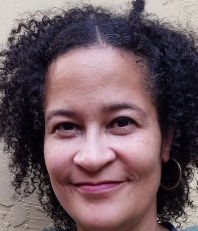
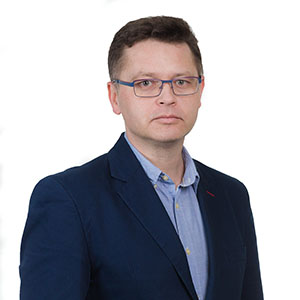
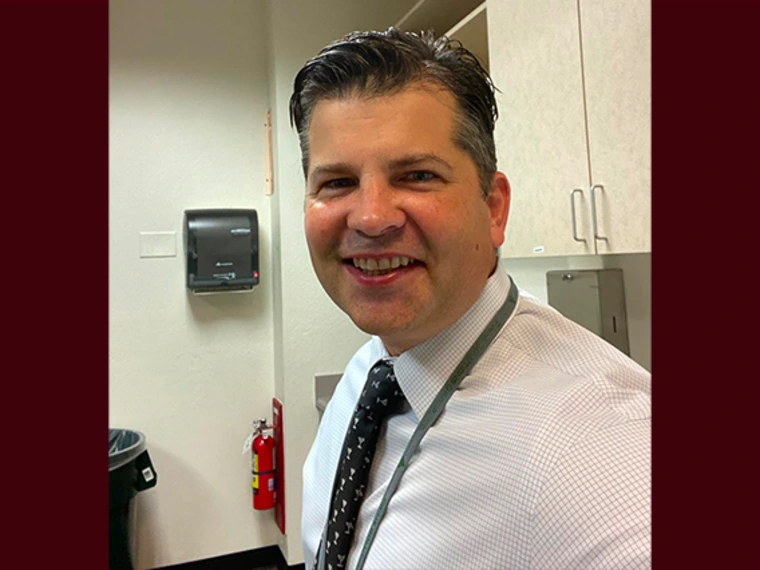
Dr. Ann Cleare is an Assistant Professor of Music and Media Technologies at Trinity College Dublin. She holds a PhD from Harvard University and an Honorary Doctorate from the National University of Ireland, recognizing her contributions to contemporary music. Her work spans concert music, opera, experimental sound installations, and hybrid instrument design, focusing on timbre, texture, and the psychological impact of sound. She is an artist-in-residence with the Crash Ensemble and a member of Young Academy Ireland. Her research explores intersections between sound and visual dimensions, exemplified by projects like rinn (a time-travel chamber opera) and TERRARIUM (a multimedia collaboration with Crash Ensemble). Key collaborations include works with Ensemble SurPlus, BBC Scottish Symphony Orchestra, and the National Symphony Orchestra of Ireland. Awards include the 2019 Ernst von Siemens Composer Prize and fellowships at Villa Concordia (2024) and Civitella Ranieri (2023). Her recent projects include MIDHE , a large-scale work commissioned by RTÉ for Ireland’s National Concert Hall, and The Little Lives , an opera addressing propaganda’s societal impact. Educational affiliations include Trinity College Dublin, IRCAM, and University College Cork. Education: PhD Harvard University, Studies at IRCAM, University College Cork Affiliations: Young Academy Ireland, Artist-in-Residence (Crash Ensemble) Notable Works: eyam series, eöl , Meridians , gravity dreams
Maria Hodermarska is a Clinical Associate Professor at the Steinhardt School of Culture, Education, and Human Development, New York University, where she has taught Drama Therapy since 1995. She coordinates creative arts therapies for Project Common Bond, an international initiative supporting youth affected by violence, and leads the Theater and Health Lab's As Performance Series. Her clinical work spans substance abuse treatment for individuals with developmental disabilities and traumatic brain injury, with extensive consulting roles in mental health programs across New York City and China. Her research focuses on how theater-based interventions impact well-being, particularly in marginalized communities. Key areas include trauma recovery, autism spectrum disorder, and community-building through performance. She has presented at global institutions like Roehampton University, Yale, and the Mount Sinai School of Medicine, and holds certifications in drama therapy, substance abuse counseling, and creative arts therapy. Her publications explore drama therapy's historical evolution, ethical considerations in therapeutic performance, and the interplay between body awareness and psychosomatic health. She has led workshops on disability advocacy, violence prevention, and culturally responsive care, emphasizing interdisciplinary collaboration between arts and mental health fields.
Sara E. Johnson is a Professor of Literature at the University of California, San Diego. She specializes in the literature and cultural studies of the Hispanophone, Francophone, and Anglophone Caribbean and its diasporas, with a focus on hemispheric American studies and the Age of Revolution. Her research also explores music and dance of the African Diaspora, informed by extensive fieldwork in Senegal, Cuba, Haiti, and Martinique. Johnson holds a Ph.D. in Comparative Literature from Stanford University and a B.A. in Comparative Literature and African American Studies from Yale University. She has held prestigious fellowships from the Ford Foundation, UC President’s Postdoctoral Program, and others. Her major publications include The Fear of French Negroes (2012) and Encyclopédie Noire (2023), which examine transcolonial intellectual networks and revolutionary politics. She co-edited Kaiso! Writings By and About Katherine Dunham (2006), recognized as a top arts book, and Una ventana a Cuba y los Estudios cubanos (2010). Johnson mentors students through programs like McNair and the Undergraduate Faculty Mentorship initiative, having advised over 45 doctoral and MFA committees. Her former students hold academic positions at institutions including Brown, Yale, and UCSD. Johnson serves as Co-Director of UCSD’s Black Studies Project and is affiliated with Black Diaspora & African American Studies, Center for Iberian & Latin American Studies, Ethnic Studies, and Critical Gender Studies. Her courses span Caribbean discourse, transcolonial American studies, and interdisciplinary topics like 'Salsa Music: Style and Substance.'
Marianne W. Lewis is Dean and Professor of Management at the Carl H. Lindner College of Business, University of Cincinnati. She previously served as Dean of Bayes Business School at City, University of London, and is a leading scholar in organizational paradoxes, leadership, and innovation. Her work is widely published and cited across top management journals. Her research focuses on organizational paradoxes, leadership, innovation, and change . She explores how organizations and leaders navigate tensions between competing demands—such as stability and change, exploitation and exploration—through paradoxical thinking. Her framework of Both/And Thinking , detailed in her Harvard Business School Press book, offers a transformative approach to managing complexity and fostering innovation. The analysis of her recent publications reveals a consistent focus on paradox as a meta-theory in organizational studies. Her work spans leadership, innovation, supply chain dynamics, and research methodology, all unified by a central theme of embracing contradictions. She contributes to both theoretical development and practical application, with publications in journals like Academy of Management Review , Organization Studies , and Harvard Business Review . Scientific Awards and Honors: Thinkers50 Breakthrough Idea Award (2023) Academy of Management Review Decade Award (2021) Academy of Management Journal Article of the Year (2000) Academy of Management Review Best Paper Award (2000) University of Cincinnati Professor of the Year (2013) INFORMS Best Technology Paper Runner-up (2009) CoB Research Fellow (2000) Lewis has been actively involved in academic advising and research leadership. She has secured multiple grants including the College Faculty Development Grant and Globalization Grant from the University of Cincinnati. While specific PhD student names are not listed, her role as a professor and PhD seminar instructor indicates active mentorship. She has also led university-wide initiatives such as the UC 21 Experiential Learning program. Service and Leadership: Dean, Lindner College of Business (current) Dean, Bayes Business School (former) Editorial Review Board, Academy of Management Journal (2003–2007) Reviewer for Academy of Management Review and Human Relations Member of AACSB and AMBA advisory boards Task Force Member for MBA revision and General Education
Niels Joseph Lennon is an Associate Professor at Aalborg University Business School within the Faculty of Social Sciences and Humanities. His work focuses on how accounting information shapes organizational performance measurement, decision-making processes, and managerial justification in both public and private sectors. He serves as academic coordinator for the Graduate Diploma in Financial and Management Accounting. Performance Measurement Decision-Making Processes Organizational Infrastructure Public Sector Accounting Management Innovation Lennon's research examines accounting's role in creating organizational narratives and justifying managerial actions through selective performance visualization. His work connects financial practices with broader organizational dynamics. Key trends in his publications include analyzing accounting's influence on innovation management, exploring cash flow control mechanisms, and investigating performance measurement paradoxes. Recent work focuses on energy sector accounting and talent management in professional services. He supervises graduate and undergraduate projects in Management Accounting and Financial Accounting, with particular emphasis on performance measurement systems and incentive structures. Lennon actively participates in interdisciplinary workshops and conferences related to accounting practices.
Prof. U. Pottgiesser is a Full Professor at Delft University of Technology’s Faculty of Architecture and the Built Environment, specializing in Heritage & Architecture. He concurrently holds roles including Vice President for Culture, Communication, and Internationalisation at Technische Hochschule Ostwestfalen-Lippe (2023–2028) and has held Full Professorships at Universiteit Antwerpen (2017–2019) and multiple German institutions. His research focuses on Modern Built Heritage, Health in the Built Environment, and Co-creation methodologies, contributing to UN Sustainable Development Goals such as sustainable cities and communities. He holds a PhD (Dr.-Ing.) from Technische Universität Dresden (2002) and a Diploma from Technical University of Berlin (1991). Research Interests His work bridges technical and cultural dimensions of architecture, emphasizing: Modern Heritage Preservation : Digital documentation, HBIM, and adaptive reuse strategies for modernist structures. Urban Well-being : Linking green spaces, design quality, and public health through interdisciplinary approaches. Co-Creation Practices : Community-driven solutions for heritage revitalization and urban regeneration. Recent Research Trends Recent publications (2023–2025) highlight: Applications of digital technologies in heritage risk management and conservation (e.g., Dubai case studies). Systematic reviews on occupant satisfaction in office spaces and green infrastructure health impacts. Global explorations of modernist architecture in Africa, Ukraine, and conflict-affected regions. Academic Leadership Editor of DOCOMOMO Journal (2023–present). Supervised 2 academic works and leads international research networks (e.g., COST Action TU1403). Labs & Collaborations Active in DOCOMOMO global initiatives, focusing on collaborative heritage inventories and open science platforms. Engages in multidisciplinary projects with institutions like TU Dresden, Universiteit Antwerpen, and international urban planning bodies.
Arkadiusz Niedźwiecki is an Assistant Professor at the Department of Economic and Social Development, Faculty of Economics and Finance, University of Białystok. His research focuses on regional development, economic policy, financial markets, EU projects, and cryptocurrency analysis. He has authored numerous publications on topics ranging from real estate market dynamics to ethical influences on economic security. Key research interests include the role of EU funds in Polish regional development, cryptocurrency predictability, and labor market equity. His work often integrates theoretical frameworks with empirical analysis of regional and global economic phenomena. Publications highlight trends in financial markets (e.g., Japan’s pandemic-era stock markets), ethical considerations in economic systems, and historical analyses of currency evolution. His contributions span interdisciplinary fields, blending economics, policy, and social sciences. No scientific awards are listed, and no advising/grant information is provided. He is affiliated with Google Scholar and ResearchGate, reflecting active academic engagement.
Mark Jobe is a Professor and the Hilton & Sallie Dean Endowed Chair of Accountancy at Lipscomb University's College of Business. He holds a PhD in Accounting from the University of Mississippi (2011), alongside Masters and BBA degrees in Accounting. Prior to academia, he worked in manufacturing as a controller and general manager. He currently serves as Internship Director for accounting students and is an elder at Veterans Parkway Church of Christ. His research focuses on the historical contributions of accountants during major conflicts, particularly World War II, and the intersection of accounting practices with military strategies. He has explored topics such as executive compensation structures influenced by technological industries and the role of CPA organizations in wartime mobilization. His work often bridges organizational behavior principles with historical case studies of professional excellence under crisis conditions. Recent publications (2023-2015) highlight CPA leadership roles in naval contexts, wartime financial strategies of firms like Deloitte predecessors, and the evolution of tax policies during conflicts. Earlier works (2005, 1987) analyze organizational behavior in military settings and historical tax code adaptations. No scientific awards are explicitly mentioned in available texts. He has advised at multiple institutions including Ole Miss, Arkansas State, and Lipscomb. His professional service extends to elder roles in local congregations and academic internship coordination. No lab or team affiliations are detailed in provided materials.
Dr. Lisa Collinson is the Academic Engagement & Research Lead at Museums and Special Collections, University of Aberdeen. She holds a PhD in Anglo-Saxon, Norse, and Celtic from the University of Cambridge (2004), focusing on Norse kings' saga compilations. Her research spans medieval legal and literary history, particularly Scandinavian and British Isles contexts. She has led projects like 'Open to All' (2021–2022) and 'Caring and Sharing' (2019–2022), emphasizing museum digital engagement and curation. She co-edited The Borgarthing Law and the Eidsivathing Law (2020) and Theorizing Old Norse Myth (2017). Her work bridges academia and performance, co-creating intermedia projects like Cruel and Unusual (2013–2014). Key research interests include medieval legal systems, Norse sagas, and interdisciplinary cultural studies. Education: PhD in Anglo-Saxon, Norse, and Celtic (2004), University of Cambridge MPhil in Anglo-Saxon, Norse, and Celtic (1999), University of Cambridge MA(Hons) Scandinavian Studies (1998), University of Edinburgh Awards & Grants: AHRC-funded Cultural Engagement post (2009–2012) Workshops on creative responses to ancient texts funded by AHRC (2014–2015) Supervision: Involved in co-supervision of PhD researchers, with experience in examining doctoral theses.
Ben Musgrave is a Lecturer in Scriptwriting at the School of Literature, Drama and Creative Writing, University of East Anglia (UEA). He is a member of the Creative Writing Research Group and contributes to research in performance and creative writing, aligning with the UN Sustainable Development Goal on Education. Research Interests: His work centers on scriptwriting, intercultural theatre, and performance writing. He explores narratives across cultures, digital collaboration in drama, and the pedagogy of creative writing. His practice-led research emphasizes trust in the creative process and the global reach of theatrical storytelling. Research Trends: His recent creative outputs reflect a strong trend in intercultural performance, adaptation across linguistic contexts (e.g., Bangla and English), and the use of theatre to explore postcolonial, diasporic, and ethical themes. Productions like Indigo Giant and The Last Missionary of Kanaipur demonstrate a sustained engagement with South Asian narratives and global performance formats. Media and Public Engagement: Featured in the Royal Literary Fund’s Writers Aloud podcast (April 2022), discussing writing across cultures and digital drama creation. Advising and Grants: No information is available regarding student supervision or research grants. Labs and Teams: He is an active member of the Creative Writing Research Group at UEA, contributing to collaborative research and creative development within the School.
Casey Cota is an Assistant Professor of Practice at the University of Arizona, bringing over 24 years of professional experience from the national defense, homeland security, and intelligence communities. His academic and professional work bridges practical military and intelligence operations with higher education, focusing on critical thinking, data systems, and organizational development. His educational background includes a PhD in Business Administration from Northcentral University, an MA in Intelligence Studies from American Military University, and a BA in Intelligence Studies with a concentration in Terrorism Studies, also from American Military University. Dr. Cota's research and teaching interests center on intelligence analysis, cybersecurity, cloud computing, and adult learning methodologies. He emphasizes critical thinking, the use of historical case studies, and challenging assumptions through evidence-based reasoning. His teaching philosophy supports diverse learning styles and encourages students to question the 'why' behind conclusions. The available information does not include recent publications, making it difficult to assess current research trends. However, his professional background suggests a strong applied focus on national security systems, data infrastructure, and leadership in defense and intelligence environments. There are no scientific awards listed in the provided information. Dr. Cota has served in key roles at the National Security Agency, Defense Intelligence Agency, National Geospatial-Intelligence Agency, and U.S. Cyber Command, managing full lifecycle programs and leading innovation in corporate culture and performance. He currently works as a Senior Solutions Architect, providing consulting services to the Department of Defense and Intelligence Community, while also contributing to academic instruction as Core Faculty. No information is available regarding labs, research teams, or specific research groups he may lead or participate in.
Dr. Gerarda Richards is a Senior Lecturer in Early Childhood Education at Swinburne University of Technology, within the School of Social Sciences, Media, Film and Education. She holds significant leadership roles as the Professional Experience Academic Lead and the Graduate Teacher Performance Assessment Lead, where she supports Initial Teacher Education (ITE) placements and collaborates with mentor teachers and educational stakeholders to enhance early childhood learning outcomes. Institution: Swinburne University of Technology School: School of Social Sciences, Media, Film and Education Academic Rank: Senior Lecturer Email: gerardarichards@swin.edu.au ORCID: 0000-0002-6757-483X Her research is centered on improving early childhood education through multiple interconnected domains. Gerarda investigates Initial Teacher Education, Early Childhood Education, Teacher Professional Development, Family and Community Partnerships, STEM integration in early years, Curriculum and Assessment practices, Indigenous Perspectives, Trauma-Informed Pedagogy, and Inclusive Education. Her work particularly emphasizes the critical role of families in children’s learning trajectories, exploring how parental engagement and access to educational capitals shape early mathematical and STEM learning. The recent publications of Dr. Richards reveal a strong focus on equity, inclusion, and multimodal learning in early childhood contexts. Her scholarly output spans conceptual frameworks for gender equity in STEM, systematic reviews on multimodal STEM resources, and in-depth studies on parental engagement models such as the actiotope framework. These works collectively highlight trends toward inclusive, family-centered, and culturally responsive early education practices, with implications for curriculum design, policy, and teacher training. Dr. Richards actively contributes to the education sector through professional service, including: Committee Member, VIT PST Mentor Working Group (2023–present) AITSL Panel Member (2022–present) Graduate Teacher Performance Assessment (GTPA) Recognised Assessor and Swinburne Lead Academic (2022–present) Committee Member, Professional Experience Community of Practice (2022–present) She has established collaborative partnerships with key institutions such as the Victorian Department of Education, Victorian Institute of Teaching, Australian Institute for Teaching and School Leadership (AITSL), and Teach Rural. These collaborations support knowledge exchange and the improvement of ITE practices. While specific grant details are not mentioned, her leadership in assessment and professional experience programs suggests active involvement in funded or institutional initiatives aimed at enhancing teacher education quality. Dr. Richards is involved in curriculum development, notably contributing to the Graduate Diploma of Early Childhood Teaching. Her work integrates research, teaching, and policy engagement, positioning her as a key figure in shaping contemporary early childhood education in Australia.
Steven Frost (pronouns: they/them) is an Assistant Professor in the Department of Media Studies at the University of Colorado Boulder and an IAWP Faculty Affiliate. They serve as Associate Chair for Undergraduate Studies and faculty director of the B2 Center for Media, Arts and Performance at the Roser Atlas Institute. M.F.A. in Fiber and Material Studies, School of the Art Institute of Chicago (2011) B.F.A., New York State College of Ceramics & Design at Alfred University (2004) Their research intersects textiles , queer history , pop culture , and community development , focusing on how materials embody historical narratives. Frost explores DIY spaces and libraries as platforms for public scholarship, combining traditional weaving with non-traditional materials to examine tactile memories and collective identity. Recent publications highlight their work in experimental weaving residencies and textile-based activism , including collaborative mending projects like Mend the World and critiques of media representation. Their creative practice includes performance art and sculpture featured in major galleries across the U.S. and Europe. Scientific Awards: Lenore G. Tawney Fellowship Luminarts Cultural Foundation Fellowship Salina Biennial Top Prize Frost founded the Colorado Sewing Rebellion and co-created the Experimental Weaving Residency, emphasizing communal learning and queer methodologies . They teach courses like Queer and Trans Identities in Popular Culture and Designing Alternative Media Platforms , integrating relational aesthetics and critical theory .
Dr. Elisabeth Heyne is a researcher at the Museum of Natural History Leibniz Institute for Evolution and Biodiversity Research in Berlin, where she leads significant projects at the intersection of environmental humanities, cultural studies, and participatory museum practices. Her work focuses on collecting practices in the Anthropocene, examining how museums can engage with contemporary environmental challenges through collaborative and citizen-driven approaches. Heyne's research spans multiple disciplines, with particular emphasis on the cultural dimensions of the Anthropocene, East German environmental history, literary studies (especially German literature), and the politics of knowledge production. She explores how cultural narratives, historical perspectives, and aesthetic approaches shape our understanding of environmental change. Her work often bridges the gap between scientific research and cultural interpretation, examining how natural history collections can be reimagined for contemporary challenges. Her publications reveal a strong focus on participatory methodologies, with numerous collaborative works examining how museums can transform into spaces of co-creation rather than mere repositories of knowledge. She investigates the role of citizen science, community engagement, and participatory collection practices in addressing environmental challenges. Her work often centers on the German context, particularly examining East German perspectives on environmental change and the legacy of industrial landscapes. Heyne has been actively involved in numerous collaborative research projects, particularly 'The Nature of Things: A Participatory Collection of the Anthropocene' which explores innovative approaches to collecting in the age of humans. Her publications span academic journals, edited volumes, and public-facing materials designed for educational purposes, reflecting her commitment to both scholarly rigor and public engagement. She has contributed to important discussions about the role of museums in the Anthropocene, particularly regarding decolonization, environmental justice, and the transformation of traditional collection practices. Her work often examines how historical perspectives, particularly from the German context, can inform contemporary environmental challenges and solutions.
Professor Michael Corsten is a full Professor of Sociology at the University of Hildesheim, Germany, affiliated with the Institute of Social Sciences within the Faculty of Educational and Social Sciences. He maintains an active research and teaching profile, with consultation hours listed during lecture periods. His institutional roles include serving as Academic Advisor for multiple programs including International Information Management (BA) and International Communication and Translation (BA), as well as handling credit transfer issues for Sociology in teacher training programs. He participates in significant university governance as a member of the Doctoral Committee FB 1, Budget Committee Department 1, and as Deputy Senate Member for Department 1. Professor Corsten's research spans several interconnected domains focused on modern social phenomena. His primary interests include symbolic practice and modern subjectivity, political culture and civil society engagement, educational inequality, and communication with digital media. His work often examines how individuals construct identity within societal frameworks, with particular attention to mythologization processes, generational differences, and social classification systems. Recent projects have investigated narrated educational and childhood experiences in the GDR, the analytical potential of qualitative longitudinal interviews in socialization research, and solidarity discourses in times of crisis. His publication record from 2022-2025 reveals consistent scholarly output across multiple high-impact venues. His research demonstrates a methodological diversity spanning qualitative and quantitative approaches, with particular strength in biographical and narrative analysis. Thematically, his work shows evolving focus from foundational questions of self and subjectivity toward increasingly applied concerns regarding political polarization, educational inequality, and social cohesion in contemporary Germany. As an academic leader, Professor Corsten contributes significantly to institutional development through his committee work and academic advising responsibilities. His research projects often involve interdisciplinary collaboration, particularly with colleagues working at the intersection of sociology, political science, and education studies. He appears to maintain active connections with multiple research networks focused on social inequality, political culture, and educational processes in German society.