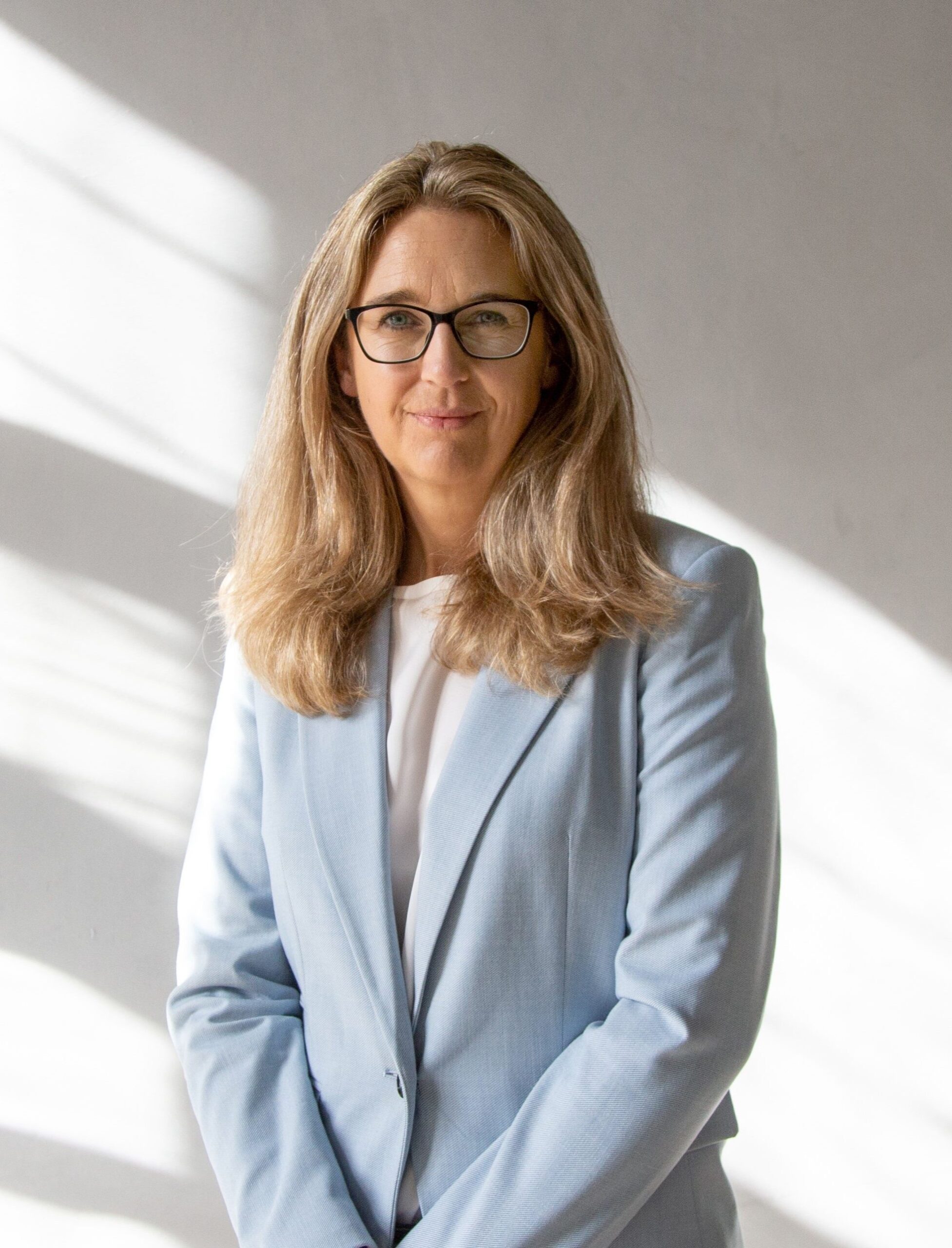
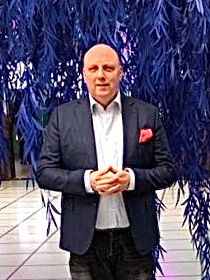
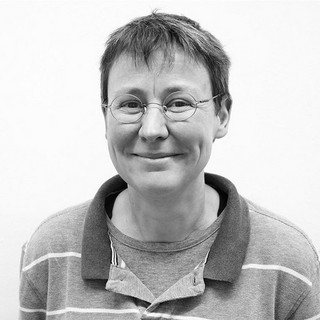
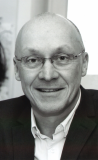
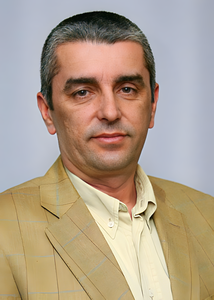
Professor Arjen P. Versloot is affiliated with the Faculty of Arts at the University of Groningen , specifically within the Frisian Language and Literature department and the Research Centre Arts in Society (AiS) . His research focuses on linguistics , with particular expertise in: Frisian Language and Linguistics Old English morphology and syntax Historical linguistics and language evolution Morphological competition in inflection and word-formation Professor Versloot's recent scholarly work demonstrates a consistent focus on the morphological structures of Germanic languages, particularly examining gerund forms in Old English and past participle competition in Frisian. His research bridges historical linguistic analysis with contemporary theoretical frameworks in morphology, exploring how linguistic forms compete and evolve over time. Professor Versloot has been actively engaged with the public through media appearances, discussing topics related to Frisian language education and preservation. His recent media contributions (2024-2025) include commentary on: The new Frisian language bachelor's program in Groningen Potential locations for Frisian language studies Career opportunities for Frisian language students Discussions with the ministry regarding Frisian language education
Lotte Sommerer is Professor and Chair of English Linguistics at the Department of English and American Studies, Friedrich-Alexander University Erlangen-Nürnberg (FAU), a position she has held since October 1, 2024. She previously served as Assistant Professor at the University of Freiburg from March 2021 to September 2024. As a historical, functional-cognitive linguist, Professor Sommerer specializes in morphosyntactic variation and change across Modern English, Middle English, and Old English. She subscribes to a usage-based, constructional theory of morphosyntax (CCxG) that emphasizes functional and cognitive constraints while accounting for linguistic variation. Her research encompasses several interconnected domains: Cognitive Construction Grammar frameworks Diachronic language evolution processes Grammaticalization and Constructionalization phenomena Lexicon-Grammar interface interactions Noun phrase structural development Linguistic categorization mechanisms across historical English stages Professor Sommerer serves as Editor-in-Chief of the open access journal Constructions alongside Stefan Hartmann from the University of Düsseldorf. Her scholarly work bridges theoretical linguistics with historical language analysis, maintaining an active research profile as evidenced by her recent habilitation at the University of Freiburg in 2022.
Dr. Jarrette K. Allen serves as an Assistant Professor in the Department of English and Foreign Languages within McNeese State University's College of Liberal Arts. His office is located in Kaufman Hall, room 309-B, with contact available via email jkallen@mcneese.edu or phone 337-475-5310. His academic credentials include: Bachelor of Arts in French from Louisiana State University Master of Arts in French Studies from Louisiana State University Master of Arts and Doctor of Philosophy in Linguistic Anthropology from Tulane University Dr. Allen's research focuses on linguistic anthropology, particularly the Ursuline obituary circular tradition in Old and New France, collaborative language documentation methodologies, lexicological software development, and religious education among indigenous communities. His international teaching experience spans language documentation and endangerment seminars across the United States, France, and the Philippines. He teaches diverse courses including French Language and Culture, The Ursuline Obituary Circular Tradition, Advanced English Syntax, Archival Research, and Perspectives and Methods in Linguistic Anthropology.
Dr. W. (Wim) Vuijk is a Lecturer at the University of Groningen's Faculty of Arts, specifically within the Discourse and Communication department. He specializes in Communication Studies with a focus on Corporate and Marketing Communication, Argumentation Theory, and Cultural Studies. His research integrates interdisciplinary approaches, including linguistic analysis and cultural reflection. Notable projects include the participatory border region study 'De verdwenen Eems' and foundational work on argumentation structures. He holds roles such as Secretary of the Admissions Board CIS and contributes to academic conferences and publications. His work spans historical linguistic analysis, organizational communication, and societal impact studies. Education: Ph.D. in Communication Studies (implied by title 'dr.') Research interests emphasize cultural and communicative dynamics across academic, organizational, and historical contexts. Recent publications (2022) highlight community engagement in environmental and cultural heritage projects. Earlier works (1990s) explored argumentation theory, language conventions, and medical discourse analysis. Publications reflect a blend of empirical studies and theoretical contributions, including book reviews and conference proceedings. He collaborates with interdisciplinary teams on projects like the Eems/Die River study combining archaeology and community participation. Teaching and advisory roles complement his research, focusing on discourse analysis and communication strategies. Active in academic service, he maintains a presence in professional networks through LinkedIn and institutional platforms.
Prof. Birgit Hellwig is a Professor in the Department of Linguistics at the University of Cologne, specializing in language documentation, child language acquisition, and anthropological linguistics. Her research focuses on understudied languages such as Qaqet (Papua New Guinea), Tabaq (Sudan), and Goemai (Nigeria). She holds the Lichtenberg Professorship since 2014, funded by the Volkswagen Foundation. Her work integrates fieldwork, corpus linguistics, and cross-linguistic comparison to address issues in language endangerment, acquisition, and typology. Educational Background: PhD (Linguistics) 2003: Max Planck Institute for Psycholinguistics & Radboud University Nijmegen M.A. (African Linguistics) 1998: Universität Hamburg Research Interests: Language documentation and revitalization Child language acquisition in multilingual contexts Semantic typology of motion events Language contact in West Chadic and Nilo-Saharan languages Corpus-driven linguistic analysis Key Projects: "Documenting child language: The Qaqet Baining of Papua New Guinea" (longitudinal corpus) "The Acquisition Sketch Project" (cross-linguistic documentation framework) Documentation of Tabaq (Nubian) and Katla (Kordofanian) Grants and Funding: Lichtenberg Professorship (2014–present) ARC Discovery Grant for Qaqet language documentation Labs/Teams: Leading the Cologne Language Documentation Group Collaborator in the Language Documentation Reference Corpus (DoReCo)
Dr. Bogi Perelmutter (they/them or e/em) is an Assistant Teaching Professor in the Department of Slavic, German, and Eurasian Studies at the University of Kansas. A Hungarian Jewish immigrant, they earned their PhD in Speech, Language, & Hearing from KU in 2022. Their interdisciplinary work bridges linguistic research, cultural studies, and science fiction scholarship. Research Focus Dr. Perelmutter's research explores: Linguistic and societal aspects of Hungarian and Jewish cultures in historical-political contexts Translation studies and cross-cultural adaptation Atypical language acquisition through laboratory research Gender nonconformity in literature through a Jewish studies lens Academic Contributions They have taught diverse courses including: Introduction to Slavic Folklore Jewish Mysticism and actively contributes to the KU Gunn Center for the Study of Science Fiction . Their research has been recognized with the Hadassah-Brandeis Institute Jewish Gender Studies Research Award for analyzing gender nonconformity in Zsuzsa Kántor's works.
Alice Corr is an Associate Professor in Modern Languages at the University of Birmingham. She holds a PhD from the University of Cambridge (2017) and has held prestigious fellowships including Drapers’ Company Research Fellow at Pembroke College, Cambridge, and Lumley Bye-Fellow at Magdalene College, Cambridge. Her research focuses on comparative morphosyntax, dialectology, and historical linguistics of Ibero-Romance languages, with a particular emphasis on endangered and minoritized varieties like Judeo-Spanish. She leads the British Academy/Leverhulme-funded ‘Grammars under threat’ project documenting Judeo-Spanish syntax and coordinates the Transatlantic LISTEN! initiative promoting linguistics in K-12 curricula. Education: PhD (University of Cambridge, 2017), MPhil (University of Cambridge, 2012), BA (University of Cambridge, 2010). She has taught at Oxford, Queen Mary University of London, and multiple Cambridge colleges. Her work addresses language endangerment, diaspora linguistics, and policy-driven language education reforms. Awards include the PGCHE high achievement recognition (2020). Key projects include the Linguistics in MFL initiative (introducing linguistics into UK A-level curricula) and EUniWell-funded multilingualism projects. Her research outputs span 31 peer-reviewed articles/chapters since 2015, focusing on syntax, historical linguistics, and educational policy. Recent activities include keynote addresses at international conferences on Medieval Romance linguistics and policy forums addressing the UK’s languages crisis.
Martin Klotz is a Researcher at the Institute for German Language and Linguistics, Humboldt University of Berlin, affiliated with the Collaborative Research Center (SFB1412) and the Research Unit for Emerging Grammars (RUEG). His work focuses on corpus linguistics, computational linguistics, and digital humanities infrastructure. He holds an MSc in Cognitive Systems (2019, University of Potsdam) and a BA in German Linguistics & Computer Science (2015, Humboldt University). Key research interests include corpus architectures, historical and parallel corpora, language modeling for non-standard varieties, and research software engineering. He contributes to projects like the RUEG corpus and FALKO learner corpus, emphasizing multilingual and multimodal corpus development. His publications span corpus design, software tools (e.g., Annatto), and analyses of heritage languages. He actively organizes academic events, such as the 2021 DGfS short working group on contrastive corpus methodology. He participates in lab collaborations like Deutsch Diachron Digital and contributes to open-source corpus tools. His work bridges computational methods with linguistic theory, focusing on dynamic language systems.
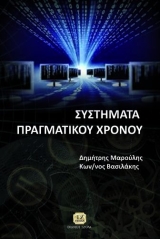
Costas Vassilakis is a Professor in the Department of Informatics and Telecommunications at the University of Peloponnese, serving as Dean of the Faculty of Economics and Technology since 2019. He holds a PhD from the University of Athens (1995) and has held academic roles since 2005, including Associate Professor and Visiting positions. His research focuses on information systems, semantic web technologies, and cultural informatics, with contributions to projects like Virtual Museums and SmartGov. He leads initiatives in digital cultural heritage, cybersecurity, and smart agriculture. Notable projects include Experimedia Blue for personalized cultural experiences and Cyber-Trust for IoT security. Active in teaching, he has instructed courses on operating systems, software engineering, and real-time systems. He contributes to academic governance, including roles in the University Council and strategic planning units. His work bridges technology and cultural preservation, emphasizing interdisciplinary innovation. Education: PhD in Informatics, University of Athens (1995); MSc equivalent in Informatics, University of Athens (1990). Research Interests: Focuses on recommenders systems, collaborative filtering optimization, cybersecurity frameworks, and AI applications in agriculture. Active in cultural heritage digitization, museum technologies, and VR systems. Recent Projects: Includes TripMentor (tourism platform), PaloAnalytics (market analytics), and Rehabotics (rehabilitation robotics). Leads EN.I.R.I.S.S.T., a national infrastructure for maritime and logistics research. Awards: No explicit awards listed, but recognized through extensive project leadership and academic roles.
Marcel Bollmann is an Associate Professor at the Department of Computer and Information Science (IDA) at Linköping University, Sweden, where he leads research in the Artificial Intelligence and Integrated Computer Systems (AIICS) division. His work focuses on natural language processing (NLP), machine learning, and computational linguistics, particularly in under-resourced languages, multilinguality, and historical document analysis. Education: He holds a PhD in Computational Linguistics from Ruhr-Universität Bochum (2018), funded by projects on historical German language corpora. Previously, he was a postdoc at the University of Copenhagen (2018–2021), supported by an EU Marie Skłodowska-Curie Fellowship, and an assistant professor at Jönköping University (2021–2023), where he developed AI Engineering courses. Research: Bollmann’s interests include linguistically-informed NLP approaches, historical text normalization, and improving NLP accessibility across language genres. His work has addressed challenges like morphology-aware models and low-resource language support. Awards: His 2021 paper on morphology’s role in error analysis won the EACL Best Long Paper Award. He also contributed to the ACL Anthology as Site Development Lead, advancing NLP infrastructure. Advising & Grants: He has supervised projects on historical language corpora and received funding from EU initiatives. His lab collaborations focus on advancing AI through interdisciplinary methods. Labs/Teams: Active in the AIICS division at IDA, contributing to WASP (Wallenberg Autonomous Systems Program) and other interdisciplinary AI initiatives.
Alice Mitchell is Junior Professor for Anthropological Linguistics of Africa at the University of Cologne's Institute for African Studies within the Faculty of Arts and Humanities. Her research focuses on anthropological linguistics, interactional sociolinguistics, and language documentation, with particular emphasis on African languages and cultures. Her work examines linguistic practices related to kinship, social hierarchy, and cultural norms in Tanzanian Datooga communities. Recent publications investigate children's acquisition of avoidance registers, kinship categorization, and the sociolinguistic history of pastoral societies in eastern Africa. Research Methodology: Fieldwork-based language documentation Cross-cultural linguistic comparisons Quantitative and qualitative analysis of social interactions
Dag Trygve Truslew Haug is a Professor at the Department of Classics at the University of Oslo, specializing in Greek and Latin linguistics with a focus on syntax and computational approaches. His research bridges classical philology with modern computational linguistics, particularly through treebank development and semantic analysis. His primary research interests include: Greek and Latin grammatical structures Lexical-Functional Grammar and formal semantics Computational linguistics and treebank development Historical linguistics and syntactic change Semantic annotation frameworks Morphological tagging systems His recent publications demonstrate a strong focus on computational linguistics applications for classical languages, semantic parsing methodologies, and the development of linguistic resources for Norwegian. The work shows consistent innovation in formal semantics, corpus linguistics, and interdisciplinary applications in computational biology. He leads the DAMOS project (Database of Mycenaean at Oslo) and participates in multiple research groups including Digital Humanities, Grammar and Meaning, Language Change, Linguistics and Poetics, Pragmatics: Theory & Experiments, and Super Linguistics.
Yourdanis Sedarous is a Lecturer I in the Department of Linguistics at the University of Michigan, within the College of Literature, Science, and the Arts (LSA). Her primary research focuses on bilingualism, syntax, and psycholinguistics, exploring how bilingual speakers' cognitive representations of syntactic structures interact across languages. She employs experimental methods such as acceptability judgments, eye-tracking, and pupillometry to study processing complexity in bilingual communities. Her work bridges theoretical linguistics with empirical approaches, addressing topics like code-switching, A-bar movement, and the construct state in Egyptian Arabic. Her research interests include syntax, psycholinguistics, and sociolinguistics, with a particular emphasis on the cognitive and linguistic mechanisms underlying bilingual grammars. She advocates for equitable and just linguistic methodologies, challenging traditional notions of 'nativeness' in language research. Her studies often involve Egyptian Arabic and English bilinguals, examining phenomena such as resumptive pronouns, island effects, and the syntax of code-switched sentences. Dr. Sedarous has contributed to the revitalization of Creole languages and the decolonization of linguistic theory. Her experimental work combines offline and online measures to investigate grammatical knowledge and language use, emphasizing data-driven approaches. Though no specific grants or advising roles are noted, her research has implications for linguistic theory and language education. Her work is housed within the Department of Linguistics at U-M, where she also maintains an active personal website.
Professor Michael Meeuwis is a distinguished academic at Ghent University's Department of Languages and Cultures, Faculty of Arts and Philosophy, where he serves as Professor of Lingala and African Sociolinguistics. With expertise spanning linguistic anthropology, African languages, and colonial history, Professor Meeuwis has established himself as a leading scholar in the study of Lingála and language policy in the Democratic Republic of Congo. Professor Meeuwis holds an MA in African History and Philology from Ghent University (1990), an MA in General Linguistics from the Universities of Antwerp and Amsterdam (1991), and a PhD in Sociolinguistic-Ethnographic studies from the University of Antwerp (1997). He was a Postdoctoral Research Fellow of the Fund for Scientific Research - Flanders from 1997-2002 and served as Professor of Anthropological Linguistics at the University of Amsterdam in 2001-2002 before joining Ghent University in 2002. Professor Meeuwis's research focuses on the linguistic, historical, and sociopolitical dimensions of African languages, particularly Lingála. His work examines the grammatical structure and historical development of Lingála, the sociolinguistic situation in the Democratic Republic of Congo, colonial language policies in the Belgian Congo, and the epistemological dimensions of colonial knowledge production. He explores how language ideologies intersect with power structures, colonial histories, and contemporary decolonial movements. His research bridges linguistic anthropology, historical sociolinguistics, and postcolonial theory to analyze how language functions as both a tool of colonial domination and a medium for resistance and identity formation. Professor Meeuwis's extensive publication record reflects his interdisciplinary approach, spanning linguistic description, historical analysis, and critical theory. His recent work has increasingly focused on the decolonial dimensions of language knowledge, examining how colonial language policies continue to shape contemporary linguistic landscapes in Africa. He has made significant contributions to understanding the complex relationship between missionary activity, language standardization, and political power in Central Africa. Professor Meeuwis has supervised numerous PhD students including Margot Luyckfasseel, Eric Mijts, Hilde Gunnink, Minah Nabirye, Bienvenu Sene Mongaba, and Gilbert Kadima Batumona Adi. His research has been supported by multiple projects including 'A historiography of Kikongo language studies and management (1624-1960),' 'Victor Roelens and the 'missionaries of Africa' (white fathers) in colonial society in Congo, 1880-1926,' and 'Lingala franca. Language, conflict and political power in Mobutu's Congo/Zaire, 1965-1997.' Professor Meeuwis is affiliated with several research centers at Ghent University, including the Afrikaans - Ghent Center for Afrikaans and the Study of South Africa, CARAM - Center for Anthropological Research on Affect and Materiality, CESSMIR — Center for the Social Study of Migration and Refugees, and MULTIPLES - Research Center for Multilingual Practices and Language Learning in Society. These affiliations reflect the interdisciplinary nature of his work, which connects linguistic analysis with broader social, historical, and political contexts.
Associate Professor Biser Grigorov, Ph.D., is affiliated with the Department of Gymnastics at the Faculty of Public Health, Health Care and Tourism of the National Sports Academy V. Levski. His professional journey spans over four decades in choreography, pedagogy, and cultural animation. Education: Academy of Music, Dance and Theatre Arts – Plovdiv Specialization: Choreographic Directing and Pedagogy Research Interests: Focused on Bulgarian folklore choreography preservation, rhythmic pedagogy innovation, and the intersection of dance with sports and cultural events. His work emphasizes classification systems for traditional dances, Olympic ceremony choreography, and rhythmic sense development in performers. Awards: First Prize (2005, 2014) for children's dance authorship Historic recognition for contributions to national dance heritage (1990-2016) Advising/Grants: No formal grants noted, but extensive creative collaborations including: Choreographed over 140 BNT episodes (2007–2009) Jury member for national dance competitions (2002–2016) Labs/Teams: Lead creative roles in: National Sports Academy's ensemble productions State Folklore Ensemble "Trakia" Ensemble "ROSNA KITKA" as Artistic Director