
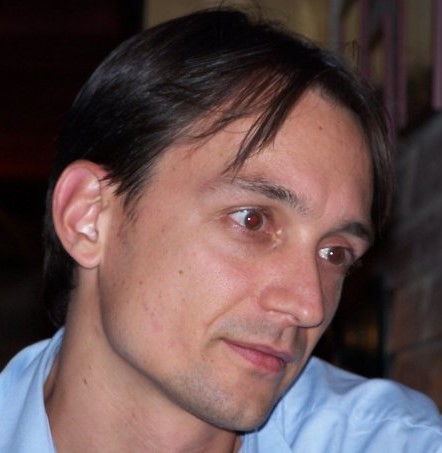
Levente SeláfView profile
Associate Professor
Levente Seláf, habilitated Associate Professor at Eötvös Loránd University (ELTE), Faculty of Humanities, teaches and researches in the Department of Early Hungarian Literature within the Institute of Hungarian Literature and Cultural Studies. His profile bridges traditional philology and digital humanities, with a strong focus on medieval and early-modern Hungarian, French, German and Italian poetry, versification theory, and large-scale corpus building. Education & Academic Status: Habilitated Doctor (Habil.) – higher doctoral qualification Academic rank: Associate Professor Contact: selaf.levente@btk.elte.hu | +36-1-411-6500/ext.5119 | Room 316, 4th floor, 1088 Budapest, Múzeum körút 4/A Research Interests: Seláf’s work revolves around historical poetics, formulaic style, intertextuality, multilingual text-setting, and computational metrics. He leads corpus-creation projects that digitise and annotate historical Hungarian verse for stylometric and metrical analysis, while simultaneously publishing close readings of medieval French and German texts that shaped images of Hungary in European literature. Publication Trends: Between 2017 and 2024 he averaged three peer-reviewed studies yearly, moving from strictly philological articles to method-oriented papers that combine traditional literary history with digital tools. Recurring themes are epic formulae, rhyme algorithms, East-Central-European imagology, and the interplay of lyric and epic modes in wartime songs. Awards & Grants: No competitive awards or named grants are mentioned in the supplied sources. Doctoral Supervision & Projects: No individual PhD advisees are listed; he currently contributes to the “Plotting Poetry” international working group and heads the “Régi magyar verskorpusz” digital repository initiative. Labs & Teams: He coordinates the Hungarian segment of the Basel-based “Plotting Poetry” consortium and collaborates with the MTMT (Hungarian Scientific Bibliography) metadata service, integrating ELTE’s medieval poetic records into national and European infrastructures.