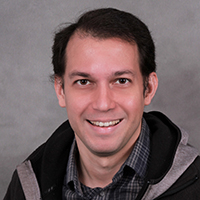
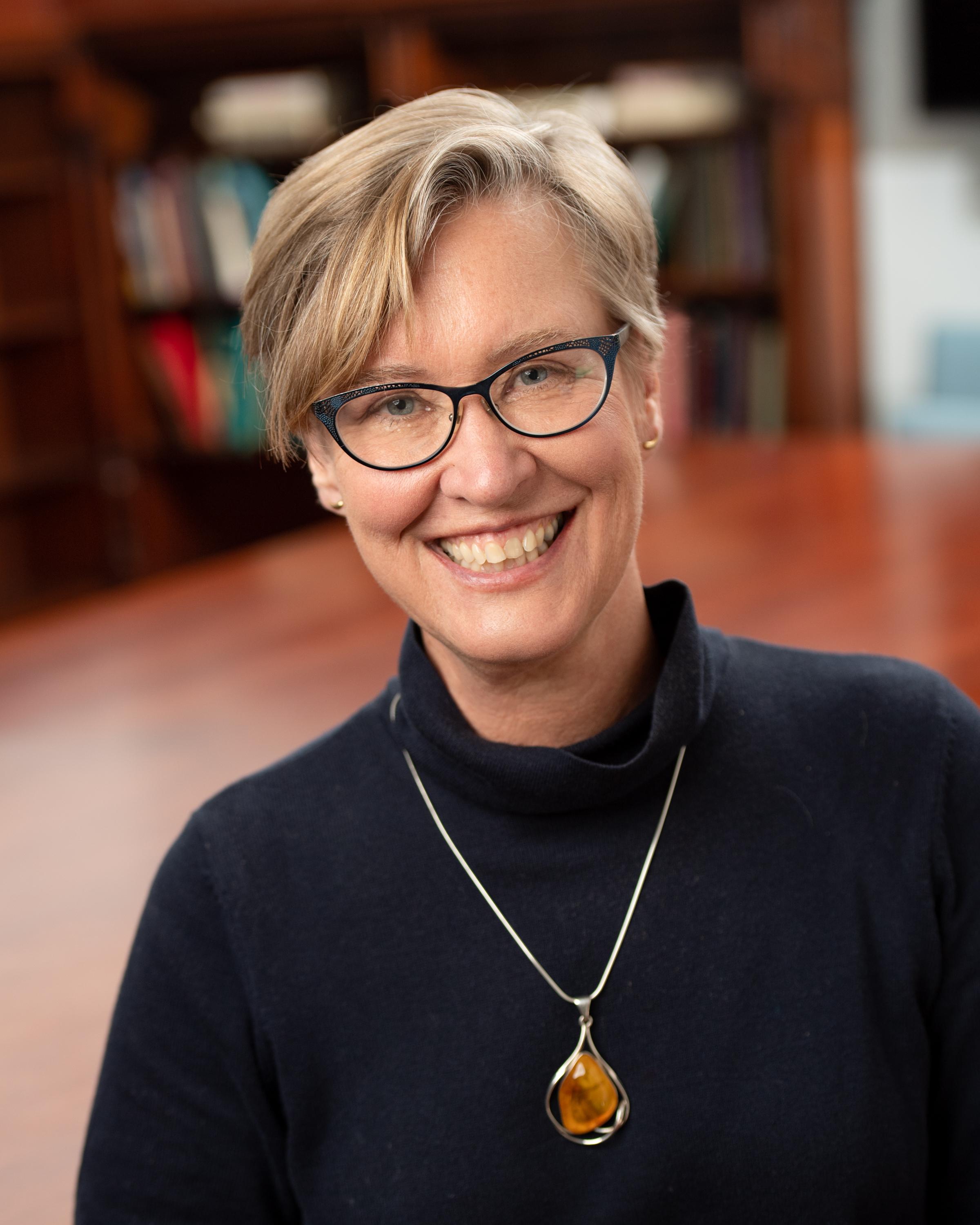
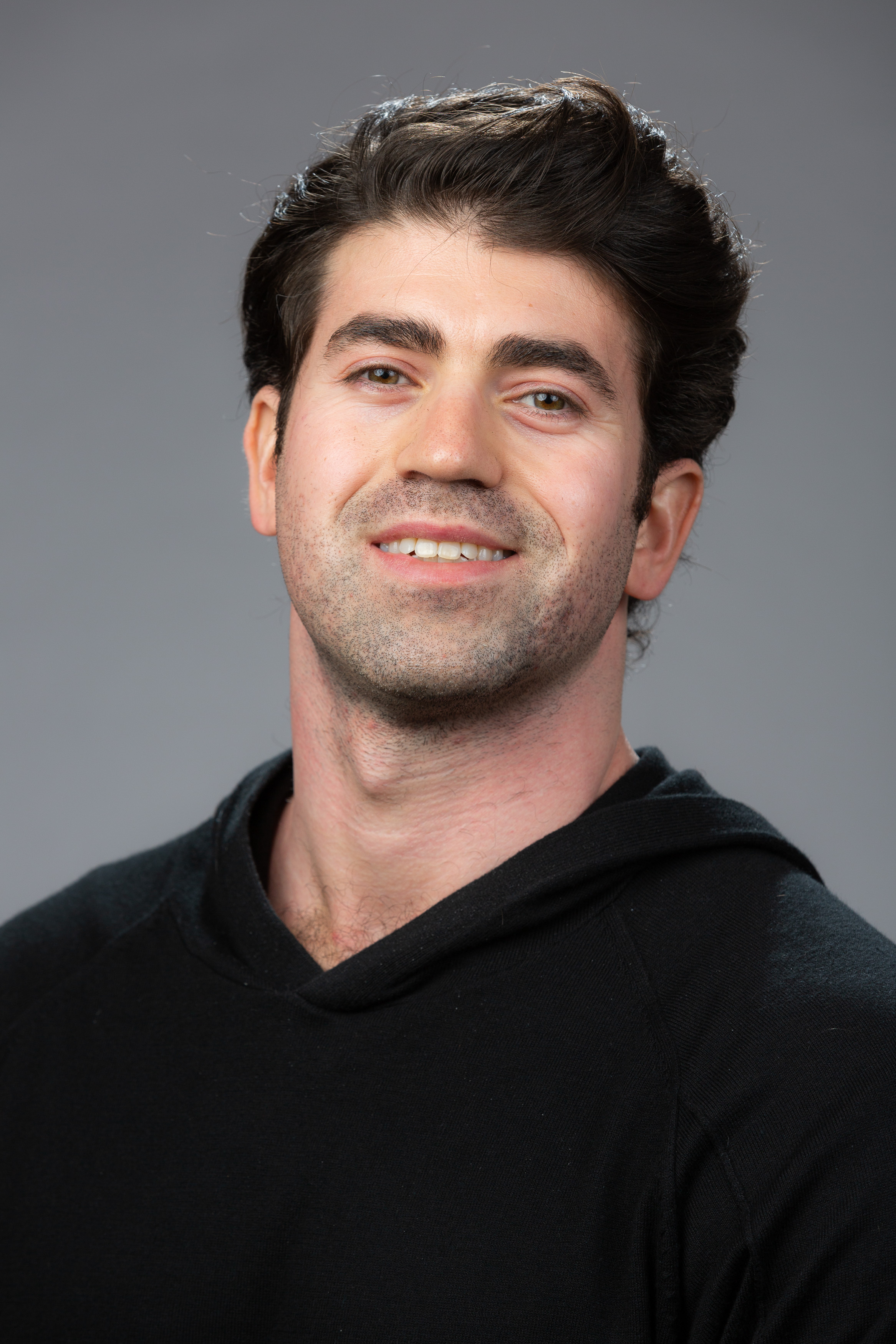
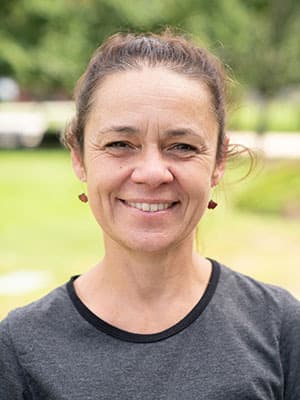
Rosemary Pang is a Lecturer in the Data Analytics and Computational Social Science (DACSS) program at the University of Massachusetts Amherst , housed within the School of Public Policy. She teaches R programming, survey analysis, and text analysis courses. Her research focuses on autocratic regimes' political dynamics, particularly in China, with expertise in computational methods including NLP and quantitative text analysis. Education: Ph.D. in Political Science and Social Data Analytics (Dual Degree), Pennsylvania State University M.A., Purdue University B.A., University of Nottingham, Ningbo, China Her work bridges comparative politics and computational methods, examining topics like party institutionalization, corruption, and legitimacy in non-democratic systems. Recent research explores protest dynamics in autocracies and the societal impacts of social movements. While no formal student advisees are listed, her teaching and research emphasize applied data science in political contexts. No grants or awards are explicitly mentioned in the provided materials. Her methodological strengths include text mining, survey analysis, and computational social science frameworks, which she applies to understand authoritarian governance structures and their societal implications.
Dr. Jeremy Aroles is a Senior Lecturer in Organization Studies at the University of York's School for Business and Society, leading the Management and Organization Studies (MOS) group. He holds a PhD from the University of Manchester (2016) and has prior academic roles at Durham University. His research focuses on new work practices (e.g., digital nomadism, gig economy), cultural institution management, and intersections between fiction and organizational theory. Key contributions include studies on platform capitalism, museum commercialization, and qualitative methodologies. Research interests include: Emerging work practices and digital labor dynamics Cultural sector governance and institutional logics Interdisciplinary approaches using actor-network theory, Deleuzean philosophy, and phenomenology Recent publications address topics like algorithmic content creation (2025), digital nomad identity work (2023), and museum marketization (2024). He is a Fellow of the Higher Education Academy (2018). Supervisory expertise spans new work practices and qualitative research methods. Led a British Academy-funded project (2021-2023) exploring global coworking spaces. Active in editorial roles and international collaborations across Europe and Asia.
John Mikhail is the Carroll Professor of Jurisprudence at Georgetown University Law Center. He holds a Ph.D. in Philosophy from Cornell University, a J.D. from Stanford University, and a B.A. from Amherst College. His research focuses on jurisprudence, moral cognition, and constitutional law, examining foundational questions about legal interpretation and ethical decision-making. Mikhail's recent scholarship analyzes experimental jurisprudence, moral psychology, and constitutional history. Publication analysis reveals consistent themes in legal philosophy (76% of recent works) with growing emphasis on empirical approaches to moral cognition (24%). Constitutional history represents 40% of recent output while moral psychology accounts for 33%.
Ricardo A. Calix is a Professor of Computer Information Technology at Purdue University Northwest. His research focuses on Machine Learning, Natural Language Processing, AI applications in Cyber Security and Healthcare, and Deep Learning methodologies. He holds a Ph.D. in Engineering Science from Louisiana State University. Key research areas include ethical AI model analysis, reinforcement learning for aerospace control systems, and industrial automation through machine learning. His work spans cybersecurity tools (e.g., CyberSecTK) and healthcare data mining from social media. Calix has secured grants as PI/Co-PI for projects like 'Detection of Potential Drug Effects from Twitter Data' (NIH) and 'A Smart and Fast IDS' (Northrop Grumman). He authored Getting Started with Deep Learning: Programming and Methodologies Using Python (2017). Recent publications (2023-2024) address biases in AI models, blast furnace automation, and autonomous aircraft control via reinforcement learning. His work bridges theoretical AI with practical applications in industry and security.
Dr. Elizabeth Robinson is an Associate Professor of Classics at the University of Dallas Rome Program, specializing in Roman art, archaeology, and digital humanities. She holds a PhD in Classical Archaeology from the University of North Carolina at Chapel Hill and has served as a GIS specialist for the Gabii Project. Her research focuses on Roman expansion in Central-Southern Italy, particularly the integration of Larinum, and combines traditional archaeology with advanced digital mapping technologies. PhD: Classical Archaeology, UNC Chapel Hill (2013) M.A.: Classical Archaeology, UNC Chapel Hill (2007) B.A.: Physics (cum laude) with Archaeology minor, Bowdoin College (2002) Her research interests include the cultural landscapes of ancient Italy, Roman urbanism, GIS applications, and the intersection of digital tools with classical studies. She has received prestigious awards including the Archaeological Institute of America Award for Digital Archaeology (2017) and the Fulbright Grant to Italy (2009-2010). Dr. Robinson has secured over $500,000 in grants, including two NEH Collaborative Research Grants, and has published extensively on topics like Larinum’s urban transformation, Oscan inscriptions, and Roman religious practices. She currently directs the Re-Survey of Biferno Valley Sites and serves on the editorial board of the Pleiades Project.
Luca Crispi is Associate Professor in James Joyce Studies and Modernism at the School of English, Drama and Film, University College Dublin (UCD), and affiliated with the UCD Centre for Research in James Joyce Studies. He is a founding co-editor of the Dublin James Joyce Journal and director of the Dublin James Joyce Summer School. He has held significant research positions at the National Library of Ireland and the University at Buffalo. His research focuses on James Joyce, particularly the textual, archival, and genetic dimensions of Ulysses and Finnegans Wake . Key areas include narratology, editorial theory, material modernism, and the construction of literary characters. His influential monograph Joyce's Creative Process and the Construction of Characters in "Ulysses": Becoming the Blooms (Oxford University Press, 2015) exemplifies his methodological rigor in genetic criticism. His recent co-edited volume James Joyce and Paul L. Léon: The Story of a Friendship Revisited (2022) further demonstrates his archival expertise. His recent publications, spanning journals like James Joyce Quarterly and Genetic Joyce Studies , reveal a consistent focus on the evolution of characters, manuscript discrepancies, and the material history of Joyce's works. Themes across his articles include the development of minor characters, the chronology of the Blooms' relationship, and the editorial challenges posed by Joyce's manuscripts. Board Member, International James Joyce Foundation (2007–12; 2017–22) Founding Co-Editor, Dublin James Joyce Journal (2008–20) Co-Editor, The Joyce Studies 2004 Series (2004–5) Co-Editor, How Joyce Wrote "Finnegans Wake" (2007) Expert Consultant, Sotheby's (2008) Luca Crispi has supervised graduate students and coordinated key modules such as Reading Joyce , Reading Ulysses , and Writing Dublin . He has secured research grants, including for the Joyce's 'Ulysses': Centenary Reading Performance and Arts Series (2019–2022). He is actively involved in the academic community through peer review for journals like Modernism/Modernity and Mosaic , and as a member of the Modern Language Association and the International James Joyce Foundation. He has curated major exhibitions on James Joyce and W.B. Yeats at the National Library of Ireland and has completed a comprehensive catalogue of the Buffalo Joyce Collections. His current major project is a biography of James Joyce titled A Writer's Life .
Nancy Jacobs is a Professor of History at Brown University, affiliated with the Department of History in the School of Humanities. Her research spans environmental history, colonial and contemporary African history, the history of science, and animal studies, with a particular focus on human-animal relations and knowledge production in southern Africa. Her research interests center on the intersections of power, race, class, and gender in colonial and postcolonial Africa, with a unique emphasis on the more-than-human world. She employs microhistory and biography to explore how scientific knowledge, particularly in ornithology, was shaped by colonial dynamics and local African expertise. Her work challenges traditional boundaries between nature and culture, emphasizing interspecies relationships and the role of animals in historical processes. The 15 most recent publications reflect a consistent trajectory in African environmental and scientific history, with increasing focus on animal agency, communication, and the Anthropocene from subaltern perspectives. Her work integrates Actor-Network Theory and transnational approaches, particularly evident in her studies of birders, parrots, and ecological networks across Africa and the diaspora. Hutchins Family Fellow, Harvard University (2023) Affiliated Scholar, Max Planck Institute for the History of Science (2022) Richard B. Salomon Faculty Research Award, Brown University (2022-23) Carson Fellow, Rachel Carson Center (2018) National Humanities Center Fellow (declined, 2022) American Society for Environmental History Alice Hamilton Prize (2002) Fulbright-Hays Fellowship (1990-91) Dr. Jacobs has been an active mentor, receiving the Mellon Mays Outstanding Mentors Award in 2004, and has secured significant research funding from institutions such as the American Council for Learned Societies, the Rockefeller Foundation, and Brown University. She has taught a wide range of courses at Brown, including African Environmental History, Southern African Entanglements, and Animal Histories. Her current research project, 'The African Grey Parrot: A Global History,' continues her innovative exploration of interspecies relations across evolutionary, colonial, and contemporary contexts. She is involved in collaborative research, notably with Jennifer Johnson of Brown University on a sourcebook for African history. Her lab and intellectual community include the Animal Studies Working Group at the Pembroke Center, which she led as a Seed Grant PI in 2016.
Johan Bos is a Professor of Computational Semantics at the University of Groningen. His research focuses on formal semantics, natural language processing, and semantic parsing, with contributions to tools like Boxer and the C&C parser. He leads the Groningen Meaning Bank project, creating multilingual semantic annotations. His work bridges computational linguistics and AI, emphasizing structured meaning representations. Key contributions include foundational textbooks such as Representation and Inference for Natural Language and Learn Prolog Now! . His research spans semantic analysis, discourse representation theory, and cross-lingual meaning parsing. Collaborations include projects on annotated corpora and neural semantic parsing advancements. Publications address challenges in semantic parsing, discourse structures, and interdisciplinary applications like tombstone inscription analysis. He actively contributes to computational semantics conferences and workshops, driving semantic tagging and interlingual meaning representation initiatives.
Prof. Dorota Klus-Stańska serves as Professor and Head of the Department of Childhood and School Research within the Institute of Pedagogy at the University of Gdańsk's Faculty of Social Sciences. Her academic leadership spans critical analysis of educational systems, teacher development, and institutional frameworks shaping early education in Poland. Her research interrogates foundational tensions in educational practice: the conflict between institutional standardization and cognitive autonomy in children, the paradoxes of school readiness assessments, and the linguistic construction of educational realities. She champions reconceptualized paradigms that prioritize holistic child development over developmental imperatives, examining how multicultural inclusivity intersects with pedagogical traditions. Her work consistently challenges transmissive teaching models while exploring narrative-based alternatives that honor children's epistemic agency. Analysis of her 2019-2025 publications reveals three dominant trajectories: deconstruction of educational language traps (27% of output), reconceptualization of early social education models (41%), and critical examinations of teacher autonomy within bureaucratic systems (32%). This scholarship bridges continental philosophy, Polish educational policy, and classroom ethnography, with increasing international engagement evident in her 2023-2025 English-language publications. Scientific Awards: No specific awards documented in available sources. While doctoral advisees and grant details remain unlisted, her departmental leadership and prolific publication record (15+ articles annually) indicate significant mentorship responsibilities. Her position as Head of Department suggests oversight of curriculum development and academic quality assurance within early childhood education programs. Research infrastructure appears integrated within the Department of Childhood and School Research, with no dedicated laboratories specified. Her collaborative work with the Pomeranian Centre for Cultural Research suggests cross-institutional engagement in sociocultural analyses of education.
Atom Egoyan is a renowned Armenian-Canadian filmmaker and academic, currently serving as Professor of Film at The European Graduate School (EGS). He has held teaching roles at the University of Toronto and is a Distinguished Scholar in Residence at Ryerson University. His work interrogates themes like technology's distortion of human communication, Armenian cultural memory, and existential anxiety. Egoyan's films often blend psychological complexity with formal innovation, earning him international acclaim. Educated in International Relations at Trinity College, University of Toronto, Egoyan's artistic journey began with his 1979 short film Howard in Particular . Notable films include The Sweet Hereafter (Academy Award-nominated), Ararat (first major film addressing the Armenian Genocide), and Chloe . He has published extensively, including screenplays, essays, and interviews that explore film theory and cultural narrative. Egoyan's awards include Canada's highest civilian honor (Officer of the Order of Canada, 1999) and the Dan David Prize (2008). His articles and interviews discuss directing techniques, artistic philosophy, and the interplay between personal and cultural history. Though primarily a filmmaker, his academic contributions span film education and critical discourse.
Professor Kim Wilkins serves as Professor and Associate Dean (Research) in the Faculty of Humanities, Arts and Social Sciences at the University of Queensland. She is Centre Director of the Research Centre in Creative Arts and Human Flourishing and maintains affiliations with both this research center and the Centre for Critical and Creative Writing. As a dual academic-creative practitioner, Wilkins bridges scholarly research with professional writing expertise, holding significant leadership roles while maintaining an active creative career. Wilkins specializes in the intersection of creativity, technology, and cultural industries, with research spanning popular fiction studies, publishing ecosystems, and technology foresight. Her work explores speculative fiction storytelling for defense innovation, community publishing in regional Australia, and the application of 'story thinking' to anticipate technological impacts. She has published over 30 novels in 20+ languages across historical fiction and fantasy genres, bringing unique practitioner insights to her academic work on creativity research, reading cultures, and the future of publishing. Wilkins' recent publications reveal a clear trajectory toward applying narrative techniques to complex problem-solving, particularly in technology foresight. Her work increasingly focuses on how creative writing methods can illuminate technological impacts in complex systems, with applications in defense innovation and digital transformation. This interdisciplinary approach bridges humanities scholarship with practical applications in technology assessment and futures thinking, demonstrating how literary techniques can enhance analytical frameworks for anticipating future scenarios. Wilkins serves as a member of the Australian Research Council College of Experts, reflecting her standing in the academic community. Her research has attracted significant funding, including ARC Linkage Projects and Commonwealth Defense Science and Technology Group grants, supporting innovative work at the intersection of creative practice and technological foresight. As a supervisor, Wilkins has guided numerous PhD and Master's students through completion, with current supervision focusing on creative writing, imagination, AI in creative practice, and Australian crime fiction. Her major grants include the ongoing Community Publishing in Regional Australia project (2023-2025), The Ursula Project on speculative fiction for technology foresight (2022), and previous ARC Discovery Projects on Australian popular fiction. She directs the Research Centre in Creative Arts and Human Flourishing, which serves as a hub for interdisciplinary research connecting creative practice with human wellbeing and technological innovation.
Jason Poulos is a data scientist and researcher currently working at the intersection of machine learning, causal inference, and health policy. He holds a Ph.D. in Political Science from the University of California, Berkeley, with a designated emphasis in Computational Science and Engineering. His academic journey includes postdoctoral positions at Harvard Medical School's Department of Health Care Policy and Brigham and Women's Hospital. Dr. Poulos's research focuses on developing and applying machine learning methods to address challenges in complex, high-dimensional longitudinal health data. His work spans several interconnected areas including extending causal inference methods for multi-valued treatments, developing frameworks for adversarial machine learning, applying neural networks for health outcome prediction, and evaluating deep learning approaches for missing data imputation in survey data. His recent publications demonstrate expertise in targeted learning methodologies, particularly in observational studies with multi-level treatments, with applications in pharmacoepidemiology. His research output shows a consistent pattern of interdisciplinary work bridging political science, statistics, and health policy. The majority of his recent publications (2021-2024) appear in high-impact journals across biostatistics, political methodology, and machine learning domains, reflecting his ability to contribute to multiple academic communities. His work often employs advanced statistical techniques to address real-world policy questions, particularly in healthcare settings. As evidenced by his publications and research trajectory, Dr. Poulos has established himself as a methodological innovator in causal inference with multi-valued treatments, with particular expertise in applying these methods to evaluate the safety and effectiveness of antipsychotic medications. His work combines deep methodological rigor with practical policy applications.
Simon Emmerson is a Professor in Music, Technology & Innovation at De Montfort University 's Leicester Media School. A composer and scholar with over 50 years of experience in electroacoustic music, he has worked extensively in live electronics, music analysis, and gender studies in sonic arts. His contributions include founding EMAS and serving on advisory boards for Sonic Arts Network, Sound and Music, and journals like Organised Sound and Journal of Sonic Studies. Education : BA in Natural Sciences and Education (Cambridge, 1972), PhD in Electronic Music (City University, 1982) External Roles : DAAD Edgard Varese Visiting Professor (Berlin, 2009-10), Silver Jubilee Visiting Professor (Perth, 2016) His research focuses on electroacoustic music composition, live performance with electronics, and the relationship between technology and human perception. Recent projects examine crossadaptive processing, spatial sound design, and the evolution of electronic music terminology. Key publications include The Language of Electroacoustic Music (1986), Living Electronic Music (2007), and The Routledge Research Companion to Electronic Music (2018). Awards span the Bourges Electroacoustic Prize (1985) and Arts Council Bursary (1987). He has served on editorial boards for Organised Sound , Radical Musicology , and Journal of Sonic Studies .
Ewa Chrusciel is a Professor at Colby-Sawyer College’s School of Arts & Sciences, joining the faculty in 2006. Holding the M. Roy London Endowed Chair, she specializes in world poetry, translation, and cognitive poetics, blending interdisciplinary and international approaches. Ph.D. in Literary Studies and Contemporary Poetry from Illinois State University M.A. in English Philology from Jagiellonian University, Poland Her research spans pre-modern, modern, and postmodern world poetry , comparative literature , and neurological theories of aesthetic experience . She teaches creative writing, world literature, and poetry, emphasizing bilingualism and translation. Recent academic work includes presentations on translating Polish poetry , religious references in verse , and cognitive embodiment in literary forms . Her poetry has been translated into Vietnamese, Hungarian, and Italian. 2016: Nomination for Best of Net Anthology 2014: Pushcart Prize nomination 2013: Second place in 'Nakręć wiersz' Poetry Competition 2011: Finalist in Sow’s Ear Poetry Contest 2009: Winner of Emergency Press Contest
Irena Vodenska is Professor of Finance and Director of Finance Programs at Boston University’s Metropolitan College, Department of Administrative Sciences. She holds a PhD in statistical finance and an MA in economics from Boston University, an MBA from Vanderbilt University, and a BS in computer information systems from the University of Belgrade. She is also a Chartered Financial Analyst (CFA) charter holder. Her research is at the intersection of finance, complexity science, and artificial intelligence, focusing on systemic risk modeling, ESG investments, and financial network dynamics. She has led major interdisciplinary research projects funded by the National Science Foundation, the European Commission, and the U.S. Army Research Office. PhD, Statistical Finance – Boston University MA, Economics – Boston University MBA – Owen Graduate School of Management, Vanderbilt University BS, Computer Information Systems – University of Belgrade Dr. Vodenska’s research interests include network theory in finance, systemic risk propagation, AI-powered ESG analysis, cryptocurrency price forecasting, and financial regulation. She employs big data, machine learning, and natural language processing to analyze financial news, market dynamics, and corporate sustainability. Her work investigates how climate disinformation spreads via social networks and influences public policy and governance. The recent articles highlight a consistent focus on modeling financial and economic systems using network science and AI. Trends include systemic stress testing, sentiment analysis in financial markets, cascading failures, and the interplay between macroeconomic indicators and financial networks. Her work spans econophysics, behavioral finance, public health economics, and ethical AI in fintech. National Science Foundation (NSF) research grant (2023) NSF EAGER Award (2014–2015) European Commission FET Open Grant (2012–2014) U.S. Army Research Office (ARO) Grant (2020–2021) MEXT Post-K Computer Grant, Japan (2016–2019) Alexander Hamilton Fulbright Fellowship (1994) Owen Graduate School Fellowship (1995–1996) Dr. Vodenska teaches core finance courses such as Investment Analysis and Portfolio Management, Derivatives Securities, and Financial Regulation and Ethics. She co-developed the MET AD 678 course with Professor Tamar Frankel from BU Law, emphasizing real-world case studies and ethical decision-making. Her research grants have supported innovative work in systemic risk modeling, AI for ESG, and financial network stability. She is actively involved in mentoring, conference organization, and editorial roles in leading journals. She is a key organizer of the International School and Conference on Network Science (NetSci) and the Big Data in Economics, Science, and Technology (BEST) Conference. Her lab and research team focus on complexity in financial systems, bringing together economists, physicists, computer scientists, and data analysts to study global financial stability and sustainability.