Professor I Wayan Arka is a leading academic at the School of Culture, History & Language, Australian National University (ANU), with a focus on Austronesian and Papuan languages. He has held leadership roles including Head of Linguistics Program (2014-2021, 2024-present) and Convenor of the Indonesian Language Program (2021-2023). His career spans theoretical linguistics, typology, and language documentation, supported by funding from the ARC, ELDP, and UK AHRC grants. PhD and MPhil in Linguistics (University of Sydney) MA in Applied Linguistics (University of Sydney) His research integrates Lexical-Functional Grammar (LFG) with fieldwork on Indonesia's diverse languages, emphasizing community collaboration and digital archiving. Recent projects include the Barrier Islands Project (2023-2027) and Enggano language studies (2019-2024). Key publication themes include: Corpus-based typology and syntactic analysis Computational grammar implementation Orthography development for endangered languages Scientific recognitions: Elected Fellow of the Academy of the Social Sciences in Australia (2021) Elected Fellow of the Australian Academy of the Humanities (2022) He supervises research students and contributes to interdisciplinary linguistics teaching, covering syntax, morphology, and Austronesian languages.
Dr. Susanna Barnes is a social anthropologist at the University of Melbourne specializing in the anthropology of island Southeast Asia with a primary focus on Timor-Leste. Her research examines customary governance, land tenure systems, inter-generational well-being, and the complex intersections of colonial history with contemporary development practices. As an active academic, she teaches undergraduate anthropology courses and supervises graduate students in anthropological research related to Southeast Asia. Dr. Barnes' educational background includes: Ph.D. in Anthropology from Monash University (Melbourne, Australia) M.A. in Anthropology of Development from University of Sussex (Brighton, UK) M.A. (Hons) in Spanish and History from University of Edinburgh (Edinburgh, UK) Dr. Barnes' research interests center on the anthropology of island Southeast Asia, with particular expertise in Timor-Leste. Her work explores how customary governance and land tenure systems interact with modern legal frameworks in post-conflict settings. She investigates inter-generational well-being and healing processes, kinship and exchange systems, and the complex legacies of colonial and post-colonial history. Her research on cultural tourism and development addresses how international development initiatives intersect with local customs and practices. Through extensive fieldwork, particularly in the community of Babulo in Uato Lari sub-district, she documents how communities navigate the tensions between tradition and modernity. Dr. Barnes' recent publications reveal a strong focus on how customary practices in Timor-Leste respond to contemporary challenges. Her work examines the intersection of traditional knowledge systems with public health responses, particularly during the COVID-19 pandemic. She explores how ritual authority is reasserted in post-occupation contexts and investigates the persistence of social categories like 'slave' in contemporary Timor-Leste society. Her research on tourism imaginaries reveals how communities envision post-pandemic economic recovery through cultural heritage. A recurring theme across her work is the examination of Portuguese colonial legacies and their ongoing influence on land governance and social structures in Timor-Leste and other former Portuguese colonies. Dr. Barnes is actively involved in interdisciplinary research collaborations, particularly with colleagues from the University of Melbourne on customary approaches to health and healing in Timor-Leste. She is currently working on an international research project that combines ethnographically grounded research and micro-histories of land governance policies across former Portuguese colonies in Asia, South America, and Africa. She is also a member of the Economies and Globalisation Research Laboratory. Dr. Barnes teaches courses including ANTH111: One World, Many Peoples, ANTH231: Cross-cultural perspectives on health and illness, ANTH240: Cultural Landscapes and Environments, and ANTH310: Anthropology of Gender. She is currently available to supervise MA students in Anthropology, focusing on research related to Southeast Asia.
Florian Albrecht-Schoeck is a German artist and Researcher at the Offenbach University of Art and Design . His work bridges Photography , Artificial Intelligence , and Machine Learning , exploring themes of roots, identity, origin, and belonging within societal, political, and individual contexts . He co-teaches the Photography Fundamentals course with Prof. Martin Liebscher. Albrecht-Schoeck’s artistic practice involves analog, digital, and virtual photography . His series like Not Alone (2021/2022) and Squares (2023) analyze the medium’s evolving role in the age of AI. He integrates research into teaching , helping students navigate complex technologies through projects like No way Back: Photography without Photographs (2024/2025). He has received notable awards and scholarships , including the Brückenstipendium der Hessischen Kulturstiftung (2021) and Deutsche Börse Fotoförderpreis (2011). His works are housed in collections such as the Art Collection Deutsche Börse and the Museum für Kunst und Kulturgeschichte in Marburg . Key exhibitions include Roots Retropia Rage Repeat (2018) and Fotografie ohne Fotografie (2025). He also contributes to pedagogical projects , such as the annual ZuTaten publications and exhibitions (2024/2025).
Tuula Juvonen is a Senior Lecturer in Gender Studies at the Tampere University , Faculty of Social Sciences, Unit of Social Research. Since 2020, she has taught the Master's Thesis Seminar (SSR.GEN.110) and coordinated/acted as examiner for English courses like YKT.215 (Gender Theories), YKT.228 (Body and Intersectionality), and YKT.YKE.501 (Genders/Sexualities). Research Fields: Queer Studies Lesbian Studies Queer History Affective Inequalities Intimate Relationships Archival Practices Feminist Pedagogy Recent Publications focus on queer historical methodologies, archival activism, affective spaces in LGBTQ+ communities, and interdisciplinary analyses of gender/sexuality discourses. Key themes include theorizing queer temporalities , resisting heteronormativity , and documenting marginalized histories . Scientific Awards: State Award for Public Information (2024, Ministry of Education) YKY Community Award (2015, with Leena Rodriguez) Good Teacher Award (2012, student-voted) Archival Deed of the Year (2012, honor mention) Grants and Projects: Leads the Affective Activism project (2021-2025, Academy of Finland), and has directed/led multiple funded initiatives including Queer Narratives (2012-2017) and Thinking Archives (2005-2006). Her work bridges academic research with community-based queer history preservation through roles in organizations like Friends of Queer History (Chair 2020-2024).
Álvaro Ferreira da Silva is an Associate Professor of Business History at the NOVA School of Business and Economics (NOVA SBE), part of NOVA University Lisbon. He earned his PhD from the European University Institute in Florence and has been a key contributor to the field of economic and business history, particularly focusing on Portugal. He previously served as Associate Dean for Faculty Affairs and Research at NOVA SBE until April 2018. His research centers on business groups, corporate networks, foreign investment, and the evolution of urban infrastructure in Portugal, with special attention to Lisbon. His work bridges history, management, and urban studies, examining how economic and technological changes shaped institutions and cities over the long term. His recent publications reveal a sustained focus on the intersection of nationality, ownership, and foreign investment, particularly in colonial and post-colonial contexts, as well as the modernization of urban services and the transfer of management knowledge. He frequently publishes in leading journals such as Business History and contributes to edited volumes on Portuguese industrial and urban history. Bolsa da Fundação Amélia de Mello (1991) Lely Prize for best paper at T2M Conference (2008) Scholarship from the European University Institute (1994) Scholarships from the Ministry of Foreign Affairs (1992, 1993) Álvaro Ferreira da Silva has advised PhD students and is currently accepting new ones. He has served as a peer reviewer for prominent journals including Business History , Explorations in Economic History , and Revista de Historia Industrial . His academic service includes editorial contributions and participation in learned societies, such as being elected to the European Business History Association. He has also contributed to archival and memory projects, particularly around the CUF (Companhia União Fabril) historical archive. His research is deeply collaborative, often involving partnerships with other historians and institutions. He is active in the academic network, with recent external collaborations across Europe, and continues to lead research into the historical roots of modern business and urban systems in Portugal.
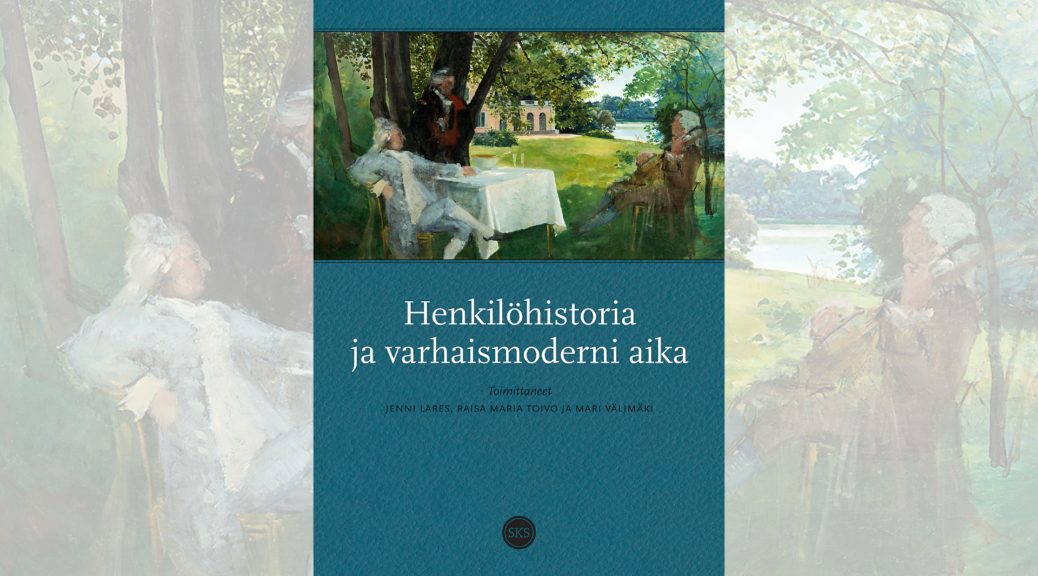
Jenni Lares is a historian and Researcher at the University of Tampere , specializing in early modern personal history and social dynamics. She contributed to the research project Personal History as a Research Project on Early Modern History (2021–2024), funded by the Jalmari Finnen Foundation , with her work published by the Finnish Literature Society. Her research bridges theoretical personal history methods with empirical studies of early modern Finland, exploring intersections of gender, alcohol culture, and individual-environment relationships. Key research areas include: Personal History : Applying life writing and experience frameworks to early modern periods. Gender Studies : Analyzing historical gender roles and intersectional perspectives. Alcohol Culture : Investigating social, economic, and legal aspects of alcohol consumption. Historical LARP : Using experiential methods to engage the public with historical justice systems. The project challenges traditional historical divisions by integrating individual and societal narratives, emphasizing underdocumented perspectives like ordinary soldiers, farmhands, and women. Her work with the Network for Research on the Beginning of a New Era promotes interdisciplinary collaboration and societal impact of early modern research.
Lusophone University of Humanities and TechnologiesPortugal
Luis Claudio dos Santos Ribeiro is a Professor at the Lusófona University of Humanities and Technologies , affiliated with the School of Communication, Architecture, Arts and Technologies (CICANT). As a researcher, he focuses on Sound Arts , Communication Sciences , and Digital Technologies , with a special interest in Urban Studies and Cultural Analysis . His career bridges academic research with literary creation , having published 8 poetry books and 4 novels since 1983. Notable projects include the Lisbon SoundMap (2012-2014), Technique and Media as a Problem (2017-2018), and the ongoing Aural Experience, Territory and Community (2018-2022). These initiatives explore soundscapes , digital media , and community engagement . His research trends emphasize sonic culture and digital communication , appearing in journals like Avant , International Journal on Stereo & Immersive Media , and Kaleidoscope . Collaborations span institutions in Portugal , Spain , and Germany , reflecting a transnational approach to sound and media studies.
James Hodges is an Assistant Professor at the School of Information, San José State University, where he contributes to teaching and research in digital archives, preservation, and the history of computing. His academic background includes a Ph.D. from Rutgers University and postdoctoral fellowship at the University of Texas at Austin. He is also a Junior Fellow in the Andrew W. Mellon Rare Book School Society of Fellows. Ph.D. in Communication and Information, Rutgers University (2020) M.A. in Media, Culture, and Communication, New York University (2012) B.S. in Media, Culture, and Communication, New York University (2009) His research centers on digital preservation and the forensic analysis of digital objects, particularly in non-institutional contexts. He investigates the history of computing through early multimedia software and countercultural digital artifacts. His work bridges archival science, digital humanities, and science and technology studies. Hodges' recent publications reveal a consistent focus on authenticity, materiality, and epistemic value in digital preservation. His articles explore topics such as unreleased gaming software, forensic reconstruction of biomedical records during the pandemic, and the software legacy of figures like Timothy Leary. The methodological thread across these works is the application of digital forensics and bibliographic archaeology to recover lost or marginalized digital histories. Bullard Postdoctoral Research Fellow, University of Texas at Austin Junior Fellow, Andrew W. Mellon Rare Book School Society of Fellows in Critical Bibliography, University of Virginia Hodges has not publicly listed advisees, but his research profile suggests active mentorship in digital archiving and information science. He has held significant research roles and continues to contribute to the scholarly discourse through publications in top journals. He is affiliated with research initiatives exploring digital forensics and the preservation of cultural software.
James D. Moore serves as Assistant Professor in the Department of Near Eastern and South Asian Languages and Cultures at The Ohio State University, with additional affiliation in the History department. He held a position as Chargé de Conférence at the École Pratique des Hautes Études (2023-2024) and collaborates on the ERC project SLaVEgents (2023-2028). He co-directs the OSU Digital Lab for Ancient Textual Objects (DLATO) and manages the Online Corpus of the Inscriptions of Ancient North Arabia (OCIANA). His academic training includes: Ph.D. in Near Eastern and Judaic Studies, Brandeis University, specializing in the Bible and Ancient Near East. Moore's research centers on Northwest Semitic epigraphy, the Hebrew Bible, and Ancient Near Eastern scribal culture, with a focus on religious economies within imperial frameworks, especially the Achaemenid Empire. He also investigates Achaemenid Mediterranean social history, Dead Sea Scrolls, Syriac, Archaeology, and Comparative Semitics, integrating philological analysis with social-historical context to explore administrative and economic structures. His recent publications reveal a concentration on Hebrew and Aramaic epigraphic evidence to study administrative reforms, religious practices, and scribal techniques during the Persian period. He is a proponent of digital humanities, developing resources for digital editions and databases of ancient texts. Moore is actively involved in major grant-funded projects, notably the ERC's SLaVEgents. He advises graduate students in philological and social-historical research, serving on the NESA Graduate Student Committee and co-advising the CANE graduate program. He emphasizes training students in digital research methods (SQL). He co-directs the DLATO, which creates digital tools for ancient textual scholarship, and manages OCIANA, a comprehensive corpus of Ancient North Arabian inscriptions, reflecting his commitment to digital innovation in the field.
Dr Gorkem Acaroglu serves as a Teaching Fellow at Deakin University's School of Communication and Creative Arts within the Faculty of Arts and Education, based at Melbourne Burwood Campus. His scholarly work critically examines the convergence of digital technologies with contemporary theatre practices, emphasizing Australian performance contexts and diversity frameworks. Education: PhD in Communication, Deakin University Acaroglu's research interrogates cyborg theory, robotic staging, and digital contamination in narrative theatre through lenses of cultural representation and technological ethics. His investigations span human-android interactions, virtual avatars, and authenticity in Australian theatrical spaces, consistently bridging theoretical discourse with practical experimentation in performance technologies. This interdisciplinary approach positions him at the forefront of digital performance studies within Australasian academia. Analysis of his publication trajectory since 2011 reveals persistent thematic focus on technology-theatre symbiosis, evolving from foundational explorations of digital contamination (2011) toward contemporary examinations of diversity in Australian theatre (2021). His work demonstrates methodological range across journal articles, conference proceedings, and collaborative artworks, with recurring emphasis on human-technology interfaces and cultural representation. Scientific Awards: No scientific awards documented in source materials Advising and Grants: Available documentation provides no explicit records of supervised students or secured research grants. His collaborative publication patterns suggest potential mentorship roles within Deakin Motion Lab projects, though formal advising relationships remain unspecified in current records. Dr Acaroglu maintains active involvement with Deakin Motion Lab as evidenced by his 2013 collaborative artwork "Robots, avatars and ghosts," which engaged 14 researchers in exploring motion-capture technologies for performance. This ongoing affiliation positions him within Deakin's interdisciplinary digital arts research ecosystem.
Rita Vecchiattini is an Associate Professor at the Department of Architecture and Design of the University of Genoa . She serves as Rector's Delegate for the "Balbi-Darsena" Territorial Center and the "Balbi" Facility Management Territorial Center. Research Interests : Architectural restoration, cultural heritage management, seismic assessment of historic structures, lime production in historical construction, sustainable urban transformation. Key Projects : Involved in the Integrated Thematic Plan for Heritage, Culture, and Economy (PITEM Pa.CE) under the ALCOTRA Italy-France Program. Publication Trends : Focus on (post)industrial landscapes, geotechnical analysis of landslide impacts on masonry churches, 3D digital surveys for structural diagnostics, and traditional lime applications.
Minas Samatas serves as Professor of Political Sociology of the Modern Greek State within the Department of Sociology at the University of Crete's School of Social Sciences, where his office is located at Gallos Campus in Rethymno, Greece. His academic career spans several decades with continuous contributions to Greek sociological discourse. He completed his educational foundation with a Diploma from Aristotle University of Salonica's Economic & Political Science Department, followed by advanced degrees in Sociology from New York City's New School for Social Research (MA and PhD, 1986). His doctoral research examined "Greek Bureaucratism: A system of sociopolitical control," establishing his focus on state-society interactions. Professor Samatas' research program centers on Political Sociology with specialized expertise in Greek State & Society dynamics, Information Society evolution, Cyber Sociology, and Surveillance Societies across historical periods. His scholarly trajectory reveals a consistent investigation of surveillance mechanisms—from Cold War anticommunist systems through Olympic mega-event security (particularly Athens 2004) to austerity-era monitoring (2010-2014) and contemporary AI-driven surveillance. This work positions Greece as a critical case study for understanding surveillance transitions in post-authoritarian Southern European contexts. His publication trends over the past decade demonstrate increasing focus on comparative Olympic surveillance (Athens 2004 vs Beijing 2008), the political economy of surveillance industries, and resistance to austerity-era monitoring practices. Recent work (2024) extends this trajectory to examine artificial intelligence integration in Olympic security infrastructure. No scientific awards were documented in the available materials. Regarding academic mentorship, while his research interests include "Graduate Sociology Students," specific advisee names and grant funding details remain unreported in the source texts. Similarly, information about research laboratories or dedicated teams was not provided.
Ramah McKay is an Associate Professor at the University of Pennsylvania , affiliated with the Department of Anthropology under the School of Arts & Sciences . Her work intersects history of medicine , anthropology , and science and technology studies (STS) , focusing on the relationships between knowledge-making , care work , and humanitarian interventions . PhD, Stanford University Her research explores how humanitarian and scientific actors use data to conceptualize habitable places, and how cleaning and care work reframe livability in climate change contexts. She applies critical and decolonial research methods to analyze transnational medical projects, particularly in Mozambique , emphasizing the often-invisible labor sustaining global health interventions. Recent publications examine planetary health policy , pharmaceutical regulation , and urban health systems . As Director of Graduate Studies , she mentors students in ethnography , history of science , and STS , though no specific advisees are named in the provided texts. She is the author of Medicine in the Meantime: The Work of Care in Mozambique (2018), which traces how global health projects depend on everyday care practices, and contributes to debates on critical global health studies as a co-editor of a special issue. Her teaching includes courses like Global Health Technologies and Feminist STS , and she is affiliated with the Center for Africana Studies .
Prof. Dr. Mehmet Serhat YILMAZ is a distinguished historian specializing in the history of the Republic of Turkey and Atatürk's revolutions. He currently serves as Professor at the Department of History within the Faculty of Humanities and Social Sciences at Kastamonu University, where he also holds the position of Dean. His academic career spans over three decades, with significant contributions to Turkish historical studies, particularly focusing on the National Struggle period and regional history of Kastamonu. His educational journey includes a BA in History from Selçuk University (1984-1989), followed by a Master's degree (1995-1997) and PhD (1998-2004) in Atatürk's Principles and Revolution History from Hacettepe University. BA, History Department, Faculty of Arts and Sciences, Selçuk University (1984-1989) MA, Atatürk's Principles and Revolution History Institute, Hacettepe University (1995-1997) PhD, Atatürk's Principles and Revolution History Institute, Hacettepe University (1998-2004) Prof. YILMAZ's research primarily centers on Atatürk's Principles and the History of the Republic of Turkey, with particular emphasis on the National Struggle period, regional history of Kastamonu, and the socio-political transformations during the early Republican era. His work often explores the intersection of local history with national narratives, examining how regional centers like Kastamonu contributed to and experienced Turkey's transition from empire to republic. His publications reveal a consistent focus on primary source analysis, particularly archival materials, newspapers, and official documents from the period. An analysis of his recent publications shows a strong trend toward examining specific historical events and their local manifestations, particularly the National Struggle period in the Kastamonu region. His work demonstrates methodological diversity, incorporating political, social, and cultural history approaches. A significant portion of his research investigates how national policies and revolutions (such as the Hat Revolution) were implemented and perceived at the local level, providing valuable micro-historical perspectives on macro-historical events. Aylıkla Ödüllendirme (1993) Throughout his career, Prof. YILMAZ has supervised numerous graduate students, with 14 theses listed where he served as the main advisor. His research has been supported by various projects, including the "Historical Independence Road and Campus Digital Museum" project (2021-2023), the "YÖK World Bank National Education Development Project," and research on the "Socio-Economic History of Northwest Anatolia (13th-15th Centuries)." His collaborative work extends internationally, particularly with Azerbaijani scholars on topics related to Turkish-Azerbaijani relations. Prof. YILMAZ is actively involved in academic administration, currently serving as Dean of the Faculty of Humanities and Social Sciences at Kastamonu University. He has held numerous administrative positions including Department Chair, Faculty Board Member, and Director of Research Application Centers. He is also a member of the Scientific Board of the Atatürk Research Center at the Atatürk Culture, Language, and History Supreme Institution, demonstrating his ongoing engagement with national historical discourse.
Markus Krumm is a historian specializing in Medieval Historiography , with particular expertise in the history of Southern Italy , papal institutions , and heretical movements . Affiliated with the Department of Medieval History at Ludwig-Maximilians-Universität München (LMU) , he has been a member of the Academic Council since 2020. His career includes significant roles as a research assistant in DFG projects like Turning Points of Power and Historiography and coordination of LMU's Medieval and Renaissance Studies doctoral program. Education: Magister Artium in Medieval History, History of Eastern/Southeastern Europe, and German Medieval Literature from LMU Munich (2009); Doctorate (Dr.) from LMU (2017) under Knut Görich. Research Focus spans medieval historiography, with a specific emphasis on texts like Alexander of Telese and Falco of Benevento as crisis management tools. He contributes extensively to Human-Animal Studies , analyzing how medieval animal representations intersect with political symbolism , cultural agency , and epistemological frameworks . His work also examines urban conflicts in Southern Italy and the role of material culture in Staufer-period governance. Publications include a 2021 monograph on Turning Power and Historiography , co-edited volumes on Italian 12th-century historiography (2024), and analyses of medieval animal studies (2023). He engages critically with texts like Galbert of Bruges' De multro through digital network analysis (2019) and explores the animal turn in medieval scholarship (2023). Collaborations feature partnerships with scholars like Alberto Cotza , Jan Glück , and Kerstin Majewski , often through interdisciplinary projects bridging history, philology, and cultural studies. His recent 2024 article on Pope Eugen III’s ceremonial missteps and 2025 chapter on Frederick II’s Capua Bridge Gate exemplify his engagement with material culture and political performance.