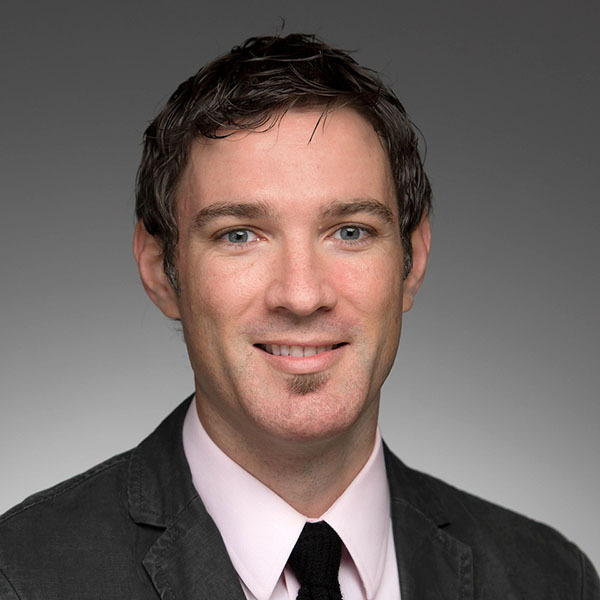
Matthew Thomas Payne is an Associate Professor in the Department of Film, Television, and Theatre at the University of Notre Dame. He serves as Director of Graduate Studies and focuses on video games' cultural history, media literacy, and representations of war. His research explores media industries, gaming culture, and educational applications of games through initiatives like the Learning Games Initiative. Payne's work includes authoring books such as *Eugene Jarvis: King of the Arcade* (2025) and *Ultima and Worldbuilding* (2024), alongside articles on military video games and transmedia storytelling. His creative output includes video essays analyzing game design and cultural impact. Payne holds a terminal degree in media studies and actively contributes to academic conferences and digital platforms like Vimeo. Education: Ph.D. in Media Studies (assumed based on faculty role). Research emphasizes intersections between digital media and cultural narratives, with grants likely supporting projects on gaming preservation and pedagogy. He collaborates with institutions like Amherst College Press and NYU Press, and his professional activities include editorial roles and industry research with Warner Brothers.
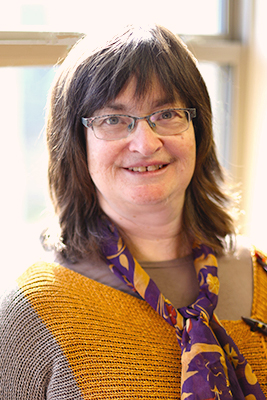
Amanda Phillips is an Associate Professor at Georgetown University, affiliated with the Departments of English, Film and Media Studies, Women’s and Gender Studies, and American Studies. Their research focuses on feminist and queer theory in digital media, with a particular emphasis on critical game studies and digital humanities. Selected publications include Gamer Trouble: Feminist Confrontations in Digital Culture and co-editing the Queer/Trans/Digital book series. Their scholarship appears in journals such as ROMchip , Feminist Media Histories , and Games and Culture . Research Interests: Digital media and gender politics Queer theory in gaming contexts Decolonial and anti-racist digital humanities Critical analysis of game mechanics Digital labor and precarity Affective histories of gaming Scientific Awards: Mellon/ACLS Dissertation Completion Fellow Academic Leadership: Former chair of the American Studies Association Digital Humanities Caucus Co-founder of the #transformDH Collective Editorial work on special issues of Game Studies and Antares: Letras e Humanidades Previous Institutions: IMMERSe Postdoctoral Fellow at University of California, Davis Ph.D. recipient from University of California, Santa Barbara with emphasis in Feminist Studies
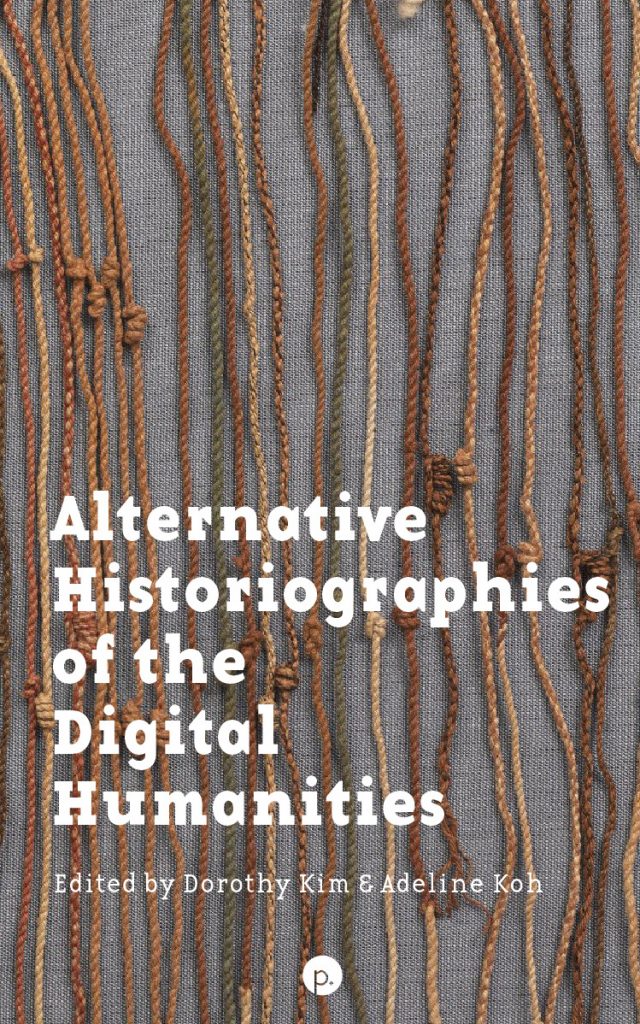
Dorothy Kim serves as Assistant Professor of English at Brandeis University with cross-appointments in the Department of Women's, Gender and Sexuality Studies and the Women's Studies Research Center. Her innovative scholarship bridges medieval literary studies, digital humanities, and critical race theory, examining how medieval history is weaponized by contemporary white supremacist movements and advocating for antiracist frameworks in academia. She earned her Ph.D. and M.A. from the University of California, Los Angeles and her B.A. from the University of California, Berkeley. Her educational trajectory reflects deep engagement with interdisciplinary approaches to literature and cultural studies. Kim's research centers on exposing the racialized foundations of medieval studies, particularly through projects analyzing digital white supremacy and medievalism's role in alt-right ideology. She pioneers methodologies connecting medieval women's literary cultures with contemporary trans feminism while interrogating Jewish/Christian difference in manuscript studies. Her work consistently challenges the field's historical whiteness and develops decolonial digital humanities practices. Her publication trends reveal a decisive shift toward critical race interventions in premodern studies, with increasing focus on database methodologies, sonic histories, and the material politics of medieval manuscript transmission. Recent works demonstrate how digital tools can either reinforce or dismantle racial hierarchies in academic knowledge production. Her distinguished honors include: 2023 Medieval Academy of America Article Prize in Critical Race Studies American Studies Association Digital Humanities Book Prize (2021) Society for Medieval Feminist Scholarship's Best Feminist Article Award (2021) AAUW Postdoctoral Fellowship (2018-2019) Folger Shakespeare Library Long-Term Fellowship (2025-2026) SSHRC, Ford Foundation, Fulbright, and Mellon fellowships Kim directs major collaborative projects including the NEH-funded An Archive of Early Middle English (161-manuscript database) and co-leads the Global Middle Ages Project. As co-director of RaceB4Race and the Reckonings Institute, she creates platforms for community archiving and social justice praxis. Her mentorship focuses on training students in critical digital methodologies through Brandeis' DH Lab while developing antifascist frameworks for humanities education. She currently leads the Brandeis University DH Lab housing her NEH project, co-edits Literature Compass's pre-1800 section, and develops two major book projects: Race, the Crusades, and the Katherine Group (based on her AAUW fellowship) and Music, Multimodal Manuscripts, and Remediating the Medieval Lyric for ArcPress.
Mohsen Goudarzi is an Associate Professor of Islamic Studies at Harvard Divinity School (HDS), part of Harvard University. He joined the faculty in 2021 after teaching at the University of Minnesota. His academic background includes a PhD from Harvard University and an MA from Stanford University. His research focuses on the Qur’an and early Islamic history, employing literary, linguistic, comparative, and historical approaches. Key interests include the Qur’an’s role in Late Antique religious developments, Islamic exegetical traditions (tafsīr), and theological frameworks (kalām). His current projects explore the Qur’anic worldview’s interpretation and the significance of Meccan cultic rituals to early Islamic identity. He has received teaching excellence awards, including a certificate from the University of Minnesota’s Center for Educational Innovation and three teaching distinctions from Harvard’s Office of Undergraduate Education. Research outputs include groundbreaking articles on Qur’anic exegesis, cultic practices, and interreligious dynamics. Notable works analyze the Qur’an’s engagement with Abrahamic traditions, ritual practices in Mecca, and the textual history of early Islamic manuscripts. His collaborative work on the Ṣan‘ā’1 codex redefined understandings of early Qur’anic canonization. Teaching spans HDS and Harvard’s Faculty of Arts and Sciences (FAS), covering Islamic studies, Qur’anic studies, and religious history. He advises students in HDS programs and contributes to interdisciplinary initiatives at the intersection of theology, history, and textual criticism.
Matt King is an Associate Professor and Graduate Director in the Department of History at the University of South Florida (USF), within the College of Arts and Sciences. He specializes in medieval Mediterranean history, digital humanities, and the Crusades era, particularly focusing on Norman-Sicily and Zirid-Ifriqiya relations. King holds a Ph.D. from the University of Minnesota (2018) and teaches courses on medieval history, digital methods, and historical pedagogy. His research explores the interconnectedness of medieval Mediterranean polities, leveraging Arabic and Latin sources alongside digital tools like the Old World Drought Atlas. His first book, Dynasties Intertwined (2022), examines Zirid-Norman relations. He has co-authored translations of al-Idrisi’s geography and is currently researching the historical perception of goblins. Education: Ph.D., University of Minnesota (2018); M.A. (2014), B.A. (2012) in History and Latin. King’s teaching emphasizes active learning and digital humanities, including workshops for K-12 educators. He has received grants totaling over $40,000 for research and community projects. Awards include the Outstanding Graduate Instructor Award (UMN, 2018) and the Subvention Award (USF, 2022). His publications span peer-reviewed journals (e.g., Journal of North African Studies , The History Teacher ) and edited volumes, with a focus on medieval Mediterranean dynamics, digital pedagogy, and environmental history. King advises graduate students in medieval Mediterranean history, emphasizing research in Arabic, Latin, or Greek. He is involved in digital initiatives, including departmental websites and archaeological 3D modeling projects.
Anna Berge is a Professor of Linguistics at the University of Alaska Fairbanks, directing the Alaska Native Language Archive. She holds a PhD from the University of California, Berkeley (1997), specializing in the documentation, description, and historical analysis of Eskimo-Aleut languages, particularly Unangam Tunuu (Aleut). Her research integrates linguistics with archaeology, genetics, and environmental studies to explore prehistoric language contact and divergence patterns along the North Pacific Coast. Her work focuses on morphosyntax, discourse analysis, and language revitalization for highly endangered languages. She teaches courses in Morphology, Field Methods, Community Language Documentation, and Eskimo-Aleut Linguistics, emphasizing practical skills for language preservation. Berge's multidisciplinary approach addresses Aleut language divergence from Eskimoan branches, leveraging data from multiple disciplines to reconstruct linguistic prehistory. She actively collaborates with Indigenous communities in Russia, Alaska, Canada, and Greenland to archive linguistic materials and support language maintenance initiatives.
Emilia Oddo is an Associate Professor of Greek Archaeology in the Department of Classical Studies at Tulane University. She holds a Ph.D. in Classics from the University of Cincinnati (2016), an M.A. in Classics from the University of Cincinnati (2010), and an M.A. from Katholieke Universiteit Leuven, Belgium (2007). Her research focuses on the archaeology of Bronze Age Crete, particularly the Late Bronze Age (Neopalatial period), with a specialization in pottery styles and their social implications. She leads excavations at Knossos, analyzing pottery from Sir Arthur Evans’ early 20th-century excavations to understand ritual practices and architectural functions. In 2024, she will lead a student field trip through the Greek Islands organized by the American School of Classical Studies at Athens. Her publications include Knossos: The House of the Frescoes (2022) and South by Southeast: The History and Archaeology of Southeast Crete (2022), which explore Minoan social dynamics and regional identity. Her work highlights how pottery styles reflect communal identity and ritual behaviors. Recent research reinterprets Evans’ archival materials to reveal new insights into Knossos’ urban context and ritual spaces. Teaching courses like CLAS-2320 (Greek Religion) and CLAS-3170 (Greek Art and Archaeology), Oddo bridges academic scholarship and pedagogy. Her field projects emphasize interdisciplinary methods, such as ceramic regionalism and contextual analysis, to reconstruct Bronze Age Cretan society. She actively contributes to archaeological discourse through edited volumes and peer-reviewed articles.
Takuya Tsunoda serves as Assistant Professor of Japanese Film and Media in the Department of East Asian Languages & Cultures at Columbia University, with prior teaching appointments at Colgate University and the University of Chicago. Currently on leave for spring 2022, he maintains his office in 416 Kent Hall (contact: (212) 854-5040, tt2101@columbia.edu). His academic credentials include: BA: Waseda University (2002), Columbia University (2005) MA: Columbia University (2008) PhD: Yale University (2015) Dr. Tsunoda's research centers on institutional-media interplay through historical and theoretical lenses, examining how technologies shape socio-cultural practices and knowledge formations. His seminal work investigates Iwanami Productions' evolution from educational/science film provider to New Cinema pioneer, arguing that Japan's 1960s cinematic revolution originated in institutionalized audio-visual pedagogy rather than political radicalism. Current explorations extend to media reflexivity, alpine photography, insect ecology, children's media engagement, and diegesis in contemporary visual culture. Teaching : Courses include East Asian Cinema, Japanese Contemporary Media Culture, Japanese New Wave Modernism, Documentary Film Studies, and Critical Approaches to East Asian Theory. His publication trajectory (2018-2022) reveals consistent focus on postwar Japanese media archaeology, connecting educational film, industrial cinema, and New Wave movements through archival analysis. Key themes include cross-medial academicism, mediascape transformations, and the socio-political dimensions of visual pedagogy in reconstructing cinematic modernism. Active research trajectories include transnational New Wave parameters, television documentary studies, and ecological media representations, with ongoing book project examining Iwanami Productions' institutional legacy.
Edward L. Shaughnessy serves as the Lorraine J. and Herrlee G. Creel Distinguished Service Professor in Early Chinese Studies and Director of Graduate Studies in the Department of East Asian Languages and Civilizations at the University of Chicago. A renowned scholar of ancient China, he specializes in archaeologically recovered texts from the Zhou dynasty period (c. 1045-249 BCE), particularly bronze inscriptions, bamboo-slip manuscripts, and the classical texts Zhou Yi (I Ching), Shang Shu, and Shi Jing. His research interests focus on the intersection of archaeological discoveries and literary traditions, with particular expertise in bronze inscriptions and the Zhou Yi. Shaughnessy has pioneered efforts to bridge Western and Chinese scholarly traditions, publishing extensively in both English and Chinese. He has written seven volumes of technical scholarship in Chinese and is currently leading an international team translating Tsinghua University's fourth-century BCE bamboo-slip manuscripts. His recent scholarly output shows strong trends in paleographic studies, with numerous publications analyzing newly excavated manuscripts. His work demonstrates a consistent focus on textual transmission, historical context, and the relationship between archaeological evidence and received literary traditions. Notable patterns include systematic analysis of bamboo-slip manuscripts, comparative studies of textual variants, and interdisciplinary approaches combining philology, archaeology, and historical analysis. Shaughnessy has received recognition through his appointment as a Distinguished Service Professor, one of the highest academic honors at the University of Chicago. His scholarly contributions have significantly advanced the field of early Chinese studies through both original research and editorial work. As an educator, Shaughnessy teaches seminars on oracle-bone inscriptions, bronze inscriptions, bamboo-strip inscriptions, and courses on the Yi jing, Shi jing, and Shang shu. He serves as Director of Graduate Studies for the department and has supervised numerous graduate students. His current and upcoming courses include 'The Ji Zhong Discovery,' 'The Development of Early China Studies in the West,' 'Western Zhou Bronze Inscriptions,' 'The Shang shu,' and 'The Shi jing.' Shaughnessy maintains an active research program with current projects including the translation of Tsinghua University's bamboo manuscripts and serving as co-editor of the journal Bamboo and Silk. His scholarly network extends internationally, as evidenced by his 2013 lecture series at the Collège de France titled 'Unearthing the Chinese Classics,' where he presented on the Zhou Yi, Shang Shu, Shi Jing, and Laozi.
University of California, Los AngelesUnited States
Sanjay Subrahmanyam is Distinguished Professor of History and Irving & Jean Stone Endowed Chair in Social Sciences at UCLA's Department of History. A globally recognized historian of the early modern period (15th-18th centuries), he previously held prestigious positions at the Collège de France (2013-2021), University of Oxford (2002-2004), and Ecole des Hautes Etudes en Sciences Sociales in Paris (1995-2002). He founded UCLA's Center for India and South Asia (2005-2011) and maintains significant academic engagement in France through media appearances and lectures. His educational background includes: M.A. in Economics (First Rank with Gold Medal), Delhi School of Economics (1982) Ph.D. in Economic History, Delhi School of Economics (1987) Honorary D.Litt., University of Calcutta (2015) Doctorat honoris causa, Université catholique de Louvain (2017) Subrahmanyam's research revolutionized global historical methodology through his pioneering concept of 'connected histories,' which challenges Eurocentric periodization and emphasizes horizontal connections across regions. His work spans South Asian political culture, Indian Ocean trade networks, Iberian imperial systems, and Mughal court dynamics, consistently integrating multilingual archives and visual sources. He demonstrates exceptional mastery in synthesizing Portuguese, Spanish, Persian, Tamil, and Sanskrit materials to reconstruct non-Western perspectives on early modern globalization. His recent publications reveal intensified focus on transcultural encounters, maritime archaeology, and the material dimensions of empire. Works like Across the Green Sea (2024) and Mirrors of Empire (2026) showcase his shift toward analyzing ego-documents and visual culture to explore identity formation in frontier zones. The consistent thread remains his critique of civilizational boundaries and emphasis on fluid cultural exchanges across the Indian Ocean world. His scientific recognition includes: Infosys Humanities Prize (2012) Dan David Prize for History (2019) Prix International de l'Histoire (2020) Fellowship in American Academy of Arts and Sciences (2009) Corresponding Fellowship in British Academy (2016) Guggenheim Fellowship (2011-12) Subrahmanyam has mentored nine doctoral students to completion, maintaining active collaborations with Muzaffar Alam (University of Chicago), Velcheru Narayana Rao (University of Wisconsin), and David Shulman (Hebrew University). His editorial leadership includes co-editing The Cambridge World History (2015) and serving over a decade as Joint Managing Editor of the Indian Economic and Social History Review . He currently directs major international projects on Indo-Persian travel writing and Mughal intellectual networks. Though not leading a traditional laboratory, he coordinates the 'Connected Histories' research initiative across UCLA, Collège de France, and University of Chicago, fostering interdisciplinary teams examining early modern knowledge circulation. His public engagement includes regular contributions to French media (France 24, France Info) and curated exhibitions like the Codex Casanatense project.
Jason M. LaBelle is a Professor of Anthropology at Colorado State University (CSU), affiliated with the College of Liberal Arts. He serves as Director of the Center for Mountain and Plains Archaeology (CMPA) and Curator of the Archaeological Repository of CSU (AR-CSU). His research focuses on hunter-gatherer societies, particularly in the Intermountain West, emphasizing subsistence, mobility, and pre/post-contact Native American cultures. His work spans environments from the Great Plains to high alpine regions, with specialties in Clovis/Folsom cultures, communal hunting practices, and lithic technology. LaBelle teaches courses in archaeology, lithic technology, and public archaeology. He oversees CMPA projects funded by federal agencies like the National Park Service and the Bureau of Land Management, supporting student training in fieldwork, lab analysis (lithics, faunal studies), and report writing. His lab houses extensive collections from Colorado’s South Platte and Colorado River Basins, including alpine artifacts. He actively engages with tribal partners and the public through outreach, conferences, and NAGPRA coordination. LaBelle’s recent research includes studies on lithic quarries, ice patch archaeology, and Bayesian chronology modeling. His publications address prehistoric mobility, site chronology, and cultural resource management. He values interdisciplinary collaboration and student mentorship, aiming to bridge academic and applied archaeology.
Reyhan Durmaz is an Associate Professor of Religious Studies at the University of Pennsylvania, affiliated with the School of Arts & Sciences and multiple interdisciplinary programs. Her research focuses on Syriac Christianity, medieval religious dynamics, and the intersection of Christianity and Islam in late antiquity. She holds a Ph.D. from Brown University (2019) and has received prestigious fellowships such as the Dumbarton Oaks Junior Fellowship and the Charlotte Newcombe Dissertation Fellowship. Her seminal book Stories between Christianity and Islam (2022) examines the transmission of saints' stories between religious traditions, earning Honorable Mention from the Middle East Medievalists. Current projects include a study of rural Christianity in the medieval Middle East through soldier-monk narratives and an analysis of the 19th-century Arabic newspaper Kawkab America . She co-leads the Digital Photograph Archive project Visualizing Countryside , documenting medieval religious sites. Dr. Durmaz teaches courses on global Christianity, material culture, and late antiquity, and serves as co-chair of the Philadelphia Seminar on Christian Origins. Her work bridges historical analysis, textual scholarship, and digital humanities, addressing themes of religious identity, cultural exchange, and marginalized communities.
M. Christine Boyer is a Professor of Urbanism and the William R. Kenan Jr. Professor of Architecture and Urbanism at Princeton University's School of Architecture. She received her B.A. from Goucher College, M.S. from the University of Pennsylvania, and M.C.P. and Ph.D. from MIT. Her research bridges urban history, city planning, preservation, and digital technologies. B.A., Goucher College M.S., University of Pennsylvania M.C.P./Ph.D., Massachusetts Institute of Technology Her work examines intersections between urban history, collective memory, and cybernetics in urban design. Recent research focuses on heritage terrorism, urbicide, and post-conflict urban reconstruction, reflecting her expertise in critical urban theory and digital urbanism. Notable scientific recognition includes the Department of Art and Archaeology Publication Fund award (2010) for her work on Le Corbusier. She has presented lectures on Cold War urbanism and disasters like Hurricane Katrina's impact on New Orleans. As director of Princeton's Undergraduate Urban Studies Certificate Program, she shapes urban pedagogy while collaborating internationally through workshops in Athens and conferences addressing spatial analysis of terrorism and urban security.
Andrew Ollett is an Associate Professor and Director of Graduate Studies in the Department of South Asian Languages and Civilizations at the University of Chicago , where he has taught since 2019. His research focuses on the literary and intellectual traditions of South and Southeast Asia, particularly through works in Sanskrit, Prakrit, Apabhramsha, and Kannada from the first millennium CE. Co-founder and editor of NESAR (New Explorations in South Asia Research) Director of NEH-funded edition/translation of the Kavirājamārga (earliest Kannada literary manual) Expert in Prakrit and Kannada literary traditions His work explores the 'question of language'—examining how language choice shaped cultural production and change in premodern India. Current projects include a monograph on context-sensitivity in Indian language theories and a study of manuscript technology's impact on early South Asian knowledge communities. He has authored The Mirror of Ornaments (Naples: Unior Press, 2025) and Language of the Snakes (UC Press, 2017), and co-authored Lilavai (Harvard, 2021). Recent publications include interdisciplinary studies on: Sanskrit-Prakrit campū genre reevaluation Pragmatics in Mīmāṁsā interpretive concepts Manuscript literacy's influence on literary forms Historical linguistics of Middle Indic syllable reduction Philosophy of language in Śālikanātha and Kumārila Bhaṭṭa Awarded the NEH 'Scholarly Editions and Translations' grant , he teaches classical South Asian literature courses covering Sanskrit, Prakrit, and Tamil traditions. He maintains digital resources including a Prakrit Digital Texts Project and Mīmāṁsādigdarśinī digital text repository, and actively contributes to open-access scholarship.
Prita Meier is an Associate Professor of Art History at New York University's College of Arts & Science , affiliated with the Department of Art History & the Institute of Fine Arts. Her work bridges African art history, Indian Ocean world studies, and global modernity frameworks. Education: Ph.D. (2007) in History of Art, Harvard University M.A. (2000) in History of Art, University of Iowa B.A. (1996) in Art History, University of Florida Research Interests focus on the visual and architectural cultures of Africa, particularly Swahili Coast port cities, exploring globalization's cultural dimensions, Islamic art, and photography histories. Her work interrogates spatial-temporal dynamics in African modernity and colonial art frameworks. Scientific Awards include CASVA Senior Fellowship, NEH Implementation Grant (with Allyson Purpura), Mellon Collaborative Grant (with Kenny Cupers), Clark Art Institute Residential Fellowship, and Andrew W. Mellon Postdoctoral Fellowship. Notably, she declined the National Humanities Center Fellowship and Stanford Humanities Fellows Program. Publications highlight Indian Ocean trade networks, Swahili Coast architecture, and photography's global circulation. Recent works (2020-2017) examine infrastructure as identity, oceanic materiality, and itinerant art historiography. Earlier articles (2016-2009) analyze porcelain trade, modernist discontents, and Swahili funerary practices. Contact: spm9@nyu.edu | 100 Washington Square East, New York, NY 10003