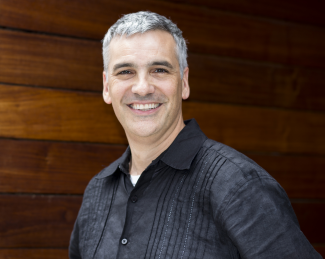
Keith Plocek is an Assistant Professor of Professional Practice of Journalism at the University of Southern California's Annenberg School for Communication and Journalism since 2014. He serves as Liaison to Adjunct Faculty and teaches courses such as Shoot the Curl: Digital Storytelling and Surf Journalism , focusing on innovative multimedia narratives. His expertise spans Arts and Culture, Data and Coding, Digital Media, Entertainment, History, and Social Media . He holds a Master's from the University of Cambridge and a Bachelor's from the University of Texas at Austin . Plocek has led digital content teams at Voice Media Group and produced award-winning investigative reporting for the Houston Press, earning two First Amendment Awards (2008). His freelance work appears in New York Times, Washington Post, Travel + Leisure , and others. Notable projects include using a kite-mounted camera to capture artificial surfing waves and launching a Vin Scully bobblehead into near-space via weather balloon. His research explores intersections between travel, culture, and surfing , with a focus on digital storytelling techniques. He has pioneered courses on coding for journalism and action sports media. Awards include the National Entertainment Journalism Award (2011) for a tweet and recognition for defending press freedoms. Current courses include Introduction to Coding for Storytelling and Storytelling for Action Sports . His work bridges traditional reporting with modern digital tools, emphasizing multimedia innovation and emerging technologies in narrative creation.
Alexander Robinson is an Associate Professor in the Department of Landscape Architecture + Urbanism at the University of Southern California (USC) School of Architecture. He holds an MLA from the Harvard Graduate School of Design and a BA in Studio Arts and Computer Science from Swarthmore College. His research focuses on landscape infrastructure, sustainable design, and community engagement, particularly through projects like the Inclusive Infrastructure Design Lab (IIDL) and the Los Angeles River Observatory (LARO). Key research areas include nature-based infrastructure, climate resilience, and the Los Angeles River revitalization. He co-founded TEST PLOT, a non-profit advancing ecological stewardship, and runs Double Iris, a design practice. His books, such as The Spoils of Dust and Living Systems , explore landscape architecture’s role in environmental restoration and design innovation. Education: MLA, Harvard Graduate School of Design BA in Studio Arts & Computer Science, Swarthmore College Awards: Fellow of the American Academy in Rome Prince Charitable Trust Rome Prize (2015) Robinson’s work integrates engineering, ecology, and public engagement through labs like IIDL, which uses advanced modeling and augmented reality. He teaches courses such as Entropy and the New Monuments , an intensive field school exploring California’s landscapes. His research is supported by NSF, USC, and collaborations with agencies like the Army Corps of Engineers.
Professor Raylene Cooke is a distinguished academic at Deakin University, serving in the School of Life and Environmental Sciences within the Faculty of Science Engineering and Built Environment. As Course Director for the Bachelor of Environmental Science (Wildlife and Conservation Biology), she champions experiential learning through field studies, work-integrated opportunities, and global mobility programs. Her leadership extends to faculty working groups focused on enhancing work-integrated learning and student global engagement. Doctor of Philosophy, Deakin University Bachelor of Education, Deakin University Bachelor of Science, Deakin University Professor Cooke's research passion centers on wildlife conservation, particularly focusing on how disturbance processes like urbanization, rodenticides, fire, and invasive species impact ecosystems and wildlife. Her pioneering work with powerful owls has transformed understanding of how apex predators adapt to urban environments. She employs spatial modeling and GPS tracking technologies to study predator movements and habitat use across urban-forest gradients. Her recent research investigates rodenticide prevalence in native wildlife across Australia and the Asia-Pacific, and she contributes to long-term studies on fire and climate change impacts on small mammals in the Grampians National Park. Professor Cooke's publication record reveals a strong focus on apex predator ecology, particularly powerful owls, across urbanizing landscapes. Her work integrates spatial ecology, toxicology, and conservation biology to address pressing environmental challenges. Recent publications highlight increasing concern about rodenticide exposure in native wildlife, urban habitat fragmentation effects on predators, and climate change impacts on small mammal communities. Her research consistently bridges theoretical ecology with practical conservation applications, often involving multi-institutional collaborations and field-based approaches. 2020 Australian Award for University Teaching - National Programs Award for Programs that Enhance Learning 2017 Vice Chancellors Award for Teaching Excellence 2016 Nancy Millis Award for Science in Parks 2015 Vice Chancellors Award for Outstanding Contributions to Global Experiences 2007 Carrick Citation for Outstanding Contributions to Student Learning (National award) 2005 Vice-Chancellors Award for Distinguished Teaching 2005 Deakin University Award for Teaching Excellence Professor Cooke maintains an active supervision portfolio with multiple current doctoral and masters students investigating topics ranging from rodenticide impacts to climate change refugia. Her extensive grant portfolio demonstrates strong industry and government partnerships, with recent projects funded by Parks Victoria, Melbourne Water Corporation, and various local councils. These grants support field research on powerful owl ecology, post-fire small mammal recovery, and rodenticide exposure across diverse Australian landscapes. Her research team includes honors students and postgraduates working collaboratively on urban processes, raptor ecology, invasive species, and conservation ecology. Professor Cooke leads a dynamic research group focused on wildlife conservation biology, with particular emphasis on apex predators in changing landscapes. Her team collaborates with Parks Victoria, local councils, and environmental organizations to translate research into practical conservation management. The group maintains long-term monitoring programs in the Grampians National Park and across Melbourne's urban fringe, employing cutting-edge technologies including GPS tracking, spatial modeling, and ecotoxicology to address contemporary conservation challenges.
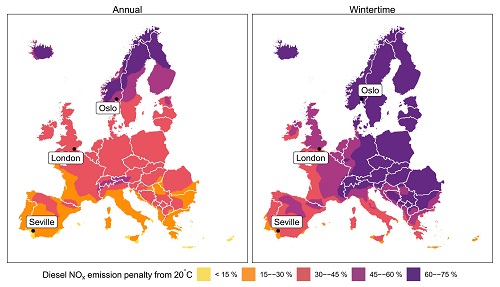
Professor David Carslaw is a leading academic in the Department of Chemistry at the University of York, specializing in urban air pollution, vehicle emissions, and receptor modeling. His research focuses on developing open-source tools (e.g., openair) and applying statistical techniques to quantify emissions and evaluate air quality interventions. Collaborations with institutions like Ricardo Energy & the Environment have advanced understanding of real-world vehicle emissions, particularly regarding NOx, ammonia, and temperature dependencies. His work has exposed critical gaps in national emission inventories and contributed to global air quality policy frameworks. Education details are not explicitly stated in the text, but his professional background indicates advanced academic training in atmospheric chemistry or environmental science. The openair project, funded by NERC, underscores his commitment to democratizing air quality data analysis through software development. Research interests include: (1) Urban air pollution dynamics, (2) Remote sensing of vehicle emissions, (3) Meteorological normalization for time series analysis, and (4) Source apportionment using statistical methods like bivariate polar plots and clustering. His team’s innovations, such as ammonia emission quantification and temperature-dependent NOx emissions, challenge conventional emission assumptions. Recent articles highlight advances in machine learning applications for air quality policy, hydrogen combustion impacts, and indoor-outdoor pollutant linkages. While no scientific awards are listed, his contributions have been widely adopted by the international air quality community. Grant activities include NERC funding for openair. Supervision of PhD students is implied through research group activities, though specific advisee names are not provided. The openair project and vehicle emission studies form core lab activities, supported by partnerships with industry and academic collaborators.
Marc Keuschnigg is a Professor of Sociology at Leipzig University and a Professor at The Institute for Analytical Sociology (IAS) at Linköping University. He holds roles as executive director of Leipzig’s Institute of Sociology and member of the steering group of the Swedish Excellence Center for Computational Social Science. His research focuses on cultural dynamics, social norms, and urban inequality, leveraging computational methods to study public discourse, social influence, and spatial inequality. He leads three research groups at IAS: Text Analysis, Cultural Dynamics, and Spatial Inequality. Recent work includes studies on misinformation propagation, cognitive ability among top earners, and urban scaling laws. Education includes a PhD from LMU Munich (2012) and a habilitation from Linköping University (2018). Awards include the Robert K. Merton Award (2017), Karl Polanyi Prize (2016), and Anatol Rapoport Prize (2014). He has supervised multiple PhD students and secured grants totaling millions in computational social science research. His work is published in journals like Nature Human Behaviour, PNAS, and Science Advances.
Prof. Andrew Martin is a Professor of Energy Technology at KTH Royal Institute of Technology, leading research in sustainable energy systems, biomass, membrane distillation, and polygeneration. He serves as Head of Faculty Renewal at the School of Industrial Engineering and Management (ITM) since 2022, with prior roles including Head of Division (2015–2022) and Director of the Sustainable Energy Engineering MSc Program (2002–2013). His work focuses on applied research addressing large-scale cogeneration and decentralized renewables in rural areas, using experimental, pilot plant, and simulation methods. Education: PhD in Mechanical Engineering (University of Florida, 1997), Docent in Energy Technology (KTH, 2004), Professor (KTH, 2012). Research interests emphasize biomass energy, solar technologies, and water purification via membrane distillation. Over 15 PhD students have graduated under his supervision. Key projects include BRISK2 (H2020) and techno-economic studies in Ghana, Bolivia, and Thailand. His articles explore topics like bioenergy systems, waste-to-energy, and hybrid energy storage. Labs/Teams: Active in the Unit of Heat and Power Technology, collaborating on membrane distillation for industrial wastewater treatment and district heating integration. Engaged in global initiatives like the Sustainable Energy Engineering program and polygeneration plant optimization for dairy farms.
Dr Hazel Dodge is the Louis Claude Purser Associate Professor in Classical Archaeology at Trinity College Dublin's Department of Classics. She holds a Ph.D. from the University of Newcastle upon Tyne and completed a British Academy Post-Doctoral Fellowship at the University of Oxford. Her career includes visiting roles like the Frederic Lindley Morgan Visiting Chair in Architectural Design (University of Louisville, 2013) and two terms as Samuel H. Kress Lecturer for the Archaeological Institute of America. Her research focuses on Roman construction techniques, ancient spectacle infrastructure, and urban development, with particular emphasis on decorative stone usage and entertainment architecture. Education background: BA in Archaeology (Newcastle upon Tyne), advanced research at Oxford through her British Academy Fellowship. Current teaching includes Roman Archaeology, Greek/Roman Art & Architecture, and modules on ancient urbanization/spectacle studies. She supervises research in Roman material culture broadly. Key research themes: 1) Roman decorative stone quarrying/distribution networks, 2) Architectural design of entertainment venues (amphitheaters, circuses), 3) Urbanization processes in Rome and the broader empire. Recent work emphasizes interdisciplinary approaches linking material evidence with socio-political analysis. Awards highlight her contributions: Kress Lectureship (2010-2011, 2018-2019), Oxford fellowship, and Louisville visiting chair. These recognize her expertise in Roman architectural history and public outreach in archaeology. Advising focuses on material culture studies with over 25 years' supervision experience. Active in archaeological fieldwork and international collaborations, though specific grants are not detailed in current text.
Professor Nidal Hilal is a leading academic at New York University Abu Dhabi (NYUAD), serving as the Director of the NYUAD Water Research Center. He holds a faculty position in the Department of Chemical and Biomolecular Engineering. His research focuses on advancing desalination, water treatment technologies, and membrane innovation, with an emphasis on sustainable solutions for water scarcity and environmental challenges. Key research themes include solar-driven membrane distillation, nanomaterial-enhanced membranes, and strategies for brine mining and nutrient recovery. He has pioneered work on feed spacer design, anti-fouling surfaces, and the integration of recycled materials into membrane fabrication. His contributions bridge fundamental material science with practical applications in industrial water treatment and renewable energy sectors. Recent studies highlight advancements in proton-selective membranes for lithium battery waste recovery, ultra-high nitrate-selective materials, and scalable electrodialysis systems. His work frequently addresses global water-energy nexus challenges, advocating for circular economy principles in water management. Notably, Dr. Hilal’s lab explores innovative methods to reduce chemical usage in membrane production, enhance membrane longevity, and apply machine learning for optimizing reverse osmosis systems. His interdisciplinary approach has led to breakthroughs in hydrogen generation via polymeric membranes and the development of electrolytic cleaning systems for fouling mitigation. His leadership at NYUAD’s Water Research Center drives collaborative projects on desalination, wastewater reuse, and nanotechnology applications. While no formal student advisees are listed, his research group likely includes postdocs and graduate students engaged in cutting-edge membrane technology research.
Dr. Tamar Zeilberger is an LSE Fellow in Political Science and Public Policy at the London School of Economics and Political Science, focusing on comparative authoritarian politics, political economy, and contemporary China. Her research employs game theory and observational data analysis to address policy-relevant questions in authoritarian contexts. Education includes: PhD in Political Science, University of California, Los Angeles MA in Social Sciences, University of Chicago Her research integrates methodological innovations in statistics and machine learning to study political uncertainty, elite behavior, and interstate conflict dynamics. Current projects examine leadership transitions in China and robotic fabrication applications. Recent publications explore themes ranging from dispute escalation patterns in authoritarian regimes to cooperative robotics in architectural construction, reflecting interdisciplinary approaches to complex socio-political and technical systems. No scientific awards reported. Teaching responsibilities include graduate courses in Political Science for Public Policy and undergraduate data analysis, with pedagogical tools developed to illustrate probability concepts through simulations.
Owen Embury is a researcher in the Department of Meteorology at the University of Reading, specializing in Earth surface remote sensing and climate science. His work focuses on developing satellite-based datasets for climate applications, particularly sea surface temperature (SST) analysis. He contributes to the European Space Agency’s Climate Change Initiative (SST CCI) and collaborates on projects like the OSTIA system for reprocessing SST data. His research spans over two decades, addressing challenges in satellite data harmonization, cloud detection, and dust-related biases. Key contributions include long-term SST datasets since the 1980s and advancements in thermal infrared radiometry. Embury’s work intersects with global climate monitoring, supporting initiatives like the Copernicus Marine Environment Monitoring Service. Publications emphasize SST validation, Bayesian cloud detection, and multivariate lake monitoring. Collaborations with international teams on projects such as Himawari-8 SST products and GOES-12 sensors highlight his global impact. His research underpins climate models and policy frameworks, reflecting a commitment to advancing Earth observation for scientific and societal benefit.
Christopher Lawrence is Assistant Professor of Science, Technology and International Affairs at Georgetown University's Edmund A. Walsh School of Foreign Service. He holds a PhD in Nuclear Science and Engineering from the University of Michigan and completed postdoctoral fellowships at Stanford’s Center for International Security and Cooperation, Harvard’s Program on Science, Technology and Society, and Princeton’s Program on Science and Global Security. His research focuses on the histories of U.S. nonproliferation engagement with North Korea and Iran, and the role of epistemic communities in shaping nuclear policy knowledge. Technical expertise includes neutron-spectroscopy techniques for nuclear warhead verification, blending scientific methods with policy analysis. Publications span academic journals like International Security and Social Studies of Science , alongside policy analysis for platforms such as the Bulletin of Atomic Scientists . His work bridges nuclear engineering, security studies, and the sociological dynamics of scientific communities. Advising and grants: No formal advisees listed; however, his postdoctoral training involved collaborative research teams across Stanford, Harvard, and Princeton. His technical research contributes to treaty verification methodologies with implications for arms control policy. Lab/Team Affiliations: Formerly affiliated with the University of Michigan’s Nuclear Science and Engineering program, Stanford’s CISAC, and Harvard’s STS program.
Edgar Avalos Gauna is a full-time Lecturer in the Department of Statistics at Rice University, affiliated with the Rice Center for Engineering Leadership. He holds a B.Eng. (2007) from Universidad Tecnológica de México, an M.Sc. in Materials Engineering (2011) from Instituto Politécnico Nacional, and a Ph.D. in Mechanical Engineering (2018) from the University of Liverpool. His research focuses on Machine Learning and AI applications in materials characterization, time series analysis, image/NLP processing, AI ethics, and business decision-making. He has served as Head of Postgraduate Programs for M.Sc. in Data Science and Ph.D. in Artificial Intelligence at Universidad Panamericana since 2021 and is a member of Mexico’s National System of Researchers (SNI), the Mexican Society of Artificial Intelligence (SMIA), and IEEE. Education: Ph.D. Mechanical Engineering, University of Liverpool (2018) M.Sc. Materials Engineering, Instituto Politécnico Nacional (2011) B.Eng. Industrial Engineering, Universidad Tecnológica de México (2007) Research Interests: Edgar’s work integrates interdisciplinary approaches, including ML-driven material behavior prediction, thermal analysis via CFD, and ethical AI frameworks. He collaborates on projects like sentiment analysis for public health (e.g., vaccine perceptions) and tourism analytics using exploratory data methods. Publications: His recent studies highlight trends in applying ML to lubricant film thickness prediction (2024), aerospace thermal management (2021), and social media-driven epidemiological insights (2021). Earlier work includes foundational studies in porous metal heat transfer (2016-2019) and boundary element methods (2012). Awards: Member of Mexico’s National System of Researchers (SNI), a prestigious recognition of scholarly excellence. Advising & Grants: While specific grants are not detailed, his leadership in postgraduate programs and teaching in Data Science and Machine Learning reflects his commitment to education. Resources for his classes are hosted on DataCamp.
Mark Schmeeckle is a Professor at Arizona State University's School of Geographical Sciences and Urban Planning, with an affiliation to the Water Institute. His research focuses on landscape mechanisms, particularly sediment transport and environmental fluid dynamics. He develops advanced numerical models for turbulence in environmental flows, including LES and RANS techniques, to simulate bedload transport and morphodynamics in rivers and aeolian systems. Educated at the University of Colorado-Boulder (Ph.D., 1998), University of Washington-Seattle (M.S. 1992; B.S. 1988), he has led major grants from NSF, USGS, and industry partners. His work integrates experimental and computational approaches to study fluvial processes, turbulence-structure interactions, and sediment dynamics. Courses taught include GIS programming and statistical methods for geography. Key research interests include aeolian and fluvial sediment transport, bedform evolution, and the effects of vegetation on sediment movement. His publications analyze turbulence-driven bedload, riverbank stability, and ancient organism-environment interactions. He has advised numerous projects on Grand Canyon sediment dynamics and coastal aquifer modeling. Recent projects include modeling thermal erosion of lava channels and statistical mechanics of bedload transport. His contributions span environmental engineering, geomorphology, and paleontology, emphasizing interdisciplinary approaches to Earth surface processes.
Matthew Booker is a Professor of History at North Carolina State University, specializing in environmental, agricultural, and food history. He previously served as Vice President for Scholarly Programs at the National Humanities Center (2020-2024). His research explores human-environment interactions in urban and coastal spaces, including projects on transpacific oyster migration and urban food production in the late 19th century. Education: Ph.D. History (Stanford University, 2005), M.S. Environmental Studies (University of Oregon, 1997), B.A. Latin American History (University of California at Berkeley, 1991). Teaching focuses on U.S. environmental history, digital humanities, and interdisciplinary courses like 'Humans and the Environment.' Research interests span global aquaculture, urban ecology, and public history. Notable projects include collaborations with the Rachel Carson Center, San Francisco Exploratorium, and the National Humanities Center. Recent work includes co-editing Food Fights: How the Past Matters to Contemporary Food Debates (2019) and a public science initiative on sourdough microbiology. Awards include the Lonnie and Carol Poole Award for Excellence in Teaching (2009) and the University Faculty Scholar designation (2018). He advises graduate students across disciplines, emphasizing environmental policy, historical methods, and community engagement. Active in professional organizations such as the American Society for Environmental History and the Forest History Society. Advising highlights include guiding over 25 graduate theses/dissertations on topics ranging from agricultural justice to climate adaptation. Collaborative efforts include landscape restoration projects in San Francisco Bay and historical analyses informing climate resilience strategies.
Marya Bazzi is an Honorary Assistant Professor at the University of Warwick. Her research focuses on developing methods for analyzing large time-dependent data, with a primary focus on Network Science. She investigates mesoscale structures in networks such as community detection, core-periphery structures, and multilayer networks, applying these tools to domains like online media, biology, finance, and digital humanities. Her work includes contributions to scalable graph representation learning (Local2Global framework), semantic change detection using the UK Web Archive, and computational journalism. She co-organizes academic initiatives like Data Science for Social Good, Data Study Group, and workshops on media in the digital age. Her research bridges algorithmic development with practical applications, emphasizing interdisciplinary collaboration. Key publications span Machine Learning, Network Science, and Computational Biology, reflecting her expertise in both theoretical frameworks and applied problem-solving. While no awards are explicitly mentioned, her active participation in organizing academic activities demonstrates leadership in fostering collaborative research environments.