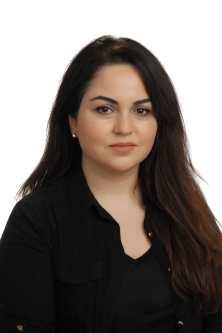
Elfide Gizem KivrakView profile
Assistant Professor
Dr. Elfide Gizem Kivrak serves as an Assistant Professor in the Department of Basic Medical Sciences at Adiyaman University Faculty of Medicine. She completed her academic training at Ondokuz Mayıs University, earning her undergraduate degree in Biology (2007-2011), followed by Master's (2012-2014) and PhD (2014-2019) degrees in Histology and Embryology. Her research expertise spans multiple areas of histological investigation with particular focus on the effects of electromagnetic fields on biological systems, stereological analysis methods, peripheral nerve regeneration, hippocampal studies, and ovarian research. Dr. Kivrak has developed significant expertise in electron microscopy (SEM-TEM) techniques and has published extensively on the protective effects of various compounds including melatonin, omega-3 fatty acids, folic acid, and N-acetylcysteine against environmental and pharmaceutical stressors. Analysis of her publication record reveals a strong emphasis on stereological and histopathological methods applied to rat models, with recent work (2021-2025) showing continued productivity across multiple research areas. Her publications appear in high-impact journals including Journal of Chemical Neuroanatomy, International Journal of Radiation Biology, and Journal of Microscopy and Ultrastructure, demonstrating the interdisciplinary nature of her work bridging histology, neuroscience, and environmental health. Dr. Kivrak is actively involved in multiple research projects investigating protective compounds against various physiological stressors, with current work focusing on natural compounds for tissue healing, gastroprotection, and neuroprotection. She serves as a researcher on several funded projects examining the effects of coconut oil, flaxseed oil, phenylthioisocyanate, and apigenin on various tissue systems. As an educator in the medical faculty, she contributes to teaching foundational histological concepts to medical students while maintaining an active research program that bridges basic science and clinical applications. Her methodological expertise in stereology has led to contributions to scientific literature on quantitative histological analysis techniques.