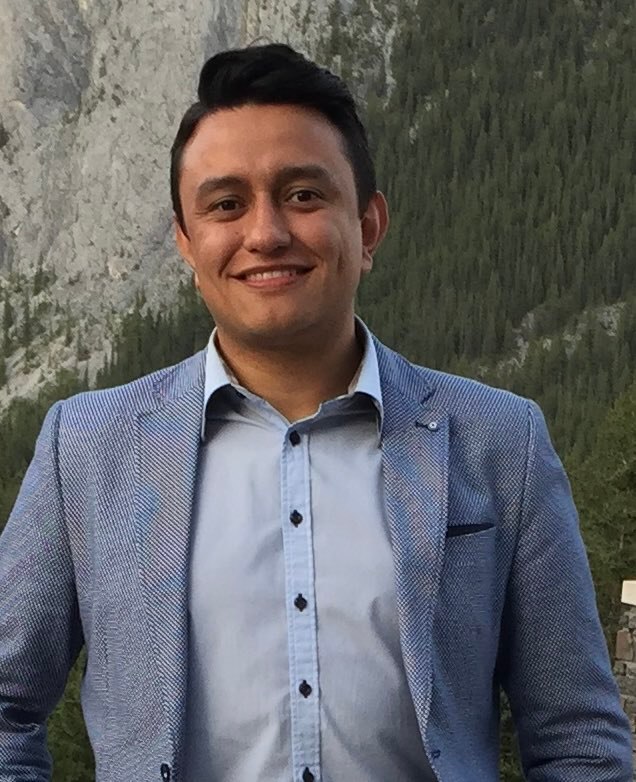
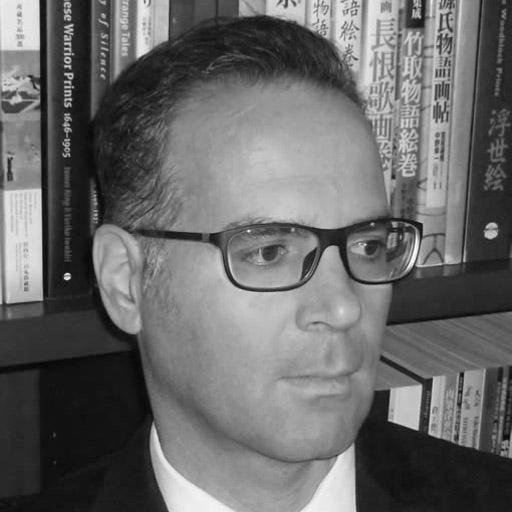
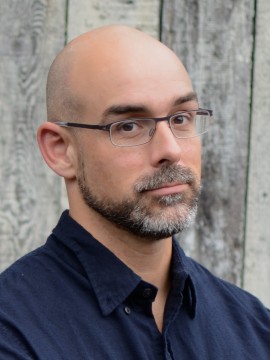
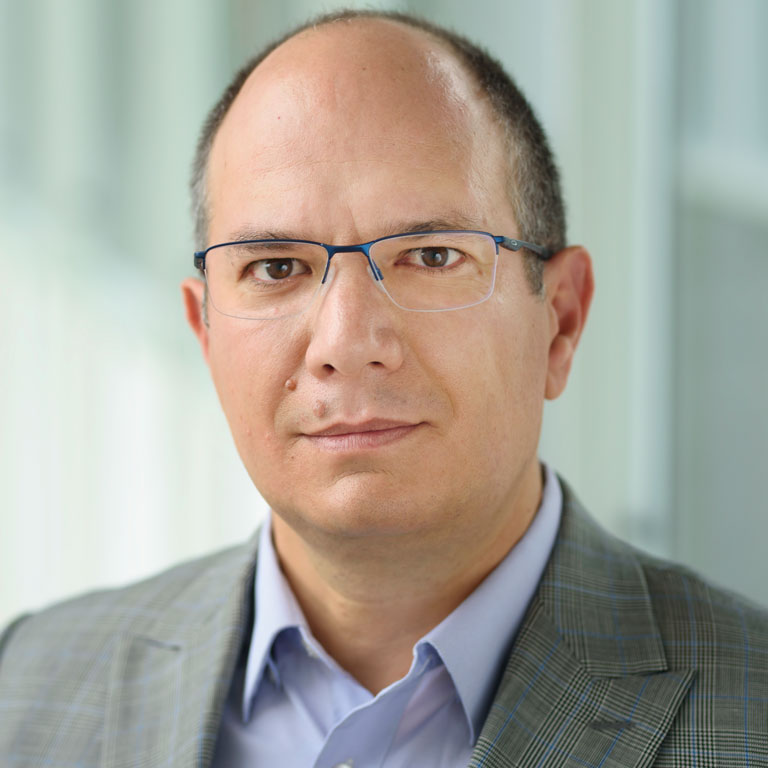
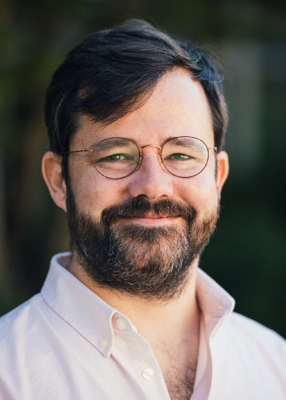
José Eduardo Villalobos Graillet is an Assistant Professor of Spanish at Idaho State University , specializing in Modern Peninsular Literature and Culture with a focus on visual culture (film and television) . He previously held a position as Spanish Instructor at Wilfrid Laurier University in the Department of Languages and Literatures. Research Areas : Spanish Film Studies, Spanish Medieval Literature, Latin American and Caribbean Studies, Teaching Spanish as a Foreign Language, Visual Culture, and Critical Pedagogy. His scholarly work examines film and television adaptations of 'La Celestina' , analyzing censorship dynamics across Francoist Spain, the Democratic Transition, and contemporary Spain. He also contributes to Spanish pedagogy , developing technological tools like Lang-8 for written expression and culturally immersive teaching units on topics such as winter festivals and Caribbean music. His publications span both critical academic analysis and methodological innovations for language instruction. Key Themes in Publications : Adaptation fidelity, political censorship, intercultural pedagogy, and the role of digital platforms in language learning.
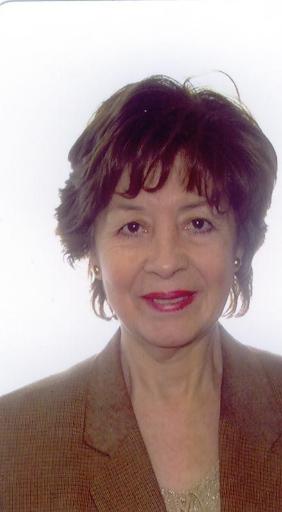
Lady Rojas Benavente is an Associate Professor in the Department of Classics, Modern Languages and Linguistics at Concordia University, where she has been teaching since her appointment as Assistant Professor in 1996, with promotion to Associate Professor in May 2003. Prior to joining Concordia, she served as an Assistant Professor at the University of Ottawa and as a lecturer at the Faculty of Education at The University of Western Ontario, where she taught second language methodology, French and Spanish. Dr. Rojas Benavente received her PhD in Hispanic Literature from the University Laval in 1991, following an MA in Spanish Literatures (Cum Laude, 1985) and BA in History and Spanish (1983), both from the University of Ottawa. She also holds a Diploma qualifying as a Secondary School teacher specializing in Spanish Language and Literature, Psychology and Philosophy from the National Pedagogic University of Women in Lima, Peru (Cum Laude, 1968). Her research focuses on Critical Feminism in Peruvian & Latin-American Women Writers, with special emphasis on contemporary Peruvian and Mexican narrative, drama, poetry and essay. Her work encompasses Cultural Studies and Literary and Critical Theories, Latin American History, Post-colonialism, Human Rights, Women Studies, Feminist Theories, Gender Issues, Latin America Black History, Indigenous and Minorities Studies, and Comparative Studies in Education. She has published nine books (two poetry collections and seven critical interpretations) and over 50 refereed papers in Latin American Women's literary work, particularly focusing on Peruvian and Mexican authors. Dr. Rojas Benavente's scholarly output demonstrates consistent engagement with themes of gender, ethnicity, and power structures in Latin American literature. Her recent publications explore the works of contemporary Peruvian women writers, examining how they address issues of violence, racism, and gender in post-independence national contexts. Her research trajectory reveals a deepening focus on decolonial perspectives, indigenous resistance, and the intersection of gender with other social categories. Hispanic Literary and Cultural Institute's Honor Diploma (2010) Publication Award from the University of New Brunswick for the Anthology, Constructing Memory: Latino-Canadian Women Writers in the New Millennium Recognition by Mouvement Desjardins in celebration of International Women's Day (2008) As president of the Society for Literary Criticism of Spanish American Women Writers' work (CCLEH), Dr. Rojas Benavente has facilitated connections between Concordia colleagues, local artists, international writers, and the Latino-Montreal community. She serves on the editorial boards of Alba de America, a literary magazine from the United States, and Voces, a Peruvian cultural magazine. Her leadership extends to organizing numerous conferences on Latin American women writers across Canada, Latin America, and Montreal, including multiple meetings of Hispano-Canadian Women Writers and events commemorating significant figures in Latin American literature.
Dr. Gaoheng Zhang is an Associate Professor of Italian Studies at the University of British Columbia's Faculty of Arts. His research analyzes cultural mobilities within Italy's and Western Europe's global networks with Asia, America, and Africa, focusing on transculturality and dialogism through multilingual and multisited methodologies. Key Focus Areas: Migration/Postcolonial Studies, Gender and Masculinity, Film/Communication Studies, Italian-Chinese Relations Teaching: Italian Food/Fashion Cultures, Mafia Movies, Pandemic Literature, (Post-)Colonial Cultures His scholarship includes pioneering works on China-Italy cultural exchanges through Mobility, Architecture, Chronotopes (2023), and the upcoming monographs Italian Dumplings and Chinese Pizzas (2025) and Fashion Communications Between Italy and China (2025). He is co-editing The Handbook on Modern China-Italy Relations (2026-2027) with Valentina Pedone. Dr. Zhang's research has received prestigious recognition including: SSHRC Insight Grant (2025-2029) UBC Killam Faculty Research Fellowship (2022-2023) Jean Monnet Fellowship (2022-2023) SSHRC Insight Development Grant (2018-2020) Provost’s Postdoctoral Scholarship at USC (2012-2014) He serves on the executive committee of UBC's Centre for Migration Studies and advisory board of Green College, while maintaining affiliations with the Centre for European Studies and Asian Canadian/Asian Migration Studies program.
Dr. Milan Balaban is a Scientific Researcher-Historian at the Bata Information Centre, Tomas Bata University in Zlin, Czech Republic. Born in Banja Luka, Bosnia and Herzegovina (1981), he holds a PhD from Masaryk University (Czech Republic), where he focused on Yugoslav-Czechoslovak economic relations (1918–1938). His research emphasizes the history of the Bata Company and transnational economic interactions between Central and Southeastern Europe. He has authored over 20 articles and a monograph, The Bata Company in Yugoslavia (2018). Education: Bachelor's at University of Banja Luka; Master's and PhD at Masaryk University (defended 2015). Research interests include industrial heritage, social welfare systems in company towns, and interwar economic dynamics. His recent work explores Bata's global expansion, labor protests in Yugoslavia, and transnational tourism networks between Czechoslovakia and Yugoslavia. He actively participates in international conferences, presenting on topics like urban heritage of Bata company towns and deindustrialization processes.
Tamara L. Mitchell is an Assistant Professor of Spanish at the University of British Columbia, located in Vancouver. She is affiliated with the Department of French, Hispanic and Italian Studies within the Faculty of Arts. Her research focuses on 20th- and 21st-century Latin American literatures and cultures, with a particular emphasis on Mexican and Central American narrative fiction. She explores the intersections of aesthetics, politics, and literary tradition under advanced capitalism, as well as sound studies, political philosophy, and border/diaspora studies. Education: Ph.D., Latin American Literatures, Indiana University (2019) M.A., Spanish Literature, University of Kansas (2009) B.A., English Literature and Spanish, Washburn University (2006) Research Interests: Her work examines postnational literary forms in the neoliberal present, with current projects including a monograph on Novel Distortions: Postnational Form in Mexican and Central American Narrative and a second project on sound and extraction in Mexican literature. She co-edited a special issue on 'Latin American Literary Aurality' and has been commissioned to write a thematic review on Latin American sound studies. Awards and Grants: SSHRC Insight Grant (2024–2029) Dean of Arts Graduate Mentorship Award (2023) Hampton New Faculty Research Grant (UBC) Multiple SSHRC and travel grants Teaching and Mentorship: She teaches courses on Latin American literatures and cultures, and has mentored undergraduate and graduate researchers. Currently not accepting new graduate students. Labs/Teams: Organized conferences and workshops, including The Sounds of Latin American Literature (2022) and co-founded panels on sound studies and Latin American literature at international conferences.
Jonathan Edmondson is Distinguished Research Professor in the Departments of History and Humanities at York University's Faculty of Liberal Arts & Professional Studies. His research focuses on Roman history, epigraphy, and cultural interactions in the Iberian Peninsula, particularly in Lusitania. He co-directs the ADOPIA project, a digital atlas of personal names from Roman Spain. Education includes: Ph.D. in Classics (Ancient History), Cambridge University M.A. in Classics, Cambridge University B.A. in Classics, Cambridge University Research interests span Roman Spain's society and economy, gladiatorial spectacles, the Roman family, and the historiography of Cassius Dio. His work employs epigraphic analysis and digital methods to explore cultural identity in provincial contexts. Recent publications demonstrate sustained focus on Lusitanian onomastics, epigraphic habits, and imperial cults. Articles utilize digital humanities approaches to reconstruct social structures and cultural dynamics in Roman colonies like Augusta Emerita. Awards and honors: Corresponding Member, Real Academia de la Historia (2002) Fellow, Royal Historical Society (2009) Genio Protector de la Colonia Augusta Emerita (2011) Award of Merit, Classical Association of Canada (2014) Dean’s Research Award, York University (2016) Distinguished Research Professor (2017) Edmondson mentors graduate students and leads international collaborations, including the CIL II Mérida inscriptions project. As co-director of ADOPIA, he oversees digital mapping of anthroponymic patterns to analyze cultural change in Roman Spain.
Anna Casas Aguilar is Associate Professor of Spanish at UBC, researching gender and cultural studies in contemporary Spain. Her SSHRC-funded project examines tourism's influence on Spanish gender identities since 1960. Her monograph Bilingual Legacies (2022) analyzes father figures in Barcelona's autobiographical literature during Franco's dictatorship. Research spans cinema, photography and material culture, employing feminist and psychoanalytic frameworks. Honors include: SSHRC Insight Grant (2023-2026) Wall Scholar Fellowship (2018-2019)
Professor Jose Jouve-Martin is a faculty member in the Department of Hispanic Studies at McGill University. His research focuses on the intersection of history and literature in colonial Latin America, particularly exploring themes of slavery, literacy, and colonialism. He has held significant academic roles including Director of Undergraduate Programs in Hispanic Studies and has been funded by major grants such as SSHRC and FQRSC. His work spans monographs, peer-reviewed articles, and edited volumes, with notable publications like Esclavos de la ciudad letrada (2005). He teaches graduate and undergraduate courses on colonial literature, the baroque, and Afro-Hispanic studies. Education: Ph.D. in Hispanic Literature, Georgetown University (2003) Licenciatura in Philosophy, Universidad Autónoma de Madrid (1994) His research interests include the cultural history of opera, funerary rituals in the Spanish Empire, and the role of writing among enslaved populations. He has advised numerous graduate and undergraduate students on topics ranging from colonial drama to modern Latin American literature. His international collaborations include membership in the MCRI 'The Hispanic Baroque' and Brown University's research groups. Prof. Jouve-Martin’s scholarly contributions have been recognized with awards such as an honorable mention for the Franklin Pease G.Y. Memorial Prize (2007). He actively participates in academic service roles, including editorial boards for Revista Canadiense de Estudios Hispánicos and Latin American Research Review .
Lorenzo DiTommaso serves as Professor in the Department of Religions and Cultures at Concordia University, Montreal, where he has progressed from Assistant Professor (2004) to full Professor (2013), including service as Department Chair. His academic home encompasses Jewish Studies and Christianity programs, with biennial teaching of the graduate religion and popular culture seminar. Ph.D. in Religious Studies, McMaster University (2002) Postdoctoral Fellow, Yale University Divinity School (2001-03) NEH Postdoctoral Fellow, Center for Medieval and Renaissance Studies, Saint Louis University (2003-04) DiTommaso's research constitutes a comprehensive exploration of apocalyptic speculation across temporal and cultural boundaries, from ancient Near Eastern traditions to contemporary digital media. His work uniquely bridges textual scholarship on biblical apocrypha and medieval manuscripts with cutting-edge analysis of apocalyptic expression in video games, anime, and popular music. The intellectual scope spans apocalyptic historiography , manuscript studies , apocalyptic and millenarian movements , and religion in contemporary media , with distinctive expertise in Japanese cultural intersections. His methodological approach combines rigorous textual analysis with interdisciplinary cultural theory, particularly examining how apocalyptic frameworks shape human responses to crisis across historical periods. Analysis of his recent publications reveals a pronounced shift toward contemporary apocalyptic manifestations, with nearly half of his 2021-2024 output focusing on digital media, video games, and modern cultural phenomena. Simultaneously, he maintains deep engagement with medieval manuscript traditions and early Jewish-Christian apocalyptic literature, demonstrating remarkable versatility across historical periods. The thematic through-line remains apocalyptic determinism versus human agency , examined through diverse lenses from ancient prophecy to interactive gaming environments. Bibliographical Society of America - Pine Tree Foundation Fellowship in Hispanic Bibliography (2019) Nicky Carpenter Fellow in Manuscript Studies Marilyn Hollinshead Visiting Scholar (2023) Research Fellow at Herzog August Bibliothek (2024) DiTommaso has supervised over 20 graduate students since 2019 across diverse apocalyptic topics including disability studies in biblical interpretation, Satanism in virtual communities, and environmental apocalypse in radical movements. His research has been continuously supported by four major SSHRC grants (2004-07, 2007-11, 2011-16, 2018-24), supplemented by specialized fellowships at premier manuscript repositories including the Vatican Film Library, Herzog August Bibliothek, and special collections at Michigan State and Minnesota universities. He co-organizes the biennial 'Through a Glass Darkly' Symposium on Apocalyptic with Colin McAllister, now in its eighth year, rotating between Colorado Springs and Montreal. The 'Through a Glass Darkly' symposium serves as his primary collaborative platform, fostering international scholarly exchange on apocalyptic themes. He maintains active research partnerships with institutions including the Enoch Seminar and Azrieli Institute for Israel Studies, while leveraging special collections access at major libraries for manuscript-based projects. Current work on apocalyptic comic art involves collaboration with special collections at Michigan State and Minnesota universities, demonstrating his commitment to bridging traditional textual scholarship with contemporary cultural analysis.
Joël Castonguay-Bélanger is an Associate Professor of French at the University of British Columbia, affiliated with the Faculty of Arts and the Department of French, Hispanic and Italian Studies. He joined UBC in 2009 after a postdoctoral fellowship at Stanford University, following a joint PhD from Université de Montréal and Université Paris IV-Sorbonne (2007) and an MA from McGill University (2002). His research focuses on 18th-century French literature, the intersection of literary and scientific discourses, the Enlightenment, and Québec literature. He is an associate member of the Centre de Recherche Interuniversitaire en Sociocritique des Textes (CRIST). Castonguay-Bélanger has published extensively in journals such as Études françaises , Papers on French Seventeenth Century Literature , and Eighteenth-Century Fiction , as well as edited volumes. His 2008 monograph Les écarts de l’imagination examines scientific representations in 18th-century novels. He co-edited Voltaire à la radio canadienne (2013) and served as co-editor of Lumen (2017). Current projects include a critical edition of Louis-Guillaume de La Folie’s Le Philosophe sans prétention and a study of Louis-Sébastien Mercier’s anti-Newtonian writings. His teaching focuses on French language and literature, including courses like FREN 101 and FREN 102 at UBC. His work bridges literary analysis with historical context, emphasizing how scientific ideas shaped cultural narratives during the Enlightenment. He received the Peter Wall Institute Early Career Scholar award (2010), reflecting his contributions to interdisciplinary scholarship.
Luis Felipe Cisneros Martinez is a Professor at HEC Montréal’s Department of Entrepreneurship and Innovation. He also serves as Director of the Institut d'entrepreneuriat Banque Nationale and Scientific Director of the Pôle Entrepreneuriat/Repreneuriat/Familles en Affaires. His expertise spans family business dynamics, entrepreneurship, and small business management. Education: M.Sc. (Administration) from Universidad Autónoma de Aguascalientes, DEA (Systèmes Comptables d’Information) from Université Paris IX–Dauphine, and a Doctorat ès sciences (gestion) from HEC Paris. Research focuses on family business succession, entrepreneurial resilience, and innovation in SMEs. Notable contributions include studies on socioemotional wealth (SEW) across borders, crisis management in family firms, and gender dynamics in entrepreneurship. Over 15 recent articles highlight his work in journals like Journal of Family Business Strategy and Entrepreneurship & Regional Development . Received recognition as one of the TLN 10 Most Influential Hispanic Canadians 2023 . Supervised master’s theses on family succession and women entrepreneurs’ performance, alongside project supervision on innovation strategies and immigrant entrepreneur support systems. Leadership roles include directing research initiatives on family business governance and entrepreneurship education, contributing to policy recommendations for sustainable firm development.
Bradley J. Nelson is a Professor of Spanish and Chair of the Department of Classics, Modern Languages and Linguistics at Concordia University. He has held various academic leadership roles, including Acting Vice-Dean of the Faculty of Arts and Science and Associate Dean in the School of Graduate Studies. His research focuses on Early Modern Spanish literature, with an emphasis on Baroque aesthetics, science fiction, disinformation pedagogy, and cognitive approaches to empathy. He has authored or co-edited over 20 books and numerous articles in top journals. Education: Ph.D. in Hispanic and Luso-Brazilian Literatures and Linguistics, University of Minnesota (2000) MA in Hispanic Literatures, University of Minnesota (1995) BS in Secondary Education and Spanish, St. Cloud State University (1987) BA in English (Spanish minor), St. Johns University (1985) Research Interests: Prof. Nelson explores the intersection of science and culture in early modern Spain, extremism and disinformation, Baroque and neo-Baroque visual/social media, sexual violence in Baroque literature, and pedagogical responses to hate speech. His work bridges historical and modern contexts, often employing interdisciplinary methods. Key Projects: Current initiatives include SSHRC-funded research on disinformation pedagogy and the 'Estranged Epistemologies' project linking Baroque science to modern sci-fi. He co-founded the Cervantes Public Project to democratize literary dialogue. Grants & Awards: Over $4M in external funding, including SSHRC grants, FRQSC support, and international collaborations. Teaching: Courses on Don Quixote, Hispanic science fiction, and medieval literature. Service: Leadership roles in academic associations, editorial boards, and community initiatives (e.g., Quebec’s Bill 21 discourse).
Patrick Moran is an Associate Professor of French in the Department of French, Hispanic & Italian Studies at the University of British Columbia's Faculty of Arts. He joined UBC in 2018 after teaching positions at Université Paris-Sorbonne, Université Lyon 2, Université Montpellier 3, McMaster University, University of Ottawa, and Université Laval. Moran holds a PhD from Université Paris-Sorbonne and is an alumnus of the École Normale Supérieure (Paris). Moran specializes in medieval French literature with particular focus on Arthurian romance from the 12th and 13th centuries. His research uniquely bridges literary theory—especially reader-response theory, narrative theory, and cognitive poetics—with material philology and codicology. He has also published significant research on fantasy fiction and modern medievalism, while himself being an author of two fantasy novels and multiple science fiction short stories. His scholarly work examines medieval narrative genres, manuscript studies, and the intersection between theoretical approaches and textual materiality. Moran's research output shows a clear trajectory from his doctoral work on inter-romanesque networks in Grail cycles to broader investigations of genre theory, narrative structure, and the reception of medieval literature. His 2019 Cambridge University Press monograph The Canons of Fantasy: Lands of High Adventure represents a significant expansion of his scholarly interests into fantasy literature studies. His recent publications increasingly explore the connections between medieval narrative techniques and contemporary interactive media. SSHRC Insight Development Grant (2019-2022): Literary Genre in the French-Speaking Middle Ages: From Manuscript Studies to Cognitive Theory UBC Public Humanities Hub Project (2020): Tracing the Scribe: Reassessing Professional Networks in the Paris Book Trade (collaborative project) Moran maintains an active research agenda with publications spanning medieval French literature, Arthurian studies, narrative theory, and fantasy literature. His work demonstrates how medieval textual practices continue to inform contemporary narrative forms, from traditional scholarship to digital media and interactive fiction.
Carolina Sá Carvalho is an Associate Professor in the Department of Spanish and Portuguese at the University of Toronto's Faculty of Arts & Science, where she specializes in modern and contemporary Hispanic literatures and cultures, with a focus on Brazil and Latin America. Her research intersects photography, film, media, environmental humanities, and critical theory. Education: PhD, Princeton University MA, Princeton University MA, Universidade Federal do Rio de Janeiro BA, Universidade Federal do Rio de Janeiro Her research centers on the aesthetics and politics of visual culture in Latin America, particularly how photography has documented violence and modernization in the Amazon and beyond. She explores how images are framed, circulated, and interpreted within capitalist and colonial contexts. Her work also extends into environmental humanities, infrastructure, and multispecies relations, as seen in her current project on mosquitoes and contagion in 20th and 21st-century Brazil. She teaches courses on Luso-Afro-Brazilian arts, film, literature, and cultures, including graduate seminars on Latin American visual culture and the politics of dwelling and contagion. The article Traces of the Unseen (2023) exemplifies her interdisciplinary approach, combining formal image analysis with cultural theory to examine photography’s role in shaping public understanding of modernization and violence. Her work spans literary studies, visual culture, and critical theory, emphasizing coloniality, extractivism, and the politics of representation. Scientific Awards: She has advised graduate students and taught advanced seminars, contributing significantly to Latin American cultural studies. Though specific grants are not listed, her monograph publication and ongoing research suggest sustained scholarly support. She previously served on the faculty at the University of North Carolina at Chapel Hill before joining the University of Toronto. Her research is conducted within the broader academic ecosystem of the Department of Spanish and Portuguese, where she contributes to interdisciplinary programs in Latin American studies, visual culture, and environmental humanities.
Elizabeth Lagresa-Gonzalez is an Assistant Professor of Spanish and Associate Head of Romance Studies in the Department of French, Hispanic and Italian Studies at the University of British Columbia's Faculty of Arts. She also holds multiple interdisciplinary affiliations including as Faculty Associate at the Institute for Gender, Race, Sexuality and Social Justice (2020-2023), Affiliated Faculty at the Centre for European Studies (2022-present), and Faculty Associate at the Global Premodern Research Cluster (2019-present). Her research focuses on early modern Spanish literature and culture at the intersection of gender, visual, cross-cultural and material studies. She specializes in early modern literature and culture, theater, visual and material culture, queer and gender studies, and cross-cultural comparative approaches. Her current research project, funded by an SSHRC Insight Development Grant (2022-2025), examines 'Re-Imagining the Spanish Novella: Cross-Cultural Encounters in Early Modern Fiction by Women (1635-1700).' Dr. Lagresa-Gonzalez's scholarly output reveals a consistent focus on early modern Spanish literary production with particular attention to gender dynamics, visual representation, and cross-cultural exchange. Her work often examines how literary texts negotiate power structures, gender identities, and cultural boundaries in the early modern period. SSHRC Insight Development Grant (2022-2026) Hampton Fund Research Grant UBC (2020-2022) Harvard Teaching Prize (2017) Harvard University Certificate of Distinction in Teaching (2012, 2014, 2016) UBC Green College Leading Scholar (2019-2021) She has received significant research funding including a $50k SSHRC Insight Development Grant for her project on early modern Spanish fiction by women, $79k as co-applicant for UBC PhD CoLab, and multiple smaller grants supporting her scholarly publications and conference travel. Dr. Lagresa-Gonzalez is currently accepting graduate students for supervision and has been recognized for her teaching excellence both at Harvard and UBC.