University of North Carolina at Chapel HillUnited States
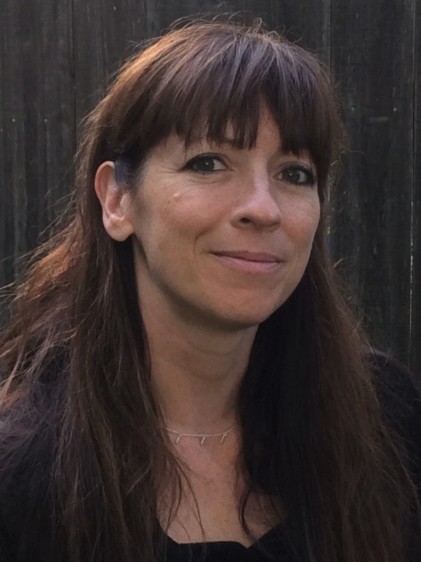
Lucia Binotti is a Professor of Spanish and Digital Humanities at the University of North Carolina at Chapel Hill (UNC-CH), with dual affiliations in the Department of Romance Studies and interdisciplinary Digital Humanities initiatives. She serves as Graduate Advisor for Hispanic Linguistics and Director of the Honors Study Abroad Program in Rome. Her work bridges traditional philology with cutting-edge digital scholarship, emphasizing immersive learning experiences through virtual reality (VR) and augmented reality (AR) technologies. Binotti holds a Ph.D. from UC Santa Barbara (1990), an MA (1985), and a BA (1984) in Romance Philology from the Università degli Studi di Pisa. Her research focuses on linguistic identity, cultural heritage preservation, and innovative educational platforms like Amirabilia—the world’s first experiential learning platform. Notable projects include nXimena (healthcare training for Latinx abuse survivors) and Entiendelo (a linguistic/cultural navigation app for Latinx communities). Her scholarly interests span Early Modern Spanish literature, digital humanities applications, and the intersection of technology with social justice. She has directed grants totaling over $500K for projects involving AR/VR integration in education, including collaborations with the UNC Health Science Library and NCSU’s DELTA initiative. Recent awards include the John K. Walsh Award (2010) and Digital Innovation Fellow status (2014). Grants & Leadership: CFE-Lenovo Technology Grants (2018–2019) for AR/VR expansion iLRN 2020 International Co-Chair XR Faculty Learning Community Leader (UNC) Teaching: Courses span from introductory Hispanic literature to advanced topics like medieval intellectual history and digital humanities methodologies. Binotti’s work emphasizes ‘place, presence, and perspective’ in Cyber-Humanities education, particularly addressing marginalized communities through technology-driven solutions.
Jaime Rodriguez Matos is an Assistant Professor in the Department of Modern and Classical Languages and Literatures at California State University, Fresno, where he has been employed since 2018. His academic career includes prior roles as Lecturer at Fresno State (2016-2018) and Assistant Professor at the University of Michigan (2007-2016). Education: Ph.D., Spanish and Portuguese, Columbia University M.Phil., Spanish and Portuguese, Columbia University M.A., Spanish and Portuguese, Columbia University B.A., Spanish Language and Literature, University of New Hampshire Rodriguez Matos specializes in Latin American poetry, nihilism, infrapolitics, and temporal theory. His work interrogates the intersections of philosophy and literary form, particularly focusing on the deconstruction of time in works by José Lezama Lima, Eduardo Lalo, and Álvaro García Linera. Current research explores neo-revolutionary rhetoric and anarchic political thought in Latin America. His published and forthcoming articles address themes such as Lacanian critiques of hegemony, the ontologies of the present, and the formless in Caribbean politics. Rodriguez Matos has presented at international conferences including the Latin American Studies Association and the University of California, Irvine Humanities Commons cluster. Selected Publications: Writing of the Formless: José Lezama Lima and the End of Time (Fordham University Press, 2017)
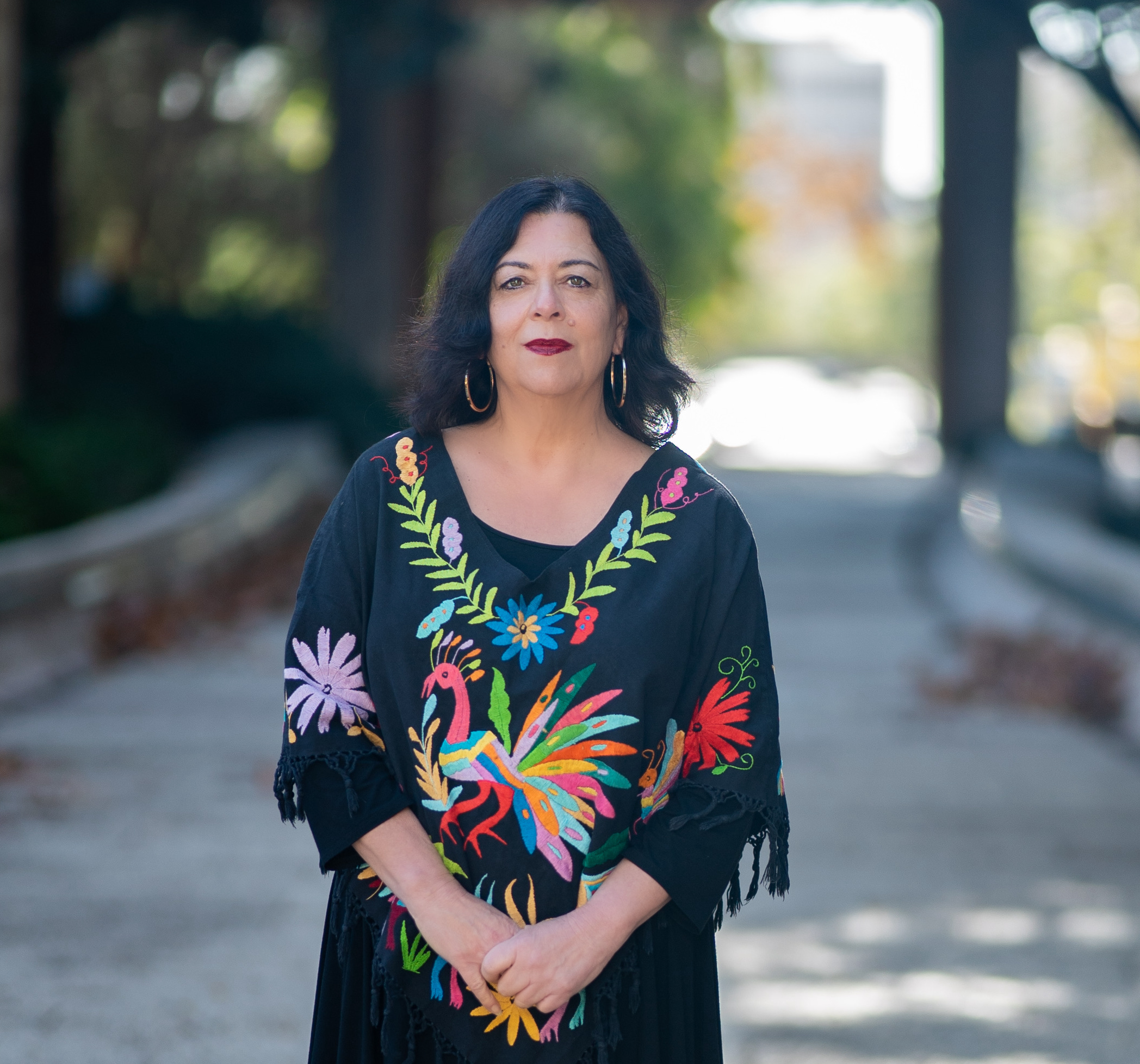
Alessandra Russo is Professor and Chair of the Department of Latin American and Iberian Cultures and Director of the Hispanic Institute at Columbia University. She specializes in the theory, practice, and display of early modern arts with a special emphasis on artistic dynamics within the context of Iberian colonization. Her work bridges art history, historical anthropology, and global studies, exploring how artifacts encountered and collected during Iberian expansion influenced the development of modern art concepts. Professor Russo received her training in art history and historical anthropology at the Universitá di Bologna, the Universiteit Leiden, and the École des Hautes Études en Sciences Sociales in Paris. She has been a fellow at the Wissenschaftskolleg-Institute for Advanced Study in Berlin and has held visiting positions at ESBA of Genève, the Institut National d'Histoire de l'Art, and the École des Hautes Études en Sciences Sociales where she is an associate member of the Centre de recherches sur les mondes Américains (CERMA). Her research focuses on the intersection of art, knowledge, and power in the early modern period, particularly examining how the encounter between European and Indigenous artistic practices transformed understandings of art globally. Russo investigates how artifacts from the Americas, Africa, and Asia collected during Iberian expansion contributed to reshaping European artistic concepts, challenging traditional narratives of art history that position Europe as the sole origin of modern art. She explores the role of multilingual dialogues, material exchanges, and visual translations in creating new artistic universes that were neither purely European nor Indigenous but emerged from their encounter. Professor Russo's publications reveal consistent engagement with global art history, transcultural studies, and the materiality of artistic production. Her work spans diverse topics including feather art, cartography, museum studies, and the theoretical frameworks that shaped artistic production across the Iberian world. A recurring theme is the examination of how objects and images traveled across continents, acquiring new meanings while retaining connections to their places of origin. Her research demonstrates how early modern artistic practices were fundamentally shaped by global encounters rather than developing in isolated national or regional contexts. Eleanor Tufts Award of the Society of Iberian and Latin American Art (SIGA) for A New Antiquity: Art and Humanity as Universal (1400-1600) Best book award in "theory of art" for Images Take Flight Grand Prix du Jury at FILAF for Images Take Flight ALAA Book Award Honorable Mention for Images Take Flight Professor Russo has advised numerous doctoral students at Columbia University whose work explores global art history, colonial Latin America, and Indigenous artistic practices. She leads the research group "Spanish Italy and Iberian Americas," which has received funding from the Getty Foundation for its work on artistic interactions between Spanish Italy and the Iberian Americas in the 16th century. This project has brought together scholars from Italy and Latin America to study artistic connections between these regions, resulting in workshops, symposia, and digital publications that document objects, monuments, maps, and prints. As a member of the Museum Advisory Committee at the Metropolitan Museum of Art, Professor Russo contributes to the reinstallation of galleries including the Gallery of Central Europe and the Gallery of Northern Renaissance. Her curatorial work includes the exhibition "El vuelo de las imágenes. Arte plumario en México y Europa. 1300-1700" at the Museo Nacional de Arte and collaboration on "Planète Métisse" at the Musée du Quai Branly in Paris. She is currently developing an exhibition project "Sebastiano, il Custode del Mondo. Universi artistici a Bologna nel Seicento" alongside her book manuscript on Sebastiano Biavati, the custodian of Ferdinando Cospi's art collections in seventeenth-century Bologna.
Jorge Cañizares-Esguerra is a Professor and Alice Drysdale Sheffield Professor of History at the University of Texas at Austin's College of Liberal Arts. His work fundamentally recontextualizes Latin America's role in shaping Western modernity through historical analysis of science, abolitionism, and democratic thought. Education: PhD from University of Wisconsin His research interrogates historiographical categories like the Enlightenment, Scientific Revolution, and Atlantic Age of Revolutions that have obscured Latin America's contributions to modernity. He demonstrates how manuscript petitions, not print culture, drove knowledge production and how colonial scribal practices created alternative cosmopolitanisms. Recent publications include Categories as Prisons (University Pennsylvania Press) challenging Atlantic historiography, and The Radical Spanish Empire (Harvard University Press) co-authored with Adrian Masters, which reclaims Spanish America's role in anti-slavery movements and systematic skepticism. His work appears in Cambridge Companion to Latin American Independence and New World Objects of Knowledge series. Teaching includes courses on Colonial Latin America (LAS 366), Atlantic History (HIS 383M), and Urban Slavery (HIS 347N). He has extensive editorial experience co-editing Princeton Handbook of Atlantic History and Jesuit-Protestant Encounters series.
Cristina Ortiz Ceberio serves as a Professor in the Department of Humanistic Studies within the College of Arts, Humanities and Social Sciences at the University of Wisconsin-Green Bay. Her academic profile spans interdisciplinary teaching in contemporary culture, Spanish language instruction, and Spanish-language literature courses. Her educational foundation includes: Bachelor's Degree in Humanities from the University of the Basque Country (San Sebastián) PhD in Romance Languages and Literatures from the University of Cincinnati (Ohio, USA) Ortiz Ceberio's research centers on gender dynamics in Hispanic contexts with specialized focus on Basque cultural production. She examines artistic representations of violence through feminist lenses, particularly analyzing how Basque women process political conflict through literature and cinema. Her scholarly work bridges literary criticism, film studies, and critical theory while maintaining strong regional expertise in Iberian and Latin American cultural studies. Analysis of her publication trajectory reveals persistent engagement with memory politics, gendered violence, and cultural identity across diverse media forms. Her work consistently connects historical contexts with contemporary socio-political issues, demonstrating methodological versatility through analyses of diaries, films, literary texts, and cultural spaces like the Basque pelota court. Scientific awards: No awards documented in source materials Regarding academic mentoring and research funding, available documentation provides no specifics about graduate students or grant-supported projects. Her professional activities appear centered on independent scholarship and classroom instruction within the humanities curriculum. No institutional research facilities, laboratories, or collaborative teams were referenced in the source documentation.
Ananda Cohen-Aponte is an Associate Professor of History of Art at Cornell University , affiliated with the Archaeology Program , Latina/o Studies Program , and the College of Arts and Sciences . She earned her Ph.D. from the CUNY Graduate Center and a B.A. from the University of Michigan–Ann Arbor . Her research focuses on the visual culture of pre-Hispanic and colonial Latin America , particularly the Andes , examining racial formation , cross-cultural exchange , and legacies of colonialism in contemporary Latinx art . Her current book project, Insurgent Imaginaries: The Art of Rebellion in the Colonial Andes , analyzes visual culture’s role in Indigenous and Afrodescendant resistance against Spanish colonialism. She has published extensively in journals like Colonial Latin American Review , The Americas , RES: Anthropology and Aesthetics , and Latin American and Latinx Visual Culture , with her work appearing in edited volumes from Brill , Pontificia Universidad Católica del Perú , and Haynanka Ediciones . Notable awards include the Association for Latin American Art (ALAA) Article Prize (2017) for 'Decolonizing the Global Renaissance,' an Honorable Mention for the Franklin Pease G.Y. Memorial Prize (2013–2014) , and the 2019 Robert A. and Donna B. Paul Academic Advising Award . She co-authored the influential 'A Call to Action' (2019) in Art Journal and co-edited the Latin American and Latinx Visual Culture dossier on diversity in art history. A cross-disciplinary researcher, she collaborates with Dr. Ella Maria Diaz, Dr. Jolene Rickard, and artist Sandy Rodriguez on projects like From Invasive Others Toward Embracing Each Other , exploring hemispheric art-ecology-migration intersections . Funded by Global Cornell and the Mellon Foundation's Just Futures Initiative , this project creates immersive learning environments for BIPOC student recruitment and place-based knowledge . She served a nine-year term as President of the Association for Latin American Art , shaping disciplinary diversity initiatives.
Noémie Ndiaye serves as Associate Professor of Renaissance and Early Modern English Literature in the Department of English Language and Literature at the University of Chicago. Her research sits at the intersection of early modern literary studies, critical race studies, theater and performance studies, and comparative literature, with specific focus on racial, gender, and identity formation processes. She has taught at UChicago since 2019 after earning her PhD from Columbia University in 2017 (with prior studies at École Normale Supérieure, Paris). Her research interests revolve around theatrical representations of race across early modern Western Europe, particularly examining how performance culture transformed blackness into a racial category. She employs transnational, comparative, and transhistorical frameworks to analyze racialization through cosmetic, vocal, and kinetic techniques of impersonation. Additional research threads include visual culture, gender and sexuality studies, translation practices, and the intersections of race with capitalism and globalization in early modern contexts. Ndiaye's publications reveal consistent focus on racial triangulation and transnational performance networks , with recent work expanding beyond Blackness to examine representations of Muslim, Jewish, Indigenous, Romani, and Asian characters in European theater. Her scholarship demonstrates methodological innovation through contrapuntal theater history and visual culture analysis, often connecting early modern racial formations to contemporary structures of white supremacy. 2023 Bevington Award from the Medieval and Renaissance Drama Society 2023 Rose Mary Crawshay Prize from The British Academy 2023 Shakespeare’s Globe Book Award 2024 PROSE Award for Art Exhibitions 2022-2023 William Nelson Prize for best article in Renaissance Quarterly Ndiaye actively collaborates with visual artists and theater makers through UChicago's Black Baroque programming and co-curated the 'Seeing Race Before Race' exhibition at the Newberry Library. Her teaching spans undergraduate courses on Black Shakespeare, representations of Islam in early modern England, and graduate seminars in Early Modern Critical Race Studies, emphasizing intersectional trans-inclusive feminism and transnational approaches.
John Slater is a Professor in the Department of Languages, Literatures and Cultures at Colorado State University, specializing in Early Modern Hispanic Literatures, History of Science, and History of Medicine. His research focuses on knowledge production in 17th-century Spain, particularly how literature disseminated ideas about health and healing. He examines print genres like sermons and drama as vehicles for scientific and medical discourse, highlighting conflicts between religious and medical practices. Slater joined CSU in 2020 after roles at UC Davis, University of Colorado, and Indiana University. He holds a PhD from Brandeis University and a BA from Earlham College. His research explores Jesuit and Franciscan healing practices, their impact on medical reforms, and intersections between literature and science. Awards include the 2023 Interdisciplinary Scholarship Award and 2025 Excellence in Teaching Award (CLA). Key publications analyze alchemy in sermons, venereal disease in Baroque Spain, and transatlantic medicinal plant trade. His edited works include studies on Cervantes and medical drama. Slater’s pedagogical contributions include annotated editions of works by Lope de Vega, Juana Inés de la Cruz, and María de Zayas. He has been honored for innovative mentorship models and career advising. His interdisciplinary approach bridges literary analysis with historical, scientific, and cultural studies, emphasizing early modern Spain’s intellectual networks and global exchanges.
Paul Firbas is an Associate Professor in the Department of Hispanic Languages and Literature at Stony Brook University, with affiliations in the Department of History. He holds a Ph.D. from Princeton University (2001), an M.A. from the University of Notre Dame (1995), and a B.A. from Universidad Católica del Perú (1992). Previously, he was an Assistant Professor at Princeton University (2001-2007) and a Visiting Professor at Columbia University (Spring 2007). Education: Ph.D., Princeton University, 2001; M.A., University of Notre Dame, 1995; B.A., Universidad Católica del Perú, 1992 His research focuses on Epic Poetry , Colonial Latin American Literature , Textual Criticism , Colonial Geopolitics , and Digital Humanities . He has extensively studied Spanish-American texts from the colonial period, particularly those discussing transatlantic South America's geography, information circulation, and moral geography. His work bridges literary analysis with historical documentation, emphasizing the role of epic poetry in shaping colonial identity. Recent publications include a 2025 digital humanities project on Magellanic route information flows, the 2023 two-volume edition of Lima's early news-sheets, and critical studies on 18th-century Lima's satire (2009), 16th-17th century Peruvian poetry (2019), and 2006 critical edition of 'Armas antárticas' . These works highlight transatlantic networks, geopolitical shifts, and literary responses to colonial crises. He has co-edited multiple volumes, including 'La biblioteca del Inca Garcilaso' (2016) and 'La forma inicial' (2015), a conversation book with Ricardo Piglia. His research also intersects with documentary film studies, as seen in 'Conversaciones en Princeton' (1998), co-edited with Pedro Meira Monteiro.
Lena Retamoso Urbano is a poet and scholar currently serving as a Visiting Assistant Professor of Spanish at Bennington College since Fall 2021. She earned her PhD in Latin American, Iberian, and Latino Cultures from The Graduate Center of CUNY . Research Focus : 20th/21st century Latin American and Spanish poetry, transnational surrealism, queer theory, avant-garde movements, and transatlantic cultural connections Creative Output : Three poetry collections ( Light of Debris , Miracles of Absence , Blank is the Dream of the Night ) Her academic work explores intertextuality and the poetics of Eros, with publications on Garcilaso de la Vega, Blanca Varela, César Moro, and Luis Cernuda. Her article Sacralizing the Ephemeral (under contract with Vernon Press) examines the dialectic between lovers and the beloved in Cernuda and Moro. She received the NeMLA Creative Writing Award (2022) for her poem and the body rises . Key trends in her scholarship include: cross-Atlantic surrealist dialogues, phenomenological approaches to poetic spatiality, and intersections between literature, film, and music. Her teaching spans Hispanic literature, culture, and creative writing at the college level.
Professor Pablo Brescia is a faculty member in the Department of World Languages at the University of South Florida. He holds a B.A. in Philosophy and Spanish from the University of California, Santa Barbara (cum laude), and a Ph.D. in Hispanic Languages and Literatures from UCSB (2000). His expertise spans Latin American literature, film, and cultural studies, with a focus on authors like Borges, Cortázar, and Sor Juana Inés de la Cruz. He has authored books such as Borges. Cinco especulaciones (2015) and edited volumes like Cortázar sampleado (2014). His creative works include short story collections under his own name and hybrid texts under the pseudonym Harry Bimer. His research interests include narrative theory, microfiction, and the intersection of sports and culture. He has received the 2013 Status of Latinos' USF Faculty Award and the 2010 Jamie Bishop Memorial Award for his contributions to fantastic literature studies. Brescia also writes a cultural column El alma por el pie for sub-urbano (Miami) and has published widely on topics ranging from Maradona's cultural legacy to the aesthetics of minimalism in literature. His recent scholarship explores themes such as technological ethics in film ( Sleep Dealer analysis), Kafkaesque elements in Juan José Arreola's work, and the reception history of Sor Juana Inés de la Cruz. He maintains an active publishing record with over 100 academic articles and creative works since the early 2000s.
Catherine DiCesare is an Associate Professor of Art History and Undergraduate Coordinator in the Department of Art and Art History and Art Museum at Colorado State University (CSU). She holds a Ph.D. in Pre-Columbian Art History/Arts of the Americas from the University of New Mexico (2002) and an M.A. in Italian Renaissance Art from Syracuse University's Florence program (1994). Education: Ph.D. 2002, University of New Mexico M.A. 1994, Syracuse University B.A. Not specified Her research focuses on Mexican pictorial manuscripts, Aztec rituals, and pre-Columbian Mesoamerican art. She teaches courses on Mesoamerican art, Aztec festivals, and Italian Renaissance art. DiCesare also leads study abroad programs in Italy, emphasizing Western European art from Medieval to Baroque periods. Her work bridges art history with cultural anthropology, exploring how material culture reflects ritual practices and cosmological beliefs. Her publications analyze Aztec festivals like Ochpaniztli and Huey Tozoztli, emphasizing their symbolic and temporal dimensions. She engages with codices such as the Borbonicus to decode ritual meanings, while also examining gender roles in pre-Hispanic ceremonies. DiCesare’s expertise spans both Mesoamerican and Italian art traditions, integrating interdisciplinary methods to contextualize art within broader socio-religious frameworks.
New York City College of Technology, CUNYUnited States
Ines Corujo Martin is an Assistant Professor at the City University of New York, College of Technology, within the School of Arts & Sciences and Department of Humanities. Her research bridges Hispanic literature, visual/material culture, gender studies, and transatlantic perspectives, with a focus on fashion objects as identity markers in 19th-21st century Spain and Latin America. Ph.D. in Hispanic Literature and Cultural Studies from Georgetown University M.A. in Spanish Applied Linguistics from Instituto Cervantes-Universidad Internacional Menéndez Pelayo M.A. in Spanish Literature and Culture from Universidad Complutense M.A. in Teaching Spanish Language and Literature from Universidad Complutense B.A. in Hispanic Philology from Universidad Complutense Her work employs archival and object-based methodologies, supported by international fellowships, to analyze intersections of fashion, gender, and cultural identity. She also specializes in interdisciplinary language pedagogy and Spanish applied linguistics. Scholarly projects include studies of Elena Quiroga's postwar narratives, philosophical approaches to fashion analysis, and transatlantic literary exchanges. Her publications span journals like Lectora and edited volumes from Bloomsbury Visual Arts and Peter Lang. 2017 Victoria Urbano Prize for Best Graduate Essay Ignacio R.M. Galbis Graduate Award for Best Original Work Teaching encompasses courses in Spanish language, literature, and Latin American fashion culture. Her research has involved global archival investigations into material culture.
University of California, Los AngelesUnited States
Charlene Villaseñor Black is a Professor of Art History and Chicana/o Studies at the University of California, Los Angeles (UCLA), where she serves as Chair and Core Faculty. Her scholarship focuses on the art of the Ibero-American world, particularly the politics of religious art, gender discourses in the Spanish Empire, and Chicana/o art practices. Her research examines intersections of art, religion, and colonial history, including the role of saints in visual culture, censorship in early modern Spain and the Americas, and the pedagogy of Chicana/o and Latina/o art history. She has co-edited works on trade networks, materiality, and global art encounters, and her teaching emphasizes border-crossing perspectives in early modernism. Scientific Awards: Gold Shield Faculty Prize (2016) Grants and Funding: Villaseñor Black has held grants from the Getty, ACLS, Fulbright, Mellon, Woodrow Wilson Foundations, and the National Endowment for the Humanities (NEH), supporting her interdisciplinary research on religious art, global exchange, and Chicana/o art.
Raúl Rodríguez-Hernández is an Associate Professor of Spanish at the University of Rochester's Department of Modern Languages and Cultures, part of the School of Arts & Sciences. He serves as Program Head for Advisors to Minors and Placement Petitions. His research focuses on 20th- and 21st-century Hispanic literatures and cultures, literary theory, Frankfurt School influences, Latin American cinema, and philosophical traditions in Latin America. He holds a PhD from Cornell University. Education: PhD in Spanish from Cornell University. Research interests span European philosophical traditions in Latin America, the Baroque/Neo-Baroque, Gothic traditions, and visual arts. His work often intersects with critical theory, cultural history, and interdisciplinary approaches to literature and film. Recent publications analyze Mexican cinema's engagement with revolutionary history, witchcraft imagery, and vampire narratives, alongside studies of Walter Benjamin's legacy in Latin American writing. Teaching includes courses on Mexican cultural studies, Latin American film, and advanced Spanish composition. Collaborations include co-teaching a course on the Transhispanic Supernatural with Claudia Schaefer. Office hours are held Monday/Wednesday 2:25-3:25 PM in 420 Lattimore Hall.