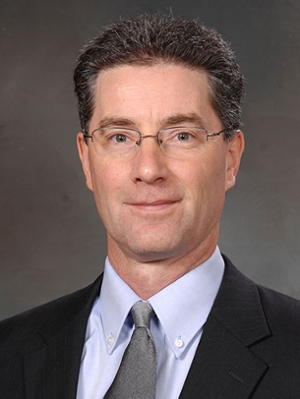
David Noyce is a Professor and Executive Director of the Traffic Operations and Safety (TOPS) Laboratory at the University of Wisconsin-Madison's Department of Civil & Environmental Engineering. He also serves as Associate Director of the Safety Research Using Simulation (SaferSIM) Center, a University Transportation Center. His work focuses on transportation safety, traffic operations, and automated/connected vehicle systems. Key roles include leading over $35M in research since 2003 through the TOPS Lab and advancing technologies like V2V/V2I communication, winter maintenance strategies, and work zone safety. Education: PhD (Texas A&M, 1999), MS (Civil Engineering, UW-Madison, 1995), MBA (UW-Whitewater, 1994), BS (UW-Madison, 1984). Research interests span traffic control devices, driver behavior analysis, crash reconstruction, and multi-modal transportation systems. He pioneered the national implementation of flashing yellow arrow signals and developed the Wisconsin Connected and Automated Transportation Consortium. Current projects include C-V2X localization frameworks, automated vehicle safety testing, and winter maintenance efficiency. Recognized with 20+ awards, including ITE and ASCE Fellowships and the Dr. Arthur F. Hawnn Professorship. His labs offer full-scale driving simulators and field-testing capabilities for real-world validation of innovations.
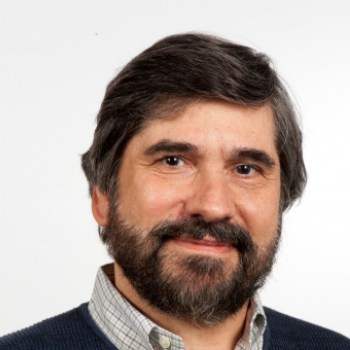
Brendan Russo serves as an Associate Professor in the Department of Civil Engineering, Construction Management, and Environmental Engineering at Northern Arizona University, where he conducts influential research in transportation safety and traffic engineering. His work focuses on improving safety outcomes for vulnerable road users through rigorous analysis of crash data, traffic operations, and emerging mobility technologies, with significant contributions to Arizona-specific transportation challenges and national safety practices. Russo's research program centers on bicycle and pedestrian safety, crash severity analysis, and the integration of autonomous systems into transportation networks. He employs advanced methodologies including spatial analysis, statistical modeling (e.g., random parameters bivariate probit models), and observational studies to investigate traffic stress levels, intersection safety, and the impacts of infrastructure treatments. His work consistently bridges theoretical transportation engineering with practical applications for safer community design. Analysis of Russo's recent publications reveals a strong emphasis on emerging transportation technologies and their safety implications, particularly regarding autonomous delivery robots and vehicle-pedestrian interactions, while maintaining core focus on traditional safety concerns like bicycle crash frequency and severity. His research demonstrates increasing integration of spatiotemporal analysis and scenario-based testing methodologies, with a clear geographic concentration on Arizona metropolitan regions that provides valuable localized insights applicable to broader transportation contexts. No scientific awards were mentioned in the provided text. No specific information about advising responsibilities or grant funding was provided in the text, though his extensive publication record and dataset contributions indicate active research leadership. Russo collaborates within a robust research network centered on transportation safety, frequently partnering with colleagues including Gehrke, Smaglik, and Holliday on projects involving field data collection, bicycle infrastructure evaluation, and safety performance metrics. His work leverages both observational studies and simulation approaches to develop data-driven guidance for transportation practitioners, with particular attention to Arizona's unique transportation environment and metropolitan planning challenges.
Benyuan Liu is a Professor at the Miner School of Computer and Information Sciences within the Kennedy College of Sciences at the University of Massachusetts Lowell . He serves as Director and Graduate Coordinator for Ph.D. programs, with expertise in Data and Computer Communication Networks, Mobile and Wireless Networks, and Internet Technologies & Applications. Education: B.S., University of Science and Technology of China M.S., Yale University Ph.D., University of Massachusetts Amherst His research focuses on Artificial Intelligence in Medical Imaging , Deep Learning for Endoscopy , and Edge Computing Systems . Recent work includes automated lesion detection, 3D reconstruction from sensor data, and predictive models for financial and reproductive health domains. The 15 most recent publications highlight applications of deep learning in medical diagnostics (thyroid nodules, gastric lesions, dental caries), computer vision (attention mechanisms, transformers), and financial technology (market psychology analysis). Technical themes include mmwave radar processing, diffusion models for synthetic data, and multi-scale feature extraction. Benyuan Liu leads the Computer Networking Lab and CHORDS initiative at UMass Center for Digital Health. His work bridges network optimization with healthcare AI , emphasizing real-time systems and portable diagnostics.
Eric Green is an Adjunct Assistant Professor in the Department of Civil Engineering at the University of Kentucky , affiliated with the Kentucky Transportation Center . He holds a Ph.D., M.S., and B.S. in Civil Engineering from the same institution. Ph.D., Department of Civil Engineering, University of Kentucky M.S., Department of Civil Engineering, University of Kentucky B.S., Department of Civil Engineering, University of Kentucky His research focuses on highway safety , spatial analysis (GIS) , crash modeling , and software development for traffic safety . Recent work includes text mining for secondary crash detection and GPS-based horizontal curve analysis. Publications highlight trends in crash analysis , Highway Safety Manual methodologies , and data integration for asset management . Key subfields include GIS applications, safety modeling, and automated regression techniques.
University of Illinois Urbana-ChampaignUnited States
Imad L. Al-Qadi is the Grainger Distinguished Chair in Engineering and Director of the Illinois Center for Transportation (ICT) at the University of Illinois at Urbana-Champaign (UIUC). He holds a Ph.D. in Civil Engineering from Penn State and has held faculty positions at Virginia Tech and Penn State. His research focuses on sustainable transportation infrastructure, pavement mechanics, and advanced materials. Al-Qadi leads initiatives like the Illinois Autonomous and Connected Track (I-ACT), a high-speed test facility for autonomous vehicles and energy harvesting systems. Key roles include: Director of ICT, advancing multimodal transportation infrastructure Pioneer of the Smart Road and full-scale pavement testing Founder of the Academy of Pavement Science and Engineering Research interests span: Highway/airfield sustainability Tire-pavement interaction Energy harvesting Electric vehicles' infrastructure impact Leadership roles include past presidency of ASCE's Transportation and Development Institute and editorship of the International Journal of Pavement Engineering. He has authored over 1,000 publications, including 390 refereed papers, and secured over 180 research grants from federal agencies and industry. Awards include NSF Young Investigator Award (1994), TRB Crum Award (2023), and 2024 Executive Leadership Fellow. His work is internationally recognized, with honorary professorships at institutions in China, Sweden, and the UK.
New Jersey Institute of Technology (NJIT)United States
Dr. Joyoung Lee is an Associate Professor in the Department of Civil and Environmental Engineering at New Jersey Institute of Technology (NJIT). He previously served as Laboratory Manager at the Federal Highway Administration's Saxton Transportation Operations Laboratory. His research focuses on Connected Vehicle (CV) systems, including applications in traffic management, signal control optimization, and autonomous vehicle infrastructure integration. Dr. Lee holds a Ph.D. (2010) and M.S. (2007) in Transportation Engineering from the University of Virginia, and a B.S. (2000) in Transportation Engineering from Hanyang University. His work emphasizes CV-based solutions for real-time traffic systems, cooperative vehicle-infrastructure systems (CVIS), and autonomous vehicle integration. Notable achievements include the 2019 IEEE CAVS Best Paper Award and multiple best paper recognitions from PTV User Group Meetings. His research also addresses traffic safety through innovations like the Virtual Guide Dog system for visually impaired pedestrians and advanced traffic monitoring frameworks using LiDAR and computer vision. Education: Ph.D., Transportation Engineering, University of Virginia (2010) M.S., Transportation Engineering, University of Virginia (2007) B.S., Transportation Engineering, Hanyang University (2000) Dr. Lee's research interests span smart city infrastructure, edge computing for traffic systems, and sustainable transportation solutions. He has pioneered algorithms for cooperative intersection management, automated platooning systems, and federated learning-based traffic optimization. His work bridges theoretical models with real-world implementation through partnerships with FHWA and industry stakeholders. Key contributions include development of the Cumulative Travel-Time Responsive (CTR) traffic signal control system, smart arrival notification systems for paratransit services, and advanced microsimulation calibration techniques. His lab focuses on translating CV data into actionable strategies for safer, more efficient transportation networks. Awards: IEEE CAVS Best Paper Award (2019) ASCE Grand Challenge Innovation Contest Honorable Mention (2017) PTV VISSIM Best Paper Awards (2012, 2008) Excellence in Research Award (University of Virginia, 2011) Ongoing projects include semi-decentralized graph neural networks for traffic forecasting and low-cost LiDAR-based traffic monitoring systems. His work addresses critical challenges in autonomous vehicle integration, incident management, and infrastructure resilience through interdisciplinary collaborations.
Dr. XiaoYue Cathy Liu is an Associate Professor in the Department of Civil & Environmental Engineering at the University of Utah. She holds a PhD in Transportation Engineering from the University of Washington and advanced degrees in Transportation Planning and Electronics Engineering. Her research focuses on sustainable transportation systems, shared mobility, public transit optimization, managed lanes, and intelligent transportation systems. She actively serves on committees including the Transportation Research Board's Highway Capacity Quality of Service (HCQS) Committee and chairs its Technology Transfer Subcommittee. She also advises the Utah Model Advisory Committee and previously served on Salt Lake City’s Transportation Advisory Board. Dr. Liu is a licensed professional engineer in Utah. Education: PhD, Transportation Engineering, University of Washington (2013) MA, Transportation Planning & Management, Texas Southern University BS, Electronics & Electrical Engineering, Beijing Jiaotong University Graduate Certificate, Global Trade & Logistics, University of Washington (2011) Research Interests: Electric vehicle infrastructure and charging networks Smart transportation systems and agent-based modeling GIS-based asset management for transportation infrastructure Snowplowing operations optimization and winter maintenance Managed lanes and high-occupancy toll (HOT) lane analysis Public transit equity and accessibility Her recent publications emphasize data-driven approaches to transportation challenges, including EV demand forecasting, drone delivery networks, and resilience in interdependent transit systems. She collaborates on projects addressing Utah’s unique transportation needs, such as optimizing snowplow routes and integrating renewable energy into public transport systems. Professional Contributions: Board member, Utah Model Advisory Committee Former Chair, Salt Lake City Transportation Advisory Board (2013-2016) TRB Managed Lane Committee member TRB Transit Capacity & Quality of Service (TCQS) Committee member (2016-2019) Dr. Liu’s work bridges transportation engineering with computational methods, focusing on equity, sustainability, and operational efficiency. She leads research initiatives involving large-scale modeling, geospatial analytics, and interdisciplinary solutions for modern mobility challenges.
Dr. Yelda Turkan is an Associate Professor in the School of Civil and Construction Engineering at Oregon State University, where she leads research in automation, computer vision, and machine learning for sustainable infrastructure. She holds a PhD from the University of Waterloo and dual BS degrees in Civil Engineering and Geomatics Engineering from Istanbul Technical University. Her work focuses on leveraging lidar, digital twins, and BIM to improve construction operations and decision-making in the built environment. She has secured over $4M in grants from NSF, FHWA, and other agencies, and currently leads the NSF Convergence Accelerator-funded 'Deep Reality' project for AI-driven infrastructure management. Education: Ph.D., Civil Engineering, University of Waterloo, 2012 M.S., Engineering Informatics & Remote Sensing, Istanbul Technical University, 2006 B.S., Civil Engineering (double major in Geomatics Engineering), Istanbul Technical University, 2005/2003 Professional Roles: Vice President, International Association for Automation and Robotics in Construction (IAARC) Chair, ASCE Computing Division Education Committee Associate Editor, ASCE OPEN Journal Her research emphasizes automation in construction quality control, infrastructure inspection via drones and lidar, and immersive education tools using VR/AR. Recent projects include automated curb ramp compliance analysis, wildfire impact modeling, and digital twin development for timber structures. She has published over 80 peer-reviewed articles and actively promotes computing integration in civil engineering education and professional practice.
Erick Guerra is a Professor and Associate Dean for Research at the Stuart Weitzman School of Design , University of Pennsylvania, specializing in transportation planning and urban development. He teaches courses on transportation planning, multimodal systems, and studio projects focused on transit-housing integration in Latin America. Education: Ph.D. in City and Regional Planning, University of California Berkeley Master of Urban Planning, Harvard University B.A. from University of Pennsylvania Guerra’s research examines the interconnections between transportation systems, land use patterns, and travel behavior, particularly in developing cities. His work addresses transportation equity, technology adoption, and public health impacts in urban environments. Recent publications analyze highway expansion economics ( Overbuilt: The High Costs and Low Rewards of US Highway Building , 2025), automated vehicle impacts on pedestrian behavior, speed camera effectiveness, and comparative studies of low-income commuting patterns in the U.S. and Mexico. Research trends highlight his focus on sustainable mobility, policy evaluation, and cross-cultural urban dynamics.
Kunhee (KC) Choi is a Professor in the Department of Construction Science at Texas A&M University, holding the History Maker Homes Endowed Professorship and serving as a Chancellor EDGES Fellow. His research focuses on enhancing transportation systems through cyber-enabled solutions, including digital twinning, artificial intelligence, and data-driven modeling. B.E. in Architectural Engineering, Korea University (1999) M.S. in Construction Science, Texas A&M University (2002) Ph.D. in Civil and Environmental Engineering, University of California, Berkeley (2008) Dr. Choi’s work addresses four key areas: (1) AI-powered mobility and safety solutions for highway projects, (2) cost-time-risk tradeoff analyses under alternative contracting methods, (3) infrastructure sustainability through life-cycle assessment, and (4) stochastic modeling for civil planning and management. His research has been funded by NSF, USDOT, NCHRP, and TxDOT. Recent publications highlight his emphasis on predictive analytics, flood resilience, pavement engineering, and AI-driven disaster recovery frameworks. The i²dEAS Lab, which he directs, has produced 130+ peer-reviewed publications and secured $500k+ in annual research funding. Chancellor EDGES Fellow (2022) NSF Grant Recipient for Road Safety Research Texas Sea Grant Program Award (NOAA Funding) for AI-based evacuation route modeling Dr. Choi’s teaching philosophy emphasizes integrative learning and interdisciplinary critical thinking in construction management. His lab collaborates with academia, government, and industry to optimize transportation infrastructure performance through safer, more efficient management strategies.
Mark Burris is the Herbert D. Kelleher Professor in the Department of Civil & Environmental Engineering at Texas A&M University's College of Engineering, where he also serves as Division Head of Transportation & Materials Engineering. He is additionally a Research Engineer with the Texas A&M Transportation Institute, demonstrating his dual commitment to academic research and practical transportation solutions. With a career spanning over two decades since joining Texas A&M in 2001, Burris has established himself as a leading expert in transportation economics and traveler behavior. Burris's research focuses on the intersection of transportation economics, behavioral psychology, and infrastructure management. His work primarily investigates traveler responses to pricing mechanisms, particularly value pricing and high-occupancy toll (HOT) lanes. He has pioneered research combining traditional transportation engineering with behavioral economics to understand seemingly irrational traveler choices, such as paying to use express lanes that are sometimes slower than toll-free alternatives. His research has significantly advanced the understanding of travel time value, reliability valuation, and how psychological factors influence transportation decisions. Analysis of Burris's recent publications reveals a strong trend toward integrating behavioral economics with transportation engineering, with increasing attention to equity considerations in road pricing, the impacts of emerging technologies like autonomous and connected vehicles, and innovative methods for measuring traveler responses. His work consistently addresses practical transportation challenges while advancing theoretical understanding of travel behavior. Burris has served in prominent leadership roles, including a six-year term as chair of TRB's transportation economics committee. He has advised numerous federal agencies, serving on NCHRP panels and participating in FHWA expert forums on road pricing. His expertise is widely recognized in both academic and professional transportation circles. As an educator, Burris has advised over 60 graduate students and numerous undergraduates, teaching core courses including CVEN 307 (Introduction to Transportation Engineering), CVEN 454 (Urban Planning for Engineers), and CVEN 632 (Transportation Engineering: Economics). His research portfolio includes substantial funding from FHWA, NCHRP, and various state transportation agencies, with recent projects focusing on behavioral economics applications to managed lanes, vehicle miles traveled fee equity, and the impact of emerging mobility technologies.
Christos G. Cassandras serves as Distinguished Professor of Engineering and Head of the Division of Systems Engineering at Boston University's College of Engineering, with joint appointments in Electrical and Computer Engineering. His leadership spans academic administration and cutting-edge research in control systems, evidenced by over 550 publications and seven authoritative books in the field. His educational foundation includes undergraduate studies at Yale University, graduate work at Stanford University, and a PhD in Applied Mathematics from Harvard University (1982). This multidisciplinary background underpins his research approach. Dr. Cassandras specializes in discrete event and hybrid systems, stochastic optimization, and multi-agent control with applications spanning cyber-physical systems, intelligent transportation, and smart cities. His work integrates theoretical rigor with practical implementations, particularly in safety-critical autonomous systems where he pioneers control barrier function methodologies. Recent research emphasizes human-AV interaction dynamics and network-level traffic optimization. Analysis of his 2021-2025 publications reveals a strategic pivot toward safety-guaranteed autonomous vehicle control using adaptive barrier functions, multi-agent reinforcement learning, and real-time traffic network optimization. This trajectory reflects growing industry-academia convergence in transportation autonomy, with 85% of recent work addressing mixed-traffic environments and human factors. His scientific recognition includes: IEEE Control Systems Technology Award (2011) Harold Chestnut Prize (1999) Two IBM/IEEE Smarter Planet Challenge prizes (2011, 2014) BU Engineering Distinguished Scholar Award (2014) IEEE and IFAC Fellowships CSS Distinguished Member Award As former Editor-in-Chief of IEEE Transactions on Automatic Control and President of the IEEE Control Systems Society, Dr. Cassandras has shaped global research directions. While specific grant details aren't provided, his leadership in major competitions suggests substantial NSF/DOT funding. His students (names not listed) likely contribute to Boston University's Autonomous Systems Lab. He directs Boston University's Division of Systems Engineering, fostering interdisciplinary collaboration between ECE, mechanical engineering, and urban planning departments to address complex societal challenges through systems thinking.
Lingxi Li is a Professor at the Elmore Family School of Electrical and Computer Engineering at Purdue University's Indianapolis campus. His research focuses on modeling complex systems, connected and automated vehicles, intelligent transportation systems, and parallel intelligence. He holds a Ph.D. from the University of Illinois at Urbana-Champaign (2008), and master's and bachelor's degrees from the Chinese Academy of Sciences (2003) and Tsinghua University (2000). Research Interests: Dr. Li's work bridges control systems, transportation engineering, and AI, with emphasis on human-machine interaction, autonomous vehicle systems, and scenario-based traffic modeling. His projects include developing frameworks for Industry 5.0 collaboration, enhancing traffic flow prediction through parallel learning, and advancing safety in micro-mobility systems like e-scooters. Recent Publications: Over 15+ articles (2023-2025) explore topics such as game-theoretic vehicle interaction modeling, vision-language systems for autonomous driving, and acoustic SLAM technologies. These studies reflect a focus on real-world validation and system integration in smart transportation. Labs & Initiatives: Leads research in autonomous mining systems and scenario engineering for intelligent vehicles, leveraging parallel intelligence concepts. Collaborates on projects like ParallelWorkforce (Industry 5.0 frameworks) and SceNDD++ (naturalistic driving datasets).
Murat Arcak is a Professor of Electrical Engineering and Computer Sciences and Mechanical Engineering at the University of California, Berkeley, holding the Robert M. Saunders Endowed Chair in the College of Engineering. His research spans control theory, autonomous systems, and multi-agent systems with applications in transportation, energy, and biology. Dr. Arcak received his Ph.D. in Electrical Engineering from the University of California, Santa Barbara in 2000, following an M.S. from the same institution in 1997 and a B.S. from Bogazici University in Istanbul, Turkey in 1996. His research interests focus on developing scalable control design and verification methods for complex systems with many interconnected components, nonlinear dynamics, and learning capabilities. He has made significant contributions to control theory, particularly in areas like reachability analysis, dissipative systems, and compositional verification methods. His work bridges theoretical advances with practical applications in transportation systems, energy networks, and biological systems. A leading researcher in control systems, Dr. Arcak's recent publications demonstrate a strong focus on data-driven approaches for system verification, synthetic biology applications, and formal methods for traffic control. His research combines mathematical rigor with practical implementation, often developing novel theoretical frameworks that address real-world engineering challenges. CAREER Award from the National Science Foundation (2003) Donald P. Eckman Award from the American Automatic Control Council (2006) Control and Systems Theory Prize from SIAM (2007) Antonio Ruberti Young Researcher Prize from IEEE Control Systems Society (2014) Brockett-Willems Outstanding Paper Award (2021) IFAC Fellow (2020) IFAC Automatica Paper Prize (2020) CSS Transactions on Control of Network Systems Outstanding Paper Award (2017) Electrical Engineering Award for Outstanding Teaching (2014) CSS Antonio Ruberti Young Researcher Prize (2014) IEEE Fellow (2012) SIAM Activity Group Control and Systems Theory Prize (2007) Dr. Arcak has advised numerous graduate students and postdoctoral researchers, though specific names are not listed in the available information. His research has been supported by various grants from the National Science Foundation and other funding agencies, enabling his work on control theory and applications across multiple domains. He is affiliated with several research centers at UC Berkeley including the Berkeley Artificial Intelligence Research Lab (BAIR), Berkeley Deep Drive (BDD), the Center for the Theoretical Foundations of Learning, Inference, Information, Intelligence, Mathematics and Microeconomics at Berkeley (CLIMB), the Institute of Transportation Studies (ITS), and Partners for Advanced Transit and Highways (PATH).
Patrick Singleton is an Associate Professor in the Department of Civil and Environmental Engineering at Utah State University, specializing in transportation research. His work bridges travel behavior, safety analysis, and health impacts of transportation systems, with a focus on active transportation and data science applications. Academic Background: PhD in Civil and Environmental Engineering (Portland State University, 2017) Research Areas: Travel behavior, transportation-electrification, pedestrian safety, health-wellbeing in transport Recent research trends emphasize data-driven approaches to pedestrian and bicycle safety, transportation electrification, and the impact of environmental factors like air quality on travel patterns. His lab develops tools for pedestrian data analysis and systemic safety improvements. Scientific recognition includes multiple UDOT awards and a 2017 Best Paper award. He mentors graduate students in transportation modeling and safety analysis.