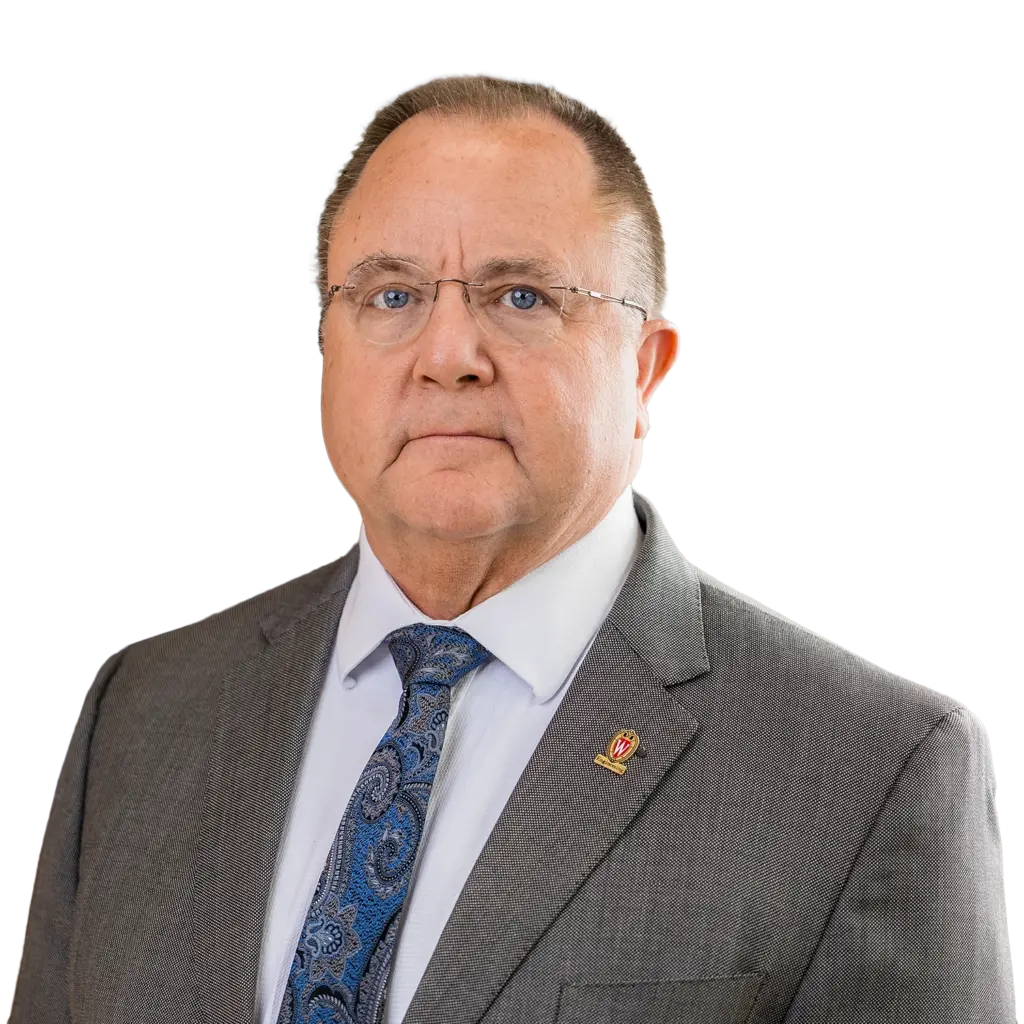
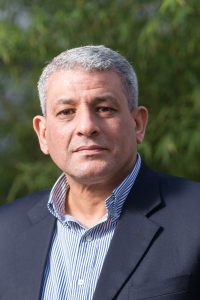
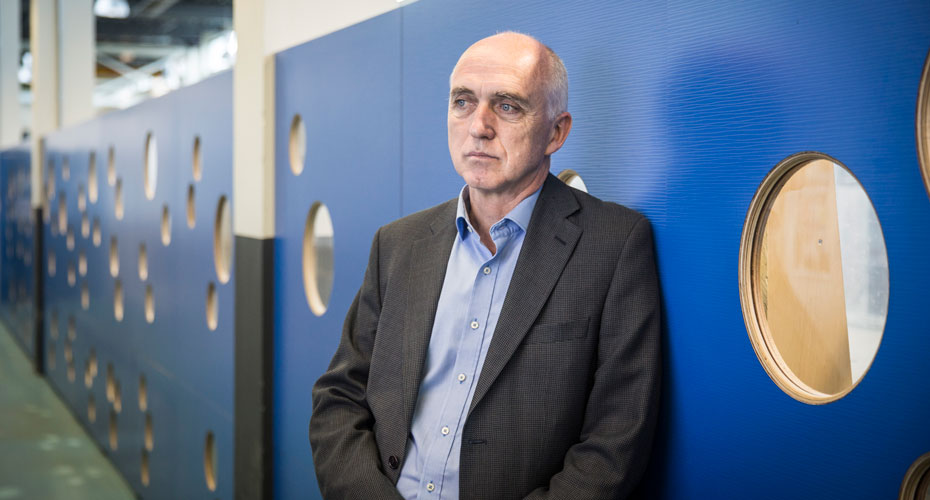
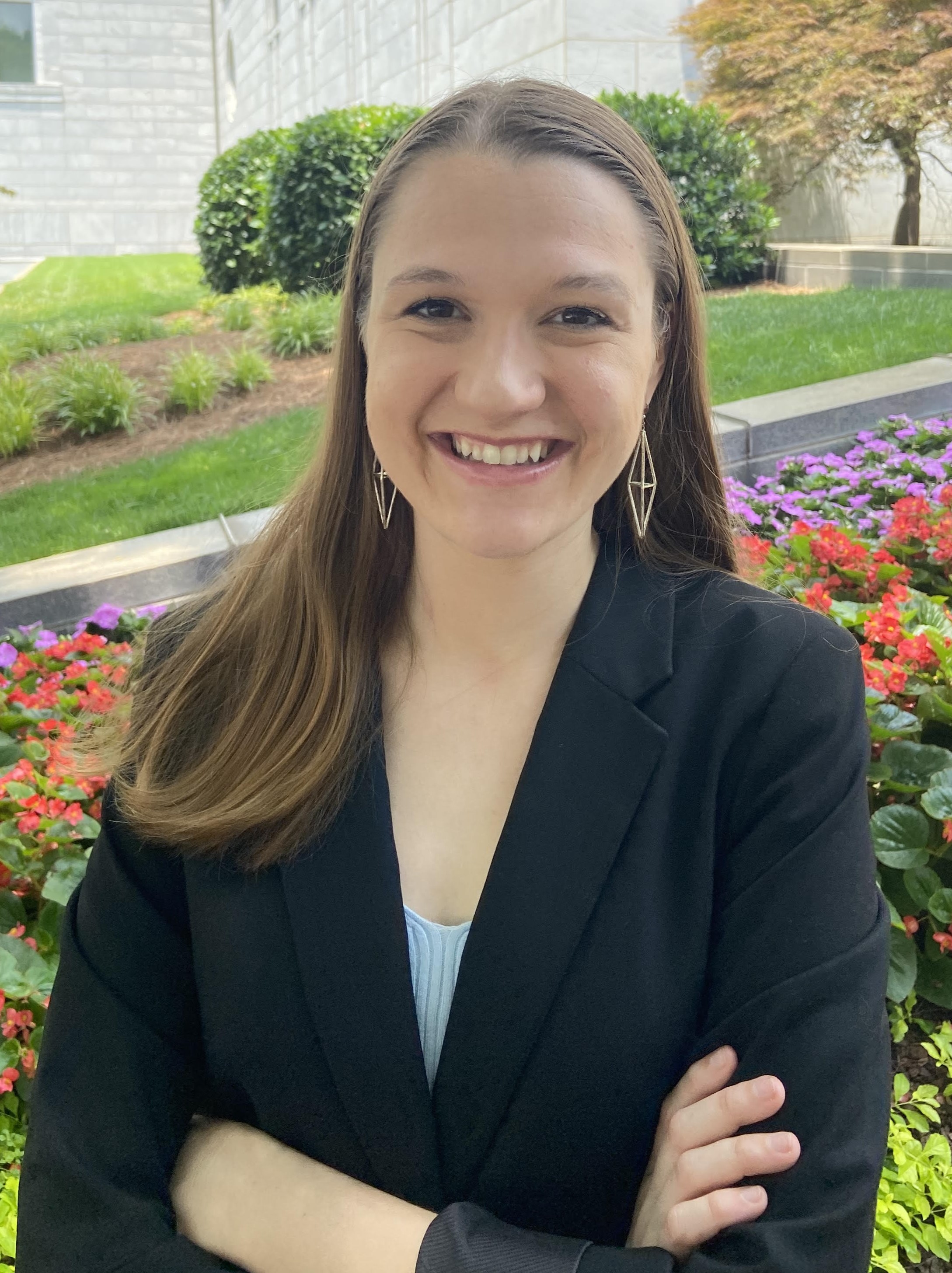
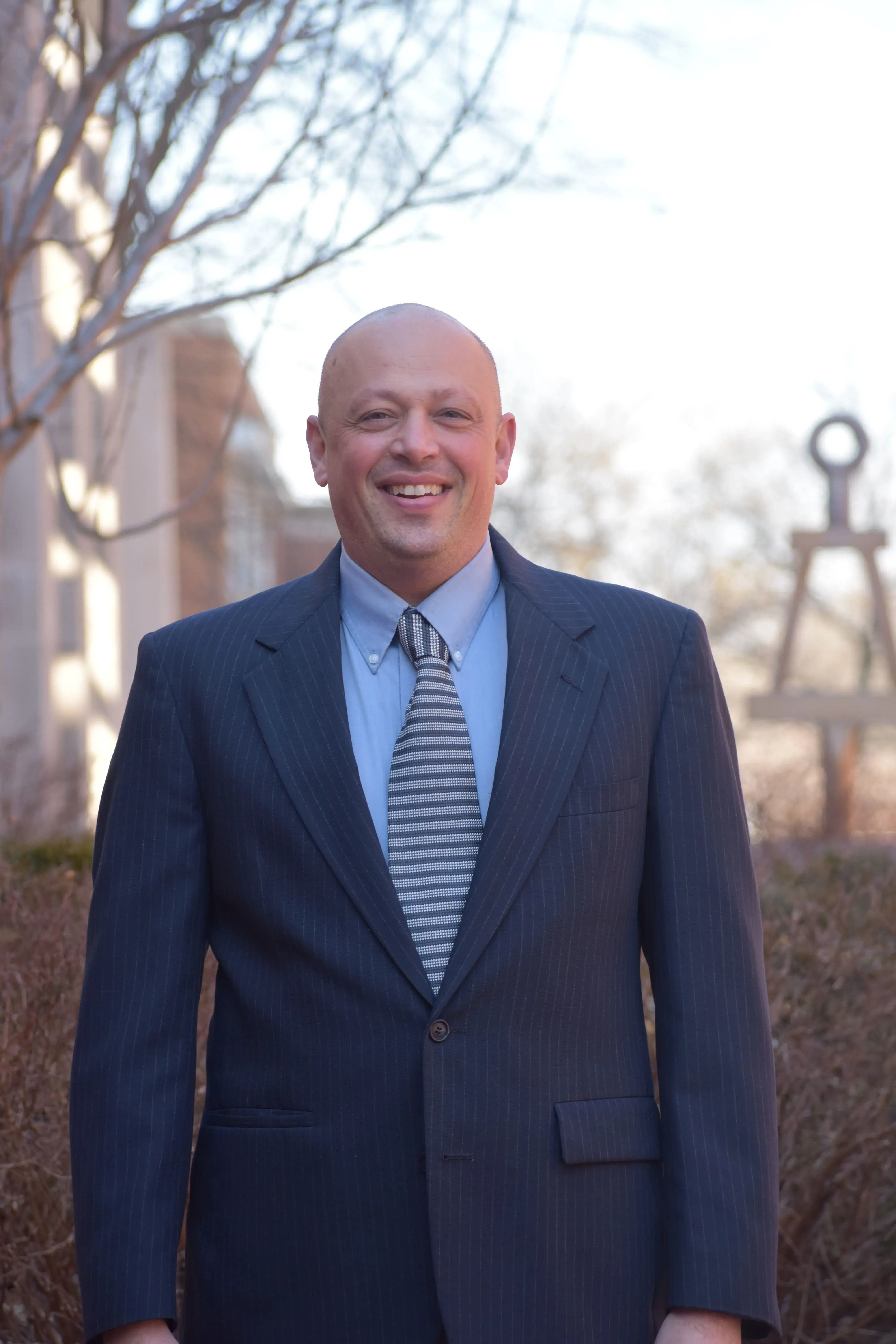
David Noyce is a Professor and Executive Director of the Traffic Operations and Safety (TOPS) Laboratory at the University of Wisconsin-Madison's Department of Civil & Environmental Engineering. He also serves as Associate Director of the Safety Research Using Simulation (SaferSIM) Center, a University Transportation Center. His work focuses on transportation safety, traffic operations, and automated/connected vehicle systems. Key roles include leading over $35M in research since 2003 through the TOPS Lab and advancing technologies like V2V/V2I communication, winter maintenance strategies, and work zone safety. Education: PhD (Texas A&M, 1999), MS (Civil Engineering, UW-Madison, 1995), MBA (UW-Whitewater, 1994), BS (UW-Madison, 1984). Research interests span traffic control devices, driver behavior analysis, crash reconstruction, and multi-modal transportation systems. He pioneered the national implementation of flashing yellow arrow signals and developed the Wisconsin Connected and Automated Transportation Consortium. Current projects include C-V2X localization frameworks, automated vehicle safety testing, and winter maintenance efficiency. Recognized with 20+ awards, including ITE and ASCE Fellowships and the Dr. Arthur F. Hawnn Professorship. His labs offer full-scale driving simulators and field-testing capabilities for real-world validation of innovations.
Brendan Russo serves as an Associate Professor in the Department of Civil Engineering, Construction Management, and Environmental Engineering at Northern Arizona University, where he conducts influential research in transportation safety and traffic engineering. His work focuses on improving safety outcomes for vulnerable road users through rigorous analysis of crash data, traffic operations, and emerging mobility technologies, with significant contributions to Arizona-specific transportation challenges and national safety practices. Russo's research program centers on bicycle and pedestrian safety, crash severity analysis, and the integration of autonomous systems into transportation networks. He employs advanced methodologies including spatial analysis, statistical modeling (e.g., random parameters bivariate probit models), and observational studies to investigate traffic stress levels, intersection safety, and the impacts of infrastructure treatments. His work consistently bridges theoretical transportation engineering with practical applications for safer community design. Analysis of Russo's recent publications reveals a strong emphasis on emerging transportation technologies and their safety implications, particularly regarding autonomous delivery robots and vehicle-pedestrian interactions, while maintaining core focus on traditional safety concerns like bicycle crash frequency and severity. His research demonstrates increasing integration of spatiotemporal analysis and scenario-based testing methodologies, with a clear geographic concentration on Arizona metropolitan regions that provides valuable localized insights applicable to broader transportation contexts. No scientific awards were mentioned in the provided text. No specific information about advising responsibilities or grant funding was provided in the text, though his extensive publication record and dataset contributions indicate active research leadership. Russo collaborates within a robust research network centered on transportation safety, frequently partnering with colleagues including Gehrke, Smaglik, and Holliday on projects involving field data collection, bicycle infrastructure evaluation, and safety performance metrics. His work leverages both observational studies and simulation approaches to develop data-driven guidance for transportation practitioners, with particular attention to Arizona's unique transportation environment and metropolitan planning challenges.
Dr. Tarek Sayed is a Professor at the University of British Columbia's Department of Civil Engineering within the Faculty of Applied Science. He specializes in Transportation Engineering, focusing on road safety analysis, traffic operations, and Intelligent Transportation Systems (ITS). He serves as the Director of the Bureau of Intelligent Transportation Systems and Freight Security (BITSAFS-Engineering) and Editor of the Canadian Journal of Civil Engineering . His research addresses three core areas: improving road safety evaluation techniques, enhancing safety through traffic operations and highway design analysis, and advancing ITS technologies. Notable contributions include frameworks for safety-audits of infrastructure projects like the Sea to Sky Highway and methodologies for evaluating transit signal priority systems in Vancouver. He has authored/co-authored over 250 publications and supervised 60 graduate students. Key Roles: Professor, BITSAFS Director, Journal Editor Awards: Tier 1 Canada Research Chair, Wilbur Smith Award, Sandford Fleming Award, Prince Michael International Road Safety Award Consulting: Global projects in traffic safety and ITS for agencies like ICBC, FHWA, and Ashghal His research integrates Bayesian statistical methods, extreme value theory, and machine learning to model traffic conflicts, pedestrian behavior, and safety interventions. Current projects include real-time safety optimization using autonomous vehicle data and analyzing shared space interactions between cyclists and pedestrians. Dr. Sayed chairs national/international committees, including the U.S. Transportation Research Board’s safety data committee. His work bridges academia and practice, influencing policy and infrastructure investment decisions worldwide.
Professor Eugene O'Brien serves as Professor of Civil Engineering within the School of Civil Engineering at University College Dublin's College of Engineering and Architecture. His research focuses on critical structural assessment methodologies for long-span bridges, with particular expertise in traffic load modeling and bridge safety evaluation. His research interests center on structural engineering challenges related to bridge infrastructure, specifically traffic load assessment for long-span bridges , structural health monitoring systems , and sustainable infrastructure management . Professor O'Brien pioneered camera-based monitoring techniques to overcome limitations of traditional Weigh-in-Motion sensors during congested traffic conditions, enabling more accurate safety assessments of aging bridge infrastructure. His work addresses the critical gap in quantifying traffic loading on bridges with spans up to 2 kilometers, where conventional methods fail during stop-and-go traffic scenarios. Analysis of his 15 most recent publications reveals a consistent research trajectory focused on probabilistic modeling of traffic loads, with increasing sophistication in handling extreme events and long-term infrastructure performance. His work spans fundamental statistical methods for load effect prediction, practical applications in real-world bridge assessments, and environmental considerations regarding infrastructure carbon footprints. The research demonstrates strong methodological evolution from basic traffic modeling to comprehensive lifetime assessment frameworks incorporating sustainability metrics. As co-founder and director of Roughan O'Donovan's subsidiary Innovative Solutions (ROD-IS), Professor O'Brien has translated research into practice through significant projects including the Malahide Railway Viaduct assessment (2009), EU-funded bridge lifespan simulation tools (2011), vibration reduction systems for bridge cables, and structural assessments for major international projects including the Ting Kau Bridge in Hong Kong, the Forth Road Bridge in Scotland, and the Chacao Channel Bridge in Chile. His consultancy work demonstrates direct application of academic research to critical infrastructure challenges worldwide. Professor O'Brien's research group operates at the intersection of structural engineering and sustainable infrastructure management, with particular emphasis on extending bridge service life through accurate safety assessment. Their work on the Chacao Channel Bridge demonstrates practical implementation of traffic monitoring systems using toll data to manage truck loads, while their environmental impact analysis shows how accurate safety assessments reduce unnecessary bridge replacements, thereby lowering the carbon footprint of transportation infrastructure through extended service life of carbon-intensive materials like concrete and steel.
Dr. Rebecca Kiriazes serves as an Assistant Professor in the Department of Civil Engineering within the College of Engineering, Physics, and Computing at Catholic University of America. Her academic journey includes a Ph.D. in Civil Engineering from Georgia Institute of Technology (2022), an M.Eng in Transportation and Highway Engineering from the same institution (2020), and a B.S. in Civil Engineering from the University of Florida (2018). Ph.D. Civil Engineering, Georgia Institute of Technology, 2022 M.Eng, Transportation and Highway Engineering, Georgia Institute of Technology, 2020 B.S. Civil Engineering, University of Florida, 2018 Dr. Kiriazes' research focuses on travel behavior and multimodal system planning to promote sustainable and safe urban environments. Her expertise spans transportation planning, operations, and designs, with particular emphasis on shifting attitudes and behaviors toward shared mobility. She approaches transportation challenges through the lens of creating more sustainable, resilient urban infrastructure that prioritizes safety and accessibility for all users. Her recent research activities include a funded project titled 'Bridging the Gap in Sustainable Climate Resiliency: Interdisciplinary and Cultural Training for University Students in Mexico and USA,' supported by a $25,000 grant from the Partners of the Americas Foundation through March 2025. NSF Graduate Research Fellowship 100,000 Strong in the Americas Innovation Fund grant ($25,000) Dr. Kiriazes maintains an active research program focused on transportation systems that address contemporary urban challenges. Her work bridges theoretical research with practical applications to create more equitable and sustainable transportation solutions. She is developing international collaborations, particularly with institutions in Mexico, to address climate resiliency through interdisciplinary approaches that incorporate cultural perspectives. Her office is located in G19/G20, and she can be reached at 202-319-6671.
Eric Green is an Adjunct Assistant Professor in the Department of Civil Engineering at the University of Kentucky , affiliated with the Kentucky Transportation Center . He holds a Ph.D., M.S., and B.S. in Civil Engineering from the same institution. Ph.D., Department of Civil Engineering, University of Kentucky M.S., Department of Civil Engineering, University of Kentucky B.S., Department of Civil Engineering, University of Kentucky His research focuses on highway safety , spatial analysis (GIS) , crash modeling , and software development for traffic safety . Recent work includes text mining for secondary crash detection and GPS-based horizontal curve analysis. Publications highlight trends in crash analysis , Highway Safety Manual methodologies , and data integration for asset management . Key subfields include GIS applications, safety modeling, and automated regression techniques.
Dr. Karim El-Basyouny is a Killam Laureate Professor and City of Edmonton Urban Traffic Safety Research Chair at the University of Alberta's Faculty of Engineering, where he serves as Associate Dean (Research Infrastructure and Innovation) in the Civil and Environmental Engineering Department. A licensed Professional Engineer in Alberta, he holds advanced degrees in Transportation Engineering from the University of British Columbia and has dedicated his career to advancing road safety through data-driven management frameworks. His academic credentials include: Doctor of Philosophy, Civil Engineering, University of British Columbia, 2011 Engineering Management Sub-specialization, Civil Engineering, University of British Columbia, 2010 Master of Applied Science, Civil Engineering, University of British Columbia, 2006 Bachelor's degree (ABET Equivalent), Civil & Environmental Engineering, United Arab Emirates University, 2003 El-Basyouny's research pioneers the integration of remote sensing, machine learning, and statistical modeling to enhance transportation safety. His work develops automated tools for infrastructure digitization, collision prediction, and speed management, treating safety as a systemic product requiring management frameworks. Key contributions include LiDAR-based road feature extraction, network-level safety evaluations, and frameworks for vision-zero outcomes that address both human-driven and autonomous vehicle contexts. His recent publications demonstrate a cohesive research trajectory centered on leveraging point cloud data and computational intelligence for safety management. Over 15 major publications since 2021 focus on automated infrastructure assessment (light pole detection, clear zone mapping, vertical clearance evaluation), weather-impact modeling, and enforcement resource optimization. This body of work bridges transportation engineering with computer vision and operations research to create scalable safety solutions. His scientific contributions have been recognized with prestigious honors including: 2024 Killam Annual Professorship Award 2024 Road Safety Achievement Award from TAC 2023 Donald Stanley Award for environmental engineering 2022 Faculty of Engineering Graduate Teaching Award 2021 Daniel B. Fambro Student Paper Award As an academic leader, El-Basyouny actively mentors graduate students and secures significant research funding through his endowed chair position. He currently recruits fully-funded PhD and postdoctoral candidates specializing in remote sensing applications, machine learning, and geomatics for road digitization projects. His research group collaborates with national safety committees and municipal agencies to translate findings into policy, while he serves on editorial boards for Transportation Research Record and Analytic Methods in Accident Research. The research group operates at the intersection of transportation engineering and computational science, developing automated frameworks that merge sensor technologies with data processing tools. Current projects focus on semantic segmentation of 3D point clouds, safety implications of infrastructure digitization, and machine learning applications for road feature extraction in both urban and rural environments.
Guang Tian, Ph.D. , is an Assistant Professor of City and Metropolitan Planning at the University of Utah and a faculty member at the Scientific Computing and Imaging Institute . His research bridges land use-transportation planning , travel behavior , and urban data science , with a focus on sustainability , climate adaptation , and equitable transit-oriented development . He previously founded the Center for Equitable Transit-Oriented Communities at the University of New Orleans as an Associate Professor. Education : Ph.D. in City & Metropolitan Planning (University of Utah, 2016) Professional Affiliations : Faculty, Scientific Computing and Imaging Institute (2025–present) His research leverages machine learning and GIS to analyze VMT reduction , active transportation , and the built environment’s impact on mobility . Key findings include the superior performance of random forest models over traditional methods in predicting mode choice and the role of polycentric urban structures in reducing auto dependency. Scientific Awards : Rising Scholar Award (2024, Association of Collegiate Schools of Planning) Grants include funding from the US Department of Transportation for equitable transit communities and multiple Louisiana Transportation Research Center projects on VMT modeling, rail infrastructure, and truck parking efficiency. His teaching centers on GIS applications in urban planning and transportation analysis.
University of Illinois Urbana-ChampaignUnited States
Imad L. Al-Qadi is the Grainger Distinguished Chair in Engineering and Director of the Illinois Center for Transportation (ICT) at the University of Illinois at Urbana-Champaign (UIUC). He holds a Ph.D. in Civil Engineering from Penn State and has held faculty positions at Virginia Tech and Penn State. His research focuses on sustainable transportation infrastructure, pavement mechanics, and advanced materials. Al-Qadi leads initiatives like the Illinois Autonomous and Connected Track (I-ACT), a high-speed test facility for autonomous vehicles and energy harvesting systems. Key roles include: Director of ICT, advancing multimodal transportation infrastructure Pioneer of the Smart Road and full-scale pavement testing Founder of the Academy of Pavement Science and Engineering Research interests span: Highway/airfield sustainability Tire-pavement interaction Energy harvesting Electric vehicles' infrastructure impact Leadership roles include past presidency of ASCE's Transportation and Development Institute and editorship of the International Journal of Pavement Engineering. He has authored over 1,000 publications, including 390 refereed papers, and secured over 180 research grants from federal agencies and industry. Awards include NSF Young Investigator Award (1994), TRB Crum Award (2023), and 2024 Executive Leadership Fellow. His work is internationally recognized, with honorary professorships at institutions in China, Sweden, and the UK.
Professor Vinayak Dixit serves as the IAG Chair of Risk in Smart Cities and Director of the Research Centre for Integrated Transport Innovation (rCITI) at the University of New South Wales (UNSW), within the School of Civil and Environmental Engineering. With a distinguished career spanning academia and research leadership, Professor Dixit has established himself as a leading expert in transportation risk analysis and smart city infrastructure. Professor Dixit's research focuses on studying risk in transportation infrastructure systems, with particular emphasis on highway safety, travel time uncertainty, and resilience against natural and man-made disasters. His work integrates cutting-edge approaches including quantum computing applications for transportation network optimization, analysis of connected and automated vehicles, and development of models for transportation resilience. His research interests span multiple disciplines, bridging civil engineering, transportation science, risk analysis, and computational methods. Professor Dixit has secured significant research funding from prestigious organizations including the United States National Science Foundation, Federal Highway Administration, and the Strategic Highway Research Program of the Transportation Research Board. His leadership extends to directing the Research Centre for Integrated Transport Innovation (rCITI), where he oversees a comprehensive research program addressing critical transportation challenges in smart cities through multiple focus areas including Connected Mobility Services, Deep Data and Digitization, Engineering Smart Cities & Logistics, Human-Centred And Automated Systems Design, and Integrated Infrastructure Strategic Planning. Professor Dixit previously served as the Associate Director of Research for the Gulf Coast Centre for Evacuation and Transportation Resiliency at Louisiana State University, where he founded the Driving Simulator Laboratory in collaboration with other faculty members. This demonstrates his longstanding commitment to innovative research infrastructure development and interdisciplinary collaboration across engineering, economics, computer science, and urban planning to address complex transportation challenges in the 21st century.
New Jersey Institute of Technology (NJIT)United States
Dr. Joyoung Lee is an Associate Professor in the Department of Civil and Environmental Engineering at New Jersey Institute of Technology (NJIT). He previously served as Laboratory Manager at the Federal Highway Administration's Saxton Transportation Operations Laboratory. His research focuses on Connected Vehicle (CV) systems, including applications in traffic management, signal control optimization, and autonomous vehicle infrastructure integration. Dr. Lee holds a Ph.D. (2010) and M.S. (2007) in Transportation Engineering from the University of Virginia, and a B.S. (2000) in Transportation Engineering from Hanyang University. His work emphasizes CV-based solutions for real-time traffic systems, cooperative vehicle-infrastructure systems (CVIS), and autonomous vehicle integration. Notable achievements include the 2019 IEEE CAVS Best Paper Award and multiple best paper recognitions from PTV User Group Meetings. His research also addresses traffic safety through innovations like the Virtual Guide Dog system for visually impaired pedestrians and advanced traffic monitoring frameworks using LiDAR and computer vision. Education: Ph.D., Transportation Engineering, University of Virginia (2010) M.S., Transportation Engineering, University of Virginia (2007) B.S., Transportation Engineering, Hanyang University (2000) Dr. Lee's research interests span smart city infrastructure, edge computing for traffic systems, and sustainable transportation solutions. He has pioneered algorithms for cooperative intersection management, automated platooning systems, and federated learning-based traffic optimization. His work bridges theoretical models with real-world implementation through partnerships with FHWA and industry stakeholders. Key contributions include development of the Cumulative Travel-Time Responsive (CTR) traffic signal control system, smart arrival notification systems for paratransit services, and advanced microsimulation calibration techniques. His lab focuses on translating CV data into actionable strategies for safer, more efficient transportation networks. Awards: IEEE CAVS Best Paper Award (2019) ASCE Grand Challenge Innovation Contest Honorable Mention (2017) PTV VISSIM Best Paper Awards (2012, 2008) Excellence in Research Award (University of Virginia, 2011) Ongoing projects include semi-decentralized graph neural networks for traffic forecasting and low-cost LiDAR-based traffic monitoring systems. His work addresses critical challenges in autonomous vehicle integration, incident management, and infrastructure resilience through interdisciplinary collaborations.
Dr. XiaoYue Cathy Liu is an Associate Professor in the Department of Civil & Environmental Engineering at the University of Utah. She holds a PhD in Transportation Engineering from the University of Washington and advanced degrees in Transportation Planning and Electronics Engineering. Her research focuses on sustainable transportation systems, shared mobility, public transit optimization, managed lanes, and intelligent transportation systems. She actively serves on committees including the Transportation Research Board's Highway Capacity Quality of Service (HCQS) Committee and chairs its Technology Transfer Subcommittee. She also advises the Utah Model Advisory Committee and previously served on Salt Lake City’s Transportation Advisory Board. Dr. Liu is a licensed professional engineer in Utah. Education: PhD, Transportation Engineering, University of Washington (2013) MA, Transportation Planning & Management, Texas Southern University BS, Electronics & Electrical Engineering, Beijing Jiaotong University Graduate Certificate, Global Trade & Logistics, University of Washington (2011) Research Interests: Electric vehicle infrastructure and charging networks Smart transportation systems and agent-based modeling GIS-based asset management for transportation infrastructure Snowplowing operations optimization and winter maintenance Managed lanes and high-occupancy toll (HOT) lane analysis Public transit equity and accessibility Her recent publications emphasize data-driven approaches to transportation challenges, including EV demand forecasting, drone delivery networks, and resilience in interdependent transit systems. She collaborates on projects addressing Utah’s unique transportation needs, such as optimizing snowplow routes and integrating renewable energy into public transport systems. Professional Contributions: Board member, Utah Model Advisory Committee Former Chair, Salt Lake City Transportation Advisory Board (2013-2016) TRB Managed Lane Committee member TRB Transit Capacity & Quality of Service (TCQS) Committee member (2016-2019) Dr. Liu’s work bridges transportation engineering with computational methods, focusing on equity, sustainability, and operational efficiency. She leads research initiatives involving large-scale modeling, geospatial analytics, and interdisciplinary solutions for modern mobility challenges.
Dr. Yelda Turkan is an Associate Professor in the School of Civil and Construction Engineering at Oregon State University, where she leads research in automation, computer vision, and machine learning for sustainable infrastructure. She holds a PhD from the University of Waterloo and dual BS degrees in Civil Engineering and Geomatics Engineering from Istanbul Technical University. Her work focuses on leveraging lidar, digital twins, and BIM to improve construction operations and decision-making in the built environment. She has secured over $4M in grants from NSF, FHWA, and other agencies, and currently leads the NSF Convergence Accelerator-funded 'Deep Reality' project for AI-driven infrastructure management. Education: Ph.D., Civil Engineering, University of Waterloo, 2012 M.S., Engineering Informatics & Remote Sensing, Istanbul Technical University, 2006 B.S., Civil Engineering (double major in Geomatics Engineering), Istanbul Technical University, 2005/2003 Professional Roles: Vice President, International Association for Automation and Robotics in Construction (IAARC) Chair, ASCE Computing Division Education Committee Associate Editor, ASCE OPEN Journal Her research emphasizes automation in construction quality control, infrastructure inspection via drones and lidar, and immersive education tools using VR/AR. Recent projects include automated curb ramp compliance analysis, wildfire impact modeling, and digital twin development for timber structures. She has published over 80 peer-reviewed articles and actively promotes computing integration in civil engineering education and professional practice.
Erick Guerra is a Professor and Associate Dean for Research at the Stuart Weitzman School of Design , University of Pennsylvania, specializing in transportation planning and urban development. He teaches courses on transportation planning, multimodal systems, and studio projects focused on transit-housing integration in Latin America. Education: Ph.D. in City and Regional Planning, University of California Berkeley Master of Urban Planning, Harvard University B.A. from University of Pennsylvania Guerra’s research examines the interconnections between transportation systems, land use patterns, and travel behavior, particularly in developing cities. His work addresses transportation equity, technology adoption, and public health impacts in urban environments. Recent publications analyze highway expansion economics ( Overbuilt: The High Costs and Low Rewards of US Highway Building , 2025), automated vehicle impacts on pedestrian behavior, speed camera effectiveness, and comparative studies of low-income commuting patterns in the U.S. and Mexico. Research trends highlight his focus on sustainable mobility, policy evaluation, and cross-cultural urban dynamics.
Dr. Liu Yang is an Associate Professor jointly appointed in the Department of Civil and Environmental Engineering and the Department of Industrial Systems Engineering and Management at the National University of Singapore (NUS). She holds a B.S. from Tsinghua University, an MPhil from the Hong Kong University of Science and Technology, and a Ph.D. from Northwestern University. Her research focuses on urban mobility and transport systems, including ridesharing, carsharing, traffic congestion management, and data-driven modeling. She leads the Lab for Urban Mobility Systems (LUMOS), comprising 15 members. Dr. Liu serves on editorial boards of journals like Transportation Science and Transportation Research Part C, and holds leadership roles in professional organizations such as the Chinese Overseas Transportation Association (COTA). Her work has been published in top journals including Transportation Research Part A/B/C/E and Transportation Science. Key awards include the CICTP Best Area Editor Award (2022) and the Faculty Teaching Excellence Award (2022). Her research is funded by agencies like the US Federal Highway Administration and Singapore's Ministry of Education. Education: B.S., Civil Engineering, Tsinghua University (2005) M.Phil., Civil Engineering, Hong Kong University of Science and Technology (2007) Ph.D., Transportation System Analysis and Planning, Northwestern University (2013) Professional Activities: Associate Editor, Transportation Science Co-Chair, WTC Shared Logistics and Transportation Systems Committee Member, Transportation Research Board Committee AP020 and AEP40 Her publications emphasize optimization, dynamic systems, and policy analysis in transportation networks. Recent work explores autonomous vehicles, incident-responsive traffic management, and shared mobility systems. She advises students on topics like ridesharing algorithms and congestion pricing strategies.