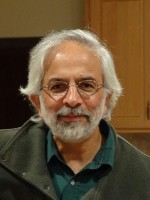
Gopalan Nadathur is a Professor in the Department of Computer Science and Engineering at the University of Minnesota , where he works in the Teyjus Project developing an efficient implementation of λProlog. His research focuses on higher-order logic programming , lambda calculus representations , and explicit substitution mechanisms with applications in formal verification and meta-programming . Key projects: Abella theorem prover, Bedwyr model checker Editorial roles: Theory and Practice of Logic Programming , Journal of Functional and Logic Programming Conference involvement: IEEE Symposium on Logic in Computer Science (2009), International Workshop on Logical Frameworks (2009) He has developed specialized techniques for: Higher-order pattern unification Modular logic programming Intensional lambda term reduction Binding structure representation
Chiara Branchini is an Associate Professor at the Department of Comparative Linguistic and Cultural Studies at Ca' Foscari University of Venice. She is actively involved in teaching Italian Sign Language (LIS) and its linguistics to undergraduate and graduate students, and serves as coordinator of the 1st level Master's degree and Advanced Training Course in 'Theory and Techniques of Translation and Interpretation Italian-LIS'. Her research focuses on the syntax of Italian Sign Language , including linear order, interrogative and imperative sentences, complex sentences, sociolinguistic analysis, and bimodal bilingual production . Education: PhD in European Intercultural Studies (2007) from the University of Urbino with thesis 'On relativization and clefting in Italian Sign Language (LIS)'; Master's in Foreign Languages and Literatures (2001) from the University of Urbino with thesis 'The Body at the Service of Language. Analysis of Non-Manual Components in American Sign Language (ASL)' Research: Currently collaborating on the drafting of a grammar blueprint for Italian Sign Language within European research project COST ACTION IS 1006; previously participated in national research project PRIN 2007 'Dimensions of variation in Italian Sign Language' by collecting and analyzing the CORPUS LIS Projects: Scientific director of FSE 2012 research grant 'Development of a video-glossary of specialist terms in Italian Sign Language (LIS)'; collaborator on European project 'Spread the sign: dissemination in Europe of vocational sign language' Publications: Authored numerous articles on LIS syntax, grammar, and bilingualism in outlets like Bilingualism , Sign Language & Linguistics , and Glossa , as well as book chapters in A Grammar of Italian Sign Language (LIS) and SignGram Blueprint Editorial Roles: Member of the editorial board for LiLiS (Languages, Language and Deafness) Edizioni Ca' Foscari Reviewing: Regular abstract reviewer for international conferences
Aaron Stump holds the John R. and Pamela Egan Chair of Computer Science at Boston College, specializing in programming languages and formal verification. He develops the Cedille programming language and proof assistant for dependently typed programming. Research focuses on: Dependent type theory implementations Zero-cost program reuse methodologies Recursive type encodings Formal verification of functional programs Leads research on lambda encodings and formal methods, contributing to proof assistant technologies and type-based program verification.
Kevin Klement is a Professor and Chair in the Department of Philosophy at the University of Massachusetts Amherst. His research focuses on the history of analytic philosophy, formal logic, and philosophical semantics. Notable works include (2002) and ongoing projects on Bertrand Russell and Wittgenstein. He holds a PhD from the University of Iowa (2000). Klement’s academic contributions extend to open-access publishing initiatives, such as digitizing Russell and Wittgenstein texts. He teaches courses ranging from introductory logic to advanced seminars on Frege, Russell, and Wittgenstein. His work often addresses logical paradoxes, higher-order metaphysics, and the evolution of analytic philosophy.
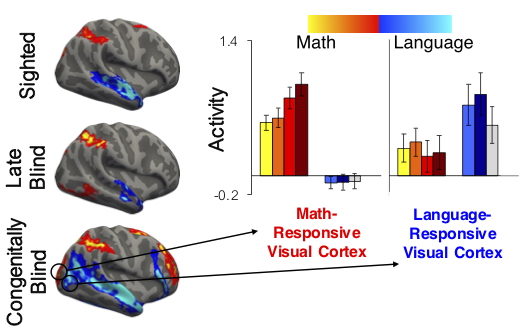
Marina Bedny is an Associate Professor in the Department of Psychological & Brain Sciences at Johns Hopkins University’s Krieger School of Arts & Sciences. Her research focuses on neuroplasticity and cognitive development, particularly how sensory experience shapes brain organization and conceptual understanding. Her lab investigates cortical plasticity in blind individuals, studying how 'visual' cortex regions repurpose for language, mathematics, and executive functions. She also examines conceptual development, exploring how blind and sighted individuals form abstract concepts like sight-related verbs or light phenomena. Key research themes include: Cortical Plasticity: Functional reorganization of occipital cortex in blindness, including cross-modal processing and executive control functions. Conceptual Development: Role of sensory experience in forming knowledge about events (e.g., 'sparkling'), objects, and mental states. Developmental Mechanisms: Sensitive periods for neural specialization and the interplay between genes and environment. Her lab’s recent work highlights functional flexibility in developing cortex, with studies demonstrating that visual deprivation leads to recruitment of occipital areas for higher-order cognition. Collaborative projects explore Braille reading neurobiology and computational models of semantic processing. Bedny mentors graduate students and postdoctoral fellows in experimental psychology and cognitive neuroscience, with active programs for undergraduate research assistants and blind/visually impaired summer interns. Lab activities include: Summer research internships for blind/visually impaired students Undergraduate research assistantships (10+ hours/week commitment) Collaborations on neuroimaging (fMRI) and behavioral experiments Bedny’s research has been published in Cerebral Cortex , Cognition , and NeuroImage , with a focus on bridging philosophical questions about the human mind with empirical neuroscience methods.
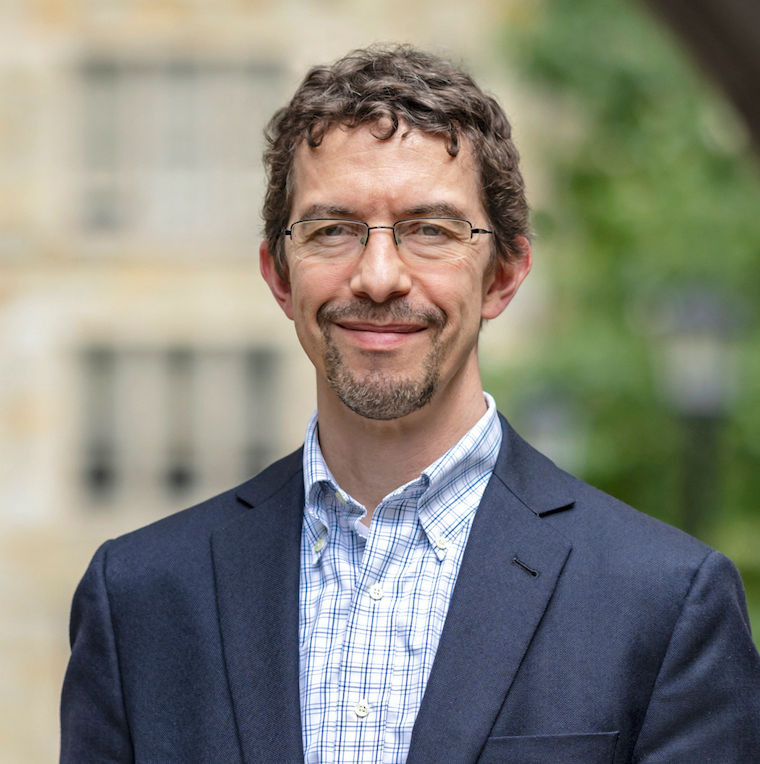
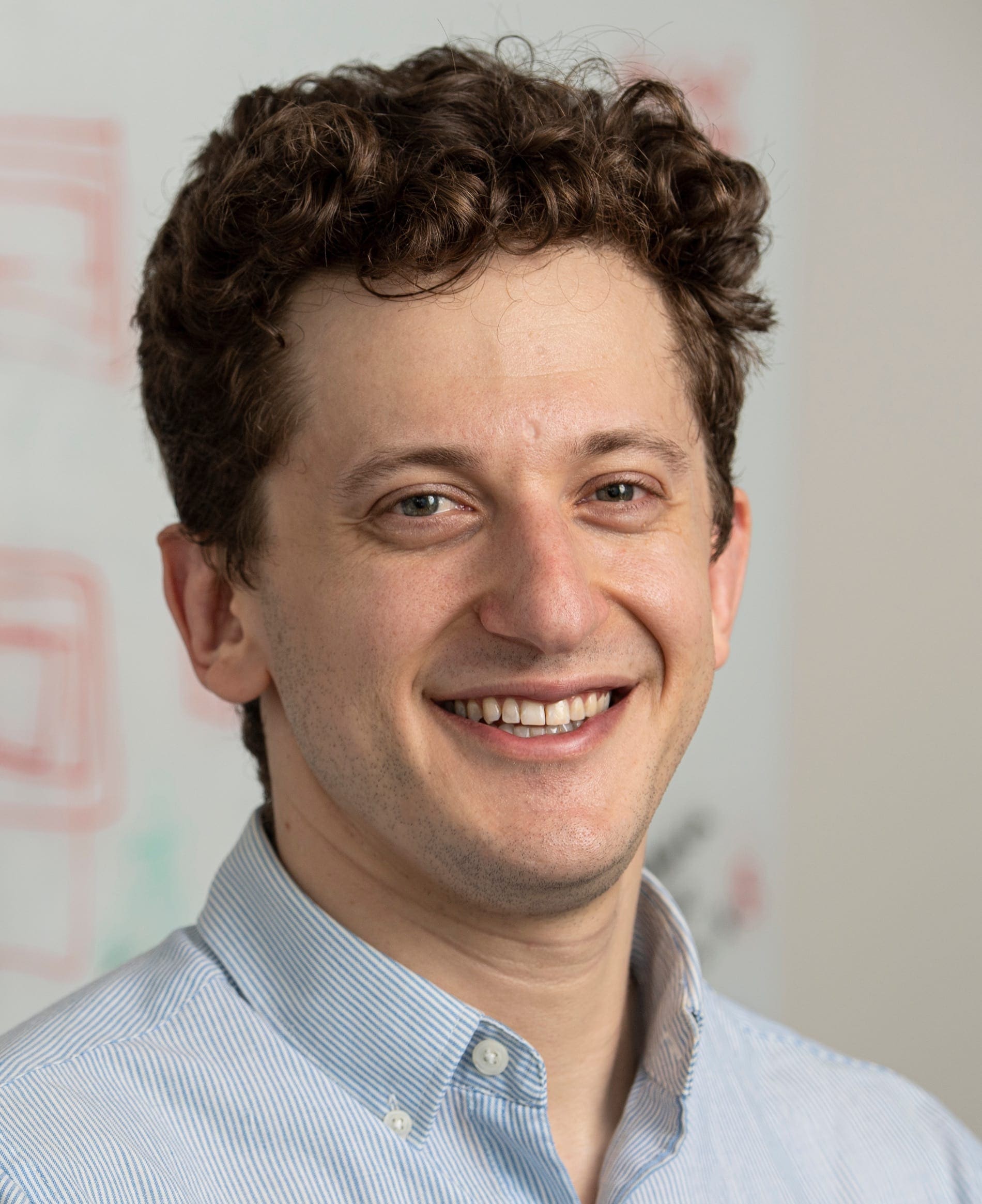
Chaz Firestone is an Associate Professor and Director of Graduate Studies in the Department of Psychological & Brain Sciences at Johns Hopkins University, within the Krieger School of Arts & Sciences. His research focuses on the intersection of perception, attention, and higher-level cognition, particularly exploring how visual perception interacts with intuitive physics, language, emotion, and memory. He directs the Hopkins Perception & Mind Laboratory, employing methods ranging from computer-based psychophysics to real-world experiments and neuroimaging studies. Notably, his work has examined physical intuition prediction (e.g., predicting block tower stability), perspectival shape representation, and cross-cultural visual perception phenomena like the Müller-Lyer illusion. Firestone’s studies also address foundational questions such as how higher-order cognitive factors influence perception and the nature of perceptual awareness. His research portfolio includes investigations into inattentional blindness, perceptual similarity judgments, and the limits of human vs. machine perception. He has conducted experimental work in diverse settings, including urban environments like New York City’s Times Square, and collaborates with computational models and brain-imaging techniques. Awards and grants are not explicitly mentioned here, but his lab’s interdisciplinary approach bridges psychology, philosophy, and neuroscience. He advises graduate students in cognitive science and perception studies, though specific advisee names are not listed in the provided materials. Firestone’s work often challenges traditional assumptions about the separation between perception and cognition, arguing for a more integrated understanding. His recent articles highlight topics like 'seeing physics,' perspectival interference, and the psychological mechanisms underlying 'impossible' somatosensory experiences. The lab’s current projects explore perceptual compositionality, the role of expectation in tactile perception, and the empirical basis of philosophical debates about perception’s limits.
Robert Atkey is a Chancellor’s Fellow and Lecturer in the Department of Computer and Information Sciences at the University of Strathclyde, where he is part of the Mathematically Structured Programming (MSP) group. His research focuses on programming language design and analysis, leveraging mathematical frameworks like category theory, type theory, and denotational semantics. He has contributed to parametricity theory, effect systems, and resource-aware verification systems such as ThreadSafe for Java concurrency. Key research areas include: Parametricity in higher-kinded and dependent type systems Applications of parametricity in DSL representation and scientific programming Development of parameterised monads for effect tracking Formal verification techniques for resource usage and concurrency defects Professional activities include programme committee roles for ESOP 2017 and POPL 2016, co-chairing the 2016 Mathematically Structured Functional Programming workshop, and organizing the Scottish Programming Languages and Verification Summer School 2024. His work bridges academic research with industrial applications, exemplified by the ThreadSafe static analysis tool developed at Contemplate. Current projects include ElePQuant (quantitative predicate logic foundations) and AISEC (AI security through construction). He collaborates on interdisciplinary initiatives like the DTP 2224 research consortium.
Ralph Matthes is a researcher at IRIT, a joint research laboratory affiliated with Université de Toulouse, CNRS, Toulouse INP, and UT3, France. His work lies at the intersection of theoretical computer science, logic, and formal methods, with a strong emphasis on category theory and type-theoretic foundations for programming languages. His research focuses on the formalization of mathematical structures in proof assistants, particularly using Coq. Key interests include: Category-theoretic models of programming languages Monoidal and displayed categories Semantics of linear logic Abstract syntax with binding Formal verification and certified programming His recent publications demonstrate a consistent trajectory in advancing the formal understanding of syntax and semantics through categorical frameworks. The articles span topics from typed abstract syntax to monoidal structures for logical semantics, all implemented and verified in the Coq proof assistant, indicating a deep commitment to rigor and mechanized reasoning. Ralph Matthes has no listed scientific awards in the provided material. He has contributed to leading venues such as CPP and CoqPL, suggesting active engagement with the formal methods and programming languages research community. While no advising or grant activities are explicitly mentioned, his sustained publication record implies ongoing research leadership and likely supervision of students or junior researchers. He is affiliated with IRIT, a prominent research institute in computer science in France, which hosts diverse teams working in software engineering, artificial intelligence, and theoretical computing. His work likely aligns with the institute's efforts in foundational software verification and logical frameworks.
Jouko Väänänen is a Research Professor at the Department of Mathematics and Statistics, University of Helsinki. He serves as Research Director and Supervisor for the Doctoral Programme in Mathematics and Statistics. His research focuses on mathematical logic, set theory, model theory, and dependence logic, with notable contributions to team semantics, categoricity arguments, and inner model theory. Väänänen has authored influential books including *Dependence Logic: A New Approach to Independence-Friendly Logic* (2007) and *Models and Games* (2011). His work bridges foundational questions in mathematics with applications in computer science and philosophy. He has received the Magnus Ehrnrooth Foundation prize in 2024. Väänänen leads projects like TEAMDEP (2021–2026), exploring team semantics and dependence logic. He actively participates in academic activities, including editorial roles for journals like *Annals of Pure and Applied Logic*, conference organization, and international collaborations. His research output includes over 130 publications, emphasizing interdisciplinary approaches to logic and its philosophical implications.
Philipp Haller is an Associate Professor in the Department of Computer Science at KTH Royal Institute of Technology, affiliated with the Theoretical Computer Science Group, Digital Futures, and WASP. He holds a PhD from EPFL (2010) and has held research positions at Stanford and EPFL, and industry roles at Typesafe Inc. Research Interests: His work centers on programming language design, concurrency (especially actor and futures models), distributed programming, type systems, and serverless computing. He is a leading contributor to the Scala language, having co-created its async/await syntax and futures library. His recent research includes the Portals framework for stateful serverless applications and formal models for consistency and concurrency safety. Publication Trends: His recent work (2020–2024) shows a strong focus on safe and scalable concurrency, stateful serverless systems, formal verification of language features, and distributed data consistency. He frequently publishes in top venues like ECOOP, OOPSLA, and PLDI, often combining theory with practical implementations in Scala. 2019 ACM SIGPLAN Programming Languages Software Award (for Scala) 2017 Teacher of the Year, EECS, KTH Advising and Grants: He supervises PhD students including Jonas Spenger, Xin Zhao, and Viktor Palmkvist. He led the Software Development Academy, a reskilling program for immigrants funded by the Wallenberg Foundations. He actively participates in academic service, co-chairing workshops like PLACES and AGERE!, and serving on program committees for OOPSLA, ECOOP, and POPL. Labs and Teams: He is part of the Theoretical Computer Science Group at KTH and leads research related to the Portals framework, which unifies dataflow and actor models for edge and serverless computing.
Dylan McDermott is a Research Fellow at the University of Oxford's Department of Computer Science. His research focuses on foundational aspects of programming languages and category theory, with a particular emphasis on monadic structures, type systems, and formal semantics. He holds a Senior Research Associate position within the department. His work bridges theoretical computer science and mathematical structures, exploring areas such as algebraic effects, graded monads, and operational semantics. Notable contributions include advancements in monad theory, category-theoretic approaches to programming language design, and formal reasoning about effectful programs. McDermott's publications span topics from relative monadicity to WebAssembly type systems, reflecting his expertise in both foundational theory and practical applications. His research often integrates categorical methods with programming language semantics, emphasizing rigorous formalization. While no specific awards or grants are explicitly mentioned, his prolific publication record indicates sustained scholarly engagement. He is affiliated with the Wolfson Building at the University of Oxford, contributing to the vibrant research community within the Department of Computer Science.
Michael Fourman is a Professor of Computer Systems at the School of Informatics, University of Edinburgh, within the College of Science and Engineering. His research focuses on applications of logic in Computer Science, Artificial Intelligence, and Cognitive Science, with contributions to formal methods, programming language semantics, and hardware specification. He has advised numerous PhD students and collaborated on EPSRC-funded projects, including work on probabilistic reasoning and program development tools like PropPlan. His research interests bridge mathematical logic, computer science, and cognitive science, emphasizing formal representations and their practical applications. He has explored categorical semantics for programming languages, hardware design tools, and AI planning systems. Recent work includes integrating logical and probabilistic reasoning frameworks. Key tools developed include PropPlan (BDD-based planner) and PropSat , alongside contributions to formal verification and categorical logic. His publications span over four decades, addressing topics from intuitionistic logic to modern informatics challenges.
Dr. Sverrir Thorgeirsson is a Professor of Computer Science at ETH Zürich, affiliated with the Department of Computer Science under the School of Computer and Communication Sciences. His work focuses on innovative educational technologies and pedagogical frameworks to enhance programming education. His research interests include visual programming languages (e.g., Algot), cognitive aspects of learning (e.g., cognitive load measurement via EEG), and strategies to improve abstraction skills and software testing comprehension in students. He emphasizes bridging the syntax-semantics gap in programming through hands-on, interactive tools. Recent publications highlight his contributions to visual programming environments, failure-based learning, and the design of pedagogical frameworks. He actively explores how cognitive science principles can optimize educational outcomes in introductory and advanced CS courses. No scientific awards were explicitly listed. His advising and grants sections remain under development, pending additional data.
Tom Schrijvers is a Professor at the Department of Computer Science, Faculty of Engineering Science, KU Leuven. His research focuses on programming language theory, functional programming, logic programming, and computational effects. Advancing multi-stage programming with computational effects (2024–2028) Generating Educational Feedback with Program Analysis (2024–2028) Programino: An Educational Programming Platform (2023–2027) eTeacher: Interactive web-based programming education platform (2023–2025) AmPERSand: Programming Education Runtime System (2023–2026) His recent publications emphasize bidirectional transformations, effect handlers, and programming education tools. He collaborates extensively with British institutions like Imperial College London and works on the book Language Engineering in Haskell with Dr. Nicolas Wu.
Claudio Sacerdoti Coen is an Associate Professor in Computer Science at the Department of Computer Science and Engineering , University of Bologna. His research focuses on Mathematical Knowledge Management , Interactive Theorem Proving , and their applications to functional programming languages and markup languages like XML and MathML. He has led the DAMA project for didactic applications of theorem provers. Employment: Associate Professor (2017–present), previously Lecturer (2007–2017) Education: Ph.D. in Computer Science (University of Bologna, 2004), Master’s in Computer Science (2000) Research Interests include: Integration of XML-based Mathematical Knowledge Management with Interactive Theorem Provers (e.g., Coq, Matita) Reduction strategies in the Calculus of (Co)Inductive Constructions Formal verification of algorithms and compilers Constructive analysis and formal topology User interface design for proof assistants Publications over the last decade highlight advancements in: Efficient substitution mechanisms for lambda calculi Formalization of mathematical theorems (e.g., Lebesgue’s Dominated Convergence Theorem) Development of proof assistant frameworks (Matita kernel, ELPI interpreter) Mathematical document structuring and search engine design