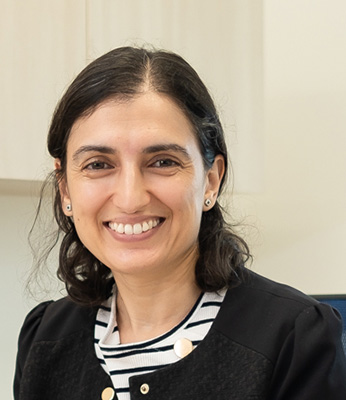
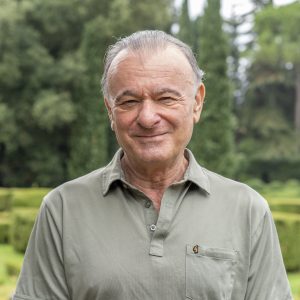
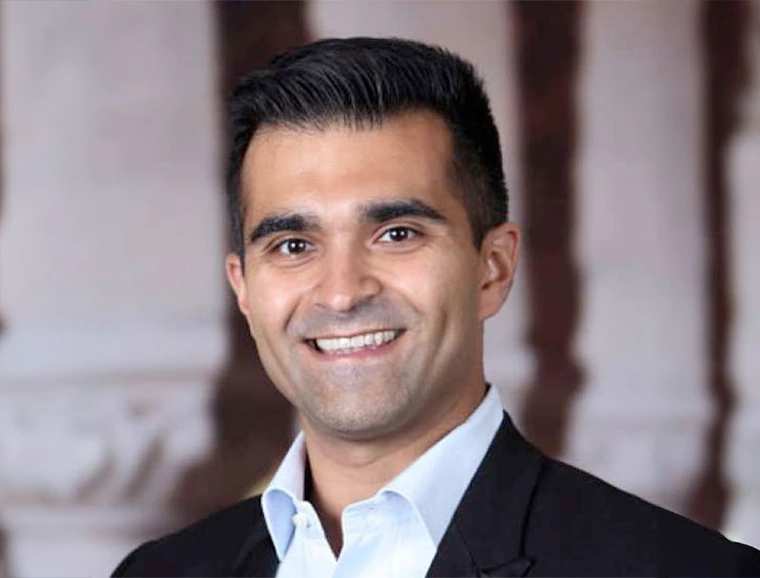
Zoe Jaques is a University Reader in Children’s Literature and Dean of Homerton College at the University of Cambridge. Her work bridges literary theory, philosophy, and children’s literature, with focuses on animal studies, ecocriticism, and posthumanism. She has held fellowships at Harvard, the University of Texas, and Kent State University, and her research has been supported by the British Academy and Sasakawa Foundation. Education: BA (Hons) English Literature, MA English Studies, PhD in English Literature, PGCert in Higher Education. Fellow of the Higher Education Academy and member of multiple literary societies including the Children’s Literature Association and International Board on Books for Young People. Research interests span intersections of children’s literature with animal ethics, environmental critique, film (especially Disney), and the history of the book. Recent articles explore poetry memorization in schools, posthumanism in Philip Pullman’s works, and ecological themes in fantasy. Current projects include the Cambridge History of Children's Literature in English and studies on entomology in Victorian childhood narratives. She supervises diverse PhD topics ranging from disability representation to posthumanist ontology in children’s texts. Awards include the 2017 Louise Betchel Visiting Professorship and 2013 Katharine F. Pantzer Jr. Fellowship. Active in academic leadership, she previously taught at Anglia Ruskin University and Birkbeck College, London.
Dr. Laraib Niaz is a Research Associate at the Faculty of Education, University of Cambridge, where she contributes to the independent evaluation of the Girls' Education Challenge II initiative. She holds an MSc in Development Management from the London School of Economics (LSE) and a PhD in Education from University College London (UCL). Previously, she served as an education consultant at the World Bank and has taught at LUMS and University College London. Her research focuses on inclusive education, disability studies, gender and development, national identity construction, and decolonizing research practices. She is affiliated with the Cambridge Network for Disability and Education Research (CaNDER) and the REAL Centre. Her research interests include exploring the role of religion in education, particularly in Pakistan, and analyzing media narratives during pandemics. She examines how textbooks construct national identity and investigates the impact of pseudoscience in educational systems. Her work also addresses academic freedom in higher education institutions in India and Pakistan. Laraib has extensive experience in supervising students and collaborating with international organizations such as the World Bank on inclusion-focused projects. Laraib has supervised students during her academic roles at LUMS and UCL. While specific grants are not detailed here, her current work involves evaluating 41 GEC II projects across 17 countries to assess support for girls with disabilities. Her research often intersects with global development and educational equity initiatives. She is part of the Cambridge Network for Disability and Education Research (CaNDER) and the REAL Centre , focusing on equitable access and learning in education systems.
Linda Sellou is a Senior Lecturer in the Department of Chemistry and Assistant Dean (Student Life) at the National University of Singapore (NUS). She holds a Ph.D. from the University of Bristol (2008) and an M.Sc. from Lille, France (2004). Her research focuses on chemical education, interdisciplinary STEM education, and science communication, with a particular emphasis on experiential learning, problem-based learning, and student-centered approaches. She leads initiatives such as the TEG-funded project on multidisciplinary fieldwork activities with Dr. Vik Gopal from Statistics and Data Science. Her teaching contributions include courses like CM3242 Instrumental Analysis II and CM3292 Advanced Experiments in Analytical and Physical Chemistry. She has received the 2008 University Engagement Awards for International Outreach from the University of Bristol for her work in science communication and outreach. Her research highlights include integrating molecular gastronomy into science education and exploring the impact of outreach programs on students' academic and career development. She actively collaborates with schools and institutions to design interactive climate science models and youth engagement programs, emphasizing the societal relevance of science. Linda’s work spans pedagogical innovation, including the use of Google Apps for Education and IT-enhanced classrooms. Her publications reflect a commitment to enhancing student learning through collaborative, technology-driven, and interdisciplinary approaches.
Liliane Abboud is an Assistant Professor in Marketing at the University of Surrey, affiliated with the Surrey Business School and the Surrey Institute for People-Centred Artificial Intelligence (PAI). Her roles include teaching and research in marketing, with a focus on integrating technology and ethical practices into service environments. Education: She holds a PhD, MSc, and BBA, and is a Fellow of the Higher Education Academy (FHEA). Her research interests center on customer experience technology, wellbeing in services, power dynamics, and actor engagement strategies. Recent work explores collective ethics in academia and service ecosystems' management. Teaching includes postgraduate Services Marketing and undergraduate courses like Capturing Market Insights and Research in Marketing. She supervises PhD students Tariq Alwashah and Heer Paleja, focusing on AI-driven consumer decision-making and service technology. Awards: Certified Management and Business Educator (CMBE). Research highlights include studying low-power customers' wellbeing, third-party roles in service encounters, and strategies to enhance end-user experiences in complex service ecosystems. Labs/Teams: Active contributor to the Surrey Institute for People-Centred AI (PAI), exploring ethical AI applications in marketing and service systems.
Robert Cohen is a Professor of Social Studies Education at New York University's Steinhardt School of Culture, Education, and Human Development. He is also an affiliated member of NYU's History Department. His work bridges historical scholarship with educational practice, emphasizing critical engagement in teaching U.S. history and fostering dialogue between teachers and historians. His research focuses on politics, higher education, and social protest in twentieth-century America, particularly student activism in the 1960s and intersections between historical narratives and classroom pedagogy. He has co-authored and co-edited works on Howard Zinn, Mario Savio, Emma Goldman, and the Free Speech Movement, reflecting his commitment to exploring radical thought and its societal impact. Cohen's publications highlight trends in integrating historical debates into social studies curricula and examining the role of protest movements in shaping American institutions. His collaborations with scholars such as Maeva Marcus, Sonia Murrow, and David J. Snyder underscore interdisciplinary and community-driven approaches. No scientific awards are explicitly mentioned in the provided text. In advising and grants, Cohen focuses on curriculum development and teacher-historian partnerships, though specific grants or advisee names are not listed. His affiliation with Steinhardt School and History Department positions him at the intersection of education policy and historical analysis. While no specific labs or teams are noted, his research aligns with NYU's broader initiatives in social studies education and historical scholarship.
University of North Carolina at Chapel HillUnited States
Gary Marks is a Distinguished Professor of Political Science at the University of North Carolina at Chapel Hill (UNC-Chapel Hill) and a Part-Time Professor at the European University Institute (EUI) in Florence. His primary affiliation is with the Department of Political Science at UNC-Chapel Hill, where he holds the Burton Craige Professorship. He also serves as a Research Professor at the Robert Schuman Centre for Advanced Studies at the EUI. Marks received his Ph.D. in Political Science from Stanford University and has held visiting professorships and fellowships at institutions such as VU Amsterdam, the Free University of Berlin, and the Hoover Institution. His research focuses on comparative politics, multilevel governance, European integration, and international organization. Notable contributions include his postfunctionalist theory of governance, detailed in works like Multi-Level Governance and European Integration (2001) and A Theory of International Organization (2019). He has been awarded prestigious honors, including the Humboldt Research Prize (2010), the Daniel Elazar Federalism Scholar Award (2017), and the Martha Derthick Award (2023) for his influential scholarship. Marks co-founded the UNC Center for European Studies (1994) and the EU Center of Excellence (1998). He currently co-leads an ERC Advanced Grant (TRANSNATIONAL) investigating political polarization in Western societies. His recent research explores education-based political cleavages, transnational governance, and the implications of crises like the pandemic on solidarity and policy responses. Awards: Humboldt Research Prize, Martha Derthick Award, Daniel Elazar Award, Honorary Doctorate from Maastricht University (2024) Grants: €2.5M ERC Advanced Grant (2010–2015), Current ERC Grant on Political Polarization (2021–2026) Labs/Teams: Transnational Lab at EUI, Chapel Hill Expert Survey (CHES) project Marks’ work bridges academic and policy circles, with datasets like the CHES providing foundational insights into global governance and political dynamics.
Lindsey Rose Bullinger is an Associate Professor in the Jimmy and Rosalynn Carter School of Public Policy at Georgia Institute of Technology and Associate Director of the Health Economics and Policy Innovation Collaborative (HEPIC). She holds affiliations with Georgia Policy Labs at Georgia State University, the Wilson Sheehan Lab for Economic Opportunities at the University of Notre Dame, and the Children's Pediatric Research Alliance at Children's Healthcare of Atlanta. Her research focuses on public policies affecting child and family health, particularly among low-income populations, with emphases on child maltreatment prevention, opioid policy, healthcare access, and economic interventions. Education: Ph.D. from Indiana University’s O'Neill School of Public and Environmental Affairs (Bloomington), MPA from Syracuse University’s Maxwell School, and a bachelor's degree from Miami University (Ohio). Research interests include the ACA Medicaid expansions, minimum wage impacts, cash transfer programs, and the intersection of social policy with child welfare systems. She has published extensively in journals like the Journal of Health Economics and Health Affairs, and her work has been funded by organizations such as the U.S. Department of Health and Human Services, FORE, and the Spencer Foundation. Dr. Bullinger serves as Co-Editor for the Journal of Policy Analysis & Management and Consulting Editor for Child Maltreatment. Her recent articles examine paid family leave effects, Medicaid coverage, and opioid treatment program impacts on child well-being.
Professor Jason Dykes is a leading figure in the field of information and geovisualization at City, University of London, where he holds the position of Professor in the Department of Computer Science and co-directs the giCentre , a renowned research centre in visualization. He is affiliated with the School of Mathematics, Computer Science and Engineering and maintains an active research and teaching profile. His academic journey includes a PhD in Geography from the University of Leicester and extensive leadership in both research and education. Education: PhD in Geography, University of Leicester, 2000 MSc in Geographic Information Systems, University of Leicester, 1991 BA/MA in Geography, University of Oxford, 1989 Jason Dykes' research is centered on designing visual methods and tools for exploring, analyzing, and presenting information, with a strong emphasis on geographic data. His work integrates cartography, information visualization, GIScience, and human-computer interaction , leading to the development of innovative techniques such as geowigs, ODmaps, BallotMaps, and AttributeSignatures. He has published extensively in top-tier journals like IEEE Transactions on Visualization & Computer Graphics, with over 20 papers in the last decade, and co-authored the seminal book Exploring Geovisualization (2005). His research is supported by major funders including EPSRC and the EU, with projects like RAMP VIS (Covid-19 response) and VALCRI (criminal intelligence). The most recent articles highlight a consistent trend in applied and human-centered visualization , focusing on responsive design, education, pandemic modeling, and novel visual metaphors for complex data. His work increasingly emphasizes methodological rigor, design exposition, and the role of visualization in interdisciplinary and emergency contexts. Scientific Awards and Recognition: National Teaching Fellow, Higher Education Academy (2005) Best Paper Awards at GIS Research UK (consecutive years) Honorable Mentions, IEEE InfoVis (2009, 2010, 2016, 2018) Security Innovation Commercialisation Award (EU, 2022) Research Supervisor of the Year, City Student Union (2020) Innovations in Teaching Award and multiple teaching grants at City Jason Dykes has supervised eight PhD students to completion and advised many others, including notable researchers like Roger Beecham, Sarah Goodwin, and Susanne Bleisch. His teaching includes modules such as Visualizing Society and Data Presentation. He has received significant grant funding from UK research councils and the EU for projects like DIVA, VALCRI, and RAMP VIS. His service to the community includes leadership roles in IEEE VIS, ICA Commission on GeoVisualization, and editorial positions at IEEE TVCG and the Journal of Visualization and Interaction. He leads the giCentre , a dynamic research group that fosters innovation in visualization, and has been instrumental in establishing the field’s educational and methodological foundations through participation in Dagstuhl seminars and publications on visualization pedagogy.
Dr. Ava Green is a Lecturer in Forensic Psychology at City, University of London, within the School of Health and Psychological Sciences, Department of Psychology. She completed her PhD in Forensic Psychology at Edinburgh Napier University in 2020 and has held academic positions at Queen Margaret University and Edinburgh Napier University. She is a Chartered Psychologist and a Fellow of the Higher Education Academy. Her educational background includes: PhD in Forensic Psychology, Edinburgh Napier University (2017–2020) MSc in Applied Criminology and Forensic Psychology, Edinburgh Napier University (2015–2016) BSc (Hons) in Psychology, Edinburgh Napier University (2011–2015) Dr. Green’s research focuses on gender differences in personality disorders, particularly narcissism in women, its aetiology, diagnostic assessment, and links to intimate partner violence. She explores how narcissism manifests differently across genders and challenges diagnostic biases in clinical settings. Her work also extends to criminal false confessions and the behavioural manifestations of narcissism in forensic contexts. Her recent publications reveal a consistent focus on narcissism through both empirical research and public engagement. Articles span clinical studies using ICD-11 frameworks, gendered analysis of personality disorders, and accessible commentary in outlets like The Conversation. Her work integrates clinical, forensic, and social psychological perspectives, emphasizing the importance of accurate diagnosis and gender-informed assessment. Her scientific recognition includes: Fellow of the Higher Education Academy Chartered Psychologist, The British Psychological Society Dr. Green is actively involved in teaching and academic leadership, serving as Programme Lead for the BSc Psychology with Criminology and Module Leader for Forensic Psychology. She supervises PhD students and welcomes research collaborations. Her professional experience includes grant acquisition and interdisciplinary research, often in collaboration with international scholars in psychology and psychiatry. She is affiliated with research teams focusing on personality disorders and contributes to academic discourse through book chapters and peer-reviewed journal articles. Her work is supported by a strong foundation in both clinical theory and empirical methodology.
Charles Gomez is an Associate Professor in the School of Sociology at the University of Arizona. He is affiliated with the College of Information Science and the Applied Math Graduate Interdisciplinary Program (GIDP), reflecting his interdisciplinary focus. His work centers on computational and mathematical sociology, particularly the study of inequality in global scientific knowledge production, diffusion, and diversity. Dr. Gomez received his Ph.D. from Stanford University, master’s degrees from Harvard Kennedy School and Columbia University, and a B.Sc.Eng. from Duke University. Ph.D., Stanford University M.A., Harvard Kennedy School M.S., Columbia University B.Sc.Eng., Duke University His research integrates natural language processing, social network analysis, survey experiments, simulations, and interviews to explore hierarchies, complexity, and diversity in science. He is particularly interested in how political and institutional forces shape AI research and global knowledge systems. The recent publications reflect a strong focus on global science, AI, knowledge diffusion, and inequality. His work employs both computational and qualitative methods to analyze large-scale scientific networks, epistemic diversity, and the structural biases in research collaboration and dissemination. Themes include international politics in AI, peer review bias, simulation of knowledge spread, and the role of elite institutions in shaping scientific agendas. His scientific recognition includes the prestigious National Science Foundation (NSF) CAREER Award (2024–2029). He has secured over $1 million in research funding as PI or co-PI. National Science Foundation (NSF) CAREER Award (2024–2029) Dr. Gomez leads the Global Knowledge Lab and Observatory ("The Global Lab"), an interdisciplinary research group dedicated to studying science, knowledge, and innovation at a global scale. He is actively involved in mentoring and welcomes Ph.D. students and collaborators. He has published in top journals including Nature Human Behaviour , Nature Communications , Research Policy , Social Networks , and Sociological Science .
Luisa Sotomayor is an Associate Professor in the Faculty of Environmental and Urban Change at York University, where she also serves as the Director of the City Institute. Her academic work bridges urban planning, governance, and socio-spatial justice, with a strong focus on inequality, housing, informality, and participatory planning. She is actively engaged in research across Latin America and Canada, contributing to critical debates on urban policy and citizenship. Education: PhD in Planning, University of Toronto MSc in Planning, University of Toronto BA in Sociology, National University of Colombia Her research interests center on urban inequality, housing precarity, socio-legal exclusions, and the formation of informal urban peripheries. She critically examines how state and non-state actors, community activism, and legal frameworks shape urban planning agendas. Her work questions the capacity of planning to address socio-spatial injustices and foster more equitable, democratic cities. The recent publications reflect a strong engagement with judicialization of urban planning in Bogotá, student housing precarity in Toronto, sanctuary city policies, and the impacts of social urbanism in Medellín. Collectively, her scholarship reveals a transnational, interdisciplinary approach that connects urban theory with grassroots realities, emphasizing legal mobilization, policy mobility, and the lived experiences of marginalized populations. Scientific Awards and Recognitions: MITACS Accelerate (2023-2024) EUC Dean’s Service Award (2021-2022) York University Academic Innovation Fund Award (2020-2021, 2021-2022) SSHRC Insight Grant (2022-2025) MITACS Global Link (2019) MITACS Accelerate (2021, 2022) SSHRC Partnership Engage Grant (2020-2021) SSHRC Connections Grant (2018-2019) SSHRC Doctoral Award (2011-2015) International Development Research Centre, Doctoral Award (2011) Luisa Sotomayor supervises graduate students in Environmental Studies, Geography, and Planning programs. She has led major funded research projects including SSHRC Insight and Partnership Engage Grants, focusing on issues such as vertical peripheries in Colombia, policy mobility in Latin American cities, legal mobilizations in urban planning, and student housing affordability in Toronto. Her collaborative work with institutions across Canada and Latin America underscores her commitment to engaged, interdisciplinary scholarship. She is involved in research labs and teams through the City Institute at York University and leads multi-institutional collaborations such as StudentDwellTO, which brings together faculty and students from OCAD University, Toronto Metropolitan University, University of Toronto, and York University to address student housing challenges. Her work continues to influence urban planning theory and practice in both the Global North and South.
Dr I-Shuo Chen is a Senior Lecturer in Organisational Behaviour at the School of Management, Faculty of Business and Law, Anglia Ruskin University (ARU). He previously held academic positions at the University of Dundee and Wuhan University, China, and earned his PhD in Business Studies from Trinity College, Dublin. He is actively engaged in research and editorial work, serving as Associate Editor for Frontiers in Psychology – Organisational Psychology . Education and Qualifications: PhD in Business Studies, Trinity College, Dublin Fellow (FHEA), Higher Education Academy (UKPSF), 2018 IPMA-HR Senior Certified Professional, 2000 Research Interests: Dr Chen's research focuses on organisational behaviour, particularly work engagement, work-life balance, green human resource management, creativity, innovation, and higher education. His work explores how personal and organisational resources influence employee well-being and performance, especially in digital and remote environments. Themes such as online leisure crafting, home boredom, and intelligent learning systems are central to his recent investigations. Publications and Research Trends: His recent publications appear in high-impact SSCI and SCI journals such as Computers in Human Behavior , International Journal of Hospitality Management , and Journal of Air Transport Management . The research demonstrates a consistent focus on applying psychological and management theories to practical organisational and educational challenges, with an increasing emphasis on digital transformation, employee resilience, and sustainable HR practices. Scientific Awards and Memberships: Fellow (FHEA), Higher Education Academy (UKPSF), 2018 IPMA-HR Senior Certified Professional, 2000 Associate Member, Chartered Institute of Personnel and Development (CIPD), 2019 Member, Chartered Management Institute (CMI), 2019 Member, UKRI Future Leaders Fellowships Peer Review College, 2021 Member, European Association of Work and Organisational Psychology, 2017 Member, European Academy of Occupational Health Psychology, 2014 Advising, Grants, and Editorial Roles: Dr Chen serves as Associate Editor for Frontiers in Psychology and has been an ad hoc reviewer for numerous top journals including Human Relations , International Journal of Human Resource Management , and Journal of Happiness Studies . While no specific grants or students are listed, his extensive peer review and editorial board involvement indicate active scholarly leadership. Labs and Research Teams: Although no specific lab or research team is named, Dr Chen collaborates internationally and presents regularly at major conferences such as the Academy of Management (AOM) and European Association of Work and Organisational Psychology (EAWOP), suggesting active participation in global research networks.
Professor Edward Palmer is a faculty member in the School of Education at the University of Adelaide, serving as Director of the Unit of Digital Education and Training and Acting Deputy Head of School. His research focuses on technology's role in education and training, particularly in virtual/extended realities, AI-driven assessment, and personalized learning approaches. He has secured over $3 million in funding from government and industry partners, with projects addressing AI ethics, VR applications in medical training, and MOOC design. Education & Roles: Holds academic leadership positions and directs digital education initiatives. Research: Investigates AI in education, VR for situational awareness, and innovative assessment methods. Active in collaborative projects with industry and defense sectors. Grants & Funding: Secured significant grants for ventures in AI ethics, VR training simulations, and digital health hubs. Labs/Teams: Leads the Unit of Digital Learning and Society, collaborating with postdocs like Daniel Lee on AI and VR projects. His work emphasizes practical applications, such as medical procedure training in VR and adaptive learning systems. He mentors HDR students and postdocs in AI-driven training scenarios and digital education innovation.
Shona McIntosh is a Senior Lecturer in the Department of Education at the University of Bath, affiliated with the Centre for Qualitative Research. She holds a PhD in Education and is actively supervising doctoral students. Her work bridges theory and practice in education, with a strong commitment to social and epistemic justice. Research Interests: Climate and Sustainability Education Decolonising Education and Research Methods Global Citizenship and International Education Teacher and Professional Learning Participatory and Feminist Qualitative Research Teaching-Research Nexus in Higher Education Her research is grounded in decolonial, feminist, and sociocultural theories, emphasizing co-construction of knowledge with participants. She employs experimental and mixed methods to explore equity in educational contexts. Recent Research Trends: Her recent publications (2022–2025) reflect a sustained focus on justice-oriented education, particularly in climate change, teacher development during crises (e.g., school closures), and methodological innovation in collaborative and reflexive research. There is a clear trajectory toward developing frameworks for epistemically-just and equitable research practices, often in international and interdisciplinary contexts. Scientific Awards: Jeff Thompson Research Award from the International Baccalaureate Organization (2017) Grants and Supervision: She has secured funding from the British Academy and the British Council for projects on the teaching-research nexus and youth climate concerns. She is Principal Investigator (PI) on multiple projects and a Co-Investigator on international collaborations. She currently accepts doctoral students and has supervised several research outputs and theses. Labs and Research Groups: She is a core member of the Centre for Qualitative Research at the University of Bath, where she contributes to advancing innovative qualitative methodologies and fostering equitable research practices.
Jasmine Travers Altizer is an Assistant Professor at NYU Rory Meyers College of Nursing, where she conducts research to improve health outcomes and reduce disparities among vulnerable older adults. Her work spans long-term care systems, aging, and health equity, with a focus on both quantitative and qualitative approaches. Education: PhD, Columbia University School of Nursing MHS, Yale University MSN, Stony Brook University (Adult-Gerontological Health) BSN, Adelphi University Her research interests include gerontology, health disparities, workforce diversity, infection control, and policy in long-term care. She investigates how neighborhood disadvantage, staffing levels, and systemic inequities affect care quality in nursing homes and home-based settings. Her recent work has explored antipsychotic medication use, caregiver coping strategies, and the impact of federal programs like the Paycheck Protection Program on staffing. The 15 most recent publications reflect a strong trajectory in health services research, with recurring themes in equity, workforce well-being, and policy evaluation. Her studies frequently use large national datasets and mixed methods to address structural barriers in care delivery for underserved populations, particularly Black and Latino older adults. Scientific Awards and Honors: Rising Star Research Award, Eastern Nursing Research Society (2022) Health in Aging Foundation New Investigator Award (2022) NASEM Committee Member on Quality of Care in Nursing Homes (2020) Scholar, National Clinician Scholars Program, Yale (2020) Jonas Policy Scholar (2019) Douglas Holmes Emerging Scholar Paper Award (2018) Travers is actively involved in mentoring and accepting PhD students. She leads multiple federally funded research projects, including a Robert Wood Johnson Foundation Career Development Award and a National Institute on Aging K76 Beeson Award. She has served on national committees and contributed to high-impact policy reports, demonstrating leadership in translating research into action. Her work is frequently covered in media outlets such as Scientific American , AARP , and Crain's New York . Laboratories and Research Teams: She is affiliated with several active research initiatives, including the NH Explanatory Trials Network and projects examining dementia care workforce experiences, health equity in nursing home quality measures, and culturally sensitive interventions for Black adults with chronic conditions.