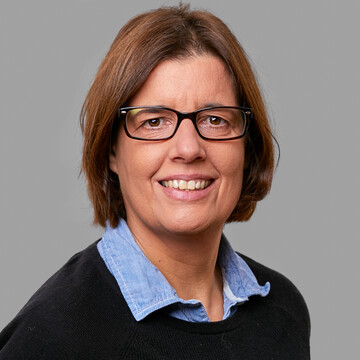
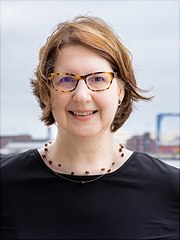
Dr. Oliver Raaz is a Research Associate at the Institute for Media and Communication Studies , part of the Department of Political and Social Sciences at Freie Universität Berlin. His work focuses on organizational communication, public relations, and the intersection of media theory with strategic discourse. University: Freie Universität Berlin School: Department of Political and Social Sciences Department: Institute for Media and Communication Studies Email: oliver.raaz@fu-berlin.de His research interests span organizational communication , public relations , transparency theory , critical post-structuralism , non-standardized research methods , and digital media in chronic disease management . He actively contributes to academic discourse through publications in peer-reviewed journals and edited volumes. Recent publications highlight trends in PR historiography , organizational transparency , digital media ethics , polyphony theory , and complexity frameworks . His work often integrates critical theory with empirical analysis.
Prof. Jürg Kramer is a Professor of Mathematics at Humboldt University of Berlin, affiliated with the Faculty of Mathematics and Natural Sciences and the Institute of Mathematics. His research focuses on Arakelov geometry, automorphic forms (particularly modular forms), and their intersections. Notable contributions include advancements in arithmetic intersection theory with logarithmic singularities and sup-norm bounds for modular forms. He is also deeply engaged in mathematics education, leading initiatives for teacher training and promoting mathematical talent through networks like the Berlin School Mathematics Network. Active in academic service, he served as EMS Education Committee Chair (2017–2022) and President of the German Mathematical Society (2013/14). His work bridges pure mathematics with pedagogical innovation, emphasizing public understanding through popular science publications. Research: Arakelov geometry, modular forms, L-functions, hyperbolic geometry methods Education: Teacher training programs, math talent promotion, textbook authorship Affiliations: Leibniz Institute for Science and Mathematics Education (IPN), EMS, Deutsche Akademie der Technikwissenschaften Key educational contributions include Felix-Klein teacher training programs and co-authoring standards for mathematics teacher education. His publications span advanced mathematical research and accessible expositions on topics like Fermat’s Last Theorem and Riemann Hypothesis.
Prof. Dr. Marco Rieckmann is a Professor of Higher Education Didactics with a focus on key competencies at the Department of Educational Sciences, Faculty of Education and Social Sciences, University of Vechta, Germany. He is also the Co-Chair of the UNESCO Chair ‘Physical Education and Sport Pedagogy for Sustainable Development’ at the University of Limerick since 2024. His work centers on education for sustainable development (ESD), transformative learning, and sustainable university development. His research interests include: Education for Sustainable Development (ESD) and Teacher Education Service Learning and Civic Engagement Curriculum Development for Sustainability Higher Education Governance and Institutional Transformation Digitalization and Serious Games in Sustainability Education Global Learning and Intercultural Education His recent publications and projects reflect a strong trend toward assessing the impact of sustainability education, developing innovative teaching formats (e.g., Minecraft-based learning), and fostering whole-institution approaches in schools and universities. He emphasizes participatory, transdisciplinary, and transformative methods to empower learners and institutions. Scientific awards and recognitions include: Best Doctoral Researcher of the Year 2008 (2nd place, Leuphana University) Innovative Teaching Award (2010) Multiple DAAD and ERASMUS guest lectureships UNESCO recognition for HOCH-N and LeNa projects (2018) Prof. Rieckmann actively advises and collaborates with students and researchers, leads major funded projects (e.g., IMP>ACT, Senatra, HOCH-N), and contributes to national and international policy development. He is a key figure in advancing sustainability in higher education through research, teaching, and institutional leadership. He leads and participates in various research labs and networks, including the UNESCO Chair, the LeNa network, the HOCH-N consortium, and multiple EU-funded projects focusing on co-learning labs, digital tools, and service learning for sustainability.
Markus Schäffter is a Professor at Ulm University of Applied Sciences (THU) , specializing in Data Protection and Information Security . He serves as the Official Data Protection Officer, contributing to institutional security frameworks while engaging with interdisciplinary research through affiliations with the Institute of Computer Science , Institute of Higher Education Didactics , and Institute of Applied Research . Research Interests: His work centers on data protection and information security, with a focus on: Technical and managerial aspects of data protection Healthcare and medical data privacy Risk-based approaches to security measures Teaching: Schäffter instructs courses on Data Protection and Information Security in Medical Informatics , offers core and elective subjects in information security, and supervises seminar projects for Bachelor's and Master's students. Contact: Located at Room A309, Prittwitzstraße 10, 89075 Ulm, Germany. Phone: +49 731 96537-576. Email: Markus.Schaeffter@thu.de .
Prof. Dr. Claudia Schlaak is Professor of Language Teaching and Learning Research: Didactics of French and Spanish at the University of Kassel, where she serves as Head of the Department of Foreign Language Teaching and Learning Research. She has held this position since September 2020, following an acting professorship at the same institution from October 2018 to December 2019. Her academic work bridges theoretical research and practical application in foreign language education, with particular focus on inclusive teaching methodologies and multilingual contexts. Dr. Schlaak's research centers on foreign language teaching and learning, with special emphasis on didactics of French and Spanish, inclusive education approaches, multilingualism in educational contexts, and the integration of digital technologies in language acquisition. Her work examines how diverse language backgrounds influence learning processes, with particular attention to bilingual learners (especially German-Turkish bilinguals) acquiring Romance languages. She investigates pronunciation acquisition, text complexity, intercultural competence development, and the implementation of inclusive teaching strategies that recognize learner diversity as a resource rather than a challenge. Analysis of her recent publications reveals a strong trend toward digital learning environments, with increasing focus on virtual reality applications, 360-degree learning environments, and digital tools for pronunciation training. Her research consistently addresses multilingual contexts and inclusive approaches, with growing attention to potential-oriented teaching methodologies that shift focus from deficits to learner strengths. The interdisciplinary nature of her work connects linguistics, educational psychology, and technology-enhanced learning. Dr. Schlaak serves as co-editor of the journal Romance Language and its Didactics (since January 2019) and the series French Didactics in Dialogue (since April 2020). She has contributed significantly to academic discourse through numerous edited volumes, special journal issues, and collaborative research projects that bridge theoretical insights with practical classroom applications. Her work demonstrates strong commitment to teacher education, with multiple publications addressing pre-service and in-service teacher training, particularly regarding inclusive practices, intercultural competence development, and the integration of digital tools in language teaching. She has developed practical teaching materials, including method cards for foreign language instruction and inclusive teaching resources for Spanish language classrooms.
Kathrin Siebold is a Professor at the Institute for German Linguistics of Philipps-Universität Marburg , specializing in German as a Foreign and Second Language (DaF/DaZ) . She leads the German as a Foreign and Second Language Working Group and oversees multiple MA and teacher training programs , including international double degree collaborations with institutions in China, France, and Spain. Contact: +49 6421 28-24892 | Email | Room B213, Marburg Educational Background includes a Dr. phil. (2007) from Universidad de Sevilla for her dissertation on speech acts and verbal politeness, with distinctions like Doctorado Europeo and Premio extraordinario del Doctorado . She earned her Magister Artium in German and Romance Studies from Philipps-Universität Marburg (1998) and Ludwig Maximilians-Universität München (1993–1997). Research Interests center on contrastive and intercultural pragmatics , focusing on speech acts, politeness, discourse markers, and interactional competences in L2. She explores empirical classroom research , video-based observation (VEO), and pedagogical innovations like Virtual Exchange and Tandem Learning . Her projects address multilingualism , language policy , and professional development of DaF/DaZ educators. Scientific Contributions include co-founding the open-access journal ZIAF (Zeitschrift für Interaktionsforschung in DaFZ) and organizing conferences such as the International Conference on German as a Foreign Language and the Marburger FaDaF-Thementage . Her recent 15 publications (2025–2023) analyze classroom interaction, discourse markers, and international educational collaborations. Awards: Premio extraordinario del Doctorado (2007) | Doctorado Europeo (2007) Professional Leadership involves coordinating research projects like DaF im iberoamerikanischen Kontext (DAAD-funded 2025–2027), Stark nach Corona in DaFZ (2023–2024), and Videobasierte Unterrichtsbeobachtung mit VEO (2023–2025). She collaborates with universities in Chile, Argentina, Spain, and Poland through Germanistische Institutspartnerschaften .
Prof. Dr. Poldi Kuhl is a Professor of Educational Psychology at Leuphana University , Lüneburg, since 2021. Affiliated with the Institute of Psychology in Education (IPE) and the Center for Empirical Research on Language and Education (ERLE) , Kuhl specializes in educational psychology, developmental psychology, and inclusive education. Their research focuses on data-driven decision-making, digital learning platforms, academic language demands, and teacher professional development. Education: Diploma in Psychology (2003) and PhD in Philosophy (2008) from Freie Universität Berlin. Kuhl’s recent work examines how academic language features affect learning outcomes, digital data utilization in primary education, and mental health literacy among teachers. Their publications span topics from virtual reality training tools to inclusive teaching strategies in mathematics. Kuhl’s career includes leadership roles at the Research Data Center (FDZ) at the Institute for Quality Improvement in Education (IQB) and a Junior Professorship at Leuphana University. They have collaborated with institutions like the Universitat Oberta de Catalunya and the Max Planck Institute for Human Development .
Dr. Guido Hunze serves as Senior Academic Councillor (Akademischer Oberrat) at the Institute for Religious Education and Pastoral Theology within the Catholic Theological Faculty of Westfälische Wilhelms-Universität Münster since December 2012. He holds state teaching authorization for Catholic Religious Education at secondary levels and has been actively involved in teacher education and curriculum development. 1991-1997: Studied Physics, Catholic Theology, and Pedagogy at Rheinische Friedrich-Wilhelms-Universität Bonn 1997: First State Examination for Teaching (Sek. II/I) in Physics and Catholic Religious Education 2006: Doctorate (Dr. theol.) at Catholic Theological Faculty of University of Bonn 2005: First State Examination for Teaching (Sek. II) in Pedagogy Dr. Hunze's research focuses on innovative approaches to religious education, particularly through video analysis methodologies. His work emphasizes inclusive religious teaching practices, creation theology in dialogue with natural sciences, and religious education for sustainable development. He explores how digital technologies transform religious pedagogy while maintaining theological depth, examining how students experience religious learning in contemporary contexts. His scholarship bridges theoretical frameworks with practical classroom applications. His recent publications reveal a consistent focus on contemporary challenges in religious education, with increasing attention to digital transformation, diversity, and sustainability. The trajectory shows evolution from traditional religious pedagogy toward more interdisciplinary approaches integrating video analysis, inclusive education, and ecological theology. His work increasingly addresses how religious education can respond to societal crises and digital transformation while maintaining theological integrity. As an academic leader, Dr. Hunze serves as faculty advisor for teacher education programs, coordinates practical semesters for religious education students, and moderates training for the implementation of confessional-cooperative religious education in the Diocese of Münster. He has contributed significantly to textbook development for Catholic religious education in German schools. Dr. Hunze leads the TheoTVIST videography team and previously directed the GRUVI project, which develops fundamental competencies for religious education through video analysis of classroom instruction. These initiatives represent his commitment to evidence-based approaches to religious pedagogy and teacher development.
Dr. Peter Mainka is a part-time lecturer at the Chair of Modern History at the University of Würzburg, with a focus on Early Modern European history and colonial contexts. He holds a PhD in Modern and Contemporary History from Würzburg and has extensive experience in German-Brazilian academic collaborations. Education : History, German Studies, and Ancient Greek at the University of Würzburg and Vienna. Research Interests span colonial history, Ibero-American studies, enlightened absolutism, and the role of religious orders in colonial contexts. His work often intersects with educational history and cultural exchange. His recent publications emphasize the Portuguese Empire, Jesuit missions in Brazil, and Early Modern political philosophy. Notable awards include the Wissenschaftspreis der Stiftung Ostdeutscher Kulturrat (2nd Place, 1995). He has led student excursions to Brazil and the Netherlands, fostering cross-cultural academic engagement. Teaching activities at Würzburg include seminars on the Portuguese seaborne empire, Ibero-American colonialism, and the Thirty Years' War. Since 2014, he has been a pedagogical staff member at the Würzburg Adult Education Center (vhs).
Jessica Süßenbach is a Professor for Sports Pedagogy and Sports Science at Leuphana University of Lüneburg. She maintains an active research profile with 78 publications, 48 academic activities, 16 research projects, and multiple media appearances. Her work focuses on physical education, gender and diversity issues in sports, and innovative teaching approaches in primary school settings. Her research interests center on physical education in primary schools, with particular emphasis on inclusive sports practices, gender diversity, and the integration of digital media in sports teaching. She has conducted qualitative studies on movement, play, and sports in all-day primary schools, examining perspectives from both educational staff and children. Her work explores wheelchair basketball as an inclusive sport, digital video tagging in football instruction, and quality development frameworks for sports offerings in extended school settings. Analysis of her recent publications reveals a strong focus on inclusive sports education, particularly examining how to make sports accessible to children with diverse needs. She has pioneered work on digital media integration in sports teaching, especially video-based approaches for reflection and instruction. Her research consistently addresses practical applications for primary school settings, with a focus on qualitative methodologies and participatory approaches that include children's perspectives. Professor Süßenbach is actively involved in significant research projects including 'Sport vernetzt,' the Move4Health subproject examining sports clubs as developmental environments for children, and the Circular EURO 2024 sustainability initiative. Her work has received substantial institutional support, including the 'Millions in funding for Leuphana teacher training' project from 2018. Her academic contributions extend to practical applications in schools, particularly through her work on wheelchair basketball (RoBaTaS project) and video-based reflection methods for physical education. She regularly presents her findings at conferences and through media outlets, demonstrating commitment to translating research into practice.
Prof. Dr. Kerstin Mayrberger is a Professor for Teaching and Learning at the University of Hamburg's Faculty of Education, specializing in Media Didactics at the Hamburg Center for University Teaching and Learning (HUL). She focuses on Digital Transformation in Higher Education, Agile Educational Leadership, and Open Educational Practices (OEP). Her work bridges theory and practice, emphasizing participatory approaches and institutional agility. Educationally, she holds a Dr. phil. from Hamburg University (2006) and has held academic positions since 2009, including roles at the Universities of Augsburg and Mainz. She is currently Chair of the BMBF's OER Strategy Advisory Board and has led major projects like the Hamburg Open Online University (HOOU). Her research explores digital didactics, open education, and leadership in education. Key interests include Ambidextrous Agile Educational Leadership (AAEL), which integrates stability and innovation in educational contexts. She has authored influential books such as Partizipative Mediendidaktik (2019) and Agile Educational Leadership (2021). Awards include the GEW Förderpreis (2000) for academic excellence. She advises on national education policies and chairs committees for OER strategies. Her work spans grants from BMBF, DAAD, and European initiatives, emphasizing digital equity, teacher professionalization, and educational innovation. She leads the HUL, coordinates international collaborations, and contributes to initiatives like the United Nations' Education 2030 agenda. Her labs and teams focus on OER development, digital pedagogy, and educational leadership frameworks.
Eva Glasmachers is a Lecturer and Managing Director of the Faculty of Mathematics at Ruhr University Bochum. She holds a PhD in Differential Geometry (2010) and has been actively involved in academic leadership since 2008. Her roles include student advising, curriculum development, and managing faculty operations. Her research focuses on university-level mathematics education, emphasizing interactive teaching methods, digital learning tools (e.g., STACK), and student motivation strategies. She leads projects like VORsprung for digital study preparation and trains tutorial group instructors. She is a founding member of HDM@RUB (Center for Higher Mathematics Education) and serves on the Ruhr University Senate and the Excellence Network for Teaching. Notable publications include works on gamification in education, adaptive learning systems, and dropout prevention strategies. She collaborates extensively with educational technology centers and contributes to national didactics conferences.
Professor Bernhard Schmidt-Hertha is a leading academic at Ludwig Maximilian University of Munich, holding the Chair in Adult Education within the Faculty of Psychology and Education. His extensive expertise spans lifelong learning, digitalization in education, and continuing education research, with a particular focus on older adults and intergenerational learning. Research Focus: Continuing education research University studies and educational transitions Education in the second half of life Informal learning processes Digitalization in educational systems His current research projects include investigating dropout in adult literacy programs (DrAG), integrating AI into vocational training (KIB³), and developing digital skills for refugees and immigrants (DigIT). These initiatives highlight his commitment to addressing contemporary educational challenges through innovative research and practical applications. Publications and Contributions: Professor Schmidt-Hertha has authored numerous influential monographs and scholarly articles. His recent work explores digital pedagogies, adult learning in digital contexts, and the socio-ecological perspectives of educational transitions. His publications appear in top-tier journals, reflecting his significant impact on the field. Consultation and Contact: He holds regular consultation hours on Tuesdays from 10:00-11:00 a.m. by appointment via email: b.schmidt@edu.lmu.de .
Univ.-Prof. Dr. Katja Heim is a prominent academic in the field of English Didactics, currently serving at the Institute of English Philology (WE6) at Freie Universitaet Berlin . With extensive experience in primary and secondary English education, her work focuses on social inclusion , learner autonomy , and hybrid/digital learning environments . She has held various academic positions including Freie Universitaet Berlin since 2024, after roles at Duisburg-Essen and other institutions. PhD in English Didactics Specializes in project-based teacher education Expert in bilingual learning in primary schools Her research emphasizes democratic classroom practices , multimodal texts , and technology integration in language teaching. Notable contributions include coordinated projects on digital media in teacher training and publications on inclusive education strategies. While her recent articles highlight hybrid learning and learner autonomy frameworks, her career spans over two decades of academic development in English education. Key research trends include: Blended learning implementation Bilingual education models Action research methodology
Mandy Hauser is a Researcher in the "Education with Special Needs and Intellectual Development" department at the Institute for Special Needs Education , Leipzig University , where she has taught and researched since 2012. Her work focuses on participatory and inclusive research, methodological and ethical challenges in empirical social research involving individuals with intellectual disabilities, inclusion-sensitive university development, disability studies, and self-reflexivity in teacher training programs. Education: Ph.D. in "Quality and Goodness in Joint Research with People with Learning Difficulties" (2019), funded by the Heinrich Böll Foundation Special Education Teaching Degree (intellectual development & communication) at Leipzig University (2002-2005) Studies in General Linguistics, Comparative Literature, and Medieval/Modern History (2000-2005) Research Interests center on participatory methodologies in disability studies, ethical frameworks for inclusive research, and transforming higher education to support inclusion. Her work addresses ambivalent emotions in academic inclusion, ableism in teacher education, and contradictions in inclusion-focused knowledge production. Recent Publications (2020-2025) explore themes like collaborative research quality, inclusive university didactics, and the intersection of disability studies and pedagogy. Notable projects include ParLink (2018-2021), funded by the German Federal Ministry of Education and Research. Notable Awards: Heinrich Böll Foundation scholarship for doctoral research She has also held an Acting Professorship at Martin Luther University Halle/Wittenberg (2011) and participated in teaching initiatives like " Kleine Forscher:innen " (2009-2013) for kindergarten education and feminist editorial work in " Outside the Box " (2009-2013).