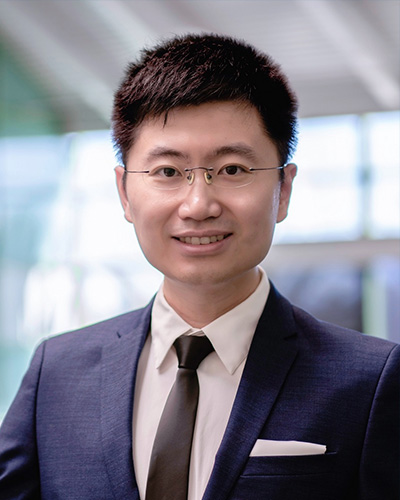
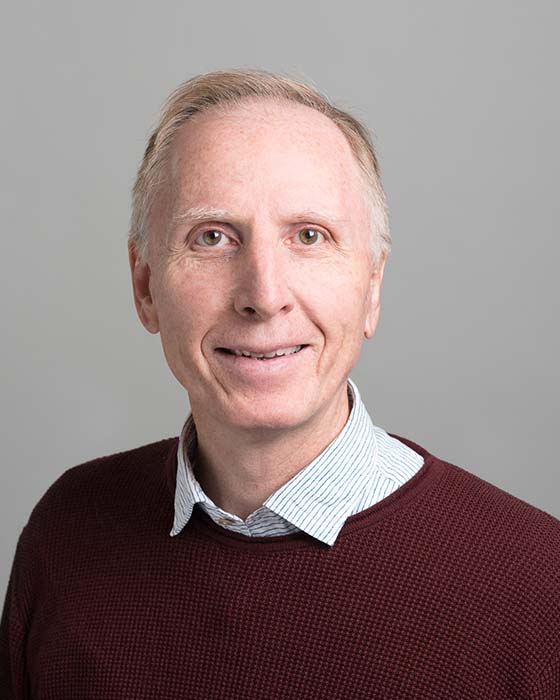
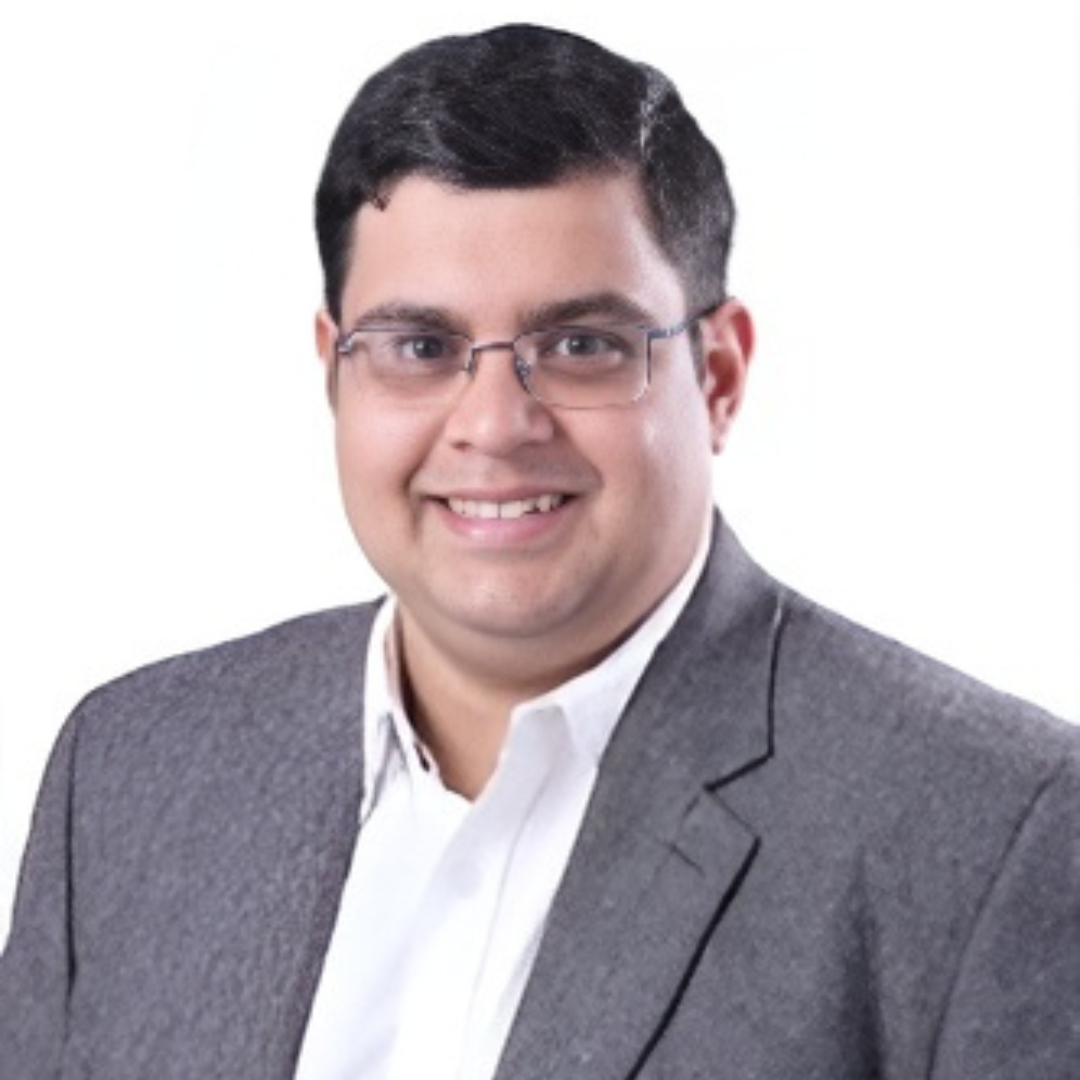
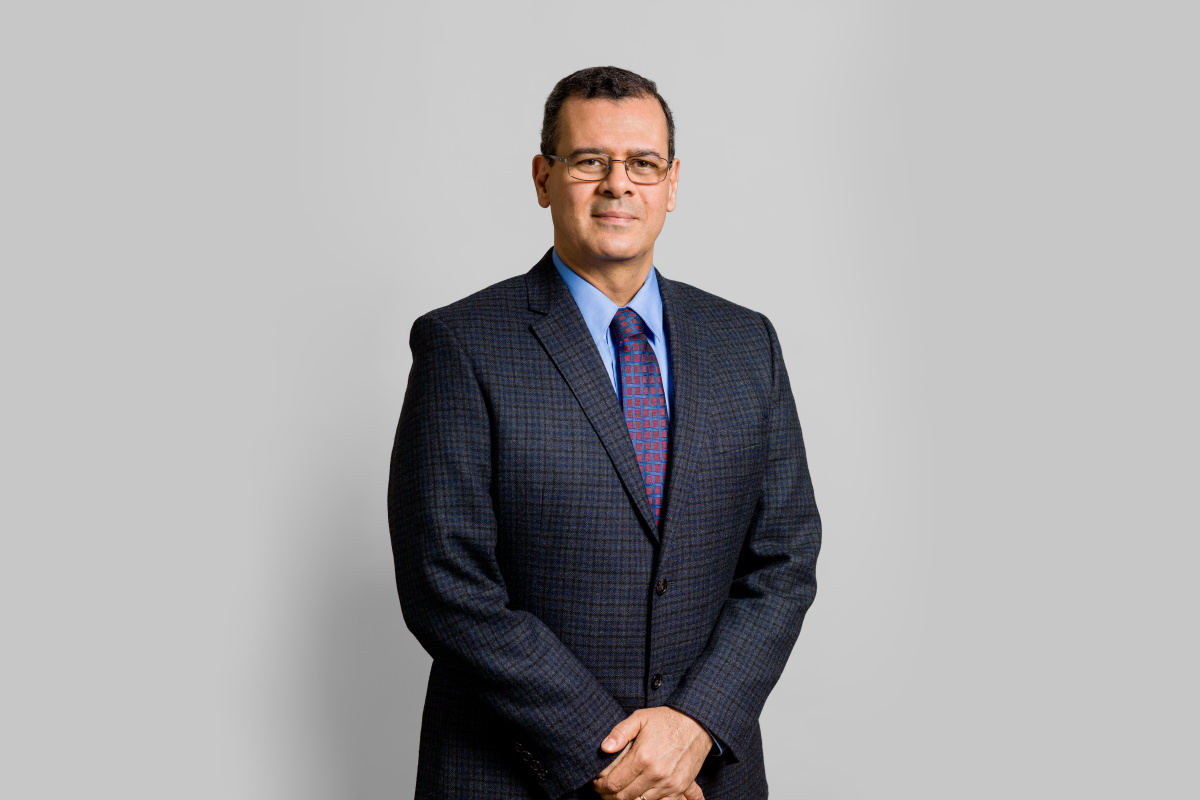
Shiyu Su is an Assistant Professor in the Department of Electrical and Computer Engineering at the University of Waterloo. His research focuses on high-speed data converters, wireless transceivers, digital phase-locked loops (PLL), and AI-assisted analog/mixed-signal design automation. He holds a Ph.D. from the University of Southern California (2019) and teaches courses such as ECE 340 (Electronic Circuits 2) and ECE 432 (Radio Frequency Integrated Devices and Circuits). Education: B.S. from Beijing University of Post and Telecommunication (China) and Queen Mary, University of London (UK), 2011; M.S. and Ph.D. from USC, 2013 and 2019, all in electrical engineering. Research Interests: High-speed ADCs/DACs RF/mm-wave transceivers Time-approximation filters (TAF) Analog/mixed-signal design automation Memristor-based computing Biomedical interfaces Key Awards: IEEE SSCS Predoctoral Achievement Award (2017–2018) Best Student Paper Award at IEEE RFIC (2022) Ming Hsieh Institute Scholar (2019–2020) Lab Focus: The Shiyu Su Lab develops integrated circuits for communications, sensing, and computing, with a focus on AI-driven methodologies and digital-analog co-design. Collaborations include work with Prof. Wei Wu (USC) on memristor-based systems.
Xilin Liu is an Assistant Professor at the Edward S. Rogers Sr. Department of Electrical & Computer Engineering (University of Toronto) and the Center for Advancing Neurotechnological Innovation to Application (CRANIA) . He obtained his PhD from the University of Pennsylvania and previously worked at Qualcomm Inc. in California. Expertise in integrated circuits and systems for brain-machine interfaces , neuromodulation , and edge AI Published in top venues including Nature Electronics , IEEE JSSC , and ISSCC Recipient of multiple best paper awards and IEEE Senior Member His research spans three main themes: High-speed data converters for wireless/wireline communication IC design for neural interfacing Accelerating machine learning via hardware Recent publications focus on closed-loop neuromodulation , ultra-wideband transceivers , and flexible biomedical sensors . These works integrate analog IC design , edge AI , and real-time neural interfacing across medical rehabilitation , parkinson's monitoring , and memory research . Awards include: IEEE Solid-State Circuits Society Predoctoral Achievement Award (2016) Best Paper Award at BioCAS (2015) ECE Department Teaching Award (2022) Multiple conference best paper finalists His lab collaborates with UHN , EMBS , and global institutions while maintaining strong commitments to equity, diversity, and inclusion (EDI) in research practices.
David A. Johns is a Full Professor at the Department of Electrical and Computer Engineering within the University of Toronto . His career spans academic and industrial contributions to analog integrated circuits and high-speed communication systems. Co-founder of Snowbush Microelectronics (integrated circuit IP company) IEEE and Canadian Academy of Engineering Fellow Recipient of Darlington Best Paper Award and multiple teaching/design accolades Research Interests include analog integrated circuits for digital communication, data converters, phase-locked loops, and signal processing. His work bridges theoretical concepts with hardware implementation, focusing on full-duplex coax/twisted-pair systems, optical wireless links, and MEMS sensor interfaces. Teaching Contributions cover analog/digital electronics courses like ECE331, ECE354, ECE1371, and ECE1392. He emphasizes hands-on design and simulation tools like LTSpice. Awards & Recognitions : IEEE Fellow (2001) CAE Fellow (2012) Darlington Best Paper Award (1999) University of Toronto ECE Teaching Award (1999) CMC Design Award (1993) Advising involves 19 PhD/MASc theses on topics ranging from oversampling filters to low-power ADCs. His group has produced innovations in continuous-time modulators, MEMS accelerometers, and optical interconnects.
Dr. Sheldon Williamson is a Professor and NSERC Canada Research Chair in Electric Energy Storage Systems for Transportation Electrification at Ontario Tech University's Department of Electrical, Computer and Software Engineering, Faculty of Engineering and Applied Science. His research focuses on advanced energy storage technologies, power electronics, and their integration into transportation systems and smart grids. Education: Ph.D. (Electrical Engineering, Illinois Institute of Technology, 2006), M.S. (Electrical Engineering, Illinois Institute of Technology, 2002), B.E. (Electrical Engineering, University of Mumbai, 1999). Research Interests - Electric Energy Storage Systems for Transportation Electrification - Battery Management Systems (BMS) and Thermal Safety - Wireless Power Transfer and Charging Infrastructure - Cyber-Physical Security in EV Systems - Smart Grid Integration of Renewable Energy Publications : Over 50 peer-reviewed articles from 2021–2025, focusing on battery technologies, power electronics, and electrification challenges. Key themes include solid-state batteries, cloud-based BMS architectures, and dynamic wireless charging systems. No scientific awards explicitly listed in provided texts. Active in academic leadership and curriculum development within the department.
Dr. Wael H. Ahmed is a Professor at the University of Guelph's Department of Mechanical Engineering. His research focuses on multiphase flow analysis for energy, water, and food systems, including thermo-fluid dynamics of mechanical systems. He teaches undergraduate courses such as Fluid Mechanics, Thermodynamics, and Heat Transfer, and graduate courses on phase change heat transfer and two-phase flow. His research lab, the Flow, Energy and Dynamics Solution (FEADS) lab, collaborates with industry to develop sustainable solutions for mechanical systems, addressing fluid-structure interaction challenges. Current projects involve optimizing airlift pumps for aquaculture, biogas production, and CO2 capture. Dr. Ahmed emphasizes hands-on learning, engaging students in real-world engineering problems through 'Learning by Doing' initiatives. Key research areas include multiphase flow dynamics, two-phase flow instabilities, and energy-efficient technologies. He has developed innovative pumping systems and sensors for industrial applications, such as the FloNergia airlift pump commercialized with academic-industry partnerships. His work integrates computational fluid dynamics (CFD), experimental validation, and machine learning for flow pattern identification. Recent projects explore applications in nuclear power plant safety, catalytic converter flow analysis, and sustainable energy systems design.
Dr. David Nairn is an Associate Professor in the Department of Electrical and Computer Engineering at the University of Waterloo. His research focuses on analog and mixed-signal circuit design, particularly in analog-to-digital converters (ADCs), digital-to-analog converters (DACs), and VLSI design. He teaches courses such as ECE 240 (Electronic Circuits 1), ECE 444 (Integrated Analog Electronics), and GENE 123 (Electrical Circuits and Instrumentation). ECE 240: Taught in 2024, 2025 ECE 444: Taught in 2020, 2021, 2022 GENE 123: Taught in 2023 His research emphasizes ADC/DAC optimization, power efficiency, and high-speed conversion techniques. Publications from 2008–2012 highlight advancements in amplifier settling behavior, capacitor scaling for ADCs, and time-interleaved converter architectures. No scientific awards or grants are listed in the provided information. No advised students or affiliated labs/teams are explicitly mentioned.
Cheng Li is a Full Professor and Department Head of Electrical and Computer Engineering at Memorial University of Newfoundland. He holds adjunct professorships at Harbin Institute of Technology and Xi'an University of Post and Telecommunications. His expertise spans wireless communications, underwater networks, and sensor systems. He has held academic roles since 1999, including leadership in Nokia Telecommunications and Baosteel. Education: B.Eng. (Hons.) and M.Eng. from Harbin Institute of Technology, followed by a PhD at Memorial University. His research focuses on energy-efficient wireless networks, underwater localization, and cooperative communication protocols. Research highlights include innovations in underwater acoustic sensor networks, vehicular ad-hoc networks, and integrated satellite-terrestrial systems. He has received 8 notable awards, including the Best Paper Award at IEEE ICC’2010 and the David Dunsiger Award. His work bridges academic and industrial applications, with contributions to standards like NECEC and IEEE conferences. He advises on network security, IoT, and multi-agent systems, with over 30 peer-reviewed publications since 2001.
Nicolas Constantin is a Professor in the Department of Electrical Engineering at École de technologie supérieure (ÉTS), Université du Québec, where he teaches courses including Electrical Circuits (ELE105) and Analog Microelectronics (SYS811). His research focuses on analog and RF microelectronics, microwave circuits, and wireless communications, with specific expertise in RF transmitters and receivers, test methods for analog and RF circuits, and power integrity in high-speed switching systems. His educational background includes: B.Eng. from École de technologie supérieure (ÉTS) M.Sc.A. from Polytechnique Montréal Ph.D. from McGill University Dr. Constantin's research spans multiple domains within electrical engineering, with a consistent focus on improving the linearity and efficiency of RF power amplifiers through innovative techniques like positive envelope feedback. His work bridges fundamental circuit design with practical applications in wireless communications, aerospace systems, and power electronics. Recent research has expanded into GHz-range power integrity modeling for switch-mode converters, millimeter-wave identification systems, and integrated solutions for avionic applications, demonstrating both depth and evolution in his technical contributions. Analyzing his publication record from 1995 to 2025 reveals a clear progression from fundamental device characterization to sophisticated integrated system solutions. Early work focused on GaAs FET behavior and nonlinear analysis of power amplifiers, while more recent publications address system-level challenges in power integrity, millimeter-wave identification, and aerospace electronics. A consistent thread throughout his career has been the development of envelope feedback techniques for RF power amplifiers, which has resulted in multiple patents and continues to drive innovation in wireless communication systems. Dr. Constantin has actively supervised numerous graduate students through doctoral and Master's research projects. His students have explored topics including positive envelope feedback techniques, power integrity in SiP implementations, millimeter-wave antenna systems, and integrated control circuits for aerospace applications. His supervision spans both theoretical analysis and practical implementation, preparing students for careers in both industry and academia. As a key member of the LACIME (Communications and Microelectronic Integration Laboratory) at ÉTS, Dr. Constantin contributes to a research environment that spans from functional materials to communication protocols. The laboratory's multidisciplinary approach enables innovative solutions in micro- and nanofabrication, integrated circuit design, and photonic systems, with strong industry partnerships that facilitate technology transfer and real-world application of research findings.