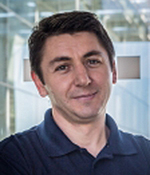
Dr. TÓTH Csaba is an Associate Professor at the Department of Highway and Railway Engineering, Budapest University of Technology and Economics (BME), Faculty of Civil Engineering. He teaches courses such as Highway and Railway Structures (BMEEOUVAI41) and Pavement Structures (BMEEOUVMU63), while previously teaching Pavement Analysis and Design (BMEEOUVDT81) and Project Management in Transportation (BMEEOUVMU-4). His research focuses on asphalt technology, pavement diagnostics, and sustainable road construction. Phone: +36 1 463 1154 Room: ÉL. ép / 206/E Research Interests: His work emphasizes non-destructive evaluation methods (e.g., Ground-Penetrating Radar), rheological modeling of asphalt binders, recycled asphalt pavement applications, and climate-adapted pavement design. Key methodologies include the Ramberg-Osgood model for dynamic modulus prediction and the virtual inertial point method for structural diagnostics. Scientific Contributions: Recent research trends highlight sustainable road rating systems, thermal stress analysis in asphalt pavements, and advanced diagnostic techniques for infrastructure monitoring. Scientific Awards: Magyar Felvételi Scholarship (#építő250)
Thomas C. Rich serves as Professor of Pharmacology and Director of the Bioimaging Core Facility at the University of South Alabama's Frederick P. Whiddon College of Medicine, where he leads innovative research in cellular signaling dynamics and advanced imaging technologies. His educational background includes: Baccalaureate with Honors in Engineering from Georgia Institute of Technology Masters in Aerospace Engineering from Georgia Institute of Technology Ph.D. in Biomedical Engineering from Vanderbilt University Dr. Rich's research focuses on cellular signaling specificity , particularly cAMP pathways and phosphodiesterase regulation . His laboratory pioneered single-cell cAMP sensors and excitation-scanning hyperspectral imaging (HSI) techniques enabling 100-fold signal-to-noise improvements over traditional FRET. Key contributions include mapping cAMP gradients in pulmonary endothelial cells and airway smooth muscle, revealing previously undetectable signaling microdomains through collaborations with Dr. Silas Leavesley and Dr. Michael Francis. Analysis of his 14 publications (2015-2024) shows consistent innovation in quantitative imaging and signal transduction , with increasing emphasis on multi-parametric measurement (cAMP, Ca2+, NO, cGMP) and real-time dynamic tracking . His work spans fundamental enzymology to clinical applications, particularly in respiratory physiology and endoscopic technology development. No scientific awards were mentioned in the provided documentation. While specific advisees and grant details are not documented, Dr. Rich's research program demonstrates extensive collaboration through co-authorship patterns and facility leadership. His Bioimaging Core Facility serves as a hub for interdisciplinary projects requiring advanced fluorescence measurement capabilities. Dr. Rich leads the Bioimaging Core Facility in a collaborative research ecosystem centered around hyperspectral imaging development. His team works closely with Dr. Leavesley on optical system engineering and Dr. Francis on dynamic region-of-interest algorithms, creating an integrated approach to overcome limitations in cellular signal measurement within the 'turbulent maelstrom of the cellular environment'.
Dr. Sandra Diaz Pier is a Scientific Lead at the Jülich Supercomputing Centre (JSC) within the Jülich Research Centre , Germany. Specializing in computational neuroscience , high performance computing (HPC) , and machine learning , she bridges neuroscience and advanced computational methods through her research. Education: B.Sc. in Electronic Systems Engineering, Mexico M.Sc. in Computer Science (focus: machine learning, quantum computing), Mexico Second M.Sc. in Electrical Engineering, Ontario, Canada Ph.D. in Computer Science, Germany (2021) Her research focuses on modeling and simulating brain dynamics and plasticity at multiple scales, leveraging HPC to accelerate large-scale neural network simulations. She actively contributes to EU projects like the Human Brain Project (HBP) , Virtual Brain Cloud , and EBRAINS 2.0 , emphasizing infrastructure development and educational training. Her work includes open-source tools such as the NEST simulator , The Virtual Brain , and L2L , enabling efficient parameter exploration and multiscale co-simulation frameworks. The 15 most recent publications highlight her interdisciplinary approach, spanning topics from quantum computing in biomolecular simulations to neural plasticity algorithms and cloud-based brain modeling . These articles reflect her expertise in integrating machine learning , multi-scale simulation , and HPC infrastructure for neuroscience challenges, including seizure propagation, Parkinson’s disease progression, and swarm intelligence in spiking networks. She leads technical coordination in projects like EBRAINS and serves as a task leader in the HBP infrastructure work package , while also organizing workshops and hackathons for open-source tools. Her role involves supporting domain scientists through methodological research and workflow optimization for brain simulations.
Dr. Gergely Kocsis serves as an Associate Professor at the University of Debrecen's Faculty of Informatics, Department of Informatics Systems and Networks. His office is located in the Faculty of Informatics building at 4028 Debrecen, Kassai út 26, ground floor, IF13 (Lecturers' room), with contact email kocsis.gergely@inf.unideb.hu and central telephone +36 52 512 900 75013. Dr. Kocsis's research program focuses on: Information spreading phenomena Agent-based and individual-based simulations Cellular automata applications Network structure and dynamics His scholarly output reveals a sophisticated research trajectory evolving from foundational work on cellular automata modeling of social dynamics (2007-2014) to contemporary investigations of transportation networks, VANETs, and AI applications. The 2023-2025 publications demonstrate particular expertise in network extraction methodologies, containerized computing environments, and the application of generative AI to productivity challenges. His work consistently applies computational modeling approaches to understand complex spreading phenomena across diverse network structures. Dr. Kocsis maintains comprehensive scientific profiles across major academic platforms including Google Scholar, ResearchGate, ORCID, Scopus, and Web of Science, demonstrating active participation in the international research community. His departmental colleagues work in complementary areas such as complex networks, embedded systems, and neural networks, suggesting rich collaborative opportunities within the Faculty of Informatics.
Bodil Holst is a Professor at the University of Bergen's Department of Physics and Technology , specializing in surface science and scientific instrumentation development . Her research spans 2D materials , helium atom scattering , and archaeometry applications. She leads projects like Nanometer-Resolution Matter-Wave Lithography (FET-Open), 2D Material Properties (NFR FRIPRO), and Wind Turbine Erosion Prevention (Equinor). Her Nanophysics Group has produced groundbreaking work on graphene's temperature-dependent rigidity and icephobic surfaces . First neutral helium microscope images (2008) Recorded bending rigidity of 2D materials (2018-2021) Developed solid-state conversion techniques for sapphire (2017-2021) Her teaching innovations in classical mechanics explore retrieval practice and digital learning structure , documented in Physics Education and Physical Review Physics Education Research .
Jieyang Chen is an Assistant Professor in the Department of Computer Science at the University of Oregon's School of Computer and Data Sciences, where he leads research in high-performance computing and data-intensive scientific applications. His work bridges theoretical computer science with practical solutions for large-scale computational problems. Research Focus: Developing energy-efficient algorithms for CPU-GPU heterogeneous systems Creating fault-tolerant frameworks for scientific computing Designing advanced data compression techniques with error control Optimizing distributed machine learning workflows Dr. Chen's research portfolio demonstrates a consistent focus on performance, reliability, and energy efficiency in scientific computing. His recent publications show increasing sophistication in handling scientific data through techniques like multigrid frameworks, progressive retrieval methods, and adaptive compression algorithms that preserve critical features in climate and other scientific datasets. Education: PhD in Computer Science, University of California, Riverside (2019) MS in Computer Science, University of California, Riverside (2014) BE in Computer Science, Beijing University of Technology Dr. Chen previously worked as a Computer Scientist at Oak Ridge National Laboratory before joining the University of Oregon faculty. His collaborations span national laboratories and industry partners, contributing to real-world applications in scientific computing infrastructure.
Sarah Neuwirth is a tenured Professor for Computer Science at Johannes Gutenberg University Mainz (JGU) and a Visiting Researcher at the Jülich Supercomputing Centre. She manages JGU's High Performance Computing (HPC) division, coordinates regional/national HPC activities, and represents JGU in NHR, Gauss-Allianz, and HPC committees. Education : PhD (Dr. rer. nat.) in Computer Science (2018), Heidelberg University Diplom in Computer Science (2012), University of Mannheim Bachelor of Science in Computer Science (2010), University of Mannheim Research Interests : Parallel File and Storage Systems Modular Supercomputing (resource disaggregation/virtualization) Performance Engineering High Performance Computing Networking Reproducible Benchmarking Parallel I/O Publications Trends : Her work focuses on HPC performance modeling, parallel I/O optimization, modular supercomputing, network characterization, and reproducible benchmarks. Key themes include resource disaggregation, automated workflows, and data-intensive distributed applications. Scientific Awards : 2023 PRACE Ada Lovelace Award for HPC ZONTA Science Award 2019 Grants & Leadership : She leads the High Performance Computing division at JGU, participated in European DEEP projects, and serves on SC conference committees.
Richard S. Lewis serves as Professor of Neuroscience and Psychological Science at Pomona College, where he has maintained an active research program since 1985. Currently on leave for Fall 2025, he directs a laboratory specializing in cultural neuroscience using electrophysiology and functional near-infrared spectroscopy (fNIRS). His work examines how cultural frameworks shape neural processing of social and physical environments, with particular focus on self-construal differences between East Asian and European American populations. His educational foundation includes a Ph.D. from Michigan State University, Master of Arts from California State University, Los Angeles, and Bachelor of Science from University of California, Los Angeles. This training underpins his interdisciplinary approach bridging psychology, neuroscience, and cultural studies. Dr. Lewis's research program centers on three interconnected domains: (1) cultural modulation of neural responses to social stimuli using N400 and P3 event-related potentials; (2) acute/chronic stress effects on frontal EEG asymmetry and cognitive performance; and (3) neurocognitive sequelae of mild traumatic brain injury. His laboratory actively investigates how cultural background influences neural processing of contextual incongruities and emotional cues, revealing fundamental mechanisms of sociocultural cognition. His publication trajectory since 2006 demonstrates consistent advancement in cultural neuroscience methodology, increasingly incorporating ecological validity through naturalistic paradigms. The work shows progressive refinement from basic ERP studies of cultural priming to complex investigations of stress-cognition interactions in real-world academic settings, with recent emphasis on developing virtual reality methodologies for social neuroscience. Scientific recognition includes: Wig Distinguished Professorship Award for Excellence in Teaching (Pomona College, 1988 & 2011) National Institute of Mental Health Postdoctoral Fellowship (1984-1986) Research funding reflects his program's significance through: National Science Foundation Grant: "Stress, Stages of Memory, and Event-Related Potentials" (2002-2006) National Science Foundation MRI Grant: "Establishment of High-Density ERP Laboratory" (2001-2004) National Institutes of Health Grant: "Neurobehavioral Sequelae of Mild Pediatric TBI" (1989-1991) He actively mentors undergraduate researchers in his Pomona College laboratory, with students contributing to publications across cultural neuroscience and stress physiology domains. His laboratory maintains specialized facilities including high-density EEG systems and fNIRS equipment, recently enhanced through NSF instrumentation grants. Current work pioneers virtual reality integration to create ecologically valid social scenarios while preserving experimental control, aiming to uncover deeper sociocultural neural mechanisms through innovative methodology.
Professor Richard Morgan is an academic at the University of Queensland's School of Mechanical and Mining Engineering, where he served as Director of the Centre for Hypersonics from 1997 to 2021. His research specializes in hypervelocity aerothermodynamics, scramjet propulsion, and advanced hypersonic testing facilities. He lectures in mechanical and aerospace engineering and maintains an extensive international research program. His research focuses on: Development of hypervelocity impulsive facilities (including the 'X' series expansion tubes) Hypersonic aero-thermo-dynamics and radiation physics Scramjet propulsion systems for high-speed flight Planetary entry phenomena including ablation and radiation coupling Superorbital ground testing methodologies Analysis of recent publications reveals a dominant focus on experimental hypersonics, particularly in expansion tube facility development, radiation measurement techniques, planetary entry simulations, and aerodynamic heating. His work consistently addresses challenges in recreating extreme flight conditions for spacecraft and missile technologies. Awards and honors include: NASA Ames Honour Award (2010) for contributions to Hayabusa asteroid sample return mission observations UQ Excellence in Research Higher Degree Supervision Award (2012) He leads significant research collaborations with DSTG, NASA, ESA, Oxford University, and Ecole Centrale Paris, supported by continuous ARC funding since 1990 including current Discovery grants. His laboratory develops cutting-edge facilities like the X3 expansion tube and T6 Stalker Tunnel for hypersonic testing.
Professor Vincent Wheatley is a Professor at the School of Mechanical and Mining Engineering, University of Queensland , and Co-Director of the Centre for Hypersonics . His research focuses on supersonic plasma flows , hypersonics , and computational fluid dynamics , with applications in inertial confinement fusion and scramjet engines for space propulsion. Education: PhD in Aeronautics (2005), California Institute of Technology MEngSc (Mechanical), University of Queensland BE (Mechanical and Space), University of Queensland His recent work (2025–2021) explores scramjet combustion dynamics (e.g., hydrogen/ethylene fuel injection), plasma instabilities in multi-fluid models, and hypersonic noise and shock wave interactions . These studies employ direct numerical simulation (DNS) , large eddy simulation (LES) , and reacting flow modeling . Scientific Awards: Australia's Research Field Leader in Aerospace and Aviation Engineering (2018) 2017 Australian Award for University Teaching – Award for Teaching Excellence Professor Wheatley supervises projects on plasma fuel engines and hypersonic propulsion , supported by grants from the Australian Research Council (ARC) and Commonwealth Defence Science and Technology Group . His team collaborates on multi-fluid plasma simulation and scramjet optimization .
David Strang is a Professor in the Department of Sociology at Cornell University's College of Arts and Sciences . His research focuses on innovation and diffusion in political, organizational, and scientific domains, with recent projects analyzing the evolution of research articles, social movements' influence on policy, and computational models of management practice adoption. Research Interests Political Sociology & Social Movements Organizations & Economic Sociology Models and Methods for Dynamic Processes Sociology of Science Email: ds20@cornell.edu His publications span sociological theory, computational modeling, and empirical studies of diffusion processes. Articles reflect trends in peer review analysis, management fashion cycles, and cross-cultural institutional adoption. Key collaborations include works with Kyle Siler and Robert J. David. David Strang's methodological expertise includes agent-based modeling and textual analysis. He has edited volumes like The Oxford Handbook of Management Ideas and authored books such as Learning by Example: Imitation and Innovation at a Global Bank . His work has appeared in Administrative Science Quarterly , American Journal of Sociology , and Sociological Theory .
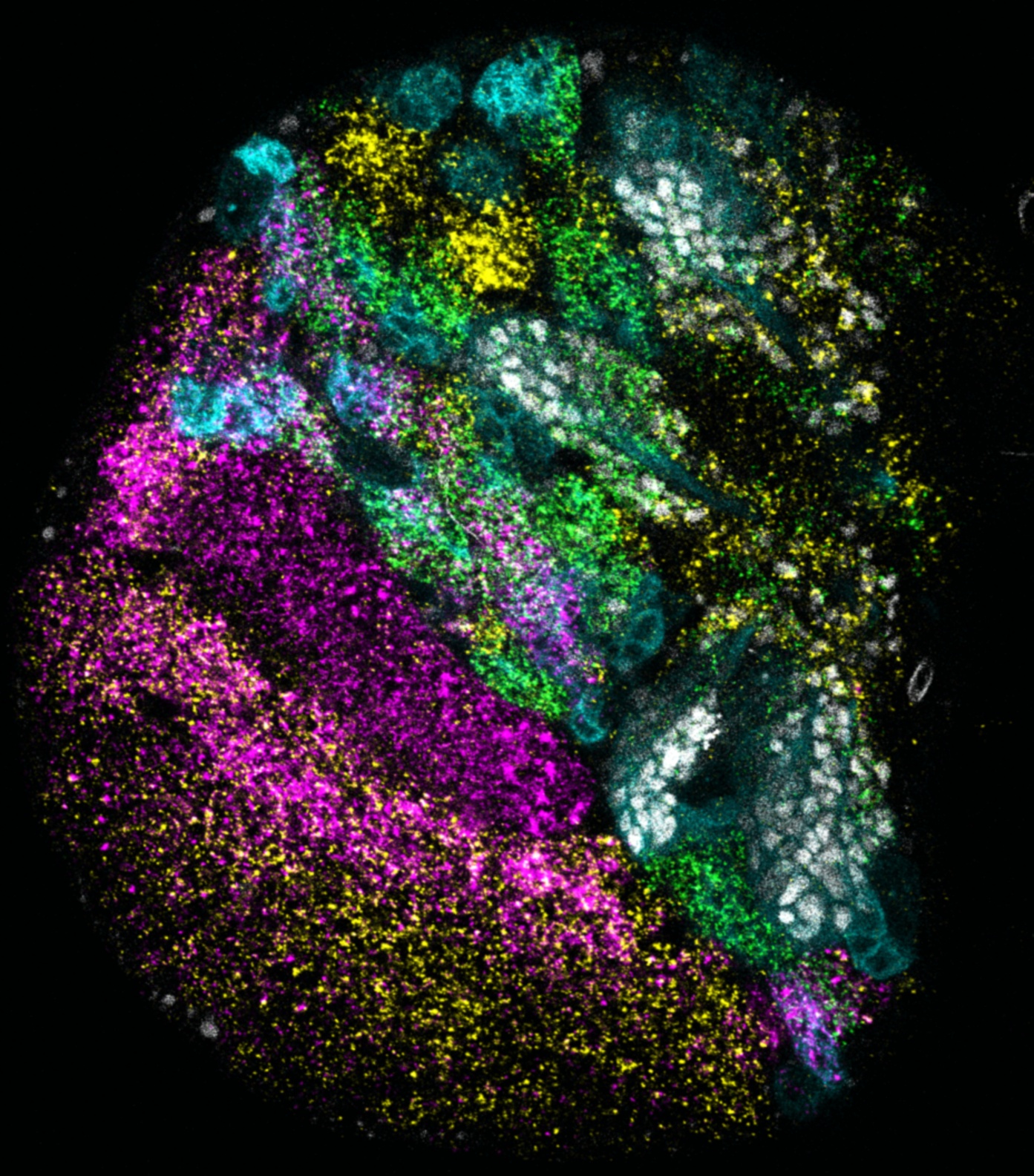
Dawen Cai, Ph.D., is an Associate Professor at the University of Michigan Medical School in the Department of Cell and Developmental Biology , with a secondary affiliation in the Biophysics Department under the College of Literature, Science, and the Arts (LS&A). He is also affiliated with the Neuroscience Graduate Program at the Medical School. His research focuses on integrating computational and experimental approaches to study neuronal subtype determination using scRNA-seq and in situ analysis. His research explores the intersection of RNA biology, neuroscience, and bioinformatics. He develops tools for multispectral imaging and lineage tracing to decode neural development and connectivity in Drosophila and mammalian models. His work combines single-cell transcriptomics with advanced microscopy to identify marker genes and model neuronal architecture. The articles reflect a strong interdisciplinary focus on neuroscience and biomedical imaging. Recent publications highlight innovations in 3D imaging technologies, image compression algorithms, and machine learning applications for medical image segmentation. These works emphasize scalable solutions for high-resolution data analysis, advancing tools for neurophysiology, and leveraging RNA sequencing to map neural development. No scientific awards were explicitly mentioned in the text. Dawen Cai actively recruits PhD students and postdoctoral fellows for the Cai Lab, prioritizing candidates with wet-lab skills, bioinformatics expertise, and experience in quantitative image processing. His lab emphasizes training in interdisciplinary research, paper/grant writing, and critical thinking.
Florin Rusu is a Professor and Chair of the Department of Computer Science and Engineering at the University of California Merced, School of Engineering. He joined UC Merced in 2010 and has served in multiple administrative positions including as chair of the School of Engineering's Executive Committee and currently as chair of the Department of Computer Science and Engineering. His educational background includes a B.Eng. degree from the Technical University of Cluj-Napoca, Faculty of Automation and Computer Science (2004), and M.Sc. and Ph.D. degrees from the University of Florida in Computer Science (2008 and 2009). Rusu's research focuses on database systems and large-scale data management, with particular emphasis on designing infrastructure for Big Data analytics. His specific research areas include query processing and optimization, approximate and randomized algorithms, scalable machine learning, multi-dimensional array data management, and in-situ data processing. His work bridges theoretical aspects with practical system design issues. His research has been funded by multiple prestigious organizations including the US Department of Energy (DOE), National Science Foundation (NSF), California Department of Education, Hellman Foundation, LogicBlox, and TigerGraph. His recent publications show a continued focus on database query optimization, particularly around cardinality estimation, sketch-based methods, and innovative approaches to query plan generation. His work spans both theoretical contributions and practical implementations, with several projects transitioning into real-world database systems. Scientific Awards: DOE Early Career Award (2014) Hellman Faculty Fellowship (2013) Rusu has advised numerous graduate students through their Ph.D. and Master's programs, with many going on to successful careers at major tech companies (Google, Meta, TigerGraph) and academic positions. His research group has secured substantial funding from NSF (COMPASS project 2020-2025), DOE Early Career Award (2014-2021), TigerGraph, California Department of Education, and Hellman Foundation. His research group maintains active projects in Database Query Optimization, Scalable Gradient Descent Optimization, Array Databases, In-Situ Data Processing, GLADE, Online Aggregation, and Sketches, demonstrating a comprehensive research program spanning multiple aspects of database systems and large-scale data management.
Ramon Canal is a Professor at the Universitat Politècnica de Catalunya (UPC), affiliated with the Barcelona School of Informatics and the Computer Architecture Department. He has served as Vice Dean of postgraduate studies and leads the VirtuOS (Virtualization and Operating Systems) research group. His academic background includes BSc, MSc, and PhD from UPC, with thesis supervision by Antonio González (UPC) and James E. Smith (University of Wisconsin-Madison). He completed sabbaticals at Harvard University (2006-2007) and University of Cyprus (2019-2020). Education: PhD, MSc, BSc in Computer Engineering (UPC) Research focus: Microarchitecture security, reliability across circuit/system levels, cloud optimization Recent publications address privacy in IoT, secure hardware accelerators, and safety-critical systems. His work contributes to the DRAC project (2019-2022), Red-RISCV network, and Horizon's Vitamin-V project. Awards include HiPEAC Paper Awards, IEEE Senior Member status, Fulbright recognition, and multiple education excellence accolades. Scientific Honors HiPEAC Paper Award (ISCA-44, 2017) IEEE Senior Member (2016) Best Paper Nominee (ICCD-32, 2014) UPC Outstanding PhD Award supervision (2011) He advises current MSc students and has mentored multiple PhD graduates. Professional activities span academic leadership, research collaborations with Barcelona Supercomputing Center (BSC), and technical contributions to reliability analysis frameworks like RECIPE and FRACTAL.
Sophie S. Berkman is an Assistant Professor in the Department of Physics & Astronomy at Michigan State University. Her research focuses on experimental particle physics, particularly neutrino interactions and the development of liquid argon time projection chamber (LArTPC) detectors. Her work involves precision measurements of neutrino-argon cross sections critical for the Deep Underground Neutrino Experiment (DUNE). She contributes to Fermilab's MicroBooNE and ICARUS detectors within the Short-Baseline Neutrino program, analyzing data to understand neutrino properties and detector performance. Her research spans charged-current and neutral-current interactions, pion production mechanisms, and searches for physics beyond the Standard Model through sterile neutrino and dark sector investigations. Recent publications demonstrate leadership in neutrino interaction vertex reconstruction using deep learning, liquid argon purity monitoring, and supernova neutrino detection capabilities. Her work on trigger systems and software development directly supports DUNE's operational readiness and scientific objectives in neutrino oscillation physics. She actively participates in international collaborations including DUNE, MicroBooNE, and ICARUS, contributing to detector calibration, event reconstruction algorithms, and cross-section measurements essential for next-generation neutrino experiments.


.JPG)