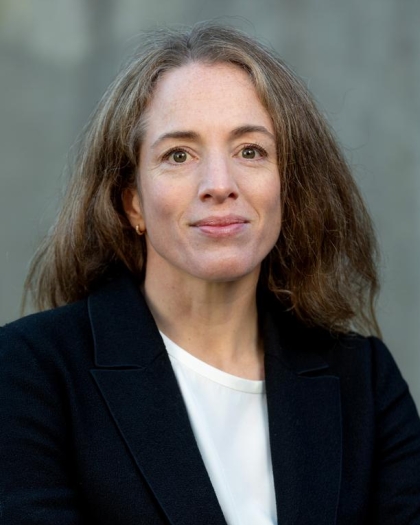
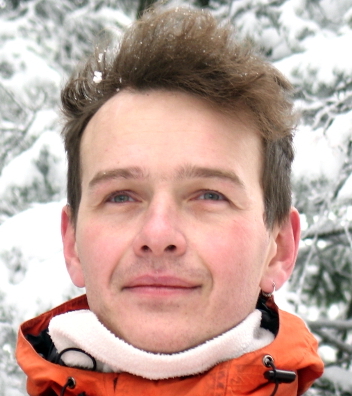
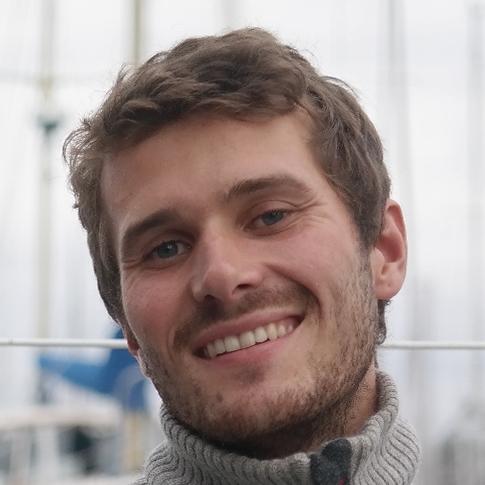
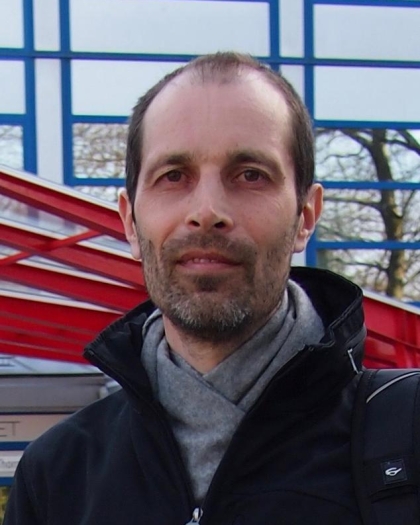
Inga Berre is a Professor at the Department of Mathematics, University of Bergen, and serves as Director of the Center for Modeling of Coupled Subsurface Dynamics (CSD). She leads the Porous Media Research Group and was appointed Argyris Visiting Professor at the University of Stuttgart's SimTech Cluster of Excellence in 2023. Research Interests: Mathematical modeling, partial differential equations, numerical methods for coupled thermo-hydro-mechanical-chemical processes in subsurface systems, and fault reactivation induced by injection/production. Scientific Leadership: Member of SIAM Council (2022-2027), Chair of SIAM GS activity group (2021-2022), Co-Chair of SET-Plan Deep Geothermal Implementation Working Group (2019-2021), and Chair of the Joint Program Geothermal, European Energy Research Alliance (2018-2021). Awards: 2011 Meltzer Award for Young Researchers. Advisory Roles: Member of Scientific Advisory Boards for GFZ (2024-2027) and SFB1313 (2018-), among others. Teaching: Developed courses on calculus, functional analysis, mathematical modeling, and numerical methods at the Bergen Summer Research School.
Terese Løvås serves as Vice Dean of Research and Innovation at the Faculty of Engineering, Norwegian University of Science and Technology (NTNU), where she leads strategic development of research and innovation activities. She concurrently holds the position of Professor of Combustion and Thermodynamics within the Department of Energy and Process Engineering. Her leadership responsibilities include oversight of Centers of Excellence, Horizon Europe projects, and PhD researcher training. Her research focuses on combustion engineering and alternative fuel technologies , particularly investigating ammonia and hydrogen combustion for zero-emission engines, biomass gasification processes, and reactive multiphase flow modeling. She heads the Engine Lab at NTNU and teaches Thermodynamics, Heat, and Combustion courses. Her work bridges theoretical modeling with experimental validation in sustainable energy systems. Løvås actively contributes to major research initiatives including LowEmission (SFI center), ACTIVATE (ammonia-powered agricultural vehicles), AMAZE (ammonia zero-emission), and CAHEMA (marine ammonia/hydrogen engines). Her publications reveal strong trends in ammonia combustion chemistry , emissions reduction , and advanced computational modeling for sustainable fuel systems, with increasing focus on nitrogen oxide formation mechanisms and dual-fuel strategies. Member of the Board of Directors, Combustion Institute (2022–present) Joint Editor, Proceedings of the Combustion Institute (2019–present) Alumni Fellow in Engineering, Churchill College, Cambridge University As Vice Dean, she manages NTNU's Research and Innovation Committee and represents the faculty in NTNU's Research and Innovation Committee. She supervises multiple PhD candidates and leads international collaborations through projects funded by the Norwegian Research Council, Nordic Energy Research, and EU programs. Her laboratory work focuses on optical engine diagnostics and advanced combustion testing. Løvås maintains active industry engagement through her leadership in the ComKin Research Group and membership in the Institute of Physics and Scandinavian-Nordic Section of the Combustion Institute. Her current work emphasizes practical implementation of ammonia-fueled engine technologies for marine and agricultural applications.
Sverre Steen is a Professor and Head of the Department of Marine Technology at the Norwegian University of Science and Technology (NTNU). He leads the Kongsberg Maritime University Technology Centre focused on 'Ship Performance and Cyber-physical Systems' and is a member of the standing committee for the Symposium of Marine Propulsors. His research emphasizes ship propulsion, hydrodynamics, and big data analysis of in-service vessel performance. Key interests include seakeeping, high-speed marine vehicles, and model testing techniques. Steen teaches TMR 4217 Hydrodynamics of High-Speed Marine Vehicles , covering cavitation, experimental hydrodynamics, and propulsion systems. He collaborates internationally on projects like the Norwegian Ocean Technology Centre. His recent work explores wave-energy extraction via hydrofoil vessels, resistance modeling for fast ferries, and propulsion efficiency in real sea states. He has contributed to global shipping emission models (MariTEAM) and reliability analysis of structural components under vibration. Steen's publications span propulsion in waves, engine-propeller dynamics, and data-driven methods for ship performance monitoring. His applied research bridges experimental testing and computational modeling to address challenges in sustainable maritime transport and operational safety.
Roy Johnsen is a Professor in the Department of Mechanical and Industrial Engineering at the Norwegian University of Science and Technology (NTNU), specializing in corrosion and surface technology. With a Dr.ing. degree from NTH (1984), he has extensive industry experience from Statoil Research Centre (1985-1991) and CorrOcean (1991-2004), where he expanded the company globally. His current research focuses on hydrogen embrittlement, corrosion protection, and integrity management in offshore systems, with collaborations across Europe, Asia, and the Americas.
Hans Bihs is a Professor in the Department of Civil and Environmental Engineering, Faculty of Engineering. His research focuses on computational fluid dynamics (CFD), wave hydrodynamics, and wave-structure interaction using the open-source framework REEF3D. Key Research Areas: CFD simulations, wave modeling, floating body dynamics, ocean wave energy, aquaculture hydrodynamics, sediment transport, and high-performance computing. Projects: ERC Consolidator Grant PARTRES (2023-2028), EEA Grants Portugal SurfWave (2023), NFR KPN IPIRIS (2021-2025), EEA Baltic SolidShore (2021-2024), NTNU's MAPLE (2022-2025), and DigiCoast (2021-2024). Email: hans.bihs@ntnu.no His recent publications (2025-2020) analyze fluid-structure interaction, ship-induced waves, floating offshore wind turbines, submerged vegetation, and coastal structures using advanced CFD techniques. Topics include wave hydrodynamics, turbulence, and numerical modeling for marine and aquaculture systems.
Andrei Kutuzov is an Associate Professor in the Language Technology Group (LTG) within the Department of Informatics at the University of Oslo. He serves as the Norwegian on-site manager of the High-Performance Language Technology (HPLT) project and has made significant contributions to computational linguistics and natural language processing. His research primarily focuses on computational linguistics and natural language processing, with specialized expertise in semantic change detection, diachronically aware language models, distributional semantics, and large language models. Kutuzov has been instrumental in developing Norwegian language resources including NorBERT, NorELMo models, and the very large-scale NORA.LLM generative models. He created WebVectors, a web service for exploring neural distribution models for Norwegian and English texts. Analysis of his recent publications reveals a strong focus on semantic change modeling, multilingual dataset development, and Norwegian language technology. His work spans from theoretical linguistic analysis to practical applications in language modeling, with significant emphasis on low-resource and Nordic languages. Kutuzov's research demonstrates a consistent trajectory toward improving language models' understanding of semantic evolution and developing robust evaluation frameworks for Norwegian language processing. Norwegian Artificial Intelligence Research Consortium (NORA) award as Distinguished Early Career Researcher (2022) Kutuzov teaches several advanced courses including IN5550 - Neural Methods in Natural Language Processing (2019-2025) and IN3050 - Introduction to Artificial Intelligence and Machine Learning (2024-2025). He has received research funding through the HPLT project which focuses on developing high-performance language technologies. His laboratory work centers around the Language Technology Group at UiO, where he collaborates on developing Norwegian language resources and models, with particular emphasis on diachronic semantic analysis and multilingual capabilities.
Tatiana Aleksandrovna Iakovleva is a Professor of Entrepreneurship Studies at the University of Stavanger (UiS), affiliated with the UiS School of Business and the Department of Innovation, Management and Marketing. She is actively engaged in research on responsible innovation, digital health, user involvement, and entrepreneurship. Her research interests include responsible innovation, digital health, user engagement in innovation, living labs, open innovation, stakeholder involvement, healthcare innovation, social innovation, and regional development. She explores how innovation can be conducted ethically and inclusively, particularly in public and healthcare sectors. Her recent publications (2020–2025) reveal a strong focus on responsible innovation in digital health, user empowerment, and collaborative innovation spaces such as living labs. Themes include stakeholder inclusion, boundary innovation spaces, patient engagement, and the role of universities in regional development. Her work spans interdisciplinary fields, combining insights from management, public health, innovation studies, and social sciences. She has collaborated extensively with researchers such as Elin Merethe Oftedal, John Bessant, Raj Kumar Thapa, and others, contributing to high-impact journals and international conferences like ISPIM and Routledge handbooks. She advises students and researchers in entrepreneurship and innovation, though specific names are not listed in the provided text. She is involved in projects related to digital health innovation, responsible research, and university-industry collaboration. She is associated with the Norwegian Smart Care Lab and participates in participatory research involving service users and professionals in mental health care. Her work emphasizes inclusive and responsible approaches to innovation, particularly in public service contexts.
Tae Eun Kim is an Associate Professor in Maritime Safety Management at UiT The Arctic University of Norway, working within the Department of Technology and Security. Her research, teaching, and industrial collaboration focus on maritime safety and human factors, with particular expertise in maritime safety management, accident analysis, Maritime Autonomous Surface Ships (MASS), and human factors in maritime operations. Dr. Kim's research spans four interconnected domains: maritime safety management and leadership, maritime accident and casualty analysis, Maritime Autonomous Surface Ships (MASS), and human factors in maritime operations. She has developed assessment instruments like the Safety Leadership Self-Efficacy Scale (SLSES) and conducted STAMP-based causal analyses of maritime accidents. Her work on MASS addresses safety challenges in mixed navigational environments and examines leadership competencies for autonomous shipping operations. Her human factors research explores how technological advancements impact navigators' performance, crew dynamics, and safety outcomes, including gender parity issues in the maritime industry. Dr. Kim's publication record reveals a strong focus on the intersection of maritime safety, technology, and human performance. Her recent work increasingly addresses autonomous shipping technologies, with numerous publications on AI decision transparency, learning analytics in maritime simulator training, and multi-modal data analysis for nautical skill development. She has conducted systematic reviews on simulator training approaches and scenario design, contributing significantly to methodology development in maritime education and training. Her research demonstrates a clear trajectory toward integrating emerging technologies with traditional maritime safety practices as the industry transitions toward greater automation. Dr. Kim is actively involved in several significant research projects, including the i-MASTER EU Horizon Europe Research and Innovation Project, the REFRAME project, and the SPRICE project (Multidisciplinary approach for spray icing modelling). She is a member of both the Advanced Maritime Ship Operations research group and the Maritime Safety Science (MARSCI) Research Group, demonstrating her commitment to collaborative research in maritime safety science. Dr. Kim teaches several specialized courses at UiT, including SVF-3206 Safety Management and Accident Investigation, TEK-3014 Navigation Technology, MFA-2100 Maritime Digitalization, MFA-8010 Maritime HTO (Human-Technology-Organisation) and Innovation, and MFA-2018 Maritime Administration and Leadership. Her teaching portfolio reflects the interdisciplinary nature of her expertise, bridging engineering, safety science, and organizational behavior in maritime contexts.
Hakan Basarir is a Professor in the Department of Mining Engineering at the Norwegian University of Science and Technology (NTNU), Trondheim, Norway. His research and teaching focus on mining rock mechanics, rock mass characterization, underground support systems, and the application of soft computing methods in mining engineering. PhD in Mining Engineering (2002) 20+ years of research and teaching experience 60+ publications in journals and conferences Research Interests include rock mass property prediction using measurement while drilling (MWD) techniques, numerical modeling of mining structures, optimization of mine support systems, and sustainable material development. His work integrates machine learning and computational methods to address challenges in mining geomechanics and backfill design. Recent Publications highlight advancements in AI-driven lithology prediction, eco-concrete formulation, and backfill mixture optimization. He has also contributed to tunnel stability analysis and seismic rock slope modeling. Teaching includes advanced courses in mining engineering, mineral production modeling, and specialization projects in geotechnology.
Per-Arne Andersen is an Associate Professor at the Department of Information and Communication Technology within the University of Agder . His research focuses on artificial intelligence , reinforcement learning , Tsetlin machines , and deep learning , with applications in real-time strategy games , industrial environments , and IoT systems . Projects: RESTORE Research Groups: CAIR - Center for Artificial Intelligence Research, CIEM - Center for Integrated Crisis Management, Intelligent Mechatronics (iTron) His work explores safe and sustainable reinforcement learning , interpretable AI , and generative environment modeling . He has developed frameworks like CaiRL and CostNet for high-performance RL environments and goal-directed learning. Recent publications include advancements in Tsetlin automaton analysis , GNSS jamming classification , and road quality detection . Articles from 2025-2016 span machine learning , computer vision , and environmental modeling . He contributes to IEEE , Springer , and LNCS publications, with a focus on interdisciplinary AI applications in crisis management , cybersecurity , and industrial optimization .
Shuai Ren is a Research Fellow at the Department of Energy and Process Engineering, Norwegian University of Science and Technology (NTNU). His research focuses on high-temperature heat pumps, heat and mass transfer, and computational fluid dynamics, with applications in industrial refrigeration and food processing. He is part of the ENOUGH project, exploring sustainable energy solutions. Key research interests include absorption-compression heat pump systems, CO2-based refrigeration technologies, and optimization of thermal systems for industrial use. His work addresses energy efficiency and sustainable energy integration in sectors like dairy processing and food manufacturing. Recent publications emphasize experimental and numerical studies of heat pump performance, including oil-free systems and ammonia-water mixtures. He has presented at international conferences such as the IIR Gustav Lorentzen Conference and the International Congress of Refrigeration. Shuai Ren advised the 2023 Master's thesis 'Utilization of surplus heat from the organic dairy at Røros.' His research collaborations involve institutions like the International Institute of Refrigeration and projects targeting low-carbon energy solutions.
Amirhosein Taherkordi is a Professor in the Networks and Distributed Systems group at the Department of Informatics, University of Oslo, Norway. His research focuses on resource-efficiency, scalability, adaptability, dependability, mobility and data-intensiveness of distributed systems for emerging computing technologies including Internet of Things (IoT), Fog/Edge/Cloud Computing, and Cyber-Physical Systems (CPS). Dr. Taherkordi received his Ph.D. from the Informatics Department at the University of Oslo under the supervision of Prof. Frank Eliassen, with his thesis titled "Programming Wireless Sensor Networks: From Static to Adaptive Models." He holds an M.Sc. in Information Technology Engineering (Software Engineering) from University of Science and Technology and a B.Sc. in Computer Engineering from Sharif University of Technology. His research spans multiple domains of distributed systems with emphasis on practical applications. He investigates energy efficiency in wireless sensor networks, communication optimization in IoT systems, and adaptive resource allocation in edge computing environments. His work addresses critical challenges in network traffic classification, federated learning for vehicular networks, and data processing across heterogeneous platforms. Analysis of his recent publications reveals a strong trajectory toward communication-efficient federated learning techniques for vehicular networks, energy-aware protocols for IoT data collection, and advanced machine learning approaches for network traffic analysis. His research consistently focuses on optimizing resource usage while maintaining system performance and privacy in distributed architectures. Dr. Taherkordi actively contributes to several research initiatives including the CPS Lab at UiO for Cyber Physical Systems, DILUTE: Fluid Service Abstraction for Large-Scale Cloud IoT Systems, and the Gemini Centre on IoT at UiO. His work bridges theoretical advances with practical implementations in transportation systems, environmental monitoring, and industrial automation.
Milica Orlandic is an Associate Professor in the Department of Electronic Systems at NTNU. She holds an MSc from the University of Montenegro (2009) and a PhD from NTNU (2015). Her research focuses on hyperspectral imaging, remote sensing, FPGA-based systems, and embedded computing for aerospace applications. She is actively involved in the HYPSO CubeSat mission, developing onboard processing systems for Earth observation. Education: MSc in Electrical Engineering, University of Montenegro (2009) PhD in Electronics, NTNU (2015) Research Interests: Her work spans hyperspectral data processing , including compression, anomaly detection, and onboard computing for satellites. She also explores reconfigurable hardware (FPGAs) for real-time signal processing, cyber-physical systems, and spaceborne sensor systems. Publications Trends: Recent work emphasizes lightweight machine learning for anomaly detection, FPGA acceleration of hyperspectral compression (CCSDS 123), and algorithm co-design for CubeSat missions. Key contributions include robust onboard processing frameworks for HYPSO-1 and adaptive hardware-software systems. Advising & Teams: She supervises a dynamic team of over 40 PhD and MSc students working on FPGA implementations, satellite systems, and hyperspectral algorithms. Notable collaborations include the HYPSO CubeSat project, which aims to deliver high-resolution Earth observation data with low latency. Labs & Infrastructure: Her research leverages NTNU’s facilities for embedded systems prototyping, FPGA development, and CubeSat payload testing. The HYPSO mission integrates her team’s hardware-software co-design innovations for space applications.
Per Gunnar Kjeldsberg is a Professor at the Department of Electronic Systems, Norwegian University of Science and Technology (NTNU), and currently serves as acting head of the institute. His research focuses on embedded heterogeneous multi-processor systems , particularly in multimedia and digital signal processing applications . He has led and participated in numerous national and international projects, including EU Horizon 2020 initiatives like READEX (as work package leader) and Tulipp (as principal researcher), and supervises the MSCA-IF project Palmera . Kjeldsberg is a Senior Member of IEEE and part of the European Network of Excellence HiPEAC . Education : Sivilingeniør (MSc) in Electrical Engineering (1992), PhD (2001) from Norwegian Institute of Technology (NTH)/NTNU His work spans energy-efficient computing , radiation-hardened memory design for space applications, and dynamic hardware management . Publications include co-authoring three books and over 150 peer-reviewed articles in journals and conferences. He leads the Circuit and Radio Systems group and drives a strategic NTNU initiative on Energy Efficient Computing Systems . Kjeldsberg has held visiting researcher roles at imec (Belgium), University of California, Irvine, imec Netherlands (Holst Centre), and University of New South Wales (Australia). Scientific Awards : Senior Member of IEEE Mikroelektronikkprisen (2006–2015)
Jaakko Timo Henrik Järvi is a Professor in the Department of Informatics at the University of Bergen, Norway, with additional affiliations at the University of Turku, Finland. His research focuses on programming language design, generic programming, and human-computer interaction, particularly in GUI frameworks and software reuse. His research interests include generic programming, programming language design (especially the Magnolia language), high-performance computing, array programming, and GUI engineering. He emphasizes formal methods and algebraic specifications to build reusable and efficient software systems. His work bridges theoretical foundations with practical applications in software development and education. The recent publications highlight a strong trend in declarative GUI frameworks, multi-selection models, and generic programming. His work explores domain-specific languages for GUI structure manipulation, reusable selection semantics across platforms, and optimizing array computations using the Mathematics of Arrays. These efforts reflect a consistent focus on software abstraction, correctness, and reusability. Jaakko Järvi has supervised doctoral students, including Tetiana Yarygina, whose dissertation explored microservice security. While no specific grants are detailed, his work on VisAST was supported by the Research Council of Norway (Project 250683), indicating active external funding. He frequently collaborates with researchers like Magne Haveraaen, Knut Anders Stokke, and Sean Parent. He contributes to tools and frameworks such as the MultiselectJS library and the VisAST educational tool. These are outcomes of collaborative research teams focused on improving software development practices and computer science education.