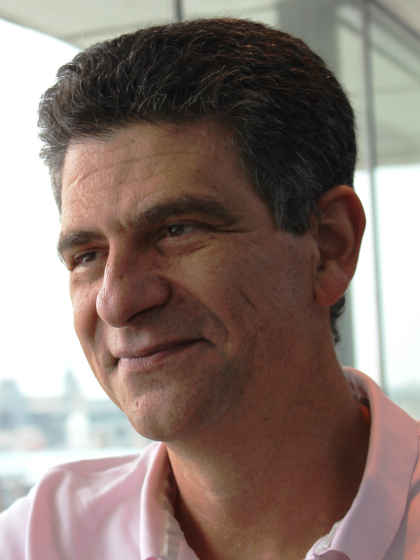
Narcis Fernandez-Fuentes is an Associate Professor at the Institute of Biological, Environmental & Rural Sciences (IBERS) at Aberystwyth University. He was previously a Lecturer at the Leeds Institute of Molecular Medicine (2007-2011) and a Research Associate at Albert Einstein College of Medicine (2004-2007). He holds an M.Sc. in Biotechnology and a Ph.D. in Computational Biology from Universitat Autonoma de Barcelona. His work spans Bioinformatics, Structural Bioinformatics, and Plant Bioinformatics, focusing on protein structure prediction, biomolecular interactions, and computational approaches to plant breeding. Protein design and structure-to-function relationships Peptide-based modulation of protein interactions Genomic analysis of abiotic stress responses in plants SNPs modeling and functional impact assessment Recent articles highlight expertise in computational peptide design for SARS-CoV-2, ulvan lyase characterization, and structural modeling of inflammasomes and protein families. His grants include projects funded by the Welsh Government, BBSRC, and Covestro. Marie Curie Training Fellowship EMBO and FEBS Short Term Fellowships Boehringer Ingelheim Fonds Fellowship
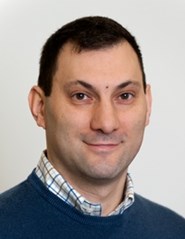
Adria Armejach Sanosa is a Senior Lecturer in the Department of Computer Architecture at the Faculty of Computer Science of Barcelona (FIB), Universitat Politècnica de Catalunya (UPC). He is also affiliated with the Barcelona Supercomputing Center (BSC-CNS), a leading institution in high-performance computing in Europe. His research spans computer architecture, high-performance computing, memory systems, and hardware acceleration for genomics and machine learning. PhD from UPC His research interests focus on optimizing computer systems for performance and efficiency, particularly in the areas of hardware transactional memory, cache optimization, RISC-V architectures, and acceleration of bioinformatics workloads. He investigates how to improve data movement, prefetching, and parallelism in large-scale heterogeneous systems. His work combines architectural innovations with practical implementations on real-world HPC platforms. The most recent articles reflect a strong trend towards high-performance computing for genomics, sparse data handling, and efficient hardware/software co-design. Topics include genomics benchmarking on ARM processors, tensor marshaling, RTL simulation scalability, and low-precision training for deep neural networks. These works demonstrate a consistent focus on bridging architectural research with real-world applications in science and AI. HiPEAC Paper Award 2024 HiPEAC Paper Award Armejach has advised several doctoral students, including J. Pavón, G. López, and J. Osorio. He has been involved in numerous competitive R&D+i projects such as Digital Autonomy for RISC-V in Europe, Laboratorio Zettaescala de Barcelona, and Genome Analysis Acceleration on HPC Architectures. These projects are often funded by national and European programs, indicating strong recognition and support for his research. He collaborates extensively within the CAP (High-Performance Computing) research group and with key figures like Miquel Moreto, Mateo Valero, and Osman Unsal. He is a member of the CAP research group and contributes to initiatives like the Laboratory for Open Computer Architecture and systems (RISC-V Chip Development) and the Barcelona Zettascale Lab. These labs focus on open hardware, European technology sovereignty, and next-generation supercomputing. His work on Metro-MPI for RTL simulation and hardware accelerators for databases highlights his contributions to both design automation and data-intensive computing.
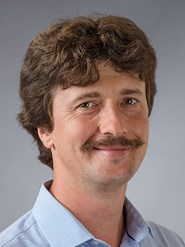
Georgi Gaydadjiev is a Professor in Innovative Computer Architecture at the University of Groningen's Faculty of Science and Engineering. Previously, he held roles including Chair Professor at TU Delft and Chalmers University of Technology, and served as VP of Dataflow Software Engineering at Maxeler Technologies. He holds a PhD from TU Delft and has over 35 years of industry and academic experience, focusing on reconfigurable computing, high-performance systems, and energy-efficient architectures. His research spans embedded systems, fault tolerance, and scalable architectures. Education: MSc Electrical Engineering (TU Delft), PhD (TU Delft), studies at Voenmeh (Baltic State Technical University). Research interests include reconfigurable computing, advanced architectures, parallel systems, and HPC. He leads projects funded by EU, Google, and Swedish Research Councils, addressing exascale computing and customized hardware. His work has been recognized with awards like the CES Design Showcase (1999) and best paper awards at ICS'10 and WiSTP'07. He advises PhD students and oversees labs like Maxeler IoT-Labs BV, focusing on deploying dataflow technology beyond data centers.
Dr. Petr Kravchuk is a Senior Lecturer in Theoretical Physics at the Department of Mathematics, King's College London, within the Faculty of Natural, Mathematical & Engineering Sciences. He holds a PhD from the California Institute of Technology (2018) and has held postdoctoral positions at the Institute for Advanced Study (2018–2021) and the Simons Center for Geometry and Physics (2021). His research focuses on non-perturbative aspects of Quantum Field Theories (QFTs), particularly Conformal Field Theories (CFTs), emphasizing the conformal bootstrap framework and numerical methods. He has received prestigious grants including the European Research Council (ERC) Consolidator Grant (2023–2028) and the Royal Society University Research Fellowship (2023–2025). Key research areas include the structure of CFT spectra (e.g., Regge trajectories, light-ray operators), automorphic forms in bootstrap equations, and applications of high-performance computing (HPC) to extract precise CFT data. His work bridges mathematical rigor with physical insights, addressing topics like AdS/CFT correspondence, asymptotic observables, and detector models in weakly coupled theories. Grants & Projects: CFTSPEC: Spectra of Conformal Theories (ERC Grant) Non-perturbative Approaches to Thermal CFTs (Royal Society) Awards: ERC Consolidator Grant (2023) Royal Society Fellowship (2023) His publications span topics from stress-tensor bootstrap calculations to fusion of conformal defects, with a focus on foundational advancements in CFT methodology. Collaborative work includes applications to AdS gravity and numerical implementations like the blocks_3d software package.
Paolo Bientinesi is a Professor at the Department of Computing Science, Umeå University, and Director of the High Performance Computing Center North (HPC2N). His research bridges theoretical and applied computer science, focusing on optimizing computational workflows through domain-specific innovations. Research Interests: Core Areas: Automatic generation of algorithms and code, numerical linear algebra, tensor operations, performance modeling, and computer music. Interdisciplinary Applications: Materials science, molecular dynamics, computational chemistry, computational biology, and computational physics. His work emphasizes leveraging architecture-specific and problem-specific knowledge to develop high-performance solutions. Publication Trends (2022-2026): Recent articles demonstrate a focus on mixed-precision computing, tensor decompositions, linear algebra algorithms (e.g., FLOPs optimization, matrix chains), and music information retrieval (e.g., automatic drum transcription, DJ cue points). Work frequently intersects with parallel computing, performance diagnostics, and machine learning. Leadership: Heads the research group High-Performance and Automatic Computing , driving projects in algorithm automation and computational efficiency.
Roman Iakymchuk is an Associate Professor at the Department of Computing Science within Umeå University, Sweden. His work focuses on numerically reliable and sustainable algorithmic solutions, emphasizing accuracy, reproducibility, and energy efficiency in high-performance computing environments. Research Interests: Numerical linear algebra, parallel programming models, sustainable computing, and optimization of distributed systems. Teaching: Courses on scientific computing, CUDA/OpenMP/MPI-based parallel programming, and floating-point error correction. The articles highlight his contributions to mixed-precision computing, numerical reliability in Krylov solvers, and energy-efficient practices in HPC systems. His work spans algorithm design, tool-assisted implementation, and European collaborative projects like CEEC.
Octavio Castillo Reyes is a full-time Professor at the Department of Computer Architecture, Polytechnic University of Catalonia (UPC), and an Associate Researcher at the Barcelona Supercomputing Center (BSC) within the Wave Phenomena Group. He holds a PhD in Computer Architecture from UPC (2017) with an international distinction for his thesis on HPC-based electromagnetic geophysical modeling. His research focuses on high-performance numerical methods for geophysical applications, particularly in electromagnetic modeling and inversion using parallel computing frameworks. Education: PhD in Computer Architecture (UPC, 2017), M.Sc. in Networks and Telecommunications (UAV, 2011), B.Sc. in Computational Systems Engineering (ITSX, 2007). Research Interests: HPC algorithms, geoelectromagnetic modeling, parallel programming, edge finite element methods, and applications in geothermal energy and reservoir characterization. He leads the development of the PETGEM code, an open-source HPC tool for 3D CSEM modeling used in geophysical studies. His work bridges computational science and geophysics, emphasizing scalability and efficiency in supercomputing environments. Publications and Projects: Over 20 peer-reviewed articles, 60+ conference presentations, and multiple funded projects (e.g., Collinder Venture Builder Programme , AIR: Air for European Resilience ). His recent work addresses groundwater imaging, metallic infrastructure challenges, and renewable energy applications. Awards: JCC2015-BSC Prize for 'Your Thesis in Three Minutes,' National System of Researchers (CONACyT, Level I), and UPC's Excellence Cum Laude PhD Award. He is a member of the Mexican Supercomputing Network and certified by ANECA/AQU for teaching excellence.
Jesús Labarta is a Professor at the Universitat Politècnica de Catalunya (UPC) and a researcher at the Barcelona Supercomputing Center (BSC-CNS). As a member of the Department of Computer Architecture and affiliated with the Barcelona School of Computer Science (FIB), he is recognized for pioneering contributions to programming models and performance analysis tools in high-performance computing (HPC). His work includes the development of the OmpSs programming model, Nanos runtime system, and performance analysis tools like Paraver and Dimemas. Labarta received the 2017 Ken Kennedy Award, making him the first European recipient of this prestigious honor. Research Focus: Labarta’s research centers on advancing programmability and productivity in HPC through asynchronous task-based programming models and intelligent runtime systems. His tools enable efficient concurrency detection, locality management, and predictive performance analysis for parallel applications. Scientific Awards: Ken Kennedy Award (2017) - Recognizing contributions to HPC programmability and community service
Waqwoya Abebe is a Postdoctoral Research Associate at the Geospatial Artificial Intelligence (GeoAI) Group within the National Security Sciences Directorate at Oak Ridge National Laboratory (ORNL) . His work focuses on advanced machine learning techniques for geospatial data science and high-performance computing applications. Education: Ph.D. in Computer Science, Iowa State University Research Interests: Privacy-preserving federated learning Multi-modal foundation modeling Neural architecture search High-performance computing (HPC) challenges for large language models (LLMs) Atomic-scale electron micrograph segmentation Decentralized learning systems Professional Affiliations: Member of IEEE
Prof. Dr. Sergei Gorlatch is a full professor at the University of Münster, Germany, in the Department of Mathematics and Computer Science, where he holds the Chair of Practical Computer Science (Parallel and Distributed Systems) within the Institute of Computer Science. He has been a leading figure in high-performance and parallel computing since joining the university in 2003. University: University of Münster School: Department of Mathematics and Computer Science Department: Institute of Computer Science Academic Rank: Professor His research focuses on algorithm and software development for modern computer systems, particularly in parallel and distributed computing, high-performance computing (HPC), GPU-based systems, cloud and grid computing, and performance optimization. His work bridges theoretical formal methods and practical applications, especially in real-time online interactive systems such as online games and simulations. He has pioneered frameworks like SkelCL, dOpenCL, and the Real-Time Framework (RTF) to simplify parallel programming and improve performance portability. The recent publications (2020–2024) reflect a strong trend in GPU programming, performance optimization, formal verification, and distributed systems. Key themes include the development of safe and high-level GPU languages (e.g., Descend), autotuning and model checking for performance, multi-cloud orchestration, and performance modeling of legacy and real-time systems. His work often combines compiler techniques, functional programming, and systematic transformations to achieve efficient and portable code. Best Poster Award – PUMPS+AI, 2019 Best Paper Award – CGO, 2018 Alexander von Humboldt Research Fellowship, 1991 Prof. Gorlatch has supervised numerous students and researchers, many of whom are frequent co-authors on his publications. He has led multiple funded projects from DFG, EU (e.g., CoreGrid, MONICA), and industry (e.g., NVIDIA Graduate Fellowship). His work includes both theoretical contributions (e.g., algorithmic skeletons, formal verification) and applied systems development, demonstrating a strong record of advising, grant acquisition, and interdisciplinary collaboration. He is actively involved in several research labs and teams at the University of Münster, particularly those focused on parallel computing, GPU programming, and real-time systems. His group develops high-level programming models and tools to make parallel computing more accessible and efficient across diverse architectures.
José L. Sánchez is a full Professor in the Department of Computer Systems at the University of Castilla-La Mancha (Spain), where he has held a permanent academic position since 1986. His research spans high-performance computing, network architecture, and GPU acceleration, with particular focus on energy-efficient interconnection networks for data centers and exascale systems. His research interests center on interconnection network optimization , including torus topologies, deadlock-free routing, and QoS provision in high-radix switches. He pioneers energy-efficient networking through on/off link strategies and develops frameworks like VEF traces for modeling MPI traffic in large-scale simulations. His work bridges theoretical network design with practical GPU-accelerated implementations for real-time computer vision and similarity search algorithms. Recent publications reveal a strong trend toward exascale-ready networking solutions , with 60% of his 2019-2022 work addressing energy efficiency in HPC topologies, congestion management in lossy networks, and photonic interconnect challenges. His methodology consistently combines formal network modeling with hardware-aware implementations, particularly leveraging GPU parallelism for bioinspired vision algorithms and metric search optimization. Professor Sánchez leads significant contributions to network simulation tooling, including the TopGen library for topology modeling and VEF3 framework extensions. His collaborative work spans multiple EU institutions, with frequent co-authorship patterns indicating strong ties to research groups specializing in network-on-chip systems and high-performance interconnects.
Francisco Alfaro-Cortés is a Professor at the Department of Computer Systems, Universidad de Castilla-La Mancha (UCLM), Spain, since 2020. His research focuses on interconnection networks, network-on-chip (NoC), and quality of service (QoS) mechanisms in high-performance computing (HPC) systems. University: Universidad de Castilla-La Mancha Department: Department of Computer Systems Academic Rank: Professor (Catedrático de Universidad) His work explores energy-efficient HPC topologies, adaptive routing algorithms for twin torus networks, and congestion management in high-speed interconnects. He has developed open-source frameworks for MPI traffic modeling and self-configuring NoC infrastructures. Notable contributions include optimizing high-radix switch configurations, formalizing deadlock-free routing mechanisms, and advancing QoS provision in Dragonfly and Torus networks. His research spans 2006–2022, with recent focus on sustainable network design.
Dr. Werner Dobrautz is a quantum chemist and computational physicist who leads the DRESDEN-concept Research Group "AI4Quantum" since 2024. The group is jointly hosted by the Center for Scalable Data Analytics and Artificial Intelligence (ScaDS.AI) at TU Dresden and the Center for Advanced Systems Understanding (CASUS) at Helmholtz-Zentrum Dresden-Rossendorf (HZDR). His research integrates quantum computing, machine learning, and high-performance computing to address challenges in chemistry and physics, such as bio-catalysis for ammonia production and unconventional superconductivity. Education : PhD in Theoretical Quantum Chemistry (University of Stuttgart, 2019), Master of Science in Technical Physics (Graz University of Technology, 2014) Dr. Dobrautz specializes in developing computational methods like transcorrelation and quantum algorithms to simulate complex systems, particularly focusing on strongly correlated electron systems and noise-resilient quantum chemistry . His work aims to breakthrough the "exponential wall" in computational resource scaling. Scientific Awards : Marie Skłodowska-Curie Postdoctoral Fellowship (€223,000, 2022) Vinnova Fellowship (€44,000, 2024) He has contributed to quantum computing initiatives like OpenSuperQPlus and NordIQuEst , and his software expertise spans NECI, Qiskit, OpenMolcas, and machine learning frameworks like TensorFlow.
Fabian Denner is an Associate Professor at the Department of Mechanical Engineering, Polytechnique Montréal. His work focuses on modeling multiphase flows and related physical phenomena, including cavitation, acoustic wave dynamics, and high-performance computing (HPC). He develops advanced numerical methods and software tools for simulating incompressible and compressible flows, with applications in medicine, chemical engineering, and aerospace. His research group addresses challenges in predicting cavitation effects, liquid jet breakup, and acoustic modulation in accelerating flows. Education Dipl.-Eng. in Automotive Engineering, University of Stuttgart (2009) Ph.D. in Mechanical Engineering, Imperial College London (2013) Research Interests His expertise spans: Numerical modeling of multiphase flows Acoustic wave propagation and modulation Cavitation dynamics and biomedical applications High-performance computing (HPC) for fluid dynamics Liquid jet atomization and particle-laden flows Surface tension and interface reconstruction techniques Publications and Software Fabian has published extensively in leading journals like Physics of Fluids , Journal of Computational Physics , and Journal of Fluid Mechanics . He co-developed software frameworks such as Wave-DNA and APECSS for simulating complex fluid dynamics and acoustic phenomena. Scientific Recognition Margaret Fishenden Centenary Memorial Prize (2015) Leadership Roles Vice-director, Canadian Society for Mechanical Engineering - Fluid Engineering Technical Committee Co-director, Editorial Advisory Committee of Canadian Journal of Chemical Engineering Active contributor to international conferences (APS DFD, ICMF, IUTAM)
Urvij Saroliya is a doctoral candidate at the Technical University of Munich , affiliated with the Chair of Computer Architecture and Parallel Systems under Prof. Martin Schulz. He focuses on high-performance computing (HPC) and computer architecture, with expertise in resource management, heterogeneous accelerators, and energy-aware systems. Research Interests: Computer Architecture, HPC, Performance Modeling, Reinforcement Learning His recent publications analyze reinforcement learning applications for HPC resource management, including NUMA systems and GPU partitioning. His work emphasizes performance portability and energy efficiency in heterogeneous architectures. He contributes to ongoing projects like PDexa and participates in seminars on quantum computing integration and AI hardware development.