Martin Hebart is a Professor for Computational Cognitive Neuroscience and Quantitative Psychiatry at Justus Liebig University Giessen and an Independent Max Planck Research Group Leader at the Max Planck Institute for Human Cognitive and Brain Sciences in Leipzig, Germany. His work bridges cognitive neuroscience, computer science, and psychology to explore visual perception, object recognition, and computational models of brain function. PhD in Psychology from Bernstein Center for Computational Neuroscience Berlin (2014) M.Sc. and B.Sc. in Neuro-cognitive Psychology from Ludwig Maximilian University Munich His research integrates psychophysics , neuroimaging (fMRI, MEG), and machine learning to decode how visual input transforms into stable object representations and how these insights inform psychiatric conditions like hallucinations. Articles highlight his focus on computational models , neural network alignment , and large-scale behavioral-neuroimaging datasets (e.g., THINGS-data). His group’s work spans from basic visual cognition to translational applications in psychiatry. Scientific awards include postdoctoral fellowships from the National Institute of Mental Health (2016) and Alexander von Humboldt Foundation (Feodor Lynen, 2016), alongside doctoral and study scholarships. He leads a multidisciplinary team at the intersection of JLU Giessen’s Medical Department and MPI, mentoring students in visual neuroscience , AI-driven modeling , and clinical applications .
Kaiming Bi, Ph.D., is an Assistant Professor in the Department of Management, Policy & Community Health at the University of Texas Health Science Center at Houston (UTHealth Houston) School of Public Health . As an affiliated member of the Center for Health Care Data , his research bridges quantitative methods and public health, focusing on infectious disease modeling , epidemic forecasting , and data-driven health policy . B.S. in Mathematics from Northeastern University (2015) Ph.D. in Industrial Engineering from Kansas State University (2020) Postdoctoral training at University of California San Diego School of Medicine (2020-2021) and University of Texas at Austin (2021-2024) His methodological expertise spans mathematical modeling , machine learning , and optimization , applied to diverse public health challenges including respiratory infections , vector-borne diseases , STIs , and the opioid epidemic . Recent work includes modeling SARS-CoV-2 Omicron subvariants , population immunity dynamics , and multi-pathogen burden projections for the 2023-2024 US winter season. Dr. Bi has received prestigious accolades such as the Pencis Best Researcher Award (2021) and IISE Best Paper (2018). He previously taught graduate courses in Integer Programming , Information Systems , and Industrial Simulation at Kansas State University. Currently leading the Big-data and Infectious Disease Modeling Lab (BI Lab) , he seeks STEM-motivated PhD students to develop computational solutions for epidemic control.
Adam J Rothman is a Professor in the Department of Statistics at the University of Minnesota, Twin Cities campus, specializing in high-dimensional statistical methodologies. His research focuses on covariance estimation, multivariate analysis, and developing innovative regression frameworks for complex data structures. His primary research interests include High-Dimensional Statistics, Covariance Estimation, Multivariate Analysis, and Statistical Machine Learning. Rothman develops penalized likelihood methods and shrinkage estimators to address challenges in matrix-valued predictors, categorical responses, and large covariance matrices, with applications spanning scientific domains requiring scalable high-dimensional analysis. Rothman's recent publications (2019-2024) demonstrate consistent innovation in high-dimensional regression and classification. Key trends include covariance matrix regularization, sufficient dimension reduction techniques, and likelihood-based approaches for categorical multivariate responses. His work emphasizes computational efficiency and theoretical guarantees for datasets where variables exceed sample sizes. He has secured major National Science Foundation funding as Principal Investigator for two projects: Sufficient Dimension Reduction of High-Dimensional Data (2011-2015) and New methods for multivariate analysis in high dimensions (2015-2021). These grants supported foundational work in dimension reduction and covariance estimation, advancing methodologies for modern statistical challenges.
Dr. Tanushree Roy serves as an Assistant Professor in the Department of Mechanical Engineering at Texas Tech University's Whitacre College of Engineering and is an Affiliate Faculty member at the National Wind Institute. Her research pioneers resilient human-centric smart city infrastructures through the integration of control theory, mathematical modeling, and machine learning to address critical challenges in safety, security, and resource optimization for urban systems. Her academic foundation includes: Ph.D. in Mechanical Engineering from The Pennsylvania State University (2022) M.S. in Mathematics from University of Central Florida (2015) M.E. in Electrical Engineering from Indian Institutes of Engineering Science and Technology, India (2011) B.Tech in Applied Electronics and Instrumentation from Maulana Abul Kalam Azad University of Technology, India (2009) Dr. Roy's research centers on cybersecurity , fault diagnostics , and socio-technical systems with specialized applications in smart transportation networks and battery energy storage systems. She develops innovative frameworks that merge human-centric sensing with technical measurements to combat cyberattacks and physical faults in cyber-physical-social systems, emphasizing safety-critical resilience for urban citizens. Her methodology uniquely combines model-based control with data-driven machine learning to address challenges like social data integrity, human behavior modeling, and multi-scale anomaly characterization. Analysis of her 15 most recent publications (2021-2025) reveals dominant trends in cyberattack detection for connected vehicles, thermal fault tolerance in battery systems, and socio-technical traffic modeling. Key technical approaches include Koopman operator theory for secure estimation, control barrier functions for safety certification, and redundancy-based data fusion techniques. These works consistently bridge theoretical control systems with practical smart city implementation, demonstrating strong interdisciplinary connections between transportation engineering, energy systems, and cybersecurity. No scientific awards are documented in the provided information. Dr. Roy actively mentors three PhD students—Sanchita Ghosh (since 2022), Faysal Ahamed, and Soumyoraj Mallick (both since 2024)—alongside undergraduate researcher Mercedes Hernandez. Her research is executed through the Smart Human-centric Automation Resilience (SHARE) Lab, which has secured projects including the secure autonomous mobility testbed and participates in workforce development via Texas Tech's Engineering Research Internship Experience (ERIE) program for high school students. The SHARE Lab operates at the intersection of transportation and energy systems, maintaining two primary research thrusts: resilient human-centric transportation networks and safeguarding battery energy storage infrastructure. Current projects include SUMO-based cyberattack validation for connected vehicle platoons, self-learning voltage estimation under sensor attacks, and thermal fault-tolerant battery management. The lab maintains active collaborations with national conferences (ACC, CCTA) and industry partners to advance real-world implementation of resilient smart city technologies.
Professor Georg Gottwald is a distinguished academic in the School of Mathematics and Statistics at the University of Sydney, where he has been a faculty member since 2002, progressing from Lecturer to his current position as Professor since 2013. He also holds a Visiting Professor position at the University of Surrey in the UK since 2013. His extensive research career spans dynamical systems theory, geophysical fluid dynamics, and the intersection of machine learning with complex systems. Professor Gottwald's research focuses on dynamical systems theory as an abstract formalism for studying systems evolving in time and space. His work has significant applications across diverse fields including climate modeling, biological systems, and complex networks. He is particularly known for developing methods for model reduction of complex dynamical systems, stochastic modeling approaches, and the application of machine learning techniques to dynamical systems. His research aligns with the Faculty of Science Research Strengths in Understanding the Universe, Fundamental Laws of Nature, Complex Systems, Climate and Environmental Change, Data and Decisions, and National Security. His most recent publications demonstrate a strong trajectory toward integrating machine learning with dynamical systems theory, particularly in developing stable generative models, learning dynamical systems with random feature maps, and combining data assimilation with machine learning for forecasting. His work spans pure mathematical theory to practical applications in climate science, finance, and biological systems, showing remarkable breadth while maintaining deep mathematical rigor. Future Fellowship, 'Stochastic methods in mathematical geophysical fluid dynamics', Australian Research Council, 2010-2014 Australian Research Fellowship, 'Stochastic methods in mathematical geophysical fluid dynamics', Australian Research Council, 2010-2015 (declined) Australian Research Fellowship, 'Geometric methods in geophysical fluid dynamics', Australian Research Council, 2004-2009 Professor Gottwald has successfully supervised numerous PhD and Master's students who have gone on to academic and industry positions worldwide. His current research group includes postdocs and PhD students working on machine learning for dynamical systems, stochastic model reduction, physics-informed machine intelligence, and tensor methods for scientific machine learning. He has secured multiple ARC Discovery Project grants and has been involved in significant international collaborative research projects. He is actively involved with the Sydney Dynamics Group, which he co-founded in 2007, fostering collaboration between the University of Sydney and UNSW. Professor Gottwald maintains strong editorial commitments as Associate Editor for Geophysical and Astrophysical Fluid Dynamics, SIAM Journal of Applied Dynamical Systems, and Journal of Computational Dynamics, and serves on the Editorial Advisory Board for Chaos and the Editorial Board for Physical Review E. His professional activities demonstrate leadership in the dynamical systems community through organizing workshops, seminars, and special journal issues.
Professor Jared Tanner is Professor of the Mathematics of Information at the University of Oxford's Mathematics Institute and a Fellow of Exeter College. Previously, he held positions at the University of Edinburgh (2007-2012) as Professor, Reader, and Lecturer in Mathematics, University of Utah (2006-2007) as Assistant Professor, and Stanford University (2004-2006) as an NSF Postdoctoral Fellow. His research focuses on extracting models from high-dimensional data to reveal essential information, with specific contributions including sampling theorems in compressed sensing using stochastic geometry, efficient algorithms for matrix completion, and theoretical understanding of deep neural networks. Recent interests include neural network initialization techniques to preserve geometric and information-theoretic properties, as well as network pruning methods. Professor Tanner has supervised numerous doctoral students at Oxford and Edinburgh, including Alireza Naderi, Thiziri Nait Saada, Ilan Price, Giuseppe Ughi, Charles Millard, Michael Murray, Simon Vary, Bernadette Stolz, Bogdan Toader, Rodrigo Mendoza-Smith, Ke Wei, Bubacarr Bah, and Andrew Thompson, many of whom have gone on to prestigious positions in academia and industry. His publication record spans over two decades with significant contributions to compressed sensing, matrix completion, and more recently deep learning theory. His work demonstrates a consistent progression from foundational theoretical work to practical applications in signal processing and machine learning. As an academic leader, Professor Tanner serves as Founding Editor-in-Chief of Information and Inference: A Journal of the IMA and has held editorial positions at several prestigious journals including Applied and Computational Harmonic Analysis and IEEE Signal Processing Letters . He has organized numerous conferences and workshops including Prospects in Mathematics and the FoCM Computational Harmonic Analysis workshop.
Peter Grünwald is full professor of Statistical Learning at Leiden University's Mathematical Institute and senior researcher in the Machine Learning group at CWI (Centrum Wiskunde & Informatica) in Amsterdam. His pioneering work on e-values establishes a transformative framework for statistical inference that overcomes critical limitations of classical p-values, enabling flexible experimental designs while maintaining rigorous error control. His research centers on e-values and e-processes as a unifying paradigm between Bayesian and frequentist statistics, with core innovations in safe testing, anytime-valid inference, and optional continuation. These methods allow researchers to gather additional data after initial analysis without inflating Type I errors and to determine significance levels post-hoc—addressing longstanding rigidity in Neyman-Pearson hypothesis testing. His publication trajectory reveals rapid adoption of e-values across disciplines: from foundational theory in PNAS and JRSSB to clinical applications in survival analysis (NEJSDS) and epidemiology (medrxiv meta-analysis). The 2022–2024 publications demonstrate methodological maturation, with implementations in R (safestats package) and growing use in social sciences (PsyArXiv) and causal inference (JASA). Scientific recognition includes: ERC Advanced Grant (2024) for developing flexible statistical inference theory via e-values His ERC-funded project drives current research, while his internship policy restricts non-Dutch master’s/bachelor’s students but welcomes advanced international PhD candidates. Collaborative work spans statisticians (Ly, de Heide, Koolen), machine learning researchers (Ramdas, Shafer), and medical scientists (van Werkhoven). As core member of CWI's Machine Learning group, he advances theoretical foundations with practical impact—evidenced by the first live deployment of e-values in a BCG vaccine meta-analysis. His work redefines statistical practice for adaptive data collection in clinical trials, AI, and social science research.
Constantin Grigo is a PhD researcher at the Technical University of Munich (TU Munich), actively engaged in the Continuum Mechanics group. His work focuses on Uncertainty Quantification (UQ) and Machine Learning (ML), particularly for applications in maritime safety, bicycle traffic modeling, and stochastic systems. He has presented his research at major conferences like SIAM UQ and WCCM, and has been recognized with Student Travel Awards from SIAM UQ 2018 and SIAM CSE 2019. Education: Master of Science in Physics, LMU Munich (2015) Bachelor of Science in Physics, LMU Munich (2012) Year abroad at Grenoble INP (2010-2011) Research Interests: Probabilistic machine learning for coarse-graining high-dimensional systems Bayesian model and dimension reduction Stochastic differential equations in heterogeneous media Microscopic traffic simulation for bicycles and autonomous vehicles Digital twin applications for maritime and urban mobility Reduced-order modeling of random materials Selected Awards: SIAM UQ 2018: Student Travel Award Winner SIAM CSE 2019: Student Travel Award Winner His publications span topics such as data-driven scenario specification for autonomous vehicles, bicycle maneuver prediction using neural networks, and physics-constrained surrogates for UQ. He also contributes to open-source simulation tools like SUMO for traffic modeling.
Prosper Dovonon is Full Professor of Economics at Concordia University, Montréal, Canada, where he holds the Tier 1 Concordia University Research Chair in Econometrics of Large Datasets . He is concurrently Adjunct Professor at the University of Adelaide, Australia, and has previously served as Associate and Assistant Professor at Concordia, Visiting Professor at HEC Montréal, and Assistant Vice-President at Barclays Wealth in London. Education Ph.D. in Economics, Université de Montréal (2007) M.Sc. in Statistics and Economics, ENSEA, Abidjan, Côte d’Ivoire (2000) M.Sc. in Mathematics, Université Nationale du Bénin, Abomey-Calavi, Benin (1996) Research Interests Professor Dovonon’s research lies at the intersection of theoretical econometrics and financial data applications . He focuses on developing robust inferential procedures for moment-condition models, bootstrap techniques for high-frequency data, identification issues in GMM, and volatility modeling with factor structures that accommodate skewness and leverage effects. His work on large-dimensional datasets emphasizes scalable methods for estimation and testing in big-data environments. Scientific Awards & Recognition Concordia University Research Chair, Tier 1, in Econometrics of Large Datasets (2022–present) Collaborations & Affiliations Beyond Concordia and the University of Adelaide, he is affiliated with the Centre Interuniversitaire de Recherche en Économie Quantitative (CIREQ) in Montréal and has collaborated with leading scholars across North America, Europe, and Australia. His research is frequently cited in top econometrics and statistics journals, attesting to its broad impact.
Iva Filipovic serves as a Research Specialist in the Department of Laboratory Medicine, Division of Clinical Microbiology at Karolinska Institutet since 2025, following her Postdoctoral Research Fellowship (2019-2025) at the Department of Medicine Huddinge, Center for Infectious Medicine. She contributes to The Systems Virology Lab under Ujjwal Neogi, focusing on translational immunology in medical contexts. Her educational background includes: PhD in Physiology, Development and Neuroscience (Reproductive Immunology), University of Cambridge (2019) MSc in Immunology, Imperial College London (2015) BSc in Molecular Biology with Physiology, University of Belgrade (2014) Her research integrates tissue-resident immunology with systems approaches, examining innate lymphocytes in reproductive health, infectious diseases, and cancer. She employs advanced methodologies including RNA-Seq, single-cell analysis, and 29-color flow cytometry to investigate immune mechanisms in endometrial tissue, liver fibrosis, and viral pathogenesis. Current work emphasizes translational applications in sepsis, cholangiocarcinoma, and SARS-CoV-2 immunity. Analysis of her 15 most recent publications (2018-2025) reveals dominant themes in mucosal immunology, with significant contributions to understanding MAIT cells in sepsis, NK cell dynamics in reproduction, and immune biomarkers in cancer. Her work consistently bridges basic immunology with clinical applications through multi-omics approaches and large-scale collaborative studies like the Karolinska KI/K COVID-19 immune atlas. She actively participates in The Systems Virology Lab, contributing to Karolinska's infectious disease research infrastructure. Her technical expertise in high-dimensional immune profiling supports collaborative projects across virology, hepatology, and oncology research groups at Karolinska Institutet.
Szymon Urbas is a Lecturer in Statistics at the Department of Mathematics and Statistics, Faculty of Science & Engineering, Maynooth University (2024–present). He previously worked as a Postdoctoral Researcher at University College Dublin (2022–2024). His academic background includes a PhD (2018–2022) and MRes (2017–2018) in Statistics from Lancaster University, and a BSc in Mathematical Science from the University of Galway (2013–2017). Research Interests Bayesian modeling with latent variables Computationally intensive methods (Hamiltonian Monte Carlo, particle filters) Applications in agri-food sector and clinical trial operations Variational inference in machine learning High-dimensional data with hierarchical correlations Recent publications focus on Bayesian regression for agricultural spectral data, path sampling algorithms, clinical trial recruitment prediction, and neuro-mimetic learning strategies. His work integrates probabilistic methods with real-world challenges in agriculture and healthcare. Contact: Szymon.Urbas@mu.ie
Elizabeth (Liza) Lee is an Assistant Professor at the Samueli School of Engineering , University of California, Irvine (UCI), with joint appointments in Materials Science and Engineering and Chemical and Biomolecular Engineering . Her research program focuses on theory and computational modeling of materials formation, breakdown, and transport to design sustainable solutions for quantum and energy technologies. Ph.D. , MIT, Chemical Engineering M.S. , MIT, Chemical Engineering Practice B.S./B.A. , Johns Hopkins University, Chemical and Biomolecular Engineering and Chemistry Lee’s research bridges ab initio calculations , machine learning , and molecular simulations to study functional materials. Key areas include catalytic plastic waste deconstruction , quantum defects in semiconductors , and computational method development using statistical mechanics and machine learning. Her work has implications for sustainable synthesis , quantum information science , and energy technologies . Her recent publications (2025–2024) span nanostructure modeling , electrocatalysis , machine learning in materials science , and solid-state electrolytes , reflecting her interdisciplinary approach. Notable awards include the NSF CAREER Award , UCI Samueli Faculty Development Chair , and DOE ASCR Leadership Computing Challenge Award . NSF CAREER Award UCI Samueli Faculty Development Chair DOE ASCR Leadership Computing Challenge Award NSF Graduate Research Fellowship AIChE Electronics and Photonics Materials Award UCI Engineering Student Council’s Professor of the Year Award Maria Lastra Postdoctoral Mentor Award
Dr. Lin Chen is a tenured Professor of Biostatistics in the Department of Public Health Sciences at The University of Chicago, where they have been faculty since 2010, progressing from Assistant Professor (2010-2017) to Associate Professor (2017-2024) and now Professor (2024-present). Previously, they completed postdoctoral research at Fred Hutchinson Cancer Research Center (2008-2010) under Drs. Ross L. Prentice and Li Hsu, and at Princeton University (2008) under Dr. John D. Storey. Dr. Chen earned their Ph.D. in Biostatistics from the University of Washington in 2008 under Dr. John D. Storey, following a B.S. in Economics from Peking University (2002). Their research focuses on developing advanced statistical methods for statistical genomics , big omics data analysis , multivariate analysis , missing data analysis , and mixed-effects models . Their work has significantly advanced methodologies in Mendelian randomization, multi-omics integration, and genetic association studies. Dr. Chen's recent publications reveal a strong emphasis on integrative approaches that connect multiple layers of genomic data across different biological contexts. Their research demonstrates particular expertise in developing statistical frameworks that bridge genetic variation with molecular phenotypes and complex traits, often addressing critical challenges in causal inference and mediation analysis within genomic studies. The work consistently appears in top-tier journals including Nature Communications, Nature Genetics, and The American Journal of Human Genetics. The Best Paper in Genetic Epidemiology Award for the Year 2021 The Departmental Best Dissertation Award 2017-2018 (awarded to Jiebiao Wang) Dr. Chen actively mentors graduate students and postdoctoral fellows, with several former lab members now in faculty positions or industry roles at major pharmaceutical companies. Their lab currently has ongoing postdoctoral openings. They have developed multiple widely-used software packages including GMAC, Primo, mvMISE, ofGEM, MixRF, mixEMM, PEMM, Trigger, RHT, SNPath, and EigenR2, available through CRAN, GitHub, and Bioconductor. Dr. Chen teaches courses including Applied Regression Analysis, Introduction to Biostatistics, Statistical Analysis with Missing Data, and Introductory Statistical Genetics at the University of Chicago.
Miaolan Xie is an Assistant Professor at Purdue University's Edwardson School of Industrial Engineering, joining in 2025. Currently, she is a postdoctoral Principal Researcher at the University of Chicago Booth School of Business, affiliated with the Healthcare Initiative. Her academic journey includes a Ph.D. from Cornell University (2019–2024) under Katya Scheinberg and a Master's and Bachelor's in Combinatorics & Optimization from the University of Waterloo. Prior to academia, she worked as a data scientist at Alibaba, Baidu, and PwC Consulting, and as a Givens Associate at Argonne National Laboratory. Education: Ph.D., Operations Research and Information Engineering, Cornell University (2019–2024) Master of Math, Combinatorics & Optimization, University of Waterloo (2014–2016) Bachelor of Math, Pure Math and Combinatorics & Optimization, University of Waterloo (2010–2014) Research Interests: Focuses on stochastic optimization, data science, nonlinear optimization, and machine learning applications in healthcare. Develops algorithms with rigorous theoretical guarantees for messy data scenarios. Current work emphasizes adaptive optimization methods with high probability complexity bounds, leveraging tools from statistics and stochastic processes. Awards: Second Place, 2023 Student Paper Prize (INFORMS Optimization Society) Second Place, Flash Talk Competition (YinzOR Student Conference) NSF Research Internship Funding (2022) Advising & Grants: Seeking PhD students for Fall 2025. Active in grant-funded research through NSF and institutional collaborations. Prior industry experience informs applied healthcare optimization projects. Labs & Teams: Leads a research group at Purdue, collaborating with healthcare and optimization experts. Affiliated with the Healthcare Initiative at the University of Chicago Booth School of Business.
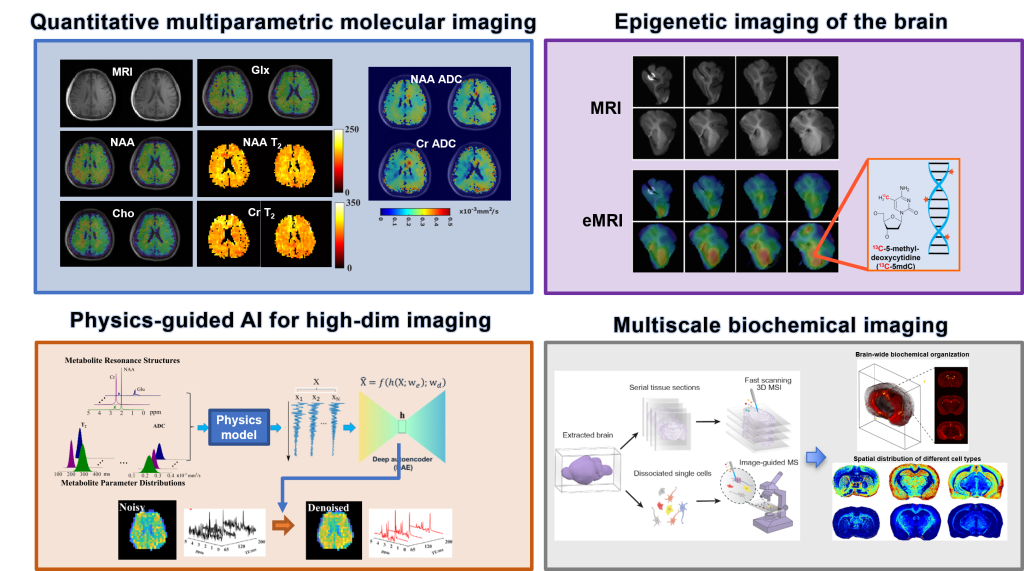
Fan Lam is an Associate Professor in the Department of Bioengineering at the University of Illinois Urbana-Champaign (UIUC), affiliated with the Grainger College of Engineering. He also directs the MS in Biomedical Image Computing (MS-BIC) program. His primary research focuses on developing advanced imaging techniques such as biomedical imaging, MRI, molecular imaging, and image reconstruction to study brain function and diseases. Lam holds a Ph.D. in Electrical and Computer Engineering from UIUC (2015), an M.S. in the same field from UIUC (2011), and a B.S. in Biomedical Engineering from Tsinghua University (2008). He is affiliated with multiple institutes, including the Carle-Illinois College of Medicine, the Carl R. Woese Institute for Genomic Biology, and the Beckman Institute for Advanced Science and Technology. Lam serves as a journal editor for Frontiers in Physics , Medical Physics , and IEEE Transactions on Medical Imaging . His work bridges engineering and neuroscience, with grants from NIH and other agencies supporting Alzheimer’s research and imaging innovations. Research highlights include epigenetic MRI, high-resolution volumetric MRI, and integrating AI with imaging methods. Lam’s team collaborates across disciplines to address challenges in medical imaging and brain mapping. His lab, the Quantitative Multiscale Imaging Group, develops tools for molecular and biochemical analysis of the brain.