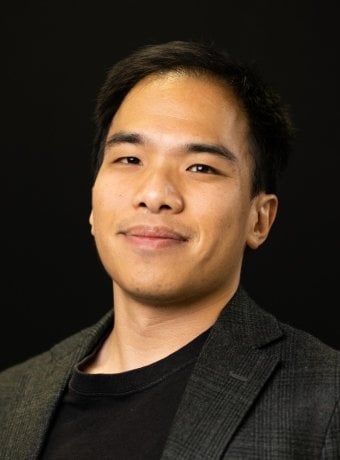
Shengxian Ding is a Postdoctoral Associate at the Yale School of Public Health , focusing on Biostatistics, Neuroscience, and Public Health . Her research develops advanced statistical models for biomedical data analysis. Her work includes 2025: Subgroup Mediation Analysis , 2024: Shape Mediation in Alzheimer’s Disease , and 2023: Tumor Growth Quantification via MRI , reflecting expertise in Regression Models, Neuroimaging, and Computational Biology . Contact: naomi.ding@yale.edu
Vinh Nguyen is an Assistant Professor in the Department of Mechanical and Aerospace Engineering at Michigan Technological University, where he directs the Michigan Tech Center for AI and coordinates the NIST-PREP program. His research focuses on advanced manufacturing through Industry 4.0, human-robot-machine interaction, and physics-based/data-driven modeling. He has developed solutions for machining, additive manufacturing, metal forming, and robotic assembly to promote smart and sustainable manufacturing. Prior to joining Michigan Tech in 2022, he was a National Research Council Postdoctoral Fellow at NIST (2020–2022). Dr. Nguyen earned his PhD (2020), MS in Mechanical Engineering (2017), and MS in Electrical & Computer Engineering (2017) from Georgia Institute of Technology. He received dual bachelor’s degrees in Electrical and Mechanical Engineering from Rensselaer Polytechnic Institute (2014). His research portfolio spans Advanced Manufacturing Industry 4.0 and 5.0 Human-Robot Interaction Physics-Based/Data-Driven Modeling Industrial Automation based on his lab’s interdisciplinary focus on human-centric, resilient solutions. His recent publications address trends in Machine Learning for Manufacturing Autonomous Vehicle Sensors Hybrid Additive/Subtractive Manufacturing Augmented/Mixed Reality Interfaces Industrial Robot Diagnostics Material-Specific Machining with keywords spanning Robotics, Data Science, and Industrial Engineering.
Massi Pontil is a part-time Professor of Computational Statistics & Machine Learning in the Department of Computer Science at University College London (UCL). He joined UCL as a lecturer in 2003 and was promoted to Professor in 2010. Since 2016, his primary appointment has been at the Istituto Italiano di Tecnologia (IIT), where he leads the CSML research group. His work bridges theoretical machine learning with practical applications in physical sciences. His research interests span a wide range of topics in machine learning theory and algorithms: Machine Learning Theory and Statistical Learning Algorithmic Fairness and Ethical AI Kernel Methods and Reproducing Kernel Hilbert Spaces Transfer Learning, Multitask Learning, and Meta-Learning Operator Learning and Dynamical Systems Sparsity Regularization and Optimization Pontil's recent work focuses on the intersection of machine learning with numerical simulations of physical systems, particularly in molecular dynamics and climate science. His publications demonstrate a strong emphasis on theoretical foundations while addressing practical challenges in high-dimensional systems, symmetry-aware learning, and uncertainty quantification. Among his notable honors are: Best Paper Runner Up Award from ICML 2013 EPSRC Advanced Research Fellowship (2006-2011) Edoardo R. Caianiello Award for the Best Italian PhD Thesis on Connectionism (2002) Professor Pontil has served on program committees for major machine learning conferences (COLT, ICML, NeurIPS) and on editorial boards of prestigious journals including Machine Learning Journal, Statistics and Computing, and JMLR. He teaches Advanced Topics in Machine Learning at UCL, with a focus on convex optimization and statistical learning theory.
Yihong Wu is the James A. Attwood Professor of Statistics and Data Science at Yale University, where he also serves as Chair of the Department of Statistics and Data Science. His academic career spans prestigious institutions with a focus on theoretical and applied statistical methods. His research bridges information theory and statistics, with applications across multiple domains of data science. Professor Wu's research focuses on the theoretical foundations of high-dimensional statistics, information theory, and optimization. His work explores dimensionality reduction through both intrinsic low-dimensionality (sparsity, smoothness) and extrinsic low-dimensionality (functional estimation). He has made significant contributions to understanding statistical-computational tradeoffs in problems involving random graphs and combinatorial structures. His research has important applications in machine learning, network analysis, and signal processing. His recent publications reveal a strong focus on information-theoretic approaches to statistical problems, with particular emphasis on graph matching, empirical Bayes methods, and high-dimensional inference. Wu's work consistently addresses fundamental questions about the limits of statistical estimation and the computational feasibility of achieving those limits. His research spans theoretical foundations while maintaining relevance to practical data analysis challenges. Professor Wu actively contributes to academic education through multiple graduate-level courses including Information Theory, Statistical Inference on Graphs, and Topics in High-Dimensional Statistics and Information Theory. His teaching reflects his research interests, emphasizing mathematical rigor and theoretical foundations.
Fredrik Johansson is an Associate Professor in the Department of Data Science and AI at Chalmers University of Technology. His research focuses on developing machine learning methods for healthcare applications, causal inference, and handling imperfect data. He leads multiple funded projects including WASP AI/MLX and research on causal machine learning for healthcare applications. Johansson's core research interests include: Machine learning for clinical decision support and healthcare analytics Causal inference methods for observational data Handling missing values and data quality issues Interpretable and robust ML models Domain adaptation and transfer learning Reinforcement learning for treatment policies His recent publications demonstrate strong focus on clinical ML applications (dermatology, rheumatology, Alzheimer's) and methodological work on causal inference. Frequent themes include handling missing data, model interpretability, and healthcare policy optimization. Collaborative work spans multiple medical domains using registry data, proteomics, and medical imaging. He leads significant research projects including: Kausalitet och sidoinformation för effektiv maskininlärning (VR-funded) Maskininlärning för kausal inferens från observationsdata (Wallenberg) Förutsättningar för inlärning av överförbara koncept (Wallenberg) Fattigdomsfällor i Afrika (Formas-funded)
Kei Hirose serves as Professor and Division Leader of the Division of Industrial and Mathematical Statistics, with concurrent appointments in the Division of Strategic Liaison and Division of Fujitsu Mathematical Modeling for Decision Making. Division Leader: Industrial and Mathematical Statistics Concurrent Roles: Strategic Liaison, Fujitsu Mathematical Modeling for Decision Making His research pioneers sparse estimation techniques for high-dimensional data analysis, focusing on multivariate methods including factor analysis and Gaussian graphical modeling. He develops computationally efficient algorithms for parameter estimation while investigating theoretical properties of sparse models, with implementations distributed via R packages. Applications prominently include genomic data analysis such as gene expression datasets, bridging statistical theory with practical computational biology challenges. Scientific recognition: No awards or fellowships specified in source material Academic mentorship and funding details were not documented in the provided text. Similarly, laboratory infrastructure, research teams, and future research trajectories remain unspecified in the available information.
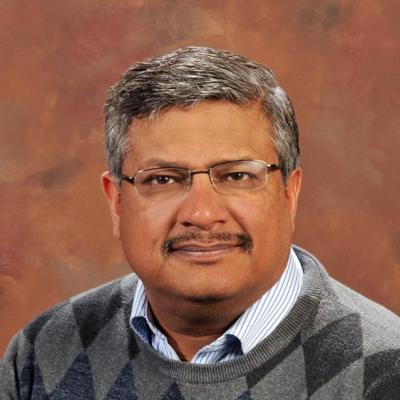
Gagan Agrawal is the UGA Foundation Professorship in Computing and a Professor at the School of Computing, University of Georgia. He serves as Director of the School and is affiliated with the Franklin College of Arts & Sciences. Agrawal holds a PhD and MS in Computer Science from the University of Maryland (1994-1996). His research focuses on high-performance computing, parallel algorithms, compiler optimization for deep learning, GPU acceleration, and interdisciplinary applications in health informatics. Notable contributions include frameworks like ForensiBlock (blockchain for data forensics) and DELITE (tensorized instruction compilation). Agrawal has secured over $2.5M in NSF grants for projects addressing extreme-scale computing challenges. Recent grants include: SHF: Small: Memory Hierarchy Optimizations Meet Transformers (MITTEN) ($600K, 2024-2027) DELITE compilation system for deep learning models ($600K, 2023-2026) Publications span parallel computing methodologies, cybersecurity frameworks, and health outcomes analysis. His work on social determinants of health in cancer survival has been systematically reviewed in top-tier medical journals. Agrawal leads UGA's computing initiatives, emphasizing interdisciplinary research and student mentorship in HPC and AI domains.
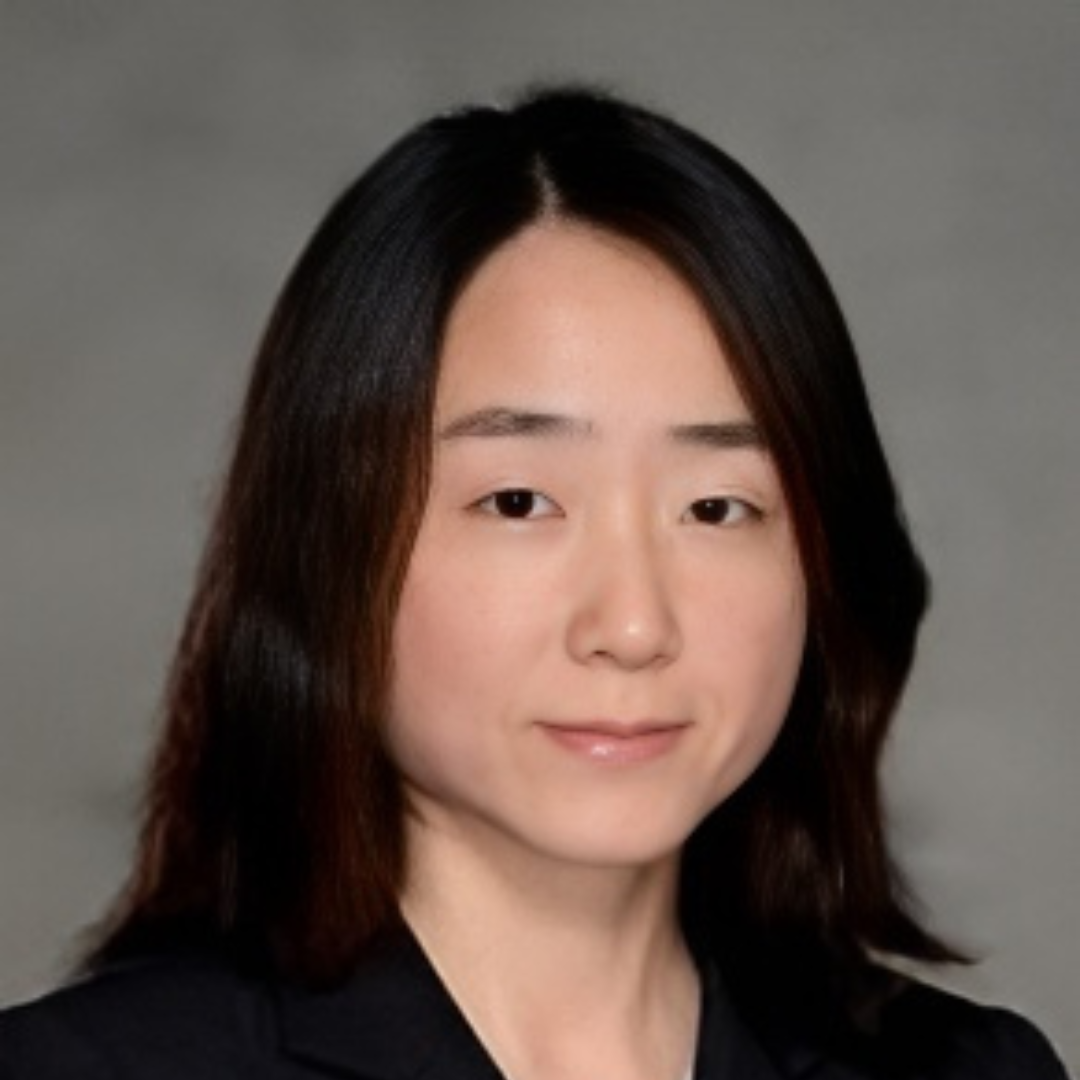
Dr. Ying Wang is a Professor in the Department of Electrical, Computer and Software Engineering at Ontario Tech University, part of the Faculty of Engineering and Applied Science. Her research focuses on RF/microwave circuits, millimeter-wave technology, antennas, and computer-aided design. She holds a PhD from the University of Waterloo (2000), and earlier degrees from Nanjing University of Science and Technology, China. Education: PhD (Electrical Engineering), University of Waterloo, 2000 Master of Applied Science (Electronic Engineering), Nanjing University of Science and Technology, 1996 Bachelor of Engineering (Electronic Engineering), Nanjing University of Science and Technology, 1993 Research Interests: Dr. Wang specializes in microwave filter design, millimeter-wave systems, antenna arrays, and neural network applications in electromagnetic optimization. Her work emphasizes practical implementations in wireless communication systems, satellites, and high-frequency devices. Recent projects include optimizing amplifier stability in CMOS technology and developing advanced multiplexing networks. Publications: Her publications span neural network modeling for microwave filters, millimeter-wave amplifier design, and multiplexer synthesis. Key themes include high-dimensional optimization techniques, scalable circuit models, and cross-disciplinary applications of artificial intelligence in electromagnetics. Professional Background: Prior to academia, Dr. Wang worked as a Senior Member of Technical Staff at COM DEV International (2000–2007), contributing to industrial microwave system development. She currently teaches courses such as Microwave and RF Circuits (ELEE 4750U) and Antenna Theory and Design (ENGR 5695G).
Dr. Igor Stankovic is a Research Professor at the Institute of Physics Belgrade, University of Belgrade. He holds a Dr.rer.nat. in Theoretical Physics from Technical University Berlin (2004) and a degree in Electrical Engineering from University of Belgrade (1999). His professional journey includes roles as a Senior Simulation Engineer at Toyota Motor Europe and visiting professorships at Universidad Técnica Federico Santa María (Chile) and University of Leoben (Austria). He has led multiple Horizon 2020 and Horizon Europe projects, including the Principal Investigator role in ULTIMATE-I and BLESSED projects. Education: 1999: Electrical Engineering (Dipl. ing.), University of Belgrade 2004: Dr.rer.nat. in Theoretical Physics, TU Berlin Research Interests: Focus on High-Performance Computing applications, computational tribology, and modeling of two-dimensional materials. His methods include molecular dynamics simulations, Monte Carlo techniques, and optimization algorithms. Key areas: ionic liquids, friction mechanisms, and self-assembled magnetic nanostructures. Key Projects: Horizon 2020: DAFNEOX (2015-2019) Horizon 2020: ULTIMATE-I (2020-2025) Horizon Europe: BLESSED (2023-2027) Scientific Awards: 1993 Prize of City of Belgrade 1999 Best Student Award Advising & Grants: Mentor for three Ph.D. students and actively advises on technology transfer through the Enterprise Europe Network. Labs & Teams: Leads Scientific Computing Laboratory, collaborates with SyNergy_Mat Lab and 2D_Mat_Lab teams.
Will Townes is an Assistant Professor in the Department of Statistics and Data Science at Carnegie Mellon University's Dietrich College of Humanities and Social Sciences. He joined CMU in 2022 after completing a postdoctoral fellowship in computer science at Princeton University with Barbara Engelhardt. His academic journey includes a Ph.D. in biostatistics from Harvard University under Rafael Irizarry's supervision, an M.S. in math and statistics from Georgetown, and earlier work in tropical ecology fieldwork in the Philippines. Dr. Townes specializes in applied statistics with primary focus areas in biomedical and public health domains. His research centers on wastewater-based epidemiology, wearable devices, and auxiliary signals for infectious disease tracking and forecasting as part of the Delphi research group. He has developed normalization, feature selection, and dimension reduction methods for single cell RNA-Seq and spatial transcriptomics data analysis. His broader research interests span biostatistics, epidemiology, genomics, time series forecasting, and theoretical aspects of Tweedie distributions. His recent publications reveal a strong emphasis on wastewater surveillance methodologies, single-cell data analysis techniques, and infectious disease forecasting models. The research demonstrates a consistent focus on computational scalability and efficiency through approximate inference techniques. Dr. Townes approaches statistical problems with a pragmatic perspective, comfortable with probabilistic (Bayesian) models while drawing inspiration from diverse statistical perspectives. Member of DELPHI Lab Group at CMU Active contributor to genomics and biostatistics research Focus on computational efficiency in statistical methods Dr. Townes mentors several students including Gabrielle Thivierge (PhD candidate working on infectious disease forecasting methods), Julia Elrod, and Anna Rosengart. He teaches data science courses at CMU, including a field course in Costa Rica where students work with community partners on real-world data projects involving water quality indicators, spring flow rates, and ecological monitoring.
Torsten Hoefler is a Full Professor of Computer Science at ETH Zurich, Switzerland, with an adjunct appointment in Electrical Engineering. He previously held roles at the National Center for Supercomputing Applications (University of Illinois at Urbana-Champaign) and Indiana University. Full Professor of Computer Science, ETH Zurich (2020–present) Adjunct Professor of Electrical Engineering, ETH Zurich (2020–present) Member at Large, ACM SIGHPC Executive Committee (2013–present) Leadership roles in the MPI Forum and Blue Waters project His research focuses on performance-centric system design , with emphasis on scalable networking, parallel programming models, and performance modeling. Key contributions include the Slim Fly network topology, Data-Centric Python framework, and innovations in parallel graph computations and RDMA-based systems. Recent publications span topics like LLM training networks , quantization geometry , chiplet interconnects , and AI-driven climate modeling , reflecting his interdisciplinary approach combining HPC, AI, and hardware-software co-design. ACM Gordon Bell Prize (2019) ERC Consolidator Grant (2020) IEEE TCSC Award for Excellence (2019) SIAM SIAG/SC Junior Scientist Prize (2012) Latsis Prize of ETH Zurich (2015) He has received multiple best paper awards at top conferences (SC10, SC13, SC14, SC19, IPDPS'15, HPDC'15, OOPSLA'16) and contributed to MPI-3 standardization.
Dogyoon Song is an Assistant Professor in the Department of Statistics at the University of California, Davis. His work bridges theoretical and applied domains in data science, with a focus on optimization, machine learning theory, and high-dimensional statistics. He also explores causal inference, contributing to foundational and algorithmic advancements in modern statistical learning. Research Interests: Optimization, Machine learning theory, High-dimensional statistics, Causal inference Publication Trends reveal expertise in high-dimensional inference, matrix estimation methods, and theoretical analysis of machine learning algorithms. His work spans temporal graph analysis, diffusion models, and robustness in learning systems, with applications to statistical modeling and optimization challenges.
Moncef Gabbouj is a Professor of Signal Processing at the Department of Computing Sciences, Tampere University, Finland. He holds a PhD from Purdue University and has held academic positions including Academy of Finland Professor (2011–2015) and Head of the Department of Signal Processing (2002–2007). His research focuses on artificial intelligence, machine learning, multimedia signal processing, and nonlinear signal/image processing. He has authored over 800 papers and supervised 64 doctoral and 72 master’s theses, earning accolades such as IEEE Fellow, Finnish Cultural Foundation Award, and TUT Foundation Grand Award. Education: BS (Electrical Engineering, Oklahoma State University, 1985), MS and PhD (Electrical Engineering, Purdue University, 1986–1989). Visiting roles include Hong Kong University of Science and Technology and University of Southern California. Research interests include Big Data analytics, multimedia content analysis, pattern recognition, and video coding. He leads the Artificial Intelligence Research Task Force of the Research Alliance on Autonomous Systems (RAAS) and directs the NSF IUCRC Center for Visual and Decision Informatics (CVDI). Awards highlight contributions to signal processing and AI, including IEEE Fourier Award Committee membership and leadership roles in EURASIP and IEEE. Grants and projects span EU Horizon programs, NSF, and industry collaborations.
Anuran Makur is an active Assistant Professor at Purdue University with dual appointments in the Department of Computer Science (College of Science) and the Elmore Family School of Electrical and Computer Engineering (College of Engineering). He is affiliated with the Institute for Control, Optimization and Networks (ICON) and teaches foundational courses in machine learning and data science. His educational background includes a B.S. in Electrical Engineering and Computer Sciences from UC Berkeley (2013, summa cum laude), an S.M. in Electrical Engineering and Computer Science from MIT (2015), and a Sc.D. from MIT (2019). B.S., UC Berkeley, 2013 S.M., MIT, 2015 Sc.D., MIT, 2019 Makur's research bridges theoretical machine learning, information theory, and applied probability. Key interests include ranking/preference learning, optimization for ML, non-parametric inference, information measures, permutation channel limits, broadcasting on graphs, and reliable computation. His work emphasizes fundamental theoretical limits and mathematical rigor in complex systems. Recent publications reveal strong trends in statistical learning theory (40%), information-theoretic methods (35%), and networked systems (25%), with growing emphasis on privacy-aware inference and high-dimensional statistics. His scientific achievements are recognized by prestigious awards: Arthur M. Hopkin Award (UC Berkeley, 2013) Ernst A. Guillemin Master's Thesis Award (MIT, 2015) Jin Au Kong Doctoral Thesis Award (MIT, 2020) Thomas M. Cover Dissertation Award (IEEE, 2021) NSF CAREER Award (2023) While specific advising details aren't public, his research leadership is evident through ICON affiliation and collaborations with MIT's LIDS/IDSS groups. The NSF CAREER grant supports his work on information-theoretic foundations of machine learning. He maintains active roles in theoretical computer science and information theory communities through conference organization and editorial work. Makur leads research within ICON, focusing on control-theoretic approaches to networked learning systems. His work integrates probabilistic modeling with optimization theory, particularly for distributed inference and networked decision-making under uncertainty.
Prof. Daniel Kressner is a Professor at the École Polytechnique Fédérale de Lausanne (EPFL), holding positions in the School of Basic Sciences (SB), Mathematics Institute (MATH), and the Numerical Algorithms and High-Performance Computing (ANCHP) group. He also leads the SMA-ENS unit within the SB-SMA division. His research focuses on numerical linear algebra, high-performance computing, and tensor approximation methods, with applications in scientific computing and data science. Education details are not explicitly listed, but his career at EPFL includes leadership in key research groups and doctoral programs. He supervises multiple doctoral students, including Alice Cortinovis, Peter Effenberger, and others. Research interests emphasize low-rank methods, matrix equations, and efficient algorithms for large-scale problems. Recent work includes advancements in randomized algorithms, tensor networks, and preconditioning techniques for eigenvalue problems. His publications span high-impact journals like Siam Journal on Matrix Analysis and Applications and Numerical Linear Algebra with Applications, addressing topics such as compressed sensing, multigrid methods, and distributed signal processing. Prof. Kressner advises doctoral candidates and contributes to the Program doctoral Mathématiques (EDMA-GE) committee. His lab, ANCHP, develops software tools for hierarchical matrices and tensor computations, such as the hm-toolbox for HODLR and HSS matrices.