Alejandra Alvarez Munera is a researcher in the Animal & Dairy Science department at the University of Georgia's College of Agricultural & Environmental Sciences . Her work focuses on statistical genetics and genomic prediction methodologies for livestock improvement. Research interests include: Quantitative genetics modeling Linear mixed models optimization Genomic selection algorithms Biostatistical computation Recent publications highlight trends in: Genomic prediction software development (Blupf90 suite) Random regression modeling for animal growth Double hierarchical generalized linear models Reliability approximation techniques
Dr. Ziyang Lyu is a Lecturer (tenure track assistant professor) in Statistics at the School of Mathematics and Statistics, UNSW Sydney. He completed his Ph.D. in Statistics at the Australian National University in 2020, followed by postdoctoral research at the University of Queensland (2020-2021) and University of New South Wales (2021-2024). His research spans asymptotic analysis, mixed models with crossed random effects, finite Gaussian mixture models, and machine learning from a statistical perspective with emphasis on semi-supervised learning. Education: Ph.D. in Statistics, Australian National University (2020) Previous Positions: Postdoctoral Research Fellow at University of Queensland (2020-2021), University of New South Wales (2021-2024) His scholarly contributions focus on: Asymptotic theory for mixed effects models Crossed random effects modeling Finite mixture model analysis Statistical approaches to semi-supervised learning Missing data mechanisms in Gaussian mixture models Research trends from his 12 publications (2018-2025) show sustained focus on asymptotic theory, mixed effects modeling, and statistical machine learning with applications to high-dimensional data analysis. His methodological work bridges theoretical statistics with practical implementation in R software. Teaching responsibilities include: 2025 Course Convenor for Data Management for Statistical Analysis and Probability/Stochastic Processes 2024 Course Convenor for Statistics Fundamentals and Applied Regression Analysis
Professor David I Warton is a leading ecological statistician at the School of Mathematics and Statistics , University of New South Wales (UNSW). He leads the Eco-Stats research group , which has secured over $9M in Australian Research Council (ARC) funding and focuses on developing model-based statistical methodologies to address ecological questions. Education: PhD in Ecological Statistics (Macquarie, 2003), MA in Mathematical Statistics (Sydney, 1999), BSc (Hons) in Ecology and Pure Mathematics (Sydney, 1997) His research spans allometry , multivariate abundance analysis , species distribution modelling , and error-in-variables regression , with applications ranging from biodiversity conservation to medical studies. His recent publications emphasize AI-driven ecological data analysis , phylogenetic GLMMs , and efficient algorithm development . Scientific Awards: ARC College of Experts (2025-27), Highly Cited Researcher (2019-22), Fellow of the Royal Society of NSW (2020), Christopher Heyde Medal (2014) He supervises PhD students working on machine learning for fish classification, spatio-temporal species distribution models, and latent variable approaches in ecology. As academic lead of Stats Central , he promotes statistical collaboration across disciplines, and serves as Associate Editor for leading journals.
Lizhen Lin is a Professor of Statistics in the Department of Mathematics at the University of Maryland. Her research bridges statistical theory, Bayesian methods, and machine learning through theoretical and applied work in statistics on manifolds, deep learning, and network analysis. University: University of Maryland Department: Mathematics Email: lizhen01@umd.edu Office: Kirwan 1107 Her research focuses on: Foundations of deep neural networks via statistical theory Bayesian modeling for infinite-dimensional and high-dimensional data Geometry and statistics for manifold-valued data Network analysis with covariates and topological structures Robust optimization and inference on non-Euclidean spaces Recent publications emphasize: Bayesian community detection and stochastic blockmodels Variational inference and posterior contraction Manifold-adaptive deep generative models High-dimensional change point detection Applications to microbiome networks and DNA topology Teaching includes courses on linear models (STAT 741) and statistical foundations of deep learning (STAT 818).
Bin Li is an Associate Professor at the School of Electrical Engineering and Computer Science. His research focuses on wireless networks, network scheduling, sufficient dimension reduction, and statistical inference. NSF-funded projects: EAGER: TaskDCL, CAREER: Wireless Collaborative Mixed Reality Networking, CNS Core: Scalable Algorithms for Virtual Reality Over Wireless Networks. Grants include foundational work in AI-driven task training, geospatial digital twins, and joint communication-computation-learning systems. His research spans wireless scheduling algorithms, data freshness optimization, and nonlinear sufficient dimension reduction. Recent work explores Fréchet regression, functional graphical models, and kernel-based hypothesis testing. Articles highlight interdisciplinary applications in computer science, statistics, and mathematics. Statistical methods dominate his contributions, including Bayesian credible sets, copula models, and additive independence frameworks. Collaborations extend to multi-source genomic data analysis and immersive educational platforms via augmented reality. With an h-index of 16 and 74 research outputs, Bin Li’s expertise intersects wireless network optimization and statistical learning. His work addresses challenges in edge computing, cloud offloading, and cyber-physical systems through algorithmic innovation and theoretical rigor.
Yukai Yang is a Senior Lecturer at the Department of Statistics, School of Economics and Business, Uppsala University. His research bridges econometric theory with applied statistical methods. Education : B.Eng, Shanghai Jiao Tong University Cand. Polit, University of Copenhagen PhD, Aarhus University (2012) His research spans smooth transition models , state-space models , Bayesian VAR , panel data analysis , and directional statistics , with recent interdisciplinary work in medical data science . Articles highlight methodological innovation in time series , machine learning , and mobile biometrics . Scientific Awards : None listed in provided data. His work includes software development (e.g., mfbvar package) and collaborations in multimedia systems and health economics .
Philipp Gersing is a researcher at the Department of Statistics and Operations Research, University of Vienna. His academic work focuses on econometrics, time series analysis, and statistical modeling with applications in macroeconomic and financial data. He teaches courses in mathematics and econometrics at both undergraduate and graduate levels. Current courses: Mathematics 1, Introductory Econometrics (MA) Advanced courses: Applied Econometrics 1 & 2, Seminar in Empirical Finance and Financial Econometrics (MA) His research specifically addresses challenges in generalized dynamic factor models, including identifiability conditions, distributed lag approaches, and the resolution of rotational indeterminacy issues. Recent work explores the canonical decomposition of factor models and the prevalence of weak factors in empirical applications. Publications demonstrate consistent contributions to factor modeling theory, with applications spanning macroeconometric analysis and financial data processing. Key themes include mixed-frequency data integration, non-stationary time series handling, and structural identification in multivariate systems.
Ken M. L. Yiu is a Professor in the Department of Computing at Hong Kong Polytechnic University , Faculty of Engineering. He received his PhD and Bachelor's degree from the University of Hong Kong in 2006 and 2002, respectively, and was previously affiliated with Aalborg University (2006–2009). He is a leading researcher in databases, with a focus on spatiotemporal data, query processing, and multidimensional data management. PhD, University of Hong Kong (2006) Bachelor of Computer Engineering, University of Hong Kong (2002) His research interests lie at the intersection of database systems and spatial analytics. He investigates efficient indexing, query optimization, and privacy-preserving techniques for large-scale spatial and temporal datasets. His recent work explores learned index structures, GPU-accelerated query processing, and high-dimensional data retrieval. He has made significant contributions to spatial query processing, trajectory analytics, and location-based services. The trends in his recent publications (2021–2025) reflect a strong focus on high-performance database systems, including GPU acceleration (GHive), perfect hashing on GPUs (GPH), and learned cardinality estimation. His work increasingly integrates machine learning with traditional database techniques, as seen in AlayaDB for LLM inference and learning-based query optimization. He also continues to advance core database problems such as spatial indexing, trajectory analysis, and similarity search. SSTD 2025 10-Year Impact Award Ken Yiu has successfully led multiple competitive research projects funded by the Hong Kong GRF, including grants on learned index structures (2024–2026), smart memory for vector data mining (2021–2023), and efficient spatial data management (2017–2019). He has supervised numerous PhD and MPhil students, many of whom now hold academic positions (e.g., Bo Tang at SUSTech, Yu Li at HDU) or work in top tech companies (e.g., Huawei, Alibaba). His professional service is extensive, including roles as PI for major grants, area chair (ICDE 2024), and program committee member for top conferences like SIGMOD, VLDB, and ICDE. He is actively involved in research groups and projects related to database systems, particularly in spatiotemporal data management and efficient query processing. His lab collaborates closely with students and co-supervisors like Bo Tang on topics such as trajectory mining, spatial indexing, and learned databases. The research group maintains strong ties with international institutions and contributes to major open problems in database performance and scalability.
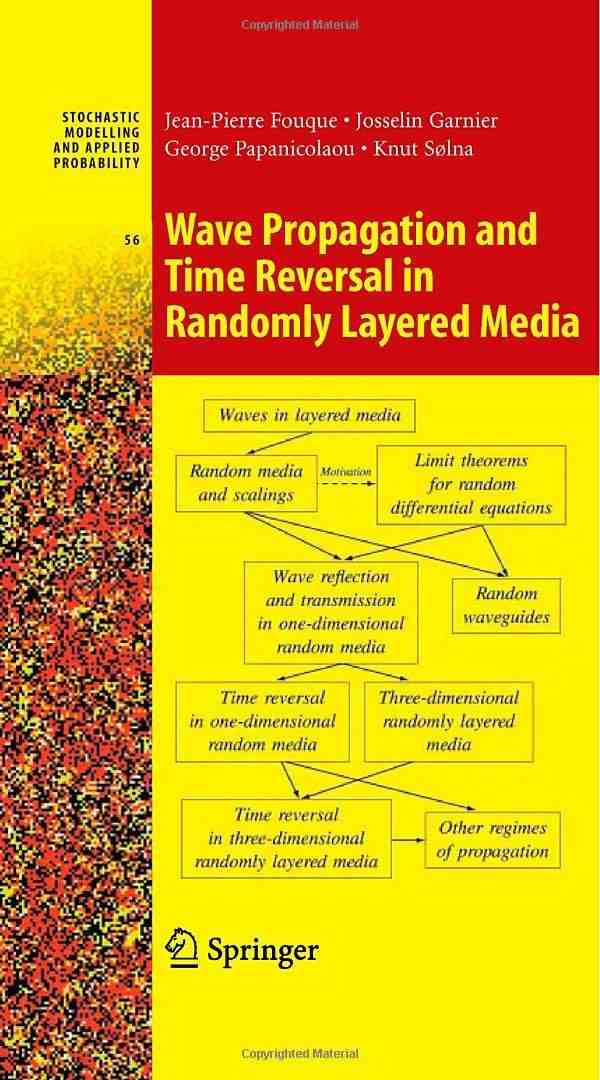
Josselin Garnier is a Professor at Ecole Polytechnique, France, affiliated with the Center for Applied Mathematics. His research focuses on wave propagation in random media, imaging techniques, uncertainty quantification, and inverse problems. He has authored/co-authored multiple influential books including Wave Propagation and Time Reversal in Randomly Layered Media (2007) and Multi-Wave Medical Imaging (2017). His work bridges mathematical theory with applications in optics, seismology, and nuclear engineering. Research interests emphasize stochastic dynamics, nonlinear wave interactions, and Bayesian methods for parameter estimation. He leads a large research group with over 30 PhD students, many working on interdisciplinary projects such as thermalization in optical fibers and seismic fragility analysis. His contributions include developing reduced order modeling approaches for inverse problems and advancing methodologies for uncertainty quantification in nuclear reactor simulations. Key collaborations involve institutions like the French Mathematical Society and the Ciroquo Research & Industry Consortium. His educational contributions include the widely used All-in-one Mathematics textbook series for undergraduate students.
Wei Hu is an Assistant Professor in the Department of Computer Science and Engineering at the University of Michigan's College of Engineering. His research focuses on uncovering the theoretical and scientific foundations of deep learning, aiming to open the black box of neural networks through a combination of theoretical and empirical approaches. Dr. Hu received his PhD in Computer Science from Princeton University, where he was advised by Sanjeev Arora. Prior to his PhD, he completed his undergraduate studies at Tsinghua University as a member of the prestigious Yao Class. He also served as a FODSI postdoc at UC Berkeley before joining the University of Michigan faculty. His research interests center around understanding the fundamental mechanisms of deep learning, particularly focusing on training dynamics, generalization properties, and the theoretical underpinnings of neural networks. His work spans both clean, controlled problems and complex real-world models, with recent emphasis on transformer architectures, grokking phenomena, and the implicit biases in neural network training. Analysis of his recent publications reveals a strong focus on theoretical deep learning with particular attention to transformer models, grokking phenomena, and generalization theory. His work bridges the gap between theoretical understanding and practical deep learning applications, with significant contributions to understanding abrupt learning transitions, representation learning, and the dynamics of neural network training. AAAI New Faculty Highlights, 2024 Google Research Scholar Award, 2023 Siebel Scholar, 2021 Best paper award at ICML Workshop on Modern Trends in Nonconvex Optimization for Machine Learning, 2018 Gordon Y.S. Wu Fellowship, 2016 Gold medal (1st place), The 27th Chinese Mathematical Olympiad, 2012 Dr. Hu currently advises three PhD students: Pulkit Gopalani, Zhiwei Xu (co-advised with Yixin Wang), and Yongyi Yang. His research group has received substantial funding through awards including the Google Research Scholar Award. He teaches courses including Introduction to Machine Learning (EECS 445) and specialized topics in machine learning theory and large language models (EECS 598/CSE 598). His research group maintains an active presence in top machine learning conferences, with publications appearing regularly in venues such as NeurIPS, ICML, ICLR, and others. The group's work has gained significant recognition in the theoretical machine learning community for its rigorous approach to understanding deep learning phenomena.
Tim van Erven is an Associate Professor of Machine Learning at the Korteweg-de Vries Institute for Mathematics within the Faculty of Science at the University of Amsterdam. His research focuses on the mathematical foundations of machine learning, with particular expertise in online convex optimization, statistical learning theory, and explainable AI. He leads a research group dedicated to developing mathematically rigorous machine learning methods that work effectively without manual fine-tuning. His research interests span the mathematical foundations of machine learning, with emphasis on explainable machine learning, adaptive methods in online convex optimization, faster-than-minimax rates for 'easy data' in statistical learning, PAC-Bayesian concentration inequalities, and statistical learning theory with frequentist analysis of Bayesian methods. His work bridges theoretical guarantees with practical applications, recently shifting toward formal mathematical analysis of explainability methods for black-box AI systems. His recent publications reveal a clear evolution from foundational work in online learning and statistical theory toward explainable AI, with increasing focus on theoretical guarantees for concept learning and algorithmic recourse. The publications demonstrate strong methodological rigor while addressing practical challenges in interpretability and robustness of machine learning systems. Scientific Awards: VICI grant by the Dutch Research Council (2025) VIDI grant by the Dutch Research Council (2019) TOP grant by the Dutch Research Council (2016) NIPS 2014 outstanding reviewer award Rubicon grant by the Dutch Research Council (2011) Van Erven serves in significant academic leadership roles including as a member of the board of directors for COLT, co-chair for the AI & Mathematics initiative, and organizer of the thematic seminar on machine learning. He has successfully secured multiple competitive research grants and leads a research group working on the Mathematical Foundations for Explainable AI project, with several PhD and Postdoc positions currently open.
Cristina Butucea is a Full Professor of Statistics at ENSAE, Institut Polytechnique de Paris (IP Paris), and a Permanent Member of CREST (Center for Research in Economics and Statistics). She specializes in nonparametric and high-dimensional mathematical statistics, with research interests spanning inverse problems, quantum statistics, privacy of data, and machine learning. Her academic career includes faculty positions at several prestigious French institutions including Université Paris-Est Marne-la-Vallée and Université des Sciences et Technologies de Lille. Her educational background includes a post-doc at Humboldt University, Berlin (1998-1999), followed by an Assistant Professor position at Université Paris Nanterre (1999-2007). She was promoted to Professor at Université des Sciences et Technologies de Lille 1 (2007-2010), then at Université Paris-Est Marne-la-Vallée (2010-2016), and currently holds her position at ENSAE, IP Paris (2016-present). Professor Butucea's research focuses on theoretical statistics with applications in modern data science challenges. Her work on differential privacy has established fundamental limits and optimal procedures for statistical estimation under privacy constraints. She has made significant contributions to quantum statistics, particularly in quantum state estimation. Her research on high-dimensional statistics addresses variable selection, sparse structures, and nonparametric estimation in complex settings. She has also contributed to the theory of inverse problems and the analysis of locally stationary processes. Her recent publications demonstrate a strong focus on the intersection of statistics with privacy concerns, quantum information, and high-dimensional data analysis. She has published in top statistical journals including Annals of Statistics, Bernoulli, and Electronic Journal of Statistics. Her work often addresses fundamental questions about optimal rates of convergence, phase transitions in estimation problems, and the theoretical limits of statistical procedures under various constraints. Nominated IMS Fellow in 2019 CO-organizer of the Seminar of Statistics CREST-CMAP Associate Editor of ALEA (Latin American Journal of Probability and Mathematical Statistics) Organizer of several conferences in mathematical statistics and machine learning (Fréjus 2018, Luminy 2019, 2020, Oberwolfach 2021) Professor Butucea has received multiple research grants including ANR HIDITSA (2017-2021), ANR SPADRO (2013-2017), and ANR DIONISOS (2012-2016). She was the Principal Investigator of an ANR project on "Statistics for quantum physics" (2007-2008). She has also been awarded research stays at CIRM Luminy and MFO Oberwolfach. She is actively involved in the academic community as a member of the IMS (Institute of Mathematical Statistics) and the Bernoulli Society. She is also a member of the Institut des Actuaires as an Actuary ISUP.
Ying Sun is an Assistant Professor in the Department of Electrical Engineering at the University of Minnesota's College of Science and Engineering. Her research focuses on distributed algorithms, nonconvex optimization, and machine learning, with applications in wireless communications and robotic swarm systems. Develops decentralized learning frameworks for data heterogeneity Designs risk-aware motion planners for large-scale robotics Works on sparse regression and covariance matrix estimation Advances gradient tracking and bilevel optimization techniques Recent work includes federated learning synchronization, tensor recovery, and robust transfer learning algorithms. She has contributed to the theoretical understanding of optimization landscapes and practical implementations of distributed systems.
Audrey Giremus is a Professor at the Institut de Mécanique et d'Ingénierie de Bordeaux (IMS Bordeaux) , affiliated with the Signal and Image Processing research group (SPECTRAL team). Her work bridges signal processing, statistical modeling, and interdisciplinary applications in environmental science and biomedical engineering. Key affiliations: IMS Bordeaux, BRGM (Bureau de Recherches Géologiques et Minières), CNRS (Centre National de la Recherche Scientifique) Collaborations: STMicroelectronics, Stellantis, Thales, CEA, Slb Research Interests focus on: Advanced signal/image processing algorithms Bayesian inference and particle filtering Applications in GPS navigation, fuel cells, and material science Statistical methods for high-dimensional data Thermal source localization and acousto-thermal coupling Coastal erosion detection using Markov chains Recent publications demonstrate expertise in GPS interference compensation , fuel cell degradation modeling , and biomarker validation . Collaborative projects with institutions like BRGM and CEA highlight her cross-disciplinary impact. Grants/Projects include: PEPR Risks (IRiMa) - CNRS OneWater PEPR - CNRS Technical platforms mentioned: Accelerated Aging Nanocomponent Testing (ATLAS, Cacyssee) Thermal Analysis (Elorga, Tamis) Terahertz and Organic Electronics
Dr. Anne Opschoor is an Associate Professor in the Department of Finance at Vrije Universiteit Amsterdam and a research fellow at Tinbergen Institute. She holds a PhD from the Tinbergen Institute/Econometric Institute at Erasmus University Rotterdam (2014) and a master's degree in financial econometrics from Erasmus University Rotterdam. Her research focuses on financial econometrics, time series analysis, risk management, and copula models. She has received notable awards, including the NWO VIDI Grant (2021) and the 2014 Journal of Applied Econometrics Dissertation Prize. Her teaching includes courses such as Empirical Finance, Quantitative Research Methods, and Mathematics for Finance. She has supervised PhD theses and contributes to grants like the NWO VIDI-funded project on extreme risks in high dimensions. Her work frequently addresses volatility modeling, tail risk, and multivariate financial dependencies, leveraging computational tools like the R package MitISEM. She has published extensively in journals such as the Journal of Financial Econometrics and Journal of Applied Econometrics.