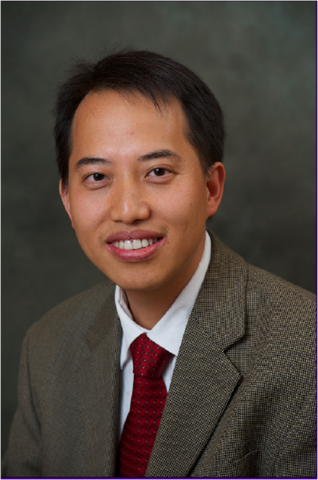
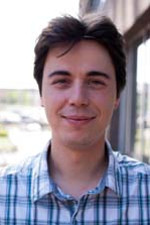
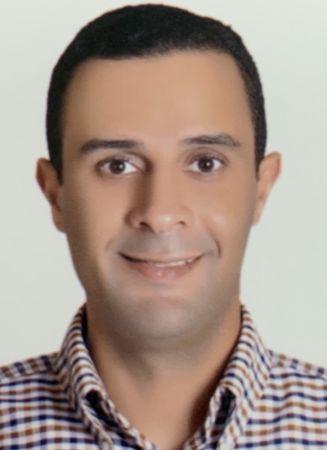
Yan Zhu is a faculty member at the University of Macau , affiliated with the Analog and Mixed Signal VLSI Laboratory within the Faculty of Science and Technology. She has a strong research focus on high-performance analog and mixed-signal integrated circuits, particularly in data conversion and low-power design. Her research interests include: Analog and Mixed-Signal VLSI Design High-Speed Data Converters (ADCs) Noise-Shaping and Time-Domain Circuits PVT-Robust and Low-Power Circuit Techniques Compute-in-Memory and AI Hardware Acceleration The recent publications of Yan Zhu demonstrate a clear trend toward advanced ADC architectures such as time-interleaved, pipelined-SAR, and time-domain converters, with a strong emphasis on calibration, linearity, and energy efficiency. Her work frequently appears in top-tier journals like IEEE JSSC and conferences like ISSCC and CICC, indicating leadership in the field of analog circuit design. There is also a growing focus on machine learning hardware, particularly analog compute-in-memory systems for edge AI applications. No scientific awards or honors are mentioned in the provided text. Yan Zhu has made significant contributions through collaborative research, particularly with Chi-Hang Chan and Rui Paulo Martins , and has been involved in numerous projects related to ADC calibration, metastability, and high-speed sampling. While specific grant details are not listed, the volume and quality of publications suggest active funding support. She has not listed any advisees in the provided data. She is a core contributor to the Analog and Mixed Signal VLSI Laboratory at the University of Macau, where her team focuses on cutting-edge IC design for communication, sensing, and artificial intelligence applications.
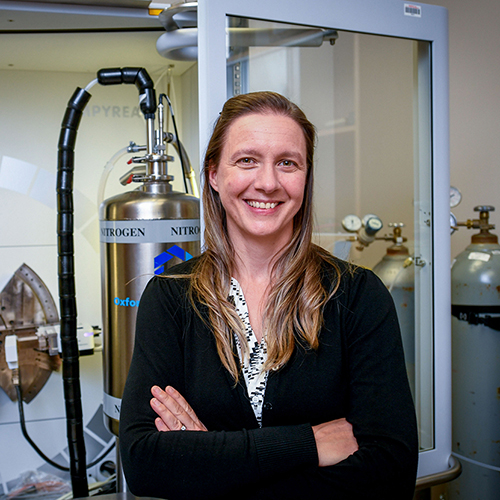
Natalia Chechina is an Honorary Research Fellow at the School of Computing Science, University of Glasgow, specializing in distributed systems with a particular focus on the Erlang programming language and its applications in building reliable and scalable systems. Her research interests span several critical areas in distributed computing: Distributed systems architecture and design Scalability and reliability engineering Erlang ecosystem development Robotics communication systems Server software engineering Performance optimization in distributed environments Dr. Chechina's extensive publication record from 2009-2021 demonstrates consistent contributions to advancing distributed computing capabilities, particularly through her work on SD Erlang (Scalable Distributed Erlang). Her research bridges theoretical analysis with practical implementation, addressing fundamental challenges in building systems that maintain functionality despite failures. She has made significant contributions to understanding how to construct robust server infrastructure that can scale effectively while preserving reliability across diverse application domains. Her collaborative work, frequently with Phil Trinder and other colleagues at the University of Glasgow, spans robotics, instant messaging systems, and general server infrastructure. The cross-disciplinary nature of her research is evident in publications addressing robot team coordination and communication, demonstrating how distributed systems principles can solve complex challenges in multiple domains.
Zebin Ren is a PhD Candidate at the Faculty of Science , Vrije Universiteit Amsterdam , specializing in Computer Systems and High Performance Distributed Computing . Research interests focus on: Input/Output Systems for NVMe SSDs Storage Optimization in cloud environments Data Structures for high-throughput systems Operating Systems performance tuning Recent publications highlight trends in storage system characterization for LLMs, GPU interconnect analysis , and Linux scheduler benchmarks . Key methodologies involve open source tools , filesystem design , and high-performance computing .
Zhongwei Chen is an Adjunct Professor in the Department of Chemical Engineering at the University of Waterloo. His research focuses on advanced energy storage systems, including proton exchange membrane fuel cells, next-generation rechargeable batteries (lithium-ion, lithium-sulfur, zinc-air), and nanomaterials synthesis for electrochemical applications. He explores innovative solutions for improving battery performance, safety, and sustainability through material design and interfacial engineering. Chen's work spans interdisciplinary areas such as membrane technology, solid-state electrolytes, and electrode materials optimization. He has contributed to breakthroughs in polysulfide regulation for lithium-sulfur batteries, scalable silicon anode prelithiation, and biomass-based electrolytes for zinc-iodine batteries. His research often integrates computational modeling (e.g., P2D models) with experimental validation to address practical challenges in energy storage. Publications highlight his expertise in electrocatalysis for water splitting, high-energy-density solid-state batteries, and flame-retardant materials for safer battery systems. His team develops novel characterization techniques (e.g., in situ X-ray diffraction) to study battery degradation mechanisms and improve cycle life. Chen collaborates extensively with industry partners to translate lab-scale innovations into real-world energy solutions.
Joaquín Rodríguez-López is a Professor in the Department of Chemistry at the University of Illinois, with additional appointments at the Materials Research Lab and as a Theme Lead at the Beckman Institute for Advanced Science and Technology. His research group combines interests in electroanalytical chemistry and energy materials, developing chemically-sensitive methods for studying ionic and electronic reactivity at electrode/electrolyte interfaces, highly-localized surface features, and individual particles relevant to energy storage, electrocatalysis, sensors, and environmental electrochemistry. Dr. Rodríguez-López completed his undergraduate studies at Tecnológico de Monterrey (2005), earned his Ph.D. from the University of Texas at Austin under Prof. Allen J. Bard (2010), and conducted postdoctoral research with Prof. Hector D. Abruña at Cornell University (2012). His research focuses on characterizing heterogeneous electrode materials to advance electrochemical energy technologies and sensing, pioneering methods of analysis at the nano- and micro-scale to understand how electrode structure, shape, size, and chemical intermediates impact performance in batteries, electrocatalysts, and photoelectrocatalysts. His analytical research employs novel electrochemical and chemical probes for quantifying the impact of surface chemical and structural heterogeneities on reaction kinetics under relevant reacting conditions ( in situ and operando schemes), pushing the boundaries of state-of-the-art electrochemical analysis in challenging environments. On the materials side, his group explores how nano-scale interactions can control electrode reactivity, advancing redox flow batteries based on size-exclusion and investigating graphene ultra-thin electrodes for energy storage applications. Recent work has established automated, robotic systems for high-throughput electrochemical characterization. Analysis of his recent publications reveals strong trends in scanning electrochemical microscopy, automated electrochemistry, and energy storage applications, with particular emphasis on redox flow batteries, graphene electrodes, electrocatalysis, and reactive oxygen species detection. His work increasingly integrates automation, computational methods, and Bayesian optimization into electrochemical analysis, creating a distinctive research profile at the intersection of analytical chemistry and materials science for energy applications. 2024 University Scholar by the University of Illinois System 2023 School of Chemical Sciences Faculty Teaching Award 2022 The Analytical Scientist Top 40 Under 40 Power List 2021 Zhaowu Tian Prize for Energy Electrochemistry 2021 IAspire Leadership Academy Fellow 2020 Arthur F. Findeis Award for Achievements by a Young Analytical Scientist 2018 Science News SN 10: Scientists to Watch 2017 Scialog Fellow 2017 Royce W. Murray Young Investigator Award 2016 ECS-Toyota Young Investigator Fellowship 2016 Sloan Research Fellow Dr. Rodríguez-López has been consistently listed as a Teacher Ranked Excellent by Students for multiple courses including Chem 524-Electrochemical methods, Chem 420-Instrumental Characterization, and Chem 588-Physical Methods for Materials Chemistry across multiple years (2016, 2021-2024). His research group has secured significant funding from organizations including the Joint Center for Energy Research Storage (JCESR), Society of Analytical Chemists of Pittsburgh (SACP), Energy Materials Center at Cornell, and the American Chemical Society Division of Analytical Chemistry. The group has established the Electrolab, an open-source, modular platform for automated characterization of redox-active electrolytes. The Rodríguez-López group operates at the cutting edge of electrochemical research, with facilities for electrochemical, spectroscopic, chemomechanical, and clean-room fabrication methods. They value creativity, diversity, and innovative approaches to electrochemical reactivity, maintaining a dynamic environment that generates original concepts in electrochemistry while developing the careers of aspiring scientists. Their work spans fundamental electrochemical mechanisms to practical applications in energy storage, environmental monitoring, and sustainable synthesis.
Sanjay Rao is a Professor in the School of Electrical and Computer Engineering at Purdue University, leading the Internet Systems Laboratory. His research focuses on network synthesis/design/verification and Internet video distribution. He holds a B.Tech from IIT Madras and a Ph.D from Carnegie Mellon University. He has held visiting roles at Google, AT&T Research, and Princeton University. Research & Awards: His work includes groundbreaking contributions like End System Multicast (winner of the ACM SIGMETRICS Test of Time Award), Oboe (ABR auto-tuning), and Veritas (causal video streaming analysis). He received the NSF CAREER Award (2010) and is an ACM Distinguished Member (2021). Teaching: Courses include Computer Networking (ECE 463), Object-Oriented Programming (ECE 39595), and Computer Network Systems (ECE 595). Service: Chair, ACM Sigcomm Doctoral Dissertation Award Committee (2022); Associate Editor, IEEE/ACM Transactions on Networking (2016–2020). Labs & Teams: Directs the Internet Systems Lab (ISL) with active projects on video streaming, network resilience, and intent-based design. Graduate students collaborate on these initiatives.
Dr. Surya Kalidindi is a Regents' Professor at the School of Computational Science and Engineering , Georgia Institute of Technology, with a joint appointment in the George W. Woodruff School of Mechanical Engineering. His research focuses on designing material microstructures for optimal performance through multi-scale modeling, machine learning, and high-throughput experimentation. Key projects include microstructure-property linkages, materials informatics, and additive manufacturing optimization. His work integrates computational mechanics, crystal plasticity, and data analytics to address challenges in heterogeneous materials. Notable contributions include developing AI-driven methods for microstructure generation, Bayesian optimization frameworks, and advanced indentation techniques for material characterization. Dr. Kalidindi leads initiatives in materials graph ontology, digital twins, and virtual materials design. His research has been applied to aerospace alloys, biomaterials, and energy materials, emphasizing data-driven approaches to accelerate materials innovation. He maintains an active lab group (MINED Super Group) and collaborates extensively on federal grants related to materials discovery and manufacturing. His work bridges theory, computation, and experimentation to achieve predictive materials modeling and industrial applications.
Leandros Tassiulas is the John C. Malone Professor of Electrical & Computer Engineering at Yale University, affiliated with the School of Engineering & Applied Science. His research focuses on network algorithms, wireless systems, quantum networks, and blockchain technologies. He holds a PhD from the University of Maryland, College Park. Key contributions include the max-weight scheduling algorithm, back-pressure control policies, and foundational work on opportunistic scheduling in wireless networks. His work spans theoretical models, protocol design, and experimental platforms. Research Highlights: Quantum network control and entanglement distribution Federated learning in edge networks Blockchain payment channel optimization Smart grid resource allocation Awards: IEEE Koji Kobayashi Award (2016) ACM Mobihoc Best Paper (2016) IEEE INFOCOM Lifetime Achievement (2007) Bodossaki Foundation Prize (1999) Lab & Collaborations: Active in quantum network experimentation, wireless testbed development (e.g., NITOS), and industry partnerships exploring AI-driven telecom solutions. His work bridges theoretical network science with real-world implementations in 5G/6G, blockchain, and quantum infrastructures.
Keith Winstein is an Associate Professor of Computer Science at Stanford University, with a courtesy appointment in Electrical Engineering. His research focuses on creating innovative networked systems, particularly in communication, compression, and computing. Notable projects include Mosh (an interactive remote shell for mobile clients), Puffer (a video-streaming platform), Lepton (a compression tool), Mahimahi (network emulators), and the gg framework for distributed computing. He has received prestigious awards such as the SIGCOMM Rising Star Award, Sloan Research Fellowship, and NSF CAREER Award. Winstein's academic journey includes undergraduate and graduate studies at MIT. Before academia, he worked at The Wall Street Journal as a reporter and at Ksplice (now part of Oracle), where he held roles in product management and business development. His research spans network protocols, video streaming optimization, cloud computing, and machine learning applications in networking. His work emphasizes practical systems that bridge theoretical concepts with real-world implementation. Recent projects explore computation-centric networking, in-network performance enhancements, and low-latency video streaming. He advocates for reproducible experiments through tools like Mahimahi and has contributed to open-source software widely used in academia and industry. Key Projects: Mosh, Puffer, Lepton, Mahimahi, gg Awards: SIGCOMM Rising Star Award, Sloan Fellowship, NSF CAREER Expertise: Networked Systems, Compression Algorithms, Distributed Computing
Nina Balke is an Associate Professor in the Department of Materials Science and Engineering at NC State University’s College of Engineering. She holds a Ph.D. in Materials Sciences from the Technical University of Darmstadt, Germany (2006). Before joining NCSU in 2021, she was a Research Staff Member at Oak Ridge National Laboratory (2010–2021) and a Feodor-Lynen Fellow at the University of California, Berkeley (2006–2010). Her research focuses on discovering nanoscale materials functionality driven by electric fields and potentials, particularly in energy and information technologies. Key areas include: Ferroelectricity and Polar Materials: Investigating polarization control, phase transitions, and electromechanical coupling in 2D materials like CuInP2S6 and BaTiO3. Energy Storage Materials: Probing ion insertion mechanisms in WO3, MXene, and Li-ion battery materials using operando atomic force microscopy (AFM). Electrochemical Interfaces: Studying solid-liquid interactions in ionic liquids and electrode/electrolyte systems to understand degradation and mechanical response. Her group develops advanced AFM techniques to quantify nanoscale properties such as piezoelectric constants and strain-current coupling. Recent work explores structural water effects in tungsten oxides and defect-driven phase transitions in ferroelectrics. Balke’s contributions span over 150 publications, with recent highlights in ACS Nano , Applied Physics Letters , and Advanced Energy Materials . Awards: None explicitly stated in provided texts. Grants/Projects: Focus on U.S. Department of Energy and NSF-funded initiatives in energy storage and nanomaterials. Her Balke Research Group includes graduate researchers and postdocs, emphasizing interdisciplinary collaboration with theory and computational groups. Active areas include MXene-based actuators, ionotronic devices, and high-throughput AFM methodologies.
Jan Fostier is a researcher at Ghent University, affiliated with the Internet Technology and Data Science Lab (IDLab). His work focuses on High Performance Computing (HPC) and Big Data Analytics in life sciences and bioinformatics, leveraging supercomputers and GPUs to accelerate genomic data processing. He collaborates across disciplines with bioscience engineers, biologists, medical doctors, and industry partners like Janssen Pharmaceutica and Agilent. His research interests include: Bioinformatics Sequencing Data Analysis High-Performance Computing Stochastic Modelling Genomic Data Compression Recent publications highlight advancements in approximate pattern matching, de Bruijn graph construction, and nanopore signal analysis. Awards include an Outstanding Presentation Award (2015) and an Outstanding Oral Poster Presentation Award (2015). He has developed tools like Halvade , Jabba , and BLSSpeller for genomic applications.
Dr. Ahmed Hassan is an Assistant Professor in the Department of Computer Science and Engineering at Lehigh University, part of the P.C. Rossin College of Engineering and Applied Science. He is a core member of the Scalable Systems Software (SSS) research group. Previously, he held an Assistant Professor position at Alexandria University and a Postdoctoral Research Associate role at Virginia Tech. His research focuses on distributed computing, concurrent and transactional data structures, multiprocessor programming, and NUMA-aware software design. He teaches courses including Analysis and Design of Algorithms, Advanced Programming Techniques, and Distributed Systems. Education: Ph.D., Computer Engineering, Virginia Tech, 2015 M.S., Computer Engineering, Alexandria University, Egypt, 2011 B.S., Computer Science, Alexandria University, Egypt, 2006 Research Interests: Hassan’s work spans distributed systems, transactional memory, and high-performance computing. He explores synchronization protocols, concurrent data structures, and optimizing software for multi-core architectures. His projects often address challenges in scalability, consistency, and efficiency in modern computing environments. Advising & Grants: While specific student advisees or grant details are not listed, his involvement with the SSS group suggests active participation in collaborative research projects. His work has been disseminated through top-tier conferences and technical reports, reflecting a strong focus on applied and theoretical systems research. Labs/Teams: Member of the Scalable Systems Software (SSS) research group at Lehigh University, focused on advancing scalable systems software and distributed computing solutions.
Adonis Bogris is a Professor at the Department of Informatics, University of West Attica (formerly part of the Technological Educational Institute of Athens). His research focuses on all-optical signal processing, high-speed transmission systems, neuromorphic computing, and nonlinear optics. He holds a B.S. in Informatics, M.Sc. in Telecommunications, and Ph.D. from the National and Kapodistrian University of Athens (1997, 1999, 2005). He has authored/co-authored over 200 articles, cited over 3,000 times. His work spans optical fiber networks, mid-infrared photonics, and physical-layer security. He serves as an Associate Editor for Optica Optics Continuum (since 2018) and IEEE Journal of Lightwave Technology (since 2022). He is a Senior Member of Optica and actively reviews for top journals like IEEE, Elsevier, and Nature. Research interests include: All-optical networking and transmission systems Neuromorphic photonic accelerators Nonlinear effects in optical fibers/waveguides Earthquake detection via fiber-optic sensing (e.g., DAS) Recent work emphasizes photonic neuromorphic processors for imaging cytometry and secure communication systems. He has led EU/national projects as Principal Investigator and contributed to standards through roles in GUnet, GRNET, and UNESCO committees. His lab explores cutting-edge applications like fiber-based seismology and high-throughput convolutional neural networks using integrated photonics.
Yifan Cheng is an Assistant Professor at the Department of Food Science and Technology, Virginia Tech. Their research focuses on improving food safety, quality, and sustainability through advanced material engineering. Key areas include antimicrobial nanostructures for packaging, food waste valorization via immobilized enzymes, AI-driven packaging design, and active/intelligent packaging systems. The lab, known as the Cheng Nano Lab, emphasizes interdisciplinary approaches to surface engineering and material-microbe interactions. Educational Background Ph.D., Food Science, Cornell University, 2017 B.S., Food Science, Cornell University, 2012 B.S., Plant Science & Technology, Shanghai Jiao Tong University, 2012 Research Interests Cheng’s work integrates nanotechnology, AI, and material science to address critical challenges in food packaging and safety. The lab’s mission is to leverage material-microbe-food interface science to reduce food loss, enhance packaging performance, and valorize food waste. Current projects include developing antimicrobial coatings, optimizing enzyme immobilization for waste conversion, and AI-guided material discovery. Laboratory and Team The Cheng Nano Lab fosters a diverse, inclusive environment for innovation. Open to postdocs, graduate students, and undergraduates, the lab emphasizes collaborative research and professional development. Funding sponsors include USDA NIFA and industry partnerships.
Joseph Poon is the William Barton Rogers Professor of Physics at the University of Virginia, with a courtesy appointment in Materials Science and Engineering. He leads a research group focused on experimental and computational studies of condensed matter physics, particularly in thermoelectric materials, magnetic skyrmions, and high-entropy alloys. His work spans advanced materials design, spintronic applications, and data-driven materials discovery. Education: Ph.D. and B.S. from California Institute of Technology (1978 and 1974). Research Interests: Thermoelectric properties of semiconductors/semimetals near topological phase transitions Skyrmionic states in amorphous ferrimagnetic heterostructures High-entropy alloy design in high-dimensional composition space His recent work emphasizes machine learning for alloy phase prediction, magnetic skyrmion dynamics, and optimizing thermoelectric performance in half-Heusler compounds. Recent Research Trends: Focus on multi-functional materials combining mechanical strength, corrosion resistance, and electronic/magnetic properties. Key contributions include demonstrating ultrafast skyrmion switching in Mn4N-based systems and designing refractory B2 high-entropy alloys with exceptional strength-ductility synergy. Grants/Advising: While specific grants are not listed, his research group's activities imply significant funding in materials science and spintronics. No advisee names are explicitly provided in the text. Labs/Teams: Operates a multidisciplinary lab integrating experimental synthesis, computational modeling, and data science for materials innovation. Collaborates extensively on projects involving skyrmionics and high-entropy alloys.