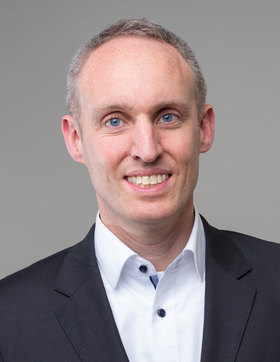
Johannes Schlaich is a Professor of Mobility and Transport at the Berlin University of Technology , with a focus on integrated transport planning, traffic modeling, and digitalization in transport. His research includes strategic demand modeling, shared mobility, and future mobility systems.
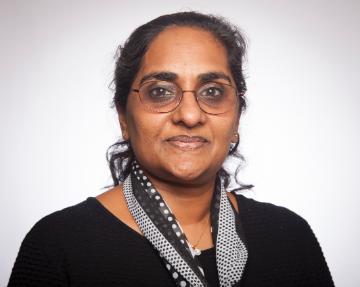
Shoba Krishnan is a Professor in the Department of Electrical and Computer Engineering at Santa Clara University's School of Engineering. Her work spans analog and mixed-signal integrated circuit design, carbon nanotube interconnect modeling, and engineering education initiatives. Education: B. Tech., Jawaharlal Nehru Technological University (1987) M.S., Michigan State University (1990) Ph.D., Michigan State University (1993) Her research focuses on high-speed data communication ICs, particularly clock/data I/O circuits, and explores carbon nanotubes as interconnect materials. She's expanding into bio-engineering instrumentation and renewable energy power electronics. Publications highlight work on low-power high-speed drivers, carbon nanotube via resistance analysis, microwave frequency modeling, and BIST structures for transceivers. She advises IEEE and Engineers Without Borders chapters at SCU.
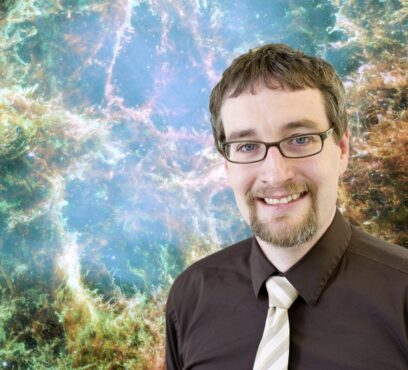
Scott A. Hughes is a Professor in the Department of Physics at the Massachusetts Institute of Technology (MIT), School of Science. He is affiliated with the MIT Kavli Institute for Astrophysics & Space Research and leads the Hughes Group, focusing on astrophysical general relativity. He previously served as the Astrophysics Division Head (2019–2023) and held the Adam J. Burgasser Chair in Astrophysics and the Class of 1956 Career Development Professorship. Education: B.A. in Physics, Cornell University (1993); Ph.D. in Physics, California Institute of Technology (Caltech), advised by Kip Thorne. Postdoctoral Experience: University of Illinois, Caltech, Kavli Institute for Theoretical Physics (UCSB). Joined MIT Faculty: January 2003. His research centers on astrophysical general relativity , with a focus on black holes , gravitational-wave sources , and strong-field gravity . He investigates waveform modeling, testing black hole spacetimes, and cosmological applications of gravitational waves ('standard sirens'). His work integrates high-performance computing and numerical relativity, contributing to LIGO science. He has authored numerous influential publications on extreme mass-ratio inspirals, ringdown spectroscopy, and gravitational wave cosmology. Analysis of his recent publications reveals a strong trend toward gravitational wave astrophysics , combining theoretical modeling with observational implications for LIGO and future space-based detectors like LISA. His work spans black hole dynamics , numerical relativity , cosmological parameter estimation , and tests of general relativity . There is a growing integration of machine learning and data analysis techniques in his recent work. Scientific Awards and Honors: American Physical Society Fellow (2012) John Simon Guggenheim Fellow (2012) Margaret MacVicar Faculty Fellow, MIT (2017–2027) Buechner Outstanding Advisor Award, MIT Physics (2016) MIT School of Science Prize for Excellence in Undergraduate Teaching (2005–2006) National Science Foundation Career Grant (2005) Buechner Teaching Prize, MIT Physics (2005) Class of 1956 Career Development Professor, MIT (2004) Professor Hughes is a dedicated educator and mentor. He has received multiple teaching awards and is recognized as an outstanding advisor. He teaches core courses including graduate 8.962 (General Relativity) , undergraduate 8.033 (Relativity) , and 8.022 (Electricity and Magnetism) . He has developed extensive open lecture notes for these courses. He is also a first-generation college graduate and actively supports first-generation students at MIT. He leads a research group and mentors graduate students, though specific student names are not listed in the provided text. His research has been supported by the NSF and other grants. He is actively involved in the international gravitational wave community, regularly presenting at major conferences and serving on thesis committees abroad. Laboratories and Research Groups: Hughes Group - Astrophysical General Relativity @ MIT (gmunu.mit.edu), affiliated with the MIT Kavli Institute for Astrophysics & Space Research.
Dr. Ali Osman ER serves as an Assistant Professor in the Department of Mechanical Engineering at Kırıkkale University's Faculty of Engineering and Natural Sciences, specializing in advanced machining technologies and hard-to-machine materials. His academic journey began with third-place graduation from Kırıkkale University's Mechanical Engineering Department in 1999, followed by research assistantship and subsequent academic promotions. His educational background includes: B.S. in Mechanical Engineering (1999), Kırıkkale University (3rd rank) M.S. in Mechanical Engineering (2003), Kırıkkale University Ph.D. in Mechanical Engineering (2008), Kırıkkale University Postdoctoral Research (2014-2015), Purdue University Dr. ER's research focuses on cutting-edge manufacturing processes including laser-assisted turning of titanium composites, high-speed machining of hardened materials, and sustainable manufacturing techniques. His work bridges theoretical innovation with industrial applications, particularly in domestic manufacturing development. Current research trends show increasing emphasis on machine learning applications for machining optimization, hybrid composite material processing, and environmentally conscious manufacturing methods like Minimum Quantity Lubrication. His scientific recognition includes: TÜBİTAK Postdoctoral Research Scholarship (2014) As an academic leader, Dr. ER has served as Deputy Department Head (2012), Director of Kırıkkale University Hacılar Hüseyin Aytemiz Vocational School (2019-2024), and University Senator. He actively contributes to national manufacturing initiatives through consultancy for İmalET Community, technical expertise for Vocational Qualifications Authority, and evaluation roles for TÜBİTAK and Ministry of Industry. His science communication efforts include TÜBİTAK-organized school talks on National Technology Move. Dr. ER maintains active engagement with student communities through Mechanical Engineering Club and previously co-founded Kırıkkale University Mountaineering Club. His patent applications in Smart Kitchen Systems and Toy Production demonstrate practical technology transfer.
Ryszard Sroka serves as Professor and Head of the Department of Metrology and Electronics at AGH University of Science and Technology's Faculty of Electrical Engineering, Automatics, Computer Science and Biomedical Engineering in Kraków, Poland. His leadership extends to university committees including the Discipline Council for Automation, Electronics, Electrical Engineering and Space Technologies and the Rector's Finance Committee. His research spans transportation metrology and biomedical sensor systems, with primary expertise in weigh-in-motion (WIM) technology for vehicle mass enforcement. Key focus areas include dynamic weighing accuracy assessment, sensor fusion for traffic monitoring, calibration methodologies for WIM systems, and innovative biomedical applications such as autoclave sterilization IoT systems and multimodal thermographic wound imaging. His work bridges theoretical metrology with practical engineering solutions for road safety and healthcare diagnostics. Analysis of his 15 most recent publications (2021-2025) reveals a strategic evolution from traditional WIM system optimization toward interdisciplinary applications. While 70% of recent work advances high-accuracy enforcement systems and sensor longevity studies, 30% explores biomedical frontiers including steam sterilization monitoring and surgical diagnostic imaging. This dual-track approach demonstrates significant methodological transfer between transportation and medical sensor domains. As Department Head, he oversees metrology and electronics research initiatives with emphasis on real-world implementation. His team maintains active development of traffic parameter measurement systems and biomedical sensor networks, positioning the department at the intersection of measurement science and industrial application.
René Mayer is a Full Professor at the Department of Mechanical Engineering, Polytechnique Montréal. With a B.Eng. (1983) and Ph.D. (1989) in mechanical engineering, he has dedicated his career to precision manufacturing, machine tool calibration, and metrology. He directs the Laboratoire de recherche en fabrication virtuelle (LRFV) and co-leads the Groupe de recherche en développement et fabrication des produits (GRDFP) . His research focuses on improving machine tool accuracy through rapid, automated measurement systems. Key areas include volumetric error compensation, thermal distortion modeling, and advanced calibration methods like SAMBA and R-test devices. Collaborations span aerospace, automotive, and biomedical industries, with international academic ties in Sweden, Poland, Germany, Switzerland, and France. Education : B.Eng. and Ph.D. in Mechanical Engineering Expertise : Precision engineering, robotics, artificial vision, finite element modeling Labs : Laboratoire de recherche en fabrication virtuelle, GRDFP Recent publications highlight machine learning applications for error prediction, thermal compensation, and uncertainty quantification in five-axis machining. Scientific honors include Fellowships with CIRP (2022) and IMechE (2012), recognizing his contributions to manufacturing science.
Dr. Abbasali Saboktakin is a current faculty member at Izmir University of Economics, affiliated with the Department of Aerospace Engineering. He holds a PhD in Mechanical/Aerospace Engineering from Canada and focuses on hypervelocity impact, composite materials, and next-generation aircraft research. Biography : PhD in Mechanical/Aerospace Engineering from Canada. Fields : Hypervelocity, Composite Materials, Next Generation Aircrafts. Industrial Collaborations : Propulsion Components Manufacturing, Heavy Industry. His research bridges theoretical and industrial applications, with publications on vibrothermography, 3D textile preforms, and space propulsion. Key trends include multiscale damage analysis and non-destructive testing for aerospace structures.
Dr. LIU Quanying is an Associate Professor in the Department of Biomedical Engineering at the Southern University of Science and Technology (SUSTech), where she has been a faculty member since September 2019. She serves as the Principal Investigator of the Neural Computing and Control Laboratory (NCC lab) and is a doctoral supervisor. Prior to joining SUSTech, she earned her PhD in Biomedical Engineering from ETH Zurich and conducted postdoctoral research at Caltech. Education: PhD in Biomedical Engineering, ETH Zurich (2013-2017) Master in Computer Science, Lanzhou University (2010-2013) Bachelor in Electrical Engineering, Lanzhou University (2006-2010) Research Interests: Dr. Liu’s research integrates neuroscience, machine learning, and control theory. Her work focuses on multi-modal neural signal processing (EEG, sEEG, fMRI, DTI), explainable AI for neuroscience, and optimization techniques for neuromodulation (tES, TMS). She has developed high-density EEG source localization algorithms and data-driven brain network modeling frameworks, aiming to enhance precision in neural stimulation and control. Scientific Awards: The New Brain 30 (2023) AAIC Travel Award (2019) Estes Stars Award (2018) 深圳市孔雀人才计划C类 Laboratory and Team: As the PI of the NCC lab, Dr. Liu leads a team focused on machine learning algorithms, neurocomputational modeling, and neurofeedback control. The lab actively recruits graduate students, postdocs, and visiting researchers, emphasizing interdisciplinary collaboration in neuroscience and AI.
Stefano Marchesiello is a Full Professor of Applied Mechanics at the Polytechnic University of Turin, Department of Mechanical and Aerospace Engineering (DIMEAS), a position he has held since 2019. His academic work spans theoretical studies, numerical applications, and experimental tests within the field of Applied Mechanics. He maintains active roles in doctoral education, serving on mechanical engineering doctoral colleges from 2013/2014 through 2024/2025, and teaches courses including Dynamics and Identification of Nonlinear Systems, Dynamics of Mechanical Systems, Vibration Mechanics, and Machine Mechanics for Aerospace Engineering. Marchesiello's research focuses on modal analysis and identification, damage diagnosis in structures and construction materials, damping systems, mechanical vibrations, and nonlinear dynamics. His primary research lines include vehicle-bridge dynamic interaction, dynamic identification techniques in linear and nonlinear fields, damage identification, vibrations of continuous systems with non-proportional damping, innovative vibration damping devices, diagnostics and monitoring of rotating systems, and pantograph-catenary dynamic interaction. His work bridges theoretical mechanics with practical engineering applications, particularly in transportation infrastructure and mechanical systems. His recent publications demonstrate a strong focus on nonlinear system identification, structural health monitoring, and vibration analysis across various mechanical and aerospace applications. Marchesiello's research shows increasing integration of machine learning techniques with traditional mechanical engineering approaches, particularly in system identification and damage detection. His work spans from fundamental nonlinear dynamics to practical applications in railway systems, rotating machinery, and structural components. Certificate of reviewing awarded by Journal of Sound and Vibration - Elsevier, Netherlands (2013) Certificate of Excellence in Reviewing - Mechanical Systems and Signal Processing 2013 awarded by Elsevier, Netherlands (2013) Marchesiello serves as Scientific Director for multiple commercial research contracts, particularly with Officina Fratelli Bertolotti SpA, focusing on vibration damping systems for railway catenaries and rotor dynamics modeling. He has led research projects from 2008 through 2023, demonstrating sustained research leadership and industry collaboration. His editorial work includes membership on the Editorial Board of SHOCK AND VIBRATION since 2018, and he has served on program committees for the International Conference on Damage Assessment of Structures (DAMAS) across multiple years. He is actively involved with the Dynamics of Mechanical Systems and Identification research group (DIMEAS), which focuses on developing advanced methods for analyzing and identifying mechanical systems with both linear and nonlinear behaviors. His research integrates computational modeling, experimental validation, and practical applications across multiple engineering domains.
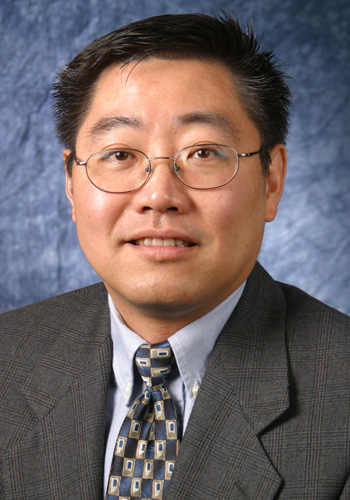
Dr. Ji Chen is a Professor and Chair at the Department of Electrical & Computer Engineering, University of Houston, where he also serves as Director of the NSF I/UCRC Center for EMC Research. His career bridges academic research with industry experience, including prior roles as a staff engineer at Motorola Personal Communication Research Labs (1998-2001). He holds a PhD in Electrical Engineering from the University of Illinois, Urbana-Champaign, with prior degrees from McMaster University and Huazhong University of Science and Technology. IEEE Fellow Fellow AIMBE NSF Career Award Winner Dr. Chen's research focuses on computational electromagnetics , particularly in biomedical applications. Key areas include electromagnetic safety of medical implants in MRI systems , multi-channel transcranial magnetic stimulation (TMS) devices , coupled EM-neuro modulation simulations , and RF field interactions with the human body . He has developed novel solutions for MRI-induced heating mitigation in implants and pioneered wireless power transfer applications for industrial systems. His publication record demonstrates expertise in FDTD modeling for periodic structures, electromagnetic dosimetry, and medical device safety evaluation. Collaborations with Wolfgang Kainz and others have produced significant contributions to MRI safety standards and virtual human modeling for dosimetric simulations. Scientific Awards IEEE EMC Society Technical Achievement Award (2011) IEEE EMC Society Distinguished Lecturer (2009-2010) IEEE APMC Best Paper Award (2008) IEEE Senior Member (2008) ORISE Fellowship (2006) Motorola Engineering Award (2000) Dr. Chen's research group has explored electromagnetic tracking systems for radiotherapy, developed advanced simulation techniques for periodic structures, and investigated safety protocols for pregnant women in metal detector exposure scenarios. His work combines theoretical advancements with practical applications in both medical and industrial electromagnetics.
Jeffrey Dellosa serves as a Professor at Caraga State University in the College of Engineering and Geosciences, Butuan, Philippines. His academic career focuses on renewable energy research with particular emphasis on solar photovoltaic systems for rural development applications in the Philippines. He holds a Doctor of Engineering degree specializing in Renewable Energy from Ateneo de Davao University (2019-2023). Education: Doctor of Engineering in Renewable Energy, Ateneo de Davao University (2019-2023) Professor Dellosa's research spans multiple domains within renewable energy engineering, with particular expertise in solar photovoltaics, energy conversion systems, and power generation technologies. His work bridges theoretical research with practical applications for rural electrification and sustainable development. Current research directions include floating solar photovoltaic systems, IoT-based energy monitoring, and renewable energy integration for healthcare facilities. Analysis of his publication record reveals a strong emphasis on practical implementation of renewable energy solutions in the Philippine context, with increasing focus on interdisciplinary approaches combining AI, IoT, and traditional energy engineering. Recent publications demonstrate a shift toward comprehensive system design that addresses both technical and socioeconomic aspects of renewable energy deployment in rural communities. Professor Dellosa leads research in Nelson Jr Enano's Lab and collaborates extensively with regional institutions on renewable energy projects. His work has resulted in 67 publications with significant readership (60,773 reads) and citations (286 citations), demonstrating impactful contributions to the field of renewable energy engineering in Southeast Asia.
Jens Bangsbo is a Professor in the Department of Nutrition, Exercise and Sports at the University of Copenhagen, where he leads the August Krogh Section for Human Physiology and the August Krogh Section for Molecular Physiology. With over 466 research outputs and an h-index of 65, he is a leading figure in exercise physiology research, particularly focusing on muscle physiology, fatigue development, and team sports applications for health. His educational background includes a Dr. Sci. from the Faculty of Natural Science, University of Copenhagen (1994) and a Master degree in Mathematics and Physical Education, University of Copenhagen (1988). Bangsbo's research primarily focuses on muscle ion transport and metabolism, fatigue mechanisms during exercise, performance optimization through training, and the health benefits of team sports. His work has significantly contributed to understanding how exercise training adaptations relate to work capacity and health outcomes across different populations. He is particularly known for developing the '10-20-30' training method that has gained international recognition in endurance training. His extensive publication record shows a consistent trajectory from basic muscle physiology research to practical applications in sports performance and public health interventions. Recent work increasingly incorporates molecular approaches including proteomics while maintaining focus on practical team sports applications, particularly for aging populations and disease management. Bangsbo has secured over DKK 80 million in research funding from prestigious sources including the Danish Research Council and Nordea-fonden. His work has been widely recognized through numerous citations and invitations to international conferences. As an academic mentor, he has supervised more than 25 PhD students and 7 Post Docs, and has organized and taught at over 20 international PhD courses. His leadership extends to serving as Head of Research at his department for over 10 years and as Vice Head of Department (2007-2017). He leads several research teams including the Copenhagen Center for Team Sport and Health and the Copenhagen Women Studies group. His research bridges basic exercise physiology with practical applications in sports performance and public health, with collaborations spanning more than ten international research groups.
Nalinaksh S. Vyas is a Professor in the Department of Mechanical Engineering at the Indian Institute of Technology Kanpur (IIT Kanpur). With over three decades of academic and research experience, he has made significant contributions to the fields of machine dynamics, condition monitoring, and fault diagnosis. His work spans both theoretical research and practical applications in various engineering domains. Dr. Vyas completed his B.Tech from IIT Bombay in 1980, followed by an M.Tech in 1983 and PhD in 1986, both from IIT Delhi. His academic journey has been marked by continuous excellence and leadership in mechanical engineering education and research. His research interests focus on Machine Dynamics, Condition Monitoring, Fault Diagnosis, Life Estimation & Prognosis , with specific expertise in Rotor Dynamics, Rail Wheel Dynamics, Automotive Dynamics, System Identification and Parameter Estimation, MEMS, Instrumentation and Sensor Technologies, and Neural Networks. Dr. Vyas has applied these research areas to solve real-world engineering problems across multiple industries. Dr. Vyas's publications over the past two decades demonstrate a consistent focus on mechanical system dynamics, with particular emphasis on rotor systems, railway applications, and advanced signal processing techniques for fault detection. His work bridges theoretical dynamics with practical engineering solutions, often incorporating innovative approaches like wavelet analysis and neural networks for system identification and health monitoring. Featured by India Today (2010), as one of the 20 Innovators Changing Our Lives Awadh Samman, 2009, Govt. of Uttar Pradesh 4th position, HSSC, Madhya Pradesh Board, 1975 Dr. Vyas has led numerous significant research projects and initiatives, including the Technology Mission for Indian Railways (TMIR) and the development of India's first nanosatellite, JUGNU. His work with government agencies like RDSO Lucknow, CSIR-CMERI, and ISRO has resulted in practical technologies that have been implemented in real-world settings, including thermal power plants and railway safety systems. He has also served in various leadership roles including as Vice Chancellor of Rajasthan Technical University and Head of the Department of Mechanical Engineering at IIT Kanpur. His research group at IIT Kanpur operates state-of-the-art laboratories for dynamics testing, condition monitoring, and MEMS sensor development. The team collaborates with industry partners including BHEL, SCL Chandigarh, and Pricol Coimbatore to develop practical engineering solutions with immediate industrial applications.
Kiyoto Takahata is an Associate Professor at the Faculty of Science and Engineering, Graduate School of Information, Production and Systems. His research focuses on silicon photonics, optical semiconductor devices, and high-speed optoelectronic integration. Primary research areas include silicon photonics, microwave photonics, and optical interconnection Specializes in electro-absorption modulator integrated distributed feedback lasers Developed membrane lasers and modulators on silicon platforms Recent publications highlight advancements in high-bandwidth photonic devices, with a focus on integrated optics for 100Gb/s+ data transmission. His work includes: Microring resonators for photonic computing MMI couplers for all-optical logic Membrane laser-modulator integration on Si Dispersion-tolerant modulation techniques He has contributed to: Flip-chip interconnection methods Low-voltage operation of optoelectronic devices Multi-lane photonic modules
Felix Heide is a Professor of Computer Science at Princeton University , where he leads the Princeton Computational Imaging Lab . He also serves as Head of AI at Torc Robotics , focusing on full autonomy stacks for self-driving trucks. His research sits at the intersection of optics , machine learning , and computer vision , addressing imaging challenges in harsh environments like dense fog, ultra-low/high illumination, and scattering media. Ph.D. in Computer Science from the University of British Columbia Postdoctoral research at Stanford University His work on computational imaging spans physics-based vision, non-line-of-sight imaging , end-to-end camera design , and robust sensor fusion . He has pioneered techniques for inverse neural rendering , nanophotonic optics , and light-speed AI through optical computing. His recent papers in Nature Machine Intelligence , Science Advances , and top conferences ( SIGGRAPH , CVPR , ICCV ) focus on: Adverse weather imaging (fog, snow, rain) Multi-sensor fusion (LiDAR, radar, gated cameras) Light transport through scattering media Optical metasurfaces and diffractive optics End-to-end optimization of imaging pipelines Event-based vision and polarization cues He has received prestigious awards including the SIGGRAPH Significant New Researcher Award , Sloan Research Fellowship , and Packard Fellowship . His lab's open-source code and datasets enable real-world applications in autonomous driving, microscopy, and augmented reality.