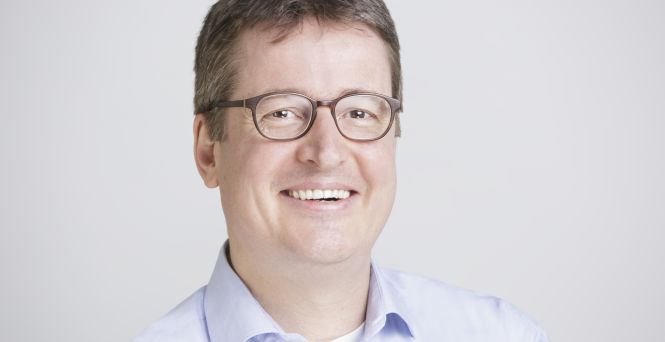
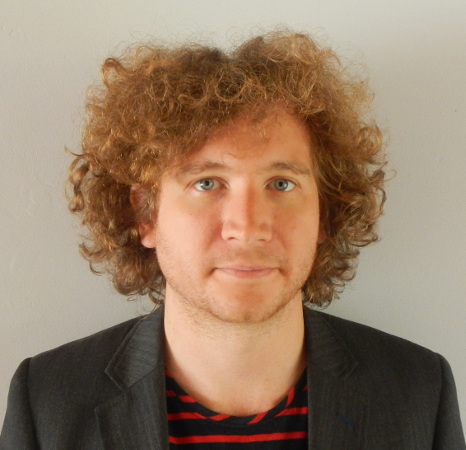
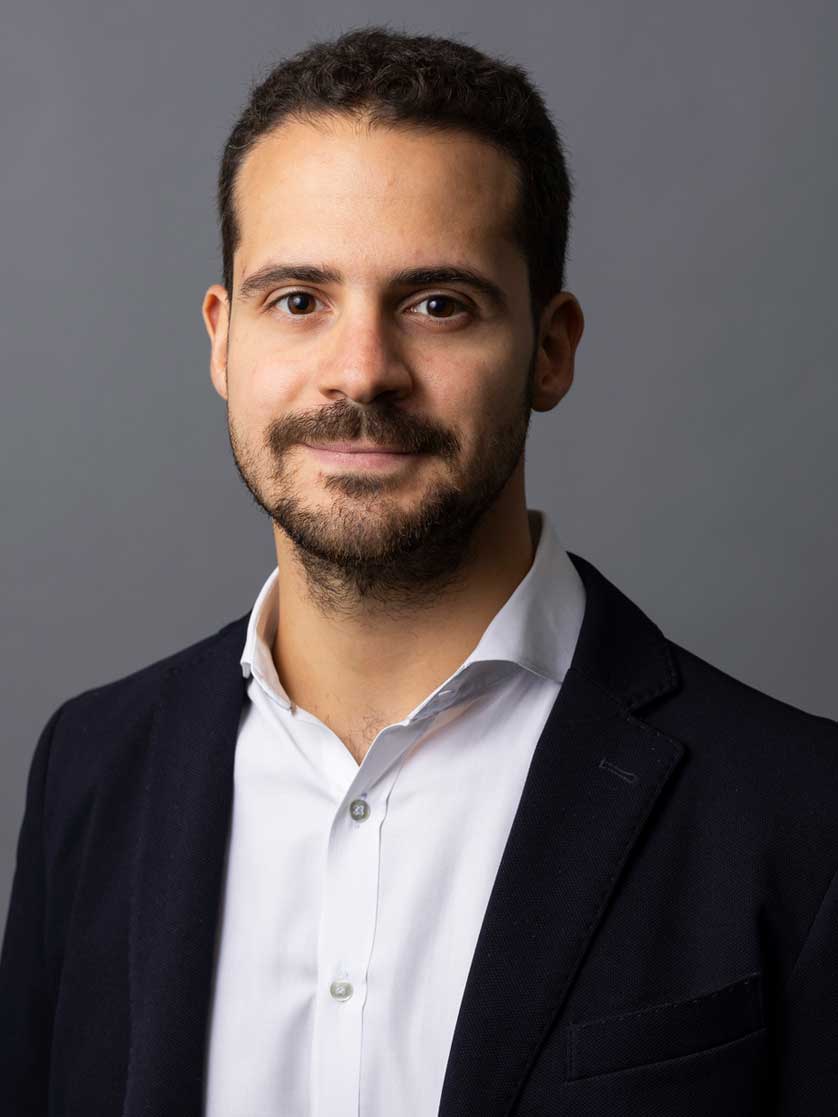
Amine Bermak is a Professor at the Department of Electrical and Electronic Engineering, Hong Kong University of Science and Technology. His research focuses on biomedical circuits, machine learning applications, and hardware security. Key contributions in CMOS sensors for bioluminescence and bacterial monitoring Pioneering work in IoT security and physical unclonable functions (PUFs) Developed edge computing frameworks for healthcare and industrial applications Significant publications in IEEE Transactions on Biomedical Circuits and Systems His recent articles highlight advancements in deepfake detection, energy-efficient ADCs, and wearable strain sensors. Collaborations span institutions in Hong Kong, Qatar, and Japan.
Christian Schroer is a Professor at the University of Hamburg and Leading Scientist at DESY, where he directs the scientific program of the PETRA III synchrotron radiation source. His research focuses on X-ray microscopy, X-ray optics, and their applications in materials science, nanotechnology, and condensed matter physics. He has contributed to the strategic development of PETRA IV, an ultra-low emittance synchrotron source, and co-founded the Helmholtz Imaging platform for data-driven imaging science. His career includes roles as a professor at TU Dresden (2006–2014), a scientist at DESY, and postdoctoral research at institutions like the University of Maryland and RWTH Aachen University. Schroer’s group develops advanced X-ray microscopy techniques and collaborates on projects ranging from solar cell analysis to catalyst dynamics. Education: PhD in Mathematical Physics, University of Cologne (1995) Studies in Physics at RWTH Aachen University (1986–1992) Habilitation in Physics, RWTH Aachen (2004) Research Interests: X-ray nanoscience and optics Aberration-corrected lenses and focusing techniques In situ and operando characterization of materials 3D tomography and multimodal imaging Synchrotron and free-electron laser applications Grants & Collaboration: Lead scientist for PETRA III and PETRA IV projects Member of Helmholtz Imaging initiative Active in international collaborations on X-ray microscopy and photon science Labs & Teams: X-ray microscopy group at DESY PtyNAMi (Ptychographic Nano-Analytical Microscope) facility
Xu Wang is an Associate Professor at Heriot-Watt University's School of Engineering & Physical Sciences, affiliated with the Institute of Photonics and Quantum Sciences. His research focuses on optical communication systems, underwater wireless optical communication, fiber Bragg grating (FBG) sensing, and signal processing using machine learning. He leads efforts in secure optical communication, nanotechnology for sensing, and turbulence-resistant underwater systems. Notable projects include developing deep learning-based signal processing for UWOC and reviewing novel FBG sensing materials. His work contributes to UN Sustainable Development Goals related to industry, innovation, and infrastructure. Dr. Wang has published extensively, with over 150 peer-reviewed articles since 1999. Recent trends in his publications emphasize underwater communication systems, secure optical encryption, and interdisciplinary applications of photonics. Collaborations span international institutions, particularly in Europe and Asia. Key Research Areas: Underwater Communication, Optical Sensing, Secure Networks, Nanomaterials Recent Achievements: 2024 Review on FBG Sensing, 2023 Deep Learning in UWOC, 2021 Quantum-Enhanced Encryption Systems No scientific awards are explicitly listed, though his prolific output suggests significant recognition. His lab focuses on translating theoretical innovations into practical systems for harsh environments and secure data transmission.
Dr. Scott Yam is an Associate Professor in the Department of Electrical and Computer Engineering at Queen's University, Canada. He holds a B.Eng. from the University of Waterloo (1998) and M.Sc./Ph.D. from Stanford University (2000/2004). His research focuses on fiber and opto-electronic devices, with applications in optical communications, sensing, and detection. Key areas include multimode fiber systems, fiber-based sensors, and high-speed signal processing. Education: B.Eng., Electrical and Computer Engineering, University of Waterloo, Canada (1998) M.Sc., Electrical Engineering, Stanford University, USA (2000) Ph.D., Electrical Engineering, Stanford University, USA (2004) Research Interests: Explores the physics of fiber-optic devices and their practical applications. Current projects include: Low-cost high-data-rate transceivers using multimode fibers Fiber-based sensors for strain, refractive index, and industrial applications High-speed digital signal processing in optical systems Molecular optical imaging of biological tissues Awards: Youth Scientist Award (IEEE LEO Japan Chapter) Student Paper Award (IEEE LEO Japan Chapter) Advising & Grants: Supervises research in optical communications and sensing. Has authored over 50 journal/conference papers and holds 2 patents. Active reviewer for journals like Journal of Lightwave Techologies and Optics Express . Labs/Teams: Research integrates photonics, optoelectronics, and biomedical applications through collaborations in optical networking and sensor development.
James M. Fraser is a Professor of Physics at Queen's University, Canada, leading an experimental research team in coherent imaging, ultrafast nanosystems, and laser processing. He holds a PhD from the University of Toronto and has pioneered real-time monitoring techniques for high-power laser manufacturing, including welding and additive manufacturing. His work bridges fundamental physics and industrial applications, with six patents and the co-founding of Laser Depth Dynamics, now part of IPG Photonics. Fraser is recognized for teaching excellence, winning the CAP Teaching Medal and 3M National Fellowship. He directs the NSERC CREATE-MAPS program, fostering interdisciplinary training in photonics and sensing for graduate students in Physics, Chemistry, and Chemical Engineering. Research interests include optoelectronic properties of carbon nanotubes, 2D materials, and laser processing dynamics. His innovations in inline coherent imaging enable real-time control of manufacturing defects and material behavior. Fraser's contributions span academic publications, patents, and industry partnerships, emphasizing both scientific discovery and practical application. Education: PhD, University of Toronto Awards: CAP Teaching Medal, 3M National Fellowship, OCE Martin Walmsley Fellowship Labs/Teams: Experimental Physics Lab, Laser Depth Dynamics (spin-off)
Nikola Djordjević is a researcher affiliated with Singidunum University in Belgrade, Serbia. Holding a PhD in Electrical Engineering from ETH Zurich (2020), his work bridges photonics and machine learning applications. Bachelor's: Faculty of Electrical Engineering, Belgrade (2012) Master's: ETH Zurich (2014) PhD: ETH Zurich (2020) His research focuses on: Colloidal quantum dot photonics Time-resolved luminescence analysis using AI Plasmonic device optimization Nanocrystal structure characterization Advanced semiconductor fabrication techniques Key publication trends show interdisciplinary work across applied physics , computational photonics , and nanomaterials .
Guillaume Crevecoeur (born 1981) serves as Associate Professor at Ghent University's Faculty of Engineering and Architecture within the Department of Electrical Energy, Metals, Mechanical Constructions, and Systems. He leads research at the Electrical Energy Laboratory (EELAB) and is an affiliate member of Flanders Make, the strategic research center for manufacturing industry. His international collaborations include membership in scientific steering committees and prior visiting researcher positions at Technical University Ilmenau and Physikalische Technische Bundesanstalt in Berlin. Crevecoeur earned his MSc (2004) and PhD (2009) in Engineering Physics from Ghent University, followed by a postdoctoral fellowship with Research Foundation Flanders (FWO-Flanders). His research spans dynamical systems modeling, optimization, and control with foundational work in model-based algorithms, inverse problems, and nonlinear optimal control. Current strategic focus areas include machines and motion systems, particularly airborne wind energy applications and robotics. Analysis of his 2022-2025 publications reveals dominant trends in physics-informed machine learning for control systems , with significant contributions to reinforcement learning for underactuated systems, tactile sensing in robotics, and computational fluid dynamics for renewable energy. His work consistently integrates model-based optimization with data-driven approaches, especially in wind turbine control and aerial robotics co-design. Best Paper Award at 22nd International Conference on System Theory, Control and Computing (2018) As Principal Investigator, Crevecoeur directs research funded through FWO-Flanders and industry partnerships with Flanders Make. His lab focuses on mechatronic systems development, particularly in robotic manipulation and renewable energy conversion. Current projects include airborne wind energy system optimization, collision-tolerant robotics, and digital twin implementations for industrial machinery. He actively contributes to international scientific steering committees and serves as academic advisor for graduate students in electrical energy systems. Crevecoeur's research group operates within EELAB's infrastructure, utilizing high-performance computing resources for computational fluid dynamics simulations and experimental facilities for mechatronic system validation. The team collaborates with industry partners through Flanders Make on industrial automation challenges, with recent work focusing on real-time control for high-speed manufacturing processes and adaptive energy management systems.
Mark McDonald is a Research Fellow at Heriot-Watt University's Institute of Photonics and Quantum Sciences within the School of Engineering & Physical Sciences. His work integrates photonics with biomedical and industrial applications, focusing on optical sensing systems for surgical robotics and environmental monitoring. His research centers on Biomedical Photonics and Optical Sensing Systems , developing fiber Bragg grating sensors for minimally invasive surgery, LIDAR technologies for long-range detection, and laser-manufactured microfluidic devices. Key projects include force-sensing surgical grippers, tissue palpation sensors, and spatial coherence filters for atmospheric sensing applications. Analysis of his recent publications reveals strong specialization in translating optical engineering into medical diagnostics and remote sensing solutions, with consistent collaboration on surgical robotics (2023-2025) and LIDAR system optimization (2023-2024). His work bridges fundamental photonics research with practical implementations in healthcare and environmental monitoring. Research activities are centered within Heriot-Watt's Institute of Photonics and Quantum Sciences, where he contributes to the university's UN Sustainable Development Goal initiatives in clean energy and industry innovation through photonics-based solutions.
Dr. Simarjeet Saini is Associate Professor and Pearl Sullivan IDEAs Clinic Director at the University of Waterloo's Department of Electrical and Computer Engineering. His research focuses on integrated optoelectronic systems for telecommunications, sensing, and signal processing. He founded Altanet Communications (2004) and previously developed semiconductor technologies at Covega Corporation. Key research areas include monolithic integration of photonic devices, tunable mid-infrared lasers, nanophotonic chem-bio sensors, and high-speed optical networks. The Nanophotonics and Integrated Optoelectronics Laboratory under his direction creates platform technologies enhancing performance in sensing and communication applications. Recent work explores smartphone-based optical sensors for healthcare and environmental monitoring. Education: Ph.D. Electrical Engineering, University of Maryland (2001) B.Tech Electronics Engineering, IIT Kharagpur (1996)
Mattias O'Nils is a Professor at Mid Sweden University's Department of Computer and Electrical Engineering (DET) and Head of the STC Research Centre. His research focuses on Internet of Things (IoT) systems, wireless sensor networks, machine learning, and computer vision with applications in industrial monitoring, forestry automation, and medical imaging. Lead author in 2025 IEEE Access paper on multi-component fault diagnostics Developed AdVision system for advertisement detection in printed media Co-inventor of Time-dependent Clustering Loss for DNN optimization His work spans edge computing, data fusion, and energy-efficient sensor networks, with recent emphasis on deep learning applications in healthcare and industrial systems. Publications highlight collaborations with researchers across multiple domains including forestry technology and skin lesion classification. Current research trends include distributed CNN optimization , contextual domain adaptation , and real-world energy consumption modeling for IoT devices. He supervises projects in the STC Research Centre related to smart industry solutions and transformative technology.
Dr. Konstantinos Yiannopoulos is an Associate Professor in the Department of Informatics and Telecommunications at the University of Peloponnese, Greece. He is affiliated with the Faculty of Economics, Management and Informatics. His research focuses on optical wireless communications , network optimization , error correction techniques , and high-speed data transmission systems . Key areas include resource allocation in metro-core networks, V2X communication protocols, and semiconductor optical amplifier applications. His work spans over 50 publications , with recent contributions addressing: Pre-amplified PPM receiver design Light-tree networks for latency optimization SDN architectures like NEPHELE for cloud data centers Fading mitigation in underwater optical systems He leads the Communication Networks and Applications Laboratory , exploring innovative solutions for optical wireless systems and network scalability. Current research emphasizes QoS-aware resource management in multipoint networks and techno-economic feasibility studies for metro-core infrastructure.
David Baddeley, PhD, is affiliated with the Yale School of Medicine at Yale University. His research focuses on advancing super-resolution microscopy techniques and applying them to study cellular structures, particularly in cardiac and neuronal systems. He holds a PhD from the University of Heidelberg (2007) and an MSc from the University of Auckland (2003). Research interests include nanoscale imaging of protein clusters, cardiac excitation-contraction coupling, and the development of integrated microscopy platforms. His work bridges biophysics, cell biology, and biomedical engineering, with a focus on understanding molecular organization in health and disease. Key publications highlight innovations in super-resolution microscopy, 3D cellular imaging, and the analysis of cardiac tissue structure. Collaborations with colleagues like Joerg Bewersdorf and Karla Neugebauer underscore interdisciplinary approaches to imaging challenges.
Dr. Peter O'Brien is Head of the Photonics Packaging Group at the Tyndall National Institute, University College Cork. He holds a PhD in Physics from UCC and a Master's in Electronic Engineering from Trinity College Dublin. His research focuses on advanced photonic packaging and integration for telecom and medical device applications, leveraging Silicon and InP technologies. Dr. O'Brien has led industry-academia collaborations with institutions like UC Berkeley, IMEC, and companies such as Medtronic and Lake Region. He founded Epi-Light Limited and co-founded Biosensia, both specializing in photonic systems for medical and pharmaceutical sectors. He also serves as an Adjunct Professor at the University of Arizona's College of Optical Science. His work spans state-of-the-art photonics integration labs, developing fiber coupling and micro-optical systems. Key projects include SFI-funded initiatives like the Irish Photonic Integration Centre (IPIC) and EU-funded programs such as Access CenTer for PHotonics innovation. Grants total over €4 million, supporting projects in photonic biosensors, advanced packaging, and UV light source development. Dr. O'Brien’s expertise encompasses thermal, mechanical, and electrical design challenges in photonics. His team collaborates globally, advancing telecom and medical device technologies. He has authored over 50 peer-reviewed papers and book chapters, with recent work highlighted in IEEE Photonics Technology Letters and Journal of Optics .
Donald O'Malley is an Associate Professor in the Department of Biology at Northeastern University, where he directs the Systems Neurobiology of Fish and Men laboratory. His research integrates cellular, systems, and computational approaches to investigate neuronal networks underlying complex behaviors in zebrafish models and mammalian cortical function. His primary research interests span Systems Neuroscience, Computational Neuroscience, and Behavioral Neuroscience, with specific focus on nuclear calcium signaling, cholinergic/GABAergic co-transmission in visual-motion detection, and symbolic operations in mammalian cortex. He explores pre-linguistic brain modules and their evolutionary role in language development, alongside knowledge organization in neocortex and its degradation in aging/neuropathology using reflective learning algorithms like Digital Maze games. Analysis of his recent publications (2005-2014) reveals a dominant theme of zebrafish neuroethology, examining locomotor control, social hierarchies, and neural circuitry through advanced imaging and computational modeling. His work bridges experimental neuroscience with engineering innovations, particularly in nanowire-based neural recording interfaces and 3D confocal analysis. Dr. O'Malley's laboratory employs confocal and high-speed imaging to dissect neural mechanisms of behavior in intact vertebrates, maintaining active research on how neuronal populations generate locomotor, social, and predatory behaviors while investigating cortical mechanisms of symbolic processing and language evolution.
Marco Colangelo is an Assistant Professor in the Department of Electrical and Computer Engineering at Northeastern University, leading the Nano Structures Laboratory. His research focuses on applied superconductivity, single-photon detectors, cryogenic devices, and nanofabrication technology. He holds a PhD from MIT (2023) and dual MSc degrees from Politecnico di Milano and Politecnico di Torino, alongside a BSc in Physics Engineering from Politecnico di Torino. Notable awards include the IEEE CSC Fellowship (2021) and MIT’s Claude E. Shannon Award (2021). His work integrates superconductivity with photonics and quantum physics to advance sensing and computing. Key projects include DARPA-funded research on superconducting deep neural networks at the edge and NSF-supported metamaterial-based detectors. The lab collaborates with Northeastern’s Institute for NanoSystem Innovation (NanoSI). Recent grants include $500K from DARPA for edge computing latency reduction and $330K from NSF for high-temperature superconducting detectors. His research spans superconducting nanowire arrays, quantum interfaces, and cryogenic memory systems. The lab actively recruits PhD students in superconducting detector technologies and photonic integration.