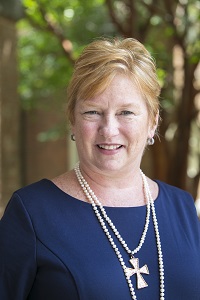
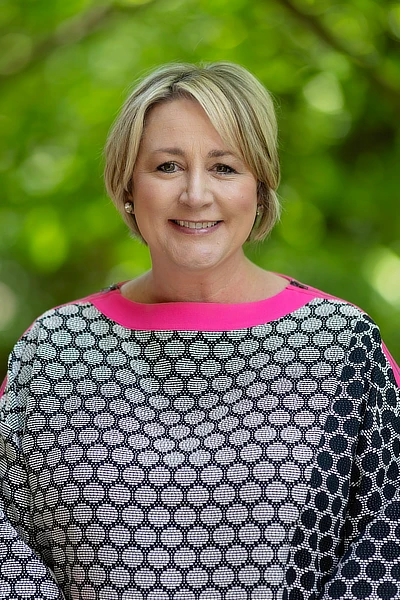
Nicola J. Camp, PhD is a Professor at the University of Utah School of Medicine with primary appointments in Internal Medicine (Division of Hematology & Hematologic Malignancies) and Human Genetics, plus adjunct roles in Biomedical Informatics and Family & Preventive Medicine. She directs the Utah Population Database and serves as a Huntsman Cancer Institute investigator. Education : PhD in Statistical Genetics from University of Sheffield; Postdoctoral training in Molecular & Genetic Medicine at University of Sheffield Medical School As a genetic epidemiologist and statistical genomicist , her work focuses on identifying heritable cancer risk variants, developing novel genomic methods, and analyzing tumor-normal tissue differences. She specializes in breast cancer, chronic lymphocytic leukemia (CLL), and multiple myeloma , leveraging Utah's unique genealogical records for high-risk pedigree studies. Recent research trends include polygenic score distributions, BRCA variant classification, and transcriptomic modeling of omics data. Key consortia collaborations span ABCTB , kConFab , and NBCS . Scientific Awards : Reed Gardner Faculty Excellence Award, Leukemia & Lymphoma Society recognition, Presidential Early Career Award for Scientists and Engineers Her lab has mentored over 40 students across Molecular Biology, Biomedical Informatics, and MSTAT programs. More at Camp Lab .
Professor Jodie Dodd is a faculty member at the University of Adelaide's Women's and Children's Health department. She specializes in maternal and child health, with a focus on obesity management during pregnancy, antenatal interventions, and preterm birth prevention. Her work integrates clinical trials, meta-analyses, and population-based studies to address challenges in obstetrics and pediatric care. She has contributed to groundbreaking research on gestational weight gain, fetal growth patterns, and the efficacy of antenatal corticosteroids in high-risk pregnancies. Her research spans systematic reviews, randomized controlled trials (e.g., SNACS trial), and innovative applications of machine learning for predicting infant health outcomes. Key areas include evaluating interventions to mitigate risks associated with maternal obesity, optimizing labor induction protocols, and understanding the social determinants of health in preconception periods. She leads multidisciplinary teams to translate evidence into clinical practice and policy.
Irene Ong is an Associate Professor at the University of Wisconsin-Madison , with joint appointments in the Department of Obstetrics & Gynecology and Department of Biostatistics & Medical Informatics . She also serves as Associate Director of the UW Carbone Comprehensive Cancer Center Cancer Informatics Shared Resource , focusing on interdisciplinary research at the intersection of computational methods and biomedical applications. B.S. in Computer Sciences and Biological Sciences from Cornell University Ph.D. in Computer Sciences from the University of Wisconsin-Madison Her research integrates data mining , machine learning , and probabilistic modeling to analyze multi-omics data (genomics, transcriptomics, proteomics, metabolomics) for precision medicine applications in cancer biology and reproductive immunology. Recent work explores radiation oncology, CAR T-cell therapy, and tumor immunology. 2025: Investigated low-dose radiopharmaceutical therapy in neuroblastoma 2024: Radiation dose heterogeneity and immune responses 2023: Dietary isoleucine restriction for longevity
Sandi McMichael, MSN, FNP-BC is an Instructor and Director of NP Clinical Services at the Moffett & Sanders School of Nursing, Samford University . With over three decades of nursing experience, she specializes in Family Nurse Practitioner care, Women’s Health , and Maternity Care Clinic Development . Education ADN, Cameron State University BSN, Auburn University at Montgomery MSN (Family Nurse Practitioner), Troy State University Her research focuses on Obstetrics and Women’s Health , including projects on prematurity prevention and antiviral therapies during pregnancy. She has presented on topics ranging from teen pregnancy prevention to hormone replacement therapy. McMichael received the NIH Professional Nurse Traineeship Scholarship (1998) and Excellence in Leadership award from Baptist Health System (2002). She actively participates in professional societies such as CANPA, NPAA, AANP, and NONPF.
Dr. Megan Mileski serves as an Associate Professor at Samford University's Moffett and Sanders School of Nursing, where she shapes undergraduate nursing education with specialized expertise in obstetric care and maternal health disparities. Her clinical focus encompasses labor and delivery, antepartum care, prenatal education, and electronic fetal monitoring, while her research confronts critical issues in maternal mortality among African American populations. Educational background: PhD in Nursing, University of Alabama at Birmingham Certificate in Applications in Mixed Methods Research, University of Alabama at Birmingham MSN in Nursing Education, Samford University BSN, Samford University ADN, Samford University Her research program targets systemic inequities in maternal health through investigations of chronic stressors, protective factors in preterm birth, and perceived racial discrimination during pregnancy. Dr. Mileski pioneers interprofessional education using systems-thinking tools like 'Friday Night at the ER' to prepare new nurses for complex clinical environments, while developing evidence-based strategies to improve birth outcomes and transition-to-practice readiness for graduates. Recent publications demonstrate a cohesive research trajectory examining racial disparities in perinatal outcomes (2021-2023), interprofessional solutions for obstetric complications (2018), and stressor-protective factor dynamics in high-risk pregnancies. These works collectively advance understanding of structural barriers in maternal healthcare and inform culturally competent nursing interventions. Professional recognition includes: Alabama League for Nursing Lamplighter Award (2024) Greek Faculty Advisor of the Year (2017) Dr. Mileski actively mentors undergraduate nursing students and serves as faculty advisor for Chi Omega sorority through Samford's Office of Greek Life. Her leadership extends to national nursing organizations where she develops practice standards and educational frameworks, particularly through her roles in AWHONN's Alabama Section. She maintains active engagement in clinical practice through community health initiatives addressing maternal mortality. As Alabama Section Leader for the Association of Women’s Health, Obstetric, and Neonatal Nurses (2022-2027), she directs statewide efforts to improve obstetric care standards while previously serving as Secretary/Treasurer (2018-2022) and Membership Director (2015-2022). Her collaborative work with the Alabama Department of Public Health on maternal mortality reviews demonstrates her commitment to translating research into policy action.
Amiram Jacob Gafni is a Professor in the Department of Health Research Methods, Evidence, and Impact at McMaster University. With over 30 years of scholarly activity, his work focuses on health economics, medical decision-making, and cost-effectiveness analyses in diverse clinical areas including oncology, obstetrics, and geriatrics. Key research themes: Patient-centered decision-making Healthcare resource allocation Clinical trial economic evaluations Age-related healthcare disparities Comparative effectiveness research Policy impact analysis His recent publications (2023-2025) examine healthcare cost disparities in cancer treatment, decision regret in thyroid cancer management, and transitional care models for stroke patients. Earlier work includes foundational studies on hip protectors, statin use, and perinatal decision-making frameworks. Notable methodological contributions to cost-benefit analysis , discrete choice experiments , and GRADE framework evaluations appear across multiple high-impact journals. Collaborations span international trials in France, Brazil, and Canada, with significant involvement in the CHIPS and MACS clinical trial series.
Sarah McDonald is a Professor in the Department of Obstetrics & Gynecology within the Faculty of Health Sciences at McMaster University. Her scholarly activity demonstrates extensive contributions to maternal-fetal medicine with over 233 publications in the last decade. She maintains active clinical and research engagement as evidenced by publications extending into 2025. Dr. McDonald's research focuses on critical areas in obstetrics including preterm birth prevention, gestational diabetes management, pregnancy weight gain patterns, antenatal corticosteroid use, and outcomes in twin pregnancies. Her work spans clinical trials, systematic reviews, meta-analyses, and population-based cohort studies addressing significant questions in maternal-fetal medicine. She has particular expertise in analyzing perinatal outcomes related to obstetric interventions and maternal conditions. Recent publication trends show continued leadership in clinical trials (including the SNACS trial on single-dose antenatal corticosteroids), national surveys examining practice patterns across Canada, and investigations into the long-term implications of preterm birth. Her work increasingly incorporates mixed-methods approaches and social-ecological models to understand complex obstetric phenomena beyond purely biomedical factors. Dr. McDonald actively collaborates across multiple Canadian institutions and contributes to clinical practice guidelines in obstetrics. Her scholarly impact is reflected in numerous publications in high-impact journals including American Journal of Obstetrics and Gynecology, JAMA Network Open, and BJOG. Her clinical expertise spans the full spectrum of obstetric care with particular attention to high-risk pregnancy management, evidence-based decision making, and translating research findings into clinical practice. She maintains an active role in shaping obstetric care through guideline development and national surveys of practice patterns.
Dr. Sameer Parpia is an Associate Professor and Biostatistician at McMaster University's Faculty of Health Sciences, holding dual appointments in the Department of Oncology and the Department of Health Research Methods, Evidence, & Impact. He serves as a faculty biostatistician with the Ontario Clinical Oncology Group (OCOG), Lead of the Collaborative Unit Biostatistics and Evidence (CUBE), and Director of the Canadian Network for Statistical Training in Trials (CANSTAT). His academic leadership spans clinical trial methodology, biostatistics education, and research coordination across multiple national initiatives. Dr. Parpia earned his B.Sc. from McMaster University, M.Sc. from Western University, and Ph.D. from McMaster University, establishing a strong foundation in statistical methodology and clinical research. His educational background directly supports his current roles in advancing clinical trial science and biostatistical training. His research focuses on the design, conduct, and analysis of randomized clinical trials , with particular expertise in oncology, thrombosis diagnostics, radiotherapy optimization, and diagnostic algorithm development. Recent work demonstrates significant contributions to pulmonary embolism risk stratification, breast cancer treatment de-escalation, and venous thromboembolism management. His methodological innovations include developing and validating clinical prediction tools like the ToDay algorithm for deep vein thrombosis diagnosis and advancing the GRADE framework for evidence assessment. Analysis of his 15 most recent publications reveals a strong emphasis on diagnostic accuracy studies (27%), clinical trial methodology (33%), and thrombosis/oncology applications (40%), with increasing focus on surgical outcomes research and evidence synthesis frameworks. His work consistently bridges statistical methodology with high-impact clinical applications across multiple specialties. Dr. Parpia has secured substantial research funding including over $2.5 million in federal funding to address clinical trial biostatistician shortages through CANSTAT and contributed to $61 million in CIHR-funded projects at McMaster. His leadership in the LUSTRE randomized trial (comparing stereotactic vs. hypofractionated radiotherapy for lung cancer) and the PE-TRACT trial (evaluating catheter-directed therapy for pulmonary embolism) demonstrates his capacity to lead large-scale multicenter studies. As an educator, he mentors students in the Health Research Methodology Program and directs CANSTAT's national training platform for clinical trial biostatisticians. His CUBE unit provides critical biostatistical support for OCOG's academic clinical trial coordination activities. Current projects include the PEREGRINE surgical trial for renal hyperparathyroidism and the ROSALIE study investigating radiotherapy omission in breast cancer.
Stuart Haslam is a Professor in Structural Glycobiology at the Department of Life Sciences, Imperial College London. His work focuses on glycobiology, particularly the structural analysis of glycoconjugates in diverse biological systems, including bacteria and humans. He leads the Analytical Glycotechnology Core for the NIH-funded Consortium for Functional Glycomics (CFG), specializing in glycomic profiling and carbohydrate structure analysis. His research integrates glycosylation mechanisms with clinical applications, such as preterm birth risk factors, cancer biology, and vaccine development. He has affiliations with the EuroCarbDB consortium, advancing carbohydrate database infrastructure. Education: PhD and first degree from the University of Leeds. Postdoctoral research at Imperial College London established methodologies for high-sensitivity mass spectrometry analysis of oligosaccharides, recognized by a Young Scientist Award from the International Symposium on Glycoconjugates. Awards also include contributions to understanding glycan-protein interactions in cell communication. Research interests span glycobiology in disease contexts: infectious diseases (e.g., Helicobacter pylori), cancer glycosylation, placental biology, and immune modulation. Key projects include developing glycan-based biomarkers and engineering glycosylation pathways for therapeutic applications. He collaborates internationally on biotechnology tools like immobilized enzyme cascades for targeted glycosylation. Grants and Funding: NIH (CFG), European Commission 6th Framework Programme (EuroCarbDB). Labs/Teams: Analytical Glycotechnology Core, Biopolymer Mass Spectrometry, Vascular Science Network.
Dr Ben Swallow is a Lecturer in Statistics at the University of St Andrews, affiliated with the School of Mathematics and Statistics. His research focuses on statistical methodology applied to epidemiological and ecological problems, with a particular emphasis on Bayesian inference, agent-based models, and public health surveillance. He has contributed to high-impact studies on pandemic response, vaccine efficacy analysis, and wildlife population dynamics. Dr Swallow has supervised PhD students Xiahui Li and Rebecca Supple. His work bridges theoretical statistics with practical applications, including modeling virus transmission dynamics, analyzing ecological data from citizen science projects, and developing computational tools for epidemiological research. Key contributions include advancements in agent-based model calibration, statistical methods for evaluating vaccine safety, and Bayesian approaches to infectious disease modeling. His research outputs span journals such as Journal of Theoretical Biology , BMC Biology , and Journal of the Royal Statistical Society . He actively participates in academic discussions, including contributing to the 'Discussion Meeting on Analysis of citizen science data'.
Lauren Kucirka is an Assistant Professor in the Department of Obstetrics and Gynecology at the University of North Carolina at Chapel Hill, with a secondary appointment in the School of Data Science and Society. Her work bridges clinical practice as a maternal-fetal medicine physician with epidemiological research, focusing on large data studies to improve clinical practices in obstetrics and public health. She holds a Ph.D. in epidemiology and has over 15 years of experience in designing and conducting research to inform evidence-based healthcare policies. Education While specific academic qualifications are not detailed in the text, her roles indicate completion of medical training and a Ph.D. in epidemiology. Research Interests Dr. Kucirka’s research emphasizes maternal-fetal medicine, pregnancy outcomes, and the application of data science to healthcare challenges. Her work addresses disparities in prenatal care access, optimization of imaging techniques (e.g., ultrasound and MRI in placental disorders), and the impact of infectious diseases (e.g., Zika, SARS-CoV-2) on pregnancy. She also investigates kidney transplantation outcomes and the ethical allocation of high-risk organs. Key Research Trends Her articles consistently focus on improving clinical decision-making through data-driven approaches. Recent work highlights disparities in maternal vaccination uptake, the accuracy of prenatal care metrics in insurance claims, and optimizing imaging protocols for placental pathologies. Her studies often address systemic gaps in healthcare access and quality, particularly for marginalized populations. Labs/Teams While specific lab affiliations are not mentioned, her interdisciplinary role suggests collaboration with maternal-fetal medicine clinics, data science teams, and public health institutions.
Anna Lopez-Marco is an Honorary Senior Lecturer at Queen Mary University of London's William Harvey Research Institute, within the Centre for Cardiovascular Medicine and Devices. She holds dual board certification in Cardiothoracic Surgery (RCS Ed and EBCTS) and a PhD from the University of Barcelona. Her clinical roles include Consultant Cardiac and Aortic Surgeon at St Bartholomew’s Hospital and Barts Health NHS Trust. Education: MD from University of Valencia (2005) PhD in Low-flow low-gradient aortic stenosis outcomes (University of Barcelona, 2019) National Training Programmes in Cardiovascular Surgery (Hospital de Bellvitge, 2006–2011) and Cardiothoracic Surgery (Wales, 2014–2020) Research: Her work focuses on aortic diseases, including dissections, aneurysms, and surgical innovations like hybrid prostheses. She emphasizes spinal cord protection in thoracoabdominal repairs and postoperative outcomes. Key areas include transcatheter aortic valve implantation, inflammatory biomarkers in surgery, and cost-effectiveness of valve replacements. Grants & Sponsors: Supported by Barts Charity and National Institute for Health Research. Her research integrates clinical practice with device innovation and patient quality-of-life studies. Labs/Teams: Active in the Aung Ye Oo Lab, collaborating on multidisciplinary aortic surgery projects. Mentors PhD student Myat Soe Thet, focusing on surgical techniques and postoperative surveillance.
Mirjam Lukasse is a Professor at OsloMet's Faculty of Health Sciences, affiliated with the Department of Nursing and Health Promotion. Her academic journey includes a nursing degree from the Netherlands, midwifery training in the UK, a PhD in Health Sciences from the University of Tromsø (2011), and a postdoctoral fellowship at NTNU (2014), funded by the Norwegian Research Council (NFR). Her research focuses on violence against women, child maltreatment prevention, and midwifery practices, with a strong emphasis on maternal health equity and interdisciplinary collaboration. Education: Bachelor's in Nursing, Sittard, Netherlands Midwifery Degree, Belfast, UK MSc in Advanced Clinical Practice in Midwifery, University of Surrey, UK PhD in Health Sciences, University of Tromsø (2011) Research Interests: Dr. Lukasse’s work addresses the intersection of violence and reproductive health, including domestic violence during pregnancy, refugee women’s maternity care experiences, and child maltreatment detection in healthcare settings. She also explores innovative midwifery practices and clinical outcomes of labor induction protocols. Her research integrates mixed-methods approaches and emphasizes culturally adapted interventions. Grants & Collaborations: Postdoctoral funding from NFR (2014) Collaborations on Nordic country studies and international projects in Nepal Leadership in the 'Women and Children’s Health' research group Labs/Teams: Active contributor to the 'Women and Children’s Health' research group at OsloMet, focusing on translational research and community engagement.
Sheriza Baksh, PhD, MPH, is an Assistant Research Professor in the Department of Epidemiology at the Johns Hopkins Bloomberg School of Public Health. She holds affiliations with the Clinical Trials and Evidence Synthesis Center and the Center of Excellence in Regulatory Science and Innovation (CERSI). Her research focuses on clinical trial design, pharmacoepidemiology, and regulatory science, with a particular emphasis on drug safety and evidence synthesis. Education: PhD in Public Health, Johns Hopkins Bloomberg School of Public Health (2018) MPH in Public Health, Boston University School of Public Health (2009) BA in Human Biology, University of Pennsylvania (2007) Her research interests center on optimizing clinical trial methodologies, evaluating drug safety signals (e.g., cardiovascular risks of dipeptidyl peptidase-4 inhibitors), and advancing regulatory science practices. Notably, she has contributed to studies on convalescent plasma use in COVID-19 treatment and the impact of sodium-glucose cotransporter-2 inhibitors on diabetic complications. Recent work includes meta-analyses of hydroxychloroquine efficacy in hospitalized patients and a multicenter trial comparing natural vs. programmed frozen embryo transfer protocols. Her publications span high-impact journals like JAMA Internal Medicine and the New England Journal of Medicine. Baksh collaborates widely, leading studies on vaccine development, post-COVID-19 condition risks, and transfusion safety. Her lab focuses on translating epidemiological insights into actionable clinical and regulatory policies.
Dr Sheena McChlery is a Senior Lecturer and National Midwifery Professional Development Coordinator at the School of Nursing & Midwifery, University of Notre Dame Australia, Fremantle Campus. With over fourteen years of academic experience, she has played a key role in developing and re-accrediting the Graduate Diploma of Midwifery and served as its Program Coordinator for eight years. Educational Background: PhD, Murdoch University Graduate Certificate in University Teaching (GCUT) Bachelor of Social Science (First Class Honours) Registered Nurse and Registered Midwife Her research and teaching focus on feminist and social justice perspectives in women's health, with a special interest in perimenopause and cultural safety in midwifery education. She employs phenomenological methodologies, particularly guided by van Manen, and integrates innovative pedagogical approaches such as Indigenous art workshops to decolonize curricula and enhance student understanding of cultural safety. Her recent publications and conference presentations highlight a strong trend in using arts-based and reflective methods to transform midwifery education, promote equity, and address gaps in women's health care across diverse settings. Themes include decolonization, SDG integration, interdisciplinary supervision, and clinical challenges in high-risk pregnancies. Scientific and Professional Recognition: Midwife Assessor, Australian Nursing and Midwifery Accreditation Council Scholarship of Teaching and Learning (SoTL) Seed Grant recipient (2021), University of Notre Dame Australia She is actively involved in research supervision, currently mentoring a PhD and a Master of Nursing Research student. Her work is supported by internal grants focused on pedagogical innovation. She has contributed to curriculum development and research projects that emphasize interdisciplinary collaboration and social accountability. Dr McChlery is a member of several professional organizations, including the Australian College of Nursing (ACN), Trans-Tasman Midwifery Education Consortium (TTMEC), and Congress of Aboriginal and Torres Strait Islander Nurses and Midwives (CATSINaM), reflecting her commitment to national and trans-Tasman midwifery advancement and Indigenous health equity.