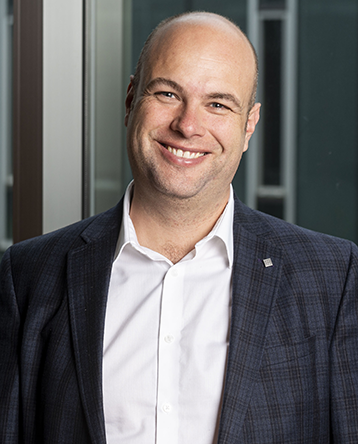
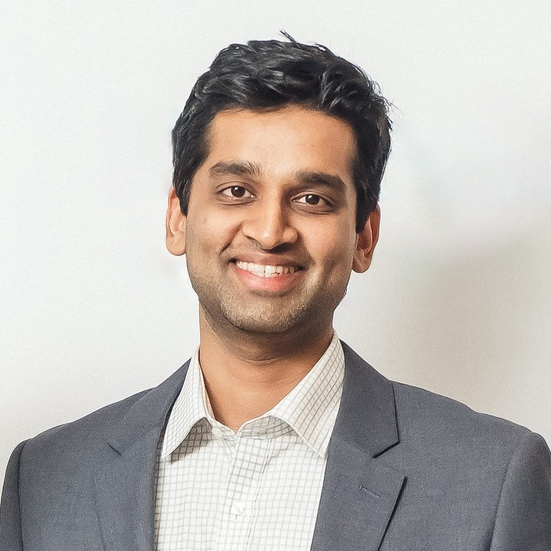
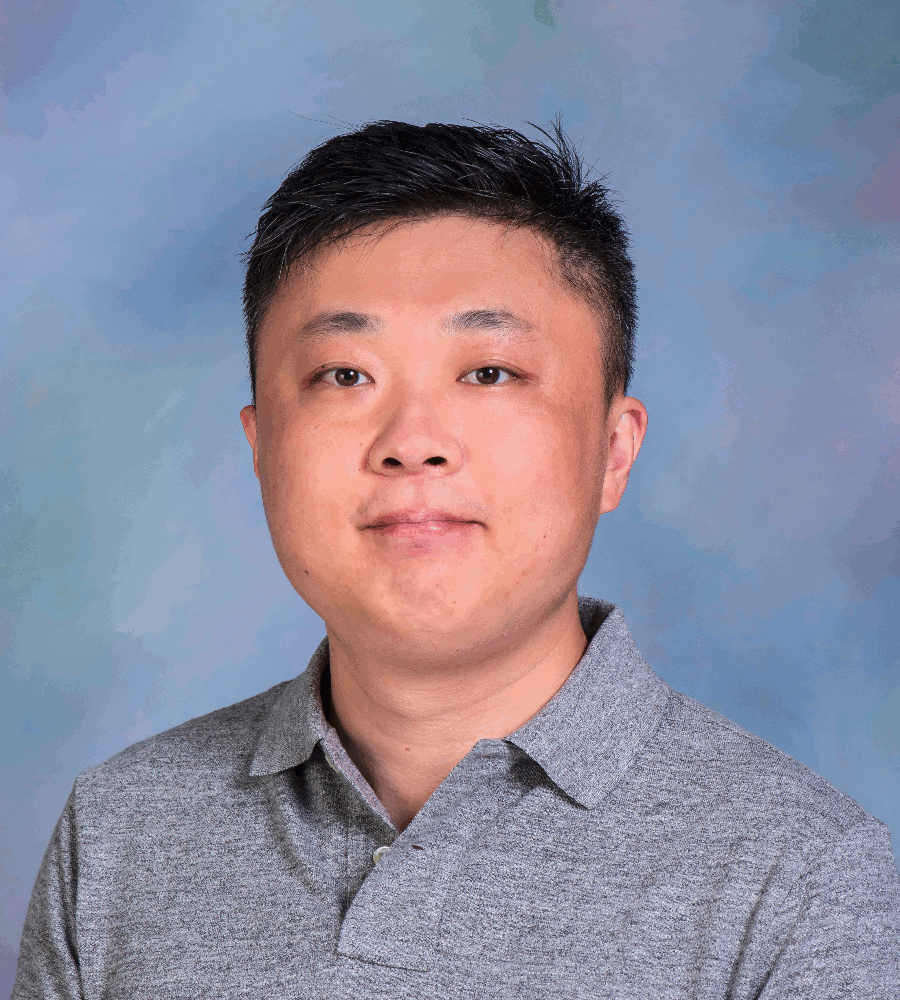
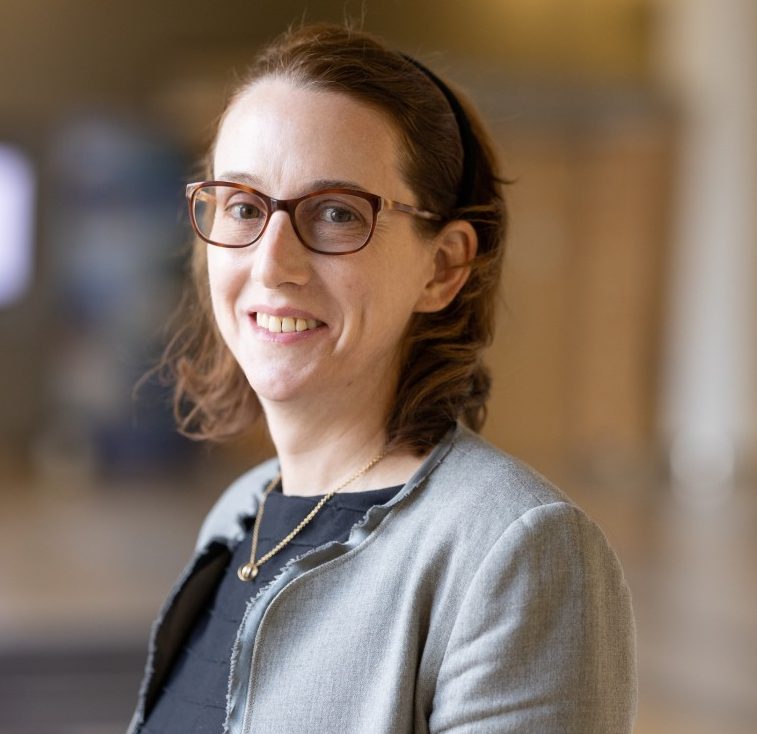
Professor Peter Boxall is a Chair in Human Resource Management at the University of Auckland Business School, Department of Management & International Business. He holds a PhD from Monash University and an MCom from the University of Auckland. His research focuses on strategic human resource management and work-related well-being, with notable contributions to understanding high-involvement work systems and HR analytics. He has held visiting professorships at Leeds, Tilburg, and Toulouse, among others. His roles include Associate Dean (Research and PBRF) and leadership in editorial boards for journals like Human Resource Management Journal . Notable awards include the 2023 Distinguished Fellow of HRNZ and multiple Emerald Awards. He teaches courses such as MGMT 304 HR Policy and Practice and supervises PhD students in HRM. His work emphasizes bridging HR practices with organizational and societal outcomes. Education: PhD (Monash), MCom (Auckland), Distinguished Fellow HRNZ Visiting Roles: Leeds, Tilburg, Toulouse, Bath Editorial Roles: Asia Pacific Journal of Human Resources, Human Resource Management Journal His research addresses strategic HRM’s role in organizational success and its impact on employee well-being. Recent studies explore HR analytics, lean production effects, and Industrie 4.0 implications. Awards highlight his scholarly contributions and industry impact. Administrative leadership includes overseeing research initiatives and PBRF evaluations at the Business School. Awards: 2023 Distinguished Fellow, 2020 Emerald Literati Award Teaching: MGMT 223, MGMT 304, GLMI 705
Sebastian Scherer is an Associate Research Professor at the Robotics Institute (RI), Carnegie Mellon University (CMU), where he leads cutting-edge research in autonomous aerial systems and robotics. His work focuses on enabling unmanned rotorcraft to operate safely and efficiently in cluttered, low-altitude, and extreme environments. Education: Ph.D. in Robotics, Carnegie Mellon University (2010) MS in Robotics, Carnegie Mellon University (2007) BS in Computer Science (Minor in Robotics), Carnegie Mellon University (2004) His research interests span robotics, artificial intelligence, autonomous navigation, obstacle avoidance, SLAM, visual-inertial odometry, energy infrastructure, and public policy . He has made seminal contributions to UAV autonomy, including the first obstacle avoidance for micro aerial vehicles in natural environments (2008) and the first automatic landing zone detection and landing on a full-size helicopter (2010). His recent publications (2023–2025) demonstrate a strong focus on resilient autonomy, multi-robot exploration, foundation models for robotics, and large-scale dataset development. His team has released key datasets like TartanGround , BETTY , and SubT-MRS , and simulation tools like Pegasus Simulator , indicating a systems-level approach to advancing real-world autonomy. The research trends emphasize self-supervised learning, robust perception, risk-aware planning, and multi-modal fusion for off-road and urban environments. Scientific Awards: Popular Science Best of What's New 2010 Award AIAA@Infotech Best Paper Runner-up Award (2010) Siebel Scholar Dr. Scherer has advised numerous students and leads a vibrant research group focused on high-impact robotics applications. He has secured significant grants related to UAV autonomy, energy infrastructure, and urban air mobility. His lab develops experimental infrastructure such as AIrTonomy for testing next-generation autonomous aerial vehicles. He is actively involved in advancing SLAM and localization in extreme environments, notably through participation in the DARPA Subterranean Challenge. His team develops large-scale datasets and benchmarking frameworks to push the boundaries of robustness and generalization in mobile robotics.
Tim G. J. Rudner is an Assistant Professor in the Department of Statistical Sciences at the University of Toronto, a Faculty Member at the Vector Institute, and a Title A Fellow at Trinity College, University of Cambridge. He was previously an Assistant Professor and Faculty Fellow at New York University. University: University of Toronto School: Faculty of Arts and Science Department: Department of Statistical Sciences Affiliation: Vector Institute, Trinity College (Cambridge) He holds a PhD in Computer Science and an MSc in Statistics from the University of Oxford, where he was advised by Yee Whye Teh and Yarin Gal, and a BS in Applied Mathematics and Economics from Yale University. PhD: Computer Science, University of Oxford MSc: Statistics, University of Oxford BS: Applied Mathematics and Economics, Yale University His research focuses on building robust, transparent, and trustworthy machine learning systems, particularly for high-stakes applications. He develops probabilistic models that improve generalization under distribution shifts, provide reliable uncertainty estimates, and enable fair and interpretable predictions. His work spans generative models, large language models, healthcare, and biomedical discovery. The recent publications highlight a strong trend toward function-space modeling, Bayesian regularization, and AI safety. Tim's work emphasizes principled uncertainty quantification, robustness to subpopulation and semantic shifts, and the development of frameworks for AI governance and specification. His research bridges theoretical advances with real-world applications, especially in safety-critical domains like medicine and defense. Tim has received numerous accolades including being named a Rhodes Scholar, Qualcomm Innovation Fellow, and 2024 Rising Star in Generative AI. He was awarded a $700,000 Foundational Research Grant and a $30,000 Apple Seed Grant for improving LLM trustworthiness. Rhodes Scholar Qualcomm Innovation Fellow AISTATS Notable Paper Award (2024) Outstanding Paper Award, ICLR GenAI4DM Workshop (2024) Apple Seed Grant ($30,000) Foundational Research Grant ($700,000) NeurIPS Spotlight Talk 2024 Rising Star in Generative AI He actively mentors students, particularly first-generation and low-income scholars, and has contributed to major policy frameworks including the OECD AI Classification Framework and a series of CSET issue briefs on AI safety. His work demonstrates a strong commitment to responsible AI development, combining technical rigor with societal impact. Tim leads research efforts at the intersection of machine learning theory and practical deployment, with ongoing projects in generative modeling, reliable LLMs, and AI governance. His lab produces high-impact work regularly published at top-tier conferences such as NeurIPS, ICML, and AISTATS.
Karthik R. Narasimhan is a Professor at Princeton University's School of Engineering and Applied Science in the Department of Computer Science. Previously, he earned his PhD from MIT under Regina Barzilay and served as a visiting research scientist at OpenAI during 2017-18. His research focuses on the intersection of language and decision-making, building autonomous agents that learn from both experience and human knowledge. His research spans multiple high-impact areas including language agents (Text-DQN, CALM, ReAct, Tree of Thoughts), reinforcement learning (h-DQN, Multi-Objective RL), and AI safety (Toxicity in ChatGPT, DataMUX). He has developed critical datasets and benchmarks such as WebShop, InterCode, SWE-bench, and SILG that have become standard evaluation tools in the field. Current work emphasizes agent capabilities, software engineering automation, and multimodal interaction. His publication trends show strong focus on practical agent deployment (SWE-agent, Tree of Thoughts), safety evaluation (Probing AI Safety), and efficiency improvements (DataMUX). Recent work increasingly addresses real-world challenges in software engineering, security, and human-AI collaboration through rigorous benchmarking. Co-author of foundational GPT (2018) paper Key developer of Text-DQN (2015), CALM (2020), ReAct (2022), Tree of Thoughts (2023) Creator of influential benchmarks: WebShop (2022), SWE-bench (2023), InterCode (2023) He actively advises students through Princeton's computer science program, with research supported by multiple grants focused on autonomous agent development and language-based decision systems. His GitHub repositories (nlp-datasets, text-world-player) demonstrate strong community engagement in open-source research tools. Current projects include advancing language agent capabilities through Reflexion (2023) and Tree of Thoughts (2023) frameworks while addressing critical safety and efficiency challenges.
Paolo Gardoni is the Alfredo H. Ang Family Professor and an Excellence Faculty Scholar in the Department of Civil and Environmental Engineering at the University of Illinois Urbana-Champaign, with additional professorial appointments in Industrial & Enterprise Systems Engineering and Biomedical & Translational Sciences. He also serves as Director of the MAE Center and Editor-in-Chief of Reliability Engineering & System Safety. Education Ph.D. in Civil Engineering, University of California, Berkeley (2002) M.A. in Statistics, University of California, Berkeley (2001) M.Eng. in Structural Engineering, University of Tokyo (1997) Laurea (BS+MS equivalent) in Structural Engineering, Politecnico di Milano (1997) Research Interests Gardoni’s scholarship integrates probabilistic methods with large-scale infrastructure systems to advance reliability, risk, and life-cycle analysis. His work quantifies the performance of deteriorating systems under natural and anthropogenic hazards, models societal impacts of disasters, and develops decision frameworks for sustainable and resilient infrastructure. He also examines ethical, social, and legal dimensions of risk, and investigates optimal strategies for hazard mitigation, disaster recovery, and climate adaptation. Across more than 250 refereed journal papers, he has advanced sub-fields ranging from probabilistic mechanics and earthquake engineering to catastrophe bond pricing and engineering ethics, leveraging tools such as stochastic differential equations, Bayesian networks, and physics-informed machine learning. Awards & Honors Alfredo Ang Award on Risk Analysis and Management of Civil Infrastructure (ASCE, 2021) Best Paper Awards in ASCE Journal of Sustainable Water in the Built Environment (2019) and Geotechnical Research (2018 Telford Premium Prize) Fellowships and named professorships: Alfredo H. Ang Family Professor, Excellence Faculty Scholar, and courtesy or honorary professorships at Tsinghua, IIT Guwahati, Tongji, Jianghan, and Loughborough universities. Research Leadership & Funding Gardoni has secured over $58 million in research funding from NSF, DHS, NIST, USAID, Qatar National Research Fund, and other agencies. He directs the MAE Center—formerly an NSF Engineering Research Center—focused on multi-hazard engineering approaches, and is Editor-in-Chief of Reliability Engineering & System Safety (Elsevier, IF 9.4). He founded and formerly led the journal Sustainable and Resilient Infrastructure (Taylor & Francis) and serves on editorial boards of nine additional journals. Advising & Mentorship He has graduated 27 PhD and 35 Master’s students, many of whom now hold faculty positions worldwide. His group maintains an active pipeline of doctoral and post-doctoral researchers working on resilience analytics, infrastructure monitoring, and risk-informed decision-making. Laboratories & Collaborations He leads the MAE Center and is affiliated with the Critical Infrastructure Resilience Institute (CIRI) and the Biomedical and Translational Sciences group. International collaborations span the UK (Loughborough), India (IIT Guwahati), and China (Tsinghua, Tongji, Jianghan), fostering cross-disciplinary research in reliability and resilience engineering.
Joël Brugger is a Professor of Synchrotron Geosciences at Monash University, where he is affiliated with the School of Earth, Atmosphere and Environment. He earned his PhD from the University of Basel in 1996 and has held academic and research positions at the University of Adelaide and South Australian Museum before joining Monash in 2014. His research leverages advanced synchrotron techniques to investigate geochemical processes in natural and anthropogenic systems. His research interests include: Synchrotron-based geochemistry Formation of rare earth element deposits Biogeochemical cycling of critical and toxic elements (e.g., tellurium) Environmental behavior of radioactive particles (e.g., plutonium at Maralinga) Mineral-microbe-fluid interactions Sustainable mineral extraction technologies His recent publications highlight the use of high-energy X-rays to study ore formation, nanoparticle dynamics, and environmental contamination. These works demonstrate a strong trend toward interdisciplinary, experiment-driven geochemistry with implications for renewable energy and environmental safety. His research is frequently published in high-impact science communication platforms and peer-reviewed journals. Scientific awards and recognitions include: No specific awards listed in the source material. He actively engages in research supervision, consulting, and media outreach. His work is supported by the Australian Research Council and industry partners in the mining sector. He leads a multidisciplinary team and collaborates internationally, particularly in synchrotron science facilities in Europe. He has contributed to studies involving nanoscale imaging, environmental risk assessment, and clean technology development. He is involved in research teams and labs such as: Minerals, Microbes and Solutions research group (formerly at University of Adelaide) Monash Centre for Electron Microscopy Collaborations with Diamond Light Source (UK) and European Synchrotron Radiation Facility (France)
Kaiyu Hang is an Assistant Professor in the Department of Computer Science at Rice University, where he directs the Robotics and Physical Interactions Lab (RobotΠ Lab). His research spans multiple domains of robotics with a focus on physical interaction systems. Before joining Rice, he completed his postdoc at Yale University, earned his Ph.D./M.Sc. at KTH Royal Institute of Technology, and received his B.Eng. from Xi'an Jiaotong University. His research interests include robotic manipulation, grasping, in-hand manipulation, optimization, planning, learning, estimation, and control systems. He develops algorithms that enable robots to physically interact with other robots, people, and the world across scales from small grasping tasks to large-scale dual-arm and multi-robot manipulation systems. His work has practical applications in factories, kitchens, hospitals, warehouses, and construction sites. His recent publications demonstrate strong trends in in-hand manipulation techniques, energy-efficient drone operations, and benchmarking frameworks for robotic grasping. The 2025 IROS papers accepted highlight his leadership in developing standardized competition frameworks for evaluating robotic manipulation capabilities across diverse hardware platforms. ASME Rising Star of Mechanical Engineering (2024) NSF CAREER Award (2023) Multiple finalist awards at IEEE-RAS Humanoids and ICRA conferences Junior Fellowship Award from Institute for Advanced Study, HKUST (2017-2018) As an educator, he has taught multiple robotics courses including COMP 462/562: Introduction to Modern Robotics and COMP 461: Senior Design in A Robotized World. He serves as Faculty Advisor for the Rice Robotics Club and participates in graduate admissions. His lab actively recruits Ph.D. students and offers research opportunities for undergraduate and master's students who have completed core robotics courses.
Mary Lanzerotti is a Collegiate Assistant Professor in the Bradley Department of Electrical and Computer Engineering at Virginia Tech. She specializes in signal processing, control systems, and medical evacuation technology. Her research focuses on hoist stabilization for MEDEVAC rescues, RF signal estimation, and material science involving liquid films. She is also deeply involved in educational initiatives, including hybrid course development and student advising strategies. Education: A.B. summa cum laude from Harvard College (1989), M. Phil. from the University of Cambridge (1991), M.S. and Ph.D. from Cornell University (1994–1997). Research Interests: Signal processing algorithms, mechanical stabilization of hoist systems, quantum computing verification, and integrated circuits design. Recent work includes gyroscopic data-driven control systems and multi-tier RF signal estimation methods. Service Roles: Member of faculty search committees, assessment committees, and the Graduate Honor System panel. Active in institutional accreditation and curriculum modernization efforts. Labs/Teams: Collaborates with interdisciplinary teams on projects involving aerospace rescue systems, laser material interaction studies, and microelectronics verification.
Michael P. Wellman is a Professor of Computer Science and Engineering at the University of Michigan, specializing in computational game theory and its applications to economics and finance. He has advised 28 PhD graduates and currently mentors 6 students, emphasizing independent research and tailored advising approaches. His work focuses on multi-agent systems, strategic interactions, and agent-based modeling of financial markets. He holds the endowed Lynn A. Conway Professorship and created the Morris Wellman Faculty Development Professorship. His research group meets weekly for progress reports, paper discussions, and practice presentations. Wellman encourages internships, teaching experience, and conference participation (e.g., ICAIF, AAMAS, EC) to foster career readiness. His scientific contributions span empirical game-theoretic analysis (EGTA), market manipulation detection, and cybersecurity strategies. He prioritizes student independence, collaborative problem-solving, and ethical considerations in AI-driven financial systems.
Professor Hala Zreiqat AM is a leading biomedical engineer at The University of Sydney , serving as the Director of the ARC Training Centre for Innovative BioEngineering . A Fellow of all major Australian academies (AAS, ATSE, FAHMS, FRSN), she develops 3D printed bioceramics for bone regeneration while championing diversity through initiatives like the IDEAL Society and BIOTech Futures mentorship program. Her work bridges academia, clinical practice, and industry in musculoskeletal research . Research Focus: Her lab creates synthetic bone scaffolds that mimic natural bone architecture, strength, and porosity, enabling non-rejected bone regeneration via patient-matched implants. Key applications include orthopaedic, dental, and maxillofacial repair , with over $18M in competitive funding and multiple patents. Current projects explore AI-driven scaffold performance prediction and anti-senescence strategies for aging-related bone loss. Scientific Trends: Recent publications highlight 3D printed nanovoxelated ceramics , antisenescence biomaterials , and multifunctional theranostic platforms . Her team integrates machine learning for scaffold design, atom probe tomography for interface analysis, and two-photon imaging for cellular monitoring in 3D environments. 2021-2022 Fulbright Senior Scholar 2018 NSW Premier's Woman of the Year 2019 Eureka Prize for Innovative Use of Technology Fellow of Australian Academy of Science (2021) Over $18M in research funding Teaching & Leadership: She designed core courses like Tissue Engineering and Nanomaterials in Medicine , mentoring 158 students in 2020 alone. As Chair of CAAR (2020-2023), she strengthens Australia-Arab collaborations. Her lab trains early-career researchers , with alumni now in academia and industry.
Prof. Dr. Jing Wang is a Full Professor at the Department of Civil, Environmental and Geomatic Engineering at ETH Zürich. His research focuses on air pollution control, nanoparticle transport, and environmental health and safety (EHS) impacts of nanomaterials. He has held roles including Assistant Professor at ETH Zürich (2010–present), Research Assistant Professor at the University of Minnesota (2007–2010), and postdoctoral associate in Particle Technology (2005–2007). Education: Bachelor’s in Engineering (2000) – Tsinghua University, Beijing Master’s in Computer Sciences (2003) – University of Minnesota PhD in Aerospace Engineering (2005) – University of Minnesota Research Interests: Air/water filtration technologies Nanoparticle emission reduction and measurement Multiphase flow mechanics Environmental impacts of nanomaterials Collaborations: Industrial partnerships include 3M, BASF, Boeing, Intel, Samsung, and others in nanoparticle measurement and filtration solutions. Honors: 2011 Smoluchowski Award (Association for Aerosol Research) 2006 ‘Best Dissertation’ Award (University of Minnesota) 2004 Doctoral Dissertation Fellowship Teaching: Courses include Air Pollution Control, Environmental Engineering Seminars, and Excursions for Environmental Engineers. Labs/Teams: Leads the Particle Technology Lab and collaborates with the Institute of Environmental Engineering at ETH Zürich.
Associate Professor Bambang Trigunarsyah holds a position at RMIT University since 2018, affiliated with the School of Property, Construction and Project Management (PCPM). He earned his BSc in Civil Engineering from Colorado School of Mines, a Master's in Civil Engineering (Construction Management) from the University of Indonesia, and a PhD in Engineering Project Management from the University of Melbourne. His career spans industry roles, including project engineering in Indonesia's oil and gas sector, academic leadership at the University of Indonesia, and international teaching/research appointments at Queensland University of Technology (QUT) and King Fahd University of Petroleum and Minerals in Saudi Arabia. Research interests focus on post-disaster reconstruction, infrastructure project governance, constructability of infrastructure, and project management in developing countries. Notable projects include risk management frameworks using blockchain, circular economy in Saudi construction, and BIPV energy solutions. He actively supervises HDR students in areas like public-sector project success determinants and thermal environment studies. Bambang serves as Higher Degree Research Delegate Authority (HDR DA) for the School of PCPM and teaches postgraduate project management programs. Professional memberships include AIPM, PMI, and ASCE. His industry advisory roles include Indonesia's National Construction Service Development Board (2002-2007) and Australia-Indonesia Centre's Infrastructure Cluster (2016-2018). Recent research emphasizes BIM applications in infrastructure preservation, risk assessment methodologies, and climate-resilient construction. His work bridges theory and practice, addressing challenges in emerging economies and complex project environments.
Philip Thomas is an Associate Professor and Doctoral Program Director at the Manning College of Information and Computer Sciences, University of Massachusetts Amherst. He leads the Autonomous Learning Lab (ALL) and co-founded the Reinforcement Learning Conference (RLC). His research focuses on reinforcement learning, AI safety, and algorithms that ensure safety guarantees for high-risk applications like healthcare and digital marketing. Education: PhD in Computer Science, University of Massachusetts Amherst (2015) MSc in Computer Science, Case Western Reserve University (2009) BSc in Computer Science, Case Western Reserve University (2008) Research Interests: Thomas specializes in designing biologically plausible reinforcement learning algorithms and ensuring safety through frameworks like Qualia Optimization and Seldonian Algorithms . His work emphasizes off-policy evaluation, fairness guarantees, and ethical AI. Recent projects include developing benchmarks for medical decision-making (e.g., ICU-Sepsis) and analyzing adversarial robustness in speech denoising models. Articles Trends: His recent work spans high-confidence policy evaluation, fairness metrics, and algorithmic safety. Key themes include improving benchmarking practices, rethinking eligibility traces, and leveraging state abstraction for consistent off-policy evaluation. Awards & Grants: Armstrong Award Co-PI on Army Research Grant (IoBT), NSF grant (FMitF) Significant funding from Adobe Research Advising & Grants: Thomas has overseen grants totaling millions and mentored students in reinforcement learning and AI safety. His current focus includes exploring qualia optimization for doctoral applications (2026-2027). Labs & Teams: He directs the Autonomous Learning Lab and collaborates on interdisciplinary projects at the Center for Data Science, emphasizing ethical AI and safe machine learning systems.
Elfatih Eltahir is the H. M. King Bhumibol Professor at MIT, affiliated with the Climate and Environment faculty and the Department of Civil and Environmental Engineering. He holds a B.Sc. in Civil Engineering (University of Khartoum, 1985), M.Sc. in Hydrology (National University of Ireland, 1988), and S.M. and Sc.D. in Meteorology/Hydroclimatology (MIT, 1993). His research focuses on climate change impacts on water availability, extreme weather, and vector-borne diseases, with a particular emphasis on developing numerical models like the MIT Regional Climate Model (MRCM) and the Hydrology-Entomology-Malaria Transmission Simulator (HYDREMATS). Key research areas include projecting climate change effects on regions such as the Mediterranean, South Asia, and West Africa, with a focus on adaptation strategies. He has pioneered the concept of 'outdoor days' to quantify climate impacts on human activity. Awards include membership in the National Academy of Engineering (2023), World Academy of Sciences (2023), and American Geophysical Union Fellowship (2008). Teaching: Global Change Science (1.071), Surface Hydrology (1.714), Environmental Data Analysis (1.073) Projects: UM6P-MIT Research Program, Jameel Observatory Climate Resilience Early Warning System Network (CREWSnet) His work has addressed societal challenges like Nile River water management, malaria transmission dynamics, and climate adaptation in vulnerable communities. Field campaigns and collaborations with institutions like the United Arab Emirates reinforce his applied research focus. Awards: 2023: National Academy of Engineering Member 2023: World Academy of Sciences Fellow 2008: AGU Fellow 2017: Hydrologic Science Award Research grants and funding support impactful projects such as climate modeling for the Middle East, Africa, and the U.S., with a focus on interdisciplinary solutions.
Mo Mansouri is a Teaching Professor and Director of Graduate Studies at the Department of Systems and Enterprises, Charles V. Schaefer, Jr. School of Engineering and Science, Stevens Institute of Technology. He also serves as a Visiting Professor at the University of North-Eastern Norway, highlighting his international academic engagement. His leadership extends to directing Systems Engineering and Socio-technical Systems Programs, underscoring his central role in shaping academic and research initiatives in systems engineering. Education: PhD in Engineering Management, The George Washington University (2004) MS in Industrial Engineering, University of Tehran (1999) BS in Industrial Engineering, Sharif University of Technology (1997) Dr. Mansouri's research is centered on computational governance frameworks , resilience design , and behavioral modeling in complex socio-technical systems . His work applies systems thinking to urban systems, smart cities, infrastructure, and healthcare, with a strong emphasis on data-driven policy design and multi-stakeholder coordination. He investigates how real-time data, sensing, and analytics can inform governance in complex environments such as transportation, energy, and public health systems. His recent publications (2023–2024) reveal a strong trend toward AI and digital transformation in healthcare , electric and urban mobility systems , and pandemic and societal resilience . These works frequently employ systems thinking, systemigram modeling, and system of systems engineering methodologies, published in IEEE, INCOSE, and IARIA venues. The interdisciplinary nature of his research spans engineering, policy, and human behavior. Scientific Awards and Recognitions: While specific awards are not listed in the provided text, his leadership roles and extensive funding indicate high professional recognition. Advising and Grants: Dr. Mansouri has served as Principal Investigator (PI) or Co-PI on multiple high-value research grants totaling millions of dollars from DoD, Lockheed Martin, NED, and FAA. These projects focus on capability assessment, smart city dashboards, governance modeling, and social development. He mentors students through doctoral and master’s level courses and research, though specific advisee names are not provided. Labs and Research Teams: While specific lab names are not mentioned, his research is conducted within the Department of Systems and Enterprises at Stevens, involving collaborations with students and professionals in areas such as smart cities, healthcare systems, and infrastructure resilience. His work with international institutions and professional societies indicates active participation in global research networks.