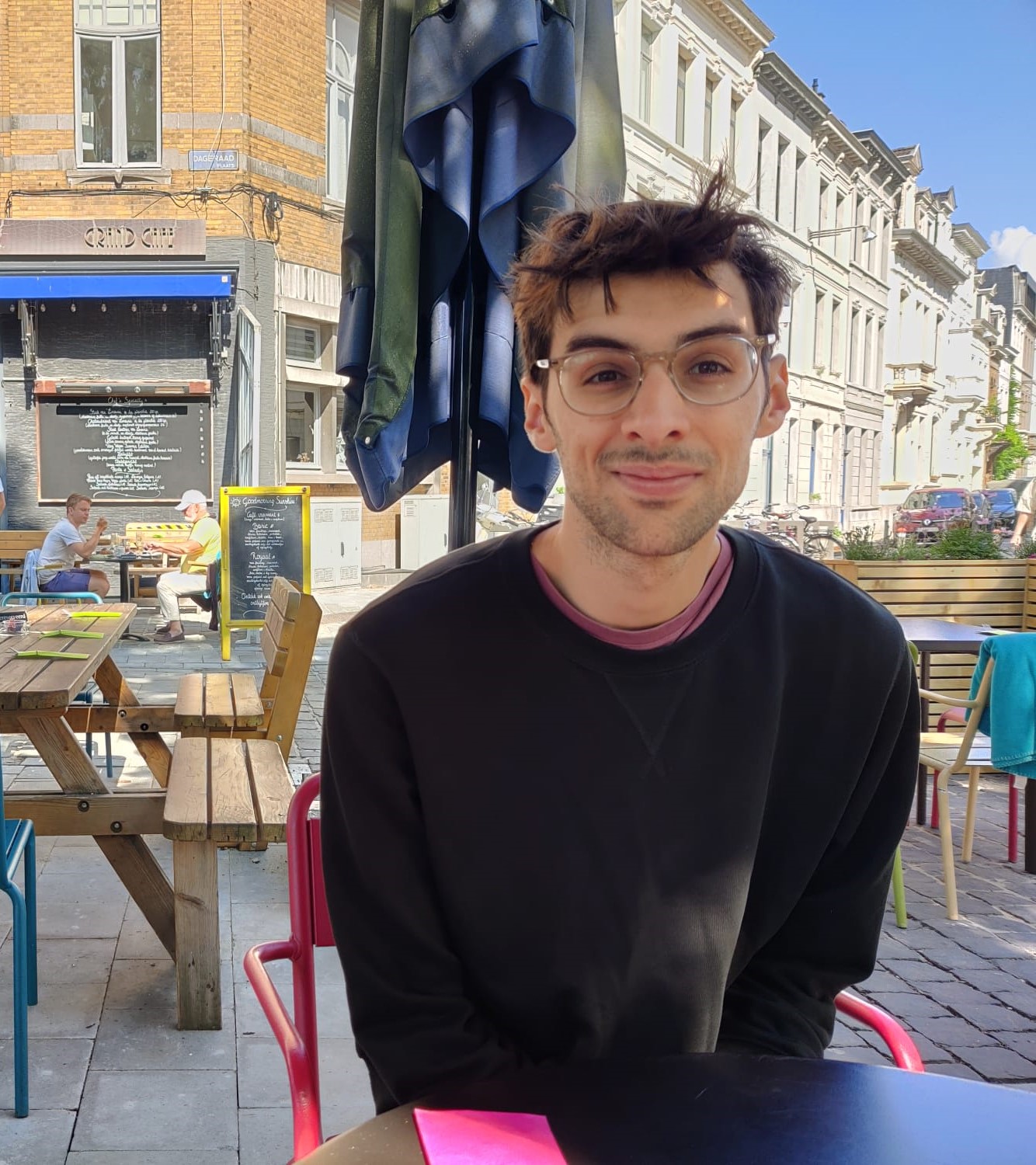
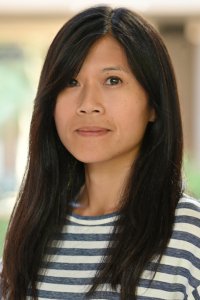
Prof. Dr. Haris Gačanin is a faculty member at RWTH Aachen University, affiliated with the Institute for Distributed Signal Processing under the College of Electrical Engineering. His research focuses on integrating machine learning with wireless communication systems, particularly in industrial IoT, edge computing, and network optimization. Current academic rank: Professor Contact: harisg@dsp.rwth-aachen.de Research Interests: Wireless systems, machine learning, signal processing, and network optimization. Key contributions include: Adaptive resource allocation in IIoT and vehicular networks AI-driven channel estimation and feedback mechanisms Security-oriented emitter identification via metric learning Federated/transfer learning for edge environments Hardware-efficient deep learning models for mmWave and THz communications Methodological Focus: Combines reinforcement learning, attention mechanisms, and robust neural architectures with practical implementations on FPGA and vehicular systems.
Dr. Masato Inoue is a Professor at the Faculty of Science and Engineering , School of Advanced Science and Engineering at Waseda University. He holds a Doctor of Medical Science from Kyoto University. Education: 2003 - Kyoto University Graduate School of Medicine 2003 - Kyoto University His research spans multiple disciplines at the intersection of Medical Informatics , Bioinformatics , and Statistical Mechanics . Key areas include: Medical Imaging : Developing Bayesian super-resolution algorithms and Prior Ensemble Learning for improved MRI reconstruction Voice Analysis : Creating innovative voice quality quantification systems for clinical diagnostics Genetic Analysis : Advancing haplotype inference methods and gene network modeling Signal Processing : Applying statistical mechanics to diverse problems from coding theory to neuroscience His recent publications (2021-2012) demonstrate consistent contributions to medical imaging algorithms , voice disorder classification , and genetic data analysis . Notable collaborations include work with Kyoto University researchers , Swedish medical institutions , and cross-disciplinary teams in bioengineering.
Kyle T Spikes is an Associate Professor in the Department of Earth and Planetary Sciences at the Jackson School of Geosciences, The University of Texas at Austin. His research focuses on integrating geologic data with quantitative tools for seismic reservoir characterization, emphasizing forward and inverse problems in rock physics, stochastic modeling, and seismic inversion. He works across scales from sub-micron rock samples to surface seismic data, developing effective medium models and numerical techniques to estimate heterogeneous and anisotropic rock properties. His work spans applications in carbonates, shales, and fractured reservoirs, with a strong emphasis on Bayesian methods, stochastic inversion, and machine learning for data analysis. Recent studies include fluid flow effects in porous media, distributed acoustic sensing (DAS), and rock physics modeling of unconventional reservoirs like the Haynesville Shale. He has contributed to CO2 sequestration monitoring through inversion of 3D VSP data at the Cranfield site. Notable trends in his publications include advancements in Bayesian-based rock physics modeling, integration of multi-scale data (laboratory to field scale), and innovative applications of DAS technology for seismic monitoring. His research bridges geophysics, petrophysics, and reservoir engineering, addressing challenges in reservoir characterization and monitoring under varying fluid and stress conditions. Dr. Spikes advises postdoctoral researchers and graduate students in the Jackson School, though specific advisee names are not listed. His work is supported by collaborative projects with industry and academic partners, focusing on practical solutions for subsurface reservoir challenges.
Anthony Illingworth is a Professor in the Department of Meteorology at the University of Reading, UK, where he leads research in atmospheric remote sensing, radar and lidar technologies, and weather forecasting. His work is central to major satellite missions such as EarthCARE and WIVERN, and he collaborates extensively with European and international meteorological agencies. Education and Background: While specific degrees are not listed in the provided text, his long-standing academic career and leadership in advanced meteorological research suggest a PhD in atmospheric physics or a related field, likely from a UK institution. His research interests span radar meteorology , cloud physics , satellite remote sensing , precipitation measurement , boundary layer dynamics , and numerical weather prediction . He focuses on improving observational techniques using ground- and space-based sensors to enhance forecast accuracy. His work integrates physics-based models with real-world data from instruments such as Doppler radars, lidars, and polarimetric sensors. The publication trends from 2015 to 2025 reveal a consistent focus on satellite-based wind and cloud observations (e.g., WIVERN and EarthCARE), calibration of remote sensing instruments, and data assimilation for weather models. His articles frequently address technical challenges in radar signal interpretation, wind profiling in extreme weather, and the use of ground networks to validate and improve forecasts. A recurring theme is the development and validation of new methodologies for extracting atmospheric parameters from remote sensing data. Scientific Awards: Advising and Grants: While no students or grants are explicitly listed, his frequent senior authorship and leadership in large collaborative projects (e.g., FRANC, EarthCARE) suggest active supervision of PhD students and postdoctoral researchers, as well as success in securing major research funding from agencies such as the UK Met Office, ESA, and NERC. Labs and Teams: Illingworth is closely associated with the atmospheric remote sensing group at the University of Reading, which operates advanced radar and lidar systems. He collaborates with the European Centre for Medium-Range Weather Forecasts (ECMWF), CNRS in France, and the CloudSat science team, indicating strong institutional partnerships and team-based research in operational and satellite meteorology.
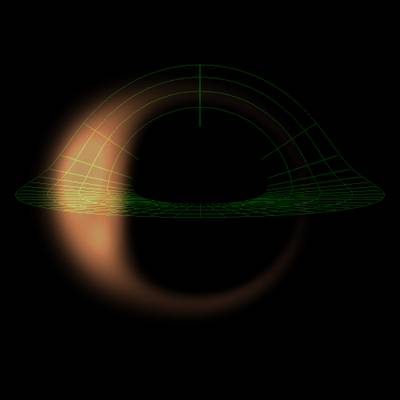
Avery E. Broderick is an Associate Professor in the Department of Physics & Astronomy at the University of Waterloo and an Associate Faculty Member at the Perimeter Institute for Theoretical Physics. His research focuses on theoretical astrophysics, particularly studying compact objects like black holes and testing general relativity through astronomical observations. He is a key member of the Event Horizon Telescope (EHT) collaboration, which produced the first direct images of black hole horizons in M87* and Sagittarius A*. Broderick’s work emphasizes relativistic astrophysical phenomena such as accretion flows, jet formation, and polarization signatures. He collaborates extensively with observational astronomers and computational physicists to model black hole environments using general relativistic magnetohydrodynamic simulations. His recent research includes analyzing EHT data to constrain black hole spin, test spacetime metrics, and study photon ring dynamics. He also explores next-generation EHT (ngEHT) capabilities for higher-resolution imaging and multi-wavelength studies. Broderick has delivered invited lectures globally, including at Harvard-Smithsonian CfA, MIT, and the Aspen Center for Physics, reflecting his leadership in the field. Broderick’s contributions span over 135 refereed publications and conference proceedings, with a focus on black hole astrophysics, VLBI techniques, and relativistic plasma physics. His work bridges theoretical predictions with observational data, advancing our understanding of extreme gravitational regimes in the universe.
Ahmet Tekalp is a Professor in the Department of Electrical and Computer Engineering at Koc University's College of Engineering since 2001. He holds dual citizenship in Turkey and the USA, with prior academic roles at the University of Rochester (1986-2005) and research positions at Eastman Kodak (1984-1987) and Rensselaer Polytechnic Institute (1981-1984). He chairs the Electronics and Informatics Group at TUBITAK since 2004 as a part-time position. B.S. (1980) in Electrical Engineering & Mathematics, Bogaziçi University M.S. (1982) and Ph.D. (1984) in Electrical, Computer, and Systems Engineering, Rensselaer Polytechnic Institute His research focuses on digital image and video processing, including video compression, motion-compensated filtering for high-resolution applications, video segmentation, object tracking, content-based video analysis, multi-camera surveillance processing, and digital content protection. He has led numerous European and U.S. grants, including FP7 STREP projects and NSF awards, emphasizing applications in sensor networks, visual databases, and medical imaging. His scholarly work spans diverse areas such as superresolution reconstruction, head gesture animation, 3DTV streaming, and reversible data hiding. He has played pivotal roles in editorial boards, including serving as Editor-in-Chief of Signal Processing: Image Communication, and has contributed to major standards bodies like ISO MPEG and ANSI NCITS. Member, Turkish Academy of Sciences (TUBA) Fellow, IEEE Fulbright Senior Scholarship (1999) TUBITAK Science Award (2004) IEEE Signal Processing Society Distinguished Lecturer (1998) He has led multiple international research collaborations and projects, including European FP6/FP7 networks and NATO programs, with substantial grant funding from NSF, NYSTAR, and industry partners like Eastman Kodak, Xerox, and Siemens.
Dan Wik is an Associate Professor in the Department of Physics & Astronomy at the University of Utah . His research focuses on observational X-ray astronomy, particularly galaxy clusters, inverse Compton scattering, X-ray binaries, and the X-ray background. He has extensive experience in data calibration, analysis tool development, and mission collaborations such as NuSTAR, Chandra, and XRISM. Wik holds a PhD in Astronomy from the University of Virginia (2010) and a BS in Astrophysics from Ohio University . His research interests span galaxy cluster mergers, nonthermal emission processes, high-energy astrophysics, and cross-calibration studies between X-ray observatories. Recent articles highlight his work on NuSTAR observations of galaxy clusters, X-ray binary populations in M31 and M33, inverse Compton emission constraints, and stray light background analysis techniques. His studies often integrate multiwavelength data and address cosmological implications of X-ray observations. Wik has received multiple grants from NASA for projects like Time Domain X-ray Studies of AGN and Hard Bandpass Extension of XRISM Cluster Observations . He supervises undergraduate and graduate researchers and teaches courses from general education to advanced graduate levels, including Foundations of Astronomy and High Energy Astrophysics .
Professor Kevin Macdonald is a Research Professor at the University of Southampton, affiliated with the Nanophotonics Group within the Optoelectronics Research Centre (ORC). His research focuses on advanced optical metrology, nanophotonics, and metamaterials, with particular emphasis on picoscale precision and time crystal dynamics. He currently supervises multiple PhD students in areas such as photonic localization and metamaterial-based systems. Active research projects include: A Photonic-electronic Non-von Neumann Processor Core (EPSRC-funded) Next Generation Optical Metrology Driven by Nanophotonics (EPSRC) Pixelated Chalcogenide Meta-Devices (Samsung-funded) His work bridges fundamental photonics with applied technologies, addressing challenges in high-speed imaging, quantum systems, and nano-scale motion tracking. He collaborates extensively with international researchers and industry partners, including Samsung Electronics. His labs are equipped with cutting-edge facilities for optical metrology and metamaterial fabrication.
Harald E. Möller is a Professor and Head of the Nuclear Magnetic Resonance Research and Development Unit at the Max Planck Institute for Human Cognitive and Brain Sciences in Leipzig. With a career spanning over four decades, he has held academic positions including Honorary Professor at the University of Leipzig and leadership roles in institutions like Duke University Medical Center and the University of Münster. His research focuses on advancing MRI methodologies, biophysical imaging principles, and their applications in neurology and neuroscience. Education: 1979-1985: Chemistry & Physics studies at Universities of Dortmund and Münster 1985: M.Sc. (Diploma) in Chemistry 1988: PhD in Physical Chemistry (summa cum laude) 2000: Habilitation in Physical Chemistry 2002: Habilitation in Biophysical Chemistry Research Interests: Development of novel MRI methods Quantitative tissue characterization Myelin sheath imaging Cerebral blood flow dynamics High-field MRI hardware
Abdullah Karaman is a Professor at the Department of Geophysical Engineering, Istanbul Technical University (ITU). His research focuses on geophysical modeling, subsidence due to longwall mining, hydrothermal systems, and seismic data analysis. He leads projects on geothermal applications using particle swarm optimization and collaborates internationally. Dr. Karaman has supervised 8 ongoing theses and has authored/co-authored over 17 publications since 1997. His work spans geophysical exploration, environmental geohazards, and subsurface imaging techniques. Education: Master of Science in Geophysics (1989) Research Interests: Hydrothermal system characterization using magnetotelluric methods Seismic inversion and diffraction imaging Geophysical monitoring of coal mine subsidence Optimization algorithms in geophysical data analysis Awards: None explicitly mentioned. Grants & Projects: Geothermal Applications of Particle Swarm Optimization Modeling Technique (2016–2021) Kordil Engineering Company: Geophysical consulting for international projects (2021) His lab focuses on integrating geophysical techniques with machine learning for high-resolution subsurface imaging.
Giovanni Russo is a Full Professor of Numerical Analysis at the Department of Mathematics and Computer Science, University of Catania, Italy . He coordinates the PhD program in Pure and Applied Mathematics and has been a visiting scholar at institutions including Courant Institute, University of California, Los Angeles, University of Michigan, and University of Bordeaux. His career spans over four decades across academia and research institutions. Education: PhD in Physics (1986, University of Catania), Laurea in Nuclear Engineering (1982, Politecnico di Milano). Research Interests: Russo specializes in Computational Fluid Dynamics , Numerical Methods for Conservation Laws , and Kinetic Equations . His work includes asymptotic preserving schemes , IMEX methods , semi-Lagrangian schemes , and high-order numerical techniques for PDEs with applications to fluid dynamics, plasma physics, and multiscale modeling. Scientific Trends: Recent publications focus on modeling epidemic dynamics , kinetic equations for inert mixtures , semi-Lagrangian methods , and uncertainty quantification in quantum systems. These works reflect his expertise in high-order numerical schemes , multiscale analysis , and applied mathematical modeling . Scientific Awards: CNR-NATO Fellowship (1987) Advising and Grants: Russo has supervised nine PhD students and served as Principal Investigator (PI) for major projects including MOSCOVID (modeling COVID-19) and ModCompShock (Horizon 2020 Marie Curie project). He has also organized international conferences like the 18th European Conference on Mathematics for Industry with 370 participants. Labs and Teams: Russo collaborates with research groups at the University of Catania and has been a visiting researcher at Courant Institute, University of Michigan, and GSSI L’Aquila. He contributes to journals as an editor and reviewer, including SIAM Journal of Numerical Analysis and Journal of Computational Physics .
Dr. Julian Tachella is a CNRS Research Scientist at the Sisyph Laboratory of École Normale Supérieure de Lyon, with co-founder/CSO roles at Blur Labs. His career spans signal processing, machine learning, and computational imaging, focusing on inverse problems and self-supervised learning. Affiliation: CNRS (French National Centre for Scientific Research), Sisyph Laboratory, École Normale Supérieure de Lyon Co-founder & CSO: Blur Labs (AI/Imaging startup) Research Interests: At the intersection of signal processing and deep learning , his work addresses imaging inverse problems through self-supervised methodologies (e.g., UNSURE, Generalized R2R) that eliminate ground-truth requirements. Key contributions include equivariant imaging frameworks for stability, spline sketches for photon-counting lidar compression, and uncertainty quantification techniques with equivariant bootstrapping. Recent Trends: 2025 publications emphasize lightweight architectures for multi-domain reconstruction (CT, super-resolution) and noise-agnostic SURE methods. 2024 works focus on audio declipping , compressed lidar , and nonlinear algorithm unrolling with applications in autonomous vehicles and medical imaging. Scientific Awards: Best Student Paper Award at ICASSP’22 Collaborations & Leadership: He leads the DeepInverse open-source project and develops algorithms for real-time 3D lidar reconstruction. His team includes researchers from University of Edinburgh and Grenoble INP, with applications in automotive lidar and underwater imaging.
Jasmine Foo serves as Associate Head and Distinguished McKnight University Professor at the University of Minnesota-Twin Cities' School of Mathematics, holding the Northrop Professorship and co-directing the Therapy Modeling and Design Center. Her leadership spans academic administration and interdisciplinary research initiatives in mathematical oncology. Foo's research pioneers stochastic evolutionary modeling of cancer dynamics, integrating mathematical theory with clinical data to understand tumor initiation, progression, and treatment resistance. Her group focuses on five interconnected themes: plasticity and epigenetics in tumor evolution; drug resistance optimization; data-driven precision oncology; spatial carcinogenesis; and tumor-microenvironment interactions using organoid models. This work bridges probability theory, systems biology, and clinical oncology to develop novel therapeutic strategies. Analysis of her 15 most recent publications reveals a consistent emphasis on quantitative approaches to cancer evolution, with growing integration of machine learning and high-resolution experimental data. Key trends include modeling phenotypic plasticity in resistance development, optimizing dosing schedules using evolutionary principles, and translating spatial tumor dynamics into clinical applications. Scientific recognition includes: Honorable Mention, Feldman Prize for theoretical contributions to tumor evolution modeling Foo actively mentors graduate students and postdoctoral researchers through the School of Mathematics, with research supported by multiple grants (though specific funding sources aren't detailed). Her group maintains strong collaborations with experimental oncology labs and clinical researchers, facilitating data-driven model validation. She co-leads the Therapy Modeling and Design Center and organizes the UMN MathBio Group Meetings, fostering cross-disciplinary collaboration between mathematicians, biologists, and clinicians in cancer research.
Prof. Juan P. Torres is a Professor at ICFO (Institut de Ciències Fotòniques) leading the Quantum Engineering of Light research group. His work focuses on generating and tailoring novel forms of classical and quantum light for fundamental quantum theory exploration and applications in secure communications, high-resolution imaging, and precision probing. His research centers on quantum optics and photonics with specialized expertise in spatial and frequency engineering of photons. He pioneers techniques for tailoring spatial entanglement through spontaneous parametric down-conversion schemes, enabling the generation of qudits with on-demand properties. His group actively develops quantum imaging methods using undetected light and explores high-dimensional quantum information processing. Analysis of his recent publications reveals dominant trends in quantum imaging with undetected photons, high-dimensional quantum teleportation, and decoherence-assisted quantum key distribution. His work consistently bridges theoretical quantum mechanics with practical implementations in optical coherence tomography and quantum communication protocols, emphasizing spatial mode manipulation. Prof. Torres maintains active international collaborations with leading researchers including Prof. Bahaa Saleh (CREOL), Prof. Malvin Teich (Boston University), Dr. Fabio Sciarrino (University of Rome), Prof. J. H. Eberly (University of Rochester), and Dr. Alfred U'Ren (UNAM). His laboratory features two fully equipped optical facilities with four optical tables, multiple laser systems across wavelengths, single-photon detectors, nonlinear crystals, and advanced spectroscopy equipment for quantum light generation and characterization.
José Picheral is a Professor at CentraleSupélec, affiliated with the Laboratory of Signals and Systems (L2S). He holds a PhD (2003) and HDR (2017) in high-resolution signal processing methods and inverse problems. His research focuses on array processing, source localization, acoustic imaging, and vibration analysis, with applications in aeroacoustics, automotive systems, and industrial monitoring. He has supervised multiple PhD students and contributed to projects like Valeo’s smartphone-based car key replacement system. Education: Engineering Degree: Supélec (1999) and Politecnico di Milano (1999, Erasmus-TIME) PhD: Paris Sud University (2003) Habilitation (HDR): Université Paris Sud (2017) Research Interests: High-resolution methods for distributed sources, sparse signal processing, acoustic imaging, asynchronous measurements, and sensor array design. Current projects include spatial source covariance estimation, EEG spectrum analysis, and automotive applications using smartphone localization. Key Contributions: Over 50 publications in top journals/conferences (e.g., IEEE Transactions, ICASSP). Notable work on MUSIC algorithm robustness, DAMAS optimization, and sparse approaches for tip-timing signals. Advising & Collaboration: Supervised 7 PhD students. Collaborations with SAFRAN, Valeo, and academic teams in Bayesian inference and inverse problems. Active in L2S’s Inverse Problems Group and SYCOMORE team. Labs/Teams: Member of L2S’s Signal Processing and Statistics group, leading research in systems and control, telecommunications, and energy systems.