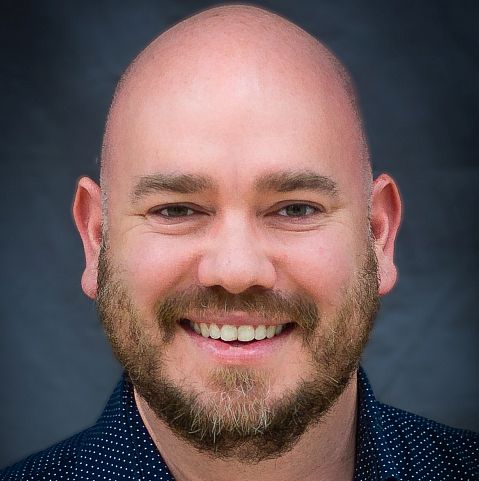
Michael Rainbow is an Associate Professor in the Department of Mechanical and Materials Engineering at Queen's University, Faculty of Engineering and Applied Science. His research focuses on biomechanics, imaging, and computational modeling of musculoskeletal systems. Research Interests : Biomechanics, Imaging, Computational Modeling Email : michael.rainbow@queensu.ca His recent work (2025) examines scapular kinematics , foot-ankle adaptation , and joint power dynamics using advanced imaging techniques like biplanar videoradiography and 4D CT . Key themes include load direction effects , muscle-tendon interactions , and standardization of imaging protocols . He contributes to the Centre for Health Innovation and develops tools for model-based pose estimation and kinematic validation . His studies span shoulder pathology , foot mechanics , and human locomotion , with applications in arthritis research and wearable technology.
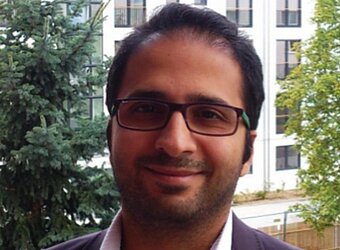
Dr. Hooman Latifi is a Researcher at the Institute of Geography and Geology within the Faculty of Philosophy at University of Würzburg, Germany. He also maintains an affiliation with the Faculty of Geodesy and Geomatics Engineering at K. N. Toosi University of Technology in Tehran, Iran, where he is listed as a staff member with the email address hooman.latifi@kntu.ac.ir. Dr. Latifi has been working at the Chair of Remote Sensing at University of Würzburg since June 2012. Dr. Latifi received his educational background in Iran and Germany: Doctoral studies (Dr. rer. nat) at Albert-Ludwigs-Universität Freiburg (2008-2011), funded by a DAAD scholarship under the supervision of Prof. Dr. Barbara Koch M.Sc. in Natural Resources from University of Mazandaran, Iran (2003-2005), with thesis titled "Evaluating Landsat ETM+ data for forest-ecotone-rangeland mapping in the timberline of northern forests of Iran" B.Sc. in Natural Resources from University of Guilan, Iran (1999-2003) Dr. Latifi's research focuses on the application of remote sensing technologies, particularly LiDAR and satellite imagery, to forest ecology and management. His work spans multiple areas including forest inventory, biomass estimation, biodiversity assessment, and environmental monitoring. He has made significant contributions to understanding forest structure through advanced remote sensing techniques, with particular emphasis on temperate forests in Europe and forest ecosystems in Iran. His research often involves multi-sensor data fusion, combining optical, hyperspectral, and LiDAR data to improve forest parameter estimation. Analysis of Dr. Latifi's publication record from 2005 to 2022 reveals a strong focus on forest remote sensing applications. His early work focused on forest type mapping in Iran using Landsat data (2005-2008). After his doctoral studies in Germany, his research expanded to include LiDAR applications for forest structure analysis in European forests (2010-2014). In recent years (2015-2022), his work has broadened to include multi-sensor approaches, biodiversity assessment, and applications in various forest ecosystems worldwide, including agroforestry systems in Africa and invasive species mapping. His publications appear in leading remote sensing and forestry journals such as Remote Sensing, Forests, and International Journal of Applied Earth Observation and Geoinformation. Dr. Latifi has collaborated extensively with researchers across multiple institutions, particularly with colleagues at University of Würzburg (especially Prof. Barbara Koch and Dr. Markus Heurich), as well as international partners in Iran, India, Chile, and Africa. His work demonstrates a progression from regional studies in Iran to increasingly global applications of remote sensing in forest ecology. At University of Würzburg, Dr. Latifi is part of the Earth Observation Research Cluster within the Institute of Geography and Geology. His work contributes to advancing the operational application of remote sensing technologies in forest inventory and ecological monitoring, with a particular focus on transitioning research methods to practical forest management solutions.
Karim Tanveer is a Research Fellow at the University of Toronto's Dunlap Institute for Astronomy & Astrophysics and Department of Astronomy & Astrophysics. His work spans cosmology, galaxy evolution, and instrumentation for large-scale surveys like the Dark Energy Spectroscopic Instrument (DESI). Current research focuses on precision cosmology through emission-line galaxies, photometric redshift estimation, and the interstellar medium's dynamics, including Fermi bubbles and galactic nuclear outflows. Key Research Themes: Cosmological parameter estimation via DESI and CMB lensing Galactic nuclear wind and outflow gas mapping Target selection algorithms for spectroscopic instruments UV absorption studies of galactic structures Next-generation infrared surveys like NANCY Instrumentation & Data: He contributes to DESI's large-scale structure catalogs, target pipelines, and data validation processes. His work bridges observational techniques with cosmological constraints, emphasizing systematic error mitigation in parameter inference.
Prof. Dr. Kurt Stockinger is a Professor of Computer Science at ZHAW School of Engineering and holds a doctorate at the University of Zurich . He serves as Head of the MAS Data Science program and co-leads the ZHAW Datalab . His research focuses on Intelligent Information Systems , bridging information systems, natural language processing, and machine learning. Affiliated with the University of Zurich, he contributes to Quantum Machine Learning and Open Data Exploration initiatives. Stockinger's educational background includes a PhD in Computer Science (University of Vienna & CERN), a Master in Business Informatics (University of Vienna), and a CAS in Didactics & Methodology (ZHAW). He has taught courses in Quantum Computing , Big Data for Natural Sciences , and Data Science programs at ZHAW and University of Zurich. His research spans Data Science , Big Data , Natural Language Query Processing , Knowledge Graphs , and Quantum Machine Learning . Recent publications focus on quantum autoencoders , hybrid quantum neural networks , and prompt engineering for knowledge graph question answering. He has developed frameworks like ScienceBenchmark for real-world NL-to-SQL evaluation and NQuest for natural language query exploration. Scientific awards include the Best Paper Award at 7th Swiss Conference on Data Science (2020) He leads major projects such as DataGEMS (Data Discovery Platform, Horizon Europe) Digital Health Zurich (Clinical Innovation Lab) INODE4StatBot.swiss (NL-to-SQL Translation) GraphQueryML (Graph Database Optimization) ScienceBenchmark (NL-to-SQL Evaluation) Stockinger's work intersects with computer vision , biomedical data , and industrial applications , demonstrated through collaborations with institutions like Lawrence Berkeley National Laboratory, CERN, and University of Washington. He has contributed to establishing QuantumBasel and ZHAW Datalab as research hubs.
Yuma Sugahara is an Assistant Professor at Waseda University's School of Advanced Science and Engineering , Department of Physics. Previously held research positions at the National Astronomical Observatory of Japan and Waseda's Research Institute for Science and Engineering. Specializes in astronomy with focus on extragalactic astronomy , particularly high-redshift galaxy evolution, starburst processes, and interstellar medium dynamics during cosmic reionization. PhD from University of Tokyo Graduate School of Science (2020) Master's from University of Tokyo Graduate School of Science (2017) Bachelor's from Kyoto University Faculty of Science (2015) Research employs JWST , ALMA , and Keck observations to study: Major mergers and starburst-induced morphological disturbances Dust temperature evolution across cosmic time Ionization parameter diagnostics for reionization-era galaxies Primordial galaxy analogs in local extremely metal-poor systems Key contributions include 15+ refereed publications as co-author on: High-redshift galaxy dynamics (z > 7) Quiescent galaxy formation pathways Outflow characterization in low-mass systems Multi-wavelength spectral energy distribution analysis
Brian Becker is a Professor in the Department of Geography and Environmental Studies and affiliated with the Institute for Great Lakes Research. His expertise bridges remote sensing technology and environmental science, with specialized focus on wetland ecology and aquatic system monitoring through advanced spectral analysis techniques. His academic foundation includes: Ph.D. from Michigan State University (2002) M.S. from University of Illinois (1993) B.S. from Eastern Illinois University (1989) Professor Becker's research program centers on developing and applying remote sensing methodologies for environmental assessment. He pioneers techniques for water quality parameter estimation (particularly CDOM and chlorophyll-a) in optically complex inland waters, utilizes hyperspectral data for wetland characterization, and creates algorithms for invasive species mapping. His work integrates field spectroscopy with satellite imagery to address challenges in freshwater ecosystems, with emphasis on spatio-temporal dynamics and algorithm validation for practical environmental management applications. Analysis of his 14 publications (2005-2018) reveals consistent innovation in remote sensing of aquatic environments. Key contributions include developing semi-analytical models for CDOM in shallow waters, optimizing spectral band selection for wetland monitoring, and creating spatial analysis techniques for large raster datasets. His research demonstrates strong methodological rigor while addressing real-world environmental challenges across the Great Lakes region and international sites like China's West Lake. As an educator, Professor Becker teaches Geographic Information Sciences, Remote Sensing, Image Processing, Environmental Science, and CAD Mapping for GIS. His affiliation with the Institute for Great Lakes Research provides students access to interdisciplinary freshwater research opportunities. While specific current grant details aren't provided, his extensive publication record in high-impact journals indicates sustained research activity with potential for student involvement in field campaigns, algorithm development, and environmental monitoring projects.
Prof. Mariusz Figurski serves as Professor at the Department of Geodesy within the Faculty of Civil and Environmental Engineering at Gdańsk University of Technology. His research bridges geodetic methodologies with atmospheric and environmental applications, utilizing satellite observations and numerical modeling to address critical climate-related challenges. His primary research domains include: GNSS-derived atmospheric parameter estimation (water vapour, precipitation) Renewable energy systems with emphasis on small-scale wind integration Meteorological modeling for fire danger forecasting Alternative precipitation measurement techniques using telecommunications infrastructure Analysis of his 2022-2025 publications reveals a strong interdisciplinary focus on environmental monitoring, where geodetic techniques intersect with climate science and renewable energy engineering. His work demonstrates consistent application of GNSS data for atmospheric studies while expanding into practical solutions for energy transition and disaster management, particularly in Central European contexts. Prof. Figurski publishes in high-impact journals including Energy , Meteorological Applications , and Climate Dynamics , maintaining active international collaborations as evidenced by multi-institutional co-authorship patterns across his recent work.
Nicolas Ranc is a Professor at Arts et Métiers ParisTech, where he has been a faculty member since September 2006. He is affiliated with the PIMM Laboratory (Laboratory of Processes and Engineering in Mechanics and Materials) and leads research within the CoMet team (Behavior and Microstructure of Metals). His work bridges mechanical engineering and materials science with a focus on experimental characterization of metallic materials. Professor Ranc's educational background includes: PhD in Mechanical Engineering (2004) with thesis "Etude des champs de température et de déformation dans les matériaux métalliques sollicités à grande vitesse de déformation" (Study of temperature and deformation fields in metallic materials under high strain rate loading) Habilitation à Diriger des Recherches (2014) with thesis "Contribution à l'étude du comportement thermomécanique des matériaux solides et des structures" (Contribution to the study of thermomechanical behavior of solid materials and structures) Professor Ranc's research focuses on the mechanical behavior of metallic materials, particularly studying thermal effects associated with mechanical solicitations. His work includes developing thermal measurement techniques using visible and infrared pyrometry, investigating metallic materials under dynamic loading conditions, and studying deformation and fracture mechanisms in metals. Specific areas of interest include the Portevin Le Chatelier effect, high-cycle and very high-cycle fatigue phenomena, and ultrasonic fatigue testing. His research combines advanced experimental techniques with theoretical analysis to understand material behavior at multiple scales, with publications showing a consistent focus on fatigue mechanisms and thermal measurement methodologies. Professor Ranc has successfully supervised numerous PhD students to completion, with two currently working under his supervision. His research is supported by competitive grants including an ANR project (GIGADEF) and an ERC Consolidator grant (FastMat). These projects enable cutting-edge research in advanced fatigue testing methodologies and material characterization, with emphasis on ultrasonic fatigue testing and synchrotron-based characterization techniques. As part of the PIMM Laboratory, Professor Ranc has access to state-of-the-art experimental facilities including thermal imaging systems, ultrasonic fatigue testing equipment, and collaborations with synchrotron radiation facilities for in situ characterization. His research group provides students with opportunities to work with advanced experimental techniques and participate in international collaborations focused on understanding material behavior under extreme loading conditions.
Kalifa Goïta serves as Full Professor in the Department of Applied Geomatics at the University of Sherbrooke's Faculty of Engineering and is an active member of CARTEL (Centre d'applications et de recherche en télédétection), a premier remote sensing research center. His research program centers on advanced geospatial technologies for environmental monitoring , with specialization in: Microwave remote sensing for soil moisture, snow hydrology, and vegetation parameter retrieval Radar/lidar altimetry applications in water level monitoring and biomass estimation Geospatial modeling of natural hazard propagation (floods, forest fires) High-resolution remote sensing for cadastral updates and topographic mapping Long-term environmental change detection systems Professor Goïta's work bridges theoretical remote sensing methodology with operational environmental applications, emphasizing practical solutions for natural resource management and climate change adaptation. His research directly supports governmental and industrial partners in developing monitoring systems for critical environmental parameters across diverse ecosystems. Through CARTEL, he maintains strong connections with environmental agencies and geospatial technology developers, providing students with access to real-world projects and field instrumentation. Prospective researchers can expect rigorous training in satellite data processing, algorithm development, and geospatial analysis within a collaborative research environment focused on solving pressing environmental challenges.