Dr. C.J. (Tijn) Berends is a Researcher at Utrecht University's Faculty of Science , specializing within the Dynamics Meteorology department. His work focuses on ice-sheet modeling and Earth system interactions, particularly examining how ice sheets respond to climate change across geological timescales. PhD in Paleoglaciology/Paleoclimatology (2020, Utrecht University) MSc in Energy and Environmental Sciences (2015, University of Groningen) BSc in Applied Physics (2012, University of Groningen) Research interests span ice sheet-climate feedbacks , meltwater oceanic impact , solid Earth deformation , and model development for computational efficiency. Articles reveal trends in Pleistocene climate transitions , Antarctic ice stability , Miocene CO2 responses , and glacial lake dynamics . Key collaborations include the ISMIP6 model ensemble and GrSMBMIP projects. He contributes to improving momentum balance boundary conditions and subglacial parameterizations , with publications in Climate of the Past , Cryosphere , and Geoscientific Model Development . Current work emphasizes sustainable digital infrastructure for climate models, ensuring multi-programmer collaboration and long-term code maintainability while simulating ice sheet evolution over hundred-millennial timescales .
Arash Amini is a Professor at the Electrical Engineering Department of Sharif University of Technology, Tehran, Iran. He received dual B.Sc. degrees in Electrical Engineering (Communications) and Petroleum Engineering (Reservoir) in 2005, followed by M.Sc. and Ph.D. degrees in Electrical Engineering (Signal Processing) in 2007 and 2011, respectively, all from Sharif University of Technology. During his doctoral studies, he spent a year (2009–2010) as a visiting scholar at the Biomedical Imaging Group (BIG), EPFL, Switzerland. Current Position: Professor (since May 2025) Previous Roles: Assistant Professor (2013–2018), Associate Professor (2018–2025), Researcher at BIG, EPFL (2011–2013) Editorial Role: Associate Editor for IEEE Signal Processing Letters (2014–2018) Research Interests : Theoretical and Statistical Signal Processing Graph Signal Processing Large Language Models Signal Processing for Communications Compressed Sensing Recent Publication Trends focus on graph signal processing, compressed sensing, biomedical imaging, and mathematical optimization. Key subfields include harmonic retrieval, subspace-informed matrix completion, sparsity-driven algorithms, and AI alignment benchmarks. Scientific Awards : Silver medal at the International Mathematical Olympiad (IMO2000) Advising includes 15+ Ph.D. and Master’s students, with collaborative projects involving institutions like EPFL and researchers such as Prof. F. Marvasti and Prof. S. Rini.
Wolfgang Wall is a full Professor and founding Director of the Institute for Computational Mechanics at the Technical University of Munich (TUM). Born near Salzburg (Austria), he studied at the University of Innsbruck and received his PhD from the University of Stuttgart. He is a co-founder of AdCo Engineering GW GmbH and Ebenbuild GmbH, and currently serves as Rector of the International Centre for Mechanical Sciences (CISM) in Udine, Italy. A member of both the Austrian and Bavarian Academies of Sciences, he has received numerous prestigious awards including the O.C. Zienkiewicz Award and ERC Advanced Grant. 1983: Matura, Höhere Technische Bundeslehranstalt Salzburg (with distinction) 1991: Dipl.-Ing. degree from University of Innsbruck (with distinction) 1999: Dr.-Ing. (summa cum laude) from University of Stuttgart His research focuses on application-motivated fundamental research in computational mechanics, spanning coupled multifield/multiscale problems (fluid-structure interaction, contact dynamics, electro-chemo-mechano-thermo interaction) and applications in energy storage systems (all-solid-state batteries), additive manufacturing, and computational biophysics/biomedical engineering (patient-specific respiratory/cardiac modeling, cancer nanomedicine, musculoskeletal systems). His group develops advanced computational methods, software frameworks, and physics-based models for high-performance computing. Recent emphasis includes uncertainty quantification, inverse analysis, and machine learning integration. The 15 most recent publications reveal trends in computational mechanics (8/15 articles), biomedical engineering (5/15), and energy storage/additive manufacturing (7/15). Notable themes include novel finite element frameworks for multiphysics problems, Bayesian calibration methods for biological systems, and multiscale modeling of nanomedicine and battery materials. 1986-1988: Excellency in Studying Awards (~ top 1%) 1991: Best graduation ever in Civil Engineering at Innsbruck University 1994: European Academic Software Award 2000: Fritz-Peter-Müller Award, University of Karlsruhe 2000: Rotary Award for doctoral thesis, Stuttgart 2005: Golden Teaching Awards (TUM students) 2008: Fellow Award of the International Association of Computational Mechanics 2011: Chuo University Guest Professorship Award 2012: IACM Computational Mechanics Award 2013: Heinz Maier-Leibnitz Medal 2016: Prandtl Medal (ECCOMAS) 2018: EUROMECH Fellows Award 2021: ERC Advanced Grant 2022: JSCES Grand Prize 2024: O.C. Zienkiewicz Award (IACM) As a dedicated educator, he teaches courses ranging from foundational engineering mechanics (1000+ students) to specialized graduate topics like discontinuous Galerkin methods and biomedical applications. His leadership extends to founding the Munich School of Engineering (2010-2012), establishing the Center for Computational Biomedical Engineering (2012), and serving on multiple editorial boards (IJNME, CMAME, IJNMBE) and scientific councils.
David Oh, MD, PhD is an Associate Professor of Medicine at the University of California, San Francisco (UCSF) School of Medicine. He is a physician-scientist specializing in cancer immunotherapy with particular expertise in genitourinary malignancies, including prostate and bladder cancers. Dr. Oh sees patients in the Cancer Immunotherapy Program at UCSF and leads numerous early-phase clinical trials focused on adoptive cell therapies for solid tumors, including CAR-T and TCR therapies. His laboratory conducts translational research on cytotoxic immune effectors in anti-tumor responses and immune-related adverse events following immunotherapy. Harvard College AB 2000 Biochemical Sciences Stanford University School of Medicine MD/PhD 2011 Medicine, Physiology University of California, San Francisco Residency 2014 Internal Medicine University of California, San Francisco Fellowship 2017 Hematology/Oncology Dr. Oh's research focuses on developing novel immunotherapies with enhanced activity and reduced toxicity for patients with solid cancers. His work spans high-resolution multiomic interrogation and functional validation using patient samples, as well as murine model systems. Recent publications highlight his expertise in CD4+ T cell function in antitumor immunity, immune-related adverse events, and predictive biomarkers for immunotherapy response. His research has shown particular promise in understanding the role of cytotoxic CD4+ lymphocytes in bladder cancer and developing strategies to manage immune checkpoint inhibitor colitis. Analysis of Dr. Oh's recent publications reveals a strong focus on translational immunology with emphasis on T cell responses to cancer therapies. His work consistently bridges basic science and clinical applications, particularly in the areas of immune monitoring, biomarker development, and management of immunotherapy toxicities. The publications show increasing sophistication in analytical approaches, moving from traditional immunological techniques to advanced single-cell and spatial multi-omics methods. University of California, San Francisco Clinical Fellow Award 2015 Conquer Cancer Foundation of American Society of Clinical Oncology Merit Award 2016 Conquer Cancer Foundation Young Investigator Award 2017 Bladder Cancer Advocacy Network Young Investigator Award 2018 Prostate Cancer Foundation Young Investigator Award 2018 Damon Runyon Cancer Research Foundation Clinical Investigator Award 2021 Dr. Oh leads the NIH-funded project 'Identification of circulating and tissue-specific autoimmune responses in checkpoint inhibitor-induced immune-related adverse events' (K08AI139375). His clinical trials portfolio includes studies of adoptive cell therapies, intratumoral immunotherapies, and next-generation cytokine therapies for solid tumors. He has mentored numerous trainees in the field of cancer immunology and regularly collaborates with researchers across multiple disciplines including immunology, urology, and gastroenterology. His laboratory maintains strong connections with clinical programs at UCSF, facilitating rapid translation of research findings into patient care.
Knud Simonsen serves as an Affiliated Associate Professor in Oceanography at the University of the Faroe Islands, Faculty of Science and Technology, while also maintaining affiliation with the Faroese Meteorological Office. His academic career spans over two decades with significant contributions to understanding Faroese marine environments and their applications to aquaculture and renewable energy. Dr. Simonsen earned his Doctor Scientiae (PhD) in Physical Oceanography from the University of Bergen between 1992 and 1996. His educational background provided the foundation for his specialized expertise in ocean circulation dynamics and numerical modeling techniques applicable to the unique North Atlantic environment surrounding the Faroe Islands. Dr. Simonsen's research program centers on the circulation in Faroese waters related to aquaculture, renewable marine energy, and climate change . His work integrates physical oceanography, computational fluid dynamics, and field observations to address practical challenges facing the Faroese aquaculture industry. He has developed specialized ocean models for the Faroe Shelf region, focusing on freshwater-driven circulation patterns, wave-current interactions, and their impacts on fish farming operations. His research directly contributes to UN Sustainable Development Goals related to life below water and climate action. Analysis of Dr. Simonsen's publication record reveals a strategic evolution toward increasingly sophisticated modeling approaches applied to real-world aquaculture challenges. His most recent work focuses on wave-generated currents threatening aquaculture sites, optimization of sea cage volume estimation, and high-resolution modeling of the Faroe Shelf circulation. The consistent theme across his publications is the application of oceanographic principles to improve aquaculture sustainability and safety in the challenging North Atlantic environment. Dr. Simonsen has secured substantial research funding as Principal Investigator for projects including 'MAIWCIF: Mapping of areas of intense wave-current interaction in Faroese waters' (2024-2027), 'Data-Driven Machine Learning Approaches for Compressible and Incompressible Fluid Dynamics Modelling' (2023-2026), and 'Wind atlas for the Faroe Islands' (2023). During his tenure as Research Director at Fiskaaling (2012-2018), he supervised numerous MSc and PhD students conducting thesis research on sea lice, fish behavior, and cage dynamics. As Research Director at Fiskaaling - Aquaculture Research Station, Dr. Simonsen led a multidisciplinary team investigating critical aquaculture challenges including sea lice transmission, hydrodynamics around sea cages, and environmental monitoring of fjord systems. His current work continues to bridge academic research with practical applications through ongoing collaborations with the Faroese aquaculture industry and meteorological services.
Thomas Giesen is a Professor of Experimental Physics at the University of Kassel, specializing in laboratory astrophysics. His research centers on high-resolution spectroscopy of molecules relevant to astrophysical environments, utilizing advanced techniques such as terahertz and infrared spectroscopy. Education: Diplom in Physics, University of Cologne (1988) Ph.D. in Physics, University of Cologne (1992) Habilitation, University of Cologne (2001) Research Interests: Thomas Giesen's research focuses on the spectroscopic characterization of astrophysically relevant molecules, including carbon clusters, radicals, and ions. He develops and applies high-resolution spectroscopic techniques, particularly in the terahertz and infrared regions, to study molecular structure and dynamics. His work bridges laboratory experiments and astronomical observations, contributing to our understanding of molecular processes in space. Scientific Awards: Max-Kade-Forschungsstipendium (1992) Sir Thompson Memorial Award (2003) Albertus-Magnus-Lehrpreis (2007) Advising and Mentorship: Thomas Giesen has supervised numerous students across Bachelor, Master, and Ph.D. levels. His mentorship has guided research projects ranging from spectroscopic instrumentation to molecular characterization, fostering a new generation of scientists in experimental physics and astrochemistry. Laboratory and Teams: He leads the Laboratory Astrophysics group at the University of Kassel, equipped with state-of-the-art spectroscopic instruments. The group collaborates extensively with national and international partners, participating in projects such as the European Union's Framework Programmes and the Sonderforschungsbereich collaborative research centers.
Hans-Christian Ebke is a Researcher at the Department of Computer Science , RWTH Aachen University . He specializes in Computer Graphics and Computational Geometry , focusing on Quad Meshing , Surface Parametrization , and 3D Modeling . His work emphasizes interactive control, scale-aware algorithms, and robust extraction methods for high-resolution meshes. His notable contributions include the QEx method for reliable quad mesh extraction, the libQEx open-source implementation, and techniques for handling Scale-Invariant Directional Alignment and Level-of-Detail Quad Meshing . He has collaborated extensively with researchers like Marcel Campen, David Bommes, and Leif Kobbelt on geometric design and optimization problems. He has authored key publications at venues such as SIGGRAPH Asia , SIGGRAPH , and the Eurographics Symposium on Geometry Processing . These works address challenges in Integer-Grid Mapping , Cross Field Computation , and Vascular Structure Meshing , with applications in medical imaging and computer-aided design.
Gerald Greil is a Consultant at Evelina Children’s Hospital, Guy’s & St. Thomas’ NHS Foundation Trust, and a clinical academic affiliated with King’s College London. He serves as Clinical Lead of the Congenital Cardiac MRI Imaging Service, where he integrates advanced imaging technologies into pediatric cardiology care. His work bridges clinical practice and academic research in cardiovascular magnetic resonance, with a focus on congenital and acquired heart disease in children. His research interests include: Cardiovascular Magnetic Resonance Imaging (CMR) Diagnostic and interventional cardiac MRI using XMR systems 3D image fusion from echocardiography, MRI, and MDCT for surgical and electrophysiological guidance Vascular and coronary artery imaging using high-field MRI and novel contrast agents Application of reduced data acquisition methods (e.g., kt-BLAST) for ventricular function assessment Twin studies to evaluate genetic and environmental influences on cardiovascular disease The analysis of his recent publications reveals a strong trend toward non-invasive, high-resolution imaging techniques for congenital heart disease, with emphasis on 3D whole-heart MRI, coronary vessel wall imaging, and functional assessment in single-ventricle physiology. His work frequently involves image navigation, dual-phase acquisition, and contrast optimization, particularly in pediatric populations. Collaborative research with institutions in Germany, the US, and the UK underscores the translational nature of his contributions. Dr. Greil has contributed to major advancements in CMR protocols and guidelines, including expert consensus statements. His collaborative projects include the development of 3D virtual and stereolithographic models for teaching and surgical planning, particularly for rare congenital defects. He has supervised and collaborated with numerous researchers and clinicians, contributing to innovations in cardiac catheterization alternatives, stress MRI, and image-guided interventions. His work has eliminated the need for invasive diagnostics in many congenital cases. He leads the Pediatric Cardiac MR Imaging Lab, fostering interdisciplinary research in imaging physics, clinical cardiology, and genetic epidemiology.
Martijn van Beurden is a Full Professor in the Electromagnetics group at Eindhoven University of Technology's Department of Electrical Engineering. His research focuses on computational electromagnetics for high-tech systems, particularly inverse scattering problems and electromagnetic field optimization. Key affiliations: Electromagnetic and Multi-Physics Modeling and Computation Lab, Center for Wireless Technology Eindhoven, EAISI Foundational Research Interests : Specializes in numerical methods for electromagnetic wave analysis, design, and detection. Areas include inverse scattering, integral equations, nonlinear optimization, and modeling of stochastic/uncertain electromagnetic fields. Current projects address periodic structures, antenna design, and soft X-ray metrology. Scientific Awards : C.I.V.I. prize for Electrical Engineering (MSc thesis, 1997) ASML prize for best PhD thesis in applied research (2004) Advising & Collaborations : Collaborates with researchers like Stefan Eijsvogel, Roeland Dilz, and Radovan Bojanic on computational electromagnetics projects.
Jan Zika is an Associate Professor in the School of Mathematics & Statistics at the University of New South Wales, Sydney. His research focuses on the role of ocean dynamics in climate change, particularly water mass transformation, heat transport, and the interaction between ocean circulation and the global water cycle. PhD from CSIRO (Hobart) Prior affiliations: Université Joseph Fourier, University of Southampton, Imperial College London Key research areas include: Ocean mixing and its impact on climate sensitivity Water mass transformation as a diagnostic for ocean circulation Heat engine efficiency in warming climates Biogeochemical tracer transport Recent publications emphasize: Advancements in water mass transformation frameworks Machine learning applications for salinity mapping Constraints on ocean carbon uptake mechanisms Historical trends in freshwater transport Scientific awards: 2018 EGU Outstanding Early Career Researcher Award 2020 Australian Academy of Science Anton Hales Medal Grants include NERC Postdoctoral and Senior Fellowships. He leads interdisciplinary teams studying Southern Ocean dynamics and has contributed to ocean modeling benchmarks in CMIP5/CMIP6 frameworks.
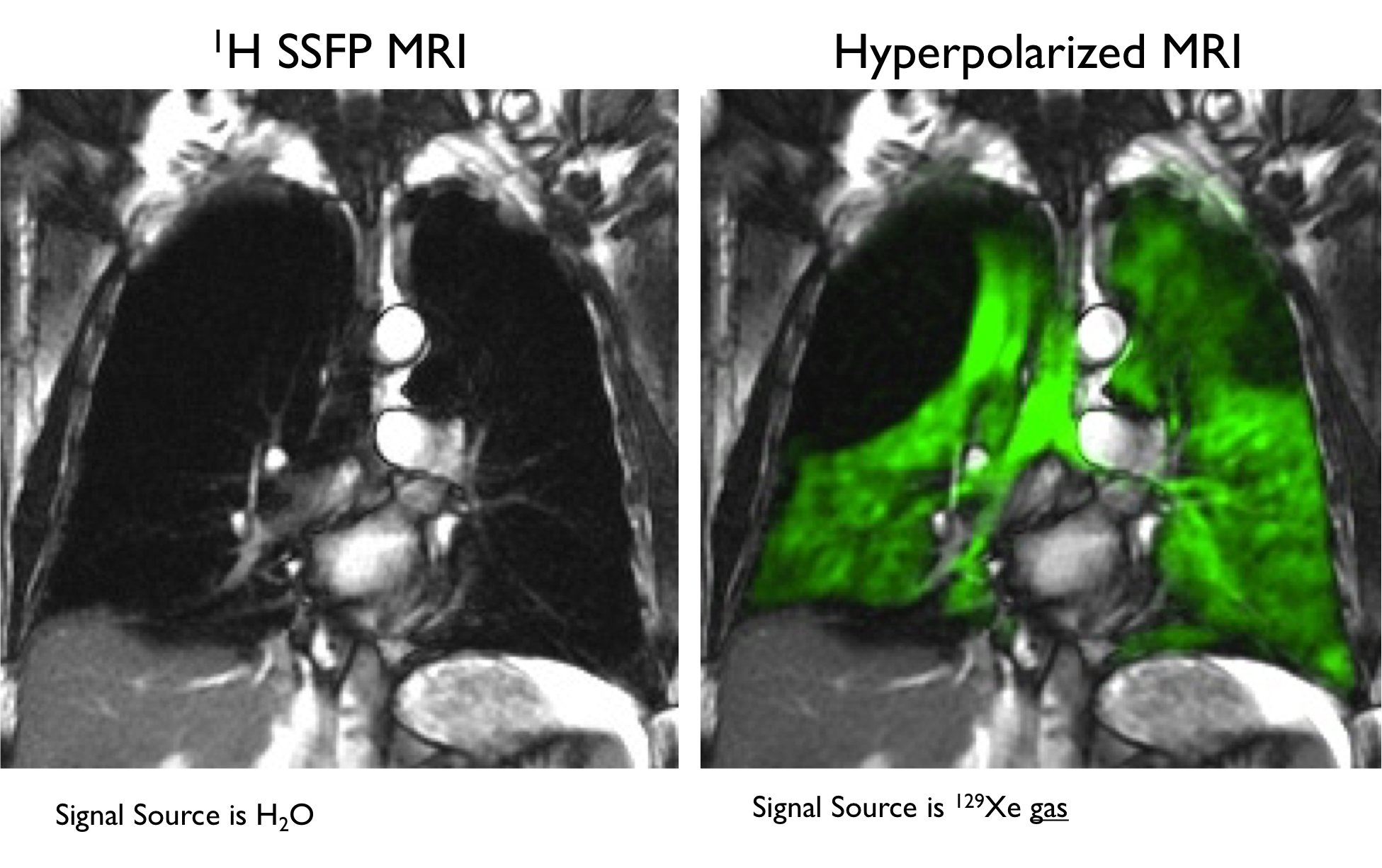
Bastiaan Driehuys is a Professor of Radiology and Professor of Biomedical Engineering at Duke University School of Medicine. His research focuses on developing hyperpolarized 129Xe gas MRI technology for imaging lung function in patients with pulmonary disease. His laboratory, supported by multiple NIH and industry-sponsored studies, is at the forefront of translating this technology from research to clinical application, with recent FDA approval for clinical use. Dr. Driehuys' research interests center on applying 129Xe MRI for early diagnosis and monitoring of interstitial and pulmonary vascular diseases. His work leverages the unique properties of hyperpolarized xenon gas, which enhances MRI signal by 100,000-fold, enabling high-resolution, non-invasive imaging of pulmonary function. His laboratory investigates ventilation defects, gas exchange abnormalities, and membrane transfer in various lung conditions including idiopathic pulmonary fibrosis, chronic obstructive pulmonary disease, asthma, and pulmonary hypertension. Analysis of Dr. Driehuys' recent publications (2024-2025) reveals a strong focus on standardizing 129Xe MRI techniques across multiple centers, establishing reference values in healthy populations, and applying these methods to track disease progression and treatment response in pulmonary conditions. His work increasingly emphasizes clinical translation, with studies on FDA-approved applications, multi-center validation, and integration with radiation therapy planning. Dr. Driehuys serves as Principal Investigator for several major studies including NIH R01HL126771-05 and NIH R01HL105643-06, which focus on optimizing 129Xe gas exchange MRI for visualizing regional therapy response in interstitial lung disease and imaging lung function in healthy volunteers and patients with pulmonary disease, respectively. His laboratory provides research opportunities for PhD, Masters, and medical students, as well as select undergraduate students. The Driehuys Lab collaborates closely with colleagues in pulmonary medicine and works within Duke's Center for Advanced Magnetic Resonance Development for clinical 129Xe MRI studies. The lab has developed numerous tools for image processing and reconstruction, contributing significantly to making 129Xe spectroscopy and imaging more practical for researchers worldwide.
Pei Zhong, Ph.D. is a Professor in the Thomas Lord Department of Mechanical Engineering and Materials Science at Duke University and also holds a professorship in Biomedical Engineering. As a Bass Fellow, Dr. Zhong leads a research group focused on engineering and technology development for medical applications, particularly in the areas of kidney stone treatment and cancer therapy. Dr. Zhong's educational background includes: M.Sc. from University of Texas Southwestern Medical Center, Medical School (1988) Ph.D. from University of Texas, Arlington (1992) Dr. Zhong's research focuses on engineering and technology development with applications in the non-invasive or minimally invasive treatment of kidney stone disease via shock wave and laser lithotripsy, high-intensity focused ultrasound (HIFU) and immunotherapy for cancer treatment, acoustic and optical cavitation, and ultrasound neuromodulation via sonogenetics. His laboratory takes an integrated and translational approach that combines fundamental research with engineering and applied technology development to devise novel and enabling ultrasonic, optical, and mechanical tools for a variety of clinical applications. They investigate shock wave/laser-fluid-bubble-solid interaction and resultant mechanical and thermal fields that lead to material damage and removal, as well as the stress response of biological cell and tissue induced by cavitation and ultrasound exposure, mediated through mechanosensitive ion channels such as Piezo 1. Dr. Zhong's recent publications demonstrate a strong focus on advancing laser lithotripsy techniques, particularly with Thulium fiber lasers, and exploring the mechanisms of stone fragmentation. His work also extends to ultrasound-based cancer immunotherapy, where he investigates how mechanical disruption of tumors combined with immune checkpoint blockade can modify the tumor microenvironment and enhance systemic antitumor immunity. His research spans multiple disciplines including biomedical engineering, urology, oncology, and physics. Dr. Zhong has received numerous prestigious awards and honors: Fellow of the Acoustical Society of America (2021) Fellow of the American Society of Mechanical Engineers (2011) MERIT Award from the National Institutes of Health (2010) Searle New Investigator Research Award from the American Foundation for Urological Disease (1994) Dr. Zhong has mentored numerous students and researchers in the field of biomedical engineering and urology. His research activities are primarily supported by the National Institutes of Health (NIH) and through collaborations with the medical device industry. He teaches several courses at Duke University including ME 592: Research Independent Study in Mechanical Engineering or Material Science, ME 555: Advanced Topics in Mechanical Engineering, and ME 336L: Fluid Mechanics.
Evgeny Timofeev is an Associate Professor in the Department of Mechanical Engineering at McGill University's Faculty of Engineering. His work focuses on computational gasdynamics, shock wave phenomena, and numerical modeling of high-speed compressible flows. With expertise in both fundamental and applied research, he contributes to aerospace propulsion, industrial safety, and biomedical applications. Ph.D., St. Petersburg State Technical University (Russia) M.Sc., Leningrad Polytechnical Institute (USSR) Timofeev's research centers on unsteady shock wave interactions, multi-fluid flow solvers, and viscous effects in supersonic flows. His methodologies combine advanced numerical schemes with practical applications in hypersonic air-breathing engines and industrial devices. Key themes include shock curvature analysis, blast wave simulations, and high-resolution computational frameworks. His publications reveal expertise in aerospace propulsion systems, axisymmetric shock wave behavior, and medical imaging applications. While no explicit awards are listed, his interdisciplinary work spans safety engineering, biomedical simulations, and computational fluid dynamics validation. Timofeev teaches advanced courses in thermodynamics, fluid mechanics, and computational gasdynamics.
Tor Nordam is an Associate Professor at the Norwegian University of Science and Technology (NTNU) , affiliated with the Faculty of Natural Sciences and the Department of Physics . While his primary employment is at SINTEF Ocean , he maintains a secondary academic role at NTNU for supervision, research, and occasional teaching. His expertise spans numerical methods for oceanic pollutant transport , Monte Carlo risk assessment , and light scattering from rough surfaces. Education : PhD in Physics from NTNU, focusing on numerical light scattering simulations Teaching : Courses like Advanced Theoretical Physics - Transport modelling with Stochastic Differential Equations and Computational Physics His research emphasizes Lagrangian particle methods , advection-diffusion problems , and environmental applications such as oil spill modeling , microplastics , and climate intervention materials . Recent work includes Bayesian backtracking for ocean drift and AI-driven ocean robotics . The 2025 articles highlight advancements in oceanographic modeling and climate intervention technologies , while 2023-2020 publications address Arctic oil spill dynamics , produced water transport , and biodegradation kinetics . Collaborations with institutions like University of Edinburgh and University of Oslo demonstrate interdisciplinary engagement.
Julie Biteen is an Associate Professor of Chemistry and Biophysics at the University of Michigan, holding the Janine Maddock Collegiate Professorship. She leads the Biteen Lab, which focuses on developing and applying single-molecule fluorescence imaging techniques to address fundamental questions in microbial cell biology and plasmonics. Her educational background includes an M.S. in Applied Physics (2003) and a PhD in Chemistry (2006). The Biteen Lab operates at the intersection of chemistry, biophysics, and microbiology, with research spanning three integrated thrusts: microbial cell biology with single-molecule imaging, new method development for single-molecule imaging, and light-matter interactions in plasmon-coupled fluorescence systems. Her recent publications (2023-2024) demonstrate significant contributions to understanding biomolecular condensates in bacteria, chiral molecule detection using plasmonics, DNA methylation dynamics, and advanced single-molecule tracking methodologies. The lab has developed innovative tools like NOBIAS for analyzing anomalous diffusion in single-molecule tracks. The Biteen Lab is recognized for its commitment to inclusive scientific practices and has produced numerous publications in high-impact journals including Nature Communications, PNAS, Nucleic Acids Research, and Journal of Physical Chemistry Letters. Professor Biteen actively mentors a diverse group of students and postdocs, emphasizing collaborative research, scientific integrity, and professional development. Her lab environment prioritizes safety, respect, and the development of scientists who can work across traditional disciplinary boundaries.