Xiaoyang ZengView profile
Professor
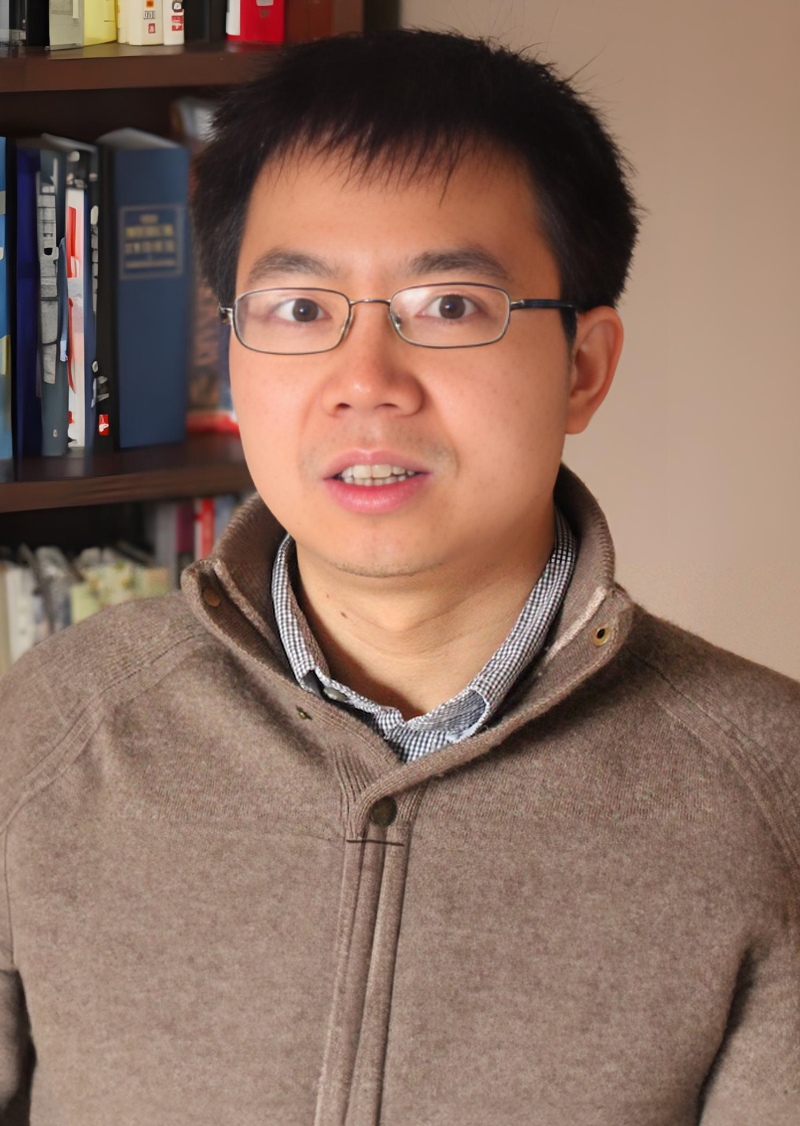
Xiaoyang Zeng is a Professor at Tsinghua University's School of Information Science and Technology, Institute of Microelectronics, with an extensive research portfolio in VLSI design, integrated circuits, and hardware acceleration systems. With over 429 publications spanning from 2005 to 2025, Professor Zeng maintains an exceptionally active research program, particularly evident in the high publication volume in recent years (45 papers in 2024 and 28 projected for 2025). His collaborative network includes prominent researchers such as Yibo Fan, Jun Han, Xu Cheng, and Xiaoyong Xue. Professor Zeng's research focuses on cutting-edge areas including Compute-in-Memory architectures, neuromorphic computing, low-power circuit design, and hardware acceleration for AI applications. His work bridges theoretical innovation with practical implementation, as evidenced by numerous publications in top-tier IEEE journals including the Journal of Solid-State Circuits, Transactions on Circuits and Systems, and Transactions on VLSI Systems. Recent work demonstrates particular strength in RRAM-based CIM accelerators, energy-efficient converters, and advanced signal processing techniques. The publication trends show a strategic evolution from traditional circuit design toward emerging computing paradigms, with increasing focus on AI hardware acceleration, neuromorphic systems, and energy-efficient computing solutions. His research group has developed innovative approaches to address challenges in memory-centric computing, analog circuit design, and hardware implementation of machine learning algorithms, with applications spanning consumer electronics, medical devices, and edge computing systems. Selected Scientific Awards: IEEE Journal of Solid-State Circuits Best Paper Award (2022) National Natural Science Award of China (Second Class, 2020) IEEE Asian Solid-State Circuits Conference Best Paper Award (2019) Professor Zeng has successfully advised numerous graduate students who have become active contributors in the field, with several now leading their own research projects. His research has been supported by multiple national-level grants from the National Natural Science Foundation of China and the Ministry of Science and Technology, focusing on next-generation computing architectures and advanced circuit design methodologies. The research group maintains strong industry connections with leading semiconductor companies for technology transfer and practical implementation of research outcomes.