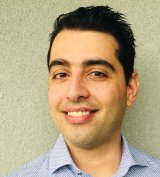
Seyed Alireza Tabatabaei Mashayekh is a researcher at the Institute of Integrated Photonics at RWTH Aachen University. His work focuses on photonic integrated circuits (PICs) and their applications in biomedical and quantum technologies. Research Interests : Biomedical Optics Integrated Optics Quantum Photonics Optical Communication Signal Processing Publications : His recent works cover STED microscopy, flow cytometry, soliton-based communication, and silicon photonics. Key subfields include biomedical imaging, laser engineering, and integrated circuit design. Advising : He served as a consultant for Arka Dipta Das's master's thesis on photonic integrated circuit control systems.
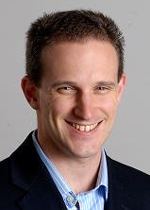
Vincenzo Nava is an Associate Professor at the Polytechnic University of Turin , affiliated with the Department of Environmental, Land and Infrastructure Engineering (DIATI). His work focuses on coastal engineering , floating offshore wind , and ocean wave dynamics. Coastal engineering Offshore renewable energy Structural health monitoring Teaching roles include: Course Instructor for Coastal Engineering (2025/26) in Environmental and Land Management Engineering Lecturer in Technical Hydraulics for Building Engineering Recent research explores machine learning applications for concrete strength estimation, variational deep learning for offshore damage detection, and Bayesian optimization in mooring systems. Publications span journals like Wind Energy Science , Ocean Engineering , and Renewable Energy . Scientific recognition includes: Open badge for public science communication (2025) Collaborations include researchers from marine energy projects, with expertise in CFD simulations , neural networks , and mooring optimization .
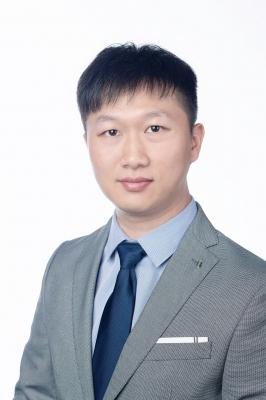
Tufan Coşkun Karalar is an Associate Professor in the Department of Electronics and Communication Engineering at Istanbul Technical University (ITU), College of Engineering. His research spans integrated circuits, analog-to-digital converters, wireless sensor networks, and energy-efficient electronic systems. He is actively involved in advanced IC design projects for applications in biomedical implants, green energy, and automotive communications. Research Interests: Integrated and analog circuit design High-speed data converters (ADCs) In-memory computing architectures RF front-end and V2X communication circuits Low-power and energy-efficient sensor networks Hall effect and current sensing technologies His recent publications focus on SRAM-based in-memory computing energy models, high-speed pipelined ADCs, and RF front-end modules for vehicle-to-everything (V2X) systems. These works reflect a strong trend toward energy efficiency, high performance, and application-specific circuit design in modern electronics. Scientific Awards: ELECO 2019 Best Student Publication Award Dr. Karalar has served as Principal Investigator (PI) on multiple research projects funded by TUBITAK and TTO, including studies on ASIC design, micro-implant power control ICs, high-speed ADCs, and improved Hall effect sensors. He is currently supervising 24 theses, indicating an active role in mentoring graduate students. His work involves close collaboration with industry and academic partners in Turkey and internationally. Labs and Research Teams: While specific lab names are not mentioned, his project leadership and publication record suggest he leads a research group focused on analog and mixed-signal integrated circuit design within the Department of Electronics and Communication Engineering at ITU.
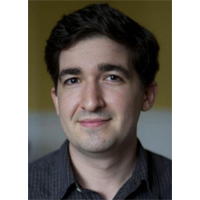
Henrik Andersen is a researcher at the Institute of Mechanical and Electrical Engineering , University of Southern Denmark, specializing in battery systems , photovoltaics , and power electronics . His work bridges artificial intelligence and energy storage , with a focus on second-life batteries, smart battery management, and renewable energy integration. Key Projects : Universal Battery Power Storage (EUDP), AIBMS Eurostars, Smart Power Conversion (Interreg 6A), Battery Lab Collaborations : Active partnerships with Danish PV plants, Electromobility consortia, and EU-funded initiatives His research emphasizes economic optimization of energy systems and machine learning for battery diagnostics, as seen in his 2023-2025 publications. Media coverage highlights his work on repurposing batteries from the world's longest-sailing electric ferry, Ellen.
Dr. George Lavidas serves as Professor of Marine Renewable Energies at Delft University of Technology's Faculty of Civil Engineering and Geosciences, specializing in Offshore Engineering. His research directly advances UN Sustainable Development Goals through ocean energy innovation, with expertise spanning wave, tidal, and offshore wind technologies. Education: Doctor of Philosophy (PhD) in Civil Engineering, The University of Edinburgh (2012-2016, awarded November 2016) Research Focus: Dr. Lavidas pioneers marine renewable energy systems with emphasis on wave energy converter optimization , resource assessment , and techno-economic viability . His work integrates high-fidelity numerical modeling with real-world deployment challenges , addressing critical gaps in climate-resilient energy infrastructure. Key contributions include developing open-source tools like HAMS-MREL and creating high-resolution wave databases for European waters. Publication Trends: His 2025 publications reveal a decisive shift toward integrated offshore energy systems , combining wave and wind resources through advanced array optimization and environmental impact modeling. Research emphasizes practical scalability via data-driven approaches like polynomial chaos expansion and spectral-domain wave-to-wire modeling, with increasing focus on Dutch coastal applications and hybrid energy parks. Scientific Recognition: Dutch-WATERS (2022): Advanced wave/tidal energy resource modeling EU-SCORES (2021): Scalable offshore renewable energy integration VALID (2020): Accelerated wave energy design verification WAVREP (2018): Wave energy resource assessment WECHULL+ (2023): Sustainable offshore renewable concrete technologies Academic Leadership: As editor for Journal of Marine Science and Engineering (2025-2028) and Applied Ocean Research (2025-2026), he shapes scholarly discourse while leading the TU Delft Wind Energy Institute (DUWIND). His grant portfolio includes EU-SCORES and Dutch-WATERS projects securing multi-million euro funding for marine energy transition. Research Infrastructure: He co-develops the Marine Renewable Energies Lab (MREL) open-source ecosystem, including the North Sea Wave Database and ECHOWAVE Hindcast. His international collaborations span 7 countries through VALID and EU-SCORES consortia, with media engagement driving public understanding of blue energy potential.
Dr. Ahmet Tekin is an Assistant Professor at the Department of Electrical and Electronics Engineering, Boğaziçi University. His research focuses on analog/mixed-signal/RF/microwave VLSI design, with emphasis on biomedical electronics, wireless communication systems, and integrated circuit innovation. He specializes in developing advanced sensor technologies, antenna arrays, and energy-efficient RF systems for healthcare, IoT, and aerospace applications. Key research areas include continuous glucose monitoring devices, optoelectronic blood pressure sensors, phased array transmitters for satellite communication, and resonance-based wireless charging systems. His work integrates cutting-edge semiconductor technologies like 22nm FDSOI and SOI CMOS with innovative circuit architectures. Dr. Tekin's recent publications highlight advancements in ultra-wideband antennas, adaptive sampling techniques, and biomedical IoT communication protocols. His research bridges electronics engineering with practical applications in healthcare, robotics, and renewable energy systems. Though no awards are explicitly mentioned, his prolific output in high-impact journals underscores his contributions to the field. He advises on interdisciplinary projects at the intersection of electronics and biomedical engineering, with a focus on wearable technologies and smart medical devices. His lab collaborates on energy harvesting systems and low-power biomedical sensors, reflecting a commitment to both foundational research and real-world solutions.
Elad Alon is a Professor of Electrical Engineering and Computer Sciences at the University of California, Berkeley, and co-director of the Berkeley Wireless Research Center (BWRC). He joined UC Berkeley in 2007 and has held visiting/consulting roles at companies like Intel, AMD, and IBM Research. His research focuses on energy-efficient integrated systems, including circuit design, communication techniques, and optimization for computing and communications. Alon holds a Ph.D. (2006), M.S. (2002), and B.S. (2001) in Electrical Engineering from Stanford University. Education: Ph.D., Electrical Engineering, Stanford University, 2006 M.S., Electrical Engineering, Stanford University, 2002 B.S., Electrical Engineering, Stanford University, 2001 Research Interests: Alon's work spans energy-efficient integrated circuits, wireless communication systems, and neural engineering. His research emphasizes: Ultra-low-power digital logic using MEMS relays High-speed analog-to-digital converters (ADCs) Wireless implantable devices (e.g., neural dust) Phased-array transceivers and massive MIMO systems Power management and voltage regulation techniques Recent Article Trends: His recent publications focus on: Neural Dust: Wireless neural recording in peripheral nervous systems via ultrasonic communication RF Transceivers: Low-power 60 GHz phased arrays and D-band MIMO systems MEMS Circuits: Capacitive-gap oscillators and relay-based logic Processor Design: RISC-V vector processors and energy-efficient SoCs Awards: IEEE Fellow (2019) ISSCC Jack Raper Award (2010) Multiple Best Paper Awards (ISSCC, CICC, VLSI Circuits) UC Berkeley Outstanding Teaching Award (2010, 2017) Advising & Labs: Alon has advised over 20 Ph.D. students, many focusing on: Neural engineering interfaces RF/mm-wave transceivers Energy-efficient ADCs Massive MIMO architectures He leads the BWRC and collaborates with the Center for Neural Engineering & Prostheses (CNEP), advancing projects like the Human Intranet and OMNI neuromodulation systems.
Claudio Talarico is a Professor in the Department of Electrical and Computer Engineering at Gonzaga University's School of Engineering & Applied Science. He holds a Ph.D. in Electrical Engineering from the University of Hawaii and an M.S. from the University of Genoa, Italy. With industry experience at Infineon Technologies, IKOS Systems, and Marconi Communications, his expertise spans VLSI design, embedded systems, and hardware/software co-design. His research focuses on: Low-power/high-performance VLSI circuits Embedded system-on-chip design Computer-aided design methodologies Wireless communication systems Hardware/software co-design Recent publications (2020-2024) demonstrate strong emphasis on: Beam steering architectures for 5G/wireless systems Angle-of-arrival estimation techniques Time synchronization in body area networks Health monitoring platforms FPGA/digital implementations He teaches core courses including VLSI Circuits & Systems, Computer Hardware Design, and Digital Systems. No awards or current students are documented in available materials.
Shaolan Li is an Assistant Professor at the Georgia Institute of Technology's College of Engineering, Department of Electrical and Computer Engineering. He specializes in analog, mixed-signal, and RF integrated circuits with applications in sensors, bioelectronics, and miniature medical imaging systems. B.Eng. (Highest Honor), Hong Kong University of Science and Technology (HKUST), 2012 Ph.D., University of Texas at Austin, 2018 Postdoctoral Fellow, UT Austin Department of Electrical and Computer Engineering, 2018-2019 His research focuses on high-performance data converters , ultra-low-power sensor interfaces , integrated medical imaging systems , and analog design automation . Recent publications emphasize advancements in noise-shaping ADCs, compute-in-memory architectures, and medical imaging SoC integration. Selected awards include: NSF CAREER Award (2023) NIH Trailblazer Award (2023) IEEE Solid-State Circuit Society Predoctoral Award (2018) HKUST Academic Achievement Medal (2012)
Jacob Karl Rosenstein is an Associate Professor of Engineering at Brown University , specializing in mixed-signal electronic design and bioelectronics . His research focuses on developing high-resolution, low-power interfaces to biological systems using integrated circuits and materials. Education : PhD (2012), MS (2009) in Electrical Engineering from Columbia University; ScB (2005) from Brown University. Research Interests : Bioelectronics, biosensor arrays, nanopore technology, electrochemical imaging, and molecular computation. Teaching : Courses include Digital Computing Systems (ENGN 0500), Electrical Circuits and Signals (ENGN 0520), Mixed-Signal Electronic Design (ENGN 2912K), and Topics in Bioelectronics (ENGN 2912L). Scientific Contributions include advancements in CMOS-integrated nanopore sensors, high-speed bioelectronic interfaces, and electrochemical imaging systems. His recent work involves machine olfaction, capacitance tomography, and ultrafast thermal cameras. Awards : Best Paper Award at BioCAS 2021, Best Paper Nomination at ISCAS 2025, Halpin Capstone Prize 2023. Students advised include Kangping Hu (PhD 2022), Steven (PhD candidate), Manar Incandela (extended paper 2024), and Yutong (Master’s thesis 2024). The Rosenstein Laboratory for Embedded Bioelectronics fosters interdisciplinary research between electronic systems and biological applications.
Morten Nymand is a Professor at the Institute of Mechanical and Electrical Engineering, University of Southern Denmark (SDU), with dual affiliation to the Centre for Industrial Electronics. His research focuses on advanced power electronics, including wide bandgap semiconductor devices (GaN/SiC), high-frequency converters, and energy-efficient systems for renewable energy applications. Key affiliations: SDU, Centre for Industrial Electronics Academic focus: Power electronics, converter design, GaN/SiC devices Projects: HPC (Ultra-High Efficiency DC-DC Converters), PtXKonvertering (Power-to-X conversion) Nymand’s work emphasizes minimizing power losses, optimizing converter topologies (e.g., ANPC, NPC), and developing novel magnetic components (planar transformers/inductors). He has contributed to EMI noise reduction, predictive control algorithms, and photovoltaic system analysis. His publications highlight collaborations across Europe and applications in grid-connected systems, battery charging, and industrial electronics. Recent research trends include hybrid converter topologies, ultra-high efficiency (>99%), and high temporal resolution weather data platforms for renewable energy storage. He has supervised students like Amin Kouchaki in EMI studies and converter design projects. Scientific activities include organizing the 13th IEEE CPE-POWERENG conference (2019) and participation in EUDP-funded projects (2022–2023). His lab work centers on FPGA-based control platforms, digital modulation techniques, and compact converter prototypes.
Dr. Forest Zhu is a Senior Lecturer at the University of Technology Sydney (UTS), School of Electrical and Data Engineering. His research focuses on microelectronics, RF integrated circuits, and power amplifiers for wireless communication and radar systems. He holds an ARC DECRA Fellowship (2016) and an ARC Future Fellowship (2023) and was recognized as Australia’s top researcher in Microelectronics (2022-2023). Education: B.Eng. and Ph.D. in Electronic Engineering (University of Hertfordshire, UK, 2005-2008) Postdoctoral roles at Aberystwyth University (2008-2009) and Macquarie University (2011-2016) Research: Specializes in analog/mixed-signal IC design, RF front-end circuits, and energy harvesting. Key contributions include low-power voltage references, mm-wave filters, and high-efficiency power amplifiers. His work spans 65nm to 45nm SOI CMOS technologies and has led to over 150 publications. Awards: ARC DECRA Fellowship (2016) ARC Future Fellowship (2023) Australia’s Top Microelectronics Researcher (2022-2023) Grants & Funding: Secured $3M+ from ARC and industry, including grants for GaN amplifiers, 5G/6G systems, and cryogenic characterization facilities. Notable projects include 'Digitally Assisted Power Amplifier Design' (2025-2027) and 'Space-Qualified Gallium Nitride Amplifiers' (2022-2023). Labs & Leadership: Member of UTS’s Global Big Data Technologies Centre. Editorial roles include Senior Associate Editor for IEEE Transactions on Circuits and Systems I, and Guest Editor for JETCAS (2024).
Dr. Jin Liu is a Professor in the Department of Electrical & Computer Engineering at the University of Texas at Dallas, affiliated with the Erik Jonsson School of Engineering and Computer Science. She joined UT Dallas as an Assistant Professor in 1999, advancing to Associate Professor in 2005 and full Professor in 2012. Her educational background includes: B.S. in Electronics and Information Systems from Zhongshan University (1992) M.S. in Electrical and Computer Engineering from University of Houston (1995) Ph.D. in Electrical and Computer Engineering from Georgia Institute of Technology (1999) Dr. Liu's research focuses on analog integrated circuits and systems for high-speed communications and biomedical applications. Key areas include: High-performance ADCs for communication systems Energy harvesting techniques for IoT devices Low-power IC design for biomedical implants RF/wireless circuit architectures including MIMO and 5G technologies Her work emphasizes efficiency optimization, metastability mitigation in converters, and novel clock generation techniques for millimeter-wave applications. Recent publications demonstrate a consistent focus on high-speed data conversion (ADCs), power management ICs, and RF systems. Trends include: Advanced calibration techniques for analog-to-digital converters Time-interleaved and flash ADC architectures Millimeter-wave clock generators for 5G applications Low-power solutions for IoT and biomedical devices Her research spans from fundamental circuit design to system-level optimization in communication and energy harvesting domains.
Mario Garcia Valderas is an Associate Professor at the Department of Electronic Technology, Universidad Carlos III de Madrid. He holds roles as Coordinator of the Electronic Technology program and Deputy Director of Infrastructure and Laboratories. His research focuses on radiation-hardened systems, fault-tolerant architectures, and embedded systems for aerospace and space applications. His work emphasizes reliability in microelectronics and FPGA-based solutions, addressing challenges like single-event effects in space and high-reliability computing. Key areas include RISC-V processors, heterogeneous computing, and hardware-software co-design for planetary exploration instruments. Publications highlight advancements in radiation-hardening techniques, error detection/recovery architectures, and fault-injection methodologies. Over 100 peer-reviewed articles and book chapters evidence his contributions to microelectronics and embedded systems reliability. He leads the Microelectronic Design and Applications (DMA) research group and collaborates with institutions like CNA for combined irradiation testing. His research spans from theoretical design hardening to practical implementations in aerospace-grade electronics.
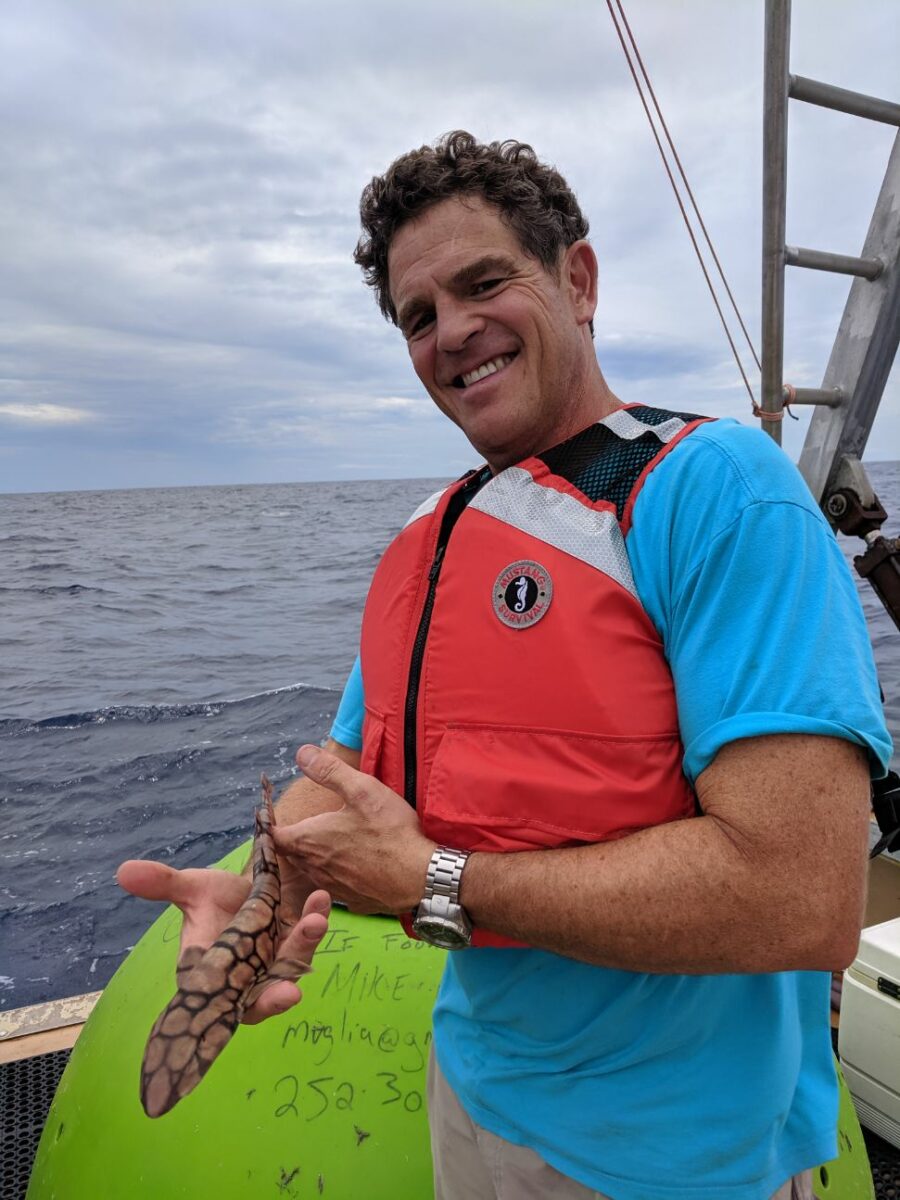
Mike Muglia is a faculty member at East Carolina University (ECU) serving as an Associate Professor in the Department of Coastal Studies and Assistant Director for Science & Research in the North Carolina Renewable Ocean Energy Program. Based at the Coastal Studies Institute (CSI), he leads Gulf Stream hydrokinetic energy assessments and manages oceanographic observing systems like HF radars and CODAR. His work bridges academic research with industry partnerships (e.g., Weatherflow, Surflink) and government agencies (USACE, NOAA, US Coast Guard). Ph.D., Marine Science, University of North Carolina-Chapel Hill (2019) M.S., Physics, University of North Carolina-Chapel Hill (2002) B.S., Physics, University of North Carolina-Wilmington (2000) B.S., Biology (Marine Science), University of Miami (1996) His research focuses on Gulf Stream variability in position, transport, and orientation, analyzing its interactions with regional water masses (Mid-Atlantic Bight, South Atlantic Bight, Slope Sea) using HF radars and ocean circulation models. He integrates oceanographic data into renewable energy solutions, collaborating on prototypes like ocean kites and towed turbines for hydrokinetic energy harvesting. Recent publications highlight advances in radar-based current monitoring, wake interaction modeling, and Gulf Stream resource characterization. Mike operates a Coastal Ocean Radar (CODAR) at the Army Corps of Engineers Field Research Facility in Duck, NC, and contributes to infrastructure development at Jennette's Pier test center. He holds certifications as a NAUI divemaster, PADI/AAUS diver, and US Coast Guard OUPV Captain, supporting fieldwork and safety protocols.