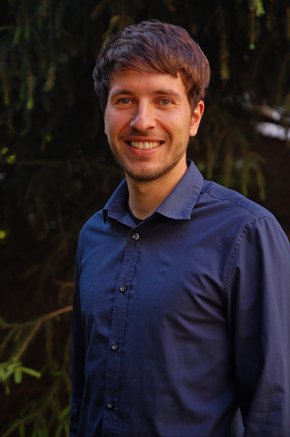
Dr. Praveen Kumar Rai is a Researcher at the Institute of Geography and Geology , University of Würzburg, focusing on climatology and environmental systems. He is based in the Climatology Working Group - Team Climate at Hubland Campus, Room 209, and holds an ORCID (0000-0001-8348-1150). His research spans monsoon meteorology, land-atmosphere interactions, ocean dynamics, and tropical climate variability, with particular emphasis on weather and climate extremes. Academic Background PhD in Environmental Sciences (2014–present), School of Environmental Sciences, Jawaharlal Nehru University (JNU), New Delhi, supervised by Prof. A. P. Dimri M.Sc. in Environmental Science (2014), JNU B.Sc. (Honours) in Chemistry (2009–2012), Banaras Hindu University Research Projects MOSAIC : Investigates irrigation impacts on South Asian hydrological cycles and monsoon dynamics using high-resolution (12 km) and convection-resolving (3 km) simulations with REMO model WE-ACT : Supports equitable transboundary water allocation through climate risk-aware planning BigData@Geo 2.0 : Enhances climate resilience for Bavarian agricultural SMEs (2023–2027, EFRE-funded) HYDRASIA (2019–2022): Analyzed Central Asian hydrology with novel irrigation and lake schemes in regional climate models Publication Trends show consistent contributions to understanding monsoon systems across South/Central Asia, with methodological advances in regional climate modeling, vegetation interaction analysis, and extreme event projections using CORDEX/RCM frameworks. Technical Expertise includes Google Earth Engine, REMO/REMO-iMOVE/RegCM4 modeling systems, EEMD-based time series analysis, and climate anomaly diagnostics. Active in international conferences like EGU General Assembly and ICRC-CORDEX.
Dr. Moritz Mathis is a Researcher at the Helmholtz-Zentrum Hereon, Institute of Coastal Systems in Geesthacht, Germany. His work focuses on global and regional ocean modeling, marine carbon cycling, and Earth system science. Key Projects: CLICCS (Climate, Climatic Change and Society), APOC (Anthropogenic impacts on particulate organic carbon cycling in the North Sea), RACE (Regional Atlantic Circulation and Global Change), ECODRIVE (Ecosystem Change in the North Sea). He specializes in coastal biogeochemistry, particularly the carbon cycle in shelf and marginal seas, ocean-atmosphere CO 2 fluxes, and exchange processes between shelf seas and the open ocean. His research integrates high-resolution modeling (e.g., ICON-Coast) with temperature-dependent remineralization, sediment resuspension, and tidal current dynamics to improve climate projections. Recent Publication: A 2022 study introducing ICON-Coast, a global ocean-biogeochemistry model with telescoping high resolution in coastal zones. This work addresses uncertainties in coastal carbon dynamics by incorporating shelf-specific processes like sediment resuspension and variable sinking particle speeds. Collaborations: Works with Max-Planck-Institute for Meteorology (Hamburg), Max-Planck-Institute for Biogeochemistry (Jena), and University of Hamburg's Institute of Oceanography.
Liane G. Benning is a distinguished researcher specializing in biogeochemical processes on the Greenland Ice Sheet. Her work focuses on the interplay between microbial communities, mineral dust, and climate change in driving ice albedo reduction and subsequent melt dynamics. She has co-authored numerous high-impact studies on cryospheric systems using field observations, remote sensing, and genomic analyses. Key Research Areas: Biological and abiotic controls on ice albedo Mechanisms of nutrient cycling in extreme environments Microbial community composition and biosynthetic potential Remote sensing validation for cryospheric monitoring Article Trends: Her recent publications analyze the formation of dark ice zones, orbital drift impacts on satellite data, and the role of organic ligands in mineral transformation. These studies often integrate multi-disciplinary approaches, including metagenomics, hyperspectral imaging, and climate modeling. Notable Collaborations: Shunan Feng Joseph Mitchell Cook Alexandre Magno Anesio Martyn Tranter
Professor Dirk J. Lehmann is a Professor of Data Science in IoT at Ostfalia University of Applied Sciences, Faculty of Computer Science, where he has been employed since May 2022. He holds significant leadership roles including Deputy Head of the Institute for Information Engineering (since 2024), Research Officer of the Faculty of Computer Science (since 2023), and membership in multiple committees including the Admissions Committee for Digital Technologies and the Digital Technologies Examination Board. Professor Lehmann's extensive academic journey includes: Part-time professorship in Data Science in IoT at Ostfalia University (2020-2022) Senior Specialist for Digitalization, AI, and Visual Analysis at IAV GmbH (2018-2023) Assistant Professor of Visual Data Analysis at Nazarbayev University, Kazakhstan (2017) Visiting professorships at TU Graz, Austria and Universidad Rey Juan Carlos, Spain (2016-2017) Researcher at Otto-von-Guericke University Magdeburg (2009-2017) His research expertise centers on Visual Analytics and Data Science, with particular emphasis on high-dimensional data visualization, categorical data analysis, and IoT applications. Professor Lehmann leads the Data Science in IoT working group, conducting research across three main areas: visual data analysis, distributed data analysis using AI methods, and applied data analysis in geology, climate data, medicine, and industrial processes. His methodological contributions include innovative visualization techniques for complex datasets across multiple domains. Analysis of Professor Lehmann's 15 most recent publications (2017-2025) reveals a consistent focus on advancing visualization techniques for complex data analysis. His work spans categorical data visualization (CatNetVis), biological data analysis (D. Melanogaster research), optimization of star coordinate systems, and interactive exploration methods for large datasets. These publications appear in top venues including IEEE Transactions on Visualization and Computer Graphics and EuroVis, demonstrating both theoretical rigor and practical application across diverse domains from healthcare to environmental science. As an educator, Professor Lehmann teaches a comprehensive range of courses from foundational mathematics to advanced machine learning and visualization techniques. He actively supervises student projects and theses, emphasizing clear project definitions with measurable acceptance criteria. His international collaborations span institutions in Israel, Saudi Arabia, China, Austria, and Spain, reflecting a global research perspective that bridges academic theory with industry applications, particularly through his previous role at IAV GmbH, a Volkswagen subsidiary.
Dr. Thorsten Zirwes serves as Deputy Head of Institute at the Institute for Reactive Currents (IRST) at the University of Stuttgart, where he leads research in combustion engineering and reactive flows. With a strong background in chemical engineering from Karlsruhe Institute of Technology (KIT), where he completed his B.Sc., M.Sc., and PhD, Dr. Zirwes has established himself as a leading researcher in computational combustion. Deputy Head of Institute, Institute for Reactive Currents, University of Stuttgart (2023-present) DAAD PRIME Fellow & Visiting Postdoctoral Scholar, Stanford University (2022) PhD in Chemical Engineering and Process Engineering, Karlsruhe Institute of Technology (2016-2021) Dr. Zirwes' research focuses on advancing computational methods for understanding and modeling complex combustion processes, with particular emphasis on carbon-free fuels like hydrogen and ammonia. His work spans fundamental flame dynamics, turbulent combustion, and the development of efficient numerical algorithms for high-performance computing environments. He has made significant contributions to the understanding of thermodiffusion effects, flame instabilities, and porous media combustion for clean energy applications. His extensive publication record shows a clear trend toward sustainable energy solutions, with increasing focus on hydrogen and ammonia combustion as carbon-free alternatives. The research spans fundamental fluid dynamics, practical combustion applications, and computational method development, demonstrating both theoretical depth and practical relevance to energy transition challenges. Jürgen Warnatz Prize (German Section Combustion Institute, 2023) Distinguished Paper Award from the Combustion Institute (2023) Bernard-Lewis Fellowship of the Combustion Institute (2022) Most downloaded author of the Springer Journal FTaC (2022) Doctorate at KIT with summa cum laude (2021) Dr. Zirwes actively supervises research projects and collaborates with both academic and industrial partners. His group develops and maintains the EBI-DNS solver, an OpenFOAM extension for direct numerical simulation of combustion processes. Current research emphasizes carbon-free combustion technologies crucial for achieving climate goals, with strong connections to industry partners working on sustainable energy solutions. His research group maintains strong connections with international institutions, including Stanford University, and participates in major collaborative projects focused on advancing clean combustion technologies. The team combines expertise in fluid dynamics, numerical methods, and high-performance computing to tackle challenging problems in sustainable energy.
Stephan Pfahl is a Professor of Weather and Climate Processes at the Institute of Meteorology within the Department of Geosciences at the Free University of Berlin. Appointed in April 2018, he leads research on atmospheric dynamics with a focus on extreme weather events, atmospheric water cycle processes, and numerical modeling of weather and climate systems. Prior to his current position, he served as a Senior Scientist and Lecturer at ETH Zurich from 2012 to 2018, following postdoctoral work at the same institution. His research interests span atmospheric dynamics, extreme weather events, atmospheric water cycle processes, numerical modeling of weather and climate, stable water isotopes, and Lagrangian analysis techniques. Pfahl's work bridges theoretical atmospheric science with practical climate modeling applications, particularly in understanding the mechanisms behind extreme weather phenomena in Europe and globally. His research employs both observational data analysis and sophisticated numerical modeling approaches to investigate complex atmospheric processes. Analysis of his recent publications (2022-2025) reveals a strong focus on extreme precipitation events, atmospheric blocking patterns, Lagrangian analysis techniques, and the application of water isotopes to understand moisture transport. His work frequently examines the connections between large-scale atmospheric circulation patterns and localized extreme weather events, with particular attention to European weather systems. The publications demonstrate an interdisciplinary approach combining meteorology, climate science, and advanced computational methods. Pfahl has been actively involved in teaching at the university level, offering courses including Weather and Environmental Models (M.Sc.), Physical Climatology (B.Sc.), Dynamics of the Atmosphere I (B.Sc.), Climate Variability and Models (M.Sc.), and Atmospheric Water Cycle (M.Sc.). His educational background includes a Diploma in Physics from the University of Göttingen (2000-2005) and a PhD from the Institute for Atmospheric Physics at the University of Mainz (2006-2009).
Dr. Paul Magdon is a Professor of Geoinformation and Forest Planning at the Faculty of Resource Management, HAWK University of Applied Sciences and Arts (HAWK) in Göttingen, Germany. He specializes in geospatial data management, remote sensing applications for forestry, and spatial data infrastructure development. His core research focuses on: Advanced remote sensing techniques (LiDAR, radar, multispectral) Forest inventory methodologies and carbon monitoring Geospatial web platforms and data infrastructure Biodiversity assessment through landscape metrics 3D forest modeling and structural analysis Recent publications demonstrate strong emphasis on: Machine learning applications in tree crown detection Multi-temporal analysis of forest dynamics Integration of airborne/satellite data with ecological studies Development of open-source geospatial tools Cross-scale biodiversity pattern analysis He leads significant research projects including a BMVI-funded initiative on climate-adapted tree species distribution modeling and coordinates spatial data for the CRC 990 ecological research program. He teaches courses on remote sensing image processing, forest inventory, and drone applications at the University of Göttingen. As part of the ForestEye research group and UAV Campus initiative, he develops operational tools like the EFForTS-WebGIS platform for spatial data analysis in tropical rainforest research.
Richard Bintanja serves as a Climate Research Scientist at the Royal Netherlands Meteorological Institute (KNMI) and holds an Honorary Professorship in Climate and Environmental Change at the University of Groningen since 2017. His expertise spans polar climate dynamics, with emphasis on modeling Arctic change and its global teleconnections using advanced climate systems like EC-Earth. His academic foundation includes: Meteorology and Physical Oceanography degree from Utrecht University (1990) PhD in Antarctic meteorology and climatology from Utrecht University (1995) Research focuses on Arctic hydrological shifts, ice-sheet evolution over million-year timescales, and climate-carbon cycle feedbacks. Major projects include QUASI (2010-2016) quantifying Arctic variability, CLIMARC (2014-2018) analyzing midlatitude weather impacts, HiWAVES3 (2016-2020) assessing crop-yield effects from heatwaves, and PRIMAVERA (2016-2020) deploying high-resolution models for Arctic climate response. Accolades feature the PULS scholarship (NWO-VENI predecessor) in 1999 and approximately 100 publications, including eight in Nature . He currently co-supervises master's students, PhD candidates, and postdocs while serving as Editor-in-Chief of Meteorologica . His work integrates closely with the EC-Earth Earth System Model—a collaborative framework involving 30 institutes across 12 European nations for CMIP6/C4MIP climate assessments.
Lai-yung Ruby Leung is a Battelle Fellow at Pacific Northwest National Laboratory (PNNL) working in Earth Systems Analysis & Modeling. She serves as Chief Scientist of the Energy Exascale Earth System Model (E3SM) supported by the U.S. Department of Energy, leading major efforts to develop state-of-the-art capabilities for modeling human-Earth system processes on high-performance computers. Dr. Leung's research broadly spans climate and hydrological cycle modeling with expertise in land-atmosphere interactions, orographic processes, monsoon climate, and climate extremes. Dr. Leung earned her educational credentials from prestigious institutions: Ph.D., Atmospheric Science, Texas A&M University M.S., Atmospheric Science, Texas A&M University B.S. (Honors), Physics & Statistics, Chinese University of Hong Kong Her research interests focus on regional and global climate modeling , land-atmosphere interactions , and the regional hydrologic cycle . She investigates orographic precipitation mechanisms, climate extremes, climate variability and change, and aerosol-cloud interactions. Her work integrates advanced modeling techniques with observational data to understand complex Earth system processes, with research featured in Science , Popular Science , Wall Street Journal , and National Public Radio . Dr. Leung has published over 500 peer-reviewed papers and serves as an editor for the American Meteorological Society's Journal of Hydrometeorology . Analysis of Dr. Leung's recent publications reveals her leadership in developing and applying the Energy Exascale Earth System Model (E3SM), with significant contributions to understanding mesoscale convective systems, soil moisture dynamics, urban hydrology, and climate extremes. Her work demonstrates increasing integration of machine learning techniques with traditional climate modeling approaches, particularly in model evaluation frameworks and high-resolution simulations. She maintains strong focus on practical applications of climate science for understanding water resources, extreme weather events, and climate change impacts. Dr. Leung's scientific recognition includes: Election to the National Academy of Engineering (NAE) Election to the Washington State Academy of Sciences (WSAS) Fellow of the American Geophysical Union (AGU) Fellow of the American Meteorological Society (AMS) Fellow of the American Association for the Advancement of Science (AAAS) AMS Hydrologic Sciences Medal (2022) U.S. Department of Energy Office of Science Distinguished Scientist Fellow (2021) Reuter's Hot List of top 1,000 most influential climate scientists (2021) AGU Jacob Bjerknes Lecture (2020) AGU Bert Bolin Global Environmental Change Award (2019) As Chief Scientist of E3SM, Dr. Leung leads major research initiatives funded by the Department of Energy and has organized key workshops sponsored by DOE, NSF, NOAA, and NASA. She has served on numerous advisory panels and National Academies committees that define future priorities in Digital Twin, AI/ML, climate modeling, hydroclimate, and water cycle research. Her professional service includes membership on the Board on Atmospheric Sciences and Climate of the National Academies, council membership with the American Meteorological Society, and editorial roles for prominent journals. Dr. Leung directs research within PNNL's Earth Systems Analysis & Modeling group, collaborating with national and international climate research teams. She leads efforts to advance the Energy Exascale Earth System Model (E3SM), which represents cutting-edge capabilities in modeling human-Earth system processes. Her work connects with multiple PNNL research areas including atmospheric science, global change, and coastal science, contributing to the laboratory's mission of addressing complex environmental challenges through scientific innovation.
Prof. Dr. Thomas Eichert serves as Professor of Horticulture within the School of Landscape Architecture, Horticulture and Forestry at the University of Applied Sciences Erfurt since October 2017. His subject area focuses on Physiology and Practice of Plant Nutrition, and he actively contributes as a member of the LGF Audit Committee. His academic journey spans over two decades with continuous appointments at German agricultural institutions. His educational foundation includes a Diplom in Geoecology (1996) and Dr. rer. nat. (2001) from the University of Bayreuth, followed by Habilitation in Plant Nutrition/Agricultural Chemistry at the University of Bonn (2010). Prior to his current professorship, he served as Temporary Academic Councillor (2011-2017) and Research Associate (1997-2011) at the University of Bonn's Institute of Crop Science, while maintaining partnership at HGoTECH GmbH since 2010. Eichert's research establishes him as a leading authority in foliar nutrient uptake mechanisms, particularly regarding boron and zinc transport across plant cuticles. His work bridges fundamental plant physiology with practical agricultural applications, examining nanoparticle interactions, nutrient speciation, and environmental impacts on crop nutrition. The recurring themes across his publications demonstrate exceptional expertise in leaf surface properties and their role in nutrient absorption efficiency. His teaching portfolio spans critical horticultural disciplines including Botany I/II, Ecological Basics, Plant Nutrition and Protection (BGA2040/BGA3030), Scientific Work methodology, and advanced Master's courses in Climate Change Adaptation and Statistical Methods in Crop Production. This comprehensive curriculum reflects his integrated approach to plant science education. While no formal student advisement is documented in the provided materials, Eichert's industry partnership at HGoTECH GmbH indicates applied research translation. His laboratory work focuses on advanced nutrient delivery systems and plant surface analysis, though specific team structures aren't detailed in the source text.
Quirin Kissmehl serves as an Academic staff member at the Konstanz Institute for Corporate Governance (KICG), a doctoral candidate at the University of Hohenheim, and Managing Director of the German Network for Business Ethics (DNWE). His work centers on compliance and integrity as leadership-driven cultural phenomena, with research spanning corporate governance, ESG integration, and high-risk environment management. His educational foundation includes a B.Eng. in Industrial Engineering from Konstanz University of Applied Sciences (HTWG), an MA in Business Administration (specializing in corporate governance and business ethics) from the same institution, and wind orchestra conducting studies at the Federal Academy for Musical Youth Education. His award-winning master's thesis on corporate integrity measurement earned the 2021 Max Weber Prize for Business Ethics. Research focuses on ethical corporate culture as a value-creation catalyst, examining leadership's role in shaping integrity systems. Key themes include responsible leadership development, high-risk country compliance strategies, and the interplay between formal compliance structures and organic integrity cultivation. His Fulbright fellowship at Bentley University's Hoffmann Center for Business Ethics underscores international scholarly recognition. Publication trends (2021-2025) reveal consistent exploration of compliance-integrity integration, with growing emphasis on practical implementation frameworks for SMEs and multinational operations. His work bridges academic rigor and corporate applicability, particularly in cultural adaptation of ethics programs. Scientific recognition includes: Max Weber Prize for Business Ethics (2021) for master's thesis on corporate integrity measurement Advising activities aren't documented, but he leads DNWE initiatives promoting business ethics standards nationally. His KICG research projects involve corporate partners in developing integrity measurement tools and leadership programs, supported by Fulbright and institutional funding. He co-leads KICG's research teams on ethical corporate culture and DNWE's practitioner networks. Current projects include his dissertation on value creation through ethical culture, Fulbright-based research on U.S.-German ethics frameworks, and DNWE's practical guides for corporate integrity implementation.
Dr. Jian Zhang is an Associate Professor in the Department of Solid Geophysics at China University of Geosciences in Wuhan, China. With a strong background in atmospheric science and electronic information, he conducts research focused on atmospheric dynamics using high-resolution observational techniques. Current faculty at China University of Geosciences Department of Solid Geophysics Former researcher at Massachusetts Institute of Technology (2016-2018) PhD from Wuhan University with focus on Atmospheric turbulence Active researcher with publications extending through 2025 Dr. Zhang's research centers on atmospheric dynamics, particularly gravity waves, tropopause physics, and planetary boundary layer processes. His work utilizes high-resolution radiosonde measurements to investigate phenomena such as wind shear variations, double tropopauses, and stratosphere-troposphere exchange. He has developed innovative approaches for analyzing atmospheric data across multiple vertical scales. Analysis of Dr. Zhang's recent publications reveals a strong focus on how vertical resolution affects the interpretation of atmospheric phenomena. His work spans from tropospheric processes to the mesosphere-lower thermosphere region, demonstrating a comprehensive approach to atmospheric dynamics. The research shows particular strength in comparative analysis between observational data and reanalysis products. 528 citations across 31 publications Active research collaborations with multiple Chinese institutions International research experience at MIT Dr. Zhang's research group focuses on atmospheric dynamics using observational data analysis. The group works with high-resolution radiosonde measurements, meteor radar data, and satellite observations to advance understanding of atmospheric processes that impact weather prediction, climate modeling, and atmospheric transport phenomena.
Annette Rinke serves as a Senior scientist and Co-Lead of the MOSAiC Modeling Team at the Alfred Wegener Institute, actively contributing to the Multidisciplinary drifting Observatory for the Study of Arctic Climate (MOSAiC) expedition through international interdisciplinary collaboration. Her core research domains include: High-Resolution Climate Modeling Arctic Sea Ice Dynamics Polar Biogeochemistry (with methane measurement specialization) Atmosphere-Ocean Interactions Seasonal Polar Climate Transitions Dr. Rinke focuses on characterizing the remote central Arctic climate system during extreme conditions including polar night and the transition to polar day. She maintains active roles across multiple MOSAiC teams: Atmosphere, Biogeochemistry, Leadership, Modelling, Sea Ice, and Leg III, integrating field measurements with advanced climate simulations.
Sebastian Bley is a Researcher at the Leibniz Institute for Tropospheric Research (TROPOS) in Leipzig, Germany, where he works in the Department of Remote Sensing of Atmospheric Processes. He is currently involved in the Aeolus DISC (Data, Innovation, and Science Cluster) and CARDINAL (EarthCARE algorithm development) projects. His academic background includes a Ph.D. in Meteorology from the University of Leipzig and TROPOS (2013-2017), a Master of Science in Meteorology from the University of Leipzig (2009-2012), and a Bachelor of Science in Meteorology from the University of Leipzig (2006-2009). Prior to his current position, he was a Postdoctoral Research Fellow at the European Space Agency (ESA-ESRIN) in Italy (2018-2021), focusing on validation of Aeolus mission products. Bley's research centers on convective cloud life cycles using Meteosat-SEVIRI satellite data, optical and microphysical cloud property measurements through satellite and ground-based systems, synergistic analysis of passive and active satellite observations, and model evaluation of convective processes. His work bridges observational data with climate modeling to improve cloud representation in atmospheric simulations. His publication record reveals a concentrated focus on satellite remote sensing advancements, particularly in cloud and aerosol observation techniques, with significant contributions to the Aeolus wind lidar mission and Meteosat-based cloud property retrieval algorithms. Recent work emphasizes cross-validation between satellite and ground-based instruments for atmospheric process understanding. Bley contributes to major collaborative projects including HD(CP)2 (funded by BMBF) and teaches specialized content on "Doppler Wind Lidar in Space - Aeolus" within the University of Leipzig's Satellite Remote Sensing curriculum, demonstrating active engagement in both research innovation and academic knowledge transfer.