Prof. Ben Paechter is a leading academic at the School of Computing Engineering and the Built Environment , Edinburgh Napier University, specializing in evolutionary algorithms and swarm robotics. As a Professor , he has shaped research directions in computational optimization and adaptive systems for over two decades. Research Themes : Evolutionary Swarm Robotics, Multi-Objective Optimization, Hyper-heuristics, Neural Architecture Search Key Projects : FOCAS (European Commission), KTP: Intelligent Agents (Innovate UK), PerAda (Self-Aware Systems) Collaborations : CAVES Research Group, Centre for Algorithms, Visualisation and Evolving Systems His article trends demonstrate expertise in cross-domain hyper-heuristics, swarm behavior tree evolution, and neural network architecture optimization. Recent works (2023-2024) focus on GPU-accelerated evolutionary algorithms and hierarchical swarm control systems. Scientific Awards : Fellow of the British Computer Society (FBCS) Chartered IT Professional (CITP) GECCO Best Paper Nomination (2018) Advising & Grants : Supervised 5 PhD students including Paul Lapok (planar mechanisms) and Andreas Steyven (swarm diversity). Secured £2.2M+ in funding across 13 projects, including EU FOCAS (£639,999) and Innovate UK grants.
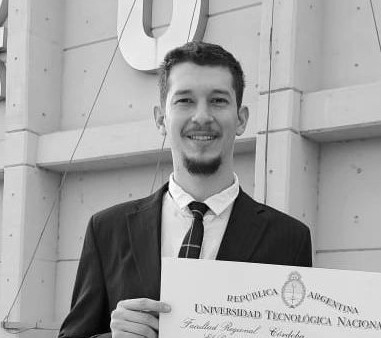
Mariano Alvarez is a researcher at the Research Centre in Digitalization and Intelligent Robotics (CeDRI) at the Polytechnic Institute of Bragança (IPB), with a focus on control and automation systems in industrial and educational contexts. His academic background includes a Bachelor's degree in Electronic Engineering from National Technological University - Cordoba Regional Faculty (UTN-FRC) and a Master's in Industrial Engineering - Electrotechnical Branch from IPB. Education National Technological University - Cordoba Regional Faculty (UTN-FRC), Electronic Engineering Polytechnic Institute of Bragança (IPB), Master's in Industrial Engineering - Electrotechnical Branch Mariano's research interests span Control and Automation , Robotics , and their applications in Industrial Engineering and Intelligent Robotics . His work on the STC 4.0 HP project aims to innovate stoneware tableware production using Ceramic 4.0 technologies and high-pressure casting robot work cells. Recent publications highlight trends in robotics for educational technology, including Force Feedback Actuators , 3D Surface Laser Engraving , and Educational Manipulator Robot Development . These works emphasize interdisciplinary approaches bridging automation, control systems, and robotics education. As part of CeDRI, Mariano contributes to advancing digitalization and intelligent robotics in manufacturing. No scientific awards or supervisees are documented in the available information.
Samuel Legge is a Research Fellow at the Department of Quantum Science & Technology, Australian National University (ANU). His research focuses on advanced quantum sensing technologies, particularly atom interferometry and cold atom systems applied to gravimetry and navigation. He leads projects involving compact quantum sensors and hybrid multisensor systems. Key roles: Principal Investigator (PI) on ANU projects including MiniGrav and quantum-assured positioning systems. Research areas: Quantum gravimeters, cold atom interferometry stabilization, supercontinuum generation in photonic crystal fibers. Collaborations: Extensive work with ANU teams on deployable sensors and fusion of classical/quantum accelerometers. His work emphasizes practical applications of quantum physics in navigation, subsurface mapping, and gravitational wave detection. Notable contributions include dual open atom interferometry designs and low-noise detection strategies for cold atoms.
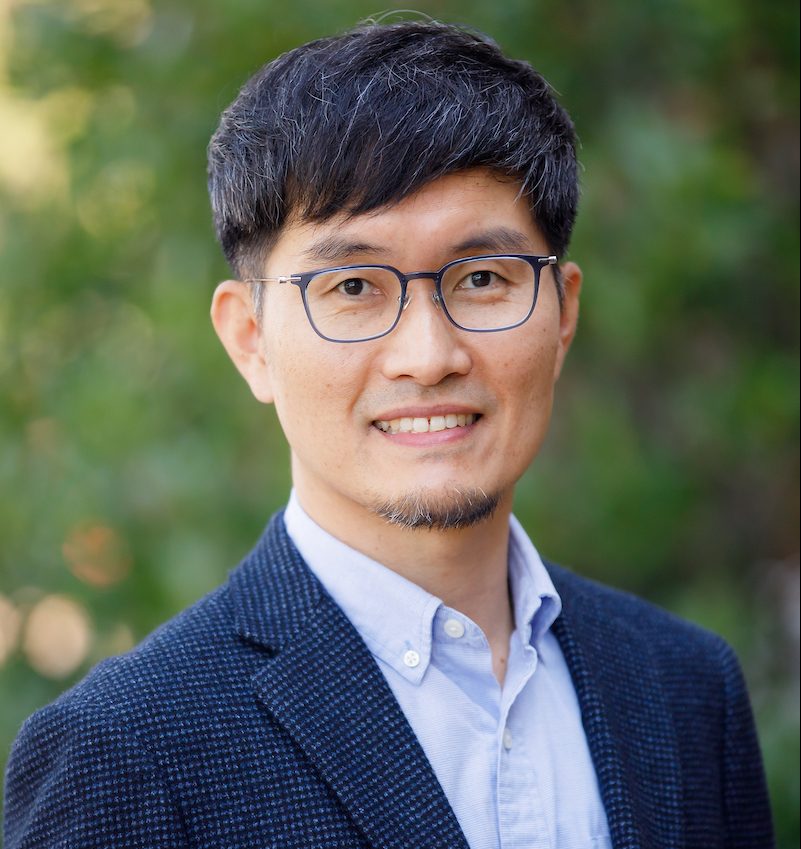
Chungheon Shin is a Lecturer at Stanford University specializing in sustainable wastewater treatment technologies. His research focuses on anaerobic membrane bioreactors (AnMBRs), microbial electrosynthesis, and resource recovery from wastewater. He has pioneered work on dissolved methane management, sulfide removal in secondary effluent, and energy-positive treatment systems in temperate climates. Key Research Themes: Biogas upgrading and CO2 mitigation via electroactive microorganisms Pilot-scale evaluation of gas-sparged vs. fluidized membrane bioreactors Ammonia recovery and embodied energy analysis in domestic wastewater systems Shin's work emphasizes practical scalability and environmental impact reduction, with publications spanning 2011-2025. He has conducted extensive studies on membrane integrity maintenance, biofouling control, and process optimization for anaerobic systems. His 2018 review article provides critical insights into pilot-scale AnMBR applications.
S. Lance Cooper serves as Professor of Physics and Associate Head within the Grainger College of Engineering at the University of Illinois Urbana-Champaign, concurrently holding the position of Materials Research Lab Education Innovation Fellow. His dual-track career bridges fundamental materials research and transformative STEM education initiatives, leveraging institutional resources across physics and engineering disciplines. Cooper's research portfolio spans Condensed Matter Physics, Materials Science, and Spectroscopy, with specialized focus on phonon dynamics, crystal electric field effects, and magnetostructural transitions in lanthanide-based compounds under extreme conditions. Complementing this, his STEM Education work pioneers writing-as-process pedagogies for engineering faculty, emphasizing longitudinal faculty development and interdisciplinary collaboration to enhance technical communication skills in STEM students. His fingerprint analysis confirms dominant expertise in Raman Spectroscopy (97% weight) and Phonon physics (46% weight), with significant contributions to electronics and magnetic field research. Recent publication trends reveal a strategic integration of his materials physics expertise with educational innovation. The 2020-2024 output demonstrates parallel advancement in fundamental condensed matter studies (e.g., pressure-induced magnetostructural effects in Pr2O3) and evidence-based writing pedagogy frameworks for engineering education. This duality positions Cooper at the intersection of experimental physics methodology and educational transformation, with consistent emphasis on collaborative approaches across both domains. Major recognition includes: APS Fellow (2003) for distinguished contributions to condensed matter physics As Materials Research Lab Education Innovation Fellow, Cooper leads cross-disciplinary initiatives that connect laboratory-based materials research with classroom pedagogy development. His current projects focus on scaling writing-intensive curricula through Faculty Learning Communities while advancing spectroscopic characterization of quantum materials, maintaining active collaboration networks across physics, engineering, and education departments.
Nathan Jeong is an Associate Professor in the Department of Electrical and Computer Engineering at The University of Alabama, College of Engineering. He leads the Intelligent Sensor and Wireless System Lab (ISWS), where he conducts cutting-edge research at the intersection of artificial intelligence, wireless systems, and sensor technologies. His work is supported by major federal grants, including a $3 million project from the Federal Transit Administration and the U.S. Department of Transportation for autonomous bus safety. Ph.D., Electrical and Computer Engineering, Purdue University, 2010 Visiting Scholar, Georgia Institute of Technology, 2010 M.S., Electrical and Electronic Engineering, Yonsei University, 2002 B.S., Radio Sciences and Engineering, Korea Maritime University, 2000 Dr. Jeong's research spans artificial intelligence, wireless power transfer, millimeter-wave systems, vehicle-to-everything (V2X) communication, adaptive RF front-ends, and biomedical electronics. His lab focuses on developing intelligent sensor systems for applications in healthcare, agriculture, transportation, and public safety. He integrates machine learning with electromagnetic and RF technologies to create innovative solutions for real-world challenges. The recent publications from Dr. Jeong and his team reflect a strong trend toward intelligent sensing systems using microwave and millimeter-wave technologies. These works span domains such as non-invasive food quality inspection, wearable biomechanical monitoring, autonomous vehicle safety, and UAV-based remote sensing. The integration of machine learning with electromagnetic wave-based sensing is a unifying theme, demonstrating a multidisciplinary approach to solving complex engineering problems. National Academy of Inventors Inductee Award Faculty and Staff Innovation Pitch Competition Award IEEE Distinguished Microwave Instructor Ambassador Alabama Society of Professional Engineers Graduate Student Engineer of the Year (advised student) Randall Outstanding Undergraduate Research Award (multiple students) Most Innovative Award, Crimson Startup Academy (student award) Dr. Jeong has successfully advised numerous graduate and undergraduate students, many of whom have gone on to win prestigious awards and publish high-impact research. He has secured significant external funding, including a $3 million federal grant for autonomous bus safety systems, demonstrating strong grant-writing capabilities and leadership in large-scale research initiatives. His work bridges industry and academia, leveraging over eleven years of industrial experience at Samsung, BlackBerry, and Qualcomm. The Intelligent Sensor and Wireless System Lab (ISWS) is a vibrant research group under Dr. Jeong’s leadership, actively engaged in projects involving AI-driven sensor networks, wireless power, V2X communication, and biomedical electronics. The lab fosters innovation through hands-on research and collaboration, welcoming motivated students at all levels.
Lina Rogström is an Associate Professor and Docent at Linköping University, affiliated with the Department of Physics, Chemistry and Biology (IFM) within the Faculty of Science and Engineering. She is actively involved in advanced materials research, particularly through collaborations with MAX IV Laboratory and participation in the FunMat-II and Nanostructured Materials (NANO) research environments. Research Interests: Her work focuses on the development and characterization of hard, wear-resistant coatings for industrial cutting tools. These coatings, typically 1–10 µm thick, are crucial for enhancing tool longevity and performance under extreme conditions of temperature and pressure during metal machining. She investigates the structural and mechanical behavior of coatings such as TiAlN and AlTiN under operational conditions, aiming to reduce reliance on cooling fluids and enable higher cutting speeds. To achieve this, she employs a multidisciplinary approach combining experimental techniques like in-situ synchrotron X-ray diffraction, high-energy XRD, XANES, and EXAFS to study phase evolution, stress development, and microstructural changes in real time during machining or high-temperature exposure. This enables a deeper understanding of coating degradation mechanisms and guides the design of next-generation materials. Publication Trends: Her recent publications (2023–2024) reflect a strong focus on in-operando and in-situ characterization of nitride-based thin films. These studies, published in high-impact journals like Acta Materialia and Physical Review Materials , reveal detailed insights into phase stability, age hardening, texture evolution, and strain development under thermal and mechanical loads. The research bridges fundamental materials science with industrial applications in manufacturing. Scientific Affiliations: FunMat-II MAX IV Laboratory Nanostructured Materials (NANO) group Department of Physics, Chemistry and Biology (IFM), Linköping University Advising and Grants: While no formal students or grants are listed in the provided text, her extensive collaborative work suggests active supervision and involvement in funded research projects, likely supported by Swedish research councils or industry partnerships. She frequently collaborates with leading experts such as Magnus Odén, Per Eklund, and Martin Magnuson. Laboratories and Teams: Lina Rogström conducts her research using advanced characterization facilities, particularly synchrotron-based techniques at MAX IV. She is part of a larger materials science team focused on nanostructured thin films and functional materials, contributing to both fundamental science and industrial innovation in surface engineering.
Shanay Rab is a Lecturer in the School of Architecture, Technology and Engineering at the University of Brighton. Their research lies at the intersection of metrology, mechanical system design, robotics, and additive manufacturing, with a strong emphasis on quality infrastructure and industrial innovation. Research interests include: Metrology and high-pressure equipment design Automation and robotics in manufacturing Additive manufacturing and material behavior under external stimuli Integration of AI tools in engineering systems Quality infrastructure encompassing standardization, accreditation, and conformity assessment Environmental noise modeling using neural networks and land use regression The recent publications indicate a growing interdisciplinary focus, combining engineering precision with digital transformation trends such as Industry 4.0, IoT, and AI-driven analysis. Key themes include metrology policy (e.g., Metre Convention), science communication in the digital era, and urban environmental modeling. The work bridges theoretical foundations with practical applications, particularly in the context of India and the Global South. Scientific contributions include over 70 peer-reviewed publications in journals such as Nature Reviews Physics , Measurement , and Environmental Science and Pollution Research . Notable topics span face recognition technologies, strategic noise mapping, and international cooperation in measurement science. Shanay Rab actively supervises research in areas related to metrology, advanced manufacturing, and automation. Though no specific grants or awards are listed, the volume and impact of publications suggest sustained research activity and external collaboration across countries. Their work contributes significantly to both academic discourse and practical advancements in engineering and quality systems. Collaborative work is evident through co-authored papers in environmental modeling, digital science communication, and international metrology policy, reflecting a broad academic network and engagement with global challenges.
Youbin Zheng is a Lecturer in the Department of Electrical Engineering & Electronics at the University of Liverpool. He holds a B.S. in Electronic Device and Materials Engineering (2010) and a Ph.D. in Material Physics and Chemistry (2015) from Lanzhou University. Before joining Liverpool in 2023, he served as an assistant research professor at Lanzhou Institute of Chemical Physics (2015–2019) and as a postdoctoral fellow in Professor Hossam Haick's group, focusing on microneedle-based skin patches and self-powered biosensing systems. His research interests span biomaterials, wearable biosensing, energy harvesting, and self-powered sensing platforms for disease screening and health monitoring. He coordinates modules such as 'Applied Design & Industrial Awareness' and 'Digital Electronics & Microprocessor Systems.' Dr. Zheng holds editorial roles including Early Career Board Member of Applied Materials Today and Special Issue Editor of Sensors . He serves as Deputy Departmental Director of Postgraduate Research and chairs the Departmental Research Committee. His publications focus on advanced biosensors, triboelectric nanogenerators, and wearable health monitoring systems, with recent work including real-time urine analysis and energy-efficient CO₂ reduction technologies.
Jacobus B.W. Kok serves as an Associate Professor in the Department of Thermal Engineering within the Faculty of Engineering Technology at the University of Twente. His academic career spans over three decades with significant contributions to combustion engineering and acoustics research. His research focuses on combustion dynamics , thermoacoustic instability , and swirl burner technology , with particular expertise in pressurized combustors, flame transfer functions, and acoustic characterization methods. Current work emphasizes multiscale analysis of combustion systems using advanced computational techniques including Proper Orthogonal Decomposition and Large Eddy Simulation. Recent publications demonstrate strong emphasis on practical industrial applications including hot blast stove optimization, gas turbine combustor design, and droplet combustion analysis. His work bridges fundamental combustion science with engineering solutions for energy systems. Principal investigator for multiple combustion research projects Supervised 19 graduate research projects Active participant in international combustion conferences Collaborator in European research networks (e.g., MAGISTER ITN) Kok maintains active research collaborations across European institutions with recent work involving pressurized combustion systems, acoustic diagnostics, and industrial furnace optimization. His laboratory utilizes advanced computational tools and experimental datasets for combustion analysis.
Troy K. Townsend is an Associate Professor of Chemistry at St. Mary's College of Maryland (SMCM), currently on sabbatical from August 2023 to August 2024. He received his B.A. in Biology and Chemistry from SMCM in 2007 and his Ph.D. in Inorganic Chemistry from the University of California, Davis, in 2012, supported by an NSF Graduate Research Fellowship. Education B.A. in Biology and Chemistry at St. Mary's College of Maryland, 2007 Ph.D. in Inorganic Chemistry at University of California, Davis, 2012 Post Doctoral Fellowship in Materials Science at U.S. Naval Research Laboratory, 2014 Dr. Townsend's research focuses on applied nanomaterials for printed electronics and functional fluorescent metal coatings. His work involves synthesizing inorganic nanocrystals for ink-jet printing, enabling fabrication of photovoltaics, LEDs, and batteries. He also explores electrochemical deposition of metal composites to enhance hardness, durability, and fluorescence. His publications highlight advancements in solution-processed electronics, such as fully inorganic solar cells fabricated in ambient conditions and non-toxic alternatives for CdTe nanocrystal processing. These studies emphasize scalable, low-cost methods like spin- and spray-coating for irregular surfaces. Scientific Awards NSF Graduate Research Fellowship (2010) National Research Council Fellowship (2012) Office of Naval Research Summer Faculty Research Fellowships (2016, 2018, 2021) Dr. Townsend mentors students in electrochemistry, nanomaterial synthesis, and redox reactions, contributing to the Materials Science Minor at SMCM. He leads partnerships with institutions like NAVSEA, NAVAIR, and SolarCube LLC, and coordinates community outreach initiatives such as 3D printing 1000 face shields during the pandemic. His Townsend Research Group investigates nanoscale energy systems, including solar fuel generation and sprayable solar cells developed during his postdoctoral fellowship at the U.S. Naval Research Laboratory.
Andrew Zydney is a Professor of Chemical Engineering at The Pennsylvania State University's College of Engineering. His research focuses on artificial organs, bioseparations, and membrane processes, with applications in biopharmaceutical purification, mRNA therapeutics, and virus filtration. He leads the Zydney Research Group, advancing fundamental understanding of membrane fouling, protein sieving, and sterile filtration. Key Research Themes: Ultrafiltration and microfiltration for biopharmaceuticals Virus retention mechanisms in sterile filtration Continuous processing of mRNA vaccines Membrane fouling in monoclonal antibody purification Single-pass tangential flow filtration (SPTFF) systems His work has been recognized by his election as a Fellow of the North American Membrane Society. Recent projects include NSF-funded research on membrane fouling and collaborations with Moderna on mRNA vaccine purification. He has contributed to innovations in countercurrent membrane purification, depth filtration, and high-performance filtration systems for gene therapies.
Magnus Engholm is a Senior Researcher at the Department of Engineering, Mathematics and Subject Didactics (IMD) at Mid Sweden University, specializing in optical fiber technology, laser cooling, and advanced materials processing. His work focuses on photodarkening resistance in Yb-doped fiber lasers, scalable material processes for sustainable energy applications, and fiber optic sensors for biomedical and industrial uses. Key research areas: optical fiber amplifiers, laser cooling, flexible electronics, and transparent conductive materials Notable projects: IMPHET (Materials & Processes), IFUS (Sensor Innovation), LEAP (Energy Applications), and STORE (Energy Storage) Recent publications highlight advancements in Yb-doped silica fiber cooling , nanoporous graphite anodes for lithium-ion batteries, and cellulose-based laminates. Collaborations span institutions like SPIE and IEEE, with applications in biomedical diagnostics (e.g., dual-parameter pH/glucose sensors) and industrial thermal management. His work integrates experimental physics with materials engineering, aiming to enhance fiber laser efficiency and develop sustainable, paper-compatible electronic components.
Mathias Porsmose Clausen is an Associate Professor at the Department of Green Technology, Faculty of Engineering, University of Southern Denmark. His research focuses on bioimaging and gastrophysics to advance sustainable, healthy, and flavorful food innovations. With expertise in molecular biophysics and advanced microscopy from institutions like the Max Planck Institute and University of Oxford, he investigates food microstructure to understand culinary transformations and functional properties. Current affiliations: SDU Food Cluster, SDU Biotechnology, SDU Climate Cluster Research areas: Quantitative optical microscopy for food analysis, membrane dynamics in food systems, sustainable food ingredient development His recent publications highlight applications of machine learning in food imaging, plant-based meat analogs, and ethical food innovations like force-feeding-free foie gras. Clausen actively contributes to EU-funded projects (FLAVOURFERM, FOODIMAR) and serves as a science communicator through media appearances and public engagement initiatives. Scientific Awards SCC Fast Track Prize (2025) Villum Grant - Villum Synergy (2023) Clausen supervises food science projects and teaches courses on biotechnological processes and food modeling. He serves as grant reviewer for Plant2Food and advisory board member for Food Innovation House.
Jiali Wang is a Researcher affiliated with the Institute of Biological Information Processing IBI-3 at Forschungszentrum Jülich GmbH and the Faculty of Mathematics, Computer Science and Natural Sciences at RWTH Aachen University . Her primary research focus lies in Optogenetic actuator engineering for subcellular targeting Polarized cell membrane protein localization Channelrhodopsin modification with mucin tandem repeats She has contributed to the development of TR-ChR2XXL constructs showing stable electrophysiological properties while enabling precise subcellular targeting in epithelial and neuronal cells. Her research (2023) demonstrates that N-terminal mucin motif fusions maintain high photocurrents in polarized cells while achieving compartment-specific expression. Key articles span neuroscience, biomedical engineering, and clinical oncology applications. Scientific awards include China Scholarship Council (CSC) financial support Helmholtz Association open access funding