Prof. Dr. Christian Eggeling is the Head of the Biophysical Imaging Research Department at the Leibniz Institute of Photonic Technology (Leibniz-IPHT). His work bridges advanced optical techniques with cellular biophysics, focusing on nanoscale imaging and molecular dynamics in biological systems. Institution: Leibniz Institute of Photonic Technology (Leibniz-IPHT) Role: Professor and Department Head Research interests include: Super-resolution microscopy (STED, dSTORM) Single-molecule tracking and fluorescence correlation spectroscopy (FCS) Biophysical characterization of cellular structures (lipids, proteins, extracellular vesicles) Development of novel imaging technologies (iSCAT-TIRF, PiF-IR) Recent publications highlight his group's innovations in: Overcoming photoconversion artifacts in confocal/STED microscopy Combining organ-on-chip models with imaging to study gut-lung axis interactions Quantifying candidalysin neutralization as a therapeutic strategy for vulvovaginal candidiasis Advancing iSCAT and PiF-IR for nanoparticle tracking and protein structure analysis Optimizing membrane vesicle production methods for biomedical applications Technical focus spans optical engineering, computational data processing (e.g., neural networks for artifact correction), and interdisciplinary applications in virology, immunology, and cellular biophysics.
Dr. Junliang Xu serves as Assistant Professor in the Department of Radiation Oncology at the University of Maryland, Baltimore, joining the institution in July 2020. He concurrently holds an associate faculty position with the University of Maryland Baltimore Graduate School for the medical physics certificate program since 2021. His academic credentials include: Bachelor of Science in Theoretical Physics from University of Science & Technology of China (2006) PhD in Physics from Kansas State University (2012) Postdoctoral Researcher in Physics at The Ohio State University (2017) Medical Physics Residency at Fox Chase Cancer Center (2020) Dr. Xu's research program bridges fundamental physics and clinical oncology, with primary focus on FLASH radiotherapy (ultra-high dose rate delivery), Linac-based stereotactic radiosurgery , precision irradiation techniques including single vocal cord treatment, dual-energy CT applications , and radiobiological mechanisms . His work integrates advanced physics methodologies to enhance radiation therapy precision while minimizing patient toxicity. Publication analysis reveals a strategic evolution from foundational atomic/molecular physics (2012-2017) toward translational medical physics (2021-2023). Early work centered on ultrafast laser-matter interactions and electron diffraction imaging, while recent publications demonstrate applied expertise in FLASH-RT instrumentation, AI-driven treatment planning, and radiation safety protocols for novel delivery systems. His contributions have garnered significant recognition: Nature Photonics highlight (2013) for molecular dynamics imaging U.S. Department of Energy feature (2012) for ultrafast imaging breakthrough Cover story in Laser Focus World (September 2013) Physical Review A Editors' Suggestion (2017) for field-ionization research While student advisement details aren't specified, his dual appointment suggests involvement in graduate medical physics education. Current research appears focused on clinical implementation of FLASH radiotherapy and AI-enhanced treatment systems through hospital-based collaborations. His laboratory work likely operates within the University of Maryland Medical Center's Radiation Oncology infrastructure, leveraging clinical linacs and imaging systems for translational research in high-precision radiation delivery.
Dr. Johan Messchendorp serves as an Associate Professor at the Faculty of Science and Engineering at the University of Groningen, specializing in Nuclear Energy research within the Energy and Sustainability Research Institute Groningen. His primary research focus lies in high-energy particle physics, with extensive involvement in the international BESIII Collaboration. His work primarily centers on precision measurements of particle decays, cross-sections, and branching fractions using data from the BEPCII collider. Dr. Messchendorp's research interests span multiple areas of particle physics including charmonium physics, baryon spectroscopy, meson physics, and precision measurements of fundamental particle properties. His work frequently involves analyzing data from electron-positron collisions to study charmed particles, hyperons, and other hadronic systems. He has made significant contributions to understanding Cabibbo-favored and suppressed decays, rare processes, and the properties of exotic hadronic states. Analysis of his recent publications reveals a strong focus on precision measurements in heavy quark physics, particularly involving charmed particles and baryons. His work often employs advanced statistical techniques and increasingly incorporates machine learning approaches for signal extraction. The majority of his research utilizes data from the BESIII detector at the BEPCII collider, with emphasis on measuring branching fractions, cross-sections, and studying the properties of various hadronic resonances. Dr. Messchendorp has supervised 11 research projects according to institutional records, though specific student names are not listed in the available documentation. His research has been supported by numerous grants enabling participation in the international BESIII Collaboration, which involves institutions from multiple countries conducting experiments at the Beijing Electron Positron Collider. His primary research environment is the BESIII experiment, a state-of-the-art particle physics detector at the Beijing Electron Positron Collider II (BEPCII) in China. This international collaboration involves hundreds of scientists from institutions worldwide, focusing on studies of charmonium physics, charm physics, light hadron spectroscopy, and searches for physics beyond the Standard Model.
Professor Carl Gwilliam is a faculty member in the Department of Physics at the University of Liverpool's School of Physical Sciences. His research focuses on particle physics, particularly through experiments at CERN's Large Hadron Collider (ATLAS, FASER) and the SHiP experiment at the SPS. He has made significant contributions to Higgs boson studies and searches for new physics beyond the Standard Model, including dark matter and long-lived particles (LLPs). Education: Ph.D. in Experimental Particle Physics (H1 Experiment at DESY, 2006) His research explores particle physics through collider experiments, detector development, and simulation. Recent work emphasizes Higgs boson properties, LLP detection, and jet reconstruction techniques. He integrates computational physics into undergraduate teaching and advocates for inclusive education as the Departmental Disability Coordinator. Selected research outputs include: Higgs boson pair production analysis in bbττ decay channels LLP searches via dark photons and heavy neutral leptons Jet energy calibration and track reconstruction software for ATLAS Forward physics facility detector optimization studies He has supervised numerous BSc, MPhys, and PhD students and coordinated international collaborations like ATLAS's Exotics Working Group and FASER's physics program.
Christopher Parkes is a Professor of Experimental Particle Physics at the University of Manchester, where he also serves as Head of the Department of Physics & Astronomy since 2024. He has held key leadership roles in the LHCb experiment at CERN, including Principal Investigator for the UK's LHCb Upgrade (2023) and leader of the LHCb Upgrade II design phase. BA (hons.), University of Cambridge (1991-1994) D.Phil., University of Oxford (1994-1998) His research focuses on matter-antimatter asymmetries and radiation-hard silicon detector development , contributing to discoveries like CP violation in B decays and exotic quark configurations. He has received the Institute of Physics High Energy Physics Group Prize (2010) and served on UK particle physics funding councils (STFC PPRP, PPGP). Current work includes LHCb Upgrade II and mentoring graduate researchers. He was a CERN Guest Professor (2020-2023) and Scientific Associate (2010-2012, 2018-2019), with a career spanning the DELPHI experiment at LEP to modern LHCb projects.
Piero Malcovati is a Full Professor in the Department of Electrical, Computer, and Biomedical Engineering at the University of Pavia, where he leads the Integrated Microsystems and Sensors Laboratory. His academic career spans over 25 years of research in microelectronics and sensor systems. His research focuses on Microsensors , Integrated Microsystems , MEMS , and Sensor Interface Circuits , with particular expertise in gas sensing systems, microsensor interfaces, and low-power analog design. His work bridges theoretical circuit design with practical applications in biomedical instrumentation, environmental monitoring, and space technology. Malcovati's publication portfolio demonstrates consistent innovation in high-dynamic-range sensor interfaces, with recent work emphasizing contactless temperature measurement systems, X-ray detector electronics for space missions (HERMES, eXTP), and ultra-low-power voice activity detection. His research shows strong interdisciplinary collaboration across nuclear engineering, aerospace systems, and biomedical applications. He teaches graduate courses including Ph.D. School in Microelectronics and Topics on Microelectronics , along with undergraduate courses such as Electrical Measurements , Industrial Electrical Measurements , and Microsensors, Integrated Microsystems, and MEMS . Malcovati's laboratory has contributed significantly to space instrumentation through the HERMES nano-satellite constellation and the eXTP mission, developing specialized front-end electronics for X-ray and gamma-ray detection systems. His team's PixDD technology represents advancement in room-temperature spectroscopic detectors for astrophysics.
Professor Ralph Tatam is a pioneering academic in Engineering Photonics at Cranfield University , where he has served since 1989. As Head of the Centre for Engineering Photonics and former Dean (2008–2011), he leads an internationally recognized research team developing novel optical instrumentation and sensors for engineering and biomedical applications. His work spans gas sensing , strain measurement , and optical coherence tomography , supported by major grants from EPSRC , NERC , and EU programs . Education: BSc in Chemistry and Physics (University of Exeter, 1981), PhD (CNAA, 1986), DSc (University of Exeter, 2004) His research focuses on fibre optic sensors for point-of-care diagnostics , airborne platform monitoring , and industrial process control . Recent work includes high-sensitivity methane detection (with Cascade Technologies) and dynamic strain measurement on helicopter rotor blades (with DLR and NLR). Publications in Optics Express and Measurement Science & Technology highlight his innovations in interferometry and multi-wavelength laser systems . Scientific awards include Fellowships from SPIE (2005) and the Institute of Physics (1996) , alongside professional certifications (CEng, CPhys, CSci). His collaborations span academia ( Southampton University , Kitakyushu University ) and industry ( Rolls Royce , BAE Systems ).
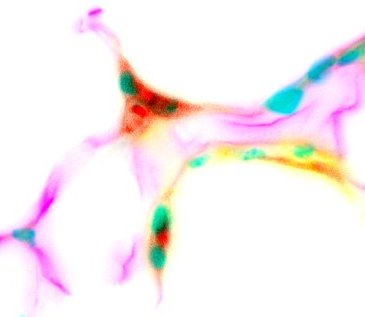
Andrew M Smith is a Professor of Bioengineering, Medicine, and Technology Entrepreneurship at the University of Illinois Urbana-Champaign (UIUC) since 2021. He also serves as an Affiliate Faculty member in the Personalized Nutrition Initiative and Department of Materials Science and Engineering, and as a Full-Time Resident Faculty at the Micro and Nanotechnology Laboratory (MNTL). Previously, he was an Associate Professor at UIUC and Carle Illinois College of Medicine (2018–2023) and Associate Course Director of Hematology and Oncology (2017–2023) at Carle Illinois College of Medicine. Ph.D. in Bioengineering, Georgia Institute of Technology (2008) B.S. in Chemistry, Georgia Institute of Technology (2002) His research focuses on Targeted Therapeutics, Molecular Diagnostics, Quantum Dots, Single-Molecule Imaging, Macrophage Biology, and Cancer Biology , with applications in precision medicine and nanotechnology. Recent studies include nanocoding for single-cell RNA sequencing , acid-degradable lipid nanoparticles for mRNA delivery , and quantum dots for in vivo macrophage imaging . Key article trends: 15 recent publications span Nanotechnology (7), Bioengineering (5), Cancer Research (4), Immunology (3), and Medical Imaging (3), with subtopics like quantum dot surface engineering , lipid nanoparticles , STING pathway inhibition , and single-molecule tracking . Fellow, American Institute for Medical and Biological Engineering (AIMBE) (2022) Donald Biggar Willett Faculty Scholar Award (2020) UIUC Campus Distinguished Promotion Award (2018) NCI K99/R00 Pathway to Independence Award (2010–2015) Emory University Center for Cancer Nanotechnology Excellence Distinguished Fellowship (2008–2012) Smith leads the Smith Lab, which develops precision nanotechnologies for analyzing and controlling biological systems. His work bridges quantum dot engineering , macrophage-targeted therapies , and high-resolution imaging , with grants from NIH and industry partners. He has taught courses like Intro to Quantitative Pharmacology and Technologies for Cancer Diagnostics since 2019.
Lado Samushia serves as Associate Professor in the Department of Physics at Kansas State University, maintaining his office in 13 Cardwell Hall. His academic career centers on observational cosmology with significant contributions to large-scale galaxy survey analysis. His research investigates the fundamental composition of the universe, where dark matter constitutes 25% and dark energy approximately 70% of cosmic content. Using 3D galaxy distribution maps from spectroscopic surveys like SDSS-III, he precisely measures cosmic expansion rates (achieving 4% precision) and tests Einstein's General Relativity. Current work focuses on next-generation missions including the Euclid satellite, DESI, and Roman Space Telescope, which will deliver orders-of-magnitude larger datasets for unprecedented cosmological constraints. Recent publications demonstrate expertise in galaxy correlation function analysis and computational methods for cosmological parameter estimation. His work shows increasing emphasis on higher-order statistics and efficient computational techniques to handle massive datasets from upcoming surveys. Samushia mentors graduate students including Jayashree Behera, Abhishek Jana, and Giorgi Khomeriki while supervising postdoctoral researcher Mehdi Rezaie. His research receives vital support from the Department of Energy and NASA, enabling participation in major international collaborations. He leads an active research group engaged with cutting-edge cosmological missions. The team's current focus involves preparing analysis frameworks for Euclid, DESI, and Roman telescope data, which will revolutionize dark energy studies through high-precision measurements of cosmic structure evolution.
Zenghu Chang is Full Professor in the Department of Physics, Faculty of Science, University of Ottawa , and inaugural Canada Excellence Research Chair in Attosecond X-ray Photonics (2024–present). Previously he held named chairs at the University of Central Florida (Trustee Chair, Pegasus Professor) and Kansas State University (Ernest & Lillian Chapin Professor), and served as founding director of the Institute for the Frontier of Attosecond Science and Technology. An elected Fellow of both the American Physical Society and Optica (formerly OSA), he is internationally recognized for developing tabletop attosecond X-ray sources spanning the soft-to-tender X-ray range. Education: PhD, Optics – Xi’an Institute of Optics and Precision Mechanics, Chinese Academy of Sciences (1988) MSc, Electron and Ion Physics – Xi’an Institute of Optics and Precision Mechanics, Chinese Academy of Sciences (1985) B.E., Electrical Engineering – Xi’an Jiaotong University (1982) Dr. Chang’s research program centers on attosecond light sources , pushing the frontiers of time resolution to the sub-femtosecond regime. His team builds tabletop keV attosecond X-ray sources based on high-harmonic generation driven by state-of-the-art mid-infrared OPCPA systems. These sources enable real-time observation of electron dynamics in atoms, molecules, and solids, with direct applications to quantum materials, solar-energy conversion, and ultrafast chemistry. Recent work focuses on waveform-controlled mid-IR lasers , plasmon-enhanced harmonic generation , and cryogenically cooled Fe:ZnSe amplifiers , delivering few-cycle, multi-millijoule pulses at 2–5 µm. These advances are critical for scaling attosecond photon flux into the water-window spectral region (280–530 eV), thereby allowing element-specific attosecond spectroscopy of every atom in the periodic table. Scientific Awards & Honors: Canada Excellence Research Chair in Attosecond X-ray Photonics (2024) University Trustee Chair, University of Central Florida Pegasus Professor, University of Central Florida Distinguished Professor, University of Central Florida Ernest & Lillian Chapin Professor, Kansas State University (2009) Fellow, American Physical Society Fellow, Optical Society of America (Optica) Research Environment & Funding: Dr. Chang leads a major collaborative program supported by the Canada Excellence Research Chairs (CERC) program, providing up to CAD 8 M over seven years. His laboratory at 25 Templeton Street, Ottawa, houses custom-built mid-IR OPCPA systems, cryogenic amplifiers, attosecond beamlines, and pump-probe spectroscopy end-stations. The group actively partners with national facilities and international synchrotron/free-electron-laser centers to transition tabletop attosecond sources into user facilities for materials science and chemical physics. Laboratory & Team: The Attosecond X-ray Photonics Laboratory operates in the Advanced Research Complex (ARC 537) at the University of Ottawa. The team includes post-doctoral fellows, graduate students, and technical staff specializing in ultrafast laser engineering, nonlinear optics, attosecond metrology, and X-ray spectroscopy.
Gian Luca Barbruni is a Postdoctoral Researcher at the Bio/CMOS Interfaces Laboratory at École polytechnique fédérale de Lausanne (EPFL), Switzerland, where he focuses on designing novel circuital architectures for in-memory sensing and computing, and on drinkable µm-sized bioelectronics for enhanced brain imaging and precise diagnostics. He also served as a Doctoral Assistant at the Integrated Systems Laboratory (LSI1) at EPFL. Dr. Barbruni earned his Ph.D. in Microsystems and Microelectronics from EPFL in 2023, focusing on the design and development of innovative cortical visual prosthesis to revert blindness. Prior to that, he received his M.Sc. in Biomedical Instrumentation (2019) and B.Sc. in Biomedical Engineering (2017) from Politecnico di Torino, Italy. His research primarily centers on the intersection of low-power mixed-signal IC design, wireless power transfer, and microfabrication techniques for biomedical applications. His work spans brain-computer interfaces, vision restoration technologies, cancer diagnostics, and electrochemical sensing systems. Dr. Barbruni's approach integrates circuit design with electrode-tissue interface engineering to create miniaturized, wireless neural interfaces that overcome limitations of traditional neurostimulation systems. His research on frequency-switching inductive links has demonstrated significant improvements in efficiency and power delivery for large-scale neural interfaces. His publication record shows a clear progression toward increasingly sophisticated and miniaturized neural interface systems, with recent work focusing on in-memory sensing for cancer diagnostics and advanced microfabrication techniques for electrode integration. The consistent theme across his publications is the development of wireless, miniaturized systems that can operate within safety constraints while delivering sufficient power for neural stimulation and sensing applications. Dr. Barbruni has received several notable recognitions for his work: Best Student Paper Award in Electronics at IEEE MOCAST, 2022 in Bremen, Germany As a Principal Investigator, he has secured multiple competitive grants including MINT-CMOS (Enable 2022) and WIMOS-RES (Enable 2022). He serves as a reviewer for prestigious journals including IEEE Transactions of Biomedical Circuits and Systems and IEEE Sensors Journal, and as a TPC member for major conferences such as IEEE BioCAS, IEEE Sensors, IEEE MeMeA, and IEEE ICECS. Dr. Barbruni is actively involved with the Bio/CMOS Interfaces Laboratory in Neuchâtel, part of EPFL's School of Engineering, where he leads research on novel circuital architectures for in-memory sensing and computing. His work on 'Neural Dot' represents a significant advancement in fully integrated monolithic chips for neural interfaces, featuring wafer-level CMOS-compatible post-processing techniques for electrode integration that address traditional challenges in miniaturized neural implant design.
Jose Angel Perez Alvarez is a Professor in the Department of Agro-Food Technology at Miguel Hernández University of Elche. He holds leadership roles as Director of the Catedra Palmeral d'Elx and Member of the University Senate (Sector 1). His academic activities include coordinating courses like Biotechnology of Functional Foods and Food Development and Innovation at bachelor's and master's levels, and directing the Industrialization of Animal Raw Materials research group. Teaching: Biotechnology, Food Science, and Master's in Agro-Food Technology Research: Food technology, antioxidant properties, coproduct valorization Labs: Director of Industrialization of Animal Raw Materials group His research focuses on functional foods, coproduct utilization, and techno-functional properties of food ingredients. Recent work includes evaluating bioaccessibility of polyphenols, developing prebiotic-enriched foods, and exploring natural additives like beetroot juice and mushroom flours. He has contributed to food stabilization techniques and laser spectroscopy applications. His 15 most recent publications span 2025-2017, emphasizing food innovations (e.g., royal jelly applications, persimmon flour), analytical technologies (laser spectroscopy), and interdisciplinary studies in food safety and medical applications. Key collaborations include projects on antioxidant potential, gut microbiota, and sustainable food processing. Jose Angel Perez Alvarez leads the University Institute for Agro-food and Agro-environmental Research and Innovation, with facilities in Orihuela, Alicante. His work addresses agricultural resources, food quality, and technological advancements through both fundamental and applied research.
Professor Tatyana Zheltonozhskaya is a Leading Scientific Researcher and Professor at Taras Shevchenko National University of Kyiv, where she has served since 1972. She currently heads an active scientific team focused on advanced polymer chemistry and nanotechnology. Education: 1967–1972 – Specialist in Chemistry (Polymer Chemistry), Moscow State University M.V. Lomonosov, Moscow, Russia 1988 – Ph.D., Taras Shevchenko National University of Kyiv, Ukraine 1996 – Senior Researcher (advanced academic certification) 2003 – Doctor of Chemical Sciences, Taras Shevchenko National University of Kyiv, Ukraine 2006 – Professor, Taras Shevchenko National University of Kyiv, Ukraine 2014 – Honored Worker of Science and Technology of Ukraine Research Interests: Professor Zheltonozhskaya’s research centers on the design, synthesis, and application of advanced polymer systems. She has pioneered work on template block and graft copolymerization , discovering intramolecular polycomplexes (IntraPCs) that enable precise control over macromolecular architecture. Her group develops micelle and micelle-like nanocontainers from asymmetric block copolymers and polymer/inorganic hybrids for targeted drug delivery and in-situ synthesis of metal nanoparticles. These nanostructures are exploited to solubilize poorly soluble or toxic drugs such as doxorubicin, prednisolone, melanin, and vitamin E, as well as to generate biocidal silver nanoparticles. Environmental applications include the creation of high-efficiency flocculants (Unicomfloc) for water purification from radionuclides and suspended matter. Publication Trends: Her most recent articles (2004–2016) emphasize the fabrication of block/graft copolymers and their hybrids, elucidating structure–property relationships that underpin nanomedicine, energy storage (solid polymer electrolytes for lithium batteries and solar cells), and environmental remediation. The body of work repeatedly highlights self-assembly, pH-responsive behavior, ionic conductivity, and the templating role of complementary polymer components. Scientific Awards & Honors: Honored Worker of Science and Technology of Ukraine (2014) US Patent No. 8,323,838 B2 for solid polymer electrolytes (2012) Team & Funding: Since 1990, Professor Zheltonozhskaya has led a scientific team that presently comprises three researchers, one engineer, one Master’s student, and two Bachelor students. The group has continuously attracted national funding for successive multi-year projects, ranging from multicomponent polymer flocculants to nano-sized block copolymer systems for drug delivery and nanoreactor applications. Laboratory & Methodological Expertise: The team employs state-of-the-art techniques including NMR, FTIR and UV-Vis spectroscopy, gel-permeation chromatography (GPC), static and dynamic light scattering, dilatometry, viscometry, potentiometric titration, transmission electron microscopy (TEM), differential scanning calorimetry (DSC), wide- and small-angle X-ray scattering (WAXS/SAXS), and more to characterize and fine-tune the molecular structure and functional properties of synthesized materials.
Dr. Geza Zsigmond is a Researcher in the UCN Physics Group at the Laboratory for Particle Physics, Paul Scherrer Institute (PSI), Switzerland. His work centers on ultracold neutron (UCN) physics and precision measurements for fundamental symmetry tests, particularly through the n2EDM experiment which aims to detect the neutron electric dipole moment with unprecedented sensitivity. As part of PSI's world-leading UCN source facility, he contributes to advancing experimental techniques for probing physics beyond the Standard Model. His research focuses on ultracold neutron production, storage, and manipulation, with emphasis on magnetic field control, systematic error correction, and dark matter searches. Key interests include neutron electric dipole moment measurements, neutron-mirror neutron oscillations, axion-like particle interactions, and precision instrumentation development. His experimental work addresses fundamental questions about CP violation, matter-antimatter asymmetry, and potential new physics through high-precision neutron-based experiments. Analysis of his recent publications reveals consistent innovation in magnetic field management for nEDM experiments, UCN source optimization using solid deuterium converters, and novel detection techniques for rare processes. His work demonstrates strong interdisciplinary connections between nuclear physics, particle physics, and precision measurement science, with recurring themes of experimental design refinement and systematic uncertainty mitigation across all publications. Dr. Zsigmond actively collaborates within large international teams, as evidenced by multi-institutional author lists across his publications. His contributions to the UCN Physics Group include critical work on the PSI Ultracold Neutron source infrastructure, magnetic shielding systems, and data analysis frameworks essential for next-generation fundamental physics measurements.
Andrew Leakey is Professor of Plant Biology at the University of Illinois at Urbana-Champaign, holding the Michael Aiken Endowed Chair and serving as Director of the $115M Center for Advanced Bioenergy and Bioproducts Innovation (CABBI). He is affiliated with the College of Liberal Arts & Sciences, the Carl R. Woese Institute for Genomic Biology, and holds an affiliate appointment in Crop Sciences. Leakey's research program focuses on integrative plant physiology, genetics, and genomics, with particular emphasis on plant water use efficiency, photosynthesis, and crop responses to environmental stressors including elevated CO2, drought, temperature, and ozone. His work combines genetic, molecular, biochemical, physiological, and ecological approaches to assess plant performance in both manipulative field experiments and controlled environments. The major focus of his group is understanding the genetic and physiological controls of stomatal patterning and photosynthetic water use efficiency through molecular and quantitative genetics. Leakey's recent publications reflect his expertise in plant responses to environmental change, with emphasis on water use efficiency, stomatal function, and crop adaptation. His work spans from molecular mechanisms to field applications, often incorporating advanced technologies like machine learning, high-throughput phenotyping, and UAV sensing. His research has significant implications for crop sustainability and food security in the face of climate change. Scientific Awards: Fulbright Scholar (2002) Beckman Fellow (2011) I.C. Gunsalus Fellow (2013) Calvin-Benson Award for Early Career Excellence in Photosynthesis Research (2016) University Scholar (2017) AAAS Fellow (2019) Massengale Lecturer, CSSA (2020) Teacher Ranked Excellent by Students (multiple years) Michael Aiken Endowed Chair (2023) Leakey actively mentors students and researchers, with opportunities available through the Department of Plant Biology, Crop Sciences, and the Program in Ecology, Evolution and Conservation Biology. His research is supported by major funding sources including the Department of Energy (CABBI), NSF, and Gates Ag One (RIPE project). His laboratory operates at multiple research sites including the Institute for Genomic Biology and the SoyFACE facility, which allows for studying crops under production field conditions with elevated carbon dioxide, ozone, temperature, and altered water availability.