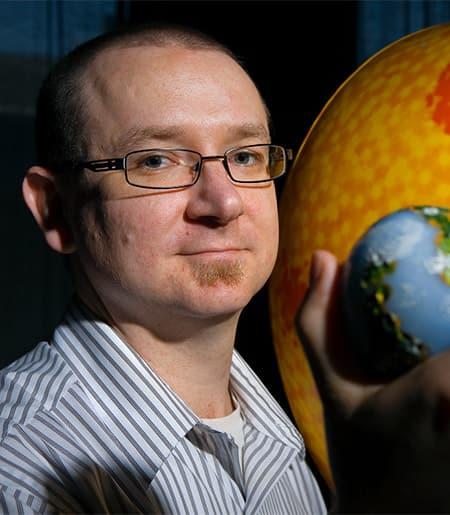
Aaron Tohuvavohu is a Research Fellow in the Division of Physics, Mathematics, and Astronomy at the California Institute of Technology. His work focuses on high-energy astrophysics, particularly gamma-ray bursts (GRBs) and multi-messenger astronomy. He is deeply involved in the Neil Gehrels Swift Observatory mission, specializing in real-time localization of transient events using the BAT-GUANO pipeline and collaborating with gravitational-wave detectors like LIGO/Virgo/KAGRA. His research emphasizes rapid-response observations of GRBs and gravitational-wave events, leveraging the Interplanetary Network (IPN) for precise localization. He has contributed to studies of short-hard GRBs associated with compact object mergers and long-duration GRBs linked to hypernovae. Notable projects include the CASTOR mission concept for UV photometry and detector characterization for next-generation astronomical instruments. Aaron's recent work includes analyzing Swift/XRT and UVOT observations of GRB afterglows, setting upper limits for electromagnetic counterparts to gravitational-wave triggers, and improving IPN triangulation algorithms. His publications reflect a systematic approach to transient astronomy, integrating data from multiple observatories for comprehensive event characterization.
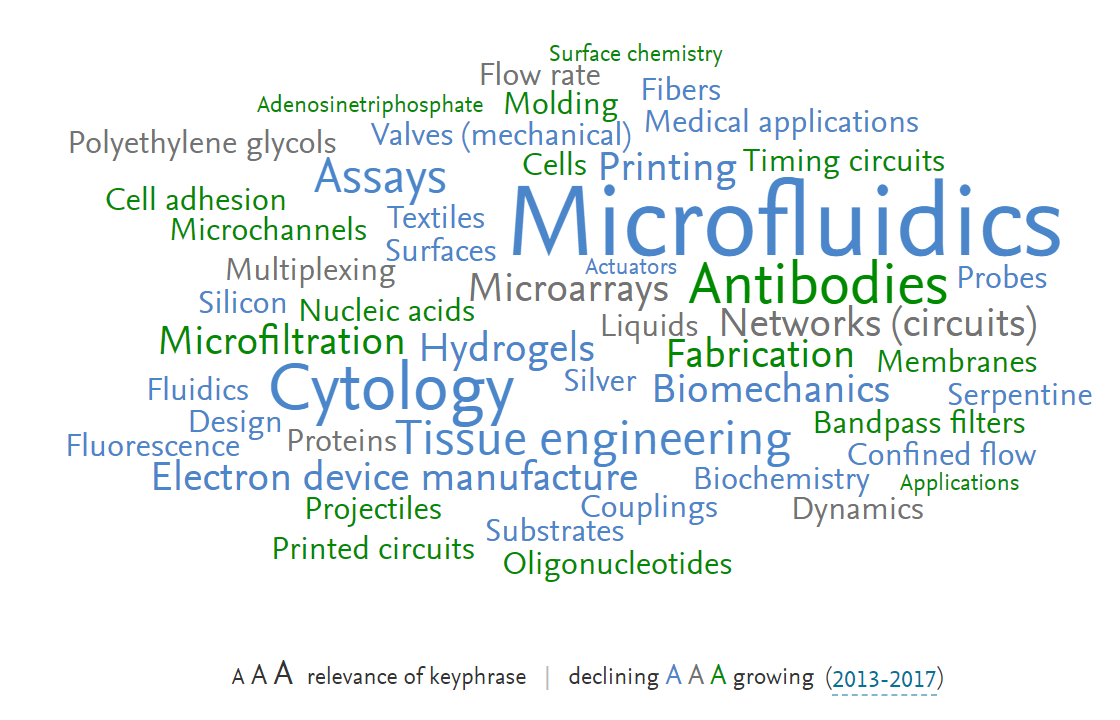
David Juncker is a Professor and Department Chair of the Department of Biomedical Engineering at McGill University. He serves as a Principal Investigator at the McGill University & Genome Quebec Innovation Centre and holds associate memberships in the Department of Neurology and Neurosurgery, Department of Electrical and Computer Engineering, Division of Experimental Medicine, Department of Surgery, and Goodman Cancer Research Centre. His research focuses on micro- and nano-bioengineering technologies for bioanalysis, precision medicine, and organs-on-chips. Key areas include microfluidics, lab-on-a-chip devices, biomedical sensors, medical diagnostics, biomaterials, tissue engineering, and cancer biomarker discovery. His lab develops scalable antibody microarrays, self-powered diagnostic platforms, microfluidic probes for brain tissue perfusion, and nanogradients for neuronal navigation, with applications in cancer diagnostics, global health, and neuroscience. Recent publications (2023-2025) reveal strong emphasis on extracellular vesicle analysis, single-cell proteomics, 3D-printed microfluidic/organ-on-a-chip systems, and capillary-driven circuits. Key trends include low-cost point-of-care diagnostics, advanced circulating tumor cell isolation methods, and biomimetic synthetic vesicles for drug delivery, demonstrating translational potential in early disease detection. Dr. Juncker leads a highly interdisciplinary team comprising undergraduate and graduate students, post-doctoral fellows, and staff from diverse scientific, engineering, and cultural backgrounds. His lab actively recruits Canadian/permanent resident graduate students for projects on single extracellular vesicle and protein detection in cancer and infectious diseases, leveraging microfluidics and wearables for biomarker discovery. The Juncker Lab operates from the McGill University & Genome Quebec Innovation Centre (740 Dr. Penfield Avenue, Room 6206). It maintains a collaborative, multicultural environment focused on developing transformative micro- and nano-bioengineering technologies with significant potential impact on human health diagnostics and treatment.
Kyle Dawson is a Professor of Physics and Astronomy at the University of Utah, where he has been employed since 2009. He currently serves as both a full Professor and Director of Graduate Studies in the Department of Physics and Astronomy, having progressed from Assistant Professor (2008-2015) to Associate Professor (2015-2019) before achieving his current position in 2019. His institutional affiliation places him within the College of Science at the University of Utah, a major research university in the western United States. Dawson earned his BA in Physics from Cornell University in 1998, followed by a PhD in Physics from the University of California, Berkeley in 2004. After completing his doctoral studies, he served as a postdoctoral researcher at the Lawrence Berkeley National Laboratory before joining the University of Utah faculty. His educational background in physics provided the foundation for his transition into observational cosmology, where he has made significant contributions through large-scale spectroscopic surveys. Professor Dawson's research focuses on observational cosmology through large spectroscopic surveys designed to measure the fundamental properties of the universe. He is currently the co-Spokesperson for the Dark Energy Spectroscopic Instrument (DESI), a major cosmological survey that has produced numerous high-impact publications in 2024-2025. Previously, he served as Principal Investigator for the Extended Baryon Oscillation Spectroscopic Survey (eBOSS), which concluded in 2020 with final cosmological measurements. His work centers on measuring baryon acoustic oscillations to constrain cosmic expansion history, dark energy properties, neutrino masses, and to test General Relativity. His research group employs techniques including galaxy clustering analysis, quasar astrophysics, and large-scale structure mapping to address fundamental questions in cosmology. The analysis of Dawson's recent publications reveals a strong focus on extracting cosmological constraints from the DESI survey data. His work spans multiple aspects of cosmological analysis, including baryon acoustic oscillation measurements, full-shape power spectrum analysis, imaging systematics mitigation, and cross-correlation studies with cosmic microwave background data. The publications demonstrate collaborative work with large international teams and contribute to increasingly precise measurements of cosmological parameters, with particular attention to dark energy equation of state, neutrino masses, and potential deviations from General Relativity. Professor Dawson has secured significant research funding throughout his career, including multiple grants from the Department of Energy (DOE), NASA, and the National Science Foundation. His grant portfolio includes leadership roles in major cosmological surveys like DESI and eBOSS, as well as support for postdoctoral researchers and graduate students. His research group has mentored numerous students who have gone on to successful careers in academia, industry, and data science fields. Dawson leads a vibrant research group at the University of Utah focused on cosmological data analysis from large spectroscopic surveys. His current team includes two postdoctoral researchers (Angela Berti and Sarah Eftekharzadeh) and a graduate student (Allyson Brodzeller). The group specializes in galaxy clustering analysis, quasar astrophysics, and machine learning applications to spectroscopic data. The research environment fosters collaboration with international teams working on DESI and related cosmological surveys, providing students with opportunities to engage with cutting-edge cosmological research and large-scale data analysis techniques.
Kobus Barnard is a Professor in the Department of Computer Science at the University of Arizona, with his office located in GS 708. His research bridges computer vision, machine learning, and interdisciplinary scientific applications across diverse domains. Education: Ph.D. from Simon Fraser University (1999) His research interests focus on extracting meaningful insights from complex data through computer vision and probabilistic modeling. Key areas include machine learning for environmental monitoring (flood detection, plant disease analysis), social dynamics (interpersonal coordination, emotional coregulation), astronomy (transient classification), and multimodal learning (visual-linguistic integration). His work consistently applies deep learning to real-world problems requiring high-resolution data interpretation. Analysis of his 2022-2025 publications reveals three dominant trends: (1) Environmental applications using satellite imagery for flood mapping and agricultural monitoring, (2) Cognitive modeling of human teams and emotional dynamics through probabilistic frameworks, and (3) Astronomical data analysis leveraging host galaxy properties for transient classification. These threads demonstrate his commitment to solving practical scientific challenges through computational innovation. While scientific awards aren't documented in available sources, his leadership in projects like FloodPlanet and ToMCAT indicates significant contributions to data infrastructure. His advising and grant activities remain unreported in the source material, though his extensive interdisciplinary collaborations suggest substantial mentorship impact. Barnard's work operates at the intersection of multiple scientific communities, evidenced by applications spanning neuroscience, agriculture, astronomy, and social science. His current focus on high-resolution data fusion and multimodal modeling positions him at the forefront of real-world AI deployment.
Nanna Bach-Møller is a postdoctoral fellow at the Niels Bohr Institute, University of Copenhagen, specializing in astrophysics and planetary research. She completed her PhD in 2024 with a dissertation on exoplanet atmospheres in high-energy radiative environments. Research Interests Exoplanet atmospheres and their interaction with high-energy radiation Microlensing events and brown dwarf characterization Planetary system dynamics and orbital evolution Stellar activity and its impact on exoplanet observations Her work combines theoretical modeling with observational data analysis, focusing on understanding atmospheric processes in extreme environments and the dynamics of planetary systems. Publications Dr. Bach-Møller has published extensively in leading journals such as Astrophysical Journal , Astronomy & Astrophysics , and Monthly Notices of the Royal Astronomical Society . Her recent work includes studies on cloud particle charging, transmission spectroscopy of exoplanets, and precision measurements of brown dwarf masses through microlensing. Collaborations She collaborates with international teams, including the MiNDSTEp Consortium, OGLE Collaboration, and MOA Collaboration, contributing to large-scale surveys and high-impact research projects.
Robert Brunner serves as Professor of Astronomy at the University of Illinois at Urbana-Champaign, where he bridges astrophysical research with computational innovation. His work focuses on extracting knowledge from massive astronomical datasets through advanced statistical and machine learning techniques, while also extending methodologies to finance and agricultural applications. Research interests center on developing machine learning algorithms (random forests, deep neural networks, Bayesian estimation) for astronomical data analysis, cosmological parameter constraints via n-point clustering measurements, and hardware acceleration using GPUs/cloud systems. His interdisciplinary approach spans source classification, transient phenomena detection in surveys like SDSS and DES, and applications in financial time-series analysis and agricultural remote sensing. Recent publications (2019-2025) reveal strong cross-domain expertise: astronomical catalogs for Rubin Observatory and Spitzer surveys coexist with financial market analysis using community detection methods and agricultural computer vision systems. Key methodological threads include spatio-temporal forecasting, multimodal learning for earnings calls, and anomaly detection via extended isolation forests, demonstrating consistent innovation in handling petascale datasets across scientific boundaries.
Scott Diddams is the Robert H. Davis Endowed Chair and Professor of Electrical Engineering and Physics at the University of Colorado Boulder. He leads the Quantum Engineering Initiative in the College of Engineering and Applied Science. His research focuses on precision spectroscopy, quantum metrology, nonlinear optics, and ultrafast lasers, with pioneering contributions to optical frequency combs for applications in optical clocks, fundamental physics tests, and astronomy. He holds over 750 publications and has received prestigious awards including the Department of Commerce Gold Medal and PECASE. **Education**: PhD in Physics from the University of New Mexico (1996). Postdoctoral work at JILA, NIST, and CU Boulder. Former NIST Fellow and Group Leader. **Research Interests**: Frequency comb technology for astrophotonics and metrology Exoplanet detection via advanced spectroscopy Ultrafast laser systems and high-harmonic generation Quantum engineering and integrated photonics **Awards**: Distinguished Presidential Rank Award IEEE Rabi Award C.E.K. Mees Medal (OPTICA) **Grants & Labs**: Directs the Quantum Engineering Initiative and maintains active collaborations with NIST. His lab develops cutting-edge instrumentation for space science and precision measurement. **Current Projects**: Focuses on miniaturized Fabry-Pérot cavities, quantum-enhanced dual-comb spectroscopy, and exoplanet characterization via the GEMS survey.
Robyn Sanderson serves as an Associate Professor in the Department of Physics and Astronomy at the University of Pennsylvania's School of Arts & Sciences, where she has been a standing faculty member since 2018. She maintains an active research role as a guest researcher at the Center for Computational Astrophysics, Flatiron Institute, following her tenure as an Associate Research Scientist there from 2018-2021. Her academic foundation includes a Ph.D. in Physics from MIT (2011), supervised by Edmund Bertschinger with committee members Alan Guth and Paul Schechter, and dual B.S. degrees in Physics and Astronomy, both earned summa cum laude from the University of Maryland (1999-2003). Dr. Sanderson's research centers on dark matter distribution in galaxies through the lens of stellar dynamics, particularly using Gaia mission data to probe galaxy outskirts where dark matter dominates. She pioneers synthetic survey techniques with FIRE cosmological simulations to develop optimal strategies for mapping Milky Way dark matter. As co-chair of the Nancy Grace Roman Space Telescope astrometry working group and a member of the SDSS-V consortium, she shapes next-generation observational approaches for testing dark matter theories through velocity and chemical-abundance data from WEAVE and future missions. Her 2024 publications reveal a dominant focus on dark matter constraints via galactic dynamics , with extensive use of FIRE simulations to model stellar streams, merger debris, and satellite interactions. Key trends include precision acceleration measurements, Roman Space Telescope survey design, and leveraging fossil records to study reionization-era galaxies. Scientific recognition includes: NSF Astronomy and Astrophysics Postdoctoral Fellowship She leads the 4N10 Galaxy Dynamics @ UPenn research group, teaches core courses including ASTR001 (Survey of the Universe) and PHYS 533 (Galactic Dynamics with Gaia), and contributes to major collaborative efforts like SDSS-V and WEAVE. Her work bridges computational astrophysics with observational strategies for upcoming space telescopes, emphasizing actionable pathways to test dark matter models through next-generation data.
Elaine Kirkpatrick is an Associate Professor of Physics and Optical Engineering at Rose-Hulman Institute of Technology. Her research focuses on nanomagnetic materials, nanostructured thin films, and magnetic nanoparticles. She has pioneered collaborative undergraduate research projects in planetary science, establishing advanced laboratory facilities for student experimentation. Education: PhD in Applied Physics, Carnegie Mellon University (1997) MS in Physics, Carnegie Mellon University (1994) BS in Physics, University of Dayton (1992) Her work bridges nanotechnology and astrophysics, with recent emphasis on asteroid lightcurve analysis and photomagnetic effects in cobalt ferrite systems. Notable contributions include seminal studies on magnetic nanoparticle behavior and asteroid rotational dynamics. Awards: NASA/American Society of Engineering Education’s Summer Faculty Fellow (2002) Best Poster Award at Nano ’98 Conference (1998) National Science Foundation Travel Grant (1996) Teaching emphasizes foundational physics concepts with hands-on labs in X-ray diffraction and semiconductor physics. She mentors students through Rose-Hulman's Oakley Observatory and advanced materials labs, integrating research into undergraduate education.
Cullen Blake is an Associate Professor in the Department of Physics and Astronomy at the University of Pennsylvania School of Arts & Sciences. His primary research focuses on exoplanet detection around low-mass stars and the astrophysics of low-mass stars and brown dwarfs. He is deeply involved in observational astronomy, developing techniques to detect Earth-like planets and improving stellar characterization through precision radial velocity measurements and synoptic surveys. Blake plays a key role in projects like the NEID Earth Twin Survey and the Brown Dwarf Kinematics Project, leveraging instrumentation such as the NEID spectrograph and robotic telescopes. Education: Ph.D. (Astronomy) Harvard University (2009), A.M. (Astronomy) Harvard University (2006), A.B. (Astrophysics) Princeton University (2003). Research Interests: Search for Earth-like planets around low-mass stars Stellar astrophysics of low-mass stars and brown dwarfs Instrumentation development for exoplanet surveys Robotic telescopes and synoptic survey strategies Stellar activity mitigation in radial velocity data He has contributed to major collaborations including the APOGEE survey, the MINERVA telescope array, and the design of the NEID spectrometer. His work emphasizes bridging observational techniques and theoretical models to advance our understanding of planetary systems and stellar evolution. Key projects include the NEID Sun-as-a-Star program and the development of algorithms to reduce noise from telluric and stellar variability. Blake's research also extends to brown dwarf kinematics and the analysis of transient phenomena in stellar systems.
Prof. Yann Alibert is an Affiliated Professor of Astrophysics at the University of Bern's Faculty of Science, based at the Center for Space and Habitability (CSH). His research focuses on exoplanet science, planetary formation mechanisms, and space missions like CHEOPS and PLATO. He leads observational campaigns analyzing exoplanet atmospheres, orbital dynamics, and planetary system architectures using high-precision photometry and spectroscopy. Key areas of expertise include: Characterization of exoplanet atmospheres via CHEOPS and ESPRESSO Studying resonant planetary systems and compact multi-planet configurations Development of mass-radius modeling tools (e.g., mr-plotter) Investigating planet formation pathways through streaming instability and pebble accretion Recent work emphasizes ultra-short-period planets, hot Jupiters, and water-world candidates. He collaborates extensively with international teams on TESS, PLATO, and ground-based radial velocity surveys. His research contributes to understanding planetary system evolution and the search for habitable worlds.
Professor Lee Jae-woo is a full Professor in the Department of Astronomy and Space Science at Sejong University, where he has served since 2003, advancing from Assistant Professor (2003-2006) to Associate Professor (2007-2012) and full Professor since 2013. His research centers on the formation and evolution of galaxies through detailed analysis of stellar populations in globular clusters using advanced optical and photometric techniques. His primary research focuses on multiple stellar populations in globular clusters, employing innovative photometric systems like Ca-CN-CH-NH to investigate chemical abundances, kinematics, and evolutionary pathways. Key areas include helium enhancement, metallicity variations, and dynamical properties in clusters such as 47 Tucanae, M22, and M92, with increasing utilization of JWST data for high-precision observations. His work bridges observational astronomy with theoretical models of galaxy formation. Analysis of his 15 most recent publications (2018-2025) reveals consistent focus on multi-population systems in globular clusters, with methodological evolution from ground-based photometry to space-based JWST observations. Dominant themes include population-specific chemical tagging, dynamical modeling of energy equipartition, and environmental effects on cluster evolution, significantly advancing galactic archaeology. His scientific excellence is recognized through prestigious awards: 2005 Group Achievement Award (NASA) 2006 16th Science and Technology Excellence Paper Award (Korea Federation of Science and Technology Societies) 2007 Top 50 Research Projects (National Research Foundation) 2010 Outstanding Paper Researcher Award (Sejong University) 2010 Ocean Science Award (Sejong University) 2010 National R&D Excellence Top 100 Achievements 2011 Scientist of the Month Award (Ministry of Education) 2013 Research Excellence Professor (Sejong University) Professor Lee actively supervises Master's and Doctoral students at Sejong University, guiding research in spectral synthesis modeling, photometric analysis of globular clusters, and cosmic distance measurement using RR Lyrae variables. His Stellar Species Research Lab conducts both observational campaigns and theoretical modeling, with recent projects focusing on JWST data analysis and innovative photometric system development. He leads the Stellar Species Research Lab, which operates Monday/Wednesday/Friday 2:00-5:00 PM, conducting observational studies on galactic formation through stellar photometry. Current projects include spectral synthesis for multi-population clusters, RR Lyrae variable analysis, and development of statistical models for population characterization, utilizing facilities like BOAO/KASINICS and JWST.
James P. Lloyd is a Professor at Cornell University with joint appointments in the Departments of Astronomy and Mechanical and Aerospace Engineering. His research spans extrasolar planets and astronomical instrumentation development. Ph.D., Astrophysics, University of California, Berkeley (2002) M.A., Astrophysics, University of California, Berkeley (2000) B.Sc. (Honours First Class), Physics, University of New South Wales (1994) Professor Lloyd specializes in infrared detectors and instrumentation , adaptive optics , interferometry , and high contrast imaging . His work includes precision radial velocity measurements and planetary science applications such as Cassini spacecraft occultation studies. His recent publications focus on exoplanet host star characterization , Kepler mission data analysis , and infrared spectroscopy techniques . Scientific Awards Fulbright Scholar Robert A. Millikan Prize Postdoctoral Scholar US Navy Antarctica Service Medal with Gold Winterover Bar As Principal Investigator for Cornell’s UNP-4 and UNP-6 Nanosatellites (CUSat and Violet), he contributed to space-based instrument development. Professor Lloyd also participated in key panels like the National Academy of Sciences Astro 2010 Decadal Survey and NASA WFIRST evaluations.
Lee Spitler is an Associate Professor at Macquarie University's Australian Astronomical Optics, leading space-related projects such as the Huntsman Telescope and the SkyHopper Space Telescope. His research focuses on observational astronomy, galaxy evolution, and instrumentation development. He heads the Huntsman Telescope project, utilizing off-the-shelf consumer cameras and lenses, and is the principal investigator of the Australian Space Eye initiative merged into the SkyHopper mission. Spitler has held roles including Australian Astronomy Limited's Optical Telescope Advisory Committee member (2017-2018) and Elected Council Member of the Astronomical Society of Australia (2013-2017). His research interests span galaxy formation, high-redshift observations, and innovative telescope technologies. Key projects include the KNTraP transient search program and the ZFIRE spectroscopic survey of galaxies in rich environments at z~2. His work emphasizes developing cost-effective solutions for space-based and ground-based astronomy. Notable awards include the Faculty Excellence Award (2021) and Macquarie Research Excellence Prize for Early Career Researcher of the Year (2015). He has led 14+ projects, including CubeSat platforms and thermal imaging payloads, and contributed to over 150 research outputs. Spitler collaborates internationally, with recent studies on Hα emitters, cosmic reionization, and the structural properties of distant galaxies.
Eline Tolstoy is Professor of Astronomy at the University of Groningen , Faculty of Science and Engineering. She leads a research program devoted to understanding the formation and evolution of dwarf spheroidal galaxies through detailed chemo-dynamical studies of resolved stellar populations. Research Interests Tolstoy’s work centers on the astrophysics of dwarf galaxies , using multi-wavelength, high-resolution spectroscopic data to trace star-formation histories, metallicity evolution, and dark matter content. Her expertise spans: Dwarf spheroidal galaxy dynamics and dark matter halos Chemical tagging of stellar populations via spectroscopic surveys Star formation histories inferred from color-magnitude diagrams and spectroscopy Next-generation instrumentation (WEAVE, WST, Euclid, MICADO) Galactic archaeology and near-field cosmology Recent Research Trends Recent publications demonstrate a strong focus on 3D chemo-dynamical mapping of Local Group dwarf galaxies, leveraging Gaia astrometry and VLT/FLAMES spectroscopy to derive precise kinematics and metallicities for thousands of individual stars. Collaborative papers on the WEAVE and WST facilities highlight her leadership in designing future wide-field spectroscopic surveys that will extend these studies to larger galactic samples and higher redshifts. Scientific Awards George Darwin Lectureship, Royal Astronomical Society (2013) Pastor Schmeits Prize (2007) NWO VICI Research Grant under the Innovational Research Incentives Scheme (2007) Data, Grants & Collaborations Tolstoy has secured major funding through the highly competitive NWO VICI program and participates in large international consortia including the Euclid space mission, the WEAVE spectroscopic survey, and the MICADO first-light imager for the ELT. She has released 31 curated datasets via the Strasbourg and Groningen astronomical data centers, underpinning reproducibility and open science. Labs & Teams She heads a dynamic research group within the Kapteyn Astronomical Institute at Groningen, supervising post-docs, PhD students, and international visitors. The group operates at the intersection of observation, theory, and instrumentation, fostering strong collaborations with ESO, ESA, and institutes across Europe and North America.