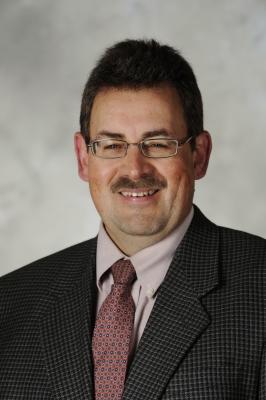
Jon R. Marstrander is an Assistant Professor in the Department of Electrical and Computer Engineering at the University of Alabama at Birmingham (UAB) , where he joined the faculty in 2005. His expertise bridges Embedded Systems , Digital Signal/Image Processing , and Neurological Signal Analysis , supported by a Professional Engineering License since 1992. Education : B.S. in Electrical Engineering, UAB M.S. in Electrical Engineering, UAB Ph.D. in Computer Engineering, UAB His research focuses on collaborative neuroscience projects with UAB clinicians, combining industry-grade hardware/software design (from 16+ years of aerospace/medical engineering) with medical image analysis . Recent work includes high-performance computing workflows for neuroimaging and pathology modeling in Parkinson's/Schizophrenia. Key publication themes: Neurological Imaging (2015–2020), Exercise Neurology , Antipsychotic Treatment Analysis , and Optical Navigation Systems .
Stephen Ramsey, an Associate Professor at Oregon State University, holds dual appointments in the School of Electrical Engineering and Computer Science (College of Engineering) and the Department of Biomedical Sciences (Carlson College of Veterinary Medicine). With a PhD in Physics from the University of Maryland, his postdoctoral training in computational genomics at the University of Washington, and professional experience at the Institute for Systems Biology and Center for Infectious Disease Research, Ramsey bridges computational methods with biomedical applications. Education : Ph.D., Physics, University of Maryland; M.S., Physics, University of Maryland; Sc.B., Mathematical Physics, Brown University Ramsey specializes in computational systems biology , focusing on bioinformatics , biomedical knowledge graphs , and precision medicine . His research integrates machine learning , gene regulatory network modeling , and multi-omics data analysis to address challenges in rare disease diagnostics , drug monitoring , and inflammatory disease mechanisms . Current work includes AI-driven biomedical translation and electrochemical biosensor development for non-invasive diagnostics . Recent publications highlight knowledge graph applications in translational biomedicine , causal network inference in clinical-environmental data integration , and cross-species cancer transcriptomics . His team develops tools like RTX-KG2 and PloverDB to standardize biomedical data sharing and semantic reasoning . Scientific Awards : 2019 Zoetis Award (Carlson College of Veterinary Medicine) 2016 NSF CAREER Award 2016 PhRMA New Investigator Award 2010 NIH K25 Mentored Quantitative Research Award Ramsey advises in computational biology courses (CS 446/546) and contributes to biomedical AI through projects like mediKanren for rare disease diagnostics . His NSF-funded research explores gene expression noise and regulatory network dynamics , while NIH and PhRMA grants support his translational medicine initiatives. He leads the Ramsey Laboratory , which develops graph-based reasoning tools for biomedical data translation and multi-omics integration . The lab's work spans comparative oncology models, electrochemical biosensors , and knowledge graph infrastructure for clinical decision support .
Dr. Shaima Moh is a research-focused academic at Northumbria University's Newcastle Business School, Department of Leadership and Human Resource Management. Her research bridges organizational behavior, human resource management, and work design with a particular focus on agile organizations and creativity. Her research interests center on Agile Human Resource Management , Work Design , and Creativity in Organizations . She employs advanced methodologies including fuzzy-set Qualitative Comparative Analysis (fsQCA) to examine complex organizational phenomena. Her work explores how different work arrangements (onsite, hybrid, remote) impact performance, how HR systems interact with relational climates to foster creativity, and how workers transform subjective creativity into recognized contributions. Dr. Moh's publication record demonstrates strong international collaboration, with co-authors from institutions across Europe. Her research has appeared in journals including Information Systems Journal , Creativity Research Journal , and Project Management Journal , as well as presentations at major conferences like the Academy of Management and EGOS Colloquium. Her academic journey culminated in a PhD in Human Resource Management on March 4, 2019, establishing her expertise in contemporary HRM challenges.
Jiong Tang is a Pratt & Whitney Chair Professor in Design and Manufacturing at the University of Connecticut , where he also serves as Co-Director of the Management and Engineering for Manufacturing Program . He received his B.S. and M.S. in Applied Mechanics from Fudan University, China (1989 and 1992), and his Ph.D. in Mechanical Engineering from Pennsylvania State University (2001). Prior to joining UConn, he worked at the GE Research Center as a research engineer. Research Interests : System dynamics, control theory, smart materials, vibration suppression, uncertainty propagation, computational intelligence, and multi-physics system modeling. Current Projects : Digital twin development for aerospace materials, physics-informed machine learning in manufacturing, adaptive metasurface design, and optimization of cooperative robotics. Methodological Focus : Combines Bayesian deep learning , Gaussian process metamodeling , transformer-based architectures , and multi-fidelity data fusion for industrial applications. His work emphasizes smart sensing , electromechanical integration , and uncertainty-robust inverse analysis . Collaboration : Research funded by federal agencies and industrial partners , with particular emphasis on aerospace and manufacturing technologies. His recent publications highlight generative adversarial networks for defect detection , piezoelectric metamaterials , and physics-guided neural network architectures across mechanical, structural, and composite systems.
Zhiyang Shen is an Associate Professor at the IÉSEG School of Management, specializing in Economics with a focus on Environmental and Energy Economics, Efficiency Analysis, and Sustainable Development. He holds a Ph.D. in Economics from the University of Lille 1 (2016) and an HDR (Habilitation) in Economics from the University of Lille (2023). His research explores the intersection of digital technology, energy transitions, and environmental policy, with a particular emphasis on green productivity and climate resilience in developing economies. Education: 2023: HDR in Economics, University of Lille, France 2016: Ph.D. in Economics, University of Lille 1, France 2013: Master in Public Economics and Public Finance, University of Rennes, France 2012: Master of Business Administration, Rouen Business School, France Research Interests: Shen’s work centers on measuring and improving environmental and economic efficiency through advanced methodologies like Data Envelopment Analysis (DEA). He investigates topics such as energy transitions, carbon neutrality strategies, and the role of digital technologies in fostering sustainable growth. His studies often address policy-relevant questions in China and other Belt and Road countries. Publications: His recent work highlights themes such as green productivity decomposition, energy security, and the impact of digitalization on energy efficiency. Key contributions include analyzing agricultural productivity in Belt and Road nations and evaluating renewable energy policies in China. Professional Experience: 2022–present: Associate Professor, IÉSEG School of Management 2020–2022: Assistant Professor, Beijing Institute of Technology 2013–2022: Research and Teaching roles at IÉSEG 2017–2020: Economic Analyst/Manager, China Ex-Im Bank 2009–2011: Civil Servant, Bengbu Municipal Bureau of Finance Labs/Teams: Member of the Laboratory of Economics and Management (LEM) at IÉSEG.
Junming Zeng is a Researcher at the Department of Electrical and Electronic Engineering, Faculty of Engineering at Imperial College London. His work focuses on advanced CMOS technologies for biomedical applications, including lab-on-chip platforms and ion imaging systems. He holds a PhD from Imperial College London (2022), following a Master's in Analogue and Digital Integrated Circuit Design (2017) and a Bachelor's in Electronic Engineering (2016), both from UK institutions. His research interests span analogue/mixed-signal IC design, FPGA-based digital systems, and ultra-high-speed ion sensing solutions. He has pioneered CMOS lab-on-chip platforms for real-time chemical monitoring and developed compressed sensing techniques for optimizing sensor array performance. His work integrates deep learning for applications like diabetes glucose prediction and drift compensation in ISFET sensors. Zeng has received the Best Student Paper Award (1st Prize) at ISCAS 2018 and Imperial's Department PhD Scholarship. His research bridges electrical engineering and biomedical engineering, with a focus on scalable, energy-efficient systems for healthcare and diagnostics. He leads projects involving edge computing, temporal fusion transformers, and microfluidic integration, demonstrating expertise in both hardware innovation and algorithmic development. His lab develops cutting-edge systems such as 1000fps ISFET SoCs with programmable gain and high-throughput digital readout architectures. Recent work includes live demonstrations of real-time pH monitoring in 3D-printed microfluidic systems and spatio-temporal ion membrane characterization platforms.
Frédéric BERTRAND is a Full Professor at the Université de Technologie de Troyes (UTT), part of the Computer Laboratory and Digital Society (LIST3N). He previously held positions at the Université de Strasbourg and Institut de Recherche Mathématique Avancée (IRMA). His academic qualifications include a habilitation to direct research (HDR) from the Université de Strasbourg, a Ph.D. from Université Louis Pasteur, and membership in the École Normale Supérieure de Lyon. He specializes in statistical modeling, machine learning, and artificial intelligence, with applications in bioinformatics, biostatistics, and medical data analysis. Roles and Affiliations: Full Professor at UTT Director of the Mastère Spécialisé in Big Data Analytical and Decisional Aspects Responsible for the OSS ED361 SPI specialty Responsible for the PEA Impact program Member of the LIST3N laboratory Research Interests: His work focuses on statistical and machine learning methods applied to complex systems, including bioinformatics, medical data analysis, and process mining. Key areas include Bayesian networks, partial least squares regression (PLS), variable selection algorithms, and handling missing data in large-scale datasets. He has developed multiple R packages, such as selectBoost , bootPLS , and Patterns , which are widely used in statistical modeling and data analysis. Publications and Contributions: He has authored/co-authored over 38 scientific articles, 14 books, and 14 R packages. His research emphasizes methodological advancements in statistics and their practical applications in biology, healthcare, and industry. Notable contributions include developing algorithms for high-dimensional data analysis and collaborative projects on cancer genomics and proteomics. Teaching: He teaches advanced courses in statistics, mathematics, and data analysis at the graduate and postgraduate levels, including modules on uncertainty analysis and complex systems at UTT and the Université de Strasbourg.
Andrew F. Peterson is a full Professor at the School of Electrical and Computer Engineering, Georgia Institute of Technology. He holds degrees from the University of Illinois, Urbana-Champaign (B.S., M.S., Ph.D. in Electrical Engineering). His research focuses on computational electromagnetics, antenna design, and electromagnetic compatibility. He has authored numerous publications on numerical methods, integral equations, and antenna array optimization. Peterson is a Fellow of IEEE and has received the IEEE Third Millennium Medal. He has held leadership roles, including President of the IEEE Antennas and Propagation Society (2006) and Chair of the IEEE Atlanta Section (2002-2003). His educational background includes a rigorous academic trajectory: B.S. (1982), M.S. (1983), and Ph.D. (1986) in Electrical Engineering from UIUC, followed by a Visiting Assistant Professorship there until 1989. He joined Georgia Tech in 1989, where he teaches electromagnetic field theory, antennas, and computational electromagnetics. Research interests span computational electromagnetics with applications to radar signatures, signal integrity in electronic packaging, and antenna design. Notable contributions include advancements in error estimation techniques for integral equations, reflectarray antennas, and machine learning-driven design automation. Publications emphasize numerical methods for electromagnetic problems, such as the EFIE and MFIE formulations, and explore topics like SAR estimation, crosstalk mitigation, and high-frequency via characterization. His work bridges theoretical rigor with practical engineering challenges in satellite communications and biomedical applications. Awards: IEEE Fellow, Third Millennium Medal, NSF Young Investigator Award Leadership: AP-S President (2006), IEEE Atlanta Section Chair (2002-2003) His research groups focus on high-accuracy numerical methods and antenna technologies, with applications in aerospace, telecommunications, and biomedical systems.
Souheil Ben Smida is an Associate Professor at the School of Engineering & Physical Sciences at Heriot-Watt University, affiliated with the Institute of Sensors, Signals & Systems. His research focuses on power amplifiers, signal processing, radar systems, and biomedical applications, with a particular emphasis on integrating neural networks and wireless communication technologies. His work spans areas such as nonlinear systems, 5G technology, and healthcare innovation, leveraging radar and machine learning for non-invasive monitoring. Recent contributions include dual-band radar systems for vital signs detection, low-complexity neural network-based channel estimation, and predistortion techniques for power amplifiers. Key research trends include biomedical applications using radar and neural networks, optimization of communication systems for 5G, and hardware implementations on FPGA platforms. His publications reflect a balance between theoretical advancements and practical applications in electronics, healthcare, and telecommunications. Dr. Ben Smida's expertise contributes to the UN Sustainable Development Goals, particularly in advancing health technologies and sustainable industrial innovation.
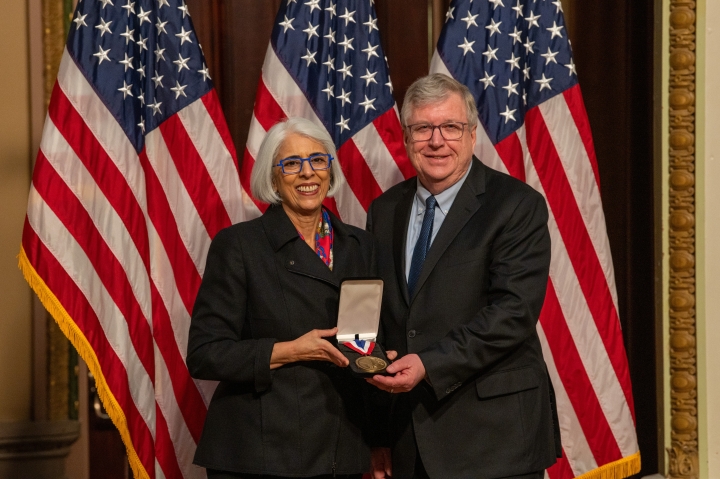
Eric R. Fossum is the John H. Krehbiel Sr. Professor for Emerging Technologies at the Thayer School of Engineering at Dartmouth College. He serves as Vice Provost for Entrepreneurship and Technology Transfer and Director of Dartmouth's PhD Innovation Program. As one of the world's leading experts in solid-state image sensors, he invented the CMOS active pixel sensor technology that revolutionized digital imaging in smartphones, medical devices, and automotive systems. His work has earned him numerous accolades, including the National Medal of Technology and Innovation (2025) and the Queen Elizabeth Prize (2017). His research interests focus on: Solid-state image sensors (CCDs, CMOS active pixel sensors, Quanta Image Sensors) Advanced imaging systems and on-chip processing New applications for image sensors in medicine, security, and space Dr. Fossum's recent publications demonstrate significant advancements in: Photon-counting sensors for low-light applications High-speed imaging for microscopy and radiography Backside-illuminated and sub-diffraction-limit pixel designs Quantum random number generation using sensor technology Infrared spectral extension of CMOS sensors His scientific awards include: National Medal of Technology and Innovation (2025) Queen Elizabeth Prize for Engineering (2017) IEEE Andrew S. Grove Award (2009) Induction into National Inventors Hall of Fame (2011) Emmy Award for Technology & Engineering (2021) Doctor of Science, Honoris Causa from Trinity College (2014) As an entrepreneurial leader, Dr. Fossum has: Co-founded Gigajot Technology with former PhD students Previously led Photobit and Siimpel Corporations Active participant in technology transfer initiatives at Dartmouth Founder and Past President of the International Image Sensor Society
Ireneusz Winnicki is a **Full Professor** at the **Military University of Technology**, affiliated with the **Faculty of Civil Engineering, Geodesy and Transport**. His research focuses on **meteorological modeling**, **numerical methods**, **remote sensing**, and **applied mathematics**, with applications in transport safety and environmental monitoring. **Research Interests**: He specializes in advanced numerical techniques for solving nonlinear systems (e.g., Newton’s method), high-order differential equation modeling (Beam–Warming, Lax-Wendroff), and radar-based precipitation intensity analysis. His work integrates atmospheric dynamics, image processing (Laplace contour filters), and parallel computing for weather forecasting and hazard prediction. **Collaborations and Impact**: He has extensive collaborations, notably with **Sławomir Pietrek** (14 joint publications). His research addresses critical challenges like frontogenesis/frontolysis modeling, MODIS satellite data analysis for visibility prediction, and urban development cartography in protected areas. **Awards and Recognition**: No scientific awards are explicitly mentioned in the provided texts. **Advising and Grants**: No advised students or specific grants are listed, though his work suggests involvement in research projects related to meteorological radar systems and numerical modeling.
Dr. Francis Gacenga, currently at the University of Southern Queensland (UniSQ), serves as a Senior Digital Research Advisor in the Research Infrastructure Admin department. He is affiliated with the Centre for Sustainable Agricultural Systems and Institute for Advanced Engineering and Space Sciences. PhD in Information Systems (USQ, 2013) MBA (University of Nairobi, 2000) Graduate Diploma in MIS (University of Greenwich, 2003) BA(Hons) from Kenyatta University (1997) With over 20 years of experience in IT and academic research, Dr. Gacenga specializes in Research Data Management (RDM), IT Service Management (ITSM), Digital Research Infrastructure, and Design Science. His work focuses on applying FAIR (Findable, Accessible, Interoperable, Reusable) data principles to agricultural and environmental domains. The 15 most recent publications reveal a trajectory from foundational ITSM research (2010-2016) to agricultural data platforms (2019-2024). Key themes include FAIR data implementation, cloud computing integration, reproducible research frameworks, and cross-disciplinary agricultural applications. Senior Member of Australian Computer Society (since 2009) Former Chair of ACS Toowoomba Chapter As Principal Investigator for grants totaling over $500k from GRDC, Soils CRC, and ARDC, he leads digital infrastructure projects. He also supervises Doctoral candidates and contributes to national cybersecurity and data policy committees.
Josep Casanovas is a Full Professor at the Statistics and Operations Research Department of the Technical University of Catalonia (UPC), affiliated with the Barcelona School of Informatics. He previously served as head of inLab FIB (2012-2020) and as dean (1998-2004) and vice-rector (2006-2011) of UPC, leading strategic initiatives in university governance and ICT policies. His research focuses on Modelling and Simulation , Internet and Information Systems , and Urban Mobility . He has led projects for the European Union, including C-ROADS Spain, REMEDiAL, and ECHORD++, addressing intelligent transport, software automation, and robotic innovation. Recent publications highlight his work on agent-based simulation for urban health, deep learning applications in traffic and energy savings, and wildfire management tools . He co-directs LogiSim and coordinates the Severo Ochoa Research Excellence Program at the Barcelona Supercomputing Center (BSC-CNS).
Assoc. Prof. Dr. Onur Behzat Tokdemir is an Associate Professor in the Civil Engineering Department at Istanbul Technical University (ITU), with prior affiliation at Middle East Technical University (METU). His expertise spans Construction Technologies, Project Management, and Construction Management, with a focus on integrating Artificial Intelligence (AI) and Machine Learning (ML) into infrastructure development. He holds a Ph.D. from Illinois Institute of Technology and has extensive industry experience in project management roles with firms like Renaissance Holding and Qatar Project Management. Education: B.Sc. from METU (1990-1995), M.Sc. from Illinois Tech (1995-1997), Ph.D. from Illinois Tech (1997-2003). His research emphasizes AI-driven solutions for construction safety, cost prediction, and digital twin applications. Notable projects include the EU-funded 'DIGITWINS4CIUE' and the strategic tender decision support system leveraging ML. Awards include the ITU Academic Performance Publication Award (2022-2024) and METU's Prof. Dr. Mustafa N. Parlar Award (2019). He has advised over 15 theses on topics like AI in safety assessment, labor efficiency prediction, and post-disaster housing frameworks. Active memberships include the American Society of Civil Engineers (ASCE) and the Chamber of Civil Engineers.
Marvin Onabajo is a Professor and Associate Chair for Faculty Affairs in the Department of Electrical and Computer Engineering at Northeastern University. He holds a Ph.D. from Texas A&M University and has industry experience at Intel Corp. and Broadcom Corp. His research focuses on analog/RF integrated circuits, built-in test techniques, on-chip thermal monitoring, and medical applications. He leads the Analog & Mixed-Signal Integrated Circuit (AMSIC) Research Laboratory. Education: B.S. (summa cum laude) from University of Texas at Arlington (2003), M.S. and Ph.D. from Texas A&M University (2007, 2011). Awards: NSF CAREER Award, ARO Young Investigator Program Award, Martin Essigman Teaching Award. Grants: NSF RINGS Project ($1M), NSF Low-Power Computing Grants, ARO Thermal Sensing Project. Research interests include low-power computing, self-adaptive RF receivers, and IoT resilience. He advises over 20 graduate students and has supervised numerous MS/Ph.D. theses and industry internships. His work integrates circuit design with machine learning for enhanced system performance. Labs: AMSIC Lab, Northeastern Energy-Efficient Systems Lab, Restuccia Lab. Collaborates with industry partners like Analog Devices and MIT Lincoln Laboratory.