Andrew Rau-ChaplinView profile
Professor
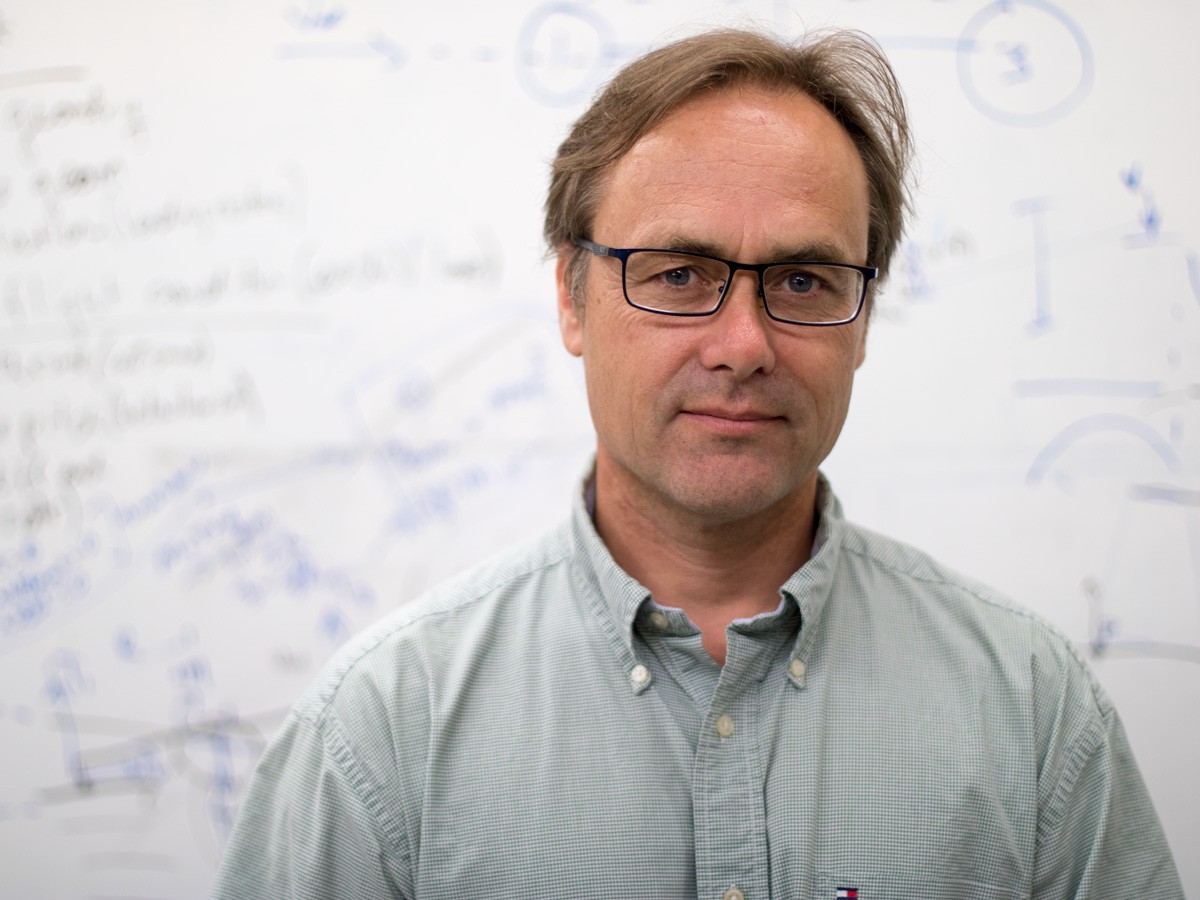
Andrew Rau-Chaplin is a Professor and Dean of the Faculty of Computer Science at Dalhousie University, where he leads the Risk Analytics Lab and contributes significantly to research in high performance computing, parallel algorithms, and risk analytics. He is affiliated with the Institute for Big Data Analytics and has a strong academic and administrative presence. Education: Postdoc - DIMCS (Princeton, Rutgers, Bell Labs) PhD - Carleton University (1993) MCS - Carleton University (1990) BCS - York University (1986) His research focuses on applying parallel and high performance computing to data-intensive domains such as data warehousing, OLAP, catastrophe modeling, and risk analytics. He emphasizes both algorithmic design and practical system implementation, with a strong grounding in experimental evaluation. His work spans theoretical studies and real-world applications in finance, bioinformatics, and geospatial systems. The 15 most recent publications reflect a consistent focus on parallel data processing, OLAP optimization, indexing techniques (e.g., Hilbert curves), and risk modeling. Key themes include scalable data cube computation, view selection, adaptive coding, and spatial analytics, demonstrating expertise in both algorithmic innovation and systems-level performance. He has served on numerous scientific committees and grant panels, including NSERC and Compute Canada, and has been a journal editor for JPDC and DMTCS. Dr. Rau-Chaplin has supervised a wide range of graduate students in areas including risk analytics, GPU computing, text analytics, and parallel algorithms. His lab has received funding for postdoctoral, graduate, and undergraduate research positions. He teaches courses such as Parallel Computing, Software Engineering, Data Structures, and Risk Analytics, and has developed software tools like LaHave, Clustal XP, and Digital Coliseum. His lab, the Risk Analytics Lab, focuses on integrating analytics, risk management, and HPC for challenges in catastrophe modeling and financial risk. The lab leverages technologies such as stochastic simulation, optimization, and spatial OLAP.