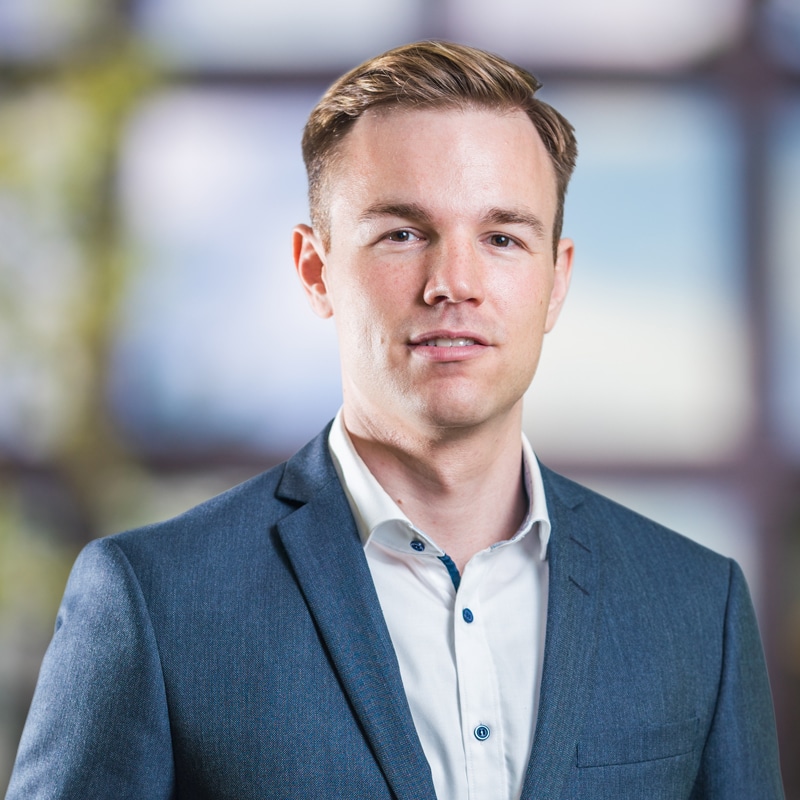
Frederik Hesse is a postdoctoral researcher and lecturer at the Institute for Leadership and Human Resource Management (IFPM-HSG) of the University of St.Gallen. His work focuses on leadership dynamics, organizational culture, and employer attractiveness in the context of labor shortages. Research Interests: Hesse explores how modern leadership practices and cultural factors like trust and flexibility influence employee retention and company appeal. His studies address the 'acceleration trap' of overwork and its impact on organizational energy. Publications: Recent articles analyze cross-generational leadership strategies and actionable frameworks for attracting skilled workers, reflecting trends in human resource management, labor economics, and organizational behavior. Labs & Collaborations: Affiliated with IFPM-HSG, a research hub for leadership studies at the University of St.Gallen.
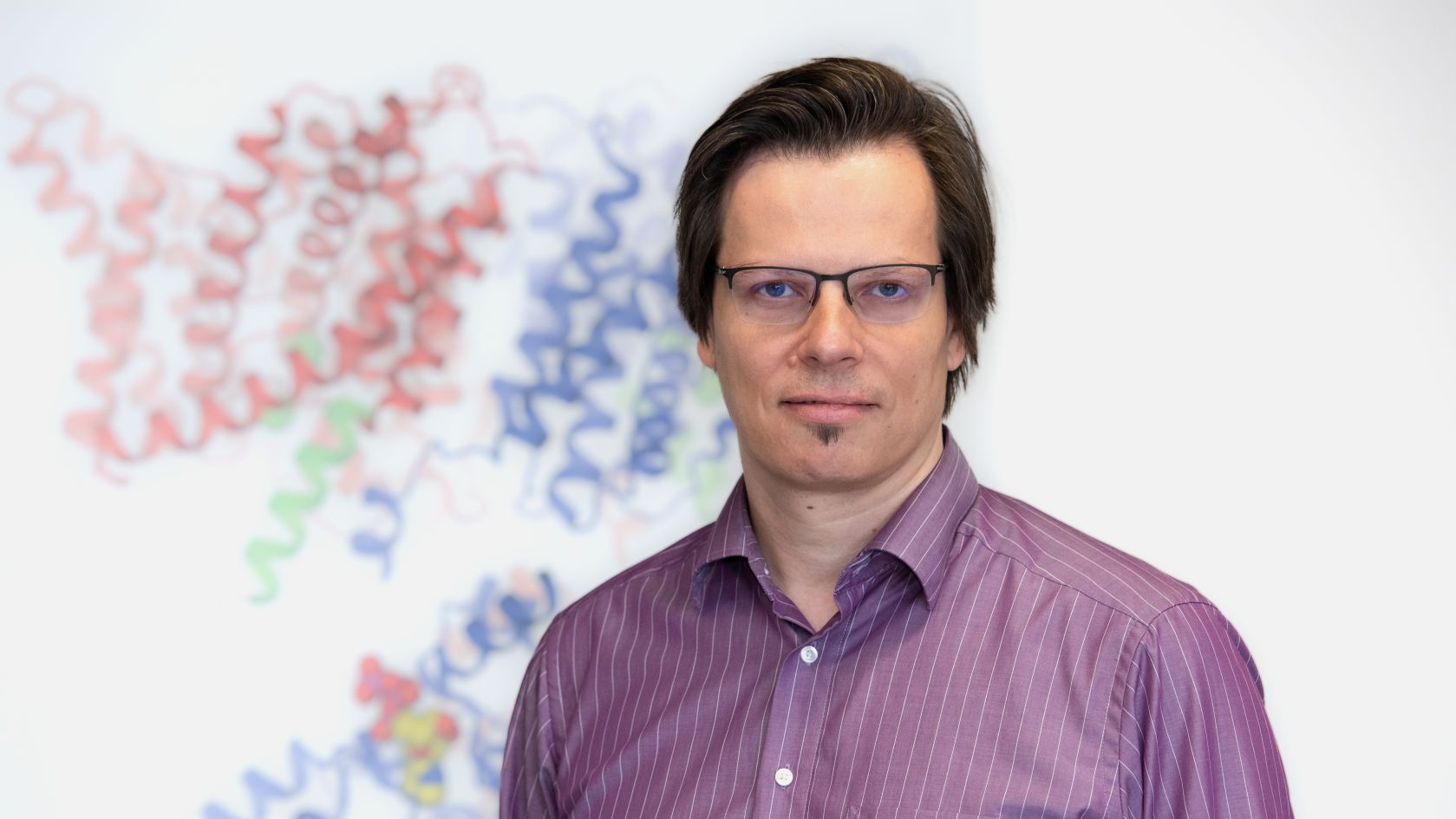
Andreas Vitalis is a Senior Scientist in the Department of Biochemistry at the University of Zurich, where he leads the development of molecular simulation software (CAMPARI) and research platforms. He holds a Ph.D. in Molecular Biophysics from Washington University (St. Louis) and conducted postdoctoral research at UC San Diego and Zurich. His expertise spans protein aggregation mechanisms, computational biophysics, and high-performance computing. Education: Ph.D. in Molecular Biophysics, Washington University in St. Louis (2003-2009) Research Scholar, University of California San Diego (2001-2002) Diploma in Biochemistry, Ruhr-Universität Bochum (1998-2001) Research Interests: Protein aggregation (Alzheimer's, Huntington's diseases) Molecular simulation methods (enhanced sampling, FAIR data) Drug discovery platforms and computational tools Neuroscience applications of biophysical modeling His work bridges computational methods with experimental biology, emphasizing scalable solutions for complex systems. Key contributions include CAMPARI software and FAIR-compliant data management frameworks.
JingJing Li is a Researcher affiliated with the Professorship for Computational Physics at ETH Zürich. Their work is centered within the domain of computational and theoretical physics, focusing on areas such as quantum mechanics and numerical simulations. Located in Zürich, Switzerland, they can be reached at jingjli@student.ethz.ch .
Prof. François Avellan is a prominent academic at École Polytechnique Fédérale de Lausanne (EPFL), affiliated with the School of Basic Sciences and the Department of Mechanical Engineering. His research focuses on hydraulic machinery, particularly Francis turbines, Pelton turbines, and cavitation phenomena. Key areas include CFD simulations, turbine design optimization, and hydropower system analysis. He leads projects like DuoTurbo (counter-rotating hydroturbines for energy recovery) and investigates fluid-structure interactions in off-design turbine operations. His work bridges experimental fluid mechanics with computational modeling, addressing challenges in renewable energy and grid stability. Education details are not explicitly provided in the text, but his extensive scholarly output indicates a strong academic background in mechanical engineering and fluid dynamics. Collaborations with institutions like the Laboratory of Hydraulic Machines (LMH) and the Swiss Federal Institute of Technology underscore his interdisciplinary involvement. Research interests emphasize cavitation dynamics, turbine instability mechanisms, and hydroacoustic resonance prevention. Recent studies explore part-load resonance risks, vortex rope behavior, and the integration of emerging hydropower technologies. His contributions span both fundamental and applied research, impacting turbine efficiency, energy recovery systems, and sustainable energy solutions. Publications highlight advancements in CFD validation, particle-based methods for erosion prediction, and predictive control of unstable flows. Innovations like the Y-junction hydraulic short-circuit and variable-speed pump-turbine simulations demonstrate practical applications of his research. Ongoing work includes multiscale erosion modeling and strategic hydropower potential assessments for Switzerland. Laboratory affiliations include the Laboratory of Hydraulic Machines (LMH), where experimental facilities support his investigations into turbine dynamics and fluid mechanics. His research directly informs industrial practices in hydropower plant design and operational reliability.
Matija Piškorec is a Senior Research Associate at the Faculty of Informatics, University of Zurich. His research spans machine learning, complex systems, and blockchain technologies, with a focus on statistical inference of social influence and network analysis. Primary Affiliation: Faculty of Informatics, University of Zurich Research Interests Machine learning and complex systems Statistical inference of influence in online social networks Blockchain technologies and distributed ledger systems Information visualization and interactive web applications in computational biology Publications His recent work explores blockchain networks like Polkadot and Ethereum, analyzing their structure and consensus mechanisms. Earlier research focuses on social network influence, financial data cohesiveness, and computational biology tools. Awards No scientific awards or honors were explicitly mentioned in the text. Additional Contributions Developed web-based visualization tools (e.g., MultiNets) and applied machine learning to diverse domains, including microbiology and finance.
Dr. Taehoon Kim is a Senior Research Associate at the Blockchain Centre at the University of Zurich, specializing in computational science, blockchain technology, and network analysis. His work bridges theoretical research with practical applications in complex systems. Education: PhD in Biosystems Science and Engineering His research focuses on blockchain dynamics, particularly EVM chains and smart contract development using Solidity. He also explores graph representation learning, network science, and high-performance computing solutions for data-intensive projects at the university's Blockchain and Distributed Ledger Technologies (BDLT) lab. Currently, no scientific awards or publications are listed in the provided text. Taehoon contributes to data observatory initiatives and integrates cloud technologies into his computational frameworks.
Juan Carlos Farah is a Researcher at the École Polytechnique Fédérale de Lausanne (EPFL), holding dual appointments in the Fondation Bertarelli Chair in Neuroprosthétique Cognitive (School of Life Sciences/SV) and the SCI-STI-DG group (School of Engineering/STI). His work bridges neuroscience, artificial intelligence, and educational technology, focusing on innovative applications of AI in learning environments and neuroprosthetics research. Research Interests: Farah’s research spans educational chatbot design, AI-enhanced learning analytics, neuroprosthetic systems, and the ethical integration of technology in education. He has pioneered frameworks for task-oriented conversational agents, blockchain-based learning trace repositories, and gamified computational thinking tools. Key Projects: He contributed to the Graasp Desktop initiative for underconnected African schools and developed the TRACE model for educational chatbots. His work on code review notebooks and bot-mediated software engineering education has influenced pedagogical practices globally. Awards & Recognition: No specific awards listed, but his publications reflect high-impact contributions to IEEE, ACM, and Elsevier journals/conferences. Active in global initiatives like UNESCO’s Unequal World Conference on education equity. Technical Expertise: Proficient in Python, JavaScript, and AI toolkits. Specializes in building scalable educational platforms, learning analytics pipelines, and neuroimaging analysis for cognitive studies.
Dr. Amit Jamadagni Gangapuram is a researcher with expertise in quantum computing and computational physics. He is associated with ORCID ID 0000-0001-7631-1065 and has contributed to the field of quantum simulation software benchmarking. Research Interests His work focuses on quantum computing , computer simulation , and software engineering , particularly in evaluating quantum computer simulation tools. Recent publications highlight his contributions to computational physics and high-performance computing. Publications A key publication in 2024 titled Benchmarking quantum computer simulation software packages: State vector simulators explores advancements in quantum simulation methodologies.
Prof. Giuseppe Carleo is a Professor specializing in quantum computing and machine learning for quantum many-body systems, renowned for developing the NetKet open-source software library. His research bridges theoretical physics and artificial intelligence to solve complex quantum problems. His primary research interests include: Variational quantum algorithms and neural quantum states Simulation of quantum dynamics and non-equilibrium phenomena Hamiltonian reconstruction and learning Open-source tool development for quantum simulation Recent publications (2022-2025) demonstrate leadership in applying machine learning to quantum systems, with breakthroughs in Bose gas dynamics, noise resilience in quantum state propagation, and scalable software frameworks. The NetKet project has become a cornerstone for researchers globally, enabling neural-network-based quantum simulations. While specific mentorship details are unreported, his collaborative publications indicate active supervision of computational physics projects. His work drives innovation in quantum computing infrastructure, with implications for quantum hardware development and algorithm design.
Prof. Tobias Donner is a faculty member at ETH Zurich, affiliated with the Quantum Optics research group. His work centers on theoretical and computational approaches to quantum many-body systems, with a focus on quantum simulations, cavity quantum electrodynamics, and GPU-accelerated computational methods. Research Interests: His expertise spans quantum optics, many-body physics, and computational physics. Key areas include: Quantum simulations of Bose-Einstein condensates Cavity QED phenomena GPU-based solvers for quantum equations Floquet engineering in polaritonic systems High-performance computing for quantum problems Publication Trends: Recent articles (2022–2024) emphasize computational tool development for quantum many-body systems, including GPU-accelerated solvers (e.g., TorchGPE) and theoretical studies of multimode-polariton dynamics using Floquet methods. Dominant themes include quantum simulations, open-source software, and light-matter interactions. Affiliation Context: He contributes to the Quantum Optics group at ETH Zurich, which explores quantum many-body phenomena, quantum simulations, and photonic systems.
Ayan Chakraborty is a Research Fellow at the École Polytechnique Fédérale de Lausanne (EPFL) , affiliated with the School of Computer and Communication Sciences and the Department of Computer Science . He works at the Parallel Systems Architecture Laboratory (PARSA) and is part of the doctoral program in computer and communication sciences. Bachelor of Technology in Electronics & Electrical Communications Engineering (E&ECE) from IIT Kharagpur, 2022 Minor in Computer Science & Engineering (CSE) at IIT Kharagpur Ayan’s research focuses on building high-performance scalable computing systems for future server workloads using a hardware-software co-design approach. His prior work includes developing Electronic Design Automation (EDA) tools for analog circuit verification and exploring High-Level Synthesis (HLS) for accelerators via functional programming. He also has industrial experience in formal verification at NVIDIA. He serves as President of the EPFL PhDs of I&C (EPIC) association and is based at EPFL’s INJ 215 office.
Fabio Marcinno is a Researcher affiliated with the School of Basic Sciences at École polytechnique fédérale de Lausanne (EPFL), specializing in the Department of Mathematics. He is associated with the Chair of Numerical Modelling and Simulation (MNS) and the Doctoral Program in Mathematics (EDMA). His contact details include the email fabio.marcinno@epfl.ch and office address at MA C2 557, Bâtiment MA, Station 8, Lausanne, Switzerland. Institution: EPFL School: School of Basic Sciences Department: Mathematics Chair: Numerical Modelling and Simulation (MNS) His research focuses on numerical methods and computational techniques within mathematical sciences, aligning with the objectives of the Chair of Numerical Modelling and Simulation. More information about his research group can be found at the MNS website .
Peter Oehme serves as a Researcher and Doctoral Assistant at the Numerical Algorithms and High-Performance Computing Chair (ANCHP) within the Department of Mathematics, School of Basic Sciences at École Polytechnique Fédérale de Lausanne (EPFL). Concurrently, he is a doctoral candidate in the Doctoral Program in Mathematics (EDMA) and acts as Webmaster for the SIAM Student Chapter, managing its digital presence. His research centers on Numerical Algorithms and High-Performance Computing , with specialization in computational mathematics and parallel algorithm design. These fields focus on developing efficient computational methods for solving complex mathematical problems using advanced parallel architectures, contributing to scientific computing across engineering and physical sciences. As a core member of the ANCHP research group, Peter advances numerical simulation techniques while actively supporting academic community engagement through SIAM. Contact details: peter.oehme@epfl.ch .
Nian Shao is a Researcher at the Department of Mathematics, School of Basic Sciences, École Polytechnique Fédérale de Lausanne (EPFL), affiliated with the Numerical Algorithms and High-Performance Computing group under the CADMOS Chair. His work focuses on computational methods and advanced numerical algorithms. Email: nian.shao@epfl.ch Research interests include Numerical Algorithms , High-Performance Computing , Computational Mathematics , Applied Mathematics , Scientific Computing , and Computer Science . Office: MA B2 454 (Bâtiment MA), Station 8, Lausanne.
Philipp Christoph Weder is a Doctoral Assistant and PhD candidate at the Chair of Numerical Modelling and Simulation (MNS) within the Department of Mathematics at École Polytechnique Fédérale de Lausanne (EPFL). He is supervised by Prof. Annalisa Buffa and specializes in isogeometric analysis, analysis-aware defeaturing, and nonlinear model reduction techniques. His academic background includes a Master’s in Computational Sciences and Engineering and a Bachelor’s in Mathematics from ETH Zürich. Research Interests Isogeometric Analysis Numerical Methods for Partial Differential Equations Machine Learning in Scientific Computing Wave Propagation Modeling Computational Physics Fluid Dynamics at Low Reynolds Numbers Recent Publications and Preprints 2025: Galerkin Neural Network-POD for Wave Propagation 2025: Neural Galerkin Schemes on Quadratic Manifolds 2025: Lumped Parameter Modeling for Congenital Heart Syndromes 2022: Stokesian Microswimmer Optimization Scientific Recognition EPFL PhD Excellence Program (2025) Teaching and Collaboration Main Teaching Assistant for Parallel and High-Performance Computing (2025) and Analysis III (2024) at EPFL Contributions to international conferences like the Swiss Numerics Day 2025 and the Functional Imaging and Modeling of the Heart International Conference (2025) Active participation in research networks including the SIAM Student Chapter at EPFL