Ola Jetlund is an Associate Professor at the Faculty of Technology, Art and Design, Department of Mechanical, Electrical and Chemical Engineering, Oslo Metropolitan University. His work focuses on electronics, signal processing, and digital education. Education: Doctor Engineer (PhD) in Electronics and Signal Processing Research Interests: Jetlund's research spans adaptive multimedia streaming, channel coding optimization, and digital pedagogy. He contributes to the ADvanced hEalth intelligence and brain-insPired Technologies (ADEPT) research group. Publication Trends: His recent works emphasize community-based digital teaching methods and historical contributions to adaptive coded modulation schemes for wireless networks. Administrative Roles: Currently serves as Head of Studies in Electronics and Electrical Engineering.
Katalin Vertes is an Associate Professor at the Department of Engineering Sciences, University of Agder. She holds an MSc in Structural Engineering & Geotechnics (2000) and a PhD in Civil Engineering (2006) focused on steel semi-rigid connections and chain bridge eye-bars. Research Focus: Steel structures, Ultra-High Performance Concrete (UHPC), Finite Element Method (FEM), lifecycle analysis, and bridge engineering. Key Publications (2017-2020): Explored fiber-reinforced UHPC optimization, environmental impact of UHPC, and lifecycle assessment of timber/concrete bridges. Teaching: Courses in steel/timber structures, FEM, aluminum/timber materials, and structural lifecycle analysis. Collaborations: Worked on multidisciplinary projects with researchers like Ingrid Lande Larsen, Reyn Joseph O'Born, and Miklós Iványi.
Eivind Brodal is an Associate Professor at UiT The Arctic University of Norway, affiliated with the Department of Automation and Process Technology. His research focuses on heat pumps, process modeling and optimization, energy efficiency, and carbon capture technologies. Teaches Technical Thermodynamics and Heat Pumping Processes Supervises master's and PhD engineering students His work addresses energy challenges in cold climates, including CO2 liquefaction, LNG cascade processes, and hydrogen pre-cooling optimization. He contributes to advancing refrigeration technologies and sustainable energy systems through computational modeling and industrial applications. Brodal collaborates on energy efficiency projects and co-develops mathematical models for thermal systems. His recent publications emphasize heat exchanger optimization, pinch point analysis, and ambient temperature impacts on process performance. He is a member of the IR, Spectroscopy, and Numerical Modelling Research Group, operating from room 4.024 in Teknologibygget Tromsø.
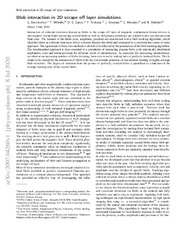
Gregor Decristoforo is a plasma physics researcher at UiT The Arctic University of Norway specializing in computational modeling of magnetically confined fusion plasmas. His work focuses on turbulence and transport phenomena in scrape-off layers, particularly studying blob dynamics and intermittent fluctuations critical for fusion energy development. His research interests span plasma turbulence modeling , computational physics , and fusion boundary layer phenomena . Using advanced numerical simulations and stochastic modeling techniques, he investigates coherent structures in magnetized plasmas, developing blob tracking algorithms and GPU-accelerated computation methods to analyze cross-field particle transport mechanisms. His publication record shows consistent research output from Master's research (2016) through doctoral work (2021) to recent first-author journal articles (2024), demonstrating ongoing contributions to understanding plasma exhaust processes in magnetic confinement devices. Current work examines RF-induced flow effects during ion cyclotron resonance heating, addressing key challenges in mitigating scrape-off layer transport for viable fusion energy production.
Elisavet Kozyri is an Associate Professor at UiT The Arctic University of Norway's Department of Informatics within the Faculty of Science and Technology, where she conducts research in computer security and information flow control. Her office is located in Realfagbygget A232 in Tromsø. Her research focuses on: Information flow properties and enforcement mechanisms Privacy-preserving technologies and GDPR compliance Reactive information flow systems Formal methods for security verification Diversity and inclusion in computer science education She leads the Better Balance in Informatics (BBI) project and participates in the Cyber Security Group (CSG). Her publications demonstrate a consistent focus on information flow control, privacy enforcement, and security formalization, with recent expansion into educational equity research. Analysis shows strong emphasis on: Formal modeling of security properties (60% of publications) Practical implementation of privacy frameworks (25%) Educational initiatives in computer science (15%) Teaching responsibilities include: Advanced Computer Security (2023-2025) Computer Security (2022-2025) Computer Communication (2022) Professional activities include: IEEE Computer Security Foundations Symposium PC member (2021-2026) Deputy Representative to Informatics Europe (2023-present) EUGAIN Management Committee member (2022-2024)
Alexander Lincoln Read is a Professor at the University of Oslo's High Energy Physics department, specializing in precision measurements of the Higgs boson through the ATLAS experiment at CERN. His research bridges particle physics and advanced statistical/data analysis methods. Education: BS (1981, University of Illinois) | PhD (1986, University of Colorado) Employment: NAVF Scientific Assistant (1986-89) | CERN Scientific Associate (1989-91) | Professor (1993-present) Research Focus: Higgs boson properties, Dark Matter connections, CLs statistical technique, Compressed Sensing, Gaussian Processes, and Machine Learning applications in particle physics. Scientific Contributions: Key role in Higgs boson discovery (2012), development of the CLs method, and detector calibration innovations. Scientific awards: CLs technique creator | Higgs discovery contributor Projects: ATLAS experiment, NorLHC (extreme collision rates), Insights ITN (statistics network), Strategic Dark Matter Initiative.
Alessandro Gatti is a Doctoral Research Fellow at the University of Oslo , affiliated with the Faculty of Mathematics and Natural Sciences and the Networks and Distributed Systems research group. His work focuses on computational biology, high-performance computing, and scientific computing. Under the supervision of Prof. Tor Skeie, Prof. Xing Cai, Dr. Hermenegild Arevalo, and Prof. Andrew McCulloch, he contributes to a project titled "Using personalized cardiac models to predict patient risk to arrhythmias and optimal therapy in patients with congenital heart disease." Email: alessaga@ifi.uio.no Contact: Mobile +47 92022677 | Room 315 | Kristian Augusts gate 23, 0164 Oslo
Per Erik Vullum is a Professor at the Norwegian University of Science and Technology (NTNU) with extensive research contributions in materials science, electron microscopy, and related fields. His work spans multiple disciplines including battery technology, semiconductor research, and crystallography. Dr. Vullum's research focuses on atomic-scale imaging , nanomaterials characterization , and advanced electron microscopy techniques . He has made significant contributions to the development of Atomap, a software tool for automated analysis of atomic resolution STEM images. His work bridges fundamental materials science with practical applications in energy storage, semiconductor technology, and advanced manufacturing. His publication record shows consistent high-impact research output with recent work (2022-2024) focusing on: Atomic-scale 3D imaging of dopant atoms in oxide semiconductors Advanced characterization of MXene materials Intermetallic phase growth in dissimilar metal joining Ferroelectric materials with tetragonal tungsten bronze structures Dr. Vullum has received recognition through numerous peer-reviewed publications in high-impact journals, demonstrating his standing in the materials science community. His collaborative work spans multiple departments and institutions, reflecting the interdisciplinary nature of modern materials research. His research has important implications for clean energy technologies, advanced electronics, and materials characterization methodologies. The development of Atomap has particularly enhanced the field's ability to extract meaningful data from complex atomic resolution images.
Dolores Modic is a researcher at the Division of Innovation and Entrepreneurship at Nord University. Her primary research interests include technology transfer, intellectual property rights (IPR) management, university-industry collaboration, patent informatics, and circular economy. She has led numerous projects sponsored by funding agencies across Europe, USA, and Asia, serving as a project author, PI, team member, and coordinator. Her work focuses on understanding complex systems in innovation, particularly in circular economy and data-driven IPR management. She contributes to the field through interdisciplinary collaboration and international team coordination. Scientific Awards: JSPS Fellow in Japan (2016-2018) Fulbright Scholar in U.S.A. (2015) She actively participates in projects involving public procurement, patent data, and innovation ecosystems, with recent publications in journals like Environmental Technology & Innovation, IEEE Transactions on Engineering Management, and Research Policy.
Bo Jiang is a Postdoctoral Fellow in the Department of Chemistry at the University of Oslo's Faculty of Mathematics and Natural Sciences, where he conducts research in the Electrochemistry Research Group. His work bridges fundamental materials science with practical applications in energy technologies. Dr. Jiang's research interests span multiple domains of advanced materials, with particular focus on: Electrochemistry and solid-state ionics Energy storage materials for batteries (potassium-ion and magnesium systems) Lead-free ferroelectric and piezoelectric materials Perovskite oxide materials and their structural properties Nanostructured electrode materials for electrochemical applications Analysis of Dr. Jiang's publication record (2016-2025) reveals a consistent research trajectory focused on structure-property relationships in functional materials. His work shows increasing sophistication in combining computational methods with experimental validation, particularly in understanding local structural disorder in complex materials. The publications demonstrate strong international collaboration and a focus on both fundamental mechanisms and practical applications in energy technologies. Dr. Jiang's research program addresses critical challenges in sustainable energy technologies, with particular emphasis on developing alternatives to lithium-ion battery systems and lead-based piezoelectrics. His work on potassium-ion battery materials and lead-free ferroelectrics positions him at the forefront of environmentally conscious materials development. As a Postdoctoral Fellow, Dr. Jiang actively contributes to the research ecosystem at the University of Oslo, collaborating with senior researchers like Professor Sverre Magnus Selbach while developing his independent research profile. His work demonstrates the capacity for both theoretical insight and practical materials development.
Leiv Rønneberg is a Postdoctoral Fellow in Statistics and Data Science at the University of Oslo (UiO), with a primary affiliation at the Department of Mathematics. His research focuses on Bayesian statistical methods, machine learning, and data science, particularly applied to biomedical and astrophysical domains. Key research trends in his publications include: Development of flexible Bayesian models (FlexKnot, bayesynergy) for complex datasets Applications in 21 cm cosmological signal processing and drug combination analysis Creation of bioinformatics tools (screenwerk) for experimental design Interdisciplinary work spanning astrophysics, pharmacology, and sports science Scientific Awards: No awards explicitly mentioned in the provided text. Students: No advisees or students listed in the current description.
Ernst Gunnar Gran is Associate Professor at the Department of Information Security and Communication Technology at the Norwegian University of Science and Technology (NTNU), where he heads the communication technology discipline. He also holds an adjunct research scientist position at Simula Research Laboratory, where he headed the Cloud department until December 2016. His research spans high performance computing (HPC), HPC interconnection networks, enterprise data centre networks, cloud computing, and data-intensive processing in multi-clouds. He serves as the Scientific Leader of Communication Technologies in the RCN-funded infrastructure project eX3 (Experimental Infrastructure for Exploration of Exascale Computing) and has significant experience with both RCN-funded and EU-funded research projects, including the H2020 project Melodic (Multi-cloud Execution-ware for Large-scale Optimised Data-Intensive Computing). Gran received his M.Sc. and Ph.D. degrees in computer science from the Department of Informatics, University of Oslo, in 2007 and 2014, respectively. Both theses focused on different aspects of resource management in high performance interconnection networks. He previously headed the RCN-funded project ERAC (Efficient and Robust Architecture for Big Data Clouds) and led the design, implementation, and deployment of the multi-homed IP-based research testbed NorNet Core. Gran also has several years of experience as a system administrator and scientific programmer. His research interests center on the intersection of high performance computing and networking, with particular focus on anomaly detection in time series data, HPC interconnection networks, network virtualization, and cloud computing infrastructure. His work demonstrates a consistent evolution from fundamental networking research to applied solutions for modern computing challenges, particularly in IoT security and smart home applications. His recent publications show a strong emphasis on developing lightweight, real-time anomaly detection systems using deep learning techniques. Analysis of his publication trends reveals a clear progression from traditional HPC networking research toward time series anomaly detection applications, particularly for IoT systems. His 15 most recent publications show dual focus areas: approximately 60% concentrate on anomaly detection methods for time series data (particularly for IoT applications), while the remaining 40% maintain his foundational work in HPC networking, virtualization, and cloud infrastructure. This evolution demonstrates his ability to adapt core networking expertise to emerging application domains while maintaining technical depth. While no specific scientific awards are mentioned in the provided text, Gran's leadership roles in significant research projects (eX3, Melodic, ERAC) indicate recognition of his research capabilities within the academic and research funding communities. His position as Scientific Leader of Communication Technologies in the RCN-funded eX3 project further demonstrates his standing in the Norwegian research community. Gran's teaching responsibilities include serving as course coordinator for DCSG1006 Data Communication and Networks, DCSG2001 Interconnected Networks and Network Security, and Networks: Administration, Programming and Security. His research leadership extends to significant grant-funded projects, including the RCN-funded eX3 infrastructure project and the EU H2020 Melodic project. His previous leadership of the ERAC project and the NorNet Core research testbed demonstrates sustained ability to secure and manage substantial research funding. His laboratory and team affiliations include the Department of Information Security and Communication Technology at NTNU, where he heads the communication technology discipline, and Simula Research Laboratory, where he maintains an adjunct position. The NorNet Core research testbed, which he led the development of, represents a significant infrastructure contribution to the networking research community. His current work with the eX3 project suggests ongoing involvement in experimental infrastructure for exascale computing exploration.
Christian Johansen is a Professor in the Department of Information Security and Communication Technology at the Norwegian University of Science and Technology (NTNU), Faculty of Information Technology and Electrical Engineering. He leads the Systems Security group (S2G) and is affiliated with the Center for Cyber and Information Security (CCIS), the Norwegian Cyber Range, and the S2G Playground. Professor Johansen's research focuses on Security and Theoretical Computer Science, with emphasis on developing formal methods and tools for ensuring reliability of complex systems. His work spans security, safety, and concurrency properties in software systems, cyber-physical systems like Smart Grids, Internet of Things security, and modeling concurrency in multi-core and high-performance computing. Among his notable contributions are the Timed Distributed pi-calculus, ST-structures, Dynamic Structural Operational Semantics, Synchronous Kleene Algebra, and Higher Dimensional Modal Logic. His research interests include modeling of security protocols, programming language semantics, verification of distributed systems, concurrent systems modeling, and legal electronic contracts. His recent publications show a strong trend toward concurrency theory, security, and privacy, with significant contributions to pi-calculus variants, higher-dimensional automata, attribute-based encryption, and semantic access control frameworks. Many of his papers appear in top venues such as CONCUR, ATVA, FM, POST, CCS, JLAMP, IJCIP, FMSD, and LMCS. Professor Johansen actively mentors students and collaborators, having worked with Manish Shrestha on the LightSC Security Classification Method for Smart Grids and IoT, and with Bjørnar Luteberget on the SAT modulo Discrete Event Simulation method for railway capacity verification. He has secured funding from competitive sources including EU-FP7-FET-Young-Explorers, Horizon-2020, NFR-FRINATEK, UK's EPSRC, and ECSEL-JU. His work often bridges theoretical computer science with practical security applications in critical infrastructure domains.
Benjamin James Knox serves as an Adjunct Associate Professor at the Norwegian University of Science and Technology (NTNU), with his work based at the Gjøvik campus. His research bridges cybersecurity with cognitive science, focusing on human factors in cyber defense operations. He maintains an active research profile with numerous publications through NTNU's institutional repository. Dr. Knox's research interests center on the intersection of human cognition and cybersecurity, with significant contributions in cognitive agility for cyber operators, neuroergonomic approaches to threat identification, and the psychological dimensions of cyber warfare. His work explores how cognitive processes, emotional states, and team dynamics influence cyber situational awareness and decision-making in high-stakes environments. Recent research has expanded into extended reality training environments, individual risk assessment for cybersecurity personnel, and the application of digital twins for critical infrastructure protection. His publication record demonstrates consistent output across multiple high-impact venues including Frontiers in Education, IEEE Access, and Lecture Notes in Computer Science. Dr. Knox frequently collaborates with researchers across European institutions, particularly in Norway, Lithuania, and Germany, indicating strong international research networks. His work with NATO Science and Technology Organization highlights the strategic relevance of his research to defense applications. While specific laboratory affiliations aren't detailed in the available information, his publications suggest involvement with cyber defense simulation environments and neuroergonomic testing facilities. His recent focus on extended reality and digital twin technologies indicates engagement with advanced simulation platforms for cybersecurity training.
Muhammad Adnan serves as a Research Fellow at the Department of Technology and Safety, UiT The Arctic University of Norway, with contact details including email muhammad.adnan@uit.no and phone +47 77 66 02 47. His research spans critical domains in modern engineering and computer science, with primary focus areas: Autonomous Maritime Systems : Developing operational frameworks for remotely controlled vessels and onshore operation centers Machine Learning Applications : Advancing ensemble methods for classification, spam detection, and remote sensing Computer Vision Integration : Leveraging electro-optical/NIR sensors for maritime object detection Cybersecurity Solutions : Enhancing email security through stacking ensemble techniques Recent publications (2023-2024) reveal a concentrated research trajectory merging maritime autonomy with AI-driven solutions, demonstrating significant interdisciplinary work across navigation support systems, sensor fusion, and transfer learning applications. His output shows consistent publication in high-impact journals with practical engineering implementations. No scientific awards were documented in the provided materials. Information regarding student supervision, grant funding, or laboratory affiliations was not available in the source text.


.jpg)

.jpg)
