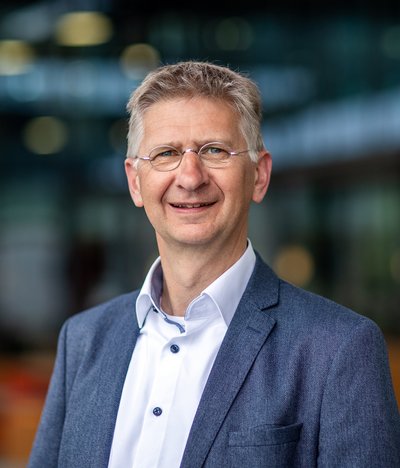
Abdel el Yaakoubi is a Researcher at Erasmus University Medical Center in the Hematology department. His work focuses on medical imaging, radiation therapy, and oncology-related research. Dr. el Yaakoubi's research interests center around medical imaging technologies, particularly Cone Beam Computed Tomography (CBCT) and Volume CT applications in radiation therapy. His work spans multiple clinical areas including prostate cancer treatment, pelvic region imaging, and cognitive function assessment in brain tumor patients. His recent publications demonstrate a strong focus on improving imaging technologies for radiation oncology applications. He has contributed to research on AI-based autosegmentation for CBCT systems, evaluation of new high-performance imaging systems for prostate cancer, and longitudinal studies examining cognitive function in glioma patients undergoing radiotherapy. His research has gained attention with citations across multiple platforms, including Scopus and Mendeley, with some of his work being picked up by news outlets and discussed on social media.
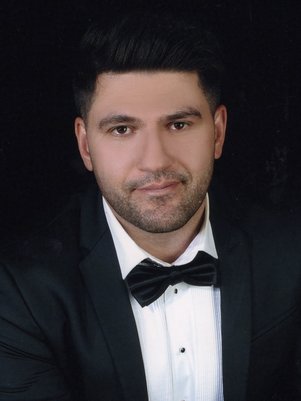
Theo Salet serves as Dean and Full Professor of Structural Design/Concrete Structures at the Department of the Built Environment (Eindhoven University of Technology). He pioneered research integrating design and construction in concrete through computational models like 'Parametric Design Tools' and 'Numerical Concrete' for advanced finite element analysis. Current affiliations: 3D Concrete Printing group, EAISI High Tech Systems, Built Environment department Research focus: 3D printing of functional construction materials, self-sensing concrete with embedded nanomaterials, Industry 4.0 applications in construction His recent publications analyze: (1) data-driven approaches to 3D concrete printing process monitoring (2025), (2) electrical conductivity modeling of carbon nanotube-cementitious materials (2024), and (3) real-time residence time measurement in concrete processing (2024). Research is supported by grants from the Dutch Research Council (NWO) and Saint-Gobain Weber Beamix. Key contributions include developing: (1) domain knowledge-enhanced sensor systems for moisture/heat monitoring in additive manufacturing, (2) analytical models for nanocomposite conductivity validation, and (3) experimental frameworks for improving 3D-printed concrete robustness. His lab operates a proprietary 3D concrete printer for structural applications and reinforcement embedding research.
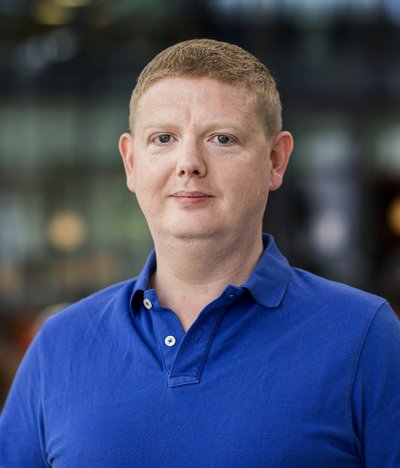
Mohammad Fotouhi is an Assistant Professor at Delft University of Technology's Faculty of Civil Engineering and Geosciences, specifically within the Materials, Mechanics, Management & Design (3MD) department. He has held academic positions at the University of Glasgow, University of the West of England, and University of Bristol, focusing on structural health monitoring and composite material development. PhD in Mechanical Engineering from Amirkabir University of Technology MSc and BSc in Mechanical Engineering from Amirkabir and Tabriz Universities His research spans bio-inspired composites , 4D printing , and smart materials , with emphasis on self-sensing , multi-functional composites , and damage detection . Recent work explores piezoelectric sensors for structural strain analysis and chaos-integrated neural networks for nonlinear regression. While no formal awards are listed, his publications demonstrate leadership in fatigue monitoring , impact damage detection , and hybrid material design . Collaborations with institutions like University of Bristol and ResearchGate profile highlight his academic network.
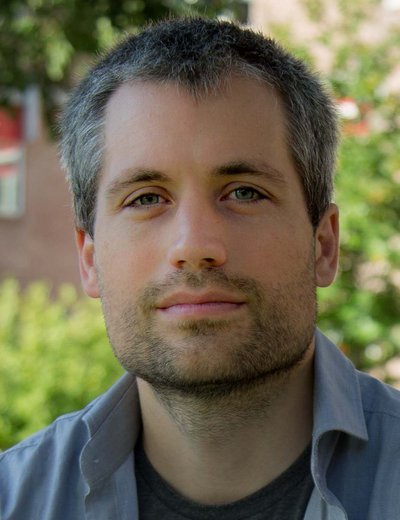
Marc Geilen is an Associate Professor at the Electronic Systems group of Eindhoven University of Technology (TU/e) . He leads the Model-Based Design Lab within the CompSOC Lab and High Tech Systems Center .
Andrew Nelson is a part-time Assistant Professor at the Electronic Systems department, College of Engineering , Eindhoven University of Technology . He also serves as a founder and R&D lead at Verintec Solutions B.V. . Research Focus : Predictable and composable embedded systems, real-time robotics, multi-sensor fusion for industrial positioning, multi-core processor optimization. Key Contributions : Development of the CompSOC platform, CompROS architecture for ROS2, and novel multi-rate control strategies. Recent Article Trends : His work emphasizes predictable execution on multi-core platforms, sensor fusion techniques (linear encoders + vision systems), and real-time robotics. Articles span 2015–2025, highlighting collaborations with institutions like TU/e and ECSEL JU grant projects IMOCO4.E (2021–2023) and COMP4DRONES (2021).
Jeroen Voeten is a Full Professor in the Electronic Systems group of the Department of Electrical Engineering at Eindhoven University of Technology (TU/e). He also holds a position as a Research Fellow at the Embedded Systems Institute in Eindhoven and is a Senior Scientist and Scientific Advisor to TNO-ESI since 2017. Academic Background: MSc in Mathematics and Computing Science (1991, TU/e) PhD in Electrical Engineering (1997, TU/e) Voeten's research focuses on formal methodologies for hardware/software system specification, design, and implementation. His work spans computer architectures, embedded systems, performance modeling, and cyber-physical systems. He is currently leading the Carm 2G project with ASML to enhance model-based engineering environments for wafer scanner control systems. His recent publications emphasize advancements in global scheduling, fault-tolerant real-time systems, and hybrid performance modeling. These studies address critical areas like latency reduction, schedulability improvements, and data age analysis in multi-rate task chains. Scientific Awards: Best Paper Award, Forum on Specification and Design Languages (FDL 2005) Best Paper Award, Property-Preserving Synthesis for Unified Control and Data-Oriented Models (2005) Voeten has contributed to 87 conference reports, 13 academic reports, 11 book chapters, and 11 journal articles, reflecting his extensive involvement in both academic and industrial research. Labs and Collaborations: He is affiliated with the Model-Based Design Lab and the High Tech Systems Center at TU/e, collaborating with institutions like TNO-ESI and industry leaders such ASML. His work aligns with the UN Sustainable Development Goals (SDGs) through applications in embedded systems and high-tech manufacturing.
Martin Schmettow is an Assistant Professor at the Digital Society Institute, affiliated with the Cognition, Data and Education school. His research spans interdisciplinary domains including human-AI interaction, usability evaluation, and applications in healthcare and robotics. Usability & User Experience Human-AI Interaction Neurological Clinical Research Ecological Remediation Recent publications focus on chatbot usability validation, postictal recovery analysis, and ant bioturbation impacts. He has developed multilanguage psychometric scales and contributed to Bayesian statistical methodologies in design research. Collaborations highlight intersections between simulation technology, wearable devices, and medical informatics. Key research areas evident from publications include: Usability engineering for high-risk systems Human factors in robotic surgery training Bayesian modeling applications Neurological recovery post-ECT studies Ecological rehabilitation strategies Human-robot interaction dynamics
Bruno F. Santos is an Assistant Professor in Airline Operations at Delft University of Technology's Faculty of Aerospace Engineering. His research bridges theoretical optimization methods with practical airline operations challenges, focusing on making aviation systems more efficient and sustainable through data-driven approaches. Dr. Santos's research interests center around aircraft maintenance optimization , predictive maintenance using AI , stochastic modeling for airline operations , and strategic planning for sustainable aviation . His work applies advanced computational techniques including Bayesian frameworks and deep reinforcement learning to solve real-world problems in the aviation industry. A key focus is transforming traditional fixed-schedule maintenance into condition-based approaches that respond to actual aircraft system health. His recent publications demonstrate a strong trajectory in high-impact journals, with a focus on counterfactual explanations for remaining useful life estimation, deep reinforcement learning for airport operations, and multidisciplinary coupling for hybrid-electric aircraft design. These works collectively address the critical challenge of making aviation more efficient, sustainable, and cost-effective through digital transformation. TRA VISIONS 2022 Senior Researcher Award Airborne AIAA Electrified Aircraft Technology Technical Committee Best Paper Award (2023) AIAA Software Best Paper Award (2024) Dr. Santos leads significant research initiatives including the €6.8 million ReMAP project, which successfully demonstrated through a six-month trial at KLM that AI models can predict aircraft system health and optimize maintenance scheduling. This project involved collaboration with multiple European universities and industry partners. His editorial roles for Transportation Research Procedia and Transport Policy demonstrate his standing in the academic community. Dr. Santos actively translates research into practical applications, with media coverage highlighting how his work can save airlines hundreds of millions while improving operational efficiency. His Aircraft Maintenance and Operations Research Group focuses on developing adaptive maintenance planning systems that use real-time data to optimize maintenance scheduling, reducing unnecessary maintenance while preventing system failures. The group's work represents a significant shift from traditional fixed-schedule maintenance to condition-based approaches that respond to actual aircraft system health.
Dr. Gang Mei is an Associate Professor in Scientific Computing within the School of Engineering and Technology at China University of Geosciences (Beijing), where he has held academic positions since 2014. His career progression includes Postdoctoral Researcher (2014-2016), Lecturer (Oct-Dec 2016), and current Associate Professor (since Jan 2017). His research bridges computational science and engineering applications with significant editorial contributions to computer science literature. Education: Ph.D. in Computer Science, University of Freiburg, Germany (2014) Research Interests: Dr. Mei specializes in Numerical Simulation and Computational Modeling, GPU Computing, Machine Learning, and Data Mining, with strong applications in Network Science and Spatial Information Systems. His work integrates Distributed and Parallel Computing techniques for large-scale scientific simulations, particularly in geospatial modeling and network analysis. The research demonstrates consistent focus on computational efficiency through hardware acceleration and algorithmic optimization across diverse domains including satellite imagery processing, financial event detection, and medical image classification. Publication Trends: His editorial portfolio reveals strong interdisciplinary patterns connecting computer science fundamentals with domain-specific applications. Recent works emphasize GPU-accelerated methods for data-intensive problems (2020-2022), spatial-temporal modeling (2019-2020), and network science applications (2021). The publications consistently address computational scalability challenges while maintaining practical relevance across geospatial, financial, medical, and engineering contexts. Professional Recognition: As an IEEE Member, Dr. Mei serves on editorial boards for IEEE Access and PeerJ Computer Science, reflecting peer recognition in computational fields. His editorial contributions span 15+ publications demonstrating expertise in evaluating cutting-edge computer science research. Academic Service: Beyond editorial work, Dr. Mei's service includes advising on computational methodology across multiple disciplines. His role as Academic Editor demonstrates commitment to scholarly communication, particularly in bridging theoretical computer science with practical engineering applications. No grant funding details were specified in available materials.
Jannis Teunissen is a researcher in the Multiscale Dynamics group at Centrum Wiskunde & Informatica (CWI), the Dutch national center for mathematics and computer science. He also serves as a visiting lecturer at the Centre for mathematical Plasma Astrophysics at KU Leuven. Education: BSc in Physics & Astronomy and Master in Computational Science from University of Amsterdam PhD in computational plasma physics at CWI (obtained "cum laude") Postdoctoral research at KU Leuven's Centre for mathematical Plasma Astrophysics Dr. Teunissen's research focuses on computational plasma physics, particularly on simulating electric discharges. His work bridges theoretical modeling, computational methods, and experimental validation. He develops advanced computational techniques for studying streamer discharges, which are fast-moving ionized channels that form the first stage of sparks. These phenomena have important applications in environmental technology, high-voltage engineering, and atmospheric science. His research employs a range of computational methods including adaptive mesh refinement (AMR), plasma fluid modeling, particle-in-cell simulations, geometric multigrid solvers, and high-performance computing techniques. More recently, he has been applying machine learning methods to space weather research. Analysis of his publication history shows a strong focus on streamer discharge phenomena across different gas mixtures, with emphasis on macroscopic parameterization, electric field measurements, and radio emission calculations. Hershkowitz Early Career Award and Review (2024) from Plasma Sources Science and Technology Early Career Scientist Prize on Plasma Physics (2023) from IUPAP Student Award of Excellence of the Gaseous Electronics Conference (2015) PhD obtained "cum laude" (2015) Dr. Teunissen has been actively involved in several research projects including "Reliable nExt GENERation Actuation sysTEms (REGENERATE)" and "Plasma for Plants: Towards controlled and efficient plasma-activated water generation for a cleaner environment." His work has resulted in numerous publications focusing on streamer discharges in various gas mixtures, their radio emissions, electric field measurements, and computational modeling approaches. His research has significant implications for understanding natural phenomena like lightning and developing more environmentally friendly alternatives to traditional insulating gases used in high-voltage technology.
C.J. Simao Ferreira is a Professor at Delft University of Technology's Faculty of Aerospace Engineering, where he specializes in Wind Energy research. He is affiliated with the TU Delft Wind Energy Institute (DUWIND), a leading center for wind energy research in Europe. His academic credentials include a Dr.ir. degree from TU Delft, and he has established himself as a prominent researcher in wind turbine aerodynamics. Professor Ferreira's research focuses on wind turbine aerodynamics, with particular expertise in vertical axis wind turbines, unsteady flow phenomena, and airfoil design. His work addresses critical challenges in wind energy harvesting, including dynamic stall characteristics, wake interactions in wind farms, and high-density wind farm layouts. His research combines experimental approaches (using PIV and other advanced measurement techniques) with computational modeling to advance understanding of complex aerodynamic phenomena. His recent publication trends show consistent output in high-impact journals, with multiple 2025 publications examining advanced topics in wind turbine aerodynamics, propeller aeroacoustics, and regenerative wind farming concepts. His work spans both fundamental aerodynamic research and practical applications for improving wind energy systems. 199 total research outputs including 85 articles, 57 conference contributions, and 46 conference articles 19 datasets published through TU Delft-4TU.ResearchData 14 supervised students or junior researchers Publications in Wind Energy, AIAA Journal, Journal of Aircraft, and Wind Energy Science Professor Ferreira actively supervises graduate students and maintains research collaborations both within TU Delft and internationally. His research group conducts experimental work using advanced facilities including wind tunnels and PIV systems, and develops computational models to analyze wind turbine performance. His recent work on regenerative wind farming demonstrates innovation in wind energy system design, exploring novel approaches to maximize energy capture from wind resources.
Pieter Sijtsma serves as a Professor in the Department of Operations & Environment within Delft University of Technology's Faculty of Aerospace Engineering. His academic career spans over 15 years of specialized research in aeroacoustics, with significant contributions to microphone array technology and noise measurement methodologies. Current affiliations include active roles in the Berlin Beamforming Conference Committee and ongoing collaborations with major aerospace research entities. Professor Sijtsma's research focuses on advanced acoustic measurement techniques for aerospace applications. His work centers on beamforming algorithms , engine noise characterization , and wave propagation modeling in complex environments like wind tunnels and annular ducts. Key specialties include CLEAN-SC deconvolution methods for noise source mapping, directivity pattern analysis, and experimental validation of acoustic assessment techniques. His fingerprint reveals dominant expertise in acoustics (100%), noise measurement (97%), and microphone array technology (68%). Recent publication trends show concentrated activity in improving acoustic field assessment (2025), engine noise directivity determination (2024), and beamforming in swirling flows (2023). His work consistently addresses practical aerospace noise challenges through rigorous experimental validation and mathematical modeling, with strong emphasis on measurement accuracy and algorithmic innovation. Professor Sijtsma actively supervises research through collaborative projects, typically co-mentoring students with colleagues like Snellen and Avallone. His group maintains strong industry connections, evidenced by committee roles with the Ministry of Infrastructure and Environment and participation in international standard-setting conferences. Current projects involve EU-funded research on wind tunnel acoustic correction methods and engine noise source characterization. The research infrastructure leverages TU Delft's advanced wind tunnel facilities with specialized acoustic treatment and high-channel-count microphone arrays. Recent dataset releases confirm access to sophisticated wave propagation modeling tools and experimental validation platforms for closed-test-section environments.