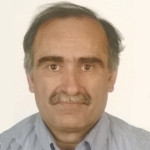
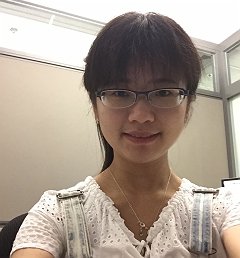
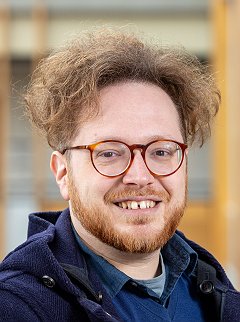
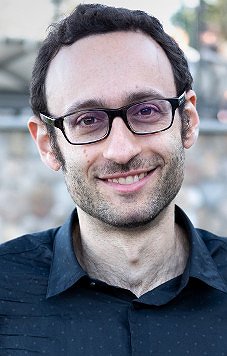
Professor Spyrakis Pavlos is affiliated with the Department of Computer Engineering and Informatics (CEID) at the University of Patras, School of Engineering. His research focuses on fundamental principles and applications of Computer Science, including algorithms, distributed systems, artificial intelligence, and networks. He is associated with laboratories such as the Combinatorial Algorithms, Distributed Systems and Telematics, and Internet of Things Algorithms and Systems groups, contributing to cutting-edge advancements in theoretical and applied computing. Contact: spirakis@ceid.upatras.gr , spirakis@cti.gr , Phone: +30 2610 997 703. Office hours: Friday 15:00-17:00 or by appointment.
Panagiotis E. Hadjidoukas is an Adjunct Assistant Professor at the Department of Computer Science, University of Ioannina, Greece. He currently holds a Visiting Scientist position at IBM Research Zurich. His work bridges parallel computing with applications in medical physics, computational biology, and high-performance numerical optimization. His research focuses on parallel and distributed computing, runtime support for parallel programming models, and thread libraries. He has contributed to hybrid programming frameworks and task-parallelism deployment in multicore environments. The articles in his portfolio highlight a strong trend in Monte Carlo simulations applied to radiation biology, parallelization techniques for hierarchical data clustering, and performance optimization in multicore systems. His work often integrates OpenMP and hybrid MPI/OpenMP models for distributed computing. He has developed notable software projects like PSthreads (a runtime library for lightweight threads) and UthLib (a portable non-preemptive user-level threads package).
Panagiotis Michailidis is a Professor at the Department of Balkan, Slavic and Oriental Studies, School of Economic and Regional Studies, University of Macedonia. His academic work focuses on Computational Methods and Informatics, integrating technological expertise with regional studies. BSc (1998) and PhD (2004) in Applied Informatics from University of Macedonia Academic career progression: Lecturer (2004-2013), Assistant Professor (2014-2019), Associate Professor (2019-2023), now Professor Research spans computational approaches to social science and humanities, with significant contributions to: Social Data Science Digital Humanities Quantitative Social Science Parallel/Distributed Computing String Matching Algorithms Scientific Computing Recent publications reveal interdisciplinary focus combining: Augmented Reality applications for cultural heritage Machine Learning for Greek language sentiment analysis High-performance computing implementations Metaheuristic optimization techniques Scientometric analyses of research fields Active in academic service through: IEEE memberships Conference program committee roles Guest editor for Algorithms special issue Research program participation Reviewing for multiple journals Teaching portfolio includes: DIGITAL SOCIAL RESEARCH METHODS INFORMATION, TECHNOLOGY AND SOCIETY QUANTITATIVE METHODS OF SOCIAL SCIENCES SPACE AND CULTURAL MANAGEMENT COMPUTER SCIENCE TOPICS
Ioannis Venetis is an Assistant Professor at the University of Piraeus, School of Information and Communication Technologies, Department of Informatics, specializing in Operating Systems and Parallel Computing. He earned his PhD from the Department of Computer Engineering and Informatics at the University of Patras. His research spans programming models for parallel systems, scheduling optimization, and applications in computational neuroscience and seismology. Research Interests Operating Systems Parallel Computing Scheduling Algorithms High-Performance Computing Computational Neuroscience Seismology Projects Participation in European and national research programs Development of Gisola (GPU-accelerated seismic inversion tool) His teaching portfolio includes courses like Operating Systems, Parallel Processing, and Symbolic Programming. Articles highlight expertise in GPU acceleration, tridiagonal solvers, sensor networks, and many-core architectures. Notable contributions include work on Chimera states in neuronal dynamics and hierarchical workload scheduling frameworks.
Professor Kyriazis Demosthenis serves as a Professor in the Department of Digital Systems at the University of Piraeus and currently holds the position of Vice-Chancellor for Research and Lifelong Learning. His academic career spans over two decades with significant contributions to service-oriented architectures and cloud computing. His educational background includes: Diploma in Electrical and Computer Engineering from the National Technical University of Athens (NTUA) in 2001 Interdepartmental postgraduate diploma in "Techno-Economic Systems" in 2004 (NTUA, National Kapodistrian University of Athens, University of Piraeus) PhD in Electrical and Computer Engineering from NTUA in 2007, specializing in Service-Oriented Architectures Professor Kyriazis focuses on service-oriented, distributed and heterogeneous systems with particular expertise in software technologies and data analysis. His work bridges theoretical frameworks with practical implementations in cloud infrastructure management. His research has evolved to address emerging challenges in virtualization technologies for high availability of cloud computing infrastructures and management techniques in Internet of Things environments. He has demonstrated leadership in European research initiatives, coordinating multiple projects and serving in prominent research groups including the Future Internet Architecture Board and Cloud QoS&SLAs. His work has practical applications across multimedia, virtual reality, and health domains. Throughout his career, Professor Kyriazis has participated in numerous European and Greek research projects including BigDataStack, CrowdHEALTH, MATILDA, 5GTANGO, CYBELE, ORBIT, VISION Cloud, IRMOS, and 4CaaSt. His research leadership extends to coordinating relevant European projects in the IoT and cloud computing domains.
Antonios G. Kladas is a Full Professor at the National Technical University of Athens (NTUA), School of Electrical and Computer Engineering, where he directs the Laboratory of Electrical Machines and Power Electronics. He holds a Diploma from Aristotle University of Thessaloniki (1982) and DEA/PhD degrees from Université Paris VI (1983-1987). His academic career spans roles as Assistant Professor (1996-2001), Associate Professor (2001-2006), and Full Professor (2006-present). Research Focus: Prof. Kladas specializes in electric machine and transformer design, renewable energy systems, industrial drives, and electromagnetic field computation. His work integrates finite-element modeling with optimization techniques for applications in electric vehicles, aerospace actuators, and power grids. Key innovations include hybrid electromagnetic-thermal methodologies and multi-objective evolutionary algorithms for motor design. Awarded the Best Paper Award at ICEM 2010 , he has led projects like the EU Clean Sky Programme and the fuel-efficient 'Pyrforos' vehicle prototype (Shell Eco Marathon 2012). He serves on steering committees for IEEE CEFC and ICEM conferences and has evaluated research programs for Italian/Portuguese agencies. Major Grants: EU Clean Sky (HPEM, EMAS), HERACLITOS II (electric vehicles), CREAM (integrated actuators) Advising: Supervised 14 PhD theses and >100 undergraduate projects on topics ranging from PM motor optimization to wave energy converters. Laboratory Leadership: Oversees 50+ researchers in the NTUA Laboratory of Electrical Machines and Power Electronics, focusing on experimental validation of industrial and renewable energy systems.
Vissarion Papadopoulos is a Professor in the Department of Structural Engineering at the School of Civil Engineering, National Technical University of Athens (NTUA). His office is located at the Statics and Aseismic Research Laboratory, with contact details including email vpapado@central.ntua.gr and phone 210 772 4158. He has maintained an active research profile since at least 2016, focusing on advanced computational methods in structural engineering. His primary research domains include: Structural Engineering and Computational Mechanics Stochastic Analysis and Uncertainty Quantification Multiscale Modeling of Composite Materials Machine Learning for Engineering Simulations Optimization of Structural Systems Thermomechanical Behavior of Advanced Materials Analysis of his recent publications reveals a decisive shift toward integrating deep learning frameworks with traditional computational mechanics. His work demonstrates consistent innovation in accelerating solutions for parametric and transient structural problems through transformer networks, Bayesian inference, and physics-informed neural networks. Key application areas include carbon nanotube reinforced composites, sustainable automotive design, and seismic-resistant structures, with emphasis on enhancing computational efficiency while maintaining accuracy. He is affiliated with NTUA's Statics and Aseismic Research Laboratory, which specializes in structural dynamics, earthquake engineering, and advanced computational methodologies for civil infrastructure analysis and design.
Ioannis Skarmoutsos is an Assistant Professor at the Department of Chemistry, University of Ioannina , specializing in Theoretical-Computational Physical Chemistry . His research employs multi-scale molecular simulations and statistical engineering theories to investigate complex fluid systems. Focus on supercritical fluids, ionic liquids, and nanoporous materials Applications in green chemistry, energy storage, and environmental technology Expertise in molecular dynamics and computational modeling Recent publications highlight his work on electrolyte design for batteries, nanoporous material simulations for gas separation, and anomalous properties of water under extreme conditions. His computational approaches address challenges in solvation dynamics, dielectric properties, and structural transitions across diverse thermodynamic states.
Chao Peng is a Principal Research Scientist at ByteDance where he leads the Trae Research team (ByteDance Software Engineering Lab), conducting cutting-edge research on AI agents for software engineering. He also serves as a Part-time Postgraduate Student Mentor at Fudan University's School of Computer Science, bridging industry research with academic mentorship. PhD in Informatics (2021), University of Edinburgh, UK MSc in High Performance Computing and Data Science (2017), University of Edinburgh, UK BEng in Computer Science and Technology (2016), Xuzhou University of Technology, China Dr. Peng's research focuses on the intersection of software testing, program analysis, and large language models. His work explores how AI agents can revolutionize software engineering practices, with particular emphasis on automated bug detection, code generation, and testing frameworks. He has pioneered approaches for evaluating LLM performance in software engineering contexts and developing agent-based systems that enhance developer productivity while maintaining code quality and security. His recent publications demonstrate a clear trend toward integrating large language models with traditional software engineering practices. The research spans code generation evaluation, security vulnerability detection, automated bug reproduction, and issue localization. These works collectively advance the field of AI-assisted software development by addressing practical challenges in reliability, security, and efficiency of AI-generated code. Distinguished Reviewer for FSE'25 School of Informatics Scholarship (fully-funded PhD scholarship) Outstanding Graduate Scholarship at Xuzhou University of Technology Multiple China National Scholarships Honours Spot Bonus at ByteDance Certificate of Achievement for HPCAC Student Cluster Competition Dr. Peng actively mentors students through his role at Fudan University and previously at the University of Edinburgh, where he served as sub-supervisor for MSc projects and teaching assistant for software testing courses. His research has attracted significant industry attention, leading to multiple collaborations between ByteDance and academic institutions. He frequently serves on program committees for major software engineering conferences including ASE, FSE, and ICSE, demonstrating his leadership in the field. As leader of the Trae Research team at ByteDance Software Engineering Lab, Dr. Peng oversees research on AI agents for software engineering, including the application and evaluation of AI agents and training LLMs for agent-based systems. The lab's work focuses on practical systems that predict, detect, diagnose, and fix bugs across various software systems, with particular emphasis on real-world applications and measurable impact on developer productivity.
Dr. Ying Wang is an Associate Professor and Assistant Dean at the Software College of Northeastern University in China, where she also serves as a doctoral supervisor. She received her PhD in Software Engineering from Northeastern University in January 2019 and joined the faculty in February 2019. Her academic career includes a postdoctoral fellowship at the Hong Kong University of Science and Technology (2022-2023) and a visiting scholar position at Microsoft Research Asia (2021) through the StarTrack Program. Her research focuses on dependency management, software ecosystem governance, software refactoring, and software supply chain security. She has made significant contributions to understanding cross-language dependencies, vulnerability propagation across ecosystems, and developing tools for dependency conflict detection and resolution. Her work spans multiple programming language ecosystems including Java, C#, Python, Go, JavaScript, Android, and Rust. Dr. Wang's publication record shows a consistent trajectory of high-impact research in top software engineering conferences (CCF-A level) including ASE, ICSE, ESEC/FSE, and ISSTA. Her recent work increasingly integrates large language models with traditional software engineering techniques, particularly in dependency analysis and software refactoring. The publications demonstrate a strong emphasis on practical tool development with industry applications. Microsoft Research Asia Star Program Scholar (2020) CCF Outstanding Doctoral Dissertation Award nomination (2020) Liaoning Province Outstanding Doctoral Dissertation Award (2021) ACM SIGSOFT Distinguished Paper Award (ICSE 2021 and ESEC/FSE 2023) Multiple CCF ChinaSOFT Software Prototype Competition awards (2020, 2023) OpenHarmony Community Security Governance Contributions (2024, 2025) Dr. Wang actively mentors a large group of graduate students working on various aspects of software engineering, with many graduates securing positions at major technology companies including Huawei, Microsoft, Alibaba, and Tencent. She serves on the editorial board of IEEE Transactions on Software Engineering and has held numerous program committee positions at top software engineering conferences. Her research has strong industry connections, with several tools developed by her team being integrated into commercial platforms at Huawei and Microsoft.
Yufei Ding is an Associate Professor in the Computer Science & Engineering Department at the University of California, San Diego (UCSD), where she leads the PICASSO Lab. Her research spans domain-specific language design, architecture and compiler optimization, and hardware acceleration, with current focus on developing high-performance, energy-efficient, and high-fidelity programming frameworks for quantum computing and machine learning. Dr. Ding received her Ph.D. in Computer Science from North Carolina State University and a B.S. in Physics from the University of Science and Technology of China. Her interdisciplinary background bridges physics and computer science, enabling her to tackle challenges in emerging computing paradigms. Her research interests focus on Compiler Technology, Machine Learning, and Quantum Computing , with specific expertise in domain-specific language design, architecture and compiler optimization, and hardware acceleration. Dr. Ding's work addresses critical challenges in programming frameworks for emerging technologies, particularly in making quantum computing more accessible and efficient through innovative compiler techniques and runtime systems. Dr. Ding's scientific contributions have been recognized with prestigious awards including the NSF CAREER Award (2020) and the IEEE Computer Society TCHPC Early Career Researchers Award for Excellence in High-Performance Computing (2019) . As an active researcher and educator, Dr. Ding serves on program committees for major conferences including PLDI, PPoPP, and SPLASH. She currently has Ph.D. openings in quantum computing and machine learning systems research, as well as a postdoc position in quantum computing for physics Ph.D. candidates with relevant background. Dr. Ding founded and leads the PICASSO Lab at UCSD, which focuses on developing innovative solutions for programming emerging computing technologies. The lab's work bridges theoretical foundations with practical implementations to address real-world challenges in high-performance computing.
Arjun Guha is an Associate Professor at Northeastern University's Khoury College of Computer Sciences, where he also serves as the Area Chair for Software. He conducts research in programming languages with a focus on program synthesis for low-resource programming languages and understanding how computer science education is impacted by large language models. His work spans multiple domains including WebAssembly, software-defined networking, and serverless computing. Guha's research interests center around programming language design, implementation, and application. He has made significant contributions to understanding JavaScript through formal semantics (LambdaJS), developing functional reactive programming for web applications (Flapjax), and creating tools for software-defined networks (NetKAT, Frenetic). His recent work focuses on leveraging large language models for code generation in specialized programming languages and understanding their impact on programming education. His publications reveal a strong trend toward applying AI and machine learning techniques to programming language problems, particularly in code generation and understanding. The research spans from foundational programming language theory to practical applications in education and software development tools, with increasing focus on the intersection of programming languages and large language models. Guha has received several prestigious awards including the OOPSLA Most Influential Paper Award in 2019 for his work on Flapjax, an ACM SIGPLAN Research Highlight for his work on NetKAT, and a Best Student Paper Award. His research has been recognized for its foundational contributions to programming language theory and practical impact on software development. OOPSLA Most Influential Paper Award (2019) for Flapjax ACM SIGPLAN Research Highlight for A Fast Compiler for NetKAT Best Student Paper Award for Flapjax paper Guha advises numerous PhD, MS, and undergraduate students, with several alumni now at leading tech companies and academic institutions. His research has been supported by the National Science Foundation, the Department of Energy, the Office of Naval Research, and industry partners including Google, JPMorgan Chase, MathWorks, Meta, Oracle, and Roblox. He leads the Programming Research Laboratory at Northeastern and is actively involved in major research collaborations like the BigCode Project. Guha is a member of the Programming Research Laboratory at Northeastern and leads several major research initiatives including the BigCode Project's evaluation working group. His lab develops practical software systems like MultiPL-E (a polyglot benchmark for Code LLMs) and WasmFX (bringing effect handlers to WebAssembly), with applications in education, software development, and high-performance computing.
Gilbert Bernstein is an Assistant Professor in the Computer Science & Engineering department within the College of Engineering at the University of Washington. His research bridges computer graphics and programming languages, with a focus on high-performance domain-specific languages. Previously, he was a post-doctoral scholar at UC Berkeley and MIT working with Jonathan Ragan-Kelley, and received his PhD from Stanford University under Pat Hanrahan. His research interests span Computer Graphics, Programming Languages, High-Performance DSLs, Physical Simulation, Geometry & Topology, Differentiable Programming, Hardware DSLs, Tools for Artists, Fabrication, and Human-Computer Interaction. Bernstein develops languages and compilers that enable efficient computation for creative applications, physical simulations, and graphics rendering systems. His recent publications reveal strong trends in differentiable programming for graphics applications, domain-specific languages for hardware acceleration, and computational approaches to traditional crafts like quilting and knitting. His work consistently combines formal language theory with practical applications in graphics and fabrication. Bernstein actively mentors students across multiple institutions including current advisees Felix Hahnlein (UW Postdoc), Ryan Zambrotta (UW PhD), Haoran Peng (UW PhD), and previous students including Alex Reinking (UC Berkeley PhD 2022, now at Qualcomm) and MacKenzie Leake (Stanford PhD 2021, now at Adobe Research). His lab works on diverse projects including debugging CAD programs, compilers for finite element methods, semantics for knitting machines, algebraic scheduling of tensor programs, and exocompilers for hardware accelerators. Bernstein also collaborates on DSLs for networking, Counterstrike bots, gradient-based optimization, memory management, hardware design, and garment design tools.
Adam Chlipala is a Professor at the Massachusetts Institute of Technology working at the intersection of programming languages, formal methods, and computer systems. His research focuses on building practical verified systems with end-to-end machine-checked proofs, particularly using the Coq proof assistant. His educational background includes a Computer Science undergraduate degree from Carnegie Mellon University (2003) and a PhD in Computer Science from the University of California, Berkeley (2007). Following a postdoctoral position at Harvard University through 2011, he joined MIT as faculty. Chlipala's research spans multiple domains with strong emphasis on dependent types , verified compilation , and hardware-software co-verification . His work consistently bridges theoretical foundations with practical implementation, as evidenced by his development of the Ur/Web programming language and his focus on creating clean-slate hardware-software stacks with formal guarantees. Key research thrusts include cryptographic constant-time verification, side-channel security, and verified tensor compilation. His recent publications (2020-2025) reveal a clear trajectory toward increasingly complex verified systems, with growing emphasis on hardware-software integration, cryptographic implementations, and performance-critical applications. The work consistently leverages Coq for machine-checked proofs while addressing real-world constraints like timing channels and hardware interfaces. Chlipala is the author of the influential textbook Certified Programming with Dependent Types , which serves as a primary educational resource for Coq at numerous institutions worldwide. His professional activities include significant service to the PL community through program committees for major conferences including PLDI, POPL, ICFP, and CPP. He leads research initiatives connecting hardware and software verification, most notably through the DeepSpec project which aims to build fully verified computing stacks. His current work focuses on practical applications of dependent types for business applications through Ur/Web and verified cryptographic implementations.
Rajiv Gupta is a Distinguished Professor and the Amrik Singh Poonian Professor of Computer Science at the University of California, Riverside (UCR), where he serves as Associate Dean for Academic Personnel in the Bourns College of Engineering (BCOE). He is a member of the RIPLE research group and has co-authored 327 papers with an h-index of 69 and over 16,600 citations. His extensive service includes chairing major conferences such as FCRC 2015, PPoPP 2020, ASPLOS 2011, and PLDI 2008. Professor Gupta's research focuses on Programming, Compiler, Runtime & Architectural Support for Parallel & Distributed Heterogeneous Systems and Software Tools for Monitoring and Managing Runtime Behavior . His work spans graph analytics with scalability and performance, understanding and managing the dynamic behavior of parallel programs, software speculation for irregular parallelism, dynamic program analysis for secure and reliable computing, and compiler optimizations with architectural support. His research has significant applications in high-performance computing, GPU programming, and distributed systems. Analysis of his recent publications reveals a strong focus on graph processing systems, with particular emphasis on evolving and streaming graph analytics. His work addresses critical challenges in memory management for large-scale graph processing, hardware acceleration for graph algorithms, and optimization techniques for concurrent and distributed graph computations. The research demonstrates a progression from foundational compiler and architecture work to increasingly sophisticated systems for handling modern data-intensive computing challenges. Fellow of the ACM (2009) Fellow of the IEEE (2008) Fellow of the AAAS (2011) NSF Presidential Young Investigator Award (1991) UCR Doctoral Dissertation Advisor/Mentor Award (2012) Multiple best paper awards across major conferences Two students won ACM SIGPLAN Outstanding Doctoral Dissertation Award Five advisees received NSF CAREER Award Professor Gupta has supervised 42 PhD students to completion and currently advises several doctoral candidates. His advising success is reflected in his students' achievements, including multiple award-winning dissertations and significant career accomplishments in academia and industry. His research has been supported by numerous grants from NSF, DARPA, and industry partners, enabling sustained investigation into parallel computing systems. The RIPLE research group under his leadership has produced influential work that bridges theoretical foundations with practical system implementations. As the leader of the RIPLE research group at UC Riverside, Professor Gupta oversees a vibrant team focused on innovative approaches to parallel and distributed computing. The group maintains strong collaborations with industry partners and other academic institutions, contributing to the development of next-generation computing systems. Current projects include GRASP (Graph Analytics with Scalability & Performance) and research on understanding and managing the dynamic behavior of parallel programs, reflecting the group's continued focus on cutting-edge computing challenges.