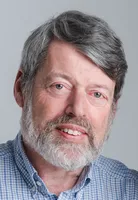
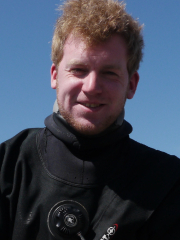
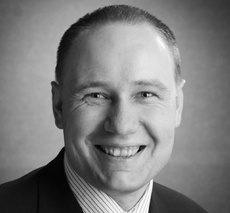
Casimir Katz is an Adjunct Professor at the Chair of Computing in Civil and Building Engineering at the Technical University of Munich , specializing in computational mechanics, finite element analysis, and wind engineering. He has contributed extensively to structural simulation, building information modeling (BIM), and digital twinning. Education: Diplom in Civil Engineering (1976, TU Munich) Key research areas: Wind Load Analysis , Nonlinear Structural Mechanics , Computational Fluid Dynamics , Finite Element Method , and Engineering Software Development . His work bridges theoretical advances in Scaled Boundary FEM and CFD modeling with practical applications in bridge engineering , urban wind analysis , and tunneling . He co-founded SOFiSTiK AG , a leader in structural engineering software, and has advised on projects like the Arnulfsteg and Rader Hochbrücke bridges. Current teaching focuses on Computational Mechanics and BIM applications in structural engineering. His recent publications emphasize dynamic soil-structure interaction , polyhedral mesh generation , and nonlinear design methodologies . Collaborations span academia, industry, and research groups like the BIM Lab at TU Munich.
Dr. Gyula I. G. Józsa serves as Scientific Staff at the Radio-Observatorium Effelsberg, Max Planck Institute for Radio Astronomy since 2021, and concurrently holds a Visiting Professor position at Rhodes University's Department of Physics and Electronics since 2020. His work centers on spectrum management, radio astronomical frequency protection, and radio interference analysis for global observatory operations. His academic foundation includes: PhD in Astronomy, University of Bonn (2002-2006) Diplomarbeit (MSc equivalent), Radioastronomisches Institut, University of Bonn (2001-2002) Undergraduate studies in Physics and Philosophy, University of Bonn (until 2001) Research integrates galaxy evolution studies with critical spectrum protection efforts: Gas dynamics and dark matter distribution in galaxies Computational parametrization of rotating gas discs Radio interference prediction/simulation and policy advocacy through international committees Development of automated radio data analysis pipelines using high-performance computing As an active member of the International Astronomical Union, Committee on Radio Astronomy Frequencies, and IAU Centre for Protection of the Dark and Quiet Sky, he shapes global spectrum policies while leveraging the Effelsberg 100-meter telescope for astronomical research and operational integrity of radio observatories.
Henry Hoffmann is Professor and Liew Family Chair of the Department of Computer Science at the University of Chicago. He serves as Chair of the department and leads research in self-aware and adaptive computing systems. His work bridges traditional computer systems areas with control theory and machine learning to create systems that automatically adapt to meet high-level goals. Hoffmann received his Ph.D. from MIT in 2013 under advisors Anant Agarwal and Srinivas Devadas, with his dissertation titled "SEEC: a framework for self-aware management of goals and constraints in computing systems." He earned an S.M. from MIT in 2003 and a B.S. with highest honors and distinction from UNC-Chapel Hill in 1999. Hoffmann's research focuses on developing self-aware computing systems that understand high-level goals and automatically adapt their behavior to meet those goals optimally. His recent work has shifted toward applying these techniques to control machine learning and AI systems, building learning systems that dynamically adapt their internal structure and resource usage to meet accuracy, energy, performance, and security goals at inference time. His interdisciplinary approach combines operating systems, computer architecture, control theory, and machine learning. Analysis of Hoffmann's recent publications reveals a clear trajectory toward increasingly sophisticated applications of self-aware computing principles. His work has evolved from foundational resource management to cutting-edge applications in AI/ML systems, quantum computing, and security. The publications demonstrate a consistent theme of using control theory and machine learning to create adaptive systems that optimize multiple competing objectives like performance, energy efficiency, and reliability. Recent papers show expanding applications into large language models, quantum algorithms, and privacy-preserving techniques. Presidential Early Career Award for Scientists and Engineers (PECASE) 2019 DOE Early Career Award 2015 Samsung Security Hall of Fame recognition IEEE Micro Top Picks Honorable Mention awards FSE Test of Time Honorable Mention ASPLOS Hall of Fame recognition Hoffmann has mentored numerous PhD and Master's students who have gone on to successful careers in academia and industry. His research has secured over $19 million in funding for the University of Chicago. He co-founded Config Dynamics in 2019 to commercialize aspects of his self-aware computing research. His work has practical applications across data centers, edge computing, AI systems, and quantum computing. Hoffmann leads the SEEC (Self-aware, Energy-Efficient Computing) research group at the University of Chicago. The group focuses on developing frameworks and techniques for building self-aware computing systems that can dynamically adapt to changing conditions and requirements. The group maintains strong collaborations with industry partners and other academic institutions, particularly in the areas of quantum computing, AI systems, and energy-efficient computing.
Mahdi Ghorbani is affiliated with the University of Edinburgh as a researcher. His work spans Compilers , Programming Languages , and Data Systems , with a focus on optimizing computational frameworks for data science and domain-specific languages. Recent contributions include advancements in tensor algebra compilation and functional data structure efficiency. His research aligns with the design and optimization of systems for complex data processing tasks.
Kristopher Micinski is an Assistant Professor at Syracuse University in the Department of Electrical Engineering and Computer Science. His research focuses on Programming Languages, Security, and Systems, particularly in static analysis and logic programming. PhD Students: Arash Sahebolamri (graduated May 2023), Yihao Sun (since 2020), Chang Liu (since 2023), Neda Abdolrahimi (since 2023) Email: kkmicins@syr.edu Research interests include high-performance implementations of declarative languages (e.g., Datalog and Scheme), formal methods for program security, and systems-level innovations for scaling static analyses. He has contributed to conferences like OOPSLA, CC, and Scheme with work on optimizing Datalog engines and extending logic programming paradigms. Recent publications explore topics such as Scaling control-flow analyses using Datalog extensions (OOPSLA 2023) Macro-based compilation for performance gains in lattice-oriented Datalog (CC 2022) Data-parallel Datalog execution (CC 2021) Symbolic execution and SAT solvers in program analysis (e.g., projects involving Chaff, EXE, and CDCL) He teaches undergraduate and graduate courses in programming languages, including CIS352 (Programming Languages) and CIS700 (Formal Methods and Symbolic AI). Current projects include NSF-funded research on declarative analytics and DARPA V-SPELLS for verified software security.
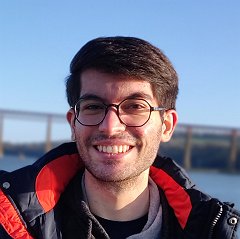
Julian Robledo Mejia serves as a Researcher at Dresden University of Technology's Chair for Compiler Construction, Germany, since January 2020. His work focuses on optimizing 5G baseband systems for performance and energy efficiency within heterogeneous multi-core environments under real-time constraints. His academic foundation includes: Bachelor of Electronic Engineering from University of Antioquia (UdeA), Medellín, Colombia Master of Embedded Systems from Polytechnic University of Turin, Italy (2017), thesis on fault injection for real-time operating systems Mejia's research tackles 5G network challenges through adaptive scheduling and dataflow models to enhance baseband system flexibility. His methodologies address critical demands for high data rates, ultra-low latency, and workload heterogeneity while optimizing energy consumption—key for next-generation mobile infrastructure. This work bridges theoretical modeling with practical implementation in resource-constrained environments. Publication analysis (2021-2025) reveals consistent innovation in reactive programming for heterogeneous systems, with Lingua Franca as a recurring framework. His contributions emphasize timing-energy trade-offs in base station optimization, advancing embedded real-time processing for wireless networks through model-based approaches and adaptive resource management. As part of TU Dresden's Compiler Construction research group, Mejia collaborates on cutting-edge projects in compiler design and embedded systems, contributing to tools like Mocasin for rapid prototyping of heterogeneous multi-core mappings. His industry background in automotive embedded software informs practical implementations of theoretical frameworks.
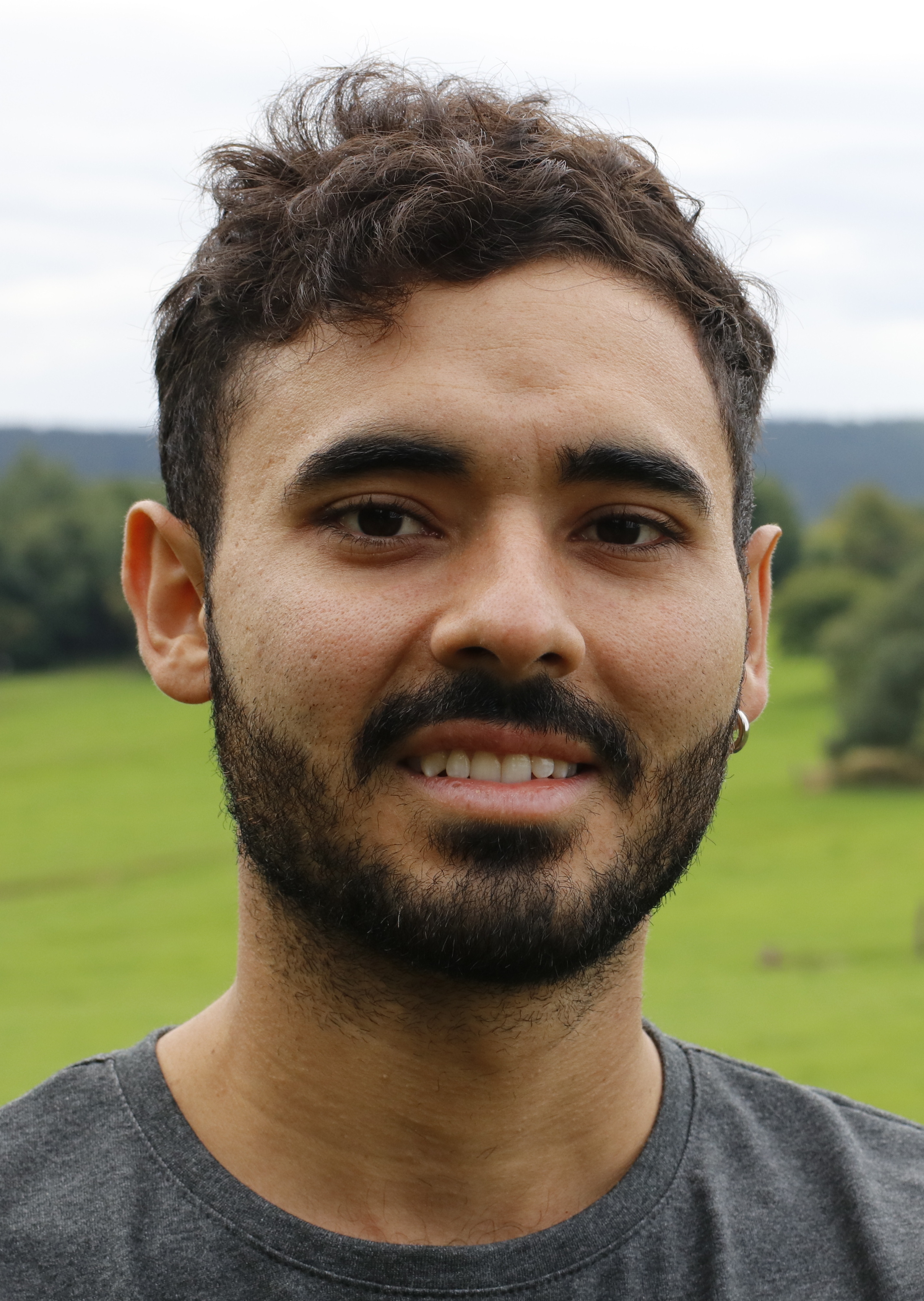
Dr.-Ing. Gerald Hempel is a researcher at Dresden University of Technology (TU Dresden) with active contributions to computer architecture and embedded systems from 2015–2023. His work bridges hardware/software co-design through domain-specific languages and compiler techniques, primarily within the Faculty of Electrical and Computer Engineering context. His research spans: Domain-Specific Languages for hardware acceleration Memory optimization in high-performance computing Reconfigurable computing using FPGAs Many-core and heterogeneous system design Bio-inspired algorithms for robust system mapping Racetrack memory applications in brain-inspired cognition Publication analysis reveals consistent focus on compiler-driven hardware acceleration, particularly for computational fluid dynamics and cognitive systems. His work emphasizes memory architecture innovations (e.g., high-bandwidth memory, caching) and bio-inspired robustness techniques, often through collaborations like the EVEREST consortium for compilation frameworks. No scientific awards were documented in the source material. No student advising or grant information was provided in the available texts. Dr. Hempel collaborates within TU Dresden's research ecosystem, notably with the EVEREST consortium and chairs including Compiler Construction and Emerging Electronic Technologies. His work on tools like Mocasin demonstrates active participation in teams developing rapid prototyping frameworks for heterogeneous multi-core systems and FPGA-based accelerators.
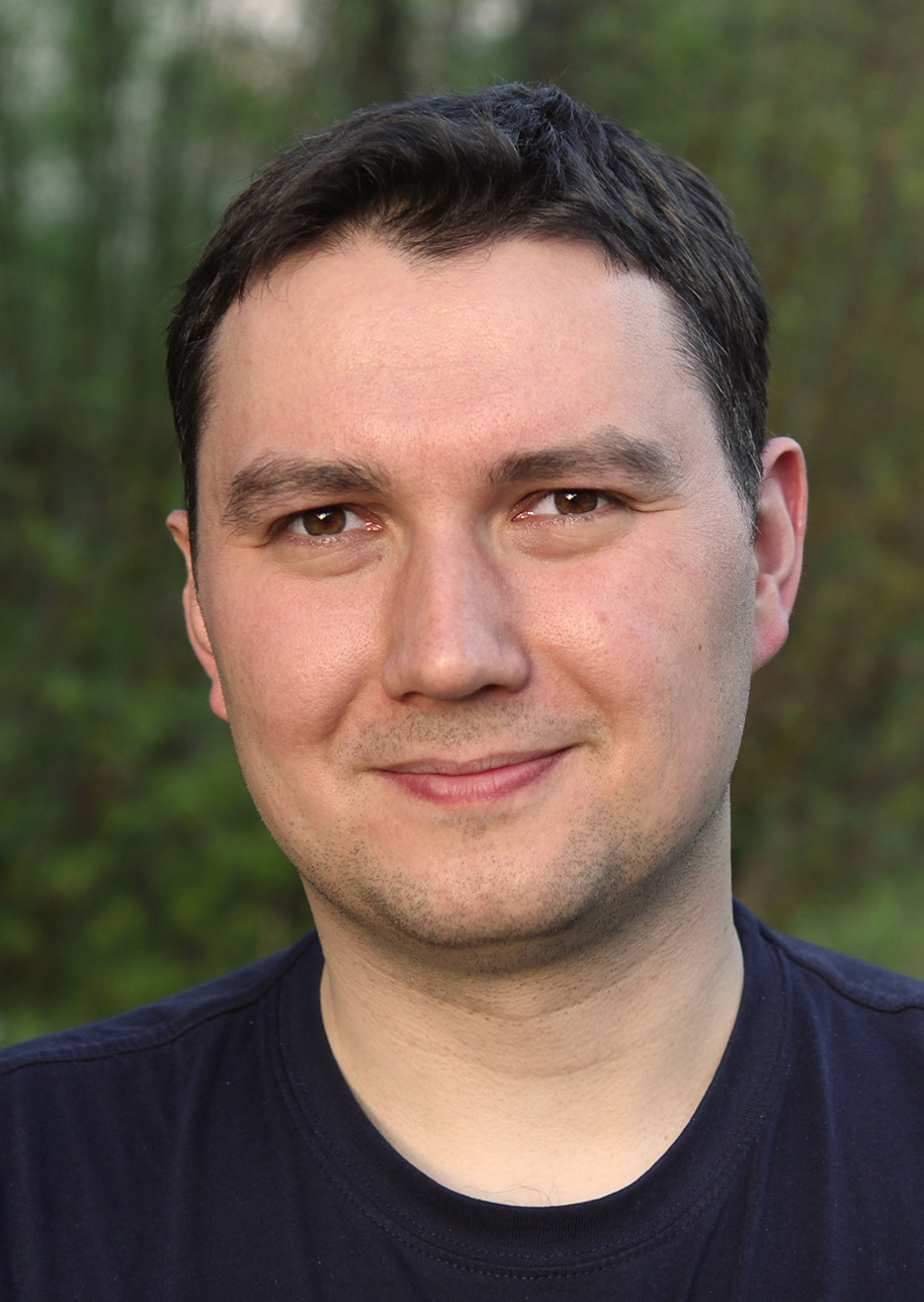
Dr. Florian Ott is a faculty member in the Faculty of Computer Science at Bundeswehr University Munich, specializing in human-computer interaction and collaborative systems. He maintains an active research profile through the Cooperation Systems research group and has established significant projects including CommunityMirrors (semi-public interactive large screens) and CommunityMashup (person-centric data integration for social software). Dr. Ott's research spans multiple domains of interactive systems: Human-Computer Interaction and User Experience design Public and Interactive Display Systems Awareness and Context-aware Computing Sociotechnical Systems Integration Information Ergonomics and Usability Natural User Interfaces Social Computing and Enterprise 2.0 applications His publication history reveals a clear trajectory from foundational work on enterprise social software (wikis, weblogs) toward more sophisticated ambient awareness systems and person-centric mashup technologies. The research shows consistent focus on bridging theoretical HCI principles with practical enterprise applications, particularly in team awareness and knowledge management contexts across diverse settings including corporate environments and high-performance sports. Dr. Ott collaborates extensively within the Cooperation Systems Center Munich ecosystem, working closely with Professor Michael Koch (his doctoral advisor), Alexander Richter, and Peter Lachenmaier. His work demonstrates strong integration between technical development of social software platforms and sociotechnical considerations of their implementation in real-world settings.
Georgiana Haldeman is an active computer science educator and researcher specializing in programming education, particularly for introductory courses (CS1). Her work focuses on improving code quality, program decomposition, and developing educational tools that enhance student learning experiences in computer science education. Her research interests center around CS1 pedagogy, autograding systems, and code quality assessment. She has developed frameworks for teaching program decomposition and created educational tools like RAVIC (Runtime Analysis Visualizer for Introductory Courses) to help students visualize program execution. Her work often addresses both procedural and conceptual knowledge dimensions in programming education, recognizing the importance of developing both skill sets in novice programmers. Analysis of her publication record shows a strong focus on practical educational interventions in computer science. Her work spans multiple dimensions of CS education including assessment methods, educational tool development, classroom activities for improving code quality, and gender diversity in computer science. She frequently collaborates with researchers like Monica Babes-Vroman, Andrew Tjang, and Thu D. Nguyen, suggesting established research partnerships in the CS education community. Her recent publications (2023-2025) indicate active research in program decomposition frameworks, notional machines for databases, and synthesized teaching models that balance procedural and conceptual learning. This demonstrates continued innovation in computer science pedagogy and a commitment to addressing fundamental challenges in teaching introductory programming.
Dr. Rene Marcel Plonus serves as a Postdoctoral Researcher in Marine Ecosystem Dynamics and Management at the University of Hamburg's Faculty of Mathematics, Computer Science and Natural Sciences. He is affiliated with the Department of Biology and works within the Institute of Marine Ecosystem and Fisheries Sciences, focusing on computational approaches to marine conservation. His educational background includes a 2023 PhD in Fisheries Science with thesis 'Multi-dimensional characterization of pelagic habitats at different spatio-temporal scales', a 2018 Master's in Ecosystem and Fisheries Sciences, and a 2015 Biology Bachelor's degree. He holds European Scientific Diver certification from 2017. Plonus specializes in developing machine learning solutions for marine science applications, particularly automatic fish species classification using underwater video footage to support non-invasive fisheries management. His research integrates computer vision with ecological monitoring, targeting biodiversity assessment in the North Sea and Baltic regions. His publication record demonstrates consistent output in high-impact marine science journals since 2017, with recent 2024 publications showing continued focus on plankton habitat identification and microbial transport pathways. Current projects include the Nikofin initiative using BRUVs (Baited Remote Underwater Videos) and eDNA for biodiversity monitoring at the Sylt Outer Reef. As a researcher, he actively contributes to advancing computational methods in marine ecology through algorithm development for plankton image classification and pelagic habitat segregation, addressing critical challenges in ecosystem-based fisheries management.
Dr. Muhammed Jeneesh Kariyottukuniyil serves as a Postdoctoral Researcher at the Institute of Nanotechnology, Karlsruhe Institute of Technology (KIT), Germany, within the Multiscale Materials Modelling and Virtual Design research unit. His work focuses on computational approaches to materials engineering and nanoscale system design. His research spans critical domains in advanced materials development: Materials Science Nanotechnology Computational Modeling Multiscale Simulation Virtual Design He specializes in developing integrated modeling frameworks that bridge atomic-scale phenomena with macroscopic material behavior, enabling virtual prototyping of next-generation nanomaterials for industrial applications. No scientific awards or honors were documented in the available information. Details regarding student supervision, grant funding, or advisory roles were not provided in the source materials. He operates within KIT's Multiscale Materials Modelling and Virtual Design research unit, which emphasizes cross-disciplinary collaboration in computational nanotechnology and digital materials engineering through high-performance computing infrastructure.
Dr. Daniel Schneider is a Scientist at the Karlsruhe Institute of Technology (KIT) within the Institute of Nanotechnology, specifically working in the Microstructure Simulations research unit. His office is located in Building 30.48, Room 110.1 at KIT's Eggenstein-Leopoldshafen campus. He is actively engaged in the Multiphysics Materials Modeling: Microstructure Mechanics research group, focusing on computational approaches to materials science problems. Dr. Schneider's research centers on the interactions between microstructural and mechanical influencing factors at the mesoscopic length scale of materials. His work investigates how grain and domain evolution, along with resulting heterogeneous microstructures, affect material properties. He primarily employs the phase field method coupled with numerical algorithms to study these phenomena. This computational approach allows for optimization of process parameters, reduction of production costs, and development of new materials with tailored properties. His current research portfolio spans several key areas including recrystallization processes, solid-solid phase transformations, electrochemical processes, and crack propagation. The materials systems he investigates are diverse, ranging from metals and fiber composites to lithium-ion batteries and piezo crystals. His extensive publication record demonstrates particular expertise in modeling phase transformations with mechanical driving forces, crack propagation in various materials, and the influence of microstructure on mechanical properties. The integration of chemical, thermal, and electromagnetic driving forces in his models represents a sophisticated multiphysics approach to materials simulation. Dr. Schneider's work has significant practical applications in virtual material design, where computational models can predict material behavior before physical production. His research contributes to optimizing manufacturing processes and developing advanced materials with specific performance characteristics. The breadth of his publications across journals in materials science, computational mechanics, geoscience, and electrochemistry highlights the interdisciplinary nature of his work and its relevance across multiple scientific domains.
Martin Köhler is a researcher at the Max Planck Institute for Dynamics of Complex Technical Systems, specializing in computational methods within systems and control theory. His work focuses on leveraging modern computer architectures for solving generalized eigenvalue problems and large-scale matrix equations efficiently. Research Interests: Parallel algorithms for system and control theory Generalized eigenvalue problems on advanced computing architectures High-performance computing for matrix equations Multicore and multi-GPU programming Contact: koehlerm@mpi-magdeburg.mpg.de
Dr. Klein, L. is a prominent researcher at Heidelberg University's Faculty of Medicine, Department of Clinical Radiology, with a primary focus on medical imaging, cancer research, and radiation therapy applications. Their work bridges clinical oncology with advanced imaging technologies and artificial intelligence methodologies, contributing significantly to the German Cancer Research Center (DKFZ) publications database. Research interests center on tumor heterogeneity, radiation dose optimization in CT imaging, pancreatic cancer microenvironments, and AI applications in medical diagnostics. Dr. Klein's work demonstrates particular expertise in translating technical imaging advancements into clinical applications, especially in neuro-oncology and metastatic disease management. Their research spans both theoretical frameworks and practical implementations in radiation physics and cancer treatment. The publication record reveals a strong trend toward interdisciplinary research combining oncology, radiology, and artificial intelligence. Recent articles show increasing focus on spatial tumor biology, radiation dose minimization techniques, and explainable AI applications in medical imaging. This work represents a convergence of traditional radiology with cutting-edge computational approaches to improve cancer diagnosis and treatment. Dr. Klein actively collaborates with researchers across multiple institutions, particularly evident in multicenter studies on hydrocephalus management in leptomeningeal disease and large-scale analyses of radiation therapy techniques. These collaborations span clinical departments, physics laboratories, and AI research groups, reflecting the interdisciplinary nature of modern medical research. The research program operates within DKFZ's infrastructure, leveraging advanced imaging facilities and computational resources for both clinical and preclinical studies. Current work appears focused on optimizing radiation delivery systems while simultaneously developing AI-driven approaches to personalize cancer treatment based on imaging biomarkers and tumor microenvironment characteristics.
Dr. Richard Pausch is a PostDoc researcher at Helmholtz-Zentrum Dresden-Rossendorf (HZDR), affiliated with the Laser Particle Acceleration department within Radiation Physics. He leads the Junior Group Computational Radiation Physics and contributes to the PIConGPU project, focusing on advanced computational approaches in his field. His research spans Laser Physics , Particle Acceleration , and Computational Radiation Physics , with emphasis on high-performance computing applications for simulating laser-plasma interactions. Dr. Pausch's work sits at the intersection of theoretical physics and practical implementation of particle acceleration technologies using laser systems. As part of HZDR's research infrastructure, he operates within the Dresden High Magnetic Field Laboratory ecosystem, contributing to Germany's strategic research initiatives in advanced physics. His technical expertise includes developing simulation frameworks that model complex plasma dynamics and radiation generation processes.