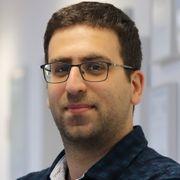
Hanna Bishara is a Senior Academic Staff member at the Iby and Aladar Fleischman Faculty of Engineering, Department of Materials Science and Engineering, Tel Aviv University. Her research focuses on microstructural characterization and properties of metallic alloys, particularly examining grain boundary effects on electrical resistivity, thermoelectric materials, and dislocation dynamics. Research interests span advanced materials characterization, grain boundary engineering, and the interplay between microstructure and electronic properties in metals and alloys. Her work combines experimental approaches (STEM, nanoindentation) with computational modeling to understand defect-induced property variations. Recent publications highlight investigations into Heusler alloy microstructures, grain boundary resistivity mechanisms, Laves phase fracture behavior, and thin film texture control. Keywords across her work include materials science, electrical resistivity, thermoelectrics, grain boundary physics, and microstructure engineering. Ongoing efforts address multiscale conductivity analysis, defect manipulation for performance enhancement, and fundamental studies of intermetallic phase stability at nanoscale dimensions.
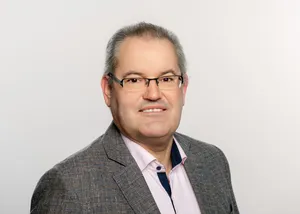
Erwin Laure serves as Director of the Max Planck Computing and Data Facility (MPCDF) and Honorary Professor at the Technical University of Munich (TUM). Previously, he was Professor and Director at KTH Stockholm's PDC Center for High Performance Computing. He holds a PhD from the University of Vienna and brings over 25 years of expertise in High Performance Computing. Educational Background: PhD, University of Vienna His research focuses on parallel and distributed systems , exascale architectures , and computer architecture , with emphasis on programming environments , compilers , and runtime systems for large-scale applications. His work drives European initiatives including EuroHPC and BioExcel Centre of Excellence. Prof. Laure leads MPCDF and participates in major projects: ongoing efforts include SEANERGYS (EuroHPC), PlasmaPEPS, and OpenCUBE; completed projects encompass Time-X, DEEP SEA, and REGALE (all EuroHPC). He teaches core courses in parallel programming, computer architecture, and virtualization across multiple semesters at TUM.
Haim Avron is a Professor in the Department of Applied Mathematics at Tel Aviv University's School of Mathematical Sciences, where he has been employed since 2015. His research focuses on numerical computing, high-performance computing, and their applications in scientific computing and machine learning. Education: Completed PhD in Computer Science at Tel Aviv University under Prof. Sivan Toledo, followed by postdoctoral research at IBM T.J. Watson Research Center. Research interests: Foundations of numerical linear algebra and randomized algorithms Tensor-tensor algebra for multiway data representation High-performance computational methods for machine learning Optimization techniques for large-scale systems Recent publications demonstrate strong focus on tensor algebra, randomized numerical methods, and machine learning optimization, with applications ranging from quantum computing to deep learning architectures. Awards: SIAM Activity Group on Computational Science and Engineering Best Paper Prize 2025 Software contributions include development of numerical libraries such as libSkylark for matrix sketching and Blendenpik for least-squares problems.
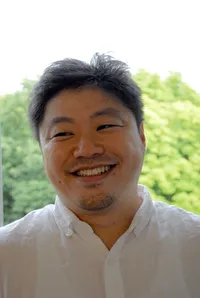
Alexander Gladis is a Researcher at the Institute of Technology and Innovation Management (TIM) at RWTH Aachen University, a position held since 2019. He serves as a Digital Lecturer supporting courses in Strategic Management and Corporate Digital Responsibility, while providing student coaching and supervision for project modules. His academic foundation includes dual Master of Science degrees in Electrical Engineering/Information Technology and Business and Economics from RWTH Aachen University. His educational background: M.Sc. in Electrical Engineering, Information Technology, and Technical Computer Science, RWTH Aachen University B.Sc. in Electrical Engineering, Information Technology, and Technical Computer Science, RWTH Aachen University (Dean’s List Scholarship recipient) M.Sc. in Business and Economics (ongoing), RWTH Aachen University, Innovation Honors Class participant Gladis's research critically examines cybersecurity vulnerabilities arising from privacy regulation implementations, particularly GDPR's unintended consequences. He investigates white hat hacker communities' cultural dynamics, ethical hacker-organization cooperation via bug bounty platforms, and Corporate Digital Responsibility frameworks. His work bridges technical cybersecurity challenges with managerial implications in Industry 4.0 and IoT ecosystems, emphasizing socio-technical system vulnerabilities. Publication analysis reveals dual research trajectories: regulatory technology impacts (2022 GDPR weaponization study) and computational resource optimization (2015 GPU scheduling research). These works demonstrate interdisciplinary convergence between information law, cybersecurity engineering, and innovation management, with recent focus shifting toward governance frameworks for digital transformation. Scientific recognition includes: Dean’s List Scholarship from RWTH Aachen University Education Fund Admission to the Innovation Honors Class program Through course supervision and student mentoring in strategic management and digital responsibility modules, Gladis cultivates next-generation innovation leaders. His industry engagement includes PRECIRE Technologies GmbH data science internship and student assistant roles at electrical engineering and operating systems chairs, informing his practical research approach. Within TIM's research ecosystem, Gladis contributes to digital innovation projects examining organizational cybersecurity maturity and ethical technology governance, collaborating with industry partners on real-world digital transformation challenges.
Prof. Dr. Klaus Stiller is a researcher and lecturer at the Institute of Educational Science within the Faculty of Humanities at the University of Regensburg, Germany. He has been affiliated with the Chair of Pedagogy I since 2013, following previous positions at the University of Regensburg's Chair of Psychology IV (1996-2013) and the Dortmund Technical University's Chair of Educational Psychology (2007-2010). His academic career spans over 25 years in educational science and psychology, with a focus on instructional design, technology-enhanced learning, and educational research methodology. Dr. Stiller completed his academic journey at the University of Regensburg, where he earned his diploma in psychology from the Department of Experimental Psychology. He continued his studies at the same institution, completing his Ph.D. (Dr. phil.) research on pictures and texts in multimedia learning environments, followed by his Habilitation (postdoctoral qualification) on modes of text presentation and access to text in computerized learning environments. Dr. Stiller's research primarily focuses on the intersection of educational psychology and technology. His work explores how learners interact with various forms of instructional media, particularly examining cognitive, motivational, and affective processes in multimedia learning environments. He investigates how illustrations, text design, and interactive elements impact learning outcomes, with special attention to distance education contexts and game-based learning approaches. His research integrates theoretical frameworks like Cognitive Load Theory and the Cognitive Theory of Multimedia Learning with practical applications in educational settings. His scholarly contributions reveal consistent engagement with critical issues in educational technology, particularly examining learner characteristics that influence success in online and distance education. A significant thread throughout his work involves understanding how to reduce dropout rates in online training while enhancing learning outcomes through thoughtful instructional design. His recent publications show an increasing focus on the integration of social and emotional dimensions into multimedia learning theory, moving beyond purely cognitive approaches to create more holistic models of learning. Dr. Stiller serves on the editorial board of the Journal of Computer Assisted Learning (JCAL), a high-impact international journal with a Web of Science impact factor of 5.1. He has conducted over 170 verified peer reviews for prominent journals including JCAL (51 reviews), Sustainability (21), Instructional Science (20), Education Sciences (9), BMC Medical Education (8), and Educational Research Review (8), demonstrating his significant contribution to scholarly discourse in educational technology. Throughout his career, Dr. Stiller has mentored numerous students through various teaching roles across multiple academic programs. His teaching portfolio spans bachelor's and master's programs in Educational Science, teacher training programs, and specialized courses in media education. He has developed innovative approaches to instruction, integrating traditional methods with modern e-learning techniques to enhance educational experiences. His collaborative work extends to research partnerships with colleagues including Prof. Dr. Mike Altieri, Prof. Dr. Leo Riedl, Prof. Dr. Silke Schworm, and Stefanie Stiller. Dr. Stiller leads research activities focused on distance education and online learning environments, examining persistent challenges such as high dropout rates while exploring innovative solutions through learning analytics and data mining approaches. His work on game-based learning investigates how educational games can effectively support cognitive, motivational, and social learning processes. The integration of technology acceptance models into educational contexts represents another key dimension of his research program, helping to understand factors that influence successful implementation of e-learning solutions.
Prof. Dr. Alfred Taudes is a faculty member at the Vienna University of Economics and Business, affiliated with the Department of Information Processing and Process Management under the Institute for Production Management. His research spans Production Management, Strategic Management in High-Tech Industries, Real Options, Supply Chain Management, and SAP R/3 integration, with significant contributions to Quantitative Models of Learning Organizations. Key research areas: Production/Operations Management, Strategic High-Tech Industry Analysis, Real Options Theory Notable collaborations with researchers like Mild, Natter, and Dorffner Focus on empirical validation of models in marketing, supply chain optimization, and software platform decisions His publications demonstrate interdisciplinary trends combining Management Science , Information Systems , and Machine Learning . Recurring subfields include Neural Network Applications , Real Options Valuation , Consumer Behavior Modeling , and Process Migration in Distributed Systems . While no explicit scientific awards are listed, his work has been disseminated through leading journals and conference proceedings.
Victor Zappek is a Researcher and PhD candidate at the Institute for Rotorcraft and Vertical Flight, Technical University of Munich (TUM), supervised by Prof. Dr. phil. Ilkay Yavrucuk. His office is located at Boltzmannstr. 15, 85748 Garching, Germany, with contact number +49 (0)89 / 289-16366. His research focuses on VTOL preliminary design, aircraft performance analysis, hydrogen powertrains for UAVs/eVTOLs, and extraterrestrial unmanned aircraft. He actively contributes to projects like ENGEL (Energy Efficient Flight Guidance), VARI-SPEED II, ARCTIS, and LaBouR, advancing sustainable aviation and rotorcraft innovation. His publication trends reveal a strong shift toward sustainable propulsion systems (hydrogen fuel cells) and extraterrestrial applications, bridging traditional helicopter engineering with eVTOL and space exploration technologies. Recent works analyze landing gear performance, VTOL concept selection, and Mars mission vehicle configurations. Scientific Awards: No awards or fellowships were documented in the source material. Advising and Grants: While no formal advisees are listed, his PhD candidacy suggests mentoring involvement. Project participation (e.g., VaMEx, HyDDEn) implies grant-funded research, though specific awards remain unreported. Labs and Teams: He utilizes TUM's rotorcraft facilities including the Whirl Tower, Flight Simulator Facilities, Unmanned Rotorcraft Testbed (AREA), and GPU/CPU clusters for computational analysis within the Institute for Rotorcraft and Vertical Flight.
Dr.-Ing. Yoshiyuki Sakai is a Scientific Employee at the Department of Hydromechanics, College of Engineering, Technical University of Munich (TUM). His research focuses on wall-bounded flows, duct turbulence, coherent structures, computational fluid dynamics (CFD), and high-performance computing (HPC) applications. PhD in Fluid Mechanics (2016) from Karlsruhe Institute of Technology MSc in Computational Science and Engineering from TUM (2012) BEng in Aerospace Engineering from University of Southampton (2010) His work bridges fundamental turbulence research with environmental applications, particularly microplastic transport in aquatic systems and hyporheic exchange processes. He has contributed to advancing DNS and HPC capabilities through code optimization studies. Recent publications show strong focus on: Turbulent flow structure evolution Pore-scale and open channel flow dynamics Microplastic dispersion modeling LES-RANS hybrid methods Flow regime transitions HPC performance optimization His work combines theoretical fluid mechanics with advanced computational methods to address both engineering and environmental challenges.
Etienne Zink is a PhD Student & Research Assistant at the University of Tübingen , affiliated with the Faculty of Science and the Department of Computer Science , specifically the Chair of Communication Networks. His research focuses on Software-Defined Networking (SDN) and P4 programming language applications in network monitoring and softwarization. B.Sc. in Computer Science (2019-2022) at DHBW Stuttgart Campus Horb M.Sc. in Computer Science (2022-2024) at the University of Tübingen Etienne contributes to network softwarization research through projects involving Snabb-Based Service Functions and Rust Barefoot Runtime (RBFRT) . His work addresses performance optimization, protocol enhancements, and runtime control in SDN architectures. Recent publications focus on histogram-based RTT monitoring and P4TG framework improvements. He supervises courses including Network Security I/II and Public Cloud Computing , while tutoring Network Softwarization and Informatik der Systeme . Etienne's programming expertise includes Rust and P4 for network device control.
Robert Strzodka is a full professor at Heidelberg University, holding the chair on Application Specific Computing since 2015. He is renowned for pioneering work in GPU-based scientific computing, focusing on optimizing interactions between mathematics, algorithms, and parallel hardware architectures. Current affiliation: Institute of Computer Engineering (ZITI), Heidelberg University Prior roles: NVIDIA (AmgX group), Max Planck Institute (Integrative Scientific Computing), Stanford University (visiting assistant professor) PhD: Numerical mathematics from University of Duisburg-Essen (2004) His research spans parallel algorithms (GPUs, FPGAs), numerical methods (AMG, Krylov, preconditioners), and graph algorithms (partitioning, MST). Publications emphasize GPU acceleration , cache optimization , and mixed precision computing across domains like astrophysics, fluid dynamics, and finite element methods. The 15 most recent articles (2024-2008) demonstrate consistent innovation in parallel computing , GPU algorithms , and numerical methods . Key subfields include stochastic modeling , tridiagonal solvers , level set visualization , and cache-aware algorithms .
Valery Bessely Stanislas Kouassi is a doctoral research fellow at the University of Bonn, affiliated with the research group of Prof. Dr. Julian Klaus. His work focuses on ecohydrology, climate change adaptation, and water resource management in data-scarce regions of West Africa. Education: PhD candidate (2021–present) at the Graduate Research Program on Climate Change and Water Resources, Université d'Abomey-Calavi, Benin (WASCAL) Professional Master in Transport and Urban Planning (2021–2023), National Polytechnic Institute Houphouët-Boigny, Côte d'Ivoire MSc in Environmental Management & Sciences (2015–2017), Nangui Abrogoua University, Abidjan BSc in Water Technology and Sciences (2012–2015), Nangui Abrogoua University, Abidjan Research interests include: Ecohydrological modeling Water quality and sanitation systems Climate change impacts on watersheds Integration of high-performance computing in hydrology Remote sensing for land use/land cover analysis Water isotopes applications Sustainable urbanization-transport-environment linkages Scientific awards highlight his recognition in climate change research: Argelander Scholarship (2025) for doctoral candidates from the Global South WASCAL scholarship (2021–present) for climate adaptation studies CEA-CCBAD scholarship (2016–2017) during graduate studies Professional experience spans environmental engineering, transport planning, and urban development projects in Côte d'Ivoire, including roles at Millenium Challenge Account, Urban Mobility Authority in Greater Abidjan, AFCONS Infrastructure Limited, and Tractebel Engie.
Robert Horres is a full Professor of Japanese Studies at the Faculty of Humanities, Eberhard Karls University of Tübingen, since March 2004. His research bridges cultural and social sciences with media and information studies, focusing on modern Japan. Current position: Professor of Japanese Studies Institute: Department of Japanese Studies, Institute of Asian and Oriental Studies Key roles: Dean of Studies (Faculty of Humanities), Director of the Asia-Orient Institute (2008–2013) Research Interests: Horres investigates media development in Japanese society, media-based cultural resource exploration (digital humanities), new media didactics (e-learning, CAI), and cross-cultural studies in globalization. His work spans technology policy, bioethics, digital archiving, and intercultural communication. Scientific Awards: DFG funding for the eGovernment Documentation Project (eGDP): Japan (since 2006) Stipendium des japanischen Kultusministeriums (1991–1993) Publications and Projects: Horres has published extensively on Japanese space technology management, digital humanities, bioethics, and media policy. His projects include the eGDP: Japan (DFG-funded) and historical Japanese text digitization. Recent articles analyze medieval comparative studies, media historicity, and biotechnological policy. Teaching: Courses include 'e-Japan: Economy and Politics in the Information Society' and 'Traditional Craft in Japan: History, Technique & Material Culture'. He also organizes scientific colloquia on Japanese studies.
Sven Gehrke is a Professor of Business Informatics at Fachhochschule Erfurt (University of Applied Sciences Erfurt) in Germany, affiliated with the School of Economics, Logistics, and Transport. His office is located at Altonaer Straße 25, and he holds office hours on Tuesdays from 1:00 pm to 2:00 pm by prior appointment. His research interests include: IT service management and governance Machine learning, particularly methods for dimensionality reduction of high-dimensional data Social media data analysis and its applications in scientific research Data analytics process trust from stakeholder perspectives Professor Gehrke's recent publications demonstrate a strong interdisciplinary approach that bridges business informatics with medical applications, social media analysis, and business process management. His work spans from medical image enhancement systems for laryngeal lesion detection to comparative analyses of social media versus traditional panel data, and from process organization in crisis situations to decision support systems incorporating user-generated content. His teaching responsibilities include: Winter semester: General Business Administration courses, organization, Internet and e-commerce Summer semester: Business Informatics and Modeling of business processes Professor Gehrke's professional background includes: Research assistant at the Chair of Business Information Systems at Friedrich Schiller University Jena Consultant at Peregrine Systems GmbH in Frankfurt Freelance management consultant specializing in ITSM/IT Governance
Michael Wibmer is a Professor at the Technical University of Munich (TUM) within the TUM School of Engineering and Design (Faculty 03), based in room R 4.058 at Lothstr. 64, Munich. He serves as Vice Dean of Research & Development and Chairman of the Ombudsman Commission for Scientific Misconduct, with additional responsibilities as Master's Exam Planner. His research specializes in deterministic and probabilistic modeling of complex mechanical systems, focusing on statics, vibration analysis, and uncertainty quantification through probability theory and mathematical statistics. Key application areas include biomechanics (particularly cardiac support systems), automotive engineering (wave propagation in flexible components), and interdisciplinary work bridging stochastic differential equations with free probability theory. Prof. Wibmer leads the MTM Laboratory (Mathematics & Engineering Mechanics) and directs two major BStmWK-funded projects: MSSKW (stochastic wave propagation modeling in collaboration with Prof. Georg Schlüchtermann) and SMARTHEART (biomechanical implant systems developed with AdjuCor GmbH and TUM's Mechanics and High Performance Computing Group). He actively recruits master's students for thesis work in Scientific Machine Learning, requiring strong foundations in mathematics, numerics, and programming.
L. Peroni is a Researcher at the GSI Helmholtz Centre for Heavy Ion Research in Darmstadt, Germany, specializing in material response under extreme conditions relevant to particle accelerator systems. Research Focus: Their work centers on laser-driven shock experiments and numerical simulations of materials behavior, with particular emphasis on graphite and porous materials for beam-intercepting devices. Key research areas include: Dynamic material response under high-strain-rate loading Laser-induced shock wave propagation in carbon-based materials Validation of computational models against experimental shock data Material performance optimization for particle accelerator components Publication Trends: Recent work demonstrates consistent focus on graphite material characterization under laser shocks, combining experimental techniques with numerical modeling to address challenges in accelerator engineering. Publications appear in materials-focused journals with strong interdisciplinary connections to physics and mechanical engineering. Collaborative Context: As part of GSI's research infrastructure, Peroni collaborates with accelerator physics and engineering teams on materials development for high-energy beam environments, contributing to the center's mission in heavy ion research and accelerator technology development.