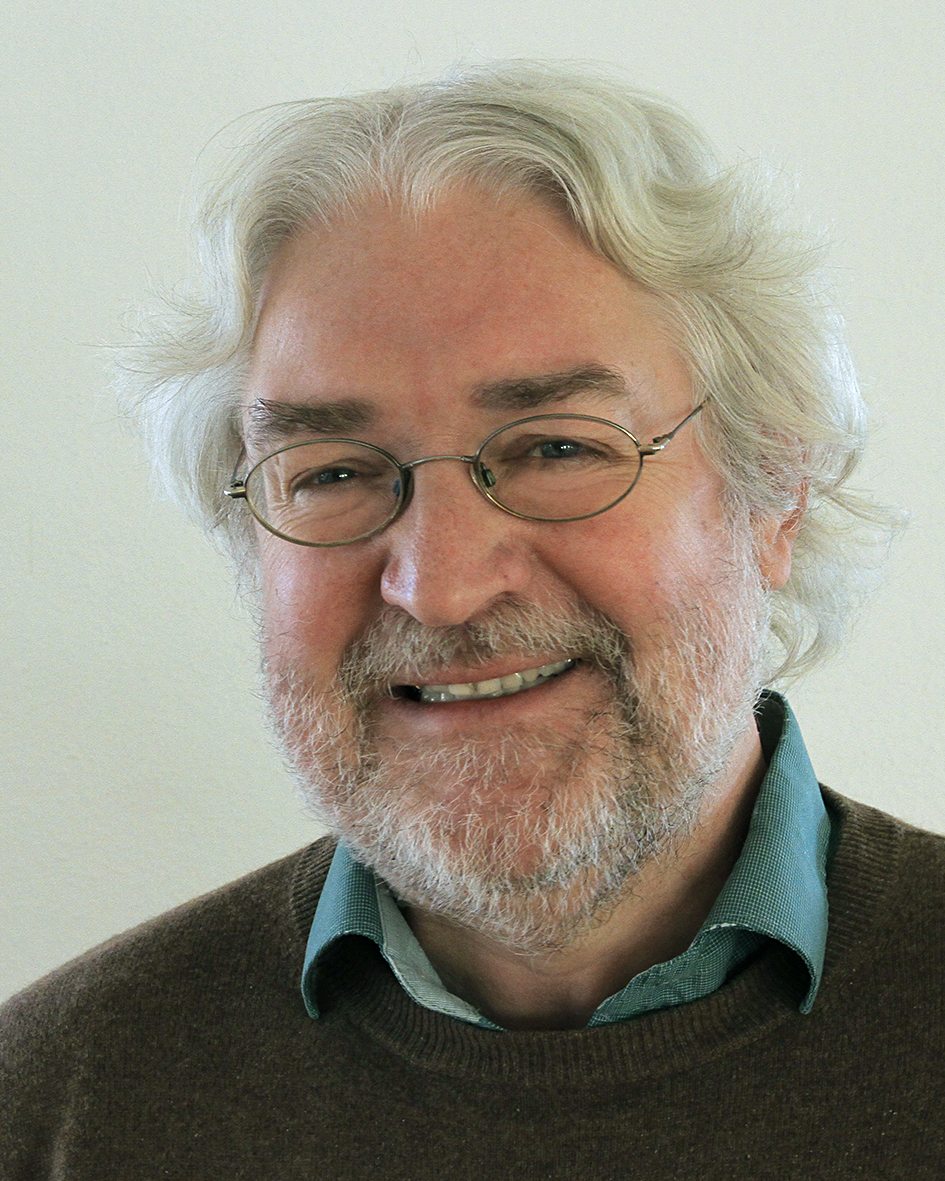
Ali Youssef is affiliated with the Computation-based Science & Technology Research Center (CaSToRC) at The Cyprus Institute. His research interests span quantum computing, machine learning, and computational modeling, reflecting the center's focus on advanced computational methodologies. He contributes to areas such as high-performance computing and computational physics, aligning with CaSToRC's mission to drive innovation in computational sciences. While specific educational background and professional history are not detailed in the provided text, his affiliation with CaSToRC underscores his involvement in cutting-edge interdisciplinary research at the intersection of computing and applied sciences. No academic awards, supervised students, or published articles are explicitly mentioned in the text.
Constantinos Zampelas is affiliated with the Computation-based Science & Technology Research Center (CaSToRC) at The Cyprus Institute. His research interests align with the center's focus areas including quantum computing, machine learning, computational modeling, and high-performance computing. Specific roles or academic rank details beyond 'Researcher' are not explicitly stated in the provided text. No scientific awards, publications, or student advisement records are mentioned.
Marina Lardou is a Researcher affiliated with the Computation-based Science & Technology Research Center (CaSToRC) at The Cyprus Institute. Her research focuses on advanced computational methodologies and technologies, including quantum computing, machine learning, and high-performance computing applications. She contributes to interdisciplinary projects leveraging computational modeling and artificial intelligence in scientific contexts. Research Interests: Her work spans cutting-edge areas such as quantum algorithms, computational physics simulations, and AI-driven solutions for complex scientific challenges. She collaborates on initiatives related to computational infrastructure development and its application in material science and environmental modeling. No awards, student advisees, or specific grants are listed in the provided information. Her professional activities are centered within CaSToRC's core mission areas.
Giannis Ashiotis is affiliated with the Computation-based Science & Technology Research Center (CaSToRC) at The Cyprus Institute. His research interests align with the center's focus areas, including Quantum Computing, Machine Learning, and Computational Physics. While specific academic roles or detailed projects are not explicitly stated in the provided text, his association with CaSToRC suggests involvement in advanced computational and technological research.
Sisem Ektirici is a Researcher at The Cyprus Institute (CyI), affiliated with the Computational Sciences Department within the Computation-based Science & Technology Research Center (CaSToRC). She joined CyI in September 2022 as a Research Assistant in the ENGAGE European Doctorate Program. Her research focuses on Molecular Dynamics Simulations of Biomolecules , Quantum Mechanical Calculations of Nanoparticles , and Biosensors . Ektirici holds an MSc in Biochemistry from Hacettepe University, where her thesis involved chromatographic techniques and quantum chemical calculations of biomolecules. Education: MSc in Biochemistry, Hacettepe University Research Interests: Advanced computational modeling of biomolecular systems Quantum mechanical analysis of nanomaterials Development of biosensor technologies Interdisciplinary applications in computational chemistry and bioengineering Advising & Grants: Currently no advising roles or active grants are listed, but her work contributes to the ENGAGE program's goals in training computational physicists and engineers. Labs/Teams: Part of the Computational Sciences Department at CaSToRC, collaborating on projects involving high-performance computing and computational physics.
Andreas Papageorgiou is a Researcher at the Computation-based Science & Technology Research Center (CaSToRC) at The Cyprus Institute. His affiliation with CaSToRC indicates involvement in advanced computational research areas such as quantum computing, machine learning, and high-performance computing. While specific academic roles or personal achievements are not detailed in the provided text, his association with this research center highlights expertise in computational sciences and technology-driven innovation. Career Focus: His work aligns with CaSToRC's mission to advance computational methodologies across disciplines including materials science, physics, and artificial intelligence. No specific awards, students, or publications are explicitly mentioned in the text provided.
Georgios Sakellion is affiliated with the Computation-based Science & Technology Research Center (CaSToRC) at The Cyprus Institute. His research aligns with the center's focus areas, including quantum computing, machine learning, computational modeling, and high-performance computing. He contributes to interdisciplinary computational science projects and innovations. Education details are not explicitly listed in the provided text, but his involvement with CaSToRC suggests expertise in advanced computational methodologies. His work supports the center’s mission to advance computational research and technology-driven solutions. No specific grants, awards, or lab affiliations are mentioned in the text. However, his role within CaSToRC implies participation in ongoing projects related to computational physics, materials modeling, and artificial intelligence applications.
Asst. Prof. Dr. Umut Yıldırım is an Assistant Professor in the Department of Civil Engineering at Eastern Mediterranean University. His research focuses on structural engineering, earthquake engineering, and the application of machine learning in civil infrastructure. He teaches courses such as CIVL343, INSA473, and CE 477, and has contributed to advancements in base-isolation systems, rubberized concrete properties, and structural health monitoring. He serves as an Associate Editor and Reviewer for academic journals, and has published extensively in high-impact journals and conferences. His work spans experimental testing (e.g., Arduino-based shake tables) and computational modeling (e.g., physics-informed neural networks). Education details are not explicitly stated in the provided text. His research interests include optimizing seismic isolation systems through machine learning, enhancing material performance (e.g., rubberized concrete), and improving infrastructure resilience against earthquakes. Recent articles highlight innovative methods for earthquake record selection, nonlinear response analysis, and cost-effective testing frameworks. Awards and grants are not mentioned in the provided data. He has supervised Master’s and PhD theses, contributing to next-generation structural engineering solutions. His lab work involves experimental setups for bridge dynamics and material characterization.
Dr. Mohsen Soori is an Assistant Professor in the Department of Mechanical Engineering at the Faculty of Engineering, Eastern Mediterranean University. His research focuses on integrating artificial intelligence (AI), machine learning, and deep learning into advanced manufacturing processes, particularly in Industry 4.0 applications such as smart quality control, human-robot collaboration, and additive manufacturing optimization. He also specializes in CNC machining optimization, virtual machining systems, and error compensation in precision manufacturing. Dr. Soori holds a Ph.D. in Mechanical Engineering from Eastern Mediterranean University (2022), an M.Sc. from Amirkabir University of Technology (2012), and a B.Sc. from Shahid Rajaee Teacher Training University (2007). His academic work bridges theoretical advancements in numerical methods (e.g., variational iteration, finite element analysis) with practical industrial challenges in machining, robotics, and sustainability. His recent publications (2023–2025) emphasize AI-driven solutions for Industry 4.0, including blockchain-enabled supply chains, smart manufacturing systems, and virtual machining analytics. He has also contributed to studies on tool wear prediction, thermal management in titanium alloy machining, and sustainable CNC operations. Administrative roles and grants are not detailed in the provided text, but his involvement in academic leadership and collaborative research projects is implied through his active publication record and institutional affiliation.
Dr. Josephina Antoniou is an Associate Professor in Computing and Deputy Head of the School of Sciences at UCLan Cyprus. She holds a PhD in Computer Science (University of Cyprus, 2010), MSc in Advanced Computer Technologies (University of Cyprus, 2004), and BA in Computer Science & Mathematics (Wartburg College, 2002). Her roles include Course Leader for MSc Computing and Chair of the University Ethics Subcommittee (2021–2024). She is a Senior Member of ACM and IEEE, and a Fellow of the Higher Education Academy (FHEA). Her research focuses on Quality of Experience (QoE) in communication networks, AI ethics, and emerging technologies like IoT and 5G. Notable research interests include ethical implications of AI, responsible innovation, and user-centric system design. She has led multiple EU-funded projects, including Horizon Europe initiatives on research ethics and AI governance. Dr. Antoniou has supervised numerous PhD and postdoctoral researchers, contributed to over 50 publications, and received awards such as the ACM-W Networking Grant (2015–2016). She actively engages in outreach, including workshops for high school students and international conferences like ACM-W and IEEE events.
Andreas Savva is a Lecturer in Computing at UCLan Cyprus since 2017. Previously, he served as a Lecturer in Networking at Bahrain Polytechnic (2014–2017) and as a Tutor in Computer Science at the University of Cyprus (2008–2013). He holds a PhD in Computer Engineering from the University of Cyprus (2024), an MSc in Computer Engineering (2008), a BSc (Hons) in Computer Science (2005), and a Certification of Learning and Teaching in Higher Education (2016). His research focuses on optimizing computing systems through: Many-core architectures and minimizing power consumption in networks-on-chip Applying artificial neural networks (ANN) for prediction and fault detection in hardware systems Enhancing overlay network performance via caching algorithms Savva has contributed to international conferences and has secured research funding, including a €89,450 grant in 2008 from Cyprus Research Promotion Foundation for a collaborative project on simulation frameworks for many-core architectures. He is affiliated with professional organizations like the Cyprus Scientific and Technical Chamber and IEEE. His administrative experience includes panel membership for accreditation at Bahrain Polytechnic and roles in educational software management (Cyprus Ministry of Education, 2002–2007). He has also served as an external moderator for ICT programs and a judge for student projects at Bahrain Polytechnic, alongside research activities in labs such as EASOC (Embedded and Application Specific Systems-on-Chip Laboratory) and KIOS (Research Centre for Intelligent Systems and Networks) at the University of Cyprus.
Professor Constantia Alexandrou is a distinguished physicist at the Department of Physics, School of Natural and Applied Sciences, University of Cyprus. She leads state-of-the-art research in Lattice Quantum Chromodynamics and hadron structure, heading the Lattice QCD Computational Lab at the university. Professor Alexandrou serves as Chair of the Council of PRACE (Partnership of Advanced Computing in Europe), is a member of multiple prestigious scientific councils including the National Council for Research in Greece and the Helmholtz-Institute Mainz, and represents Cyprus at IUPAP. B.A. in Physics with First Class Honors from University of Oxford (1980) Ph.D. in Theoretical Strong Interactions Physics from MIT (1985) Research positions at Paul Scherer Institute, Switzerland and Erlangen University, Germany Professor Alexandrou's research focuses on Lattice Quantum Chromodynamics, hadron structure, and high-performance computing applications in theoretical physics. Her work bridges fundamental particle physics with advanced computational techniques, particularly in studying nucleon properties and quantum chromodynamics from first principles. She has pioneered methods for calculating parton distribution functions, hadronic vacuum polarization, and nucleon spin decomposition using lattice techniques, contributing significantly to our understanding of strong interaction physics. Her recent work has expanded into quantum computing applications for high-energy physics problems. Analysis of Professor Alexandrou's recent publications reveals a consistent focus on advancing lattice QCD methodologies for calculating fundamental properties of hadrons and nucleons. Her work spans both traditional lattice calculations and emerging quantum computing applications, demonstrating leadership in adapting computational physics to new technological frontiers. The publications show particular emphasis on precision calculations of nucleon structure, hadronic contributions to fundamental constants, and developing non-perturbative methods for quantum field theory. Fellow of the American Physical Society Principal Investigator of three European Joint Doctorates (approximately €3.7 million each) Principal Investigator of Excellence Center Quantum Computing for Science and Technology (QSciTec) under Teaming action (€35 million) Professor Alexandrou has secured approximately €15 million in competitive funding for the Computational-based Science and Technology Research Center of the Cyprus Institute, including two ERA Chair projects of €2.5 million each. She has served as the first Head of the Department of Physics at the University of Cyprus and held leadership positions at the Cyprus Institute from 2004-2022. With over 300 scientific publications and numerous invited talks at international meetings, she has organized several workshops in Cyprus and abroad, significantly contributing to the international lattice QCD community through the Extended Twisted Mass Collaboration (ETMC). She heads the Lattice QCD Computational Lab at the University of Cyprus, which operates dedicated computing clusters for lattice QCD calculations. As a member of the Extended Twisted Mass Collaboration (ETMC) - comprising major European and US research groups - she plays a key role in advancing international collaboration in computational particle physics. Her leadership extends to multiple scientific advisory bodies where she influences research directions in high-performance computing and theoretical physics across Europe.
Prof. Dr. ALİ ÖZTÜREN is a full-time Professor at the Faculty of Tourism, Eastern Mediterranean University (EMU) , where he also serves as Vice Rector. He is actively involved in research, teaching, and academic leadership with a focus on sustainable tourism, hospitality management, and digital transformation in tourism. Education: PhD in Tourism and Hospitality MBA in Business BS in Tourism and Hospitality Research Interests: His research spans sustainable tourism development , green management in hospitality , electronic word-of-mouth (eWOM) , smart tourism destinations , and human resource management . He investigates how digital technologies, ethical leadership, and environmental values influence tourism outcomes. Publication Trends: His recent articles (2021–2023) show a strong emphasis on sustainability, digital behavior (eWOM, AI, VR), and organizational dynamics in tourism. Topics include green airports, robot integration in hotels, accessible tourism for disabled visitors, and coopetition with informal enterprises. His work appears in high-impact journals such as Sustainability , Journal of Public Affairs , and Current Issues in Tourism . Scientific Awards: EMU Publication Citation Award (2021) EMU Research Incentive Award (2020) Advising and Grants: He has supervised over 40 Master’s and PhD students, many focusing on sustainability, consumer behavior, and innovation in tourism. He leads several funded research projects at EMU, including studies on sustainability in airport operations, AI in HRM, and spiritual leadership in innovation. His work bridges academic rigor with real-world policy and managerial implications. Labs and Teams: While no formal lab is mentioned, he collaborates extensively with international scholars and leads research teams within the Faculty of Tourism, particularly in sustainability and digital transformation projects.
Sazeidis Giannos is a Professor at the Department of Informatics, University of Cyprus. His academic roles include teaching and research in computer architecture and high-performance computing. He holds a Ph.D. in Electrical Engineering from the University of Wisconsin-Madison (1999), following earlier degrees from Oakland University (B.Sc., 1991) and Cornell University (M.Eng., 1992). Education: B.Sc. in Computer Engineering, Oakland University, 1991 M.Eng. in Electrical Engineering, Cornell University, 1992 Ph.D. in Electrical Engineering, University of Wisconsin-Madison, 1999 His research focuses on Computer Architecture , with emphasis on optimizing high-performance processors, program behavior analysis, and energy-efficient microarchitectures. He has industry experience at HP, Compaq, and Intel, working on advanced processor development. At the University of Cyprus, he has served as a Visiting Lecturer (2000–2001) and currently holds a permanent professorship. No scientific awards or recent articles were explicitly listed in the provided text. His professional activities include curriculum development and supervision of academic programs in informatics.
Karl Jansen is a researcher at DESY Zeuthen, Germany, where he leads the Center for Quantum Technologies and Applications (CQTA) and contributes to the NIC research group 'Elementary Particle Physics'. His work spans computational sciences, quantum computing, lattice field theory, and theoretical biology, with a focus on interdisciplinary approaches integrating physics and AI in drug design. Affiliated institutions: DESY Zeuthen, NIC (Research Center Jülich) Research areas: Quantum technologies, computational physics, molecular simulations, and epigenetic drug development Recent publications emphasize machine learning applications in drug discovery, epigenetic inhibition mechanisms, and advanced computational modeling techniques. His leadership in quantum technologies highlights DESY's commitment to cutting-edge research infrastructure. Personal interests include diving (documented across global locations like Australia, Taiwan, and Cyprus) and music, reflecting a multidisciplinary engagement beyond formal academic roles.