Dominique OrbanView profile
Professor
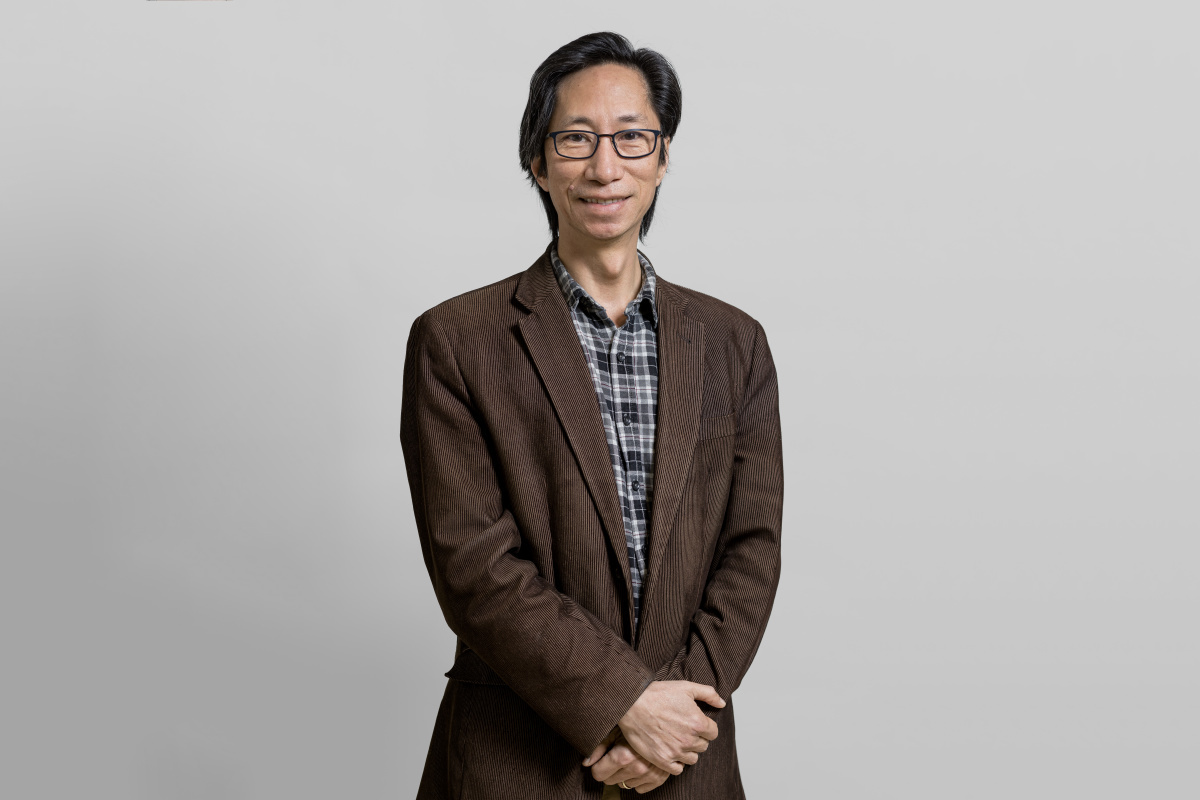
Dominique Orban is a Full Professor in the Department of Mathematics and Industrial Engineering at Polytechnique Montréal. He holds a Ph.D. from FUNDP Namur and INP Toulouse and has established himself as a leading researcher in numerical optimization. His academic affiliations include the Institute for Data Valorization (IVADO) and the Decision Analysis Study and Research Group (GERAD). Professor Orban's research focuses on numerical mathematics, particularly continuous nonlinear optimization, nonlinear systems of equations, and numerical linear algebra. His work involves designing specialized numerical algorithms for optimization problems, with particular interest in degeneracy and ill-posed problems. His research spans theoretical development of algorithms, their implementation in software, and applications to real-world problems such as image reconstruction, optimal structure design, and optimization under differential constraints. Analysis of his recent publications (2021-2025) reveals a strong focus on developing practical optimization algorithms with theoretical guarantees. His work spans multiple areas including nonsmooth optimization, iterative methods for linear systems, regularization techniques, and software implementation in Julia. A notable trend is his increasing focus on developing open-source software tools that make advanced optimization methods accessible to practitioners. Over 160 publications including journal articles, conference papers, and technical reports Multiple publications in top optimization journals each year through 2025 Strong emphasis on both theoretical foundations and practical implementation Increasing focus on Julia-based optimization software development Professor Orban has successfully supervised 9 doctoral students and 13 master's students to completion, demonstrating his commitment to mentoring the next generation of researchers. His supervision style appears to balance theoretical depth with practical implementation skills, preparing students for both academic and industry careers. His research has been supported through various institutional and collaborative grants, enabling him to maintain an active research program with multiple ongoing projects. His contributions to the field include significant software developments such as Krylov.jl, JSOSuite.jl, and DCISolver.jl, which have made advanced optimization techniques more accessible to the broader scientific community. These tools reflect his philosophy of bridging theoretical optimization with practical computational implementation.