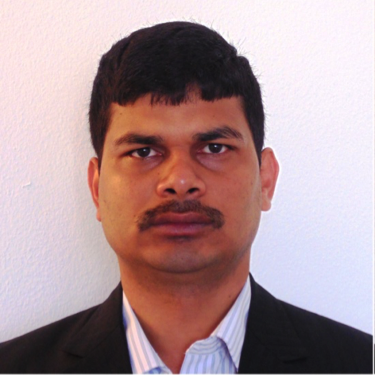
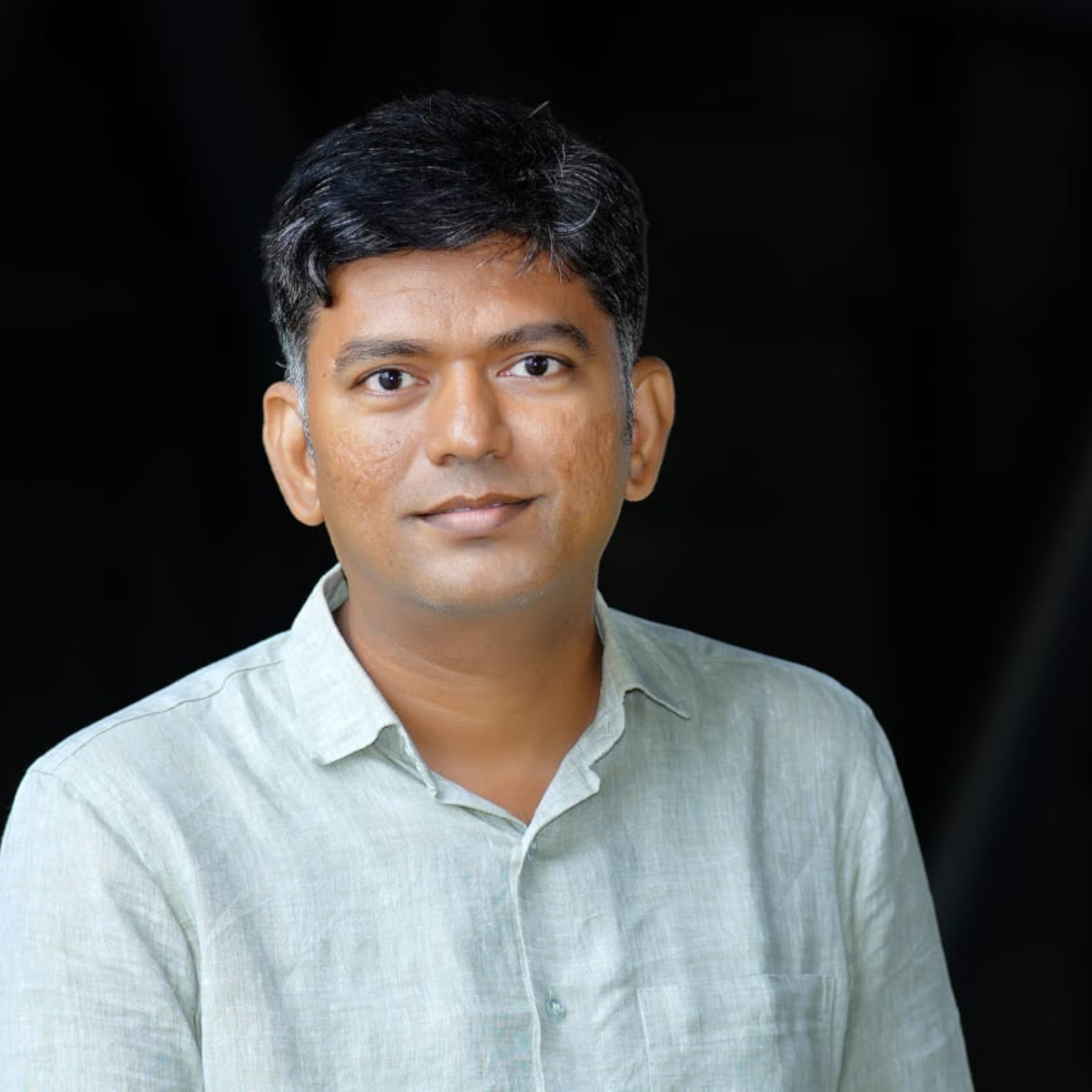
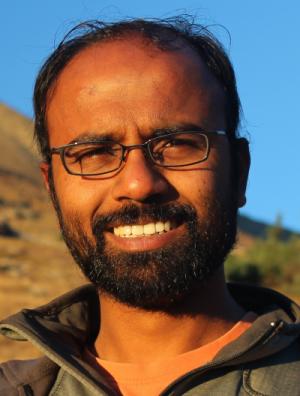
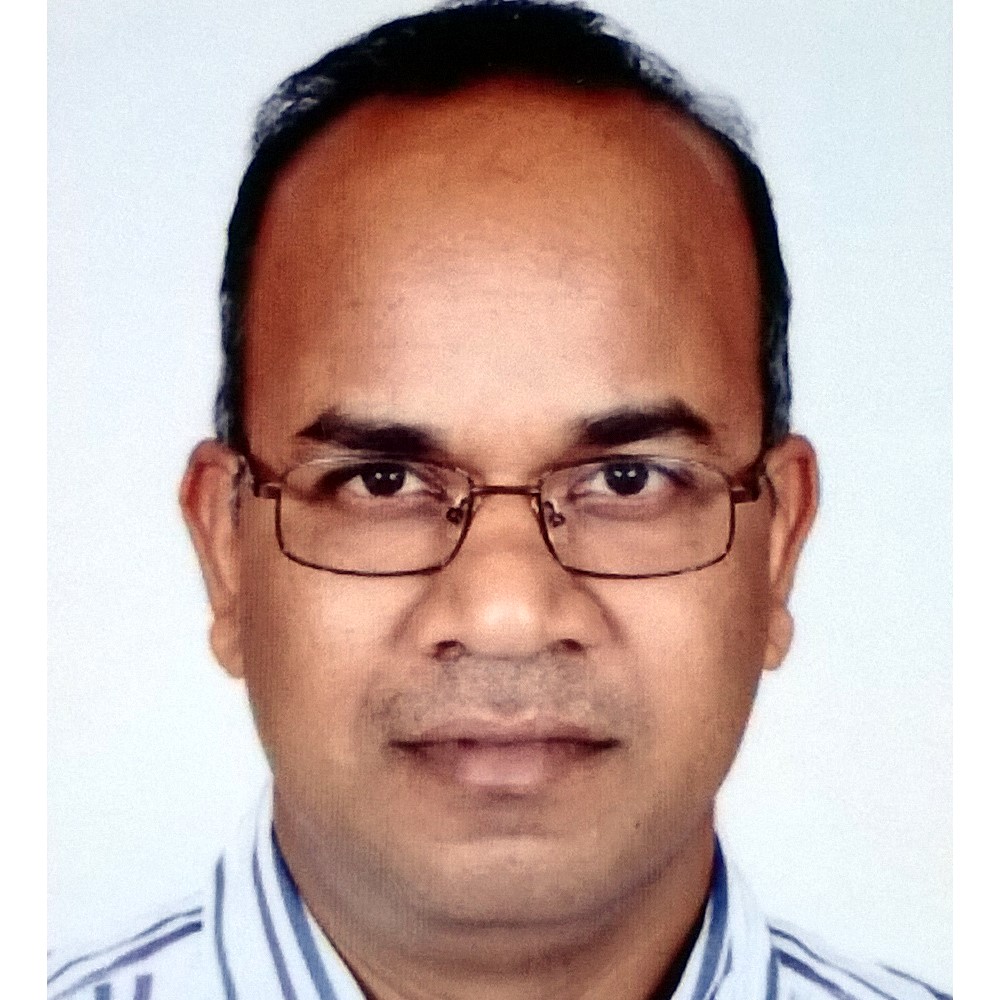
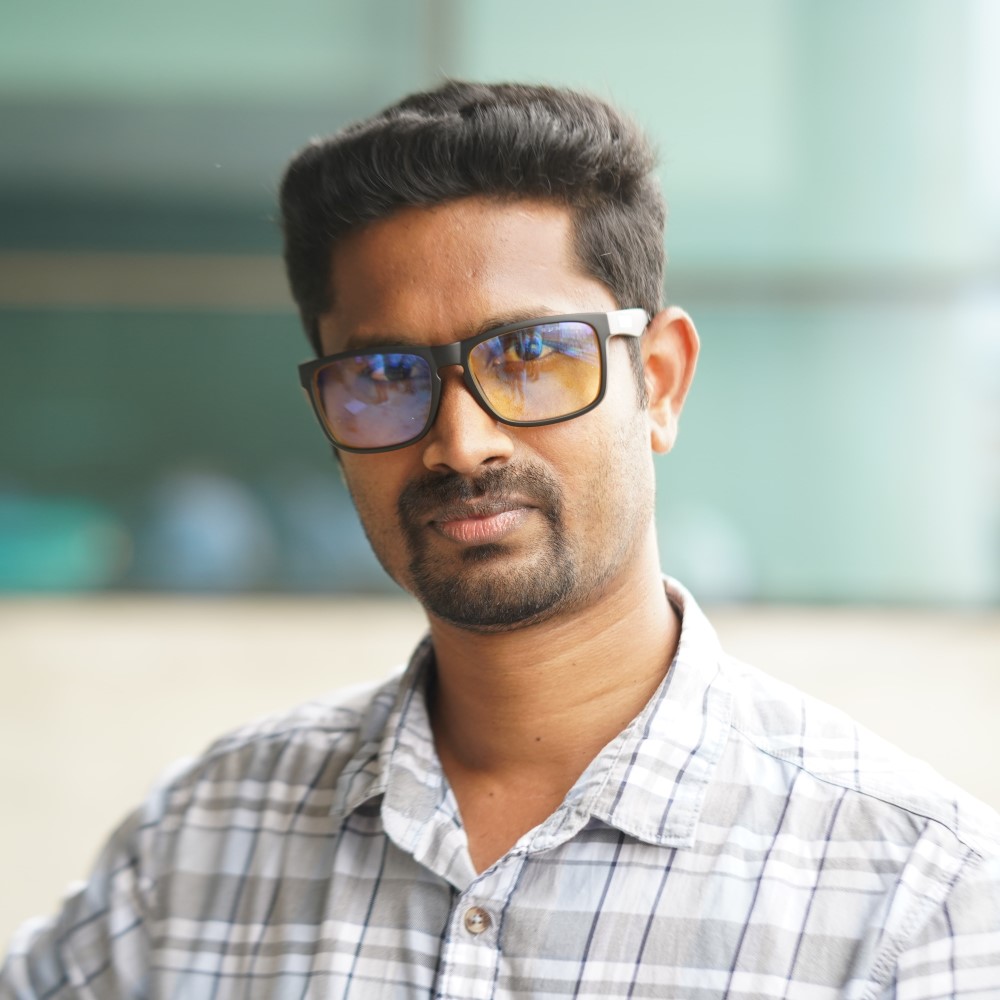
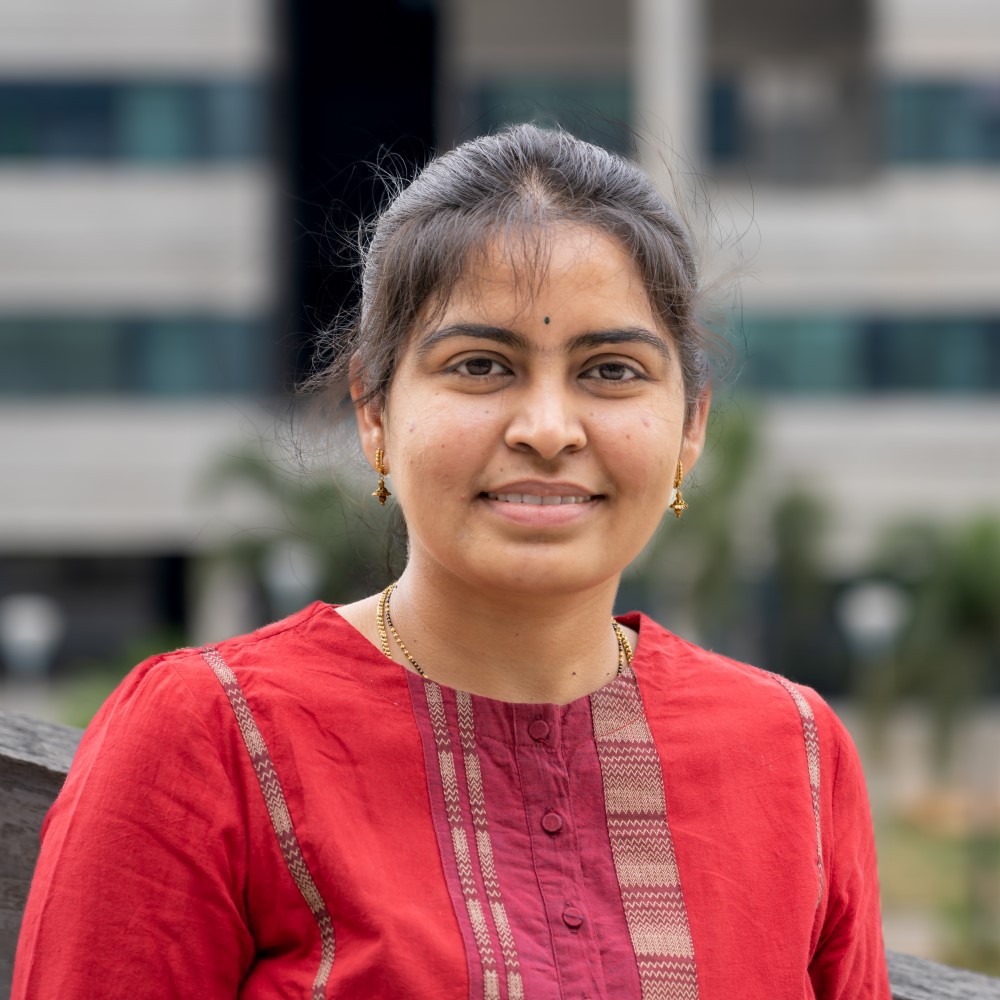
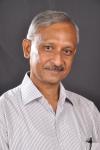
Surajit Maity is an Associate Professor in the Department of Chemistry at the Indian Institute of Technology Hyderabad . His research focuses on Laser Spectroscopy , Molecular Dynamics , and Non-covalent Interactions in biorelevant systems, alongside High Performance Computing for energy transfer studies. He obtained his PhD in Chemistry from IIT Bombay and has held positions at the University of Bern, University of Basel, and University of Hawaii. His work bridges experimental and computational approaches to study interstellar chemistry , atmospheric pollutant activation , and molecular navigation devices . Research Themes : Spectroscopic characterization of molecular clusters, non-covalent interactions, CO2 desorption energies, and environmental applications of computational chemistry. Publications : Over 50 peer-reviewed articles, including recent studies on hydrogen-bonded complexes, solvent effects in excited states, and metal cluster catalysis. Students : Mentored PhD and MSc students like Simran Baweja, Ramesh Jarupula, and Saurabh Khodia, who have secured prestigious postdoc positions and grants. Awards : Recipient of the Excellence in Research 2023 award from IIT Hyderabad and the SERB International Travel Grant .
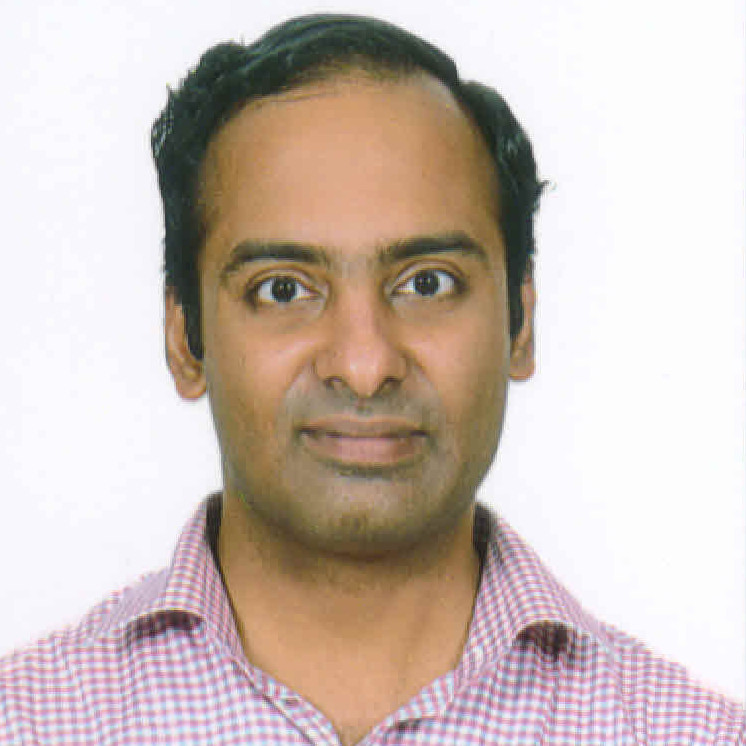
Dr. Surendra Nadh Somala is an Associate Professor at the Indian Institute of Technology Hyderabad , affiliated with the Civil Engineering and Heritage Science & Technology departments. He holds a Ph.D. from California Institute of Technology (Caltech) and focuses on interdisciplinary research at the intersection of structural engineering, AI/ML, and heritage conservation. Education: Ph.D., California Institute of Technology (Caltech) His research spans seismic resilience technologies, additive manufacturing for civil infrastructure, and applications of machine learning in structural health monitoring. He also explores high-performance computing (HPC) for multiscale modeling and integrates virtual/augmented reality in design innovation and heritage preservation. Office Address: Room B-304, Academic Block B, Indian Institute of Technology Hyderabad, Kandi-502284, Sangareddy, Telangana, India.
Partha S. Ghoshdastidar is a Professor (Higher Academic Grade) in the Department of Mechanical Engineering at the Indian Institute of Technology Kanpur. With over three decades of academic experience, he has established himself as a leading expert in Computational Heat Transfer, specializing in rotary kiln modeling, non-Newtonian flow, boiling heat transfer, electronic cooling, and nanofluid heat transfer. Dr. Ghoshdastidar earned his PhD from the University of South Carolina, Columbia, USA in 1984, with a thesis on 'Heat Transfer in a Rotary Kiln During Incineration of Solid Waste' under Prof. C. A. Rhodes. His academic career at IIT Kanpur began as Visiting Faculty in 1984, progressing through Lecturer, Assistant Professor, Associate Professor, and Professor positions, currently holding the title of Professor (Higher Academic Grade) since August 2014. He also served as Guest Professor at Universität Hannover, Germany (2000-2001). His research focuses on computational approaches to heat transfer problems, particularly using the Coupled Map Lattice Method (CML) for modeling complex thermal phenomena. Current research areas include numerical simulation of nanofluids flow, heat transfer modeling in rotary kilns, electronic equipment cooling, LED street lighting heat sink design, and pool boiling simulation of nanofluids. Notable achievements include the Institution Prize of the Institution of Engineers (India), multiple Certificates of Merit, election as Fellow of the World Innovation Foundation, U.K. (2002), and the 2012 A. M. Strickland Prize from the Institution of Mechanical Engineers, U.K. He serves as Associate Editor for HEAT TRANSFER RESEARCH and Editorial Board Member for Engineering Science and Technology. His extensive teaching portfolio includes undergraduate and postgraduate courses in Heat Transfer, Fluid Mechanics, Numerical Methods, and specialized topics. He has mentored numerous students across BTech, MTech, and PhD programs, with current research students including Ashish Agrawal, Dileep V. Nair, and Rajat Dhingra. His sponsored research projects, funded by DST and CSIR, demonstrate the practical applications of his theoretical work in industrial settings.
Anirban Patra is an Associate Professor in the Department of Metallurgical Engineering and Materials Science at the Indian Institute of Technology Bombay (IIT Bombay) , where he has been a faculty member since October 2017. He holds a Ph.D. from Georgia Institute of Technology (USA) and a B.Tech. from IIT Kharagpur. His research is primarily in computational mechanics, crystal plasticity, and constitutive modeling of structural materials. Education Ph.D. in Materials Science and Engineering, Georgia Institute of Technology, USA (2009–2013) B.Tech. in Metallurgical and Materials Engineering, IIT Kharagpur (2005–2009) His research interests span computational mechanics , crystal plasticity , strain gradient plasticity , finite element modeling , and microstructure-property correlations in structural materials. He focuses on modeling deformation behavior in nuclear, aerospace, automotive, and additively manufactured materials, with an emphasis on irradiation effects, creep, fatigue, and failure mechanisms. He has developed ρ-CP , an open-source dislocation density-based crystal plasticity framework, enabling predictive simulations across scales. His recent publications indicate strong trends in multiscale modeling , residual strain prediction , non-Schmid effects , and machine learning integration for accelerated materials design. His work frequently combines simulations with experimental validation. Scientific Awards and Recognition Serves on the Editorial Advisory Board of the International Journal of Plasticity . Supervised students awarded Prime Minister's Research Fellowship . Advising and Grants Prof. Patra has mentored numerous Ph.D., M.Tech., and dual-degree students, many of whom have pursued postdoctoral and industry positions at institutions like Purdue University and Ansys. His research is supported through institutional and project-based funding, though specific grants are not listed. He actively recruits researchers with backgrounds in mechanics, materials, and computational methods. Current advisees: Gulivindala Gopi, Girish Kulkarni, Lopamudra Singh, Alanka Naga Satya Sai Mahesh, Suryakant Priyadarshan, Mukul. Alumni include Namit Pai, Suketa Chaudhary, Manikandan Muruganandam, Preet Shah, and others. Labs and Teams He leads the Computational Mechanics and Materials Research Group at IIT Bombay, which develops and applies advanced modeling tools like ρ-CP. The group focuses on high-performance computing, open-source software development, and interdisciplinary collaboration with experimentalists.
Bhabani Shankar Mallik is a Professor in the Department of Chemistry at the Indian Institute of Technology Hyderabad . His research focuses on Computational Chemistry , Molecular Dynamics , and First Principle Calculations for energy materials and catalysis. He leads the BSM Lab , which utilizes High-Performance Computing (HPC) resources like ParamSeva@IITH (838 TFLOPS, 7500 cores). Research Areas : Structure/Dynamics of Ionic Liquids, Catalysis (Homogeneous/Heterogeneous), Energy Materials, Microkinetic Theory, Machine Learning in Chemistry, Vibrational Spectroscopy His recent publications analyze ionic transport mechanisms in solid-state electrolytes, electrocatalytic processes for nitrogen reduction, and proton transfer dynamics in aqueous systems. He teaches courses like Modern Simulation Methods and Principles of Quantum Chemistry .
Dr. Nithyanandan Kanagaraj is an Assistant Professor in the Department of Physics at the Indian Institute of Technology Hyderabad, leading the Ultrafast Fiber Optics and Complex Photonics Laboratory . His interdisciplinary research bridges photonics, computational science, and materials engineering. Ph.D. from Pondicherry Central University Collaborates with engineers in Electrical, Communications, and Computer Science domains His research focuses on fiber lasers, nonlinear photonics, and ultrafast optical phenomena , with applications in sensing, high-performance computing, and additive manufacturing. Recent publications highlight trends in dissipative solitons, spectral pulsations, and advanced fiber devices , often leveraging AI/ML and quantum technologies for pulse optimization. CEIFPRA/IFCPAR Industry-Academic Grant (180 Lakhs) JICA Friendship Grant 2.0 OSA Senior Member (2021) Bureau of Indian Standards (BIS) member He mentors a diverse team of Ph.D. and Master's students, including Amala Jose, Subrata Manna, Ashish Kumar Kok , and others, while collaborating with international experts like Prof. Philippe Grelu (France) and Prof. David Richardson (UK).
Saurabh Kumar Singh is an Assistant Professor in the Department of Chemistry. His research focuses on computational inorganic chemistry, molecular magnetism, electronic structure theory, and heavy element chemistry. Ph.D. from IIT Bombay Active in computational chemistry and nanotechnology research Contact: Office Phone (040) 2301 - 6266 His work spans quantum chemical modeling, reaction mechanisms, and high-performance computing applications in molecular science.
Chithra is an Assistant Professor in the Department of Electrical Engineering at the Indian Institute of Technology Kanpur (IIT Kanpur), which is part of the School of Engineering. She earned her B.E. (Hons.) in Electrical and Electronics Engineering from BITS Pilani K. K. Birla Goa Campus, followed by an M.S. and Ph.D. from IIT Madras. Her academic journey reflects a strong foundation in electrical engineering with specialized expertise in VLSI design. Her research focuses on Analog and mixed-signal VLSI design , digital VLSI design , frequency and phase synthesis , and time-to-digital converters . These research areas represent critical components in modern electronic systems, with applications spanning communication devices, precision measurement instruments, and high-performance computing systems. Her work contributes to advancing integrated circuit technologies that form the backbone of contemporary electronic devices. Dr. Chithra maintains her office in room WL-211 of the Department of Electrical Engineering at IIT Kanpur. She can be reached at phone number +91-512-259-2199 or via email at chithra@iitk.ac.in. As a faculty member at one of India's premier technical institutions, she participates in teaching undergraduate and graduate courses while conducting research in her specialized areas of expertise.
Jyothi Vedurada is an Assistant Professor in the Department of Computer Science and Engineering at the Indian Institute of Technology Hyderabad (IIT Hyderabad). Her research focuses on compilers, program analysis, high-performance computing (HPC), and software engineering. Prior to joining IIT Hyderabad, she was a postdoctoral researcher at Microsoft Research Lab in Bangalore and worked as a Software Engineer at Hewlett Packard in Chennai. Her research spans four major areas: Compiler Optimizations : Developing global compiler optimizations for CPU-GPU heterogeneous systems to enhance performance across varied hardware environments. ML for PL : Leveraging AI to overcome scalability and semantic challenges in program analysis, with applications in bug detection, API misuse recommendation, and algorithm description generation for Jupyter notebooks. Parallelization : Designing efficient GPU algorithms for tasks like Approximate Nearest Neighbour search and subgraph isomorphism optimization, alongside developing the Tensor Transposition Library for GPUs (TTLG). Concurrency Testing : Creating systematic testing frameworks for concurrent systems, including language-agnostic libraries and mock storage systems to validate weak isolation levels in databases. Scientific Awards & Recognition : Distinguished Artifact Award at ECOOP 2025 Google Research exploreCSR Award (2021) Tata Consultancy Services PhD Fellowship ACM SIGAI, SIGPLAN, and IEEE Travel Grants Advising & Collaborations : Supervising 11 PhD and MTech students, including Soumik Kumar Basu and Karthik V, with projects spanning compiler optimizations, HPC, and AI-driven software analysis. Collaborating with institutions like Microsoft Research and IIT Madras.
Dr. Amrita Bhattacharya is an Associate Professor in the Department of Metallurgical Engineering and Materials Science at the Indian Institute of Technology Bombay (IIT Bombay). She has been a faculty member since December 2017, advancing to Associate Professor in May 2021. Prior to joining IIT Bombay, she held prestigious positions including Max Planck Postdoctoral Scientist at the Fritz Haber Institute in Germany and DST Inspire Faculty at the National Physical Laboratory in New Delhi. Her educational background includes a Ph.D. in Computational Physics from the Indian Association for the Cultivation of Science and an MSc in Physics from Burdwan University. Dr. Bhattacharya's research is focused on computational materials science, with core interests in: Charge and heat transport in thermoelectric materials Defects in semiconductors Magnetic structure in strongly correlated materials Quantum confinement effects in 2D planar nanomaterials (e.g., graphene, silicene, BN sheets) Machine learning applications for predicting physical properties of materials Development of computational methods for analyzing electronic and phononic properties Her recent publications reveal a strong trend toward high-throughput computational screening, machine learning of material properties (such as lattice thermal conductivity and zero-point energy), and the design of efficient thermoelectric materials like half-Heusler alloys and Bi2S3. Her work integrates density functional theory (DFT) with advanced transport models and data science to accelerate materials discovery. She has received several notable awards and recognitions: Max-Planck Postdoctoral Fellowship (2013–2016) DST Inspire Faculty Award (2015) DAAD Travel Grant (2016) Young Scientist Award, Materials Research Society India (2012) Kawazoe Best Poster Award, ACCMS-TM2DS, Bangalore (2012) DST Travel Grant (2011) Dr. Bhattacharya is actively involved in research funding and mentoring. She leads the Ab initio Computational Materials Simulation laboratory and has ongoing projects, including a BRNS-funded project on spin-orbit driven thermoelectric materials. She recruits Junior Research Fellows (JRFs) and postdoctoral researchers, indicating her active supervision of students and early-career scientists. She also contributes to method development in computational materials science, including coding tools for analyzing band structures, phonon properties, and elastic constants. She maintains a strong publication record in high-impact journals such as Physical Review Letters , ACS Applied Materials & Interfaces , Acta Materialia , and Journal of Materials Chemistry C .
Dr. Pradeep Moise is an Assistant Professor in the Department of Aerospace Engineering at the Indian Institute of Technology Kanpur. He holds a Ph.D. in Aerospace Engineering from the Indian Institute of Science, Bengaluru (2019), an M.Sc. in Aerospace Engineering from the same institution (2012), and a B.Tech. in Mechanical Engineering from the National Institute of Technology, Tiruchirappalli (2008). Prior to joining IIT Kanpur, he served as a Research Fellow in Aeronautical & Astronautical Engineering at the University of Southampton, United Kingdom (2020-2022). His research focuses on computational fluid dynamics, specializing in: Direct Numerical Simulations (DNS) and Large Eddy Simulations (LES) Swirling flows and transonic flow phenomena Hydrodynamic stability analysis and modal decomposition techniques High-performance computing applications in fluid dynamics His recent publications demonstrate a consistent focus on vortex dynamics and flow transitions, with particular emphasis on vortex breakdown phenomena in swirling jets and transonic buffet flows. His work frequently appears in high-impact journals like the Journal of Fluid Mechanics.
A. S. Panwar is a Professor in the Department of Metallurgical Engineering and Materials Science at the Indian Institute of Technology Bombay, a position he has held since May 2021. He is actively engaged in computational and theoretical research in materials science and soft matter physics. Research Interests: His work focuses on multi-scale molecular modeling of macromolecular self-assembly, macromolecular transport in micro- and nano-scale channels, and high-performance computing applications in polymer and composite systems. His research bridges physics, materials science, and computational modeling to understand complex soft matter behavior. Publication Trends: His publications from 2003 to 2011 demonstrate a strong focus on Brownian dynamics simulations of polymers and polyelectrolytes under various physical constraints such as nanoconfinement, electric fields, and shear flows. Key themes include DNA translocation, nanopore sensing, polymer electrophoresis, and carbon nanotube dispersion in polymer blends—indicating expertise in computational soft matter and nanomaterials. Academic Background: B.Tech. in Metallurgical Engineering and Materials Science, IIT Bombay (2000) Ph.D. in Materials Science and Engineering, University of Minnesota (2005) Postdoctoral Research Associate, University of Massachusetts, Amherst (2005–2009) Scientific Contributions: While no formal awards are listed, his work has been published in high-impact journals such as the Journal of the American Chemical Society , Macromolecules , and Polymer Engineering and Science , reflecting significant contributions to the field of computational polymer physics. Advising and Grants: Although specific students or funded projects are not mentioned in the provided text, his long-standing research output suggests active supervision and potential grant involvement. His computational focus implies use of high-performance computing resources, possibly supported by national or institutional grants. Laboratory and Team: While no formal lab or team name is provided, his research likely involves a computational group focused on molecular modeling and simulation of soft materials. His personal website (http://www.aspanwar.wix.com/aspanwar) may contain further details on current projects and collaborators.
Supratim Biswas is a Professor in the Department of Computer Science and Engineering at the Indian Institute of Technology Bombay, where he has served since 1995. His academic career spans over four decades, beginning as a Lecturer in the Computer Center in 1980, progressing to Assistant Professor in 1985, Associate Professor in 1990, and achieving full Professorship in 1995. He has held significant administrative roles including Dean of Academic Programs (2007-2010), Head of CSE Department (2000-2003), and Director of IITB-Monash Academy (2009-2010). His research interests focus on Programming Languages, Compiler Optimization, Parallelizing Compilers, Parallel and Distributed computing, and Combinatorial Optimization . Professor Biswas has made substantial contributions to compiler technology, particularly in parallelization techniques for modern architectures. His work bridges theoretical compiler design with practical applications in high-performance computing and CAD systems, demonstrating how compiler optimizations can significantly enhance computational efficiency in real-world applications. The publication record shows a consistent research trajectory spanning nearly four decades, with recent work (2012-2015) focusing on GPU-based parallel algorithms, loop parallelization techniques for non-uniform data dependencies, and mesh processing for CAD applications. His research demonstrates evolution from foundational compiler theory to contemporary parallel architectures, maintaining relevance through practical applications in computational geometry, CAD systems, and high-performance computing. Excellence in Teaching Award (2000) Professor Biswas has supervised over 60 doctoral and master's students, establishing himself as a dedicated mentor in systems software education. His sponsored research portfolio includes significant projects with CDAC (350 lacs), MIT (133 lacs), TCS (81.3 lacs), and Intel Corporation (10 lacs), demonstrating strong industry-academic collaboration. His teaching portfolio spans both undergraduate and postgraduate levels, including foundational courses like Discrete Structures and advanced topics like Parallelizing Compilers, reflecting his commitment to curriculum development across multiple generations of computer science education. His laboratory work has supported students across B.Tech, M.Tech, and Ph.D. programs, with particular emphasis on compiler construction and operating systems. Through the Continuing Education Program, he has extended his expertise to industry professionals, conducting numerous specialized courses for organizations including VSNL, TCS, DRDO, and Reliance.
Anand Mohan is a Professor in the Department of Chemical Engineering at the Indian Institute of Technology Hyderabad. His research focuses on interdisciplinary problems at the intersection of fluid dynamics, applied mathematics, and biomedical engineering, with applications in cardiovascular mechanics and complex fluid rheology. He utilizes computational fluid dynamics (CFD), mathematical modeling, and multiscale simulations to develop hypotheses and products in collaboration with partners. His work spans theoretical and applied domains, including high-performance computing and biomedical device development. Education: Ph.D. from Texas A&M University, College Station, TX Research Highlights: His team has demonstrated CFD's potential in predicting atherosclerosis sites and developed a novel viscoplastic fluid model applied to classical flow problems. Research also integrates AI/ML with fluid dynamics and applies mathematical models to study blood coagulation mechanisms.
Preeti Malakar is an Assistant Professor in the Department of Computer Science and Engineering at the Indian Institute of Technology Kanpur. She leads the Scalable Parallel Computing Laboratory (SParCL) and previously held positions as a postdoc and Assistant Computer Scientist at Argonne National Laboratory (USA) and was a Visiting Affiliate at Lawrence Berkeley National Laboratory (USA). She completed her PhD from the Indian Institute of Science Bangalore under Prof. Vijay Natarajan and Prof. Sathish Vadhiyar. Her research focuses on high-performance computing systems, parallel I/O optimization, in-situ analysis, and scientific visualization. Key areas include job scheduling, communication optimization for MPI applications, machine learning for performance prediction, and adaptive frameworks for large-scale simulations. Her work integrates HPC with climate modeling and extreme weather prediction. Recent publications emphasize job scheduling with SLURM, deep learning for climate applications, in-situ visualization, and auto-tuning of parallel I/O parameters. Her research consistently targets optimization of HPC systems for scientific domains. Awards: Best Paper Award, EduHiPC 2019 TCPP Best Paper Award, HiPC 2009 She actively advises students in HPC research, with alumni pursuing careers at NVIDIA, Microsoft, Apple, and SAP Labs. Her lab (SParCL) hosts internships and winter schools, including the ACM Winter School on HPC at IIT Kanpur.