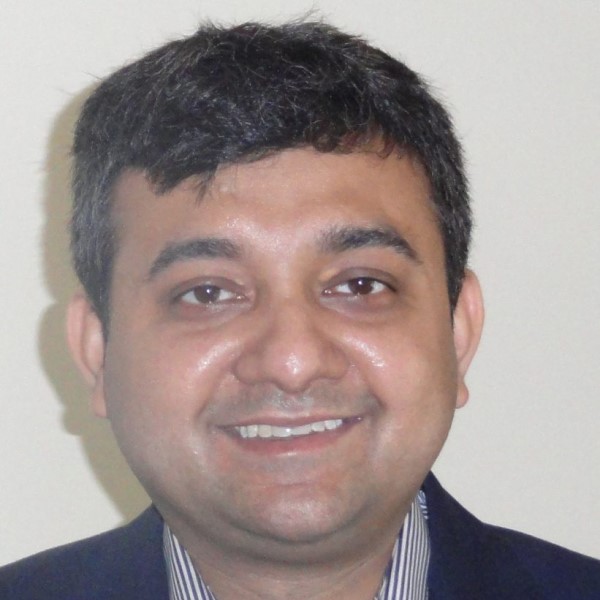
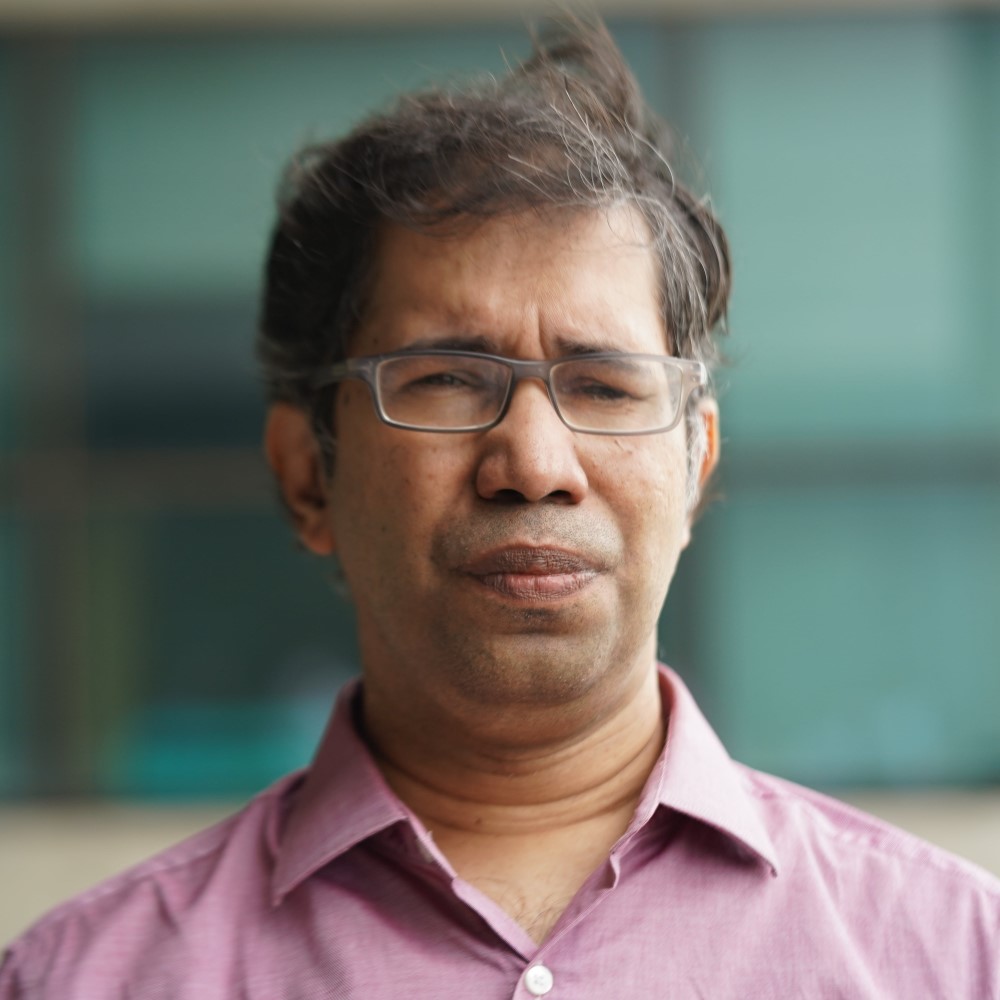
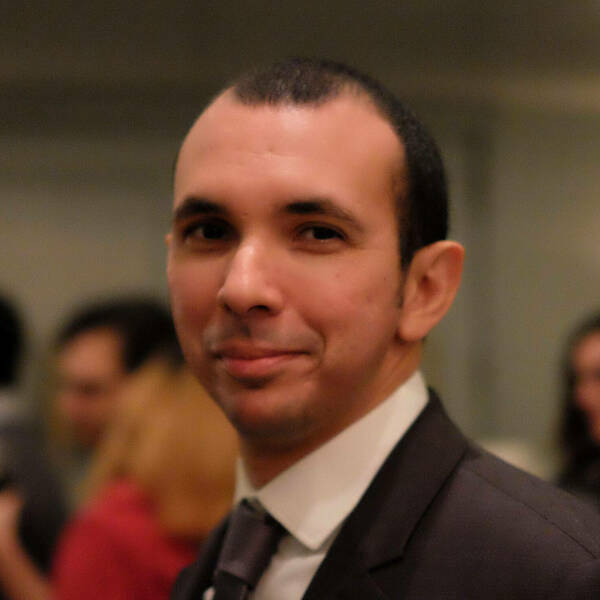
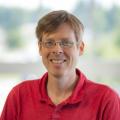
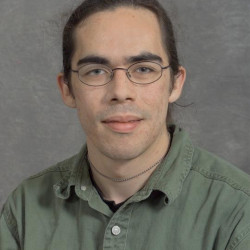
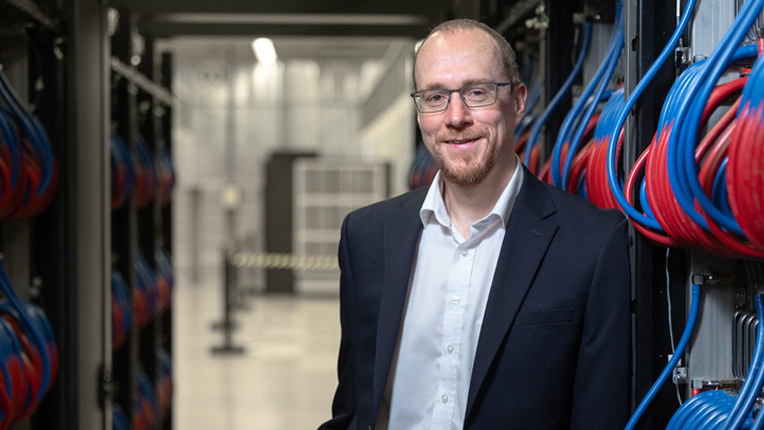
Saswata Bhattacharya is the Head (MS) & Professor in the Department of Materials Science and Metallurgical Engineering at the Indian Institute of Technology Hyderabad. He earned his Ph.D. from the Indian Institute of Science in Bengaluru and focuses on computational materials science and data-driven modeling. Education: Ph.D., Indian Institute of Science, Bengaluru Research Interests Phase-field modeling of microstructural evolution in alloys and oxides Phase transformations Micromechanical modeling Multiscale modeling AI/ML integration in materials science High Performance Computing (HPC) applications Materials Processing Office Address: Room MSME-402, MSME Block, Indian Institute of Technology Hyderabad, Kandi-502284, Sangareddy, Telangana, India.
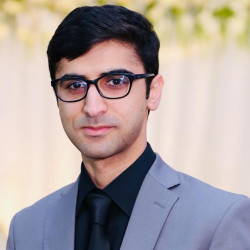
Shantanu Desai is a full-time Professor of Physics (and jointly of Artificial Intelligence) at the Indian Institute of Technology Hyderabad , a position he has held since October 2023 after serving as Associate Professor from 2016-2023. He earned his Ph.D. in Physics from Boston University in 2004 and is a member of several high-profile international collaborations, most notably the Super-Kamiokande Collaboration —sharing the 2016 Breakthrough Prize in Fundamental Physics for the discovery of atmospheric neutrino oscillations and solving the solar neutrino puzzle. Education Ph.D. in Physics, Boston University, May 2004 M.A. in Astronomy, Boston University, May 1997 B.Tech in Physics, Indian Institute of Technology Bombay, May 1995 Research Interests Desai’s work straddles observational cosmology, high-energy astrophysics, and data-driven methodologies. His core research areas include: Cosmology and Galaxy Clusters: probing dark energy, cluster abundances, and large-scale structure. Pulsar Timing & Gravitational Waves: member of the Indian Pulsar Timing Array searching for nano-Hertz gravitational waves. Neutrino Astrophysics: utilizing Super-Kamiokande data to study solar and atmospheric neutrinos. Gravitational Lensing: strong and weak lensing analyses within the Dark Energy Survey and Euclid. Machine Learning & Astrostatistics: developing AI/ML techniques for transient detection, lens finding, and survey optimization. High-Performance Computing: leveraging HPC resources for large-scale simulations and data processing. Publication & Research Trends Across 2024-2025, Desai’s publications reveal a focused synergy between multi-wavelength observations and advanced statistical methods. Topics include joint analyses of DES Y3 weak-lensing and ACT SZ data, targeted gamma-ray searches for dark matter signals in galaxy clusters, cosmological constraints on neutrino masses, and machine-learning-driven lens discoveries. These works consistently integrate large survey datasets (DES, ACT, Fermi-LAT, InPTA) with rigorous profile-likelihood techniques to address tensions in the standard cosmological model. Scientific Awards 2016 Breakthrough Prize in Fundamental Physics – shared as a member of the Super-Kamiokande Collaboration for the discovery of atmospheric neutrino oscillations and resolution of the solar neutrino problem. Student Supervision & Mentorship At IIT Hyderabad, Desai has mentored over 60 students ranging from B.Tech to Ph.D. levels, many proceeding to prestigious graduate programs worldwide (e.g., Penn State, University of Utah, Southern Methodist University, IUCAA, Swinburne, Florida Tech). Current advisees include Ph.D. students Siddhant Manna, Kamal Bora, Aman Srivastava, Gopika K., and Srinadh Reddy (co-supervised). Laboratory & Team Affiliations Desai leads a vibrant research group within the Physics Department at IIT Hyderabad. The group is actively involved in the Indian Pulsar Timing Array (InPTA) , Dark Energy Survey (DES) , Euclid Consortium , and Atacama Cosmology Telescope (ACT) collaborations, maintaining dedicated computational resources and close ties with international partners for joint observations and data analysis.
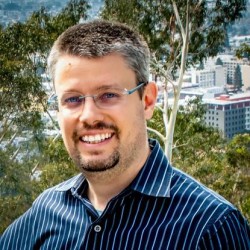
Soumya Dutta is an Assistant Professor in the Department of Computer Science and Engineering (CSE) at the Indian Institute of Technology Kanpur (IITK) since 2022. He previously held positions at Los Alamos National Laboratory as a Postdoctoral Researcher (2018-2019) and Scientist II (2019-2022). Dr. Dutta earned his Ph.D. and M.S. in Computer Science from The Ohio State University (2011-2018) and a B.Tech in Electronics and Communication Engineering from the West Bengal University of Technology (2005-2009). His research lies at the intersection of Machine Learning , Visual Computing , Big Data Analytics , and High-Performance Computing (HPC) . He focuses on developing scalable solutions for extreme-scale data, such as exascale simulations, social media, IoT, and healthcare. His work emphasizes uncertainty quantification in AI models and interactive visualization techniques. Dr. Dutta’s recent publications highlight his expertise in in situ visualization for climate modeling, implicit neural representations for uncertainty-aware rendering, and statistical sampling for exascale systems. His funded projects include AI-driven data analytics frameworks and deepfake defense mechanisms supported by ISRO, SERB, and C3iHub. Scientific Awards include Best Reviewer (TVCG), Best Paper (ISAV, TopoInVis), and LAAP Award (LANL).
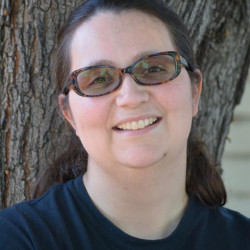
Rafael Ferreira da Silva is a Research Assistant Professor in the Department of Computer Science at University of Southern California and a Senior Research Scientist at Oak Ridge National Laboratory. He serves as Group Leader for the Workflow and Ecosystem Services group at ORNL's National Center for Computational Sciences and is the Founder and Executive Director of the Workflows Community Initiative. Additionally, he is the Special Content Editor for the Future Generation Computer Systems journal and holds Senior Member status with both IEEE and ACM. Dr. Ferreira da Silva specializes in modeling and simulation of parallel and distributed computing systems, with expertise spanning scientific workflows, hybrid quantum classical systems, and autonomous science. His technical proficiency includes sophisticated scheduling algorithms, high fidelity modeling and simulation, multi-objective optimization, fault tolerant system design, and energy efficient computing across cloud, edge, and HPC environments. His research focuses on creating resilient digital infrastructures that dynamically adapt to changing research demands, accelerating scientific discovery through robust computational foundations. His recent publications demonstrate significant contributions to exascale workflow applications, HPC-quantum convergence, agentic workflow control mechanisms, and terminology standardization for scientific workflow systems. His work bridges multiple disciplines including high-performance computing, artificial intelligence, quantum computing, and autonomous laboratory systems, reflecting a broad research impact across computational science. Professional Recognition: Senior Member of IEEE Senior Member of ACM Special Content Editor for Future Generation Computer Systems journal With 149 scientific publications, 22 chair roles in conferences, 69 PC member roles in conferences, 18 research grants, and involvement in 270+ research projects, Dr. Ferreira da Silva maintains an extensive research portfolio and leadership position in the computational science community. His Workflows Community Initiative has fostered a thriving network of 51 international workflow users, developers, and researchers. As Group Leader at ORNL, he directs research efforts focused on advancing workflow technologies and their applications across scientific domains, with particular emphasis on creating interoperable systems that can operate across multiple computing facilities and environments.
Loïc Pottier is a Postdoctoral Scholar - Research Associate at the University of Southern California, affiliated with the Science Automation Technologies group at the USC Information Sciences Institute. His research focuses on scheduling and performance models for high-performance computing (HPC) systems, scientific workflows management, and parallel algorithms. Education: PhD in Computer Science from ENS de Lyon, France (2018) Project Support: His work at USC is supported by the U.S. National Science Foundation Office of Advanced Cyberinfrastructure under Grant #2127548.
Carl Tape is a Professor at the University of Alaska Fairbanks (UAF), affiliated with the Geophysical Institute (GI) and the Department of Geosciences. His research focuses on seismology, computational modeling of seismic wavefields, and imaging Earth’s internal structure using adjoint tomography and waveform inversion techniques. Current Students: Aakash Gupta, Nealey Sims, Amanda McPherson, Bella Seppi Former Students: Ulrika Cahayani Miller (MS 2014), Celso Alvizuri (PhD 2016), Vipul Silwal (PhD 2018), Kyle Smith (PhD 2020), Cole Richards (MS 2020) His work leverages UAF’s high-performance computing resources to simulate 3D seismic wavefields for earthquakes in Alaska and global subduction zones. These simulations improve ground motion predictions and tectonic interpretations, particularly for regions like the Cook Inlet Basin and the Hikurangi Subduction Margin in New Zealand. Carl also develops open-source tools like adjTomo for automating seismic waveform inversion and adjoint tomography workflows. Collaborations include projects with the Alaska Earthquake Center, the Alaska Volcano Observatory (AVO), and NASA-supported GNSS ground motion studies. He contributes to interdisciplinary initiatives like the NSF-funded Arctic Observing Network, which integrates seismic data with meteorological and geodetic observations to track climate-induced geophysical changes.
Dr. Ernst Gunnar Gran is an Affiliated Researcher at the Simula Research Laboratory , specializing in the Department of High Performance Computing . With a career spanning over a decade, his research focuses on optimizing network performance in large-scale computing environments. PhD in Congestion Management in Lossless Interconnection Networks (2008) Co-developer of the NorNet Core multi-homed research testbed Research Focus Gran’s work addresses critical challenges in: InfiniBand hardware optimization and congestion control Self-adaptive networking for HPC-cloud integration Resource management in multi-tenant clusters Efficient routing algorithms for fat-tree architectures Real-time anomaly detection in time-series data Edge-cloud ecosystem performance modeling Publication Trends His recent research (2020-2022) emphasizes: Distributed traffic prediction using LSTM customization Lightweight anomaly detection frameworks Integration of mobile edge computing with multi-cloud systems Prior work (2015-2018) established foundational advancements in: Fat-tree reconfiguration algorithms Virtualized HPC network architectures Fault-tolerant routing strategies for complex topologies SR-IOV vSwitch implementations Technical Contributions Developed patented network reconfiguration systems Created dynamic cloud architectures with SA query caching Advanced partition-aware routing techniques Optimized load-balancing mechanisms for HPC environments
Nikolaos Lembesis is a tenured Assistant Professor in the Department of Chemistry at the University of Ioannina, specializing in Theoretical Physical Chemistry and Computational Chemistry. His research develops multi-scale computational simulation methods to understand structure-property relationships of matter for applications in energy, environment, and quality of life improvement. His educational background includes: PhD in Chemical Engineering, National Technical University of Athens (2013) BSc in Chemical Engineering, Technical University of Munich (2007) BSc and MSc in Chemical Engineering, National Technical University of Athens (2007) Dr. Lembesis's research integrates molecular dynamics, ab initio simulations, and stochastic methods to model materials at atomic-to-macroscopic scales. His group investigates perovskite solar cell interfaces, droplet absorption phenomena, and defect engineering using advanced computational techniques including classical/ab initio molecular dynamics and high-performance computing. Analysis of his 15 most recent publications (2023-2025) reveals dominant focus on perovskite photovoltaics, with recurring themes of interface engineering, strain manipulation, and defect passivation to enhance efficiency and stability. Key subfields include crystal orientation control, wide-bandgap perovskite optimization, and novel monolayer interface designs. His group offers undergraduate and master's thesis opportunities in Computational Chemistry, providing training in molecular simulation techniques, Unix/Linux systems, HPC resources, and software development for materials modeling. The research team utilizes multi-scale simulation approaches to study water-perovskite interactions, organic monolayer protection mechanisms, and thermomechanical properties of advanced materials, with strong emphasis on bridging computational predictions with experimental validation.
Muaaz Gul Awan is a Computer Systems Engineer 4 at the National Energy Research Scientific Computing Center (NERSC) under the Science Engagement & Workflows Dept. His work focuses on high-performance computing (HPC) with specialization in bioinformatics software development, GPU porting, and performance optimization for large-scale scientific applications.
Jack Deslippe serves as the Application Performance Group Lead at the National Energy Research Scientific Computing Center (NERSC), part of Lawrence Berkeley National Laboratory. He has held this position since joining the laboratory in January 2006, currently working as Computer Systems Manager 1 in the HPC Department within Computing Sciences. Dr. Deslippe earned his PhD in Physics from UC Berkeley in 2011, with research focused on materials physics and nano-science, specifically scaling many-body Green's function computational methods for studying optical properties of complex materials. His research spans multiple computational domains: Computer Software and Distributed Computing Artificial Intelligence and Image Processing Numerical and Computational Mathematics Pure Mathematics Materials Physics and Nano-science His publication record demonstrates expertise in high-performance computing optimization, particularly in GPU acceleration, parallel computing strategies, and performance modeling across physics simulations, materials science, and bioinformatics. He has made significant contributions to the BerkeleyGW software package for many-body physics calculations, focusing on scalability and performance optimization for leadership-class computing systems. As leader of NERSC's Application Performance Group, Dr. Deslippe plays a critical role in enabling scientific discovery through high-performance computing. His team works extensively with researchers to optimize computational workflows on NERSC's systems, including the transition to exascale architectures like the Cori system with Intel Knights Landing processors. His work bridges the gap between domain science and computer science, developing computational approaches that enable new scientific discoveries across multiple disciplines.
Rebecca Hartman-Baker is a computational scientist and the User Engagement Group Lead at the National Energy Research Scientific Computing Center (NERSC) under Lawrence Berkeley National Laboratory. She specializes in scalable parallel algorithms for petascale systems and focuses on inverse problems, numerical optimization, and HPC user training. PhD in Computer Science – University of Illinois at Urbana-Champaign BS in Physics – University of Kentucky Her research spans applied mathematics, distributed computing, and computational physics, with a strong emphasis on software sustainability and checkpointing techniques for large-scale systems. Recent publications highlight her work in HPC education, fault tolerance, and the IDEAS Productivity Project. Scientific awards include the R&D100 Award (Oak Ridge), James Corones Award (2019), and the Director's IDEA Mentorship Award (2023). Professional activities range from leading the Student Cluster Competition to board membership at Griffin Technology Academies.
Eric Roman is a Computer Systems Engineer and Manager at the National Energy Research Scientific Computing Center (NERSC), part of Lawrence Berkeley National Laboratory. He has been with Berkeley Lab since 1999 and currently works in the HPC Technology Department within the Computing Sciences division. Dr. Roman earned his PhD in physics from the University of California, Berkeley in 2010, with a dissertation entitled "Orientation Dependence of the Anomalous Hall Effect in 3D Ferromagnets." His doctoral research involved ab initio simulations of nonlinear optical properties of semiconductors, spin transport in metals, and the anomalous Hall effect. Roman's primary research focus is on operating systems for high performance computing, with significant contributions to Berkeley Lab's Checkpoint/Restart (BLCR) technology since 2001. His work spans several key areas: Development of multithreaded checkpoints and restarts Implementation of file and pipe support in BLCR On-the-fly compression of checkpoint files Direct I/O capabilities for HPC systems Integration with batch systems like Torque Optimization of file I/O operations His publication record shows consistent contributions to HPC systems research over 15+ years, with recent work focusing on resilience techniques, failure prediction, and system optimization. Roman has collaborated with researchers from multiple institutions, advancing parallel computing, fault tolerance, and system-level technologies that enable scientific discovery at scale. His highly cited works on live migration and checkpoint/restart frameworks demonstrate significant impact in the field. Roman has been actively involved in the HPC community, leading Linux kernel seminars and organizing projects like "High-End Computing with K42" under the FastOS initiative. He continues to collaborate with the Berkeley ParLab on cutting-edge research in high-performance computing systems.
Torsten Hoefler is a Professor at ETH Zurich , renowned for pioneering contributions to High-Performance Computing (HPC) and its application to Artificial Intelligence (AI) . His work on scalable network design, parallel algorithms, and Message Passing Interface (MPI) advancements has revolutionized supercomputing and AI infrastructure. Hoefler chairs key MPI working groups and co-developed foundational concepts like "3D parallelism" that underpin modern AI systems. Hoefler's research spans interconnection networks, congestion avoidance protocols (e.g., Slim Fly, PERCS), and performance modeling. His innovations in nonblocking collective operations (Iallreduce, Iallgather) power distributed deep learning frameworks. He also leads benchmarking and reproducibility initiatives that set global HPC research standards. ACM Prize in Computing (2024) : Recognized for enabling AI's computational scale through HPC breakthroughs ACM Gordon Bell Prize (2019) : For quantum transport simulations mapping transistor heat distribution Hoefler's work impacts millions via large-language model training (e.g., ChatGPT) and reduces data center cooling costs through thermal modeling. He leads teams at ETH Zurich's Scalable Parallel Computing Laboratory , translating theoretical advances into industry-adopted technologies.
Professor David E Keyes is a faculty member at King Abdullah University of Science and Technology (KAUST), Saudi Arabia. He is part of a 12-member international team that won the 2024 ACM Gordon Bell Prize for Climate Modelling for pioneering exascale climate emulation techniques. Research Interests: His work focuses on high-performance computing (HPC) solutions for climate science, including Earth System Models (ESMs), data storage optimization, and the application of machine learning (ML) to climate modelling. The team's research leverages exascale supercomputers and mixed-precision algorithms to enhance computational efficiency and spatial resolution (0.034°, ~3.5 km) for more accurate climate predictions. Scientific Awards: 2024 ACM Gordon Bell Prize for Climate Modelling Collaborative Impact: The project, involving supercomputers like Frontier and Leonardo, achieved exascale-level simulations (318 billion hourly observations) while reducing storage needs by orders of magnitude. This work bridges computational science, climate physics, and AI, offering transformative potential for climate policy and future climate forecasting systems.
Bradford L. Chamberlain is a Distinguished Technologist at Hewlett Packard Enterprise and an Affiliate Professor in the Paul G. Allen School of Computer Science and Engineering at the University of Washington. With over two decades of experience in high-performance computing, he has made significant contributions to parallel programming languages, particularly as the technical lead of the Chapel programming language project since 2006. His educational background includes: Ph.D. in Computer Science & Engineering from the University of Washington (2001) M.S. in Computer Science & Engineering from the University of Washington (1995) B.S. in Computer Science from Stanford University (1992) Chamberlain's research focuses on improving programmer productivity for high-performance computing through innovative language design, compiler techniques, and runtime systems. His work centers around the Chapel programming language, which aims to provide a multiresolution programming model that allows developers to express parallelism at varying levels of abstraction while maintaining performance across diverse architectures from laptops to supercomputers. His research spans parallel language design, compiler optimization, data distribution strategies, locality management, and performance portability. Chapel builds on his earlier work with the ZPL language, where he developed region-based approaches for sparse parallel computing. His publication record over the past fifteen years demonstrates a consistent focus on practical approaches to parallel programming, with recent work emphasizing data locality, heterogeneous architectures, and performance portability. His articles show an evolution from foundational language design concepts to increasingly sophisticated implementations addressing real-world HPC challenges, particularly in the areas of domain mapping, iterator abstractions, and memory management for large-scale systems. As a Distinguished Technologist at HPE, Chamberlain has played a key role in growing the Chapel project from a modest effort to one involving nearly 20 full-time developers. His leadership has positioned Chapel as one of the most promising languages for addressing the challenge of productive parallel programming at scale. He has secured funding, established collaborations with academia and industry, and performed extensive outreach through talks, tutorials, and research visits. At the University of Washington, Chamberlain serves as a liaison between academia and industry, participating in student committees, teaching graduate courses like Parallel Computation, and fostering communication between the department and HPE/Cray. His teaching experience spans from undergraduate data structures to graduate seminars on parallel programming environments. He has also volunteered as a tutor for underrepresented students in computer science.