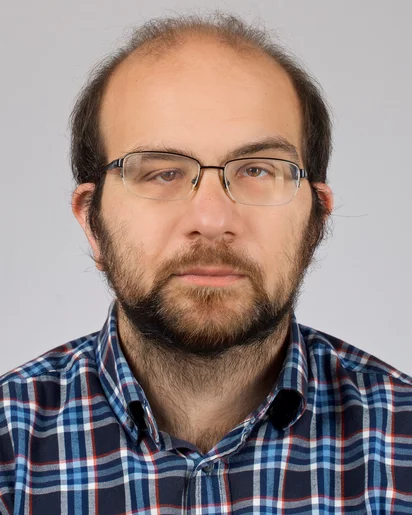
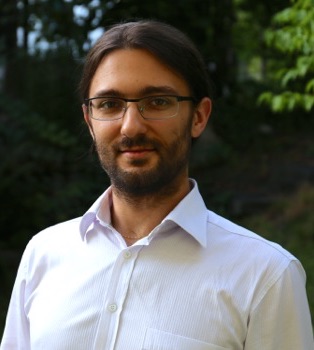
Dr. Athanasios Mokos is a researcher at the Paul Scherrer Institute (PSI) in Switzerland, specializing in computational physics and fluid dynamics. His work bridges nuclear engineering, geochemistry, and environmental engineering through advanced numerical simulations. Expertise in SPH (Smoothed Particle Hydrodynamics) Focus on reactive transport and multiphase flow Key applications in nuclear reactor safety and subsurface processes Research spans pore-scale modeling of cement-clay interactions, gas transport in geological media, and GPU-accelerated simulations for multiphysics problems. His publications emphasize machine learning integration, environmental remediation, and coastal/coastal structure hydrodynamics. Current trends in his work include Digital Twin frameworks for carbonate precipitation, CRUD analysis in nuclear fuel assemblies, and validation of surface wetting models via lattice Boltzmann methods. His position at PSI involves high-performance computing and multiphase flow simulations, with contributions to desalination membrane design and sediment grain dynamics.
Laura Grigori is a Full Professor and Chair of High Performance Numerical Algorithms and Simulations at EPFL's School of Basic Sciences (SB) Department of Mathematics (MATH). Her research focuses on numerical linear algebra, high performance computing, and tensor computations, with applications in astrophysics and molecular simulations. She leads the HPNalgs lab and teaches courses in numerical analysis and HPC. Her awards include the SIAM Supercomputing Career Prize (2024) and SIAM Fellow distinction (2020). She advises four PhD students and has authored numerous papers on communication-avoiding algorithms, randomized methods, and parallel linear algebra techniques. Her work addresses scalability challenges in scientific computing and large-scale data analysis. Labs/Teams: HPNalgs Lab (https://www.epfl.ch/labs/hpnalgs/) Grants: ERC Synergy Grant (2019) for Extreme-scale Computational Chemistry
Maciej Besta is a leading researcher at ETH Zurich's Institute for Computing Platforms, where he heads research initiatives at the Scalable Parallel Computing Lab (SPCL) and contributes to the ETH Future Computing Laboratory (EFCL). Working under the mentorship of Professor Torsten Hoefler, he has established himself as a prominent figure in high-performance computing, graph processing, and large language models. Position: Researcher at Institute for Computing Platforms, ETH Zurich Research Leadership: Head of Sparse Graph Computations and Large Language Models Research at SPCL Collaboration: Leads project management for SPCL's contributions to ETH Future Computing Laboratory Besta's research spans multiple abstraction levels, from hardware and network topologies to middleware, algorithms, and programming models. His primary focus areas include graph-enhanced language models, graph neural networks, graph databases, and sparse models, with applications across various computational settings. He approaches these problems through rigorous performance modeling and formal reasoning, emphasizing both scalability and practical implementation. His recent publications reveal a clear trend toward integrating graph structures with language models and AI systems. Besta has pioneered work on graph databases, knowledge graphs of thoughts, and higher-order graph neural networks, while maintaining his strong foundation in high-performance computing and network topology design. His research bridges traditional HPC with cutting-edge AI, creating novel approaches for efficient large-scale computation. IEEE TCSC Award for Excellence in Scalable Computing (Early Career, 2023) Multiple Best Paper Awards at Supercomputing conferences (2022, 2023) ACM SIGHPC Doctoral Dissertation Award (2022) ETH Medal for outstanding doctoral thesis (2021) Fellow of The Explorers Club (2022) Besta actively mentors ETH Zurich students through semester projects, Bachelor's, and Master's theses, focusing on graph processing and related computer science challenges. His mentorship extends beyond technical guidance, incorporating lessons from his extensive polar and mountaineering expeditions that emphasize mental resilience, efficient risk management, and leadership. He has supervised numerous student projects that have resulted in high-impact publications at top-tier conferences. As a core member of the Scalable Parallel Computing Lab, Besta collaborates with researchers across ETH Zurich and international institutions. His unique approach integrates insights from extreme environment expeditions into research methodology, creating a distinctive framework for tackling complex computational problems. The lab's work under his leadership spans theoretical modeling, practical implementation, and real-world deployment of high-performance systems.
Alexandru Calotoiu is a Researcher in the Department of Computer Science at ETH Zürich, affiliated with the Professorship for Scalable Parallel Computing. His work focuses on performance modeling, high-performance computing (HPC), serverless systems, and cloud computing. He leads research in empirical performance modeling for complex applications, optimization of parallel algorithms, and scalable cloud architectures. Key research areas include noise-resilient performance models, serverless computing frameworks, and compositional parallel programming. He has contributed to benchmarking tools like SeBS and developed techniques for loop scheduling, static analysis, and resource disaggregation in HPC environments. His publications from 2023–2025 emphasize serverless systems (e.g., FaaSKeeper, Cppless), performance embeddings for optimization, and specialized supercomputing for climate science. These studies address scalability, reproducibility, and cross-platform performance portability in data-centric workloads. No scientific awards are explicitly listed, but his work has been presented at leading conferences such as ISCA and IEEE/ACM events. He collaborates on projects like rFaaS (RDMA-enabled serverless platforms) and Process-as-a-Service frameworks. His research bridges theoretical models with practical implementations in distributed systems and cloud infrastructure.
Dominik André Strebel is a Lecturer at the Department of Mechanical and Process Engineering at ETH Zürich, affiliated with the Chair of Building Physics. His research focuses on urban climate modeling, mesoscale meteorology, and machine learning applications in environmental systems. He holds a MSc in Engineering (Energy and Environment) from HSR Rapperswil (now OST), where his studies emphasized climate models for renewable energy forecasting and Smart Grids. His Master’s thesis involved developing a coupled climate and multiphysics model for overhead power lines in collaboration with Swissgrid, alongside improving weather forecasts using UAV data integration in WRF models. Research Interests: Urban Heat Island simulation and mitigation Mesoscale meteorological modeling (WRF, COSMO) Machine learning for urban climate analysis High-Performance Computing (HPC) and Data Science GIS and mathematical modeling for urban environments Key Contributions: Developed frameworks coupling WRF-UCM-SOLWEIG for thermal comfort mapping at city scale Advanced methods for quantifying urban climate drivers (e.g., LCZ analysis) Improved mesoscale predictions using hybrid ML and sensor data Explored intra-urban warming patterns in heatwaves across multiple cities Current Projects: Hybrid machine learning-mesoscale modeling for urban climate prediction Mapping heat exposure indices in mid-latitude cities Urban morphology clustering for identifying heat-vulnerable neighborhoods
Oliver Fuhrer is Lecturer at the Department of Environmental Systems Science, ETH Zurich, a role he has held since 2010. Concurrently, he is head of the Numerical Prediction unit at the Federal Office of Meteorology and Climatology MeteoSwiss, where he drives innovation and operational excellence in numerical weather-prediction models. Education: Ph.D. in Atmospheric Dynamics, ETH Zurich Studies in Environmental Physics, Department of Natural Sciences, ETH Zurich Research interests revolve around understanding and predicting the weather-climate system. His work emphasizes high-resolution numerical weather prediction , the intricate atmospheric dynamics over complex terrain , and the high-performance computing infrastructures required to run state-of-the-art models. He has been instrumental in establishing HPC-focused atmospheric modeling initiatives within the Center for Climate Systems Modeling (C2SM). Although no specific publications are listed in the provided material, his extensive authorship and co-authorship in peer-reviewed journals—coupled with service as reviewer for major funding agencies—demonstrates sustained scholarly impact. Professional roles & affiliations: Lecturer, Department of Environmental Systems Science, ETH Zurich (since 2010) Head, Numerical Prediction Unit, MeteoSwiss Former Senior Director for Climate Modeling, Allen Institute of Artificial Intelligence Former Research Associate, École Polytechnique Fédérale de Lausanne (EPFL), Institute of Environmental Engineering Former Research Associate, ETH Zurich, Institute of Atmospheric and Climate Science Member, Center for Climate Systems Modeling (C2SM) Dr. Fuhrer spearheads interdisciplinary teams that bridge academic theory with operational meteorology, ensuring that cutting-edge research translates into reliable forecast products for Switzerland and beyond.
Mamzi Afrasiabi is a Lecturer at the Department of Mechanical and Process Engineering, ETH Zurich. His research focuses on computational mechanics, fluid dynamics, and advanced manufacturing technologies. Computational Mechanics & Fluid Dynamics Manufacturing Process Simulation Multiphysics and Multiscale Modeling High-Performance Computing (HPC) Scientific Machine Learning (SciML) Dr. Afrasiabi holds a GRA Fellowship and Zienkiewicz Scholarship , with editorial roles in journals like the International Journal of Hydromechatronics . He received the CIRP Best Paper Award and is a Corporate Member of the International Academy for Production Engineering (CIRP).