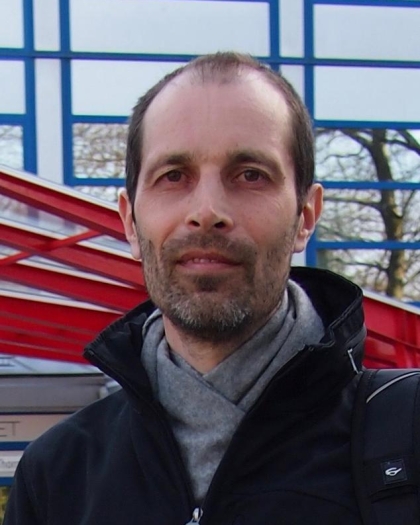
Hans Bihs is a Professor in the Department of Civil and Environmental Engineering, Faculty of Engineering. His research focuses on computational fluid dynamics (CFD), wave hydrodynamics, and wave-structure interaction using the open-source framework REEF3D. Key Research Areas: CFD simulations, wave modeling, floating body dynamics, ocean wave energy, aquaculture hydrodynamics, sediment transport, and high-performance computing. Projects: ERC Consolidator Grant PARTRES (2023-2028), EEA Grants Portugal SurfWave (2023), NFR KPN IPIRIS (2021-2025), EEA Baltic SolidShore (2021-2024), NTNU's MAPLE (2022-2025), and DigiCoast (2021-2024). Email: hans.bihs@ntnu.no His recent publications (2025-2020) analyze fluid-structure interaction, ship-induced waves, floating offshore wind turbines, submerged vegetation, and coastal structures using advanced CFD techniques. Topics include wave hydrodynamics, turbulence, and numerical modeling for marine and aquaculture systems.
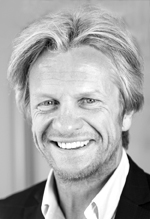
Per Gunnar Kjeldsberg is a Professor at the Department of Electronic Systems, Norwegian University of Science and Technology (NTNU), and currently serves as acting head of the institute. His research focuses on embedded heterogeneous multi-processor systems , particularly in multimedia and digital signal processing applications . He has led and participated in numerous national and international projects, including EU Horizon 2020 initiatives like READEX (as work package leader) and Tulipp (as principal researcher), and supervises the MSCA-IF project Palmera . Kjeldsberg is a Senior Member of IEEE and part of the European Network of Excellence HiPEAC . Education : Sivilingeniør (MSc) in Electrical Engineering (1992), PhD (2001) from Norwegian Institute of Technology (NTH)/NTNU His work spans energy-efficient computing , radiation-hardened memory design for space applications, and dynamic hardware management . Publications include co-authoring three books and over 150 peer-reviewed articles in journals and conferences. He leads the Circuit and Radio Systems group and drives a strategic NTNU initiative on Energy Efficient Computing Systems . Kjeldsberg has held visiting researcher roles at imec (Belgium), University of California, Irvine, imec Netherlands (Holst Centre), and University of New South Wales (Australia). Scientific Awards : Senior Member of IEEE Mikroelektronikkprisen (2006–2015)
Jaakko Timo Henrik Järvi is a Professor in the Department of Informatics at the University of Bergen, Norway, with additional affiliations at the University of Turku, Finland. His research focuses on programming language design, generic programming, and human-computer interaction, particularly in GUI frameworks and software reuse. His research interests include generic programming, programming language design (especially the Magnolia language), high-performance computing, array programming, and GUI engineering. He emphasizes formal methods and algebraic specifications to build reusable and efficient software systems. His work bridges theoretical foundations with practical applications in software development and education. The recent publications highlight a strong trend in declarative GUI frameworks, multi-selection models, and generic programming. His work explores domain-specific languages for GUI structure manipulation, reusable selection semantics across platforms, and optimizing array computations using the Mathematics of Arrays. These efforts reflect a consistent focus on software abstraction, correctness, and reusability. Jaakko Järvi has supervised doctoral students, including Tetiana Yarygina, whose dissertation explored microservice security. While no specific grants are detailed, his work on VisAST was supported by the Research Council of Norway (Project 250683), indicating active external funding. He frequently collaborates with researchers like Magne Haveraaen, Knut Anders Stokke, and Sean Parent. He contributes to tools and frameworks such as the MultiselectJS library and the VisAST educational tool. These are outcomes of collaborative research teams focused on improving software development practices and computer science education.
Tor Skeie is a Professor at the University of Oslo's Department of Informatics, specializing in networks and distributed systems. His research focuses on high-performance networking, InfiniBand technologies, and adaptive routing systems. Current investigations include automated parameter tuning for reservoir simulations, adaptive routing in InfiniBand hardware, and modeling WiFi quality attenuation. His work develops efficient solutions for virtualized HPC environments and cloud computing infrastructures. Recent publications demonstrate innovations in network modeling, adaptive routing algorithms, and performance analysis of distributed systems. Research collaborations span European projects on high-performance networking infrastructures. Leads the Networks and Distributed Systems (ND) research group investigating fault-tolerant routing, network virtualization, and congestion control mechanisms.
Magne Haveraaen is a Professor in the Department of Informatics at the University of Bergen, where he leads the Bergen Language Design Laboratory (BLDL). He is actively engaged in research on programming theory, formal methods, language design, and high-integrity systems. His work centers on algebraic specifications, generic programming, domain engineering, and the design of the Magnolia programming language. He has been a long-standing instructor of key courses such as INF220 (Program Specification) and INF222 (Programming Languages), and contributes to national and international academic forums. University: University of Bergen School: Faculty of Mathematics and Natural Sciences Department: Department of Informatics Academic Rank: Professor Email: magne.haveraaen@uib.no His research interests include programming language design, formal specifications, generic and mouldable programming, multicore and GPU computing, and algebraic methods in software development. He emphasizes correctness, reuse, and high-integrity software through theoretical and practical innovations. He has contributed extensively to the literature on algebraic reasoning, array programming, and domain-specific abstractions. The recent publications highlight a consistent focus on algebraic semantics, language design (especially Magnolia), array programming, and formal verification. Themes across these works include correctness by design, specification-driven development, and adapting programming models for modern architectures. His involvement in workshops like ARRAY, WGP, and CALCO underscores his leadership in programming language theory. No scientific awards are listed in the provided texts. He advises students and welcomes collaboration in programming theory, language design, and formal methods. He has led funded projects such as MoSIS and SHIP and is involved in the High Integrity Systems Forum. He organizes and participates in key conferences including NWPT, GPCE, and SCAM. He leads the Bergen Language Design Laboratory (BLDL), which focuses on experimental language design, and contributes to the SAGA initiative on scientific computing with algebraic abstractions. His work integrates theory with practical tooling and language implementation.
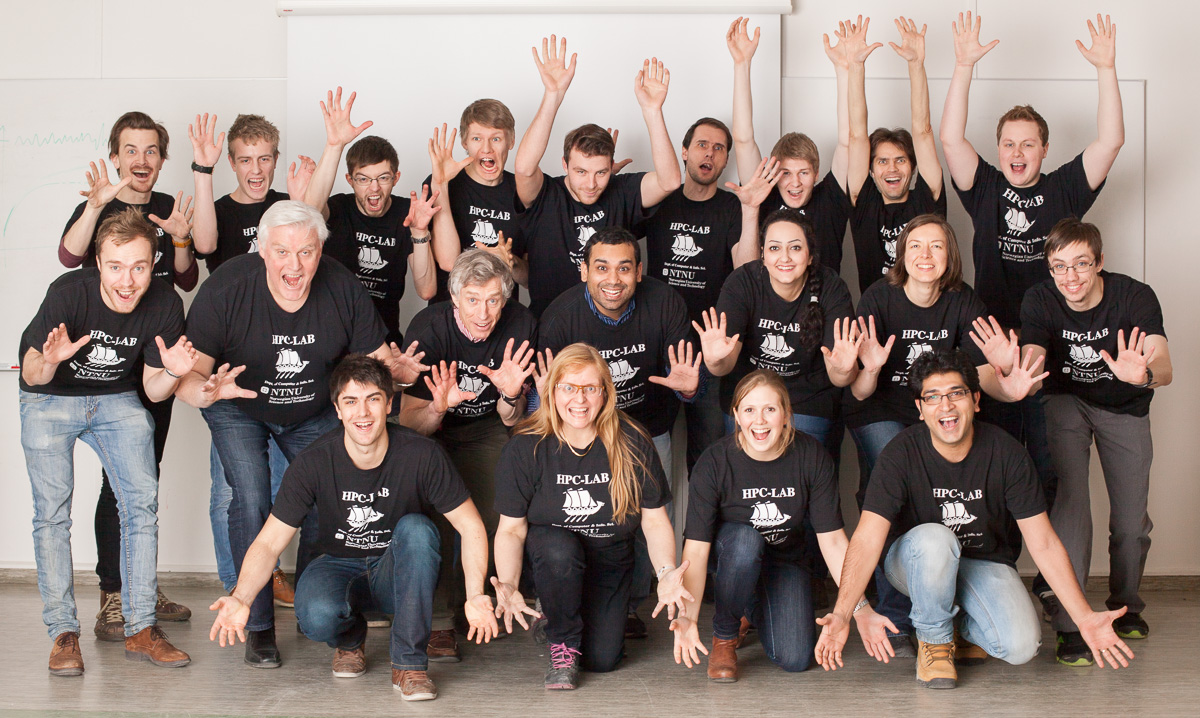
Anne C. Elster is a Professor in the Department of Computer Science at the Norwegian University of Science and Technology (NTNU), within the Faculty of Information Technology and Electrical Engineering. She is the founder and director of the HPC-Lab, a leading research group in heterogeneous and parallel computing. She also maintains a long-standing affiliation with the Oden Institute at the University of Texas at Austin as a Senior Visiting Scientist until Summer 2025. Research Interests: Her work spans high-performance computing (HPC), GPU computing, parallel algorithms, auto-tuning, performance optimization, and machine learning applications in scientific computing. She leads research in heterogeneous architectures and has contributed significantly to compiler and runtime systems for GPUs and accelerators. Publications Trends: Her recent publications (2021–2024) focus on GPU acceleration, auto-tuning frameworks (e.g., BAT, LS-CAT), performance modeling (Roofline), machine learning integration in HPC, and applications in geophysical and scientific computing. There is a strong emphasis on empirical evaluation, benchmarking, and practical optimization techniques. Scientific Awards and Recognition: IEEE Senior Member (2000) IEEE Computer Society Distinguished Contributor Charter member, NTNU's Board (2021) Distinguished Speaker, IEEE Computer Society (2019–2022) Advising and Grants: She has advised over 100 master’s students and several PhD students. She has led major funded projects including the RCN SFI Centre for Geophysical Forecasting, EU H2020 CloudLightning and TICOH, and NFR FRINATEK on Computational Microscopy. She has served on numerous international program committees and evaluation boards. Labs and Teams: She leads the HPC-Lab at NTNU, which includes postdocs, PhDs, and master’s students, and collaborates with international researchers. The lab is a hub for innovation in GPU computing, auto-tuning, and HPC applications.
Kyrre Begnum is an Associate Professor at OsloMet – Oslo Metropolitan University, affiliated with the Faculty of Technology, Art and Design through the Department of Computer Science. His research spans cloud computing, cybersecurity, and software engineering, with a focus on virtual machine management, intrusion detection, and autonomic systems. Cloud Computing Cybersecurity Software Engineering Machine Learning Data Center Management His recent publications emphasize adversarial machine learning in security, affinity-aware scheduling for cloud efficiency, and network optimization in virtualized environments. While no formal awards are documented in the provided texts, his work demonstrates technical innovation in distributed systems and educational applications of virtualization technology.
Kyrre Matthias Begnum serves as an Associate Professor at the Department of Information Security and Communication Technology at the Norwegian University of Science and Technology (NTNU). His academic career spans over two decades with significant contributions to cloud infrastructure, virtualization technologies, and system administration practices. Dr. Begnum's research focuses on several key areas within computer systems: Cloud computing and virtualization technologies Resource management and optimization in data centers Network security and intrusion detection systems System administration education and pedagogy Unikernels and lightweight virtualization approaches Application of machine learning to system management problems His publication record demonstrates consistent innovation in virtual machine management, with notable contributions including the application of stable marriage matching theory to load distribution problems and the development of Bayllocator, a proactive system using Bayesian networks for memory resource allocation. Begnum's work bridges theoretical computer science with practical infrastructure challenges, particularly in data center optimization. His recent publications show expanding interests into historical perspectives of computing, as evidenced by his 2024 book 'From EDB to KI. 40 years of information technology,' which examines the evolution of information technology over four decades. This demonstrates his ability to connect historical context with current developments in artificial intelligence and computing systems. Dr. Begnum has made substantial educational contributions through works like 'The Uptime challenge: A learning environment for value-driven operations through gamification' and his investigations into MSc program learning outcomes for Network and System Administration. His commitment to science communication is evident through public engagements like the 'Anti-IKT debatt' and 'Vitenshow: Roboten og du' presentations.
Prof. Anne C. Elster is a Professor of Computer Science at NTNU's Department of Computer & Information Science (IDI), leading the HPC-Lab. She specializes in High-Performance Computing (HPC), GPU acceleration, and heterogeneous systems. Her work spans HPC applications in medical imaging, seismic processing, and oil & gas simulations, with collaborations at CERN, NVIDIA, and Schlumberger. Elster holds a PhD in Electrical Engineering from Cornell University (1994) and is an IEEE Senior Member since 2000. She has supervised over 70 master students and numerous PhD candidates, emphasizing GPU computing. Her teaching includes courses like Parallel Computing and Compilers , with a focus on programming and problem-based learning. She leads EU projects like CLOUDLIGHTNING (2015–2018) and has organized major conferences (e.g., ISC, SC, PARA). Her HPC-Lab is a CUDA Research and Teaching Center, and she advocates for HPC infrastructure investments in Norway through policy engagement.
Kyrre Matthias Begnum is an Associate Professor in the Department of Information Security and Communication Technology at the Norwegian University of Science and Technology (NTNU). His research focuses on cloud computing infrastructure, virtualization technologies, and efficient resource management in distributed systems. Dr. Begnum's work explores optimization techniques for cloud environments, including load distribution algorithms and virtual machine management strategies. He has contributed significantly to unikernel development through the IncludeOS project, enabling highly efficient cloud services. His recent publications address security challenges in machine learning-based intrusion detection systems and network reconfiguration in high-performance computing environments. He teaches courses on robust service development and system administration. His outreach includes educational podcasts on problem-solving methodologies in technology and computing.
Dr. Ernst Gunnar Gran is an Affiliated Researcher at the Simula Research Laboratory , specializing in the Department of High Performance Computing . With a career spanning over a decade, his research focuses on optimizing network performance in large-scale computing environments. PhD in Congestion Management in Lossless Interconnection Networks (2008) Co-developer of the NorNet Core multi-homed research testbed Research Focus Gran’s work addresses critical challenges in: InfiniBand hardware optimization and congestion control Self-adaptive networking for HPC-cloud integration Resource management in multi-tenant clusters Efficient routing algorithms for fat-tree architectures Real-time anomaly detection in time-series data Edge-cloud ecosystem performance modeling Publication Trends His recent research (2020-2022) emphasizes: Distributed traffic prediction using LSTM customization Lightweight anomaly detection frameworks Integration of mobile edge computing with multi-cloud systems Prior work (2015-2018) established foundational advancements in: Fat-tree reconfiguration algorithms Virtualized HPC network architectures Fault-tolerant routing strategies for complex topologies SR-IOV vSwitch implementations Technical Contributions Developed patented network reconfiguration systems Created dynamic cloud architectures with SA query caching Advanced partition-aware routing techniques Optimized load-balancing mechanisms for HPC environments
Ernst Gunnar Gran is an Associate Professor at the Department of Information Security and Communication Technology at the Norwegian University of Science and Technology (NTNU), where he leads the communication technology discipline. He also holds an adjunct research scientist position at Simula Research Laboratory, focusing on High Performance Computing (HPC) and cloud computing. Education: M.Sc. and Ph.D. in Computer Science from the University of Oslo (2007, 2014) Research: Intersections of HPC, interconnection networks, enterprise data centers, cloud computing, and data-intensive multi-cloud processing His recent work addresses real-time anomaly detection in IoT systems, traffic speed prediction for transportation networks, and adaptive routing in HPC environments. Articles span machine learning, network security, and distributed computing, with a focus on lightweight, self-adaptive algorithms. Current projects include leadership of the RCN-funded eX3 infrastructure project and contributions to the EU H2020 Melodic initiative. He has designed the NorNet Core testbed and holds patents in network reconfiguration and cloud architecture.
Odd Magnus Faltinsen is a Professor of Marine Hydrodynamics at the Norwegian University of Science and Technology (NTNU), where he has been affiliated since 1976. He leads research at the Centre of Excellence on Autonomous Marine Operations and Systems (AMOS) and previously directed the Centre for Ship and Ocean Structures (CeSOS). His work spans hydrodynamics of ships, offshore structures, fish farms, and hydroelasticity, with contributions to analytical methods for wave loads and structural responses. Education: Cand. Real. in Applied Mathematics, University of Bergen (1968) PhD in Naval Architecture and Marine Engineering, University of Michigan (1971) Research Interests: Faltinsen's research integrates theoretical, numerical, and experimental approaches to marine hydrodynamics. Key areas include: Ship and Offshore Hydrodynamics: Motion analysis, wave loads, and stability of high-speed vessels and offshore platforms. Hydroelasticity: Fluid-structure interactions in sloshing, slamming, and flexible marine structures. Aquaculture Engineering: Hydrodynamic behavior of fish farms under wave-current interactions. Computational Methods: Development of harmonic polynomial cell (HPC) techniques for fluid simulations. Publication Trends: His recent articles emphasize computational fluid dynamics, hydroelastic responses in marine structures, and sustainable marine technologies. Dominant themes include wave-current interactions, sloshing dynamics, and bio-inspired propulsion systems, reflecting interdisciplinary applications in renewable energy and aquaculture. Awards and Honors: Fridtjof Nansen's Award (2011), ASME Lifetime Achievement Award (2013) Sobena International Award (2014), Wallace Lecture at MIT (2016) Elected to US National Academy of Engineering, Chinese Academy of Engineering, and multiple Norwegian academies. Advising and Leadership: Faltinsen has supervised 59 PhD students and founded international conferences (BOSS, FAST, Hydroelasticity). He leads experimental and numerical research teams at NTNU's marine laboratories, focusing on wave basins and CFD validation.
Jonas Gahr Sturtzel Lunde is a Research Fellow at the Institute of Theoretical Astrophysics, University of Oslo, within the Faculty of Mathematics and Natural Sciences. He holds a Master's in Computational Science: Astrophysics and a Bachelor's in Physics, Astronomy, and Meteorology, both from the University of Oslo. His research focuses on cosmology, line intensity mapping, cosmic microwave background (CMB) analysis, and high-performance computing. He contributes to the CMB&CO group and the COMAP experiment, which explores molecular gas distribution and CMB signals. His work involves analyzing data from the COMAP Pathfinder, developing methodologies for CMB experiments, and collaborating on projects like COSMOGLOBE. Notable research areas include spinning dust emission studies, CO power spectrum analysis, and improving data processing techniques. Lunde has taught as a teaching assistant in courses like Astrophysics and Computational Physics.
Hans Bihs is a Professor at the Institute for Building and Environmental Technology within NTNU's Faculty of Engineering. His work focuses on computational fluid dynamics (CFD), wave hydrodynamics, and offshore renewable energy systems. He leads the development of the open-source hydrodynamic framework REEF3D , emphasizing applications in coastal engineering, floating offshore wind turbines, and aquaculture structures. Current research projects include the ERC Consolidator Grant-funded PARTRES (2023–2028), the SurfWave project analyzing Portugal's Ericeira World Surfing Reserve, and the MAPLE initiative studying marine plastic pollution. He has held grants from EEA Grants, NFR KPN, and the Baltic Project SolidShore. Research interests span fluid-structure interaction, sediment transport modeling, and high-performance computing. His team develops numerical methods for complex coastal and oceanic systems, with applications in wave energy, ship-induced wave dynamics, and climate-resilient coastal infrastructure. Notable collaborations include the IBM/NTNU Centre for Green Shift and the DigiCoast PhD program. His lab focuses on advancing multi-fidelity CFD solvers and integrating machine learning for predictive coastal modeling.